
Politics
Oyo Govt Unveils New Export Initiative, Hosts Stakeholders

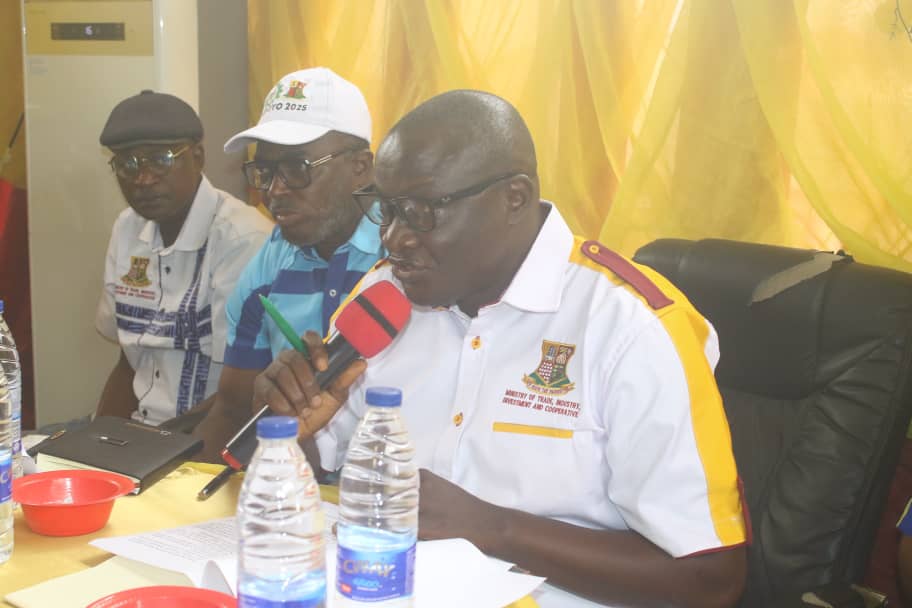
*Oyo Govt Unveils New Export Initiative, Hosts Stakeholders
The Oyo State Government has unveiled Omituntun 2.0 export initiative tagged “Operation Double Your Export”, adding that the initiative will allow key players in the export ecosystem to chart a sustainable path for increased non-oil exports in the State.
The meeting engaged major stakeholders on export growth in Oyo State.
The Commissioner for Investment, Trade, Cooperatives and Industry, Hon. Adeniyi Adebisi, made this known today during the stakeholders’ engagement held at the ministry’s conference room in Ibadan.
Hon. Adebisi emphasized that the meeting was a strategic move by the State to deepen collaboration with regulatory agencies, agro-allied entrepreneurs, financial institutions, and exporters to boost Oyo’s presence in international markets.
He noted that Oyo State is determined to harness its comparative advantage in cashew, cocoa, shea butter, cassava, and other agro-allied products to unlock wealth, create jobs, and increase internally generated revenue.
The Commissioner said that Oyo State is the first subnational in Africa to develop African Continental Free Trade Area (AfCFTA) strategy, attracting a visit from the AfCFTA Secretary General.
Leveraging its location and trade infrastructure, the state aims to boost economic growth, reduce poverty, and align with continental trade protocols.
Key initiatives include AfDB recognition as an agro-processing zone and regional cooperation with Southwest states.
Oyo sets a model for subnational leadership in Africa’s economic integration.
The Commissioner explained ongoing State interventions in regulatory reforms and export facilitation.
These include engaging agencies like the Federal Competition and Consumer Protection Commission (FCCPC), establishing a Trade Grievance Resolution Office, and supporting executive bills to ease export processes.
He urged stakeholders to bring forward export-related legislative suggestions through the Ministry, saying, “If you have a legislation that works for you, come to us. It is better and faster to go as an executive bill than for you to do it individually. Why waste time and resources?”
He also cited the example of branding Ogbomoso cashew for global visibility, stating: “If it requires that we produce bags and write ‘Ogbomoso’ on them, we will move cashew successfully for exportation.”
The Permanent Secretary, Mr. Olajide Okesade stressed the Ministry’s vision to transition from a local trade mindset to a structured, export-driven economy.
The President, Oyo State Shippers Association and CEO of Oklan Best Nigeria Ltd., Mrs. Elizabeth Olanrewaju Nwanko shared insights from her experience exporting beans, yam, egusi, and fish to Europe and North America.
She identified barriers such as high tariffs, lack of proper product certification, and the tendency of exporters to route goods through Ghana, Togo, and Benin Republic due to their friendlier trade policies.
She advocated for land allocation in Ogbomoso, Shaki, and Tede for cashew and shea plantations, use of GPS for farm monitoring, and enforcement of tree-felling laws. “There’s global demand for 500,000 metric tons of shea butter—Oyo can tap into this if we act strategically,” she emphasized.
The representative of the Nigerian Aviation Handling Company (NAHCO), Prince Aderemi Adejobi, revealed that NAHCO has established export processing centers in Lagos and plans to replicate them in other cities.
These centers aim to help farmers meet international standards, reduce spoilage through cold-chain infrastructure, and eliminate export rejection risks.
He stressed that these hubs will be vital in aggregating farm produce for efficient and compliant export operations.
Assistant Director and Oyo State Trade Promotion Advisor at the Nigerian Export Promotion Council (NEPC),Mrs. Bolanle Emmanuel, outlined various incentives and programs available for Oyo exporters, including the Export Expansion Grant (EEG), Export Development Fund (EDF), and training workshops.
She clarified that NEPC provides free advisory support, though obtaining an export certificate involves a fee ranging from ₦7,500 to ₦13,500 depending on the renewal timeline.
The representative of Parallex Bank, Mr. Adepoju Mojeed, disclosed that the bank recently received a $10 million facility from Afreximbank to support SMEs, particularly in agriculture and export trade.
He encouraged farmers and agro-processors to access credit through cooperatives, pay mandatory export fees (NESS), and leverage opportunities for collateral-free loans and capacity-building programs.
The engagement marked a significant step toward positioning Oyo State as a formidable player in Nigeria’s export sector. Stakeholders agreed to maintain close collaboration with the State Government and to fully leverage platforms such as the “Omituntun Export Initiative” for sustainable growth and inclusive economic development.
E-signed:
Prince Dotun Oyelade,
Commissioner for Information and Orientation,
Oyo State.
July 22, 2025.




Amupitan: Why the ADC is Chasing Shadows
Sanya Oni
It is no surprise that the African Democratic Congress is insistent on the immediate resignation of the chairman of the Independent National Electoral Commission, Prof. Joash Amupitan. First, was for the ‘high crime’ of seeking to play safe over a judgment of the court which demanded that ADC’s feuding parties and INEC under the leadership of Amupitan in particular take no further step to present the court with a fait accompli over a matter before it. Not sufficient to play the judge and jury in its own cause, it also insists on treating the appearance of any position deemed contrary to its own as treasonable.
Now, they want the head of the electoral body served on the platter over an alleged pro-President Bola Tinubu tweet in 2023. And so determined to press its case, the ADC, in a statement by its rambunctious National Publicity Secretary, Bolaji Abdullahi, would on Saturday, lob yet another charge at the INEC boss for what it claimed were attempts (by who?) to erase the digital trail of the offending tweet – which it also says amounted to a dangerous cover-up that undermined the credibility and neutrality of Nigeria’s electoral system.
Talk of an unproven tweet suddenly becoming an issue over which the chief electoral umpire’s integrity is not only being called into question but constituting the grounds for demanding for his head!
Of course, save for the party’s army of salesmen with their all-familiar talking points on prime time television, few Nigerians would be surprised by such antics which border on desperation. Before now, the party had, much earlier, raised the alarm over what it described as a calculated plot to impose a one-party state ahead of the 2027 general elections, accusing the ruling All Progressives Congress (APC) of using INEC to weaken opposition parties.
Let’s take a look at the tragedy of a party which seeks to pride itself as a leading opposition but has done practically nothing to earn its stripes. It started with a horde of angry, internally displaced politicians overrunning the organs of a once-marginal party, the ADC in a spectacular act of a hostile take-over. Unfortunately, if the image presented by the party from the outside at the time was one of cohesion, it certainly did not help that the invaders neither possessed the patience nor the discipline to undertake the required due diligence! Now that it turns out that what they thought they had bought with pride was in every sense, a damaged good, Nigerians as a whole are being blackmailed, accused of being an accessory to their grand act of dereliction.
Yet, as the presidential candidate of the party in the 2023, general election, Dumebi Kachikwu, would care to remind, the takeover bid, being a flawed process is akin to erecting a castle on shifting sand. The tenure of the so-called chairman of the party, Ralph Nwosu, with whom the invaders negotiated, had long been rendered invalid by the effluxion of time. Not only that, the constitution of the party also made clear that those seeking the leadership of the party must have spent no less than two years in the party! These are supposed to be the issues before the courts!
Across the states, it is the same story of a party riven with crises from top to bottom. Yet, convinced that their good – as illegitimate as could be – was already theirs for keeps, the caretakers-turned undertakers plodded on, choosing to ignore the feelings of a section of the party hierarchs that needed to be placated. With just enough crude blackmail, impunity, cash and more cash in their armoury to waltz through, the conquistadors actually assumed they were unstoppable.
Of course, they pretended that the court processes are merely a side-show. The Federal High Court ruling which required the invaders to show cause why the prayers of the aggrieved ADC members should not be granted was thought of as a joke; the same way the judgment of the appellate court which directed the parties to return to status quo ante bellum was deemed by the ADC invaders a non-binding opinion hence their plans to proceed with a convention fraught with potential legal jeopardy.
To the invaders – Mark, Rauf Aregbesola et al, their interpretation, as against that of INEC with its tilt on neutrality – was sacrosanct.
While these drag on, trust the lawyers with their boring whining about how Section 83 of the Electoral Act, 2026 ousts the jurisdiction of the courts. Yes, it provides that “No court in Nigeria shall entertain jurisdiction over any suit or matter pertaining the internal affairs of a political party” as if that effectively translates to shutting the doors of mediation to aggrieved party men even on issues bordering on their rights or non-observance of party constitutions. In like manner, it is like the express provisions of Section 6(6)(b) which also provides that: “The judicial powers vested in accordance with the foregoing provisions of this section – shall extend to all matters between persons, or between government or authority and to any persons in Nigeria, and to all actions and proceedings relating thereto, for the determination of any question as to the civil rights and obligations of that person” has suddenly become superfluous in the current electoral cycle!
To return to the Amupitan matter: Should anyone be fooled by the orchestrated blackmail by those whose record private and public can’t hold a candle to Amupitan’s? Certainly not with what I had earlier described as a programmed de-legitimisation of the 2027 elections by overrated political actors being already an open book. Sure enough, the matter, in the coming days, would not be whether or not the gentleman from Kogi can take the heat, but how far those in the business of concocting lies would go to undermine the process simply because the odds are not going their way. While they are at it, they have still not told Nigerians how the lone individual – out of 37 odd Resident Electoral Commissioners (RECs) and 12 National Commissioners, with two representing each of the six geopolitical zones, has suddenly become the ultimate decider of how things will go in 2027.
Reminds of the bad workman perennially blaming his tools.
First published in The Nation on April 14, 2026
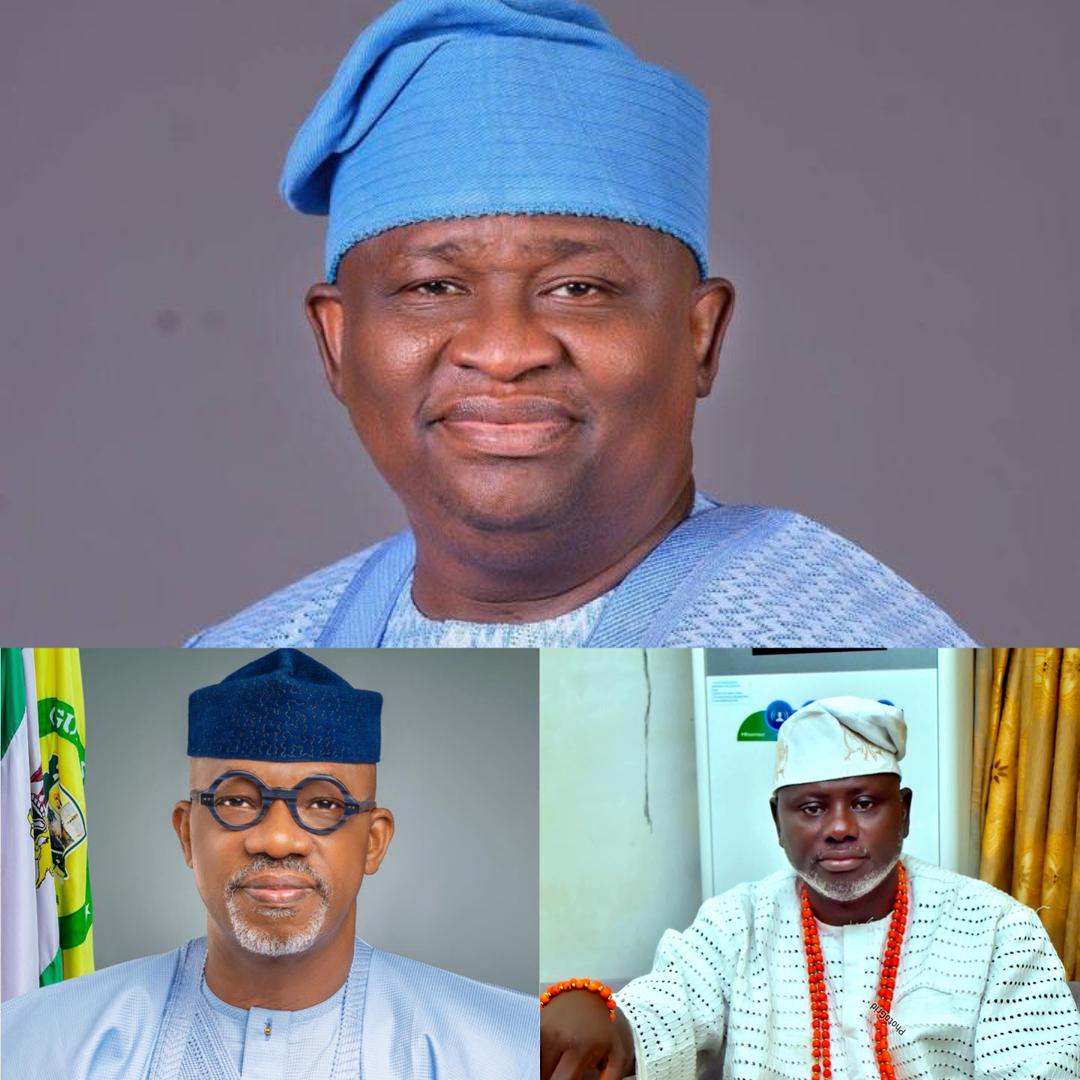
*Ogun’s Future at Risk, Says MAO, Faults ‘Anointed’ Consensus Candidate Yayi*
“In a land starved of vision, even the barely capable are crowned as kings.”
With this striking illustration, Chairman of the Egba Agenda Forum, High Chief Mustapha Abdulakeem Owolabi (MAO), has condemned the emergence of Senator Solomon Olamilekan Adeola, popularly known as Yayi, as the consensus governorship candidate of the All Progressives Congress (APC) in Ogun State.
In a strongly worded statement issued on Tuesday, Owolabi described the development as a “quiet and almost shameful orchestration,” insisting that the process reflects calculated imposition rather than the genuine will of the people.
According to him, while Yayi may have found political footing in Ogun about six years ago through Yewa, his elevation as a statewide consensus candidate without what he termed “a true test of popular mandate” raises fundamental concerns about the state of democracy in Ogun.
“This is not democracy; it is orchestration,” Owolabi declared.
The Egba Agenda Forum chairman further alleged that the move represents a stepping stone in a broader political design, suggesting that Ogun State risks becoming an extension of entrenched political influence beyond its borders.
He argued that the ambition behind the arrangement is “structured, patient and deliberate,” warning that such consolidation threatens the independence of the state’s political space.
Owolabi blamed past administrations for laying the groundwork for what he described as the recycling of failure. He accused previous leaders of governing “without building,” entrenching poverty, weakening institutions and replacing sustainable development with dependency.
“The next generation has learned the system too well,” he said. “They understand that you don’t need to fix the people; you only need to manage them.”
He criticized what is often presented as empowerment programmes, describing them as tools of control rather than genuine development initiatives. According to him, with education weakened, healthcare struggling, infrastructure decaying and debt mounting, citizens are left vulnerable to “small relief packages and symbolic gestures” that replace accountability with gratitude.
“This is not progress. It is recycling failure,” the statement read.
The Forum also expressed concern over what it called the systematic weakening of opposition parties, alleging that fractured and destabilized opposition voices leave citizens with “no real alternative only the illusion of choice.”
“True democracy thrives on vibrant, credible opposition. It demands competition, accountability and the constant testing of ideas,” Owolabi stated. “What we are witnessing is a slow drift toward political monopoly disguised as consensus.”
He further criticized former aspirants and political actors who, according to him, have abandoned principles in a bid to secure appointments and remain in the good graces of the “anointed.”
“Principles abandoned, convictions traded, ambition preserved at all costs. Shameful is an understatement,” he said.
Owolabi warned that the situation sends the wrong message to emerging political leaders, who he fears are being trained to perfect the same political playbook rather than inspired to chart a new course.
“A nation cannot rise on manipulation. A people cannot thrive on crumbs,” he added.
Concluding his statement, the Egba Agenda Forum chairman called on Nigerians to reflect deeply on the direction of the country’s democracy.
“‘Nigeria, we hail thee’ but surely, this cannot be the nation our forefathers envisioned, nor the system they hoped to build. If this cycle is not broken, then the future is already compromised. May Nigeria find the courage to demand more.”
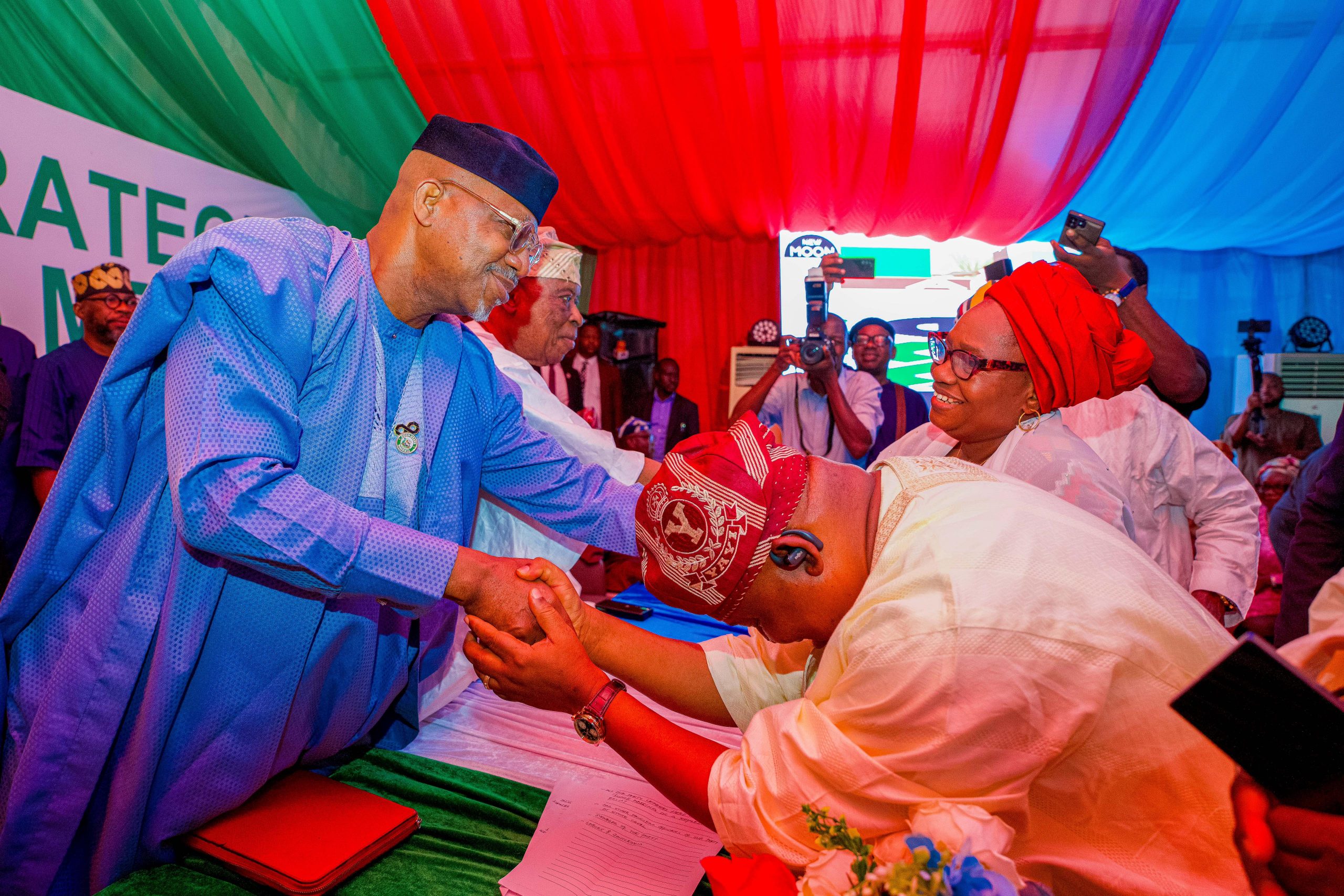
APC Picks Adeola Yayi as Consensus Candidate, Declares ‘New Ogun State Is Born’
ABEOKUTA, OGUN STATE — The Ogun State chapter of the All Progressives Congress (APC) has adopted Solomon Olamilekan Adeola, popularly known as Yayi, as its consensus governorship candidate ahead of the 2027 election.
The decision was announced on Monday, April 13, 2026, during a high-level party congress held in Abeokuta, drawing party leaders and stakeholders from across the state.
Governor Dapo Abiodun, who presided over the gathering, said the consensus arrangement was a strategic move to promote equity and inclusiveness, particularly by addressing what he described as a decades-long marginalisation of Ogun West Senatorial District in the state’s leadership structure.
He noted that the decision reflects a deliberate effort by the party to rotate power fairly among the state’s senatorial zones.
“Nothing will give me more joy than to fulfill the dreams of my predecessors — especially ensuring that Ogun West produces the next governor,” Abiodun said.
“I look forward to a time when I will sit proudly with my successor and my fellow former governors at the swearing-in of a new APC governor.”
Amid applause from party faithful, the governor formally unveiled Adeola as the party’s flagbearer, describing him as the most suitable candidate to lead the state into its next phase of development.
The announcement triggered jubilant reactions, with chants of “Yayi” echoing across the venue.
In his acceptance speech, Adeola expressed gratitude to party leaders and members, describing his emergence as a product of unity, sacrifice, and collective vision.
“I believe in oneness and the unity of our dear state and Ogun West by extension,” he said, pledging to justify the confidence reposed in him.
Adeola highlighted Ogun State’s growing economic relevance, noting its status as one of Nigeria’s most industrialised states. He promised to consolidate existing gains while advancing policies that would further drive development and prosperity.
“I will not let you down. I promise to keep the flag flying and maintain the unity, peace, and progress achieved in Ogun State,” he added.
Using a nautical metaphor, the senator assured party members of steady leadership, saying, “The ship I’m about to take over, I will make sure that it does not derail.”
He also emphasized inclusiveness, pledging to unite all factions within the party and across the state, regardless of political differences.
“By the grace of God, I will do my utmost best to keep every member of our great party together and ensure that we remain one indivisible family,” he said.
Declaring a new chapter for the state, Adeola proclaimed, “A new Ogun State is born,” promising a renewed focus on unity, development, and shared prosperity.
The endorsement, which took place during the APC Strategic Caucus Meeting, is widely seen as a defining moment in Ogun State politics, setting the stage for the 2027 governorship race and signaling strong internal cohesion within the ruling party.


- Merck Foundation marks ‘World Art Day’ through their Film, Song, Media and Fashion Awards 2026 in partnership with Africa’s First Ladies to raise awareness about social & health issues April 15, 2026
- Gabon’s Offshore Comeback: International Oil Companies (IOCs) Return as Exploration Heats Up Ahead of Paris Forum April 15, 2026
- Shell’s Eugene Okpere to Speak at Angola Oil & Gas (AOG) 2026 Amid $1B Angolan Deepwater Drive April 15, 2026
- Oando Joins African Energy Week (AEW) 2026 as Emerald Sponsor as Firm Reports 10% Profit Rise April 15, 2026
- Africa Finance Corporation (AFC) Invests in Dhamana Guarantee Company to Catalyse Local Currency Infrastructure Financing in East Africa April 15, 2026
- WESGRO and Enlit Africa 2026 unite to spotlight the Western Cape’s energy investment opportunity April 15, 2026
- Gianni Merlo re-elected as International Sports Press Association (AIPS) President for sixth and final term in landslide victory April 15, 2026
- African Development Fund approves 1.7 billion CFA francs to boost private sector competitiveness across West African Economic and Monetary Union (WAEMU) countries April 15, 2026
- Knowledge Katti: The Architect Behind Namibia’s Energy Breakthrough April 15, 2026
- African Mining Week to Highlight Africa’s Artisanal and Small-Scale Mining (ASM) Transformation Amidst $8.5T Resource Potential April 15, 2026
- Merck Foundation marks ‘World Art Day’ through their Film, Song, Media and Fashion Awards 2026 in partnership with Africa’s First Ladies to raise awareness about social & health issues April 15, 2026
- Gabon’s Offshore Comeback: International Oil Companies (IOCs) Return as Exploration Heats Up Ahead of Paris Forum April 15, 2026
- Shell’s Eugene Okpere to Speak at Angola Oil & Gas (AOG) 2026 Amid $1B Angolan Deepwater Drive April 15, 2026
- Oando Joins African Energy Week (AEW) 2026 as Emerald Sponsor as Firm Reports 10% Profit Rise April 15, 2026
- Africa Finance Corporation (AFC) Invests in Dhamana Guarantee Company to Catalyse Local Currency Infrastructure Financing in East Africa April 15, 2026
- WESGRO and Enlit Africa 2026 unite to spotlight the Western Cape’s energy investment opportunity April 15, 2026
- Gianni Merlo re-elected as International Sports Press Association (AIPS) President for sixth and final term in landslide victory April 15, 2026
-

 news4 months ago
WHO REALLY OWNS MONIEPOINT? The $290 Million Deal That Sold Nigeria’s Top Fintech to Foreign Interests
-

 celebrity radar - gossips3 months ago
Dr. Chris Okafor Returns with Power and Fire of the Spirit -Mounts Grace Nation Altar with Fresh Anointing and Restoration Grace on February 1, 2026
-

 celebrity radar - gossips4 months ago
Prophet Kingsley Aitafo Releases 2026 Prophecy: ‘Nigeria Will Rise, but the World Must Prepare for Turbulence’
-

 celebrity radar - gossips6 months ago
End of an Era: Nigeria Mourns Evangelist Dr. Uma Ukpai, 80