
society
DIVINE CALLING, BEAN CAKES, AND A BUSINESS BLESSED BY FAITH: THE REMARKABLE RISE OF VICTORIA KITCHEN


A JOURNEY OF DEDICATION: THE STORY OF EDEH CHINENYE JESSICA
Born on the 7th of February, 1988, in Akpugo, Nkanu West LGA of Enugu State, Edeh Chinenye Jessica grew up with a quiet but determined resolve — to grow, to give, and to support humanity in every way she could. Her early years in Onitsha laid the foundation for her academic journey, beginning at Santa Maria Primary School, where she obtained her First School Leaving Certificate in 2001.
Fuelled by curiosity and a love for learning, she continued her education at St. Cyprian Special Science School, Nsukka, earning her West African Senior School Certificate (WAEC) in 2007. It was there her interest in the growing world of technology began to take root — a passion that would shape the next phase of her journey. In pursuit of excellence and technical knowledge, Chinenye enrolled at the Institute of Management and Technology (IMT), Enugu, where she studied Computer Science.
She first bagged an Ordinary National Diploma (OND) in 2012 and, driven by a desire to deepen her competence, she returned to complete her Higher National Diploma (HND) in 2015. Along the way, she supplemented her classroom knowledge with practical skills, earning a certificate in Computer Applications from Mecxon Computer School the same year.
Her industrial training at Alo Aluminum Company (2012–2013) gave her firsthand experience in applying IT knowledge in a real-world setting. But Chinenye’s heart longed for more than just technical mastery — she yearned to serve.
This inner passion led her to the development sector. In 2015, she joined Happy Home Foundation, a non-governmental organization in Enugu, where she served with dedication. Her work revolved around supporting vulnerable groups, coordinating programs, and delivering hope to many.
During her National Youth Service Corps (NYSC) year from 2016 to 2017, she was posted to Succour and Development Service Initiative, continuing her humanitarian efforts with focus and compassion.
Following NYSC, Chinenye returned to Happy Home Foundation, where she worked until 2019 — years marked by growth, service, and the strengthening of her commitment to people-centered work.
Then came a new season.
In 2019, she stepped into entrepreneurship, founding Victoria’s Kitchen, a food business inspired by her mother’s legacy and her own culinary passion. What began as a small initiative soon blossomed into a platform not only for nourishment but also for empowerment, as she blended her business skills, integrity, and warmth to serve others in new ways.
Chinenye’s journey is one of consistent learning and meaningful impact — from the computer labs of IMT to the mission fields of NGOs, and now to the kitchens where food meets purpose. Through every step, her story reflects not just experience, but character, vision, and a heart that continues to work hard towards supporting the human person.
A Voice, a Prayer, and an Akara Revelation
At exactly 12 noon on an otherwise ordinary afternoon in 2019, a young Nigerian woman named Chinenye Edeh—now the proud founder of Victoria Kitchen—heard a voice. She was seated, working quietly when she felt an overwhelming urge to pause and go to a small image of the Blessed Virgin Mary located just six steps away from her workstation.
“I didn’t understand the restlessness,” she recounts. “But I obeyed.”
As Chinenye knelt before the image, she carefully articulated her thoughts, “I’m not worshiping this image, o,” she confessed, “but I know it reminds us of Mary’s presence in heaven, interceding for us.” With a heart full of sincere longing, she poured out her petition:
“What can I do to save more and raise money for my Master’s program?”
At first, there was no answer. But within minutes, a still voice echoed thrice:
“Akara… Akara… Akara.”
At first, she thought someone nearby had said it, but a check revealed no one.
The compound was silent. It wasn’t external; it was spiritual. That moment marked the genesis of what would become a thriving food business, rooted in obedience, sustained by resilience, and crowned by faith.
The Priest, the Prophet, and the First Push
Chinenye shared the experience with a close friend, a medical doctor, who suggested she see a priest. “He told me jokingly to prepare to be called Nwanyi Akara,” she recalls, laughing. But then he added something unexpectedly profound:
“If you do this akara business, it will take you to heaven.”
That single statement struck a chord. She was intrigued—not just by the business idea—but by the fact that something so ordinary could be divine.
However, it wasn’t easy walking away from a formal job. After giving notice for two months, it still took her almost six to seven months to finally resign.
Wandering in the Wilderness of Locations
With resignation behind her, the next mountain was where to start.
Chinenye Edeh consulted a security man at her former workplace—also a Keke rider—who recommended two possible selling locations. The first required writing a proposal, but the idea of competing for space discouraged her. She withdrew.
The second option was busier but already had a woman frying akara. Would it be rivalry? Would it breed tension? She pushed forward, tried it—and within days—heard another divine whisper:
“Are you supposed to be here?” She knew the answer in her heart. “I didn’t like the place,” she confesses. She told her little sister, “We won’t return tomorrow.” But family criticism followed swiftly. “You resigned for this, and you’re giving up already?” one sibling retorted. The backlash was harsh.
Despite the noise, she pivoted. She fried akara close to her home instead—something felt right. Again, the gentle voice returned:
“You’re supposed to be in a quiet place.”
Finding Purpose in the Park. The voice led her to remember a woman she deeply admired. Upon meeting her, the woman directed her to a quiet park nearby. She arrived to find only birds and a single taxi. But as she stood in that peace-filled environment, it clicked.
A security man escorted her to meet the landlord of a small adjoining space. To her surprise, the landlord was a young man.
They both laughed at the oddity of the situation, but when she explained her mission, he gave her permission to use the space—at no cost.
“It was like God had laid the path in front of me,” she says. “All I had to do was walk it.”
Humble Beginnings, Homemade Taste
On the first day of operations, she spent just ₦1,400:
₦400 for beans (half paint measure),
₦600 for groundnut oil,
₦100 for pepper,
₦200 for pap.
She used a small gas cooker, a single frying pan, and some transparent rubber containers.
To her amazement, she made N3,200 that day.
From that day onward, she never looked back.
Beyond Akara: Growing with Demand Soon, customers began asking for more than akara and pap. Some wanted rice. Others requested beans. Then came porridge yam. And by afternoon, people were demanding swallow.
“I wasn’t a professional cook,” she says, “but I knew how we cooked food at home. I just replicated that.”
Positive feedback came rolling in.
Her style? “Simple. Homemade. Clean.”
Eventually, she turned to YouTube and watched a woman demonstrate akara frying. She tried the new method—and it was a hit. Victoria Kitchen was evolving.
A Test of Fire – Finding a New Location
In 2023, the landlord informed her they had six months to vacate. Desperate but prayerful, she cried out for help. Once again, her loyal customers—many of whom were estate agents—stepped in.
One agent helped her find a new empty plot of land. She and her team gathered money, bought metal sheets, contracted a welder, and built a custom food stall.
From frying akara under a tree to building her own food space, the journey was never easy—but always graced.
Why “Victoria Kitchen”?
The business name was no coincidence.
She named it after her beloved mother, Victoria, a strong woman who—despite marital struggles—raised brave and responsible children with the help of her siblings.
“Our food tastes like the one you eat at home,” many customers would say. That feedback inspired the tagline:
“Victoria’s Homemade Food.” For branding purposes, they shortened it to:
“Victoria Kitchen.”
Grace, Not Pressure
Chinenye Edeh wasn’t driven by profits, pressure, or popularity.
“There was no high expectation. I just wanted to obey and do something with my hands. God took care of the rest.”
From ½ paint measure of beans to 25 litres of akara frying per session, the business now feeds dozens daily and has expanded into full meal services—offering rice, beans, swallows, yam, pap, and more.
From Vision to Victory
Today, Victoria Kitchen is not just a food business; it’s a movement of purpose. It stands as a symbol of spiritual obedience, resilience against societal doubt, and triumph against financial limitations.
Her advice to other dreamers?
“Start where you are. Use what you have. Be faithful. It’s not always about capital. Sometimes, all you need is grace—and grit.”
Closing Note
In a world where most people wait for the “perfect opportunity,” this woman listened to a whisper, followed a strange instruction, and built something that now nourishes both body and soul. Victoria Kitchen isn’t just feeding people.
It’s feeding dreams.
Find Victoria Kitchen at Location 36 Nza street Independence Layout, Enugu
For orders or enquiries,
Follow on Instagram: victorias_homemadefood
Motto: “Memorable and healthy food in a plate and sip”








society
Zamfara State Launches Landmark IDP Policy and Action Plan as UNDP, Northwest Forum Pledge Support

Zamfara State Launches Landmark IDP Policy and Action Plan as UNDP, Northwest Forum Pledge Support
In a significant move to address the humanitarian crisis wrought by banditry and internal displacement, the Executive Governor of Zamfara State, His Excellency Dr. Dauda Lawal, has officially launched a comprehensive policy framework and action plan aimed at delivering durable solutions for internally displaced persons (IDPs) in the state.
The Governor attended the joint launch ceremony for the IDP Policy and the State Action Plan on Durable Solutions, an initiative simultaneously rolled out for both Katsina and Zamfara States in the nations capital Abuja today Feburary 16, 2026. The event marks a pivotal moment in the region’s approach to managing displacement, shifting from emergency response to long-term, sustainable recovery.
The ambitious programme is the product of a strategic collaboration between the Northwest Governors Forum and the United Nations Development Programme (UNDP). This partnership underscores a unified, regional acknowledgment that the challenges of displacement require coordinated, multi-state solutions that address root causes and build lasting resilience.
For Zamfara State, which has borne the brunt of years of insecurity, the new policy is being hailed not merely as a bureaucratic formality, but as a binding social contract with its most vulnerable citizens. It establishes a clear roadmap for restoring the dignity of displaced families, with a laser focus on rebuilding shattered communities and creating viable pathways for safe return, peaceful resettlement, and sustainable reintegration.
The framework goes beyond temporary relief, outlining concrete strategies to help displaced populations not just survive, but ultimately thrive in safety. It seeks to transform the lives of those who have lost their homes and livelihoods by ensuring they are active participants in the state’s recovery.
Speaking at the launch, Governor Lawal reaffirmed the administration’s unwavering commitment to translating the policy document into tangible, measurable impact on the ground. “Under my leadership, we remain committed to ensuring that this framework translates into measurable impact for our people.”
The launch signals a new chapter for Zamfara, one focused on healing and forward momentum. By anchoring the response in a durable solutions framework, the state government aims to build systemic resilience, strengthen the capacity of local institutions to manage future crises, and ultimately, shape a more secure, stable, and inclusive future for all residents of Zamfara State.

society
Bright Brain Community Initiative, TMRI Host International Women’s Conference on Gender-Based Violence
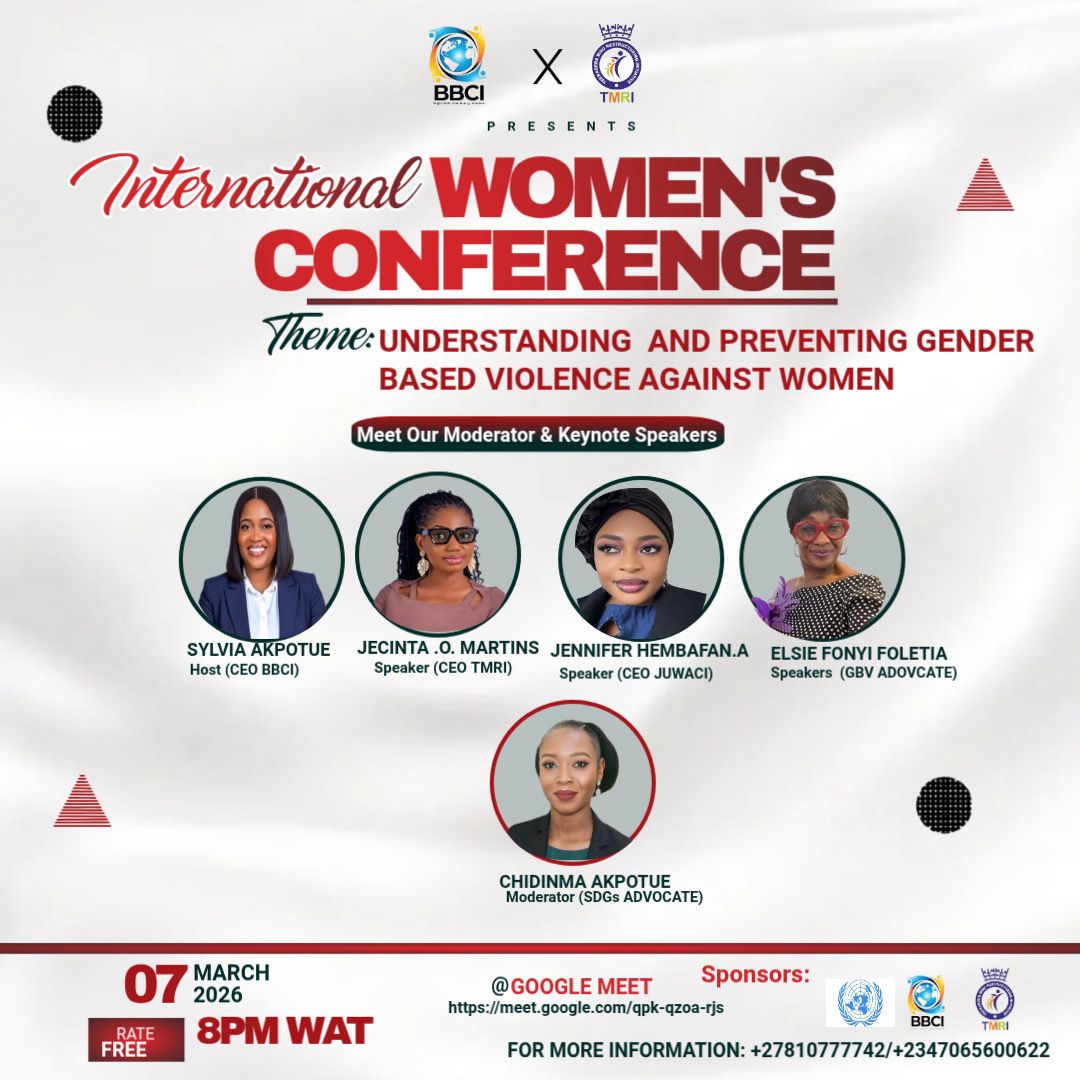
Bright Brain Community Initiative, TMRI Host International Women’s Conference on Gender-Based Violence

A LEGACY OF EXCELLENCE: Wisdom Benson Celebrates 44 Years of Entrepreneurial Triumph.
Wisdom Benson, the visionary CEO of Wisic Services, is celebrating a major milestone – his 44th birthday on 18th February! A seasoned entrepreneur, accomplished networker, and dedicated leader, Wisdom has spent over 20 years driving business growth, empowering individuals, and shaping the future of entrepreneurship in Nigeria and beyond.
As the helm of Wisic Services, Wisdom has demonstrated exceptional leadership, guiding his team with vision, resilience, and courage. His entrepreneurial journey is a testament to the power of consistency, integrity, and strategic thinking. Under his leadership, Wisic Services has become a beacon of innovation and excellence, making a lasting impact in the industry.
Wisdom’s commitment to mentoring young entrepreneurs and promoting businesses has inspired countless individuals. He has been a driving force behind the success of many startups and SMEs, providing them with the necessary tools and guidance to thrive.
“Every year is not just an addition of time, but an addition of wisdom, strength, and purpose. The journey continues,” Wisdom said ahead of his birthday. “I am grateful for the opportunity to make a difference in the lives of others, and I look forward to continuing to inspire and empower the next generation of entrepreneurs.”
As we celebrate Wisdom Benson’s 44th birthday on 18th February, we honor a man whose story inspires determination, excellence, and forward thinking. His legacy is a testament to the power of hard work, dedication, and passion.
“We are thrilled to celebrate Wisdom’s milestone birthday and acknowledge his contributions to the business community,” said a spokesperson for Wisic Services. “His vision, leadership, and commitment to excellence are an inspiration to us all, and we look forward to many more years of success and impact.”
Here’s to many more years of expanded territories, deeper impact, and greater accomplishments!
*About Wisdom Benson*
Wisdom Benson is a seasoned entrepreneur, accomplished networker, and the visionary CEO of Wisic Services. With over 20 years of experience, he has established himself as a leader in the business community, driving growth, empowering individuals, and shaping the future of entrepreneurship in Nigeria and beyond.



-

 celebrity radar - gossips6 months ago
Why Babangida’s Hilltop Home Became Nigeria’s Political “Mecca”
-

 society6 months ago
Power is a Loan, Not a Possession: The Sacred Duty of Planting People
-

 news6 months ago
THE APPOINTMENT OF WASIU AYINDE BY THE FEDERAL GOVERNMENT AS AN AMBASSADOR SOUNDS EMBARRASSING
-

 Business6 months ago
Batsumi Travel CEO Lisa Sebogodi Wins Prestigious Africa Travel 100 Women Award