
society
They Stripped Her Dignity, Not Just Her Clothes”: Nigeria Must Never Normalise the Vigilante Brutalisation of NYSC Members in Anambra State

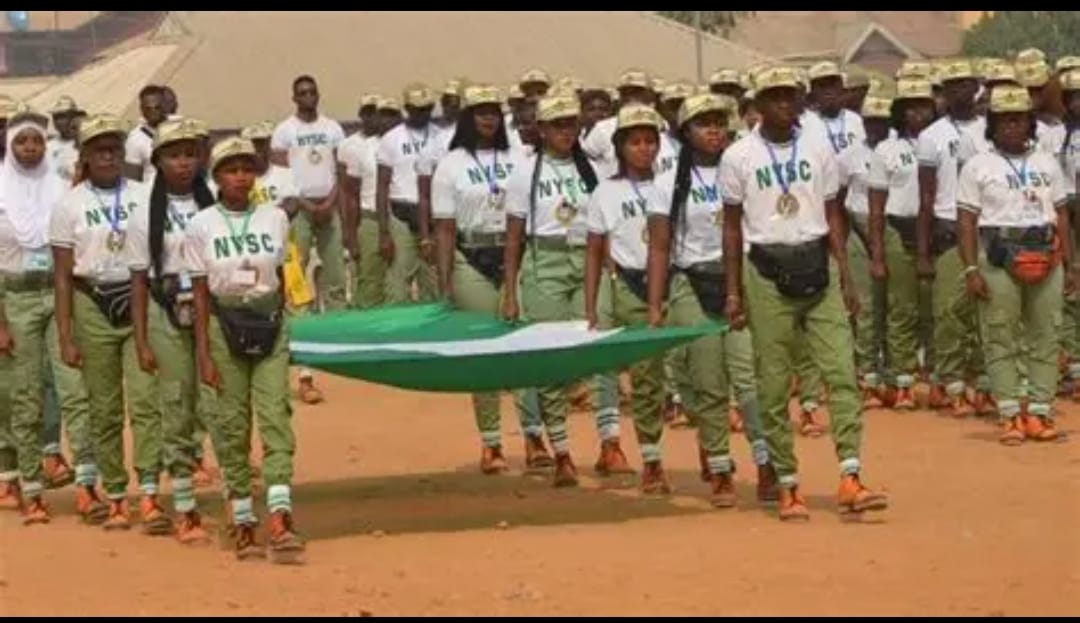
They Stripped Her Dignity, Not Just Her Clothes”: Nigeria Must Never Normalise the Vigilante Brutalisation of NYSC Members in Anambra State.
By George Omagbemi Sylvester | Published by saharaweeklyng.com
On August 19–20, 2025, Nigerians woke up to a horror no society should tolerate: ARMED MEN BELIEVED to be OPERATIVES of a LOCAL VIGILANTE OUTFIT in ANAMBRA STATE stormed a corpers’ lodge in Oba, Idemili South LGA, beat National Youth Service Corps (NYSC) members and stripped a young woman naked while she cried for help. The viral footage (too degrading to describe in full) ignited national outrage and a flurry of official statements. The Anambra State Government condemned the attack; arrests were announced; NYSC leadership decried the assault; and, in a further twist, the police claimed their investigation had been stalled because the principal victim had not yet appeared to give a statement. None of this changes the fundamental truth: what happened in Oba was not “OVERZEALOUSNESS.” It was a crime against the person and a desecration of the Republic’s promise to its youth.

Let us be exact about the facts, because accuracy is the first refuge of justice. Multiple reputable outlets reported that the assault occurred in Oba, Idemili South. The victim has been identified in press reports as Edema Jennifer Elohor; some reports also reference her NYSC details. The Anambra State Government publicly condemned the attack; the Governor’s wife, Dr. Nonye Soludo, called it “UNACCEPTABLE, DISTURBING and DEHUMANIZING” the state disclosed that the implicated vigilante operatives had been identified and arrested. The NYSC, for its part, issued a statement condemning the abuse and insisting that justice be done. Meanwhile, the Anambra State Police Command stated on August 19 that its probe was hampered because the victim had not yet appeared; an assertion that, while procedurally relevant, is morally secondary to the primary offence captured on video.

Strip away the bureaucratic phrasing and the politics and you are left with an assault on the basic covenant between state and citizen. As the political theorist Max Weber reminded us, the modern state claims a monopoly over the legitimate use of force. That monopoly is not a blank cheque; it is confined by law, due process and the inherent dignity of the human person. Whatever name the Anambra outfit goes by (AGUNECHEMBA VIGILANTE GROUP or “SECURITY NETWORK”) its personnel do not stand above the Constitution. They are bound by it. As Chinua Achebe warned, “The trouble with Nigeria is simply and squarely a failure of leadership.” Leadership that tolerates humiliation as a tool of “SECURITY” corrodes public trust and invites anarchy.

No one should romanticise vigilante structures. Community security outfits can deter petty crime and supplement overstretched police units; but without strict training, supervision and accountability, they easily mutate into instruments of fear. Hannah Arendt wrote that “the rule of law; means that the law rules,” not men with cudgels deciding who is an “INTERNET FRAUDSTER” based on whim. On the video evidence and the admissions reported so far, there was no lawful arrest protocol, no presumption of innocence and certainly no respect for bodily integrity. It is barbarism disguised as order.
The NYSC scheme embodies a national promise: THAT OUR GRADUATES WILL SERVE and in RETURN the NATION will GUARD THEM. When that promise is broken, we do not merely injure an individual; we vandalise a national institution. Wole Soyinka’s admonition rings painfully true here: “The man dies in all who keep silent in the face of tyranny.” Silence after Oba would be complicity. If we allow VIGILANTE HUMILIATION to pass as “ROUTINE CHECKS,” we invite a bleak future where uniforms (any uniforms) become licences to degrade.
Accountability must therefore be immediate, transparent and exemplary. First, the Anambra State Government should publish, within days, the names, ranks and chain of command of all personnel implicated in the Oba assault, together with the statutory basis under which their outfit operates. Second, prosecutors should file charges that reflect the gravity of the CONDUCT ASSAULT OCCASIONING HARM, CONSPIRACY, CRIMINAL INTIMIDATION and any SEXUAL OFFENCES implicated by the public stripping; rather than the limp euphemism of “UNPROFESSIONAL CONDUCT.” Third, oversight cannot stop at the foot soldiers. Who armed, accredited and deployed these men? What rules of engagement were they trained to follow? What disciplinary records exist? These answers belong in open court and in a public white paper.
To the Nigeria Police Force: the public will accept procedural updates, but not procedural excuses. Yes, complainant testimony strengthens a case. But Nigeria prosecutes murder without the victim’s testimony; it can prosecute a filmed assault too. The video evidence, corroborating eyewitness accounts and the suspects’ own admissions can sustain a prosecution. The state cannot outsource justice to a traumatised young woman’s availability. Build the case; protect the victim; proceed. As Nelson Mandela taught, “To deny people their human rights is to challenge their very humanity.” The duty to vindicate those rights rests with public institutions not with the wounded alone.
To the NYSC hierarchy: do more than condemn. Demand binding MOUs with state governments detailing protection protocols for corps members 24/7 emergency hotlines that route directly to a state-level joint operations room; mandatory body-worn cameras for any non-police outfit that interacts with corps lodges; and rapid suspension-and-reporting clauses that trigger when any outfit detains an NYSC member. Publish a quarterly safety dashboard: incidents, responses, outcomes. Sunlight disciplines power.
To Governor Chukwuma Soludo: your government’s condemnation is right and the reported arrests are necessary; but this is an inflection point. Order an immediate audit of all quasi-security structures in Anambra; mandates, training curricula, oversight and complaint mechanisms. Suspend field operations of any outfit that cannot demonstrate compliance with human-rights standards. Constitute an independent panel (including the NBA, civil society, women’s groups and a retired judge) to report within 30 days on gaps and reforms. Anything less would be administrative theatre.
To the National Assembly: legislate, do not lament. Nigeria needs a uniform federal framework for community and vigilante outfits: licensing, training standards, clear subordination to the police command, use-of-force policies aligned with human-rights law, compulsory insurance, body cameras and criminal liability for supervisors who tolerate abuse. Create a federal registry; unregistered groups must be disbanded. Without this, the “MONOPOLY of LEGITIMATE FORCE” becomes a caricature, scattered among mobs with muskets.
To the public: OUTRAGE is not ENOUGH. Demand the specific. Ask Anambra’s Attorney-General for the charge sheet. Ask the Police Commissioner for the case number and the lead investigator’s name. Ask NYSC what new protection protocols will be in place by the next orientation camp. Democracy is not a spectator sport; it is a contact sport for citizens of conscience.
Above all, we must centre the victim’s dignity and safety. TRAUMA-INFORMED care is not charity; it is justice. Anambra should guarantee medical and psychosocial support, personal security and legal assistance; immediately and at state expense. If the victim chooses privacy, respect it. If she chooses to testify, protect her. Justice that RE-VICTIMISES is no justice at all.
Let us end where we must: with first principles. A nation that cannot keep its young safe while they serve is not serious about its future. The Oba assault was a line-crossing event; an alarm bell. We either rebuild the guardrails now or we normalise public cruelty. Achebe cautioned that “one of the truest tests of integrity is its blunt refusal to be compromised.” Nigeria’s integrity is on trial in Anambra. We must refuse compromise.
ACTION POINTS WE EXPECT TO SEE WITHIN 30 DAYS:
Charge and arraign all implicated operatives; publish the case status weekly.
Suspend and retrain the vigilante outfit; enforce a rights-compliant code of conduct with body cameras and documented stop-and-search protocols.
Victim-centred relief: medical care, counselling, legal support and protection.
NYSC–State MOU on corps members’ safety with joint hotlines and rapid response teams.
Independent review panel with a public report on community-security reform.
If these steps are taken (visibly, verifiable) Anambra can turn a shameful episode into a constitutional reset. If not, the message to every corps member is chilling: YOUR KHAKI OFFERS NO SHIELD. That must never be our message.
Sources consulted for factual verification include national dailies and official statements reporting the location (Oba, Idemili South), the NYSC’s condemnation, the state’s reaction and arrests and the police’s update on the investigation. See: Punch’s breaking coverage of the outrage; Vanguard’s report quoting Dr. Nonye Soludo and noting arrests; NYSC’s public condemnation and victim identification in contemporaneous reporting; and Sahara Reporters’ detailed account of the police statement and the vigilante group involved.
“Justice is what love looks like in public.” ~ Cornel West. Today, love demands we defend our children in khaki; without fear, without favour and without delay.





society
Opinion: Doris Ogala should refrain from mentioning Dr. Chris Okafor’s name given his marital status.

Opinion: Doris Ogala should refrain from mentioning Dr. Chris Okafor’s name given his marital status.
…He is not accountable for your predicament; kindly address your case file.
Meta Facebook should take immediate action to sanitize its platform of individuals like Doris who are spreading malicious content, and Doris should be careful when referencing Lagos-based well-known Pastor Dr. Chris Okafor in connection to her faded career
Doris Ogala should be aware that the Generational Prophet is now in a fulfilling marriage with his spouse, and her recent troubles are exclusively attributed to the ancestral curse that has been a persistent issue since her previous union, which her current husband had not yet discovered.

When a grown up woman lack wisdom and good parental upbringing what should be expected from such woman is exactly what Doris Ogala portraying as human beings that fabricated lies against a true man of God and go scout-free so, no one is expected to sympathized with the faded-away actress known as Doris Ogala and she must dearly pay for her evil manipulation as nemesis hunting her back.
It’s prudent for Doris Ogala, or those close to her, to be aware of the potential risks associated with her claims regarding Dr. Chris Okafor, a married man. Without proper justification, such actions could lead to severe repercussions. The challenges she faces might be linked to her actions, and a genuine change might mitigate her situation.
Consider how the spouse of the person you’re criticizing online might feel when you address them so informally. Don’t you think she’s capable of facing you? While she may not respond to provocations, it’s advisable not to provoke further
I am taking this opportunity to advise Doris Ogala to reconsider her actions and prioritize her career by refraining from mentioning the name of a man who does not reciprocate her interest. It would also be prudent for Doris Ogala to reflect on her age and compare it with the age of the person she is so ardently pursuing and to respect the sanctity of his home, which would invite divine blessings and a peaceful life of her own if she dedicates her life to Christ, potentially reversing any adverse fate that may be looming over her.
Sincerely dedicating your life to Christ and amending your behavior can lead to divine mercy and a stable living arrangement; in my considered opinion, reforming one’s ways can yield compassion.
John Linus writes from Onitsha
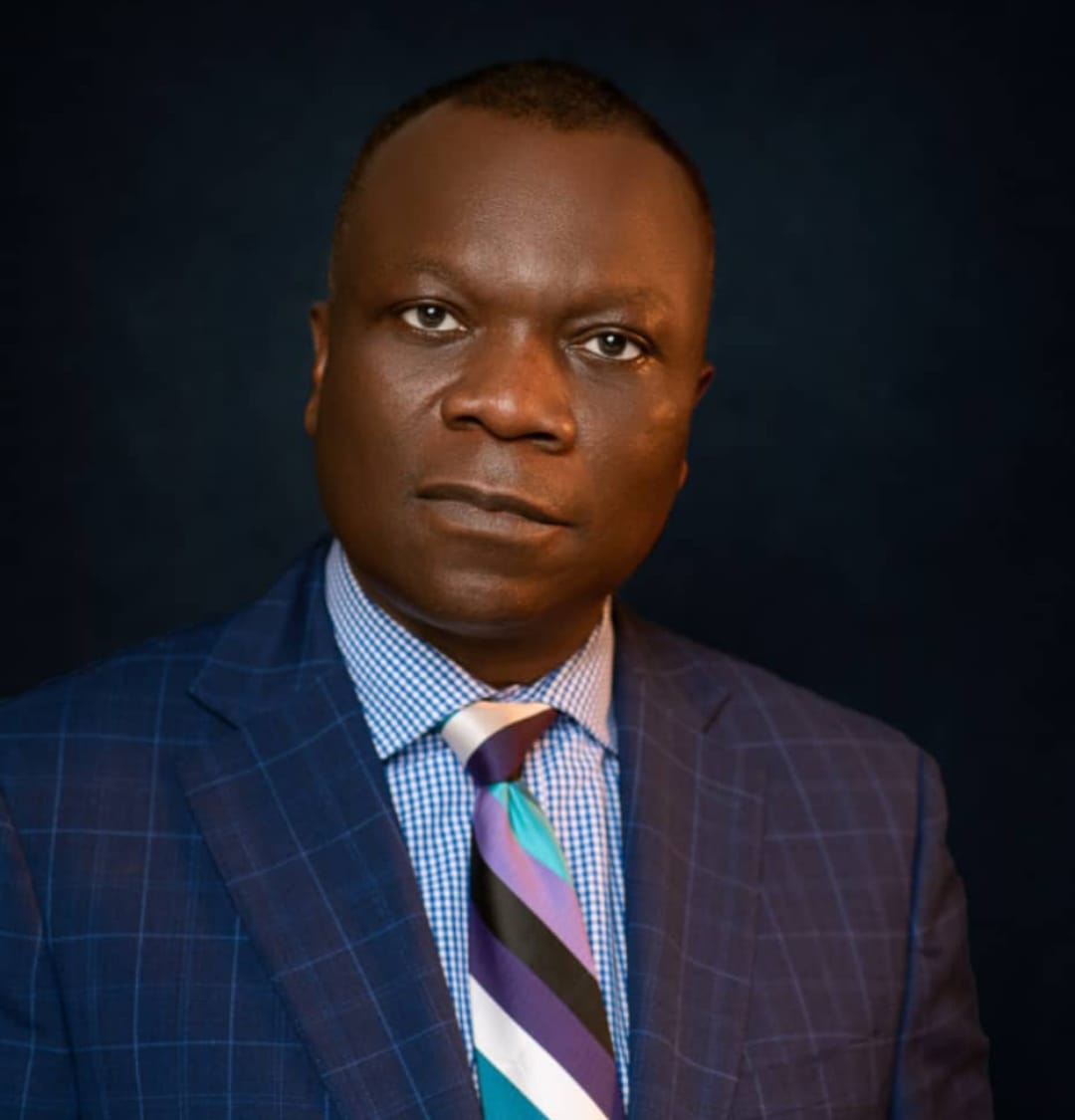
Banwo Identifies Structural Challenges Limiting Opposition
Public commentator Dr. Ope Banwo has identified key structural and strategic challenges limiting the effectiveness of opposition parties in Nigeria.
In a statement released from his base in America, Banwo outlined several factors, including internal divisions, weak grassroots presence, and lack of clear policy alternatives, as major obstacles facing opposition groups.
“One of the biggest issues is fragmentation. There are too many interests and not enough coordination,” he said.
He noted that multiple presidential ambitions within opposition ranks could make it difficult to build consensus around a single candidate.
Banwo also emphasised the importance of grassroots political structures, stating that electoral success in Nigeria depends heavily on local-level organisation.
“Elections are not won on social media. They are won through presence and coordination at the community level,” he explained.
Another concern raised by Banwo is what he described as inconsistent messaging from opposition parties, which he said could make it difficult for voters to identify a clear alternative to the current administration.
“Criticism alone is not enough. Voters want to see a defined direction and credible leadership,” he added.
He further pointed to the challenges of funding and long-term planning, noting that successful political campaigns require sustained investment and discipline.
According to him, defeating an incumbent government demands a high level of coordination, including strong alliances and a unified national strategy.
Banwo, however, suggested that there remains an opportunity for opposition parties to reposition themselves if they address these challenges early.
He stressed the need for compromise among political leaders, urging them to prioritise collective goals over individual ambitions.
“If there is unity, structure, and clarity of purpose, the political landscape can still change,” he said.
He concluded that the strength of any democracy depends on the presence of a viable opposition capable of offering credible alternatives to voters
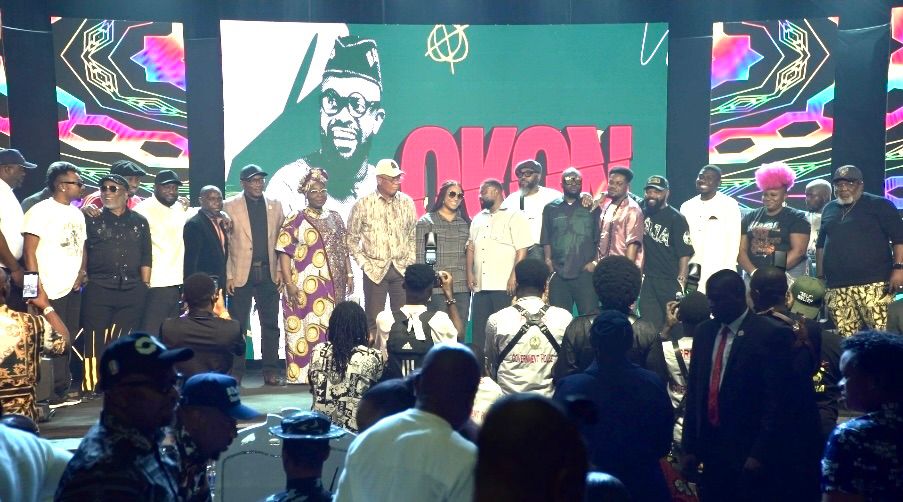
koloman’s: Daddy @pastorumoeno we’re still waiting for your benevolence sir
@igosave @okonlagos @nedu_official @yawnaija @deehumorous @senatorcomedian @akwaibomstategovt


- African Development Bank, The European Stability Mechanism (ESM) sign Memorandum of Understanding to enhance cooperation April 16, 2026
- Seeing the Unseen – How Canon is Protecting East Africa’s Coral Reefs April 16, 2026
- Sintana Listing Signals New Era for Local Ownership in Namibia’s Oil and Gas Sector April 16, 2026
- The crisis in the Middle East could cost Africa 0.2 percent in economic growth in 2026 April 16, 2026
- Namibia International Energy Conference (NIEC) 2026: Namibia Fast-Tracks Oil Law Reform as President Nandi-Ndaitwah Pushes Amendment Bill Ahead of First Oil April 16, 2026
- Africa’s Energy Wealth: Why Good Governance Must Power a Just Transition (By Sola Adebawo) April 16, 2026
- Emirates and Wesgro sign Memorandum of Understanding (MoU) to Stimulate Inbound Tourism to the Western Cape April 16, 2026
- Banco Sol’s Angola Oil & Gas (AOG) 2026 Sponsorship Affirms Drive to Finance Angolan Service Companies April 16, 2026
- Uganda Development Corporation (UDC) to take 82% of Trade ministry budget April 16, 2026
- Merck Foundation marks ‘World Art Day’ through their Film, Song, Media and Fashion Awards 2026 in partnership with Africa’s First Ladies to raise awareness about social & health issues April 15, 2026
- African Development Bank, The European Stability Mechanism (ESM) sign Memorandum of Understanding to enhance cooperation April 16, 2026
- Seeing the Unseen – How Canon is Protecting East Africa’s Coral Reefs April 16, 2026
- Sintana Listing Signals New Era for Local Ownership in Namibia’s Oil and Gas Sector April 16, 2026
- The crisis in the Middle East could cost Africa 0.2 percent in economic growth in 2026 April 16, 2026
- Namibia International Energy Conference (NIEC) 2026: Namibia Fast-Tracks Oil Law Reform as President Nandi-Ndaitwah Pushes Amendment Bill Ahead of First Oil April 16, 2026
- Africa’s Energy Wealth: Why Good Governance Must Power a Just Transition (By Sola Adebawo) April 16, 2026
- Emirates and Wesgro sign Memorandum of Understanding (MoU) to Stimulate Inbound Tourism to the Western Cape April 16, 2026
-

 news4 months ago
WHO REALLY OWNS MONIEPOINT? The $290 Million Deal That Sold Nigeria’s Top Fintech to Foreign Interests
-

 celebrity radar - gossips3 months ago
Dr. Chris Okafor Returns with Power and Fire of the Spirit -Mounts Grace Nation Altar with Fresh Anointing and Restoration Grace on February 1, 2026
-

 celebrity radar - gossips6 months ago
End of an Era: Nigeria Mourns Evangelist Dr. Uma Ukpai, 80
-

 celebrity radar - gossips4 months ago
Prophet Kingsley Aitafo Releases 2026 Prophecy: ‘Nigeria Will Rise, but the World Must Prepare for Turbulence’