Connect with us

society

Tinubu’s Two Trips, One Question: What’s Really Happening in Brazil?

Published

on

Tinubu’s Two Trips, One Question: What’s Really Happening in Brazil?

By George Omagbemi Sylvester | saharaweeklyng.com

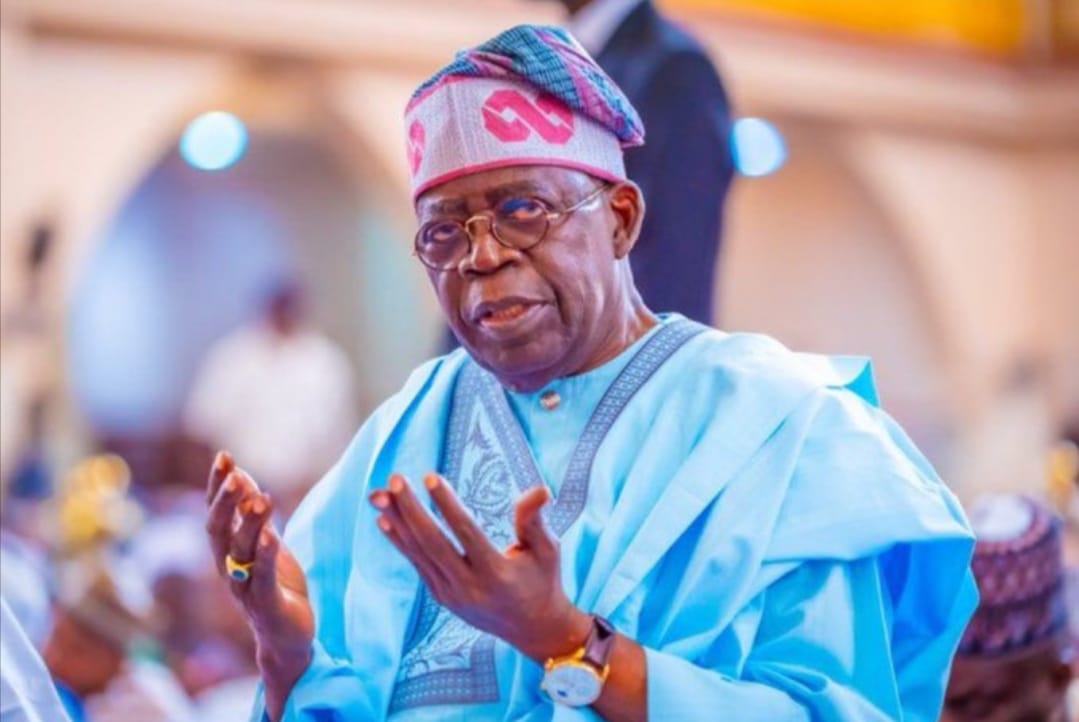
President Bola Ahmed Tinubu’s two recent visits to Brazil within roughly two months have set off a political and economic firestorm in Nigeria. To supporters the excursions are hard-nosed “ECONOMIC DIPLOMACY”; to critics they are ostentatious displays of presidential jet-setting while Nigeria grapples with inflation, insecurity and service collapse. The more useful question isn’t optics alone, it is this: what is really happening in Brazil that makes it a magnet for Tinubu’s attention and what can (or will) Nigeria realistically extract from that attraction?

Tinubu’s Two Trips, One Question: What’s Really Happening in Brazil?
By George Omagbemi Sylvester | saharaweeklyng.com

Short answer: Brazil under President Luiz Inácio Lula da Silva is consciously retooling itself as a pivot of Global South cooperation an agribusiness and energy powerhouse with manufacturing niches (notably aerospace through Embraer) and it is actively courting African partners. For a RESOURCE-RICH but UNDER-INVESTED Nigeria, that posture offers both opportunity and danger. The opportunities are concrete; the danger is that headline diplomacy outpaces implementation.

Brazil’s strategic posture in 2025: rebuilding influence and industrial reach.

Since returning to office, President Lula has driven a foreign-policy agenda that emphasises South–South cooperation: deeper ties with Africa, stronger engagement inside BRICS and an overt push to translate Brazil’s agricultural, industrial and energy strengths into exportable partnerships. This is not mere rhetoric. Brasília has hosted Brazil–Africa dialogues on food security and rural development and Lula has publicly framed agricultural technology as a way to “REPAY” historical ties with Africa, offering technology transfer rather than charity. That strategic posture made Brazil a logical and attractive partner for Nigeria at precisely the moment Tinubu sought high-level, visible wins.
Serviços e Informações do Brasil
Agência Brasil.
Concretely, Brazil’s economy is still a heavyweight in Latin America. Multilateral assessments show Brazil’s growth has been robust in recent years but faces moderation and structural headwinds in 2025 (inflationary pressures, tighter monetary policy and risks from a more uncertain global trade environment. In short: Brazil is powerful, but prudent) keen to export expertise and investment, yet protective about where and how it places capital. International institutions such as the IMF and OECD have warned that Brazil’s growth will moderate in 2025/26 even as it retains significant capacity for outward investment and technology transfer.

What Tinubu found (and loudly promised): MoUs, aviation links and Petrobras talk.
Tinubu’s state visit produced tangible announcements: a package of memoranda of understanding spanning trade, energy, aviation, science and finance; Brazil-backed commitments to expanded aviation links (Embraer interest and an Air Peace Lagos–São Paulo route); and a highly publicised promise that Petrobras could be encouraged to resume operations in Nigeria. Lula welcomed stronger NIGERIA–BRAZIL ties and spoke of productive integration and shared opportunity; messaging tailor-made for a Nigerian presidency hungry for wins. But the key fact remains that the most headline-grabbing claim (Petrobras’s return) was framed as political encouragement, not an executed, binding corporate contract. Petrobras itself declined to comment publicly at the time.

Why the Petrobras line matters and why caution is required.
The possibility of Brazil’s Petrobras returning to Nigeria is catalytic in political rhetoric: it conjures jobs, technology transfer and a revival of deepwater investment. For a president who must demonstrate immediate economic traction, a Petrobras comeback is a potent symbol. Yet corporate returns are not switched on by presidential handshakes alone. Oil majors and national companies weight decisions on political risk, contractual clarity, regulatory stability, local content rules and security conditions. Tinubu and Lula can unlock conversations and remove diplomatic friction, but they cannot singlehandedly compel Petrobras to write cheques. Investors demand signed contracts, due diligence and assurance that host-country institutions can protect multi-year, capital-intensive projects. Sahara, in reporting the exchanges, rightly stressed that discussions were encouraging but that concrete outcomes remain uncertain.

The upside: skill transfer, aviation and agricultural gains are real possibilities.

Not everything is smoke and mirrors. Brazil’s agribusiness model (mechanisation, seed technology, fertiliser logistics and large-scale cattle/ranching systems) is a genuine transfer vector for Nigeria. If Nigerian ministries and private partners secure clear, enforceable agreements with Brazilian firms, the payoff could be large: improved yields, lower food import bills and a nascent export capacity. Similarly, Embraer’s interest in a Nigerian service centre and direct Lagos–São Paulo flights would boost connectivity, reduce aircraft downtime costs and expand business ties. These are realistic, implementable outcomes, but they require contracts, finance and local capacity-building, not merely press releases.

The downside: optics, implementation gaps and the risk of diplomatic theater.
The principal danger is the classic one: diplomacy that substitutes for governance. Nigeria’s fiscal and institutional problems (currency volatility, security liabilities in the Niger Delta and the wider country, regulatory uncertainty) are the very problems that can blunt foreign investment. A pattern of state visits followed by slow or invisible implementation risks turning valuable diplomatic capital into cynical theatre. That’s not hyperbole: history is littered with MoUs that never became projects. The public frustration (“where are the jobs?”) has political consequences and feeds opposition narratives that the presidency is more interested in selfies than service delivery. Sahara and other reporting outlets flagged this gulf between announcement and deliverable.

What Nigerians should demand and what Brazil should ensure.

If these Brazil trips are to be judged a success, both governments must move beyond photo-ops into forensic implementation:

Full transparency on every MoU: precise timelines, financing sources, implementation leads and measurable KPIs. No ministry balkanisation; one coordinating office with public dashboards.

Local-content and jobs clauses: Brazilian firms must be contractually required to hire/train Nigerians, source input locally where feasible and partner with Nigerian firms.

Security and regulatory guarantees: investors need credible enforcement frameworks. Abuja must neutralise political risk and present bankable project templates, especially in oil & gas.

Quarterly public progress reports: diplomatic success is earned in execution, not tweets.

Final verdict: promising, not miraculous.
Tinubu’s double visit to Brazil has put a spotlight on a wider geopolitical shift: Brazil is actively courting African partners and positioning itself as a provider of technology, industrial capacity and diplomatic heft outside the Western axis. For Nigeria this is a golden window, but one that closes fast if Brasília and Abuja do not convert warm words into legally binding, transparent projects that deliver employment and industrial capacity. The visits were not, by themselves, a panacea. They were an opening act. The real test will be in boardrooms, ports, service centres and rural fields and in the hard ledger of jobs and factories that Nigerians can see.

If President Tinubu was seeking a story of strategic outreach, he got it. If he was seeking instant, deliverable transformation, he did not at least not yet. The responsibility now sits squarely with both governments: translate diplomacy into contracts and contracts into visible lives changed. Anything less would be expensive ceremony; everything more would be strategic statecraft.


Tinubu’s Two Trips, One Question: What’s Really Happening in Brazil?
By George Omagbemi Sylvester | saharaweeklyng.com

Continue Reading
Advertisement

society

August24news.com Publisher, Ajagbe, Set to Present Best Driver and Best Conductor of The Year Awards By Ajagbe Adeyemi Teslim

Published

on

August24news.com Publisher, Ajagbe, Set to Present Best Driver and Best Conductor of The Year Awards

By Ajagbe Adeyemi Teslim
SPONSORED by: Lagos State Government


As part of efforts to sanitize and project the image of the transportation system in Lagos State and ability to reward good deeds and eliminate the bad eggs among the drivers and conductors in the state, Lagos-based frontline journalist and publisher of Nigerian Online Newspaper, August24news.com, Mr. Ajagbe Adeyemi Teslim is set to present the best driver and best conductor awards to deserving professionals in the state.

The competition is expected to start in January 2026 and end by December 2026 and it has been designed to be a yearly competition after the maiden edition.

The parameters and measures put in place to pick the Best Driver and Best Conductor in the state is through commuters’ commendations, score cards, online voting system by the general public, public opinions and other relevant methods.

Many drivers and conductors in Lagos State are known for their lackadastical attitudes, but there are still good ones among them, which is the reason we want to reward the good ones among them so that the wrong ones will emulate from the rewarded ones.

Speaking at a press conference in Lagos, the convener of the Award and Publisher of August24news.com, Mr. Ajagbe Adeyemi Teslim highlighted some of the marks expected in every drivers and conductors before winning the awards.

He said they must possess good characters, good dress sense, good driving skills, saying that drivers and conductors must charge their passengers reasonable transport fares, possess good communication skills and relate well with their passengers, they should avoid stoping at undesignated bus-stops, avoid handling our naira with care because the way they are mishandling our naira is one of the reason why our currency is fading and changing faces.

In addition, he said that they should avoid bribing officials of the Lagos State Traffic Management Authority (LASTMA) and other road transport officials because they want to have their ways, they must receive and welcome their passengers with smiles and greetings, avoid pushing and roughhandly their passengers into and outside the bus, they must not smoke and drink before or while on duity.

He said they should be able to help passengers with free ride if the person pleads with them and they should not fight passengers whose fare is not completed, they must not make calls while driving, they should sit properly and avoid hanging on the bus, avoid picking passengers at unapproved bus stops and his or her bus must be in good condition before plying Lagos roads.

On what would be the benefits of the winner, Ajagbe stated that the winner will go home with over dozen gifts which include, a brand new bus, a brand new private car, a duplex, free 20 liters of fuel daily for a month, twenty four million naira cash, brand ambassador contract, driving contract, tour of 10 notable places in the state, courtesy visit to 10 dignitaries in Lagos State, automatic employment for two of his children in Lagos State, 24 different native and English attires from a popular designer, 24 new tyres, an award plaque, conductor and driver belt, a befitting gala night and Letter of commendation from the Lagos State Government, adding that the best conductor will also get whatever the driver gets.

When asked about what prompted the idea, the publisher said that he had witnessed many ugly incidents among Lagos drivers and conductors, which he said made him think of a way to change the narrative and to rebrand the profession.

According to him, “we want to put them on the watch, we want to set an agenda for them, we want to curb thier lakadastical act and non-challantant attitude such as drinking and smoking while on duty as well as reward the best among them, eradicate the bad ones and also encourage others so that they can be emulated.

He added that there is no agency that monitors thier activities in the state, claiming that what the National Union of Road Transport Workers (NURTW) and local governments does is just to collect fees and levies from them.

Speaking further, he said; “I have witnessed a situation where drivers and conductors beat passengers because of a mere 10 naira change during argument.

August24news.com Publisher, Ajagbe, Set to Present Best Driver and Best Conductor of The Year Awards
By Ajagbe Adeyemi Teslim
SPONSORED by: Lagos State Government

“I have witnessed, where drivers and conductors abused and insulted passengers which led to trauma. I have seen where a passenger was stranded, trekked home and even begged for transport fares simply because a wicked conductors took his change away. I have seen where people where properly dressed, clean and neat, unfortunately a public bus tore and dirty thier cloth. These are people who are set for their daily jobs, going for job interviews and attending social gathering.

He said that on numerous occasions, he had seen situations where conductors and drivers returned lost phones, gadgets, loads and even bags of money to their passengers, saying that “we must not shy away from the truth or be economical with the truth, the good ones are still living and must also be recognized and rewarded.”

“I have not seen when conductors give passengers free ride out of the 365 days in a year. Some of them are not friendly with their customers, they should be able to give back to the society or their passengers and they should be ready to partake in CSR. Anyone who does this will win the award of the year,” he said

When asked what his organisation stands to benefit from the awards, Ajagbe told newsmen that his target are numerous because “we want the best for Lagos State and Nigeria as a whole. We want them to be responsible and accountable to their passengers and the general public. We want commuters to get value for their money, We want them to be good ambassadors because foreigners and the international communities see their practice.

“We want to set an agenda for them, we want to change the narrative, we want to change the public orientation that public bus drivers and conductors are respected people and not bad people as people see them.

“Some of them are always the cause of accidents on our roads due to their lakadastical attitude. We want the government to put them on a good pedestal. We want them to put a stop to their hooliganism and fighting during the cause of their business.

“The NURTW and the local governments are levies collectors. We want the state government to mandate drivers and conductors to start wearing uniforms and have numbers to identify the erring ones among them,” he stated.

Speaking on the measure and yardstick to pick the best driver and best conductor among the thousands in the business, Ajagbe stated that members of the public will engage in voting after evaluating all the requirements.

The drivers and the conductors will also appeal to their passengers to vote for them via hard copy forms, sms text code and online voting.

Ajagbe said that all commercial buses drivers and conductors in Lagos State are eligible to participate in the competition because it is free, adding that no payment is required to participate in the competition once he or she is a registered member of the union in a specific garage attached to a route in Lagos State.

When asked if the project will fly and accepted by members of the public and even get sponsors, Ajagbe said that 90 percent of Lagosians ply public busses on a daily, weekly, monthly and yearly basis to their various destination and they must have had one or two experiences with some of these drivers and conductors and they will be willing to share their positive or negative thoughts.

He stressed that the job is taking a new look and dimensions, particularly when it’s coming with rewards and that sponsors are always keen to assist creative ideas and concepts like this.

“We would work in hand with the Lagos state government, the state Ministry of Transportation, Lagos State Branch of the NURTW State, local government branch and Unit Chairmen, drivers and conductors association and other relevant agencies attached to transport business in Lagos state”. Ajagbe added.

Ajagbe revealed that the whooping sum of one billion naira (1.000,000,000) is proposed for the project and then called on the Lagos state government, the ministry of Transportation, corporate bodies, well meaning Nigerians to key into the idea and response promptly to the proposal sent to them as he can be contacted through; [email protected] for sponsorship and partnership to produce the best Driver and Best Conductor in Lagos State.

Commenting on the project, is former LAGOS State commissioner for Transportation, Hon. Dr. Muiz Banire (SAN) stated that it is a laudable project that will add honour to the work of the commercial bus drivers and conductors in Lagos State as he kindly appealed to sponsors to fully support the project.

End#

Continue Reading

society

Cybercrimes Act 2025: Nigeria’s Cybercrimes Act Deepens Inequality, Experts Warn

Published

on

Cybercrimes Act 2025: Nigeria’s Cybercrimes Act Deepens Inequality, Experts Warn. By George Omagbemi Sylvester | Published by Sahara Weekly NG Introduction

Cybercrimes Act 2025:
Nigeria’s Cybercrimes Act Deepens Inequality, Experts Warn.

By George Omagbemi Sylvester | Published by Sahara Weekly NG

Introduction

The Federal Government’s passage of the Cybercrimes (Prohibition, Prevention, etc.) (Amendment) Act 2024, now operational in 2025, heralds entrenched contradictions. On paper, the legislation aims to bring digital order and curb online abuses. In reality, however, it magnifies inequality.

Sections criminalizing online harassment (Section 22—mirroring earlier codifications in Section 24 of the 2015 Act) and publishing false or misleading information (Section 19) are presented as noble tools for accountability. When viewed through the lens of enforcement, the story changes: the poor (politically powerless, digitally exposed and legally unprotected) shoulder the blunt force of this law, while the elite effortlessly slip through its cracks.

This is not merely a legal dilemma; it is a question of justice, class and democracy in the digital age.

Part I: What the Law Prescribes.
Online Harassment and Abuse – Section 22

Under the new law, posting rude, vulgar, offensive or indecent content with intent to embarrass or humiliate others is an offense punishable by up to 2years’ imprisonment.

This is not entirely new. The Cybercrime Act of 2015 had already addressed similar conduct under Section 24 (1), which criminalized sending “grossly offensive, pornographic, indecent, obscene or menacing” messages or false communications intended to cause “annoyance, inconvenience, danger, insult or needless anxiety.” The penalty then was 3years’ imprisonment or a fine of up to ₦7 million.

Publishing False or Misleading Information – Section 19

The new provision explicitly targets “fake news.” Anyone who spreads deliberately false or misleading content online now faces up to 2years in prison.

While the intent is to protect society from deception, vague definitions leave room for abuse. What exactly constitutes “FALSE” information in a country where government officials frequently contradict themselves? Whose truth becomes the standard?

Part II: Enforcement and Inequality.
A Resource Gap.

Cybercrime is undeniably a global threat. INTERPOL’s 2025 Africa Cyberthreat Assessment shows cybercrime now constitutes more than 30% of reported crimes in some African states. Yet, 90% of African nations (including Nigeria) admit they lack the training, tools and prosecutorial capacity to handle such sophisticated threats.

Nigeria does have the Nigeria Police Force National Cybercrime Center (NPF-NCCC), which engages in awareness and coordination. The reality is that prosecutions remain sporadic, selective and unequal.

Selective Prosecution

The elite are shielded. Politically connected individuals can hire top lawyers, secure injunctions and navigate courts to avoid consequences.

For the poor, however, the law is deadly literal. A tweet born out of frustration, a WhatsApp broadcast or even a Facebook comment can be twisted into a criminal indictment. Without access to competent legal representation, many are left at the mercy of magistrates and police officers.

The Digital Divide.

Nigeria now boasts over 152 million active internet users. Yet digital literacy remains low. Millions of Nigerians are active online without a clear understanding of the risks posed by the law.

The elite enjoy the privilege of education and access. They know how to carefully word criticism, disguise satire or even hire digital strategists. The poor (especially those posting in anger, in indigenous languages or with limited education) become easy prey.

Thus, the Cybercrimes Act, instead of being an equalizing force, has deepened digital classism.

Part III: Expert Perspectives.

Several respected voices have raised alarms about the trajectory of Nigeria’s cyber legislation:

“The Cybercrimes Act’s broad language, especially its vague definitions of ‘false information,’ ‘cyberstalking,’ and ‘harassment,’ threatens free expression and open digital discourse.”

“The Act remains insufficient in shielding Nigerian citizens from arbitrary criminalization of online expression. Reform grounded in clarity, proportionality and accountability is not only necessary, but urgent.”

“Cybercrime continues to outpace the legal systems designed to stop it. 95% of countries report inadequate training, resource constraints and lack of access to specialized tools.”

These insights underscore the real crisis: misaligned priorities. Instead of investing in capacity to tackle fraud, identity theft and large-scale scams that tarnish Nigeria’s reputation globally, the government prioritizes criminalizing insult, dissent and satire.

Part IV: The Blunt Truth.

This law, stripped of diplomatic language, is crafted to suppress, not protect.

Weaponized Vagueness
Its ambiguous language is a prosecutorial dream but a citizen’s nightmare. Terms like “OFFENSIVE” and “FALSE” are inherently subjective. What offends one politician may simply be satire or truth to the masses.

Enforcement Inequality
Justice in Nigeria is not blind; it peeks. The poor, voiceless and resourceless, face the full fury of the law, while the elite maneuver their way out.

State Surveillance over Protection.
This legislation expands state power rather than defending citizens. By criminalizing broad categories of speech, it grants government a blank check to silence critics under the guise of law.

Blinding Hypocrisy.
Nigeria loses billions annually to cybercrime syndicates; international scams, fraudulent wire transfers and phishing attacks. Yet, instead of focusing on dismantling these sophisticated networks, the government invests energy in jailing youths for Facebook insults.

Cultural and Class Bias.
Nigeria is a multilingual nation. Satirical or colloquial expression in Pidgin, Hausa, Yoruba or Igbo is more likely to be misinterpreted as “ABUSE” by law enforcement steeped in formal English. Thus, class and language again shape how the law is applied.

End Note: A Call for Reform.
Nigeria’s 2025 Cybercrimes Act, birthed from the 2015 foundation, is not the protective shield it claims to be. It is a blunt instrument used less to fight genuine cybercriminals and more to muzzle ordinary citizens.

Three urgent reforms are needed:

Transparency and Clarity: The law must define “HARASSMENT,” “FALSE INFORMATION,” and “OFFENSIVE CONTENT” with surgical precision, leaving no room for abuse.

Equitable Enforcement: Legal aid for the poor, digital literacy programs and clear prosecution guidelines are non-negotiable.

Democratic Oversight: Civil society and the judiciary must act as watchdogs, ensuring that these laws are not weaponized against free expression.

Without these safeguards, the Act will continue to serve as a tool of suppression, a digital whip for the powerless and a shield for the privileged.

The principle is simple yet profound: If laws are not applied equally, they cease to be justice. Nigeria must choose whether it seeks order through fairness or chaos through selective repression.

Cybercrimes Act 2025:
Nigeria’s Cybercrimes Act Deepens Inequality, Experts Warn.
By George Omagbemi Sylvester | Published by Sahara Weekly NG
Introduction
By George Omagbemi Sylvester
Published by Sahara Weekly NG

Continue Reading

society

Arresting the Shortage of Medical Doctors in Zone B: Sen 313 Taking the Bull by the Horns By Usman Baba, Shuaibu Awaisu and Sani Yusuf Kokki

Published

on

Arresting the Shortage of Medical Doctors in Zone B: Sen 313 Taking the Bull by the Horns By Usman Baba, Shuaibu Awaisu and Sani Yusuf Kokki

Arresting the Shortage of Medical Doctors in Zone B: Sen 313 Taking the Bull by the Horns

By Usman Baba, Shuaibu Awaisu and Sani Yusuf Kokki

Distinguished Senator Mohammed Sani Musa, popularly known as Sani 313, is by all standards a courageous man.

In 2019, Sen. 313 relaunched his political ambition under the platform of the All Progressives Congress, challenging the very popular Bar. David Umaru, who was the Chairman of the Senate Standing Committee on Judiciary, Human Rights and Legal Matters. It was a daunting task that seemed impossible. After a fierce battle, right from the party primaries to the general election, the winner was finally decided by the Supreme Court.

Arresting the Shortage of Medical Doctors in Zone B: Sen 313 Taking the Bull by the Horns
By Usman Baba, Shuaibu Awaisu and Sani Yusuf Kokki

Confirming the maxim that impossibility doesn’t exist, a five-man panel of the Supreme Court, led by Justice Ibrahim Muhammad, upheld arguments by Musa’s legal team, led by Chief Wole Olanipekun (SAN), on Friday, June 14th, 2019. They concluded that Musa won the primary of the APC for the election and was the actual candidate for the election.

Since his inauguration as a Senator of the Federal Republic of Nigeria representing the Niger East Senatorial District, the business mogul turned politician has not left any stone unturned in attracting constituency development projects all over his 9-LGA Senatorial Constituency. He is presently building a 50-bed capacity hospital in Sarkin Pawa, Munya LGA, and Kuta in Shiroro LGA. In addition, the Senator has numerous projects to his credit spread across the 9 LGAs that make up his constituency, such as the construction of classrooms, youth centers, motorized boreholes, distribution of transformers, solar street lights, market stalls, road construction, ICT centres, as well as a state-of-the-art mini stadium in Minna town. Work has reached an advanced stage in the construction of a similar stadium in Kuta of Shiroro Local Government Area.

In the area of human capital development, Senator Sani 313 has empowered about 500 women and youths with various items, which include 21 tricycles, 130 motorcycles, 80 grinding machines, 80 deep freezers, 30 generators, 95 sewing machines, 45 clippers, and 24 sewing machines. Furthermore, the Senator empowered 2,868 constituents with ₦50,000 each, amounting to ₦143 million. Additionally, 218 starter packs were distributed by the Senator to 218 youths across the constituency. The agricultural sector has been supported by farmers empowered with farming inputs such as fertilizers, chemicals, irrigation machines, and sprayers, among others. He is also proving to be a legend in attracting permanent Federal Government appointments to numerous constituents of his in various agencies.

It was Nelson Mandela of blessed memory who said “Education is the weapon we can use to develop our society.” Having the above in mind, the Senator has made several interventions in education, from settling the registration fees of undergraduate students, payment of NECO and JAMB fees, and educational assistance to 1,000 higher institution students in his constituency.

The Distinguished Senator is presently redefining and revolutionizing constituency projects in virtually all aspects of human endeavor. The latest is taking a significant step toward advancing educational excellence in Niger East by launching a fully paid international undergraduate scholarship scheme for 100 academically sound students sent to India to pursue various medical courses to bridge the wide gap of lack of medical personnel in the constituency. The selection is done in a competitive process by a high-powered committee. This committee is tasked with administering his merit-based foreign scholarship programme.

Another selection is already ongoing for another 100 poor children to be sent to China to study various marketable courses such as engineering, artificial intelligence, robotics, etc. This rare privileged opportunity will invariably expose the students to different cultures that will broaden their perspectives, foster global understanding, and international collaboration. It is also an opportunity for them to develop critical leadership skills in line with international best practices, and when they return to Nigeria, they will drive positive change by thinking globally and acting locally.

The country, Niger State, and indeed the Niger East Senatorial District are in dire need of specialised skills that are crucial for national development. Skills like engineering, artificial intelligence, medicine, etc., are in short supply. What makes this foreign scholarship interesting is that most of the beneficiaries are not from well-to-do homes. It’s hoped that this priceless education will prepare them to break the poverty cycle in their families by empowering them to improve their socio-economic status and contribute to Niger State and the country as a whole.

~Usman Baba, Shuaibu Awaisu and Sani Yusuf Kokki write in from Minna.
26th August, 2025

Continue Reading

Cover Of The Week

Trending