
society
Religion: Africa’s Oldest Weapon of Enslavement and the Forgotten Truth

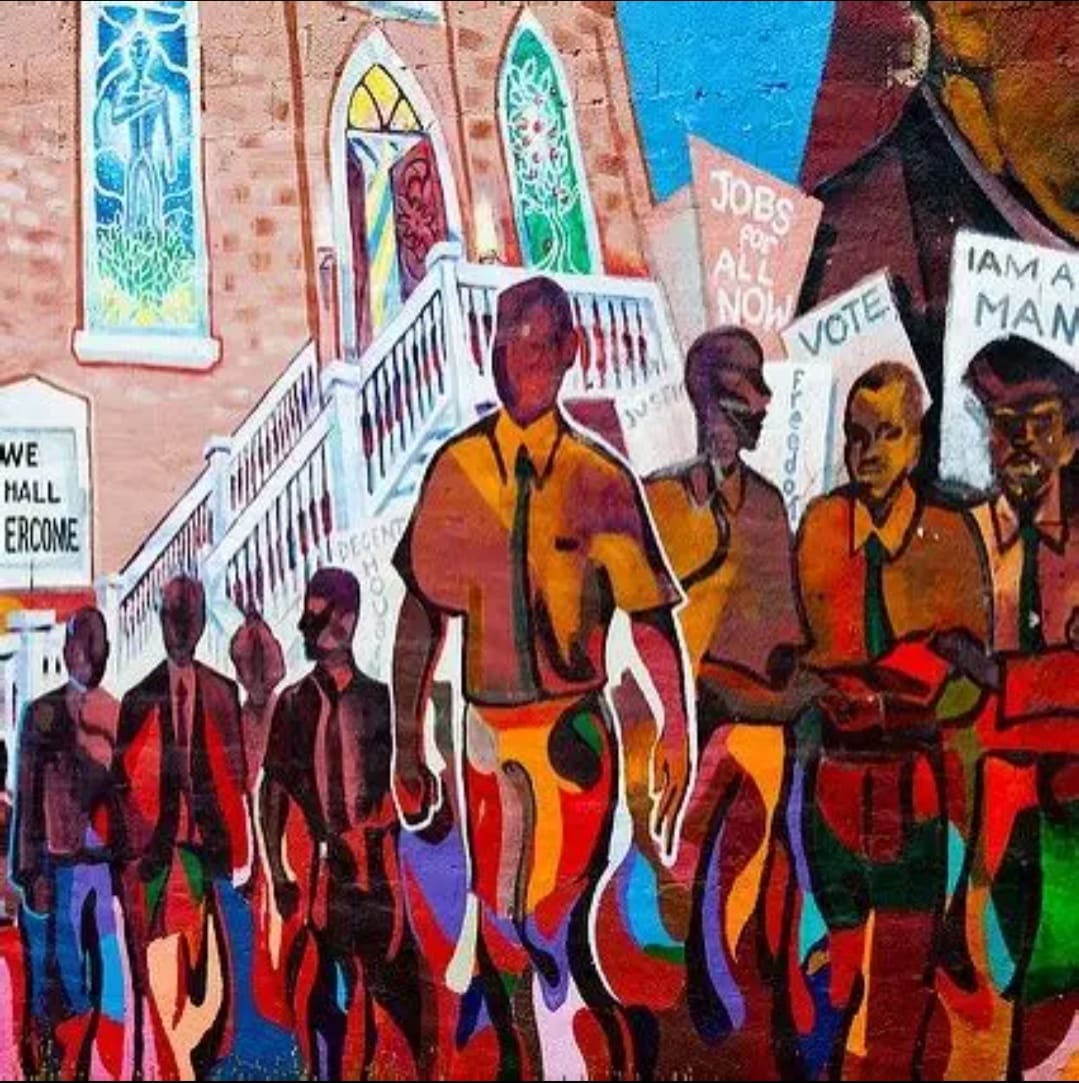
Religion: Africa’s Oldest Weapon of Enslavement and the Forgotten Truth.
By George Omagbemi Sylvester | Published by SaharaWeeklyNG.com
The day Africans stop worshipping their OPPRESSORS’ gods is the day true freedom begins.
Introduction: Chains Broken, But Minds Still Bound.
The history of Africa is incomplete without acknowledging the dual weapons that tore through its body and soul: the physical chains of slavery and the psychological shackles of religion. While the chains of iron rusted and fell off, the chains of the mind (enforced through CHRISTIANITY and ISLAM) remain deeply embedded in the African consciousness. Africans today reject the brutality of slavery, yet cling to the very tools that justified and sustained their oppression.
Religion in Africa, particularly Islam and Christianity, did not arrive as benevolent gifts of spiritual enlightenment. They were imposed, force-fed and institutionalized through violence, coercion and cultural destruction. The Trans-Saharan slave trade spread Islam across North, East and West Africa, while the Transatlantic slave trade embedded Christianity in Central and Southern Africa. Both were instruments of conquest, designed to dismantle African identity, demonize indigenous spirituality and create a submissive, divided people.
The Forgotten Prophets of Africa.
Before the arrival of Arab slave traders and European colonizers, Africa was not without its spiritual compass. The continent was rich with systems of belief rooted in ancestral reverence, herbal medicine, astronomy and moral codes handed down from sages and seers. These men and women were CUSTODIANS of TRUTH; the true prophets and visionaries of Africa.
When the foreign religions came, these prophets were branded as witches, pagans and devil worshippers. They were hunted, imprisoned and executed. Temples of knowledge (the schools of Kemet – ancient Egypt- and Kush) were either destroyed or appropriated. The herbalists who understood the earth’s healing were demonized; the diviners who read the stars were silenced. In their place came the holy books of the slave masters, which demanded blind faith, obedience and loyalty not to the ancestors but to foreign gods.
As the Kenyan scholar John S. Mbiti observed, “Religion was not brought into Africa; it was found in Africa. Africans were religious before the Europeans and Arabs came.” Yet the narrative taught today erases that truth, convincing Africans that their salvation must come from outsiders.
Religion as a Tool of Slavery.
To understand how religion was weaponized, one must confront the history:
Islam and the Trans-Saharan Slave Trade:
From the 7th century onward, Arab traders exported millions of Africans across the Sahara and Indian Ocean. Islam became the cloak under which Africans were told slavery was divinely sanctioned. Quranic justifications were twisted to brand black Africans as “FIT FOR SERVITUDE.” This trade persisted for over 1,000 years; longer than the Atlantic trade.
Christianity and the Transatlantic Slave Trade:
By the 15th century, European powers (Portugal, Spain, Britain, France) embarked on a mass kidnapping campaign that displaced over 12 million Africans. The Bible was the silent whip. Slaveholders cited verses like “Servants, obey your masters” (Ephesians 6:5) to sanctify brutality. Churches were not just silent bystanders; they owned plantations, profited from slavery and baptized captives before shipping them to death across the ocean.
Professor Chinweizu, the Nigerian critic of neo-colonialism, warned: “The white man’s God was never your God. He was invented to enslave you.”
King James and the Bible of Chains.
The King James Bible, often treated as holy scripture in African churches, has its own dark origins. King James I of England was a monarch deeply enmeshed in the politics of empire and colonization. His version of the Bible (1611) was commissioned not as a neutral spiritual text but as a political instrument to unify his kingdom and justify authority.
King James granted the Royal African Company its charter, enabling English merchants to dominate the Atlantic slave trade. This made him not only a ruler but a slave trader. As historian Edward Rugemer notes, the Bible under King James was deployed to discipline slaves, teaching them that obedience was a Christian duty. Africans who glorify this text without scrutiny fail to see the blood-soaked ink in its pages.
Jesus: The White Man’s Idol or the Black Messiah?
Perhaps the deepest deception lies in the image of Jesus. The “white boy with blue eyes” worshipped in Africa today was the creation of European Renaissance art, modeled on Cesare Borgia, the son of Pope Alexander VI. This image became propaganda, replacing the historical Jesus; a dark-skinned, woolly-haired man from the line of David.
The Book of Revelation 1:14-15 describes him plainly: “His head and his hairs were white like wool, as white as snow; and his feet like unto fine brass, as if they burned in a furnace.” This is not the image of a pale European, but of a Black man.
As Marcus Garvey thundered: “We Negroes believe in the God of Ethiopia, the everlasting God. God the Son, God the Holy Ghost, the one God of all ages. That is the God in whom we believe, but we shall worship Him through the spectacles of Ethiopia.”
The Book Jesus Spoke About.
When Jesus asked his disciples, “Have you not read? Is it not written?” he was referring not to the King James Bible, which did not exist, but to the ANCIENT SCROLLS of the TORAH, the PSALMS, and PROPHETIC WRITINGS. Africans must ask themselves: why are we handed a colonial compilation of texts while our own sacred writings (the PAPYRUS SCROLLS of KEMET, the ORAL TRADITIONS of IFA, the HIEROGLYPHIC WISDOM of NUBIA) are discarded as “pagan”?
Dr. Yosef Ben-Jochannan, the eminent Egyptologist, said: “The Bible is a rewritten book of African spiritual writings. What was stolen in Kemet became holy in Europe.”
The Psychological War: Why Africans Still Cling to Religion.
If religion was a weapon, why then do Africans still cling to it? The answer lies in psychology. After centuries of enslavement, colonial education and missionary indoctrination, religion became synonymous with morality, civilization and hope. To reject it feels like rejecting identity itself.
This is the illusion. As Ngũgĩ wa Thiong’o warns in Decolonising the Mind: “The most important area of domination is the mental universe of the colonized.” The colonizers may have left physically, but they left behind a spiritual operating system designed to keep Africa submissive.
The Call for African Awakening.
True liberation for Africa begins not in politics or economics, but in spirituality. Until Africans restore respect for their ancestral wisdom, the continent will remain trapped in foreign systems of thought. The task is not to erase faith but to redefine it, to honor the AFRICAN PROPHETS, HERBALISTS and SAGES who were silenced and to reclaim the spiritual traditions demonized by slave masters.
As Cheikh Anta Diop, the Senegalese historian, put it: “The African who loses his culture loses himself.”
Africa’s Last Awakening: Breaking the Final Chain.
The chains of slavery were visible; the chains of religion are invisible; but both are real. Africa cannot rise while bowing to the idols of its oppressors. To pray to the image of a white Christ while rejecting the wisdom of our ancestors is to spit on their struggle.
The day Africans wake up and realize that their dignity lies not in imported religions but in the reclamation of their own divine heritage, that day the continent will stand tall again.
The final battle is not fought with guns or protests, but with the awakening of the African mind.





Tinubu Abroad, Nigeria in Chaos: The Spectacle of Elite Excess
By George Omagbemi Sylvester
“Government officials queue to bid him farewell as he departs, only to rush ahead and line up again to welcome him at his destination; a stark display of misaligned priorities in Nigerian leadership.”
Wednesday, March18, 2026
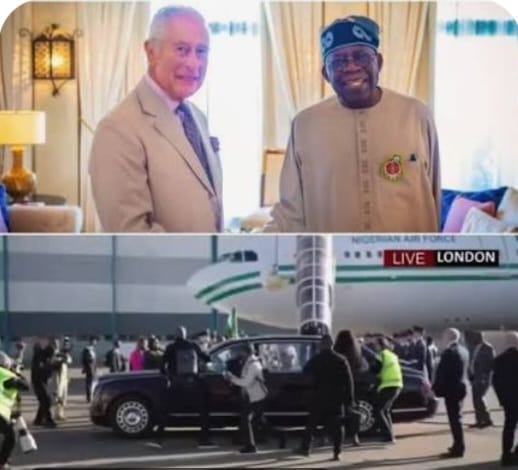
In a spectacle that has plunged Nigeria’s political class into fresh ignominy, a long line of federal ministers, governors, senators and political hangers‑on queued outside a London hotel this week to welcome President Bola Ahmed Tinubu, GCFR upon his arrival in the United Kingdom for a two‑day state visit.
Not only did these government officials send off Mr. Tinubu as he departed Nigeria (a ritual in itself excessive given the scale of pressing national crises) they rushed ahead to London to line the halls of his hotel, applauding and greeting him like conquering heroes arriving on foreign shores. This is how Nigeria’s elites now comport themselves while millions of citizens endure ever‑deepening hardship.
A Travesty of Priorities
Tinubu’s visit to the UK, hosted by King Charles III and Queen Camilla, is officially billed as an effort to deepen trade relations, attract investment and strengthen bilateral cooperation between Britain and Africa’s most populous nation. While those diplomatic objectives in theory could benefit Nigeria, the optics of an entire political class fawning over a president abroad are unbearably grim against the backdrop of domestic suffering.
According to recent economic analysis, despite macroeconomic adjustments such as ending fuel subsidies and floating the naira, more than 60% of Nigerians still live in poverty and daily hardships are rampant. Security remains a grave concern with violence and banditry destabilising large swathes of the country. Instead of addressing these crises with urgency, Nigeria’s leadership appears fascinated with photo‑ops overseas.
“A System of Self‑Centred Elites”
Critics within Nigeria have not minced words. Political observers describe the spectacle as a display of self‑centred politics divorced from the realities facing ordinary citizens. One observer on social platforms summed up the broader sentiment: “Tinubu represents a system of self‑centred elites (elite consensus over popular will) and this is exactly the performative politics that lines like these embody.”
Dr. Godfrey Mwakikagile, a respected African scholar on post‑colonial governance, has long warned that bad leadership and lack of accountability are Africa’s greatest challenges. “Power in many African states is too centralised and concentrated in the hands of elites who use it to perpetuate themselves at the expense of the public good,” Mwakikagile recently argued; a critique that resonates all the more when ministers fly abroad not to pursue tangible policy but to line up like admirers.
The Cost of Foreign Pageantry
This isn’t the first time Tinubu’s foreign engagements have attracted scrutiny. His administration’s frequent travels (often with large entourages) have drawn criticism for prioritising optics over outcomes, especially when Nigeria’s economy contracts and its people struggle with food inflation and insecurity.
Former presidential candidate Peter Obi has been among the most vocal domestic critics of these priorities, noting that Tinubu’s extensive foreign travel (including to the UK) distracts from urgent national needs and has become a “matter of grave concern.” Obi insists that such actions reveal a leadership more interested in global visibility than domestic wellbeing.
Nigeria Jagajaga!
The phrase “Nigeria jagajaga” (loosely translated as Nigeria being in disarray) has never felt more apt. A nation where ministers greet presidents in plush foreign suites while citizens queue for food and services is a country deeply out of balance.
Instead of being welcomed like dignitaries abroad, ministers and governors should be at home addressing the root causes of Nigeria’s struggles: insecurity that displaces communities and kills livelihoods, an economy that leaves the majority impoverished despite reforms, and the persistent failings of governance that erode public trust.
What Nigerians Deserve
President Tinubu and his entourage should be judged not by the number of ministers who lined up to greet him in London, but by the lives changed back in Nigeria.
As scholars like Mwakikagile and critics like Obi remind us, political leadership must be accountable and grounded in service, not spectacle. Nigeria’s leaders owe the people more than applause at international hotels; they owe them safety, economic opportunity, and genuine progress.
If this nation is ever to break free from the cycle of “jagajaga,” then those in power must demonstrate sincerity, not pageantry; action, not admiration. The lines outside a London hotel are not a testament to leadership; they are a testament to where Nigeria’s priorities have tragically come to rest.


GENERAL BULAMA BIU MOURNS VICTIMS OF BORNO ATTACKS, CALLS FOR UNITY AND VIGILANCE**
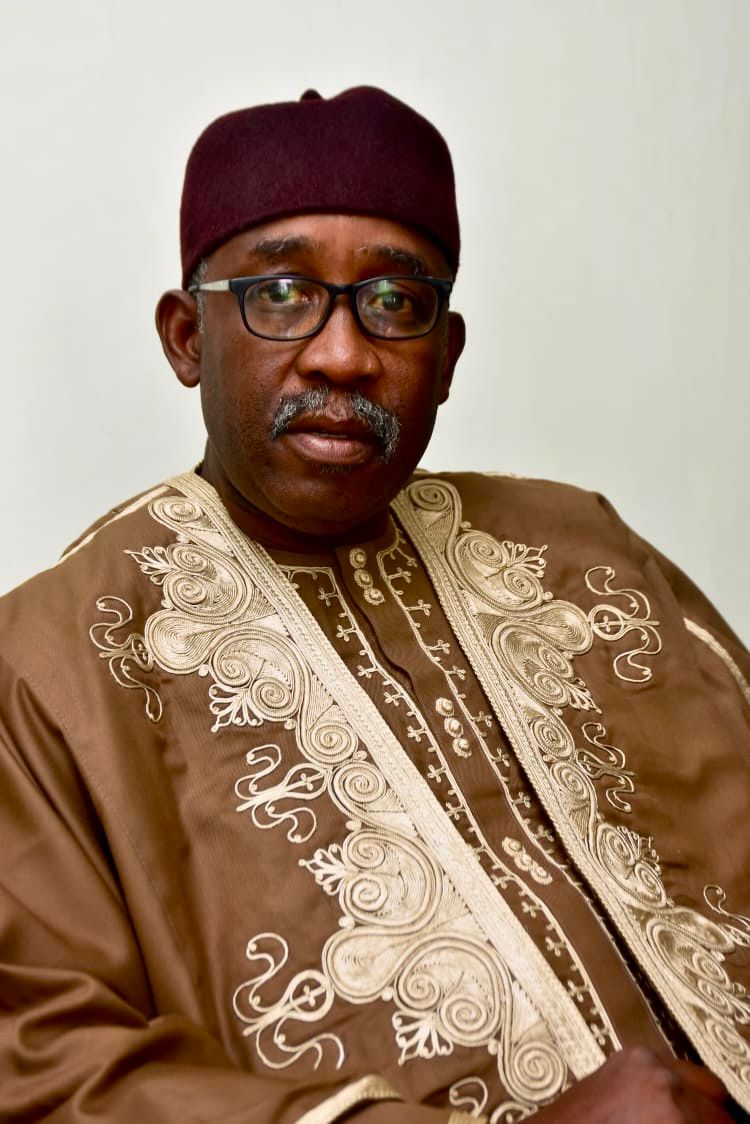
In a solemn and heartfelt message, Major General Abdulmalik Bulama Biu (Rtd), mni, the Sarkin Yakin Biu, has expressed profound grief over the recent tragic incidents of bomb explosions in Maiduguri and renewed violent attacks in several communities across Borno State.
This was contained in a statement he personally signed and made available to the press.
The retired senior military officer described the assaults which affected areas including Ngoshe, Mandiragirau, Ajiri, and Buratai as “cruel and most barbaric,” particularly as they occurred during a period of deep religious observance for many residents. General Biu extended his condolences to His Excellency, Professor Babagana Umara Zulum, the Executive Governor of Borno State, the people of the state, and especially the immediate families of the victims.
“These unfortunate attacks have painfully led to the loss of innocent lives and destruction of properties, a painful reminder of the challenges we continue to face as a people,” he stated.
General Biu prayed that Almighty Allah grants the deceased eternal rest (Jannatul Firdaus) and grants the injured a speedy recovery. He also commended the bravery and swift response of security agencies and emergency responders, acknowledging their tireless efforts to protect lives and restore peace in the state.
Addressing the resilient people of Borno, including elders, community leaders, associations, and the vibrant youth, General Biu urged steadfastness, unity, and increased vigilance. “Let us once again rejig our commitment and ensure we overcome this development. We have done it in time past, we can still do it now together,” he emphasized.
He further called on citizens not to allow “these cowardly acts to break our spirit or weaken our collective resolve to achieve lasting peace and stability.”
In strong terms, General Biu declared his solidarity with Governor Zulum, the state government, stakeholders, and all well-meaning citizens in condemning the attacks. He concluded his message with a prayer: “May Allah (SWT) bring lasting peace to Borno State and the entire nation.”
Temitope Adewale: Heralding New Era of Infrastructure Development in Ifako-Ijaiye
Residents of Ifako-Ijaiye Local Government Area are witnessing a new phase of infrastructural transformation as key transportation projects begin to reshape mobility and economic activity within the constituency. At the heart of this development is the ongoing rehabilitation and resurfacing of Iju Road, alongside the introduction of the Quality Bus Corridor (QBC) along the Iju–Agege-Abule-Egba transport route.
The projects represent a strategic step toward improving road infrastructure, strengthening public transport systems, and enhancing connectivity across several communities within the local government area; this is a total shift from the norm previously known.
For decades, Iju Road has served as one of the most important road networks connecting Iju-Ishaga, Abule-Egba, Agege, Agbado and adjoining communities leading to neighbouring Ogun State. The road plays a crucial role in the daily movement of residents, goods, commercial operators, and commuters traveling to other parts of Lagos.
However, years of heavy usage and increasing population growth placed significant pressure on the road infrastructure, making rehabilitation necessary. The ongoing project focuses on total resurfacing of the entire stretch of the road, strengthening its structure, and improving drainage to ensure long-term durability.
Beyond restoring the road surface, the rehabilitation effort is expected to significantly improve traffic flow, reduce travel time, and enhance the overall commuting experience for thousands of residents who depend on the route daily.
In addition to the road project is the introduction of the Quality Bus Corridor initiative along the Iju–Abule-Egba axis. The project forms part of Lagos State’s broader effort to modernise urban transportation and improve the efficiency of public transit across the state.
The QBC model is designed to enhance bus operations along major transport routes by upgrading road infrastructure, improving traffic management systems, and providing better facilities for commuters.
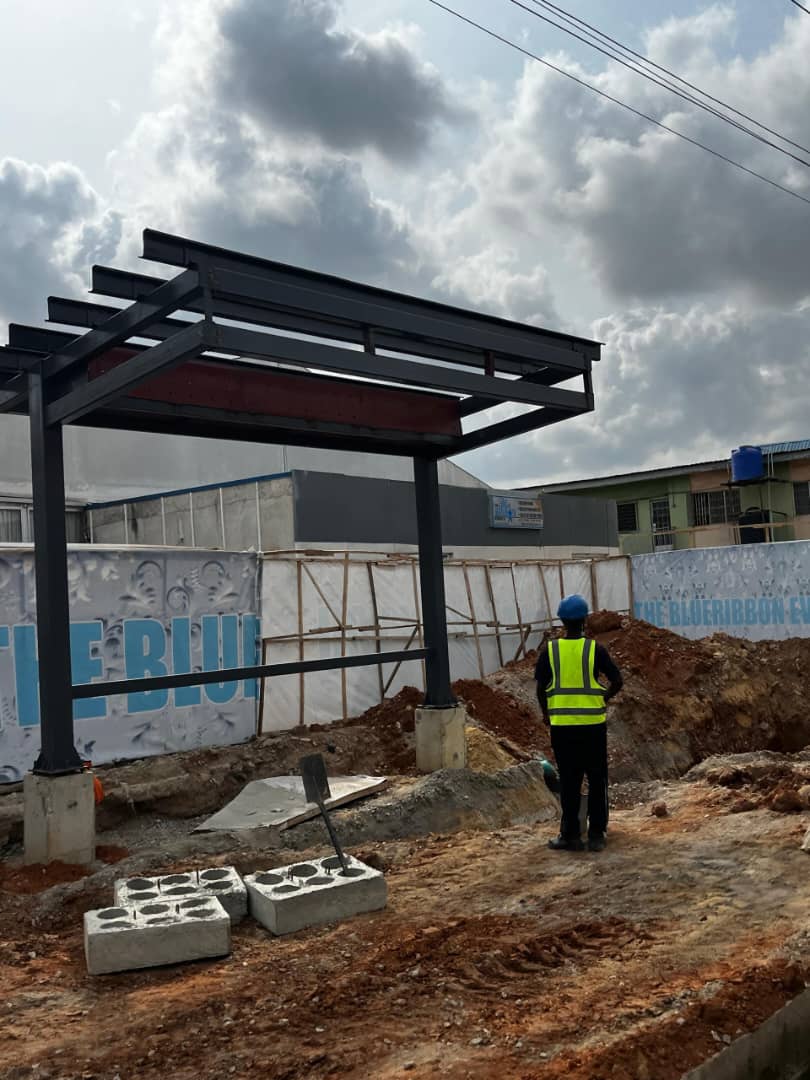
Under the initiative, several improvements are expected along the corridor, including upgraded bus stops which are already underway, improved pedestrian walkways, traffic signal optimisation, and enhanced safety measures for road users.
These upgrades are aimed at making bus transportation faster, more reliable, and more comfortable for commuters while also reducing congestion along one of the busiest corridors in the area.
The Iju–Abule-Egba corridor serves as a major transportation link for communities across Ifako-Ijaiye and neighbouring areas. With the introduction of the QBC system and the rehabilitation of Iju Road, residents are expected to benefit from improved connectivity and more efficient access to key commercial and residential districts.
Improved road infrastructure also plays an important role in facilitating economic activities, as easier transportation enables smoother movement of goods and services across communities.
For traders, transport operators, and small business owners, better road conditions translate into reduced vehicle maintenance costs, shorter travel times, and improved productivity which is the desire of all citizens. This project will surely reduce costs of energy spent on travel time, improve lifespan through less traffic, reduce carbon emission and help achieve better health for all.
The ongoing infrastructural improvements in Ifako-Ijaiye have become a reality through the legislative advocacy and productive engagement with relevant government agencies by Hon. Adewale Temitope Adedeji, OON, member representing Ifako-Ijaiye Constituency I in the Lagos State House of Assembly, Hon. Temitope Adewale, who is also the Chairman,House Committee on Transportation has been instrumental in facilitating groundbreaking infrastructural projects to Ifako-Ijaiye Constituency 01, all in bid to improve the social outlook and transform the economic landscape of the area.
Through continuous engagement with government authorities and stakeholders, the projects have gained the support required to address longstanding transportation challenges affecting different parts of the constituency, giving residents the joy for free movements at will.
His advocacy has contributed to ensuring that Ifako-Ijaiye remains part of the broader infrastructure development agenda aimed at transforming Lagos into a modern and well-connected megacity.
Infrastructure development remains a key driver of urban growth, and the ongoing projects within Ifako-Ijaiye reflect a broader commitment to building resilient and efficient transport systems across Lagos State.
By combining road rehabilitation with modern public transport initiatives such as the Quality Bus Corridor, the state government is laying the groundwork for a more sustainable and integrated transportation network.
For residents of Ifako-Ijaiye, the transformation of Iju Road and the introduction of the QBC initiative represent more than just road construction—they signal progress toward improved mobility, stronger local economies, and a better quality of life.
As work continues along the corridor, many residents remain optimistic that these infrastructural improvements will usher in a new era of development for the local government area.


-

 news3 months ago
WHO REALLY OWNS MONIEPOINT? The $290 Million Deal That Sold Nigeria’s Top Fintech to Foreign Interests
-

 society6 months ago
“You Are Never Without Help” – Pastor Gebhardt Berndt Inspires Hope Through Empower Church (Video)
-

 society7 months ago
Who is Chief Kestin Pondi? Niger Delta’s “People’s Chief” Winning Hearts With Hundreds of Millions in Generosity
-

 celebrity radar - gossips2 months ago
Dr. Chris Okafor Returns with Power and Fire of the Spirit -Mounts Grace Nation Altar with Fresh Anointing and Restoration Grace on February 1, 2026