
society
Nigeria @ 65: “We Are Not Better, Our Independence Is Like A Bondage” – Primate Ayodele


Nigeria @ 65: “We Are Not Better, Our Independence Is Like A Bondage” – Primate Ayodele
The Leader of INRI Evangelical Spiritual Church, Primate Elijah Ayodele, has expressed dissatisfaction with the state of Nigeria’s independence, describing it as another means of bondage.
In a statement signed by his media aide, Osho Oluwatosin, Primate Ayodele stated that the country has not become better and that people who fought for the nation’s independence have not been fully appreciated.
He stated that there are several differences in the country on different grounds, most especially politically, which have not allowed Nigeria to experience what it means to be independent
“At 65, we are still not better; those who fought recklessly for our independence have not been fully appreciated. They need to be appreciated by Nigeria getting united, but as it stands, we are not yet fully independent because of our several differences as a nation, especially politically. “
“Our independence is bondage for us; we are in a serious situation where there is no rest of mind and peace, for how long do we continue to pass through all of these?”
He frowned at people ruling the country the way they want it, which includes not appreciating those who worked tirelessly for where the country is at the moment.
“It’s unfortunate that the country is being run just the way people want; leaders are not appreciated, and people who have worked tirelessly have not been allowed to gain ground.”
Furthermore, he advised Nigerian leaders to work on five major things for the nation to experience what it means to be independent. He noted that the nation is sitting on a time bomb due to the issues in the country involving citizens.
“These are the five things we need to work on as we clock 65 we need to work insecurity, increase in production, utilisation of our mineral resources, agriculture and true federalism. It would be a fantastic independence.
“A lot of people are praying for separation; they have seen the government as without direction, there is tribal war, and I doubt if we are improving because we are not committed. Nigeria is in a very difficult independence moment, and we are sitting on a time bomb.”







UNITED KINGDOM OF ATLANTIS ANNOUNCES HISTORIC SUCCESS:
Premiere of ATC Digital Currency Exchange System Test, Highlighting “Gold Standard” for Humanitarian Purposes*
The Attica Empire, under the distinguished leadership of Empress Nobilisa Prof Sriwan kingjun, Empress of Attica Empire, successfully conducted a groundbreaking premiere test of its ATC (Attica Coin) digital currency exchange system. The event brought together high-ranking leaders and representatives from various nations to witness a spectacular celebration of financial innovation.
### Key Highlights of the ATC Digital Currency Exchange System Test
– The test demonstrated the efficiency and robustness of the ATC digital financial infrastructure, marking a significant milestone for Atlantis United Kingdom.
– Participants who completed the Know Your Customer (KYC) process in accordance with international standards were able to fully exchange ATC coins, thereby strengthening global confidence among currency holders.
– The ATC digital currency is positioned as the world’s first digital asset anchored to the *“Gold Standard”*, with its value guaranteed and validated through gold under certification by the International Court of Justice.
– The primary mission of the ATC currency is to fund humanitarian projects and drive macro-level social development, aligning with the empire’s vision of sustainable global impact.
### Event Atmosphere & Leadership Vision
The premiere was attended by thousands of guests who celebrated in an atmosphere of friendship, featuring:
– A concert performed by leading musical bands.
– A lavish reception of food and drink showcasing the empire’s prosperity and readiness.
– *Emperor Solomon Winning*, ruler of the United Kingdom of Atlantis and a thought leader in future-oriented projects, was celebrated as the transformative force reshaping traditional finance into a future-oriented model.
– Emperor Winning emphasized that the ATC system inaugurates a new, sustainable, and humanitarian economic framework.
*Quotes from Leadership*
_”The ATC digital currency is not just a financial innovation; it is a beacon of hope for global humanitarian efforts. We are committed to leveraging this technology to uplift communities and foster sustainable development.”_
— *Empress Nobilisa Sriwan Kingjun*
_”With the ATC Gold Standard, we are setting a new paradigm in digital finance—one that prioritizes transparency, accountability, and the greater good.”_
— *Emperor Solomon Winning*
Attica Empire is the pioneering force behind the digital economy of the United Kingdom of Atlantis. It focuses on developing secure, asset-backed FinTech solutions to support global usage and worldwide humanitarian efforts.
The ATC Digitalcurrency (Attica Coin) is a gold-backed digital asset designed to:
1. Provide a transparent and efficient medium of exchange.
2. Fund humanitarian initiatives and social development programs.
3. Set a new benchmark for asset-backed cryptocurrencies worldwide.
The Attica Empire remains committed to advancing innovative financial systems that empower global humanitarian projects and foster sustainable economic growth. The success of the ATC digital currency exchange system test paves the way for broader adoption and integration into global financial ecosystems.
### Upcoming Initiatives
– *Global Roadshow:* Attica Empire will embark on a worldwide tour to introduce the ATC digital currency to key financial hubs and international organizations.
– *Humanitarian Partnerships:* Collaborations with NGOs and global institutions to channel ATC funds into pressing social development projects.
– *Technological Advancements:* Continuous enhancement of the ATC platform to ensure scalability, security, and user-centric features.
The Attica Empire invites global stakeholders to join this transformative journey toward a more equitable and sustainable financial future.

Life Patron Gen. Buratai Congratulates Newly Elected Lady Captain of TYBGRCC
ABUJA – The Tukur Yusufu Buratai Golf Resort and Country Club (TYBGRCC) has ushered in a new era of leadership with the election of Ms. Jumai Hajara Adamu as its Lady Captain.
The club’s Life Patron, Lt Gen Tukur Yusufu Buratai (Rtd) CFR, former Chief of Army Staff, has extended his warm congratulations and full endorsement. “As the Life Patron, I am immensely proud to see a leader of your calibre step forward,” he stated. “Please be assured of my full and unwavering support throughout your tenure. I have every confidence that your leadership will be marked by significant achievements.”
The election, conducted by the club’s Board of Trustees and membership, highlights a unanimous confidence in Ms. Adamu’s vision and dedication to the sport and the club’s community.
In her acceptance address, the newly elected Lady Captain outlined a forward-looking agenda anchored on three key pillars: Unity, Development, and Inclusiveness. “I believe that golf is not just a sport but a powerful platform for friendship, discipline, mentorship, and community,” she stated, pledging to strengthen member bonds, encourage greater participation among ladies and youth, and enhance the club’s facilities.
Ms. Jumai Hajara Adamu, a respected member known for her active participation and organizational acumen, succeeds a line of distinguished past Lady Captains. She has pledged to build upon their legacy with transparency, teamwork, and accountability, ensuring every member feels heard and represented.
This appointment is seen as a significant step for the TYBGRCC, reinforcing its commitment to excellence, growth, and fostering a vibrant sporting community in the heart of the nation’s capital. The club anticipates a dynamic and prosperous term under her guidance.
About Tukur Yusufu Buratai Golf Resort and Country Club (TYBGRCC):
Located in Abuja, TYBGRCC is a premier golfing destination dedicated to promoting the sport of golf, fostering camaraderie, and encouraging a healthy lifestyle among its members and guests. It stands as a testament to world-class sporting and recreational facilities.
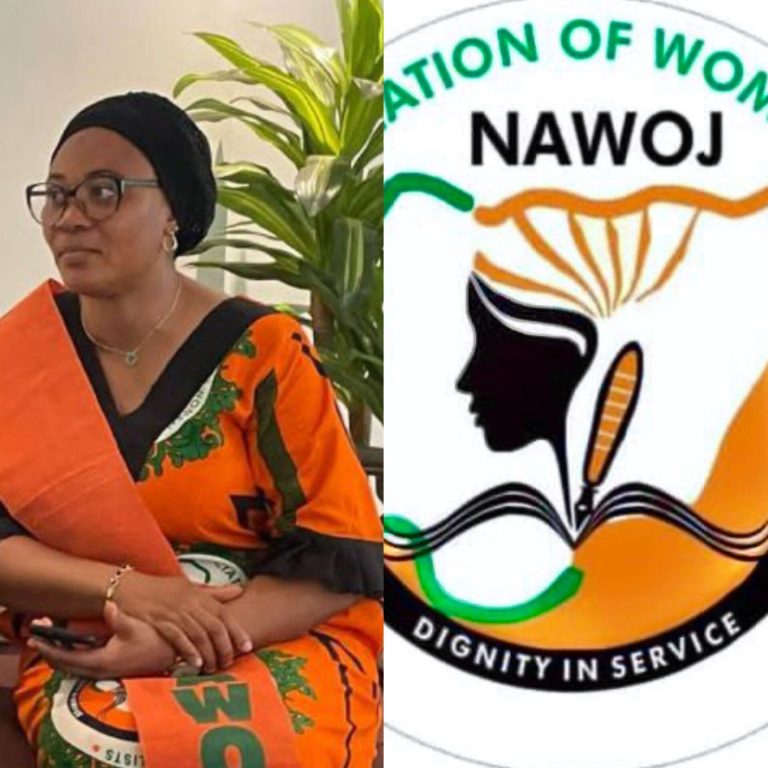
NAWOJ: SEKINAT, CHARITY GETS VOTE OF CONFIDENCE
The Nigeria Association of Women Journalists,(NAWOJ), Ogun State Chapter Executives has unanimously passed a vote of confidence on Chairman NAWOJ SEKINAT Salam and the Financial Secretary, Charity James, saying that, their leadership reflect the ideal and objectives of NAWOJ.
This was revealed in a communique issued at an Emergency meeting of the Executive held at the NUJ State Council, Iwe-Iroyin in Abeokuta.
The vote of confidence on the Leadership of NAWOJ was unanimously signed by all the five executive members that attended the meeting with the vice chairperson taking apology for official engagement outside the state capital.
According to the communique ” Consequently, NAWOJ Ogun State Chapter, reaffirms it’s unwavering support and confidence in the Chairperson and the Financial Secretary, Sekinat Salam and Charity James respectively, Urge them to continue in their commitment to purposeful leadership in the best interest of the association and the society at large”.
Speaking briefly with Journalists after the emergency Executive meeting, the Chairperson, Nigeria Association of Woman Journalists (NAWOJ), Com. Sekinat Salam, said the meeting was necessary as the news of her suspension was laughable and insulting because it is like a pot calling a kettle black in this case, saying that the Leadership of the State Council, Com. Wale Olanrewaju has no local standing to suspend her or any executive member, even he cannot be a judge in his own case.
According to her” The Leadership of the Nigeria Union of Journalists, Ogun State led by Wale Olanrewaju has always been misusing power without recourse to the constitution of this noble Union, hence has no local standing to suspend me or any executive member “.
She said only the Central Working Committee (CWC) has the constitutional rights to sanction or suspend any members found wanting after due process has been followed.
While calling on members to stay calm, Com. Sekinat Salam assured members of positive representation of NAWOJ at both the State and National level, adding the success recorded under her administration cannot be overemphasized.
She therefore called on the National leadership of NUJ to critically look into the matter, either by setting up independent committee to investigate the issues and resolve the matter as quickly as possible.


-

 celebrity radar - gossips6 months ago
Why Babangida’s Hilltop Home Became Nigeria’s Political “Mecca”
-

 society6 months ago
Power is a Loan, Not a Possession: The Sacred Duty of Planting People
-

 Business6 months ago
Batsumi Travel CEO Lisa Sebogodi Wins Prestigious Africa Travel 100 Women Award
-

 news6 months ago
THE APPOINTMENT OF WASIU AYINDE BY THE FEDERAL GOVERNMENT AS AN AMBASSADOR SOUNDS EMBARRASSING