
society
Corruption’s Cost: How Nigeria’s Low CPI Score Is Eating the Country Alive


Corruption’s Cost: How Nigeria’s Low CPI Score Is Eating the Country Alive.
By George Omagbemi Sylvester | SaharaWeeklyNG.com
“Score 26. Rank 140. The theft of trust that steals development.”
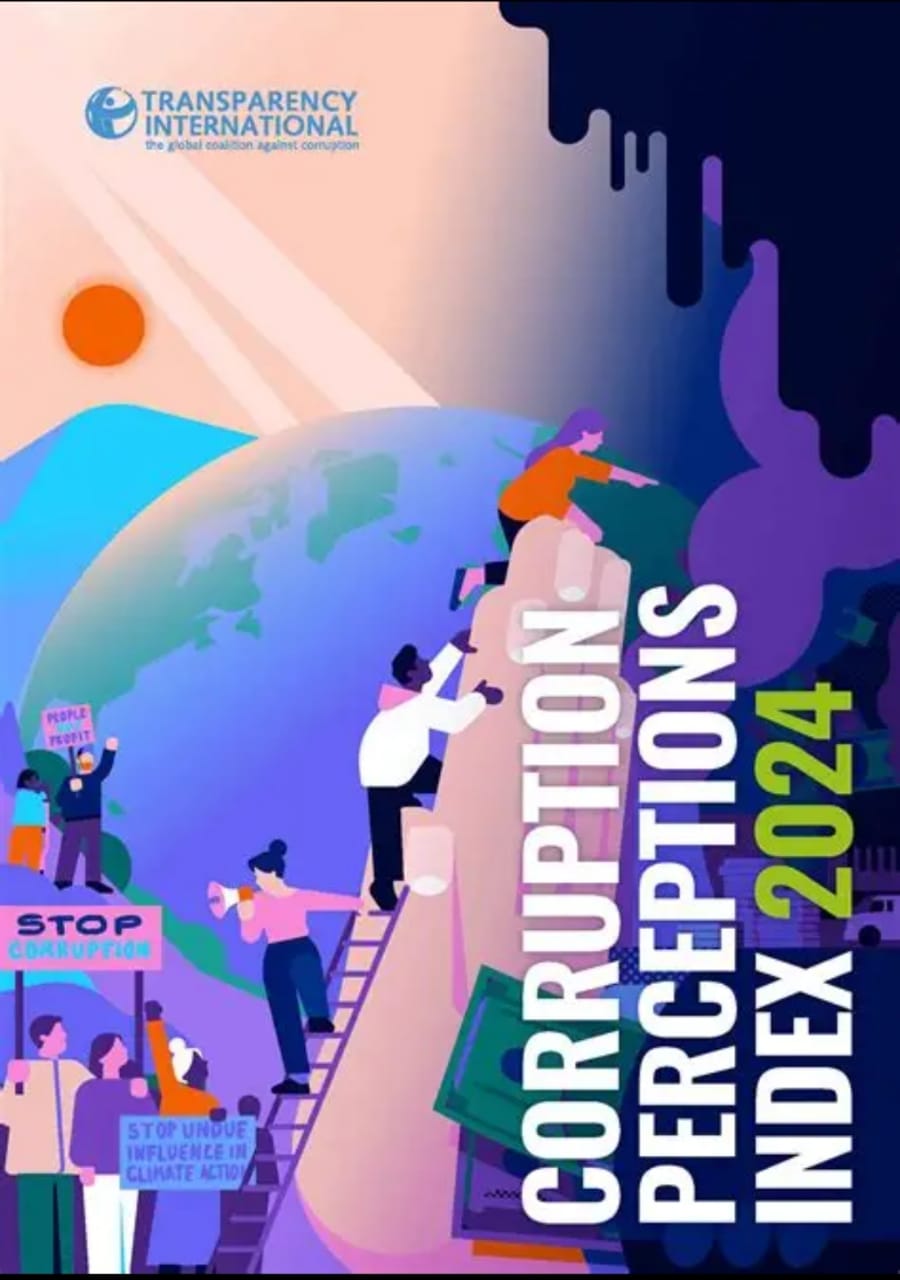
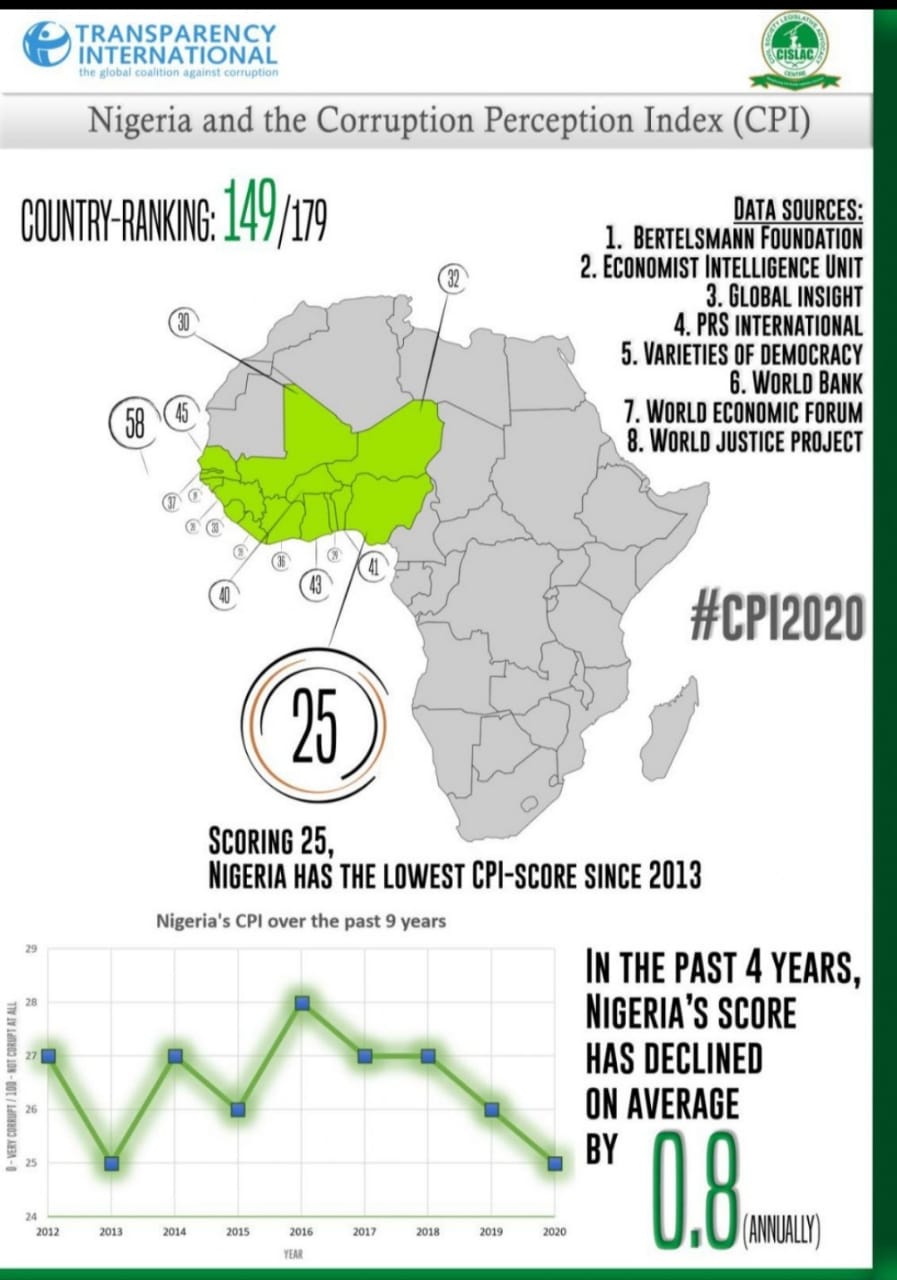
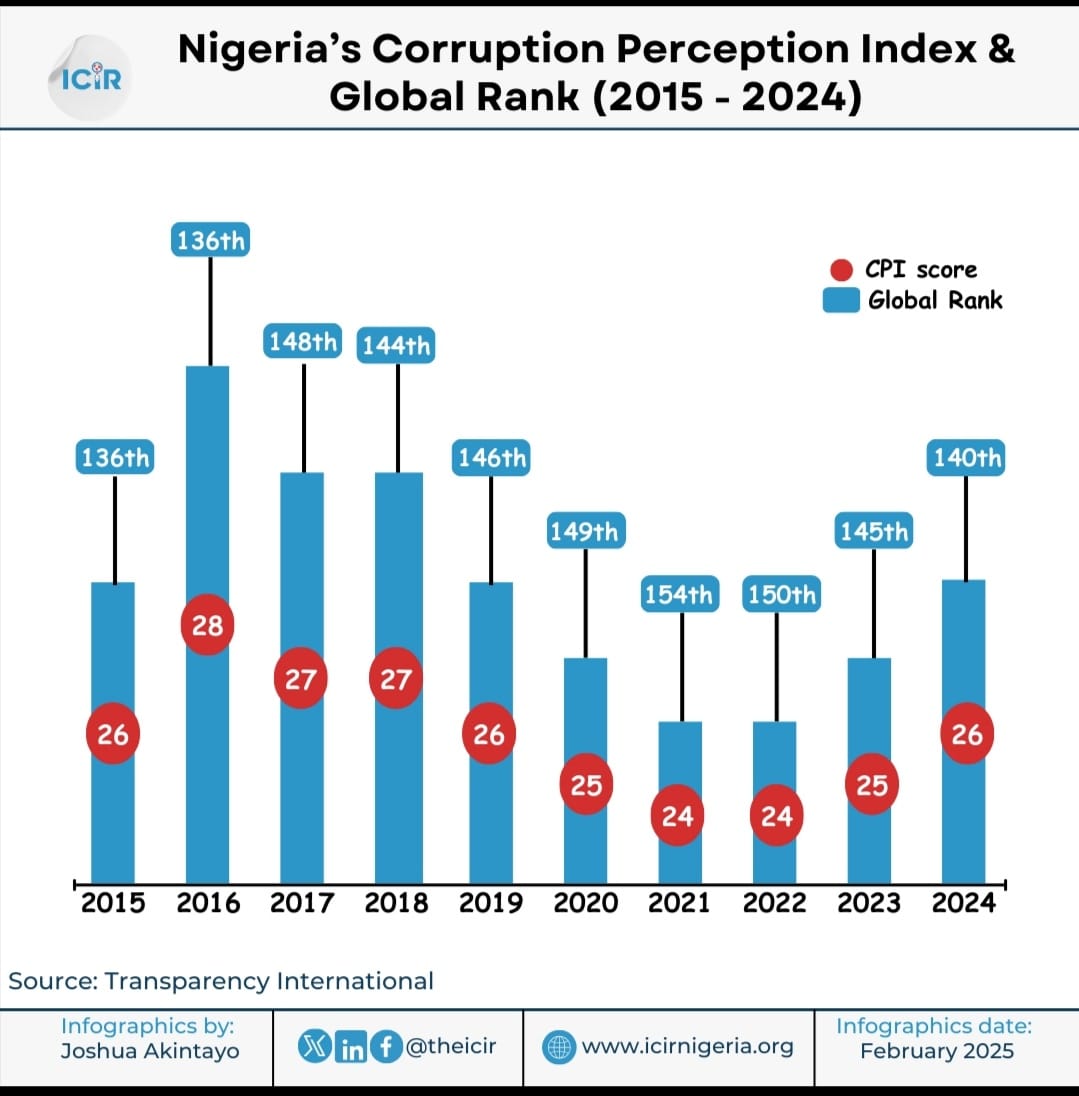
Nigeria’s corruption problem is no longer a bureaucratic scandal confined to courtrooms and press headlines but a national emergency undermining development, cleaving public trust and cavitating the very institutions meant to deliver health, education and climate resilience. Transparency International’s 2024. Corruption Perceptions Index (CPI) places Nigeria squarely among the world’s most challenged countries on corruption, a score of 26 and a global rank of 140 out of 180. Those numbers are not abstract; they are the mirror of policy failure and moral collapse.
The CPI’s global findings are stark, more than two-thirds of countries scored below 50 on a 0 (100 scale and the global average has stagnated at 43) a signal that the world’s anti-corruption effort is stalling at a perilous moment. Transparency International warns that corruption is now playing a “DEVASTATING ROLE” in the climate crisis and in eroding democratic accountability. This means stolen climate funds, hollowed-out public procurement and projects that never reach the people they were meant to protect.
What Nigeria’s CPI Score Really Means.
A score of 26 is not a statistical quirk, it is a diagnosis. It signals pervasive bribery, opaque contracts, weak oversight, politicized law enforcement and a public sector that too often functions for insiders rather than citizens. Corruption imposes costs that compound over time, foreign investors hesitate, domestic entrepreneurs pay bribes instead of hiring staff and poor communities watch roads and clinics rot while funds evaporate. Transparency International’s regional analysis shows Sub-Saharan Africa registering the lowest regional average, a sobering context for Nigeria’s slide.
While anti-graft agencies trumpet recoveries (Nigeria’s EFCC reported nearly $500 million recovered in the past year and thousands of convictions) these victories are tactical, not structural. Recoveries matter, but they do not substitute for transparent contracting systems, public asset registries and the political will to prosecute high-level abuse without selectivity. In other words, seizures do not equal reform.
The Human Toll: Corruption as a Development Kill-Switch.
Corruption is not a victimless crime. It steals from schools, hospitals and climate adaptation projects; it starves farmers of extension services and traps pensioners in unpaid entitlements. Transparency International’s CPI highlights a chilling linkage, countries most vulnerable to climate shocks often have the lowest CPI scores, which means climate funds and adaptation projects are especially at risk of diversion or mismanagement. This translates into lost crops, drowned communities and diminished resilience. When public contracts are awarded to cronies instead of competent providers, project costs balloon and quality collapses.
When licences and permits are sold rather than vetted, environmental and safety standards are ignored. The net result is a country whose public infrastructure (roads, power plants, water systems) is both underbuilt and overcharged.
Institutional Failure, Not Cultural Fate.
To be clear, CORRUPTION in Nigeria is not an inevitability or a CULTURAL TRUISM. It is the predictable outcome of weak institutions, perverse incentives and political tolerance for impunity. Countries that have broken the cycle did so by hardening institutions, independent judiciaries, transparent procurement platforms, beneficial ownership registries, open budget processes and empowered civil society and media. The CPI points to winners and losers, it is a map of policy choices not fate.
Nor is the remedy purely technocratic. It requires political courage. Leaders must stop treating anti-corruption as episodic theatre and start treating it as governance infrastructure. That means firing complicit officials, protecting whistleblowers and backing the rule of law even when it bites powerful interests.
What Must Be Done: A Roadmap for Real Reform.
Public procurement transparency, now. Every major contract (from road works to energy deals) should be published in machine-readable form with project milestones, beneficiaries and independent audits. Open contracting reduces discretion and makes corruption harder to hide.
Beneficial-ownership registries. Companies that win public contracts must reveal real owners. Shell companies and anonymous partners are corruption accelerants; removing their cover is non-negotiable.
Digitize revenues and payments. E-payments, digital tax collection and biometric cash transfers reduce leakages and create audit trails that are difficult for middlemen to manipulate.
Protect and fund anti-corruption institutions. Agencies that investigate and prosecute must be independent, well-resourced and insulated from political interference. Recoveries are hollow if investigations stop short of nets for the powerful.
Empower watchdogs. An independent press, active civil society and access to information laws turn sunlight into accountability. Citizens must be able to demand answers and see project outcomes.
Link climate finance to anti-corruption safeguards. Given Transparency International’s warning that climate finance is vulnerable, every adaptation and mitigation fund must incorporate anti-fraud safeguards, community oversight and transparent disbursement.
Voices That Matter.
Transparency International’s leadership left no ambiguity; François Valérian, Chair, warned that corruption “is a key cause of declining democracy, instability and human rights violations,” while Maíra Martini, CEO, urged urgent action to safeguard climate finance and rebuild trust. Their message is unambiguous and corruption is not a side issue, but a strategic threat to national survival.
Globally respected development economists echo the diagnosis: inclusive, accountable institutions are a prerequisite for sustainable growth. And from within Nigeria, citizens know the score, they see their taxes vanish, their courts stall and their future mortgaged to cronies.
The Takeaway.
Corruption is not an economic footnote; it is an ASSAULT on the social contract. Transparency International’s CPI 2024 is a blistering wake-up call, Nigeria’s score of 26 ought to be intolerable to every citizen and a political emergency to every leader. The country cannot borrow its way out of rotten governance; nor can it tinker at the margins while elites privatize public goods.
Reform is hard. It will be resisted by those who PROFIT from OPACITY. Though the alternative (continued decay of institutions, stolen climate funds, faltering public services and a citizenry losing faith in the state) is worse. Nigeria needs structural change, transparency baked into procurement, ownership revealed, institutions empowered and civic oversight strengthened.
As this CPI makes plain, the cost of inaction is not measured only in lost naira; it is measured in failed hospitals, empty classrooms, drowned farmlands and the slow erosion of democratic rule. That is a price Nigeria can no longer afford.







Ajadi, Peter Obi, Adeleke, Others Join Makinde at Oyo@50 Thanksgiving Service
The leading gubernatorial aspirant of the Peoples Democratic Party (PDP) in Oyo State, Ambassador Olufemi Ajadi Oguntoyinbo, on Sunday joined Governor Seyi Makinde, former Anambra State Governor and 2023 Labour Party presidential candidate, Mr Peter Obi, the wife of the Osun State Governor, Chief (Mrs) Titilola Adeleke, and other eminent dignitaries at a Thanksgiving Service marking the seventh day of activities commemorating the 50th anniversary of Oyo State.
The service, held at the Cathedral of St. Peter’s, Aremo, Ibadan, drew a large congregation of worshippers, political leaders, traditional rulers, and stakeholders across the state and beyond, underscoring the significance of the golden jubilee celebration.
Speaking with journalists on the sidelines of the event, Ambassador Ajadi congratulated Governor Makinde, former Governor and Olubadan of Ibadanland, Oba Rashidi Adewolu Ladoja, and other stakeholders for steering the state to its historic milestone, describing the anniversary as a moment for reflection, gratitude, and renewed commitment to progress.
Oyo State at 50 is not just a celebration of years; it is a celebration of the strength, resilience and enduring spirit of our people,” Ajadi said. “I congratulate His Excellency, Engineer Seyi Makinde, Oba Rashidi Adewolu Ladoja and all stakeholders for sustaining the legacy of excellence, unity and progress that the Pacesetter State represents.”
He praised the people of the state for their resilience over the decades. He acknowledged the collective efforts of past and present leaders who have contributed to Oyo State’s political stability, economic growth and rich cultural heritage since its creation in 1976.
Ajadi, an entrepreneur and philanthropist, noted that the golden jubilee provides an opportunity for both leaders and citizens to critically assess the journey so far and recommit themselves to building a more inclusive and prosperous future.
“As we celebrate this golden anniversary, we must reflect on where we are coming from, where we are today and where we want to be,” he said. “Oyo State has produced great leaders, intellectuals, professionals and cultural icons.
He also commended the state government for designing a commemorative programme that blends intellectual engagement with the celebration of excellence, stressing that such initiatives help preserve history while inspiring younger generations.
Earlier, Governor Makinde, while addressing the congregation, said that although his tenure would end in May 2027, the team with which he has delivered good governance remains intact and prepared to continue the state’s development trajectory in different capacities.
The governor, who read the second Bible lesson from Matthew 5:1–12, attributed his emergence as governor in 2019 after eight years of political contest to divine grace, describing his administration as a “new beginning” for Oyo State.
“I was the eighth civilian governor of Oyo State, and in the Bible, the number eight signifies a new beginning,” Makinde said. “God has been merciful to us, and we will continue to govern in accordance with His will and guidance for the people of Oyo State.”
He assured residents of continuity in governance, emphasising that while he would exit office at the end of his tenure, members of his team would remain committed to serving the state.
“We have a team that is still intact. It is only Seyi Makinde that will go out; the members of the team are there to continue the work for the people of Oyo State,” he stated.
In a goodwill message, former Anambra State Governor and Labour Party presidential candidate in the 2023 general elections, Mr Peter Obi, lauded Makinde’s leadership style and the transformation witnessed in the state under his administration.
Oyo State is a city of knowledge and a city of hope,” Obi said. “I thank Governor Makinde for faithfully serving the people. Nigeria is not a poor country, but a poorly governed one, and what we are seeing in Oyo State is an example of using public resources for public good.”
Dignitaries at the event included the wife of the governor, Her Excellency Engr Tamunominini Olufunke Makinde; wife of the Osun State Governor, Chief (Mrs) Titilola Adeleke; former First Lady of Oyo State, Chief (Mrs) Mutiat Ladoja; Chief Judge of Oyo State, Hon. Justice Iyabo Yerima; Secretary to the State Government, Prof. Musibau Babatunde; and several other government officials, traditional rulers and political leaders.
society
UKA Announces Appointment of Hon AMB Asari St-Hill Bahamas/atlantian as Chief of Staff to Reigning Monarch Emperor Solomon Winning*
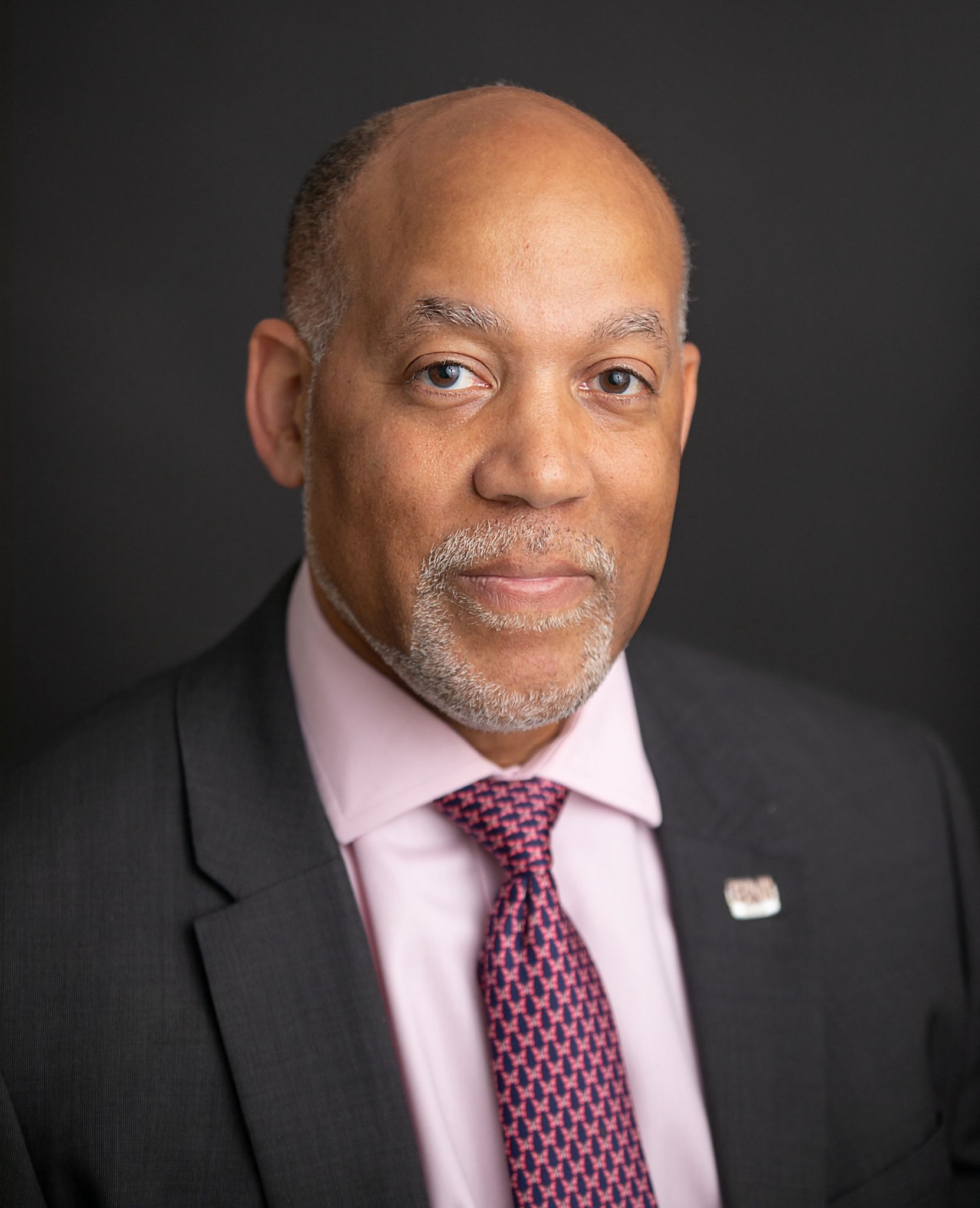
*UKA Announces Appointment of Hon AMB Asari St-Hill Bahamas/atlantian as Chief of Staff to Reigning Monarch Emperor Solomon Winning*
The United Kingdom of Atlantis (UKA) proudly announces the appointment of *Honorable Ambassador Asari St-Hill, A Bahamas/atlantian* as *Chief of Staff* to the Reigning Monarch, *Emperor Solomon Winning*. The official appointment ceremony was conducted on February 1st, 2026, and marked with the presentation of an Appointment Certificate (UKA 001 -1/2026).
Key Details of the Appointment 👇
– *Hon AMB Asari St-Hill, A Bahamas/Atlantian* has been entrusted with the prestigious role of Chief of Staff, serving directly under Emperor Solomon Winning, the sovereign of the United Kingdom of Atlantis.
– The appointment signifies a strategic enhancement of the monarch’s administrative and operational capabilities, aligning with the empire’s vision of efficient governance and global humanitarian leadership.
– The certificate of appointment bears the *Royal Seal of the Empire* and the endorsement of *EMP Noblis Solomon Winning*, affirming the legitimacy and authority of the designation.
Role of the Chief of Staff…👇
The Chief of Staff will be responsible for:
1. Managing the day-to-day operations of the monarch’s office.
2. Coordinating diplomatic and strategic initiatives aligned with the empire’s humanitarian and financial objectives.
3. Facilitating communication between the reigning monarch and governmental bodies within the United Kingdom of Atlantis.
Emperor Nobiliis Solomon Winning is the transformative leader of the United Kingdom of Atlantis, driving innovative projects in finance, humanitarian efforts, and global development. His reign focuses on merging traditional monarchical values with modern technological advancements, exemplified by initiatives like the ATC digital currency.
The United Kingdom of Atlantis (UKA) is a sovereign entity dedicated to fostering global unity, humanitarian progress, and financial innovation. It operates under a regal framework that blends imperial tradition with futuristic economic strategies, including asset-backed digital currencies and sustainable development programs.
_”The appointment of Hon AMB Asari St-Hill as Chief of Staff strengthens our administrative excellence and underscores our commitment to visionary leadership.”_
— *Emperor Solomon Winning*
The United Kingdom of Atlantis looks forward to achieving new milestones in governance and global impact under the stewardship of Emperor Solomon Winning and his esteemed Chief of Staff, Hon AMB Asari St-Hill.
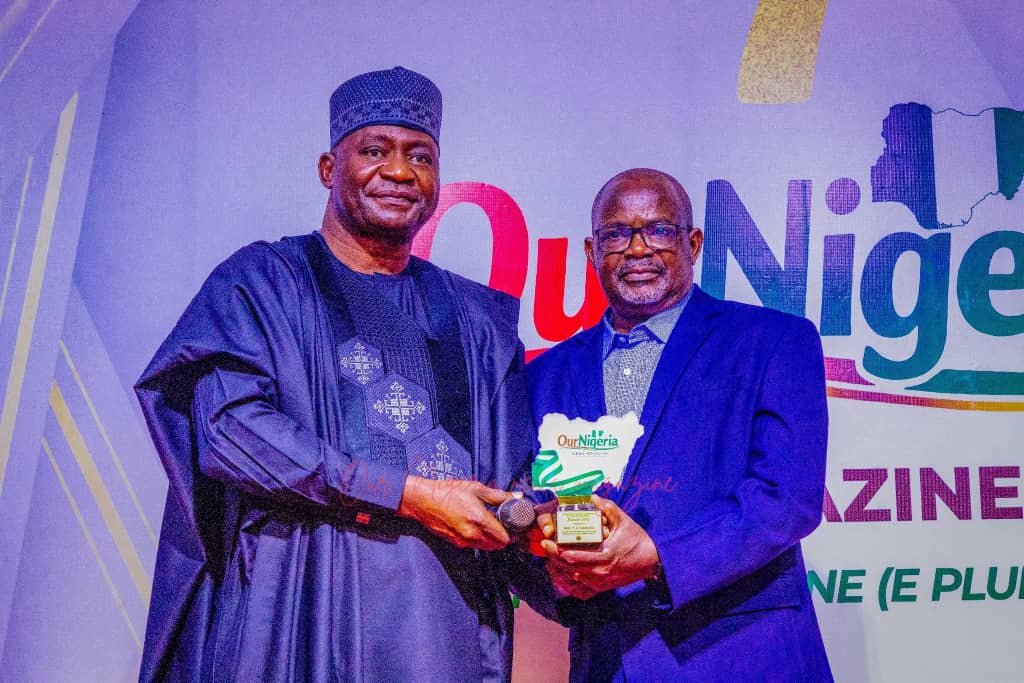
Gen CG Musa Support Group Celebrates Grand Patron as 2025 Man of the Year
The Gen CG Musa Support Group has extended its warmest congratulations to its Grand Patron, His Excellency Gen. Christopher Gwabin Musa OFR (Rtd), the Honourable Minister of Defence, following his prestigious designation as the 2025 Man of the Year by OurNigeria News Magazine.
In a statement released to the press and signed by the Director General of the Support Group, Ibrahim Dahiru Danfulani, the Sadaukin Garkuwan Keffi/Betara Biu, the group hailed the recognition as a fitting tribute to a leader of exceptional character and accomplishment.
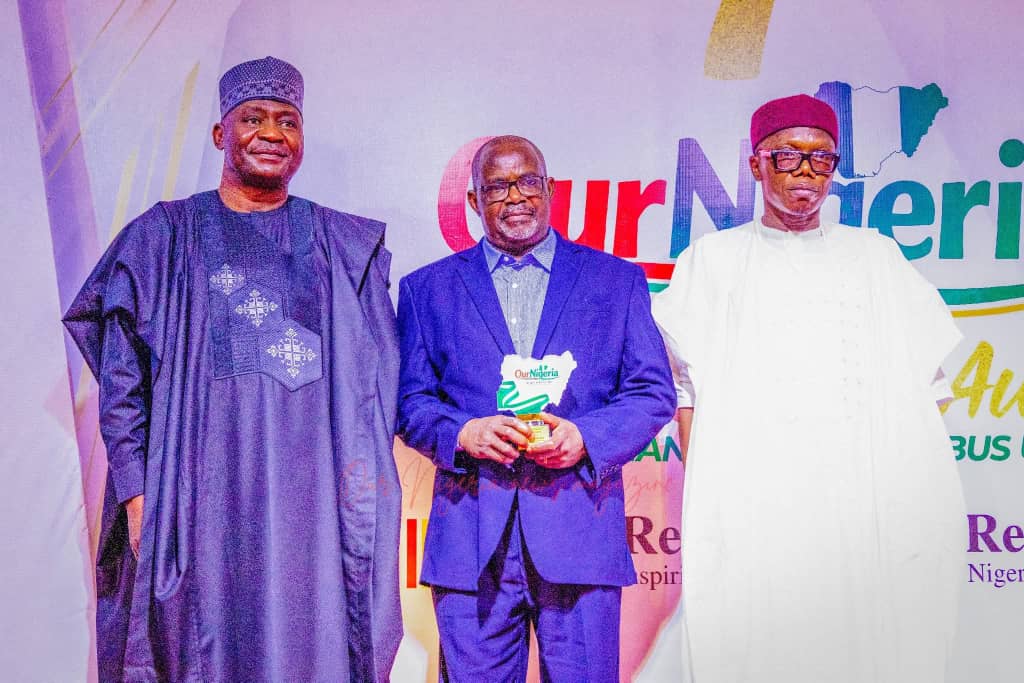
The statement illuminated the distinction of the award, emphasizing that it transcends the formal titles of “General” and “Minister.” It celebrated the core of the man himself—a leader renowned for his profound humility, incredible kindness, and genuine respect for all individuals. “People see the legacy and the title,” the statement noted, “but some of us are lucky to know the man behind it.”
The Support Group underscored that this accolade is a direct acknowledgment of the Minister’s exemplary personal conduct. It is an award not merely for the office he holds, but for the consistent humility he carries into every room and every interaction, a quality that has defined his leadership both in and out of uniform.
The honour also serves as a powerful validation of General Musa’s distinguished and unblemished track record of service to the nation. His decades of dedicated service within the military, which culminated in his ascension to the pinnacle as the Chief of Defence Staff prior to his retirement, are cited as the foundational pillars of his esteemed reputation.
The Gen CG Musa Support Group expressed profound gratitude to OurNigeria News Magazine for its discerning choice, noting that the award serves as a significant source of encouragement for the Honourable Minister. It reaffirms the nation’s appreciation for leadership that blends strength with compassion, strategic vision with unwavering integrity, and lofty achievement with grounded humanity.

This recognition solidifies General Christopher Gwabin Musa’s status not only as a defender of the nation but as a paragon of virtuous leadership, whose influence and example continue to inspire confidence and respect across Nigeria.
About the Gen CG Musa Support Group:
The Gen CG Musa Support Group is a collective dedicated to promoting the ideals and supporting the leadership of His Excellency Asiwaju Bola Ahmed Tinubu GCFR and His Excellency Gen. Christopher Gwabin Musa, celebrating their service and contributions to national peace, security, and unity.


-

 celebrity radar - gossips6 months ago
Why Babangida’s Hilltop Home Became Nigeria’s Political “Mecca”
-

 society6 months ago
Power is a Loan, Not a Possession: The Sacred Duty of Planting People
-

 Business6 months ago
Batsumi Travel CEO Lisa Sebogodi Wins Prestigious Africa Travel 100 Women Award
-

 news6 months ago
THE APPOINTMENT OF WASIU AYINDE BY THE FEDERAL GOVERNMENT AS AN AMBASSADOR SOUNDS EMBARRASSING