
Politics
Dauda Lawal: Between Leadership Award and Zamfara Reality By Silas Ajogwu


*Dauda Lawal: Between Leadership Award and Zamfara Reality
By Silas Ajogwu
There are moments when public honours become mirrors that doesn’t reflect virtue but to magnify dissonance. Governor Dauda Lawal’s recent acclamation as “Governor of the Year” by Leadership newspapers should, in a sane political economy, invite sober celebration only if the facts on the ground corroborate the plaudits. But in Zamfara, where villages are sacked, whole communities flee in fear, educational system keep declining in the wake of violence, and mass abductions have become grim headlines, the award reads less like recognition than a rhetorical conjuring trick. The editorial board that printed the accolade owes Nigerians an apology for easily being misled: how did the red ink miss the echoes of wailings and the river of bloods that flow through Zamfara today?
Let us begin with the unassailable facts. Over the past months, and indeed years, Zamfara has been one of the epicentres of Nigeria’s northwestern security catastrophe. Evidently, reports from reputable international media and rights groups have documented catastrophic violence like brutal mass killings in mining towns, the abduction of scores of villagers in single operations, and the sacking of hundreds of communities that have produced waves of internally displaced persons. Amnesty International and Reuters, among others, have catalogued attacks that leave behind corpses, razed homes, and scarred families. These are not the figments of partisan reportage; they are verifiable tragedies with names, dates, and grieving families.
If an award is to have any moral weight, it must answer this simple ledger: have lives been preserved under your watch, or have they been squandered? Has the governor provided a credible roadmap toward safety, or has he delivered platitudes and photo-opportunities while bandits seize towns and terrorize children? The empirical answer, as chronicled by independent observers is damning. Recent attacks in Zamfara have included mass abductions. One reported incident alone saw over 100 people taken, and repeated massacres in villages where citizens were slaughtered as they laboured. An outbreak of cholera in Bukkuyum and the deaths recorded there are not incidental; they are symptomatic of collapsed access to health, water, and security which are the very public goods that should mark competent stewardship of a state. Unfortunately, the massive federal allocation are only seen in the frivolous spending and luxurious purchase made by the governor and his cabinets, but not reflective in the lives of Zamfarans.
And yet, on glossy pages and curated websites, a different narrative is being sold: that a governor whose tenure coincides with such human carnage deserves a laurel. This is not merely a question of taste; it is an ethical indictment of how awards are dispensed and of what our public culture has become. When honour is decoupled from measurable public welfare and instead telescoped into ceremony, we impoverish language itself. Words like “leadership” and “transformational” warp into euphemisms for impunity. If an editorial board is prepared to bless a record marred by abandoned communities, the public is entitled to ask whether the accolade Is commensurate with performance or contaminated by other influences. Indeed, social scepticism is not cynicism; it is a civic alarm that sounds when lived reality diverges dramatically from celebratory headlines.
It Is tempting and rhetorically effective to leap to causation: Yes! awards are being bought; editorial independence is for sale; governors are laundering reputations with chequebooks. But responsible criticism requires discipline. In the absence of a smoking gun that proves pay-for-play in this specific case, the argument must rest on demonstrable incongruity and pattern. Across Nigeria, there have been recurring controversies where awards and honours were criticized for being influenced by patronage, and commentators have warned that some prizes have become transactional. What we can say with confidence is this: where public life is ravaged by banditry and humanitarian collapse, the optics of bestowing “Governor of the Year” warrants interrogation, not because the act of awarding is per se illegitimate, but because the moral calculus of governance demands that survival and dignity must come before plaudits.
The human cost of misgovernance is not an abstraction. Mothers in Zamfara and cradle children who have lost fathers to kidnappers; entire marketplaces lie empty because people fear to travel; mothers with infants cannot reach clinics because roads are controlled by armed men on motorcycles. These daily indignities corrode social trust and exact stealthy, intergenerational harm. When an editorial desk fails to look these mothers in the face and instead crowns their governor, the message sent is corrosive: that rhetoric can substitute for remedy, and that spectacle can displace sorrow. The moral outrage that follows is neither theatrical nor petty; it is a legitimate expression of popular grief and righteous indignation of personal experience.
However, it is important to consider the broader data of how human-rights organizations and investigative outlets have documented thousands killed, villages burnt down, and how hundreds of thousands were displaced across Zamfara State. These can only be a result of structural failures; failures of intelligence, of community protection, of preventive policing, and of governance allocation. If a governor’s tenure coincides with such systemic collapse, editorial boards should, at minimum, scrutinize if the state apparatus has been deployed, how it has been deployed to protect citizens. Obviously, Dauda Lawal’s administration has not strengthened local security architecture, ensured functioning clinics and safe water points, and has not exercised fiscal courage to fund durable counter-insurgency measures.
When the governor and his apologists insist on celebrating awards, they must be asked to explain, with documents and demonstrable outcomes, why the lives of their citizens were not the primary metric considered. What specific policies, funded projects, or security innovations justify a Governor of the Year title? Are there transparent records showing reductions in incidents, successful rescue operations, improved infrastructure, rehabilitated health centres, or secure corridors that allow commerce to resume? Or is the award a prophylactic meant to sanitize a political brand while the rot continues underneath? The difference between governance and marketing is precisely this: the former is accountable to the ledger of life; the latter is answerable only to visibility.
We must also confront the rhetorical posture that seeks to delegitimise popular critique by branding it as mere “political attacks.” When mothers cries for their missing children, when communities cannot till fields for fear of ambush, when clinics close because health workers cannot commute, the critiques that arise are not partisan truculence; they are the anguished responses of citizens demanding protection. To dismiss these legitimate cries as envy or opposition theatre is to perpetrate a moral inversion: those who ask for security are branded as troublemakers while those who preside over their vulnerability are lauded. If the editorial pages are to retain moral authority, they must resist becoming instruments for image laundering.
What, then, should be the civic response? First, Newspapers must demand transparency before publication. Newspapers that confer high honours must publish their criteria, and the evidentiary basis for their choices. If “Governor of the Year” is to mean anything beyond a headline, it must be backed by transparent metrics: measurable improvements in healthcare access, documented reductions in violence, convincingly audited security spending, and demonstrable community rehabilitation. Second, insist on investigative curiosity: it is important for civil society and independent media to probe the governance ledger, which are budgets, procurement processes, and security strategies. Third, let the people of Zamfara judge for themselves: community hearings, testimony from survivors, and on-the-ground reportage should be the sources that shape public memory, not paid-for adverts or celebratory galas.
Finally, there is a moral plea. Awards are supposed to confer encouragement on those who have alleviated suffering, not camouflage those who have presided over it. If Governors wish to be celebrated, let them first clear a simple threshold: make their states safer, make clinics work, make schools open, restore markets, and stop the nightly toll of abductions and killings. Let them invite independent monitors to verify progress. Let their citizens sleep without fear. Only then will a “Governor of the Year” title be more than a headline: it will be a justly earned tribute.
To the editorial board that printed the accolade, and to every Nigerian watching: do not let ceremony smother scrutiny. To the shameless governor who accepted it: Honor must be tethered to the dignity of life. In Zamfara today, that dignity is endangered; mothers weep while trumpets sound. If honour is to mean anything at all, let it begin by answering the children’s cries and the empty chairs at family tables. Let the paychecks of Civil servants bring smiles to their faces. Until then, a paper’s gold foil Is a poor balm for the blood and the silence.
Ajogwu is a security expert writing from Kaduna.






Lagos Assembly Debunks Abuja House Rumour, Warns Against Election Season Propaganda
The Lagos State House of Assembly has described as misleading and mischievous the widespread misinformation that it budgeted for the purchase of houses in Abuja for its members in the 2026 Appropriation Law.
This rebuttal is contained in a statement jointly signed by Hon. Stephen Ogundipe, Chairman, House Committee on Information, Strategy, and Security, and Hon. Sa’ad Olumoh, Chairman, House Committee on Economic Planning and Budget.
Describing the report as a deliberate and disturbing falsehood being peddled by patently ignorant people, the statement reads, “There is no provision whatsoever in the 2026 Budget for the purchase of houses in Abuja or anywhere else for members of the Lagos State House of Assembly. The report is a complete fabrication and a product of political mischief intended to misinform the public.
“The Lagos State House of Assembly does not operate in Abuja. Our constitutional responsibilities, constituencies, and legislative duties are entirely within Lagos State. It is, therefore, illogical, irrational, and irresponsible for anyone to suggest that legislators would appropriate public funds for personal housing outside their jurisdiction.”
The statement emphasised that the budget is already in the public domain and accessible for scrutiny by discerning Lagosians and Nigerians alike. It reiterated that the Lagos State Government operates a transparent budget that speaks to the needs of the people and the demands of a megalopolis.
“We view this rumour as part of a wider attempt at election-season propaganda, designed to erode public trust, sow discord, and malign democratic institutions.”
The chairmen further clarified that the 2026 capital expenditure of the House of Assembly is less than 0.04% of the total CAPEX of the state, which clearly demonstrates the culture of prudence, accountability, and fiscal responsibility that guides the legislature. However, they noted, “Historically, the House does not even access up to its approved budget in many fiscal years.”
They stressed that the Assembly remains fully committed to excellence, transparency, good governance, and the collective welfare of the people of Lagos State, in line with the objectives of the 2026 Budget of Shared Prosperity.
“We therefore challenge those behind this harebrained allegation to produce credible evidence or retract their statements forthwith. Failure to do so may attract appropriate legal actions.
“We urge Lagosians and the general public to disregard this baseless rumour and always verify information from official and credible sources.”
Politics
Democracy in the Crosshairs: How Nigeria’s Ruling APC Weaponises Power and Silences Dissent
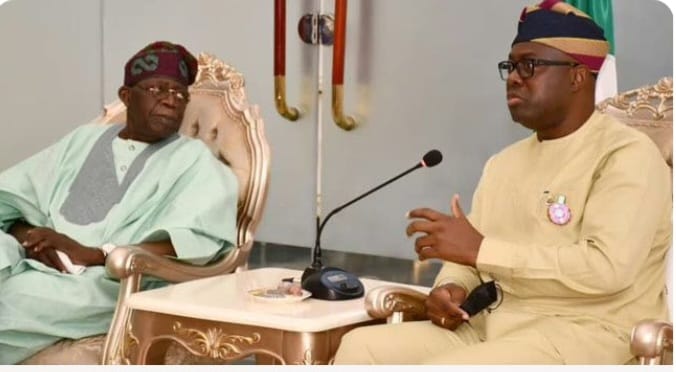
Democracy in the Crosshairs: How Nigeria’s Ruling APC Weaponises Power and Silences Dissent.
By George Omagbemi Sylvester | Published by saharaweeklyng.com
“Tinubu’s Government, the EFCC and the Strategic Undermining of Opposition Governors”.
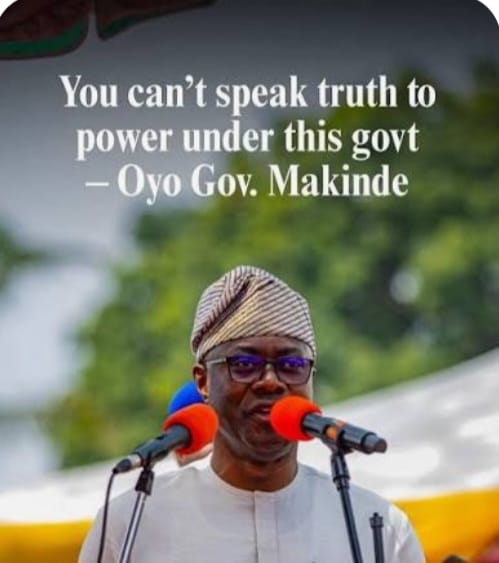
In a striking indictment of Nigeria’s current political reality, Governor Seyi Makinde of Oyo State declared that “you cannot speak truth to power in this dispensation”, directly accusing the administration of President Bola Ahmed Tinubu of intolerance for dissent and an erosion of democratic norms.
Makinde’s remarks (made during a public event in Ibadan on January 25, 2026) were more than a local governor’s lament. They crystallised a mounting national frustration: that Nigeria’s political landscape has tilted dangerously toward executive overreach, institutional capture and political engineering.
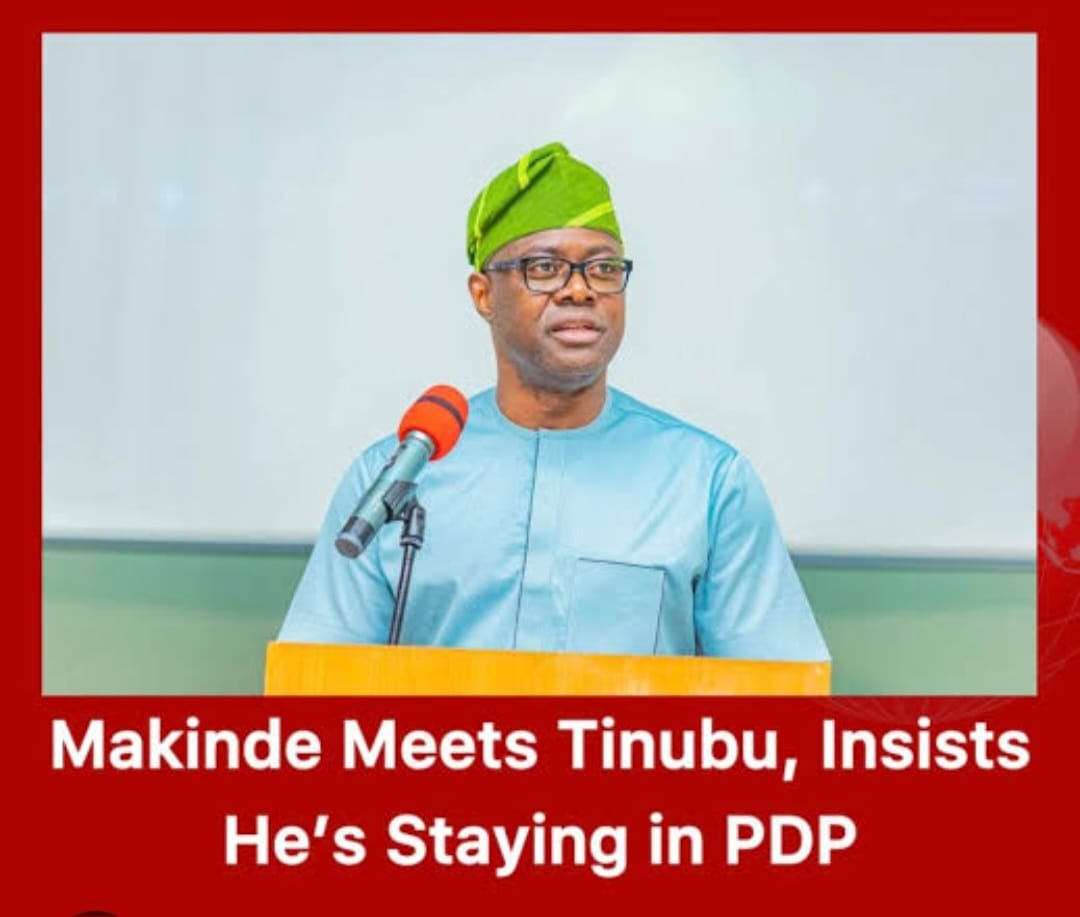
This narrative is not isolated. Across Nigeria, governors from opposition parties have defected to the ruling All Progressives Congress (APC) in numbers unprecedented in the nation’s democratic history. Critics argue that these defections are not merely voluntary political choices, but part of a strategic pressure campaign leveraging federal power and institutions to fracture opposition influence.
At its centre lies Nigeria’s principal anti-graft agency – the Economic and Financial Crimes Commission (EFCC).
The EFCC: Anti-Graft Agency or Political Instrument? Founded to combat corruption, the EFCC’s constitutional mandate is to investigate and prosecute financial and economic crimes across public and private sectors. Its legal independence is enshrined in statute and it has historically pursued high-profile cases, including recovery of nearly $500 million in illicit assets in a single year, demonstrating its capacity for tackling corruption.
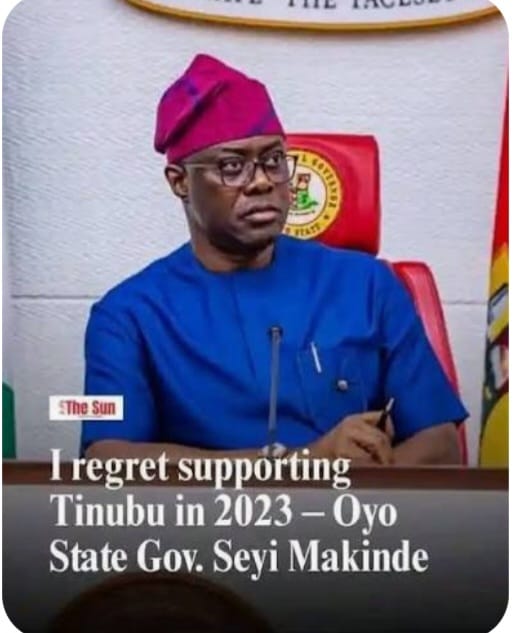
However, critics now claim that under the Tinubu administration, the EFCC’s prosecutorial power is being perceived (if not deployed) as a political instrument.
Opposition leaders, including former Vice President Atiku Abubakar and coalition parties such as the African Democratic Congress (ADC), have publicly accused the federal government of using anti-corruption agencies to intimidate opposition figures and governors, effectively pressuring them into aligning with the APC.
In a statement released in December 2025, opposition figures alleged that institutions such as the EFCC, the Nigerian Police and the Independent Corrupt Practices and Other Related Offences Commission were being selectively wielded to weaken political competitors rather than combat financial crime impartially.
This is not merely rhetorical noise. The opposition’s grievances centre on several observable patterns:
Reopened or New Investigations Against Opposition Figures: The ADC pointed to recent abnormal reactivation of long-dormant cases or new inquiries into financial activities involving senior opposition politicians. These, they argue, often arise shortly before critical elections or political realignments.
Alleged Differential Treatment: According to opponents of the current administration, individuals who have defected to the APC appear less likely to face sustained legal scrutiny or prosecution in EFCC proceedings, even in cases of credible allegations of mismanagement.
Timing of Actions: The timing of certain high-profile investigations, emerging ahead of the 2027 general elections, reinforces perceptions that anti-graft measures are tailored to political cycles rather than legal merit.
The EFCC and Presidency have publicly denied these allegations, insisting that the commission operates independently and pursues corruption irrespective of political affiliation and that Nigeria’s democratic freedoms (including party choice and mobility) remain intact.
Yet the perception of bias, once systemic, is hard to erase, especially when political actors deploy powerful state machinery with strategic timing and selective intensity.
Defections and Power Realignment: A Democracy at Risk? Since 2023 and particularly through 2025, a remarkable number of state governors and senior political leaders have crossed over from opposition parties (notably the Peoples Democratic Party – PDP) to the APC. Though defections are normal in Nigeria’s fluid political system, the scale and speed in recent years are historically noteworthy, raising critical questions about underlying incentives.
The SaharaWeeklyNG reported Makinde’s comments within the broader context of a political climate where dissenting voices face greater obstacles than at any time in recent democratic memory.
Governors who remain in opposition find themselves squeezed between growing federal assertiveness and dwindling political capital. Some analysts argue that the combination of federal resource control, political appointments and influence over public agencies exerts tangible pressure on subnational leaders to align with the ruling party for political survival. This dynamic, they contend, undermines competitive party politics and weakens Nigeria’s multiparty democracy.
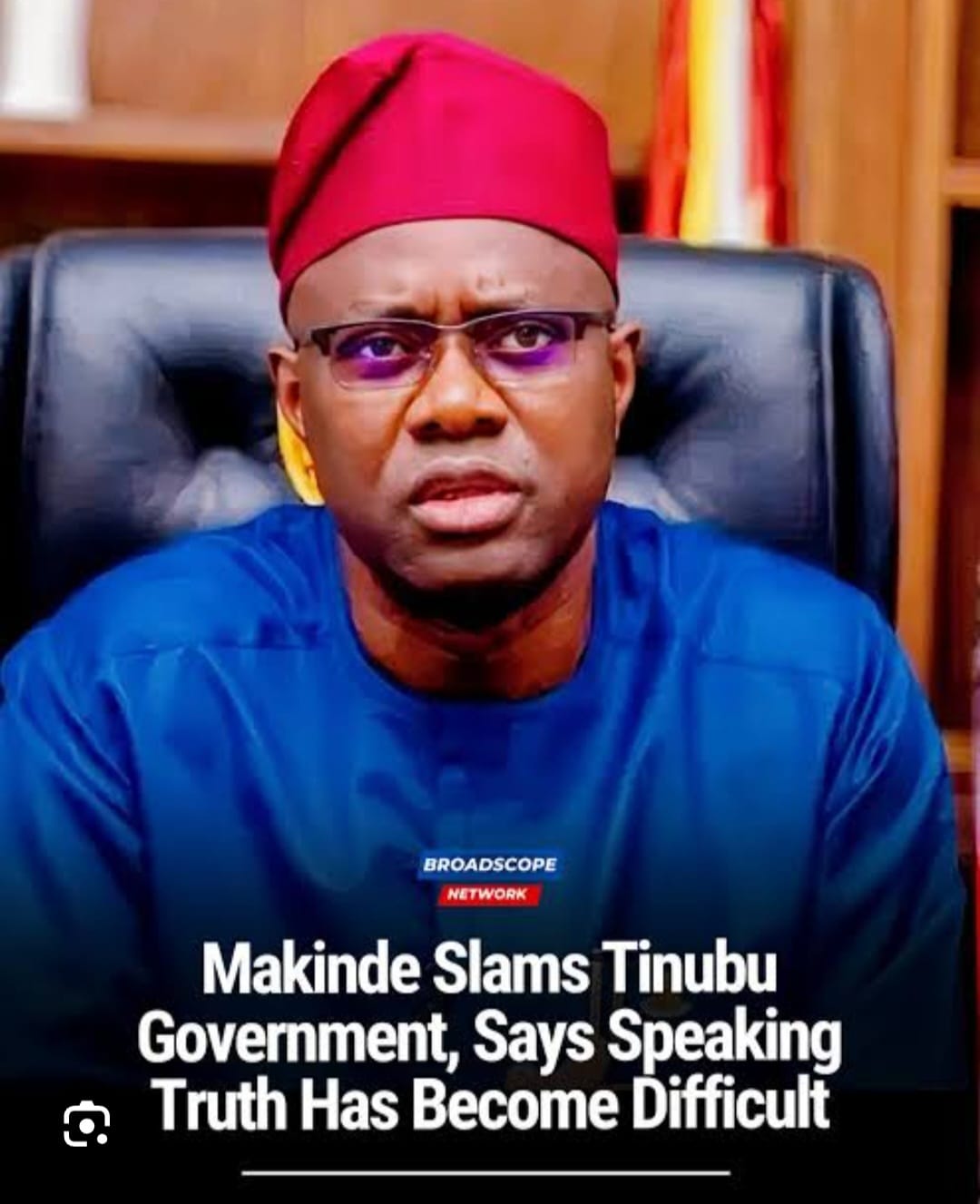
Speaking Truth to Power: What Makinde’s Critique Exposes. Governor Makinde’s core grievance (that it is increasingly difficult, perhaps perilous, to speak truth to power) resonates widely among civil society actors, political analysts and democratic advocates:
“YOU CANNOT SPEAK TRUTH TO POWER IN THIS DISPENSATION,” Makinde declared, specifically citing the government’s handling of contentious tax reform bills as an example where dissent was neither welcomed nor transparently debated.
Makinde’s critique reflects deeper structural concerns:
Exclusion of Key Stakeholders: Opposition leaders and state executives report being marginalised from meaningful consultation on national policies affecting federal-state relations, revenue sharing and fiscal reforms.
Institutional Intimidation: The perception that state politicians become targets of federal legal scrutiny after taking firm oppositional stances (real or perceived) discourages robust democratic debate.
Erosion of Opposition Space: A symbiotic effect of party defections and institutional pressure is a shrinking viable space for genuine political opposition, weakening checks and balances essential to democratic governance.
A respected political scientist, Dr. Aisha Bello of the University of Lagos, recently argued that “when opposition becomes fraught with state leverage instead of ideological competition, the very foundation of democratic contestation collapses,” adding that “a government that shies away from criticism risks inversion into autocracy.”
Another expert, Prof. Chinedu Eze, former dean of political studies at Ahmadu Bello University, warned that “selective use of anti-corruption agencies as political tools corrodes public trust and ultimately delegates justice into the hands of incumbents rather than independent courts.” These observations echo growing public skepticism.
The Way Forward: Strengthening Democracy and Institutions. Nigeria’s path forward depends on restoring confidence in democratic norms and institutional independence.
Transparent EFCC Processes: Civil society groups and legal scholars are advocating for enhanced transparency in anti-graft investigations, including clear prosecutorial thresholds and independent audits of case initiation and closures.
Judicial Oversight: Strengthening the judiciary’s capacity and independence is critical to ensuring that allegations of political weaponisation do not go unchecked. Courts must remain the ultimate arbiters of evidence and guilt.
Political Reforms: Advocates demand reforms to party financing, federal-state fiscal relations, and consultation mechanisms to reduce incentives for defections driven by federal resource leverage.
Public Engagement: A more informed and engaged civil society, anchored by independent media and civic education, must hold both government and opposition accountable for adherence to democratic principles.
Beyond The Present Moment.
Governor Makinde’s assertion that it is no longer tenable to “speak truth to power” under the current administration reflects unsettling trends in Nigeria’s evolving democratic landscape. While the EFCC and the Presidency maintain that anti-corruption efforts are independent and constitutionally grounded, opposition leaders (backed by political data and patterns of defections) argue that state power is being used to consolidate one-party dominance and undermine political pluralism.
At this critical juncture, Nigeria must choose between entrenching competitive democracy or sliding toward a political monopoly where dissent is subdued, institutions compromised, and power concentrated.
For Nigeria’s democratic ideals to survive (and thrive) its leaders and citizens must ensure that speaking truth to power remains not a perilous act of defiance but an honoured pillar of national life.

APC Chairman Appoints Norbert Akachukwu Sochukwudinma as SSA on Local Government Affairs
By Ifeoma Ikem
The National Chairman of the All Progressives Congress (APC), Prof. Nentawe Yilwatda, has approved the appointment of Norbert Akachukwu Sochukwudinma (NAS) as Senior Special Assistant (SSA) on Local Government Affairs.
The appointment is part of ongoing efforts by the APC national leadership to strengthen grassroots engagement and enhance coordination between the party’s national secretariat and local government structures across the country.
Sochukwudinma is a seasoned politician and an active member of the APC, with deep roots in Delta State politics. He currently serves as the APC Chairman for Aniocha South Local Government Area.
In addition to his local role, he is also the Coordinating Chairman of APC Chairmen in Delta North, a position through which he has played a strategic role in party mobilisation and reconciliation efforts within the senatorial district.
Known for his commitment to party integration and grassroots development, Sochukwudinma has been actively involved in strengthening the APC’s presence and internal cohesion in Delta State.
Party stakeholders have described his appointment as well-deserved, citing his experience, organisational capacity, and consistent engagement with party members at the ward and local government levels.
The new SSA is expected to bring his grassroots expertise to bear in advising the APC National Chairman on local government affairs, party administration, and effective mobilisation strategies nationwide.
His appointment takes immediate effect.


-

 celebrity radar - gossips5 months ago
Why Babangida’s Hilltop Home Became Nigeria’s Political “Mecca”
-

 society5 months ago
Power is a Loan, Not a Possession: The Sacred Duty of Planting People
-

 Business6 months ago
Batsumi Travel CEO Lisa Sebogodi Wins Prestigious Africa Travel 100 Women Award
-

 news6 months ago
THE APPOINTMENT OF WASIU AYINDE BY THE FEDERAL GOVERNMENT AS AN AMBASSADOR SOUNDS EMBARRASSING