
society
When Order Clashes with Authority: The Stand-Off in Gaduwa

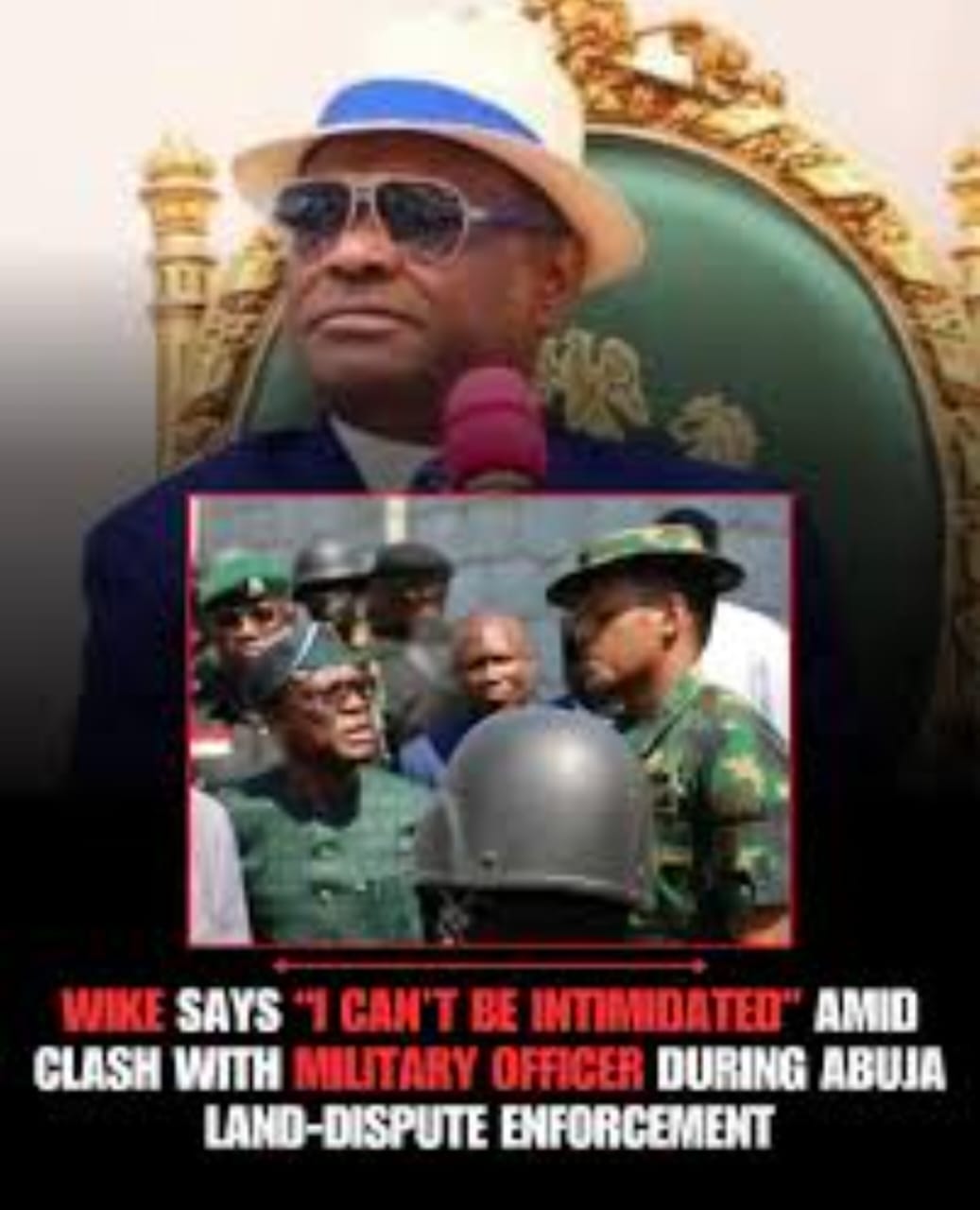
When Order Clashes with Authority: The Stand-Off in Gaduwa.
By George Omagbemi Sylvester | Published by SaharaWeeklyNG.com
A Navy Lieutenant’s Moment of Integrity Against Minister Wike’s Overreach.
On Tuesday, in the dusty environs of Gaduwa District, Abuja, an incident unfolded that speaks volumes about the fault lines in Nigeria’s power architecture; between political office, military command, land-use law and impunity. The confrontation between a naval officer and Nyesom Wike, the Minister of the Federal Capital Territory (FCT), was more than a quarrel. It was a mirror held up to a system where uniforms and titles often overshadow legal accountability.
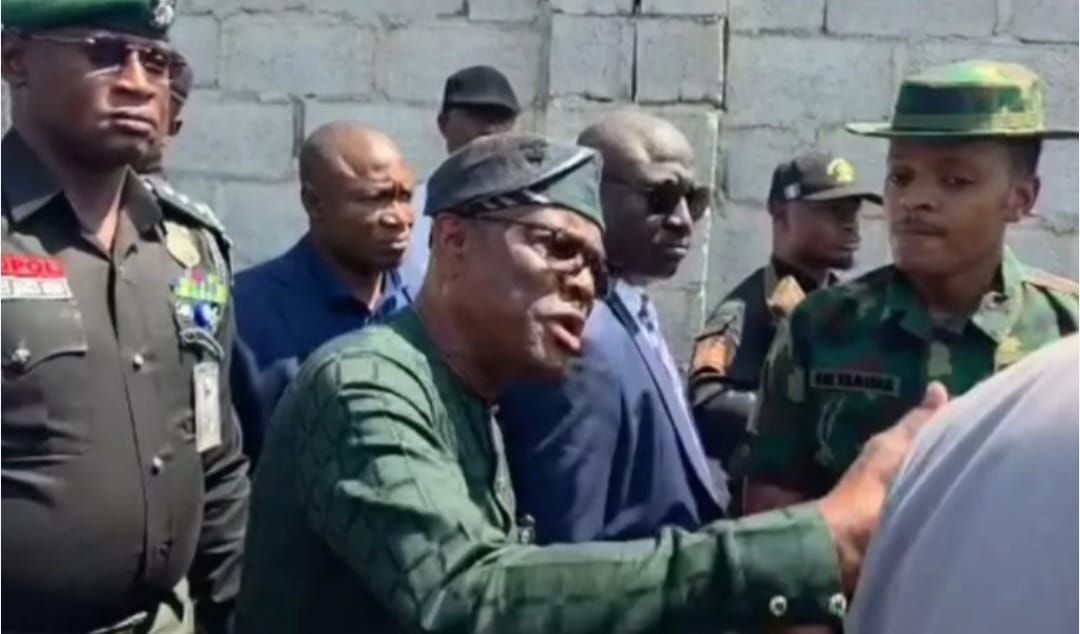
According to multiple reports, Wike arrived with his entourage and FCT field agents at a parcel of land designated Plot 1946. The plot is said to belong to retired Vice-Admiral Awwal Zubairu Gambo (ex–Chief of Naval Staff). The minister and his team were pressing for inspection and possible demolition of structures believed to be illegally developed in a buffer zone of the FCT master plan.
As the minister’s team attempted access, they were blocked by uniformed officers of the Nigerian Navy. A heated verbal encounter ensued between Wike and a naval officer (identified in one report as Lieutenant AM Yarima) who insisted they had “VALID DOCUMENTS” for the land; Wike scoffed, challenged the documents and refused to yield to the uniformed men’s presence.
At one juncture, Wike shouted: “You cannot use soldiers to intimidate government officials doing their job. This country cannot continue this way.”
The officer retorted, “I am an officer. I have integrity.” Wike’s response: “Shut up your mouth! Who does that? You are a big fool!” The officer maintained: “I am not a fool sir. I am acting on orders and I am a commissioned officer.”
What happened that day is ripe for analysis (not merely as a dramatic video on social media) but as an emblem of deeper structural dysfunction: land-grabbing, military impunity, politicised oversight and the erosion of rule of law.
Power, Uniform and the Rule of Law. First, let us be clear, the presence of uniformed naval officers in civilian land-use operations raises immediate questions. The military is not meant to operate as the muscle arm of land allocation or private development. When the minister demanded documentary proof of the officers’ claims, he was doing no more than insisting the law apply equally, regardless of rank. It is an axiom of good governance that “no one is above the law.”
A former UN expert on governance has written that “accountability becomes hollow if the symbols of power are exempt from legal scrutiny.” In other words: a uniform ought not to confer immunity. The officer’s invocation of “ORDERS” is the classic defence, but orders are meant to be lawful and legality cannot be assumed merely because someone holds a gun.
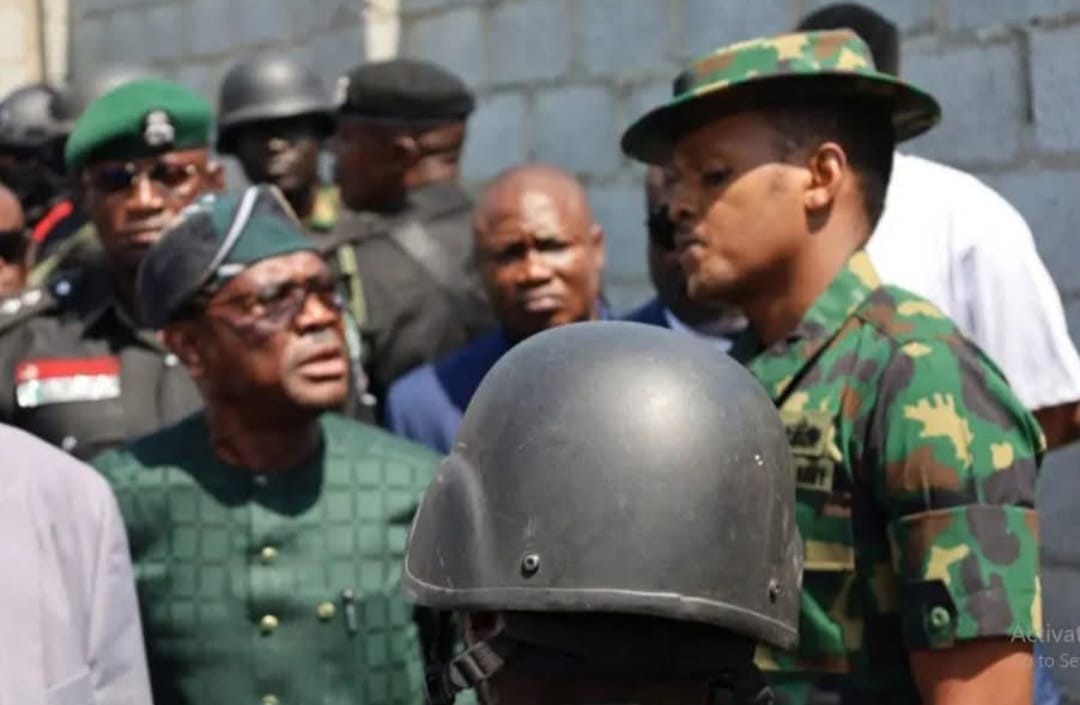
Wike, often combative by reputation, nonetheless tapped into a critical point: if law enforcement, urban management or land-allocation become hostage to uniformed intimidation, the public authority of civil offices is hollowed out. And when the armed forces are seen to be aligned implicitly with private interests (especially in land-rich Abuja) that signals a dangerous slide.
The Land Question: Abuja, Buffer Zones and the Master Plan. The purported land in question (Plot 1946 in Gaduwa) is described by reporting outlets as falling within a buffer zone designated by the Development and Control arm of the FCT Administration (FCTA) for non-development or restricted use.
If indeed part of a buffer zone, the claim of “LEGAL ACQUISITION” by the navy officer or the retired Chief of Naval Staff must be scrutinised thoroughly.
What we have here is the familiar Nigerian pattern: high-ranking officials or retired officers using title or influence to grab land, often in the name of “OFFICERS’ ACCOMMODATION” or similar. In many cases, civil regulators are ineffective or intimidated. The fact that the minister had to lead the push for field inspection signals systemic weakness.
The land sector in Nigeria has long been plagued by “symbiotic collusion between the state and the military/retired elites” in which the state grants belts of land, often without proper due process, to military insiders. That model undermines confidence in the system, invites rent-seeking and sharpens inequality: the uniformed class often enjoys privileges that citizens cannot access.
The Symbolism of the Confrontation. Why was this incident significant? Because it is a moment of symbolic clarity.
A naval officer refusing to stand down before a minister on a matter of land use is not merely insubordinate—it subverts the chain of accountability.
A minister demanding documentation and invoking “the government must function according to law” highlights the threat when state institutions become hostage to parallel structures of power.

The public nature of the exchange amplifies distrust. When citizens see uniforms deployed around private plots rather than national security, the social contract frays.
As governance scholar Joseph Stiglitz once observed: “When power is unchecked, it becomes the enemy of the people it is supposed to serve.” This stand-off played out like a microcosm of that truth.
The Broader Questions for Nigeria.
This incident begs some deeper questions:
Who serves whom? If a retired Chief of Naval Staff can claim land with officer-backed enforcement, where is the boundary between public office and private privilege?
What happens when the military is used for non-military tasks? Land allocation, demolition, buffer-zone patrols, all fall under civil regulation. Militarising them blurs lines of accountability.
What about the rule of law? Wike insisted: “You cannot use soldiers to intimidate government officials doing their job. This country cannot continue this way.”
SaharaWeeklyNG.com
If the FCT minister himself is being challenged in the field, what hope does the ordinary citizen have when confronting land-grabs or property infractions?
What does this signal to investors and residents? Abuja’s brand appeal depends on predictable land-use planning and enforcement. When buffer zones are breached and enforcement used selectively, the market and public faith suffer.
A Call for Institutional Reform. This episode should serve as a clarion call for reform not merely verbal grandstanding.
Clear delineation of roles: The military should not be deployed to enforce land-use or act as private bodyguards for land holders. Civil authorities must handle EVICTION, DEMOLITION, INSPECTION.
Transparent land-allocation records: The FCT Administration must publish all allocations, buffer-zone designations and the status of each parcel. Citizens must have sight of documents said to exist.
Independent oversight of land tenure: A civilian-led tribunal with authority to adjudicate disputes between municipality and military/retired elites could help restore confidence.
Accountability for abuses of power: When an officer refuses to comply with a minister’s lawful instruction (supported by statute and regulation), there must be consequences. As scholars argue, “power without accountability is tyranny dressed in uniform.”
Culture of integrity in the armed forces: The naval officer insisted “I have integrity.” But integrity alone is insufficient when it is not tied to transparency of acquisition. As scholar Francis Fukuyama puts it: “Institutions matter more than individuals, because they insulate society from the whims of powerful men.”
Closing Reflections. On that dusty Tuesday in Gaduwa, we witnessed not simply a spat between minister and naval officer; but a crucible for principles: legality versus privilege, civil oversight versus military intimidation, public service versus private entitlement. That a naval lieutenant (or an officer of whatever rank) dared to stand his ground against the FCT minister underscores how entrenched the problem has become: power bypassing process, rank discounting regulation.
As the minister thundered: “Even if you are a lieutenant general or vice admiral, it means nothing. The government must function according to law.”
SaharaWeeklyNG.com
That statement must not be reduced to rhetoric. It must become policy.
For Nigeria to mature as a state where citizens believe in the rule of law, where military service does not confer land-privilege, where ministers are not blocked by uniforms in the field, this incident must be more than viral footage. It must be a turning point.
The uniform is supposed to protect the nation (not encroach on public authority. The office-holder is supposed to enforce the law) not bend before muscle. The citizen is supposed to live in a system where justice is blind to rank. Let this episode serve as an uncomfortable but necessary mirror.
And let those watching ask: in a land where a Navy lieutenant can challenge a minister, who then safeguards the citizen from power imbalances? Until the institutions align, this will remain not a standout event, but an example of why governance in Nigeria still tilts toward the powerful rather than the just.
George Omagbemi Sylvester
SaharaWeeklyNG.com





TY BURATAI HUMANITY CARE FOUNDATION CONDOLES WITH BIU EMIRATE OVER TRAGIC ATTACK
In a profound expression of sorrow, the TY Buratai Humanity Care Foundation has extended its heartfelt condolences to the families of the victims and the entire people of Biu Emirate, Borno State, following the recent tragic attack attributed to Boko Haram. This devastating assault, which occurred at a work site in northeastern Nigeria, claimed the lives of dozens, including brave soldiers committed to protecting the nation.
In a statement released to the press and signed by the Chairman of the foundation, Ibrahim Dahiru Danfulani Sadaukin Garkuwan Keffi/Betara Biu, the Grand Patron of the Foundation, His Excellency Amb. Lt. Gen. Tukur Yusufu Buratai CFR (Rtd), former Chief of Army Staff, described the incident as “one too many senseless, barbaric, and ruthless displays of inhumanity.” His Excellency emphasized the heartbreaking impact of such attacks on innocent, hardworking citizens striving to make a positive difference in their communities.
The Grand Patron praised the swift and decisive response of military personnel during this critical time, underscoring their brave commitment to safeguarding the nation. He called upon them to maintain this momentum, commending their courage and sacrifice in the face of adversity. “May Almighty Allah forgive their souls and grant them Aljannah Firdouse,” he remarked, encouraging the nation to honor their spirit of sacrifice as they rally together to rebuild and restore hope across the region.
In his statement, Gen. Buratai highlighted the importance of collective action in overcoming the challenges posed by insecurity, urging concerned citizens to increase their efforts in fostering a virile community that future generations can cherish. “Together, we can surmount these troubles,” he asserted, calling on all patriotic leaders and citizens to unite in the fight against violence and insecurity.

The TY Buratai Humanity Care Foundation remains committed to supporting initiatives that promote peace, security, unity, and prosperity. As the foundation extends its condolences to the bereaved, it also calls upon all segments of society to collaborate in creating a better and safer future. May Allah guide and protect the nation and lead it toward enduring peace. Amen.
society
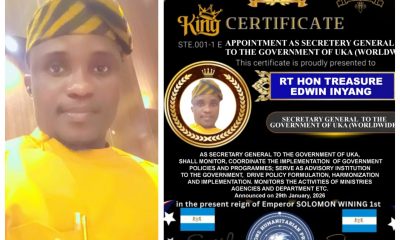
Rt Hon Treasure Edwin Inyang Appointed Secretary General to the Government of UKA (Worldwide)

Rt Hon Treasure Edwin Inyang Appointed Secretary General to the Government of UKA (Worldwide)*
January 29, 2026 – A prestigious appointment has been announced in the reign of Emperor Solomon Wining 1st, recognizing Rt Hon Treasure Edwin Inyang as the *Secretary General to the Government of UKA (Worldwide)*. The official certificate, designated STE.001-1 E, was presented to Rt Hon Inyang during a ceremonial investiture.
As Secretary General, Rt Hon Treasure Edwin Inyang will *monitor and coordinate* the implementation of government policies and programmes, serve as an advisory institution to the Government, drive policy formulation, harmonization, and implementation, and oversee the activities of ministries, agencies, and departments.
The appointment was proclaimed by *Emperor Prof. Dr. Solomon Wining*, Emperor of the United Kingdom of Atlantics and Empire Worldwide, and co-signed by *Empress Prof. Dr. Sriwan Kingjun*, Empress of Attica Empire, under the auspices of the 5 Billions Humanitarian Projects Incorporated.
The ceremony underscores the commitment to strengthening governance and humanitarian initiatives within the UKA (Worldwide) jurisdiction, effective immediately in the reign of Emperor Solomon Wining 1st.
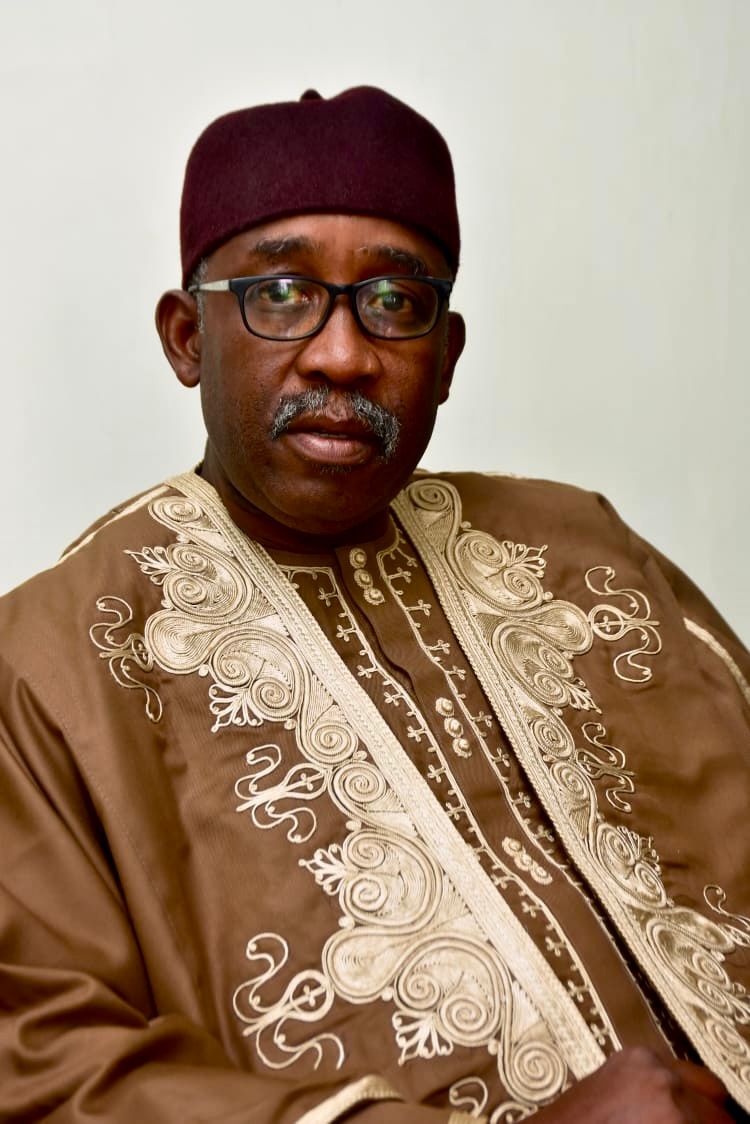
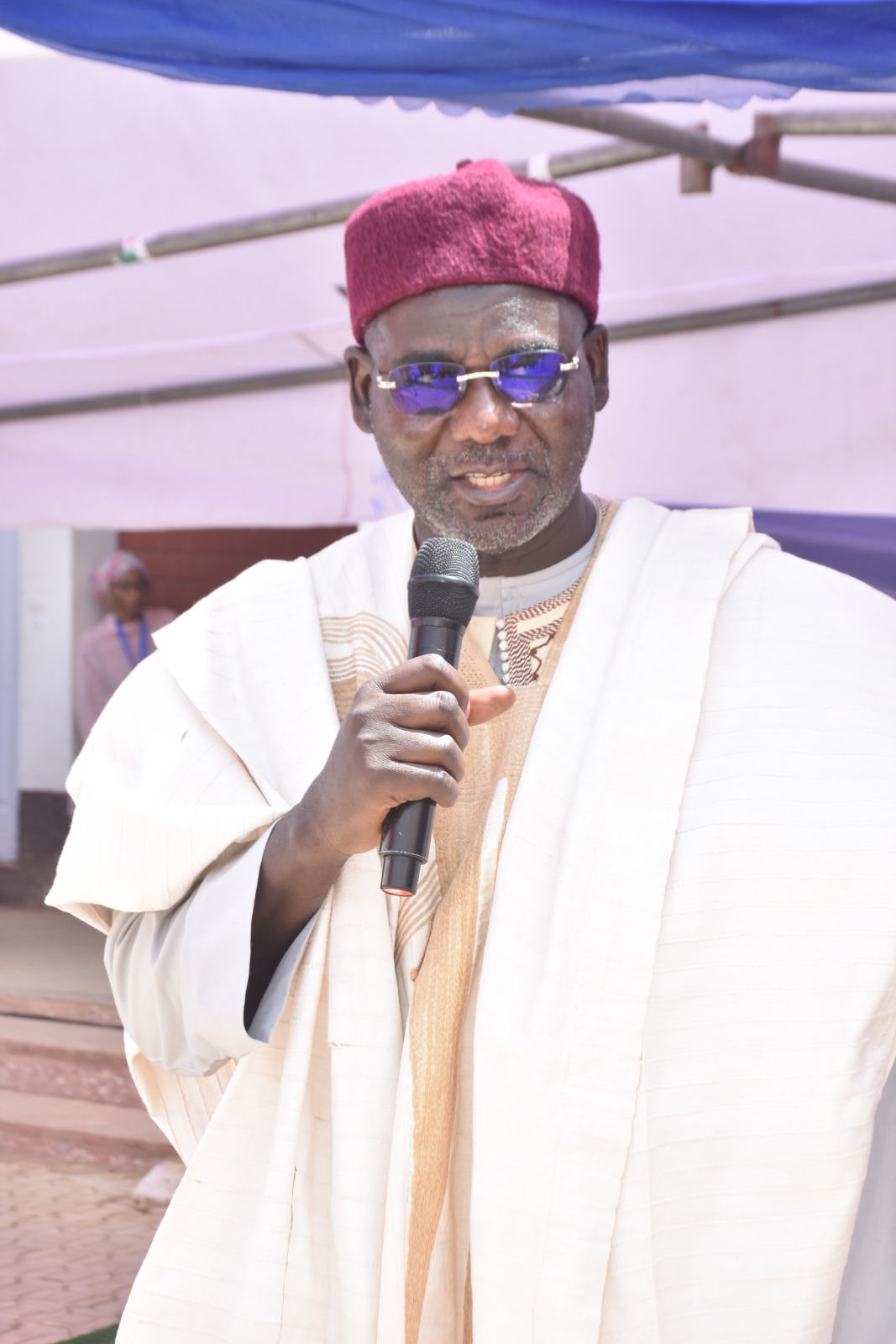
GENERAL BULAMA BIU MOURNS BOKO HARAM VICTIMS, CALLS FOR UNITY AND RENEWED EFFORTS FOR PEACE
In a solemn message of condolence and resolve, Major General Abdulmalik Bulama Biu mni (Rtd), the Sarkin Yakin of Biu Emirate, has expressed profound grief over a recent deadly attack by Boko Haram insurgents on citizens at a work site. The attack, which resulted in the loss of innocent lives, has been condemned as a senseless and barbaric act of inhumanity.
The revered traditional and military leader extended his heartfelt sympathies to the bereaved families, the entire people of Biu Emirate, Borno State, and all patriotic Nigerians affected by the tragedy. He described the victims as “innocent, peaceful, hardworking and committed citizens,” whose lives were tragically cut short.
General Biu lamented that the assault represents “one too many” such ruthless attacks, occurring at a time when communities are already engaged in immense personal and collective sacrifices to support government efforts in rebuilding devastated infrastructure and restoring hope.
In his statement, he offered prayers for the departed, saying, “May Almighty Allah forgive their souls and grant them Aljannan Firdaus.” He further urged the living to be encouraged by and uphold the spirit of sacrifice demonstrated by the victims.
Emphasizing the need for collective action, the retired Major General called on all citizens to redouble their efforts in building a virile community that future generations can be proud of. He specifically commended the “silent efforts” of some patriotic leaders working behind the scenes to end the security menace and encouraged all well-meaning Nigerians to join the cause for a better society.
“Together we can surmount the troubles,” he asserted, concluding with a prayer for divine intervention: “May Allah guide and protect us, free us from this terrible situation and restore an enduring peace, security, unity and prosperity. Amin.”
The statement serves as both a poignant tribute to the fallen and a clarion call for national solidarity in the face of persistent security challenges.


-

 celebrity radar - gossips6 months ago
Why Babangida’s Hilltop Home Became Nigeria’s Political “Mecca”
-

 society5 months ago
Power is a Loan, Not a Possession: The Sacred Duty of Planting People
-

 Business6 months ago
Batsumi Travel CEO Lisa Sebogodi Wins Prestigious Africa Travel 100 Women Award
-

 news6 months ago
THE APPOINTMENT OF WASIU AYINDE BY THE FEDERAL GOVERNMENT AS AN AMBASSADOR SOUNDS EMBARRASSING