
news
THE WIKE–ARMY CONFRONTATION: A DEMOCRACY TESTED BY OLD HABITS

By Prince Adeyemi Shonibare
Abuja, Tuesday 11 November 2025 –
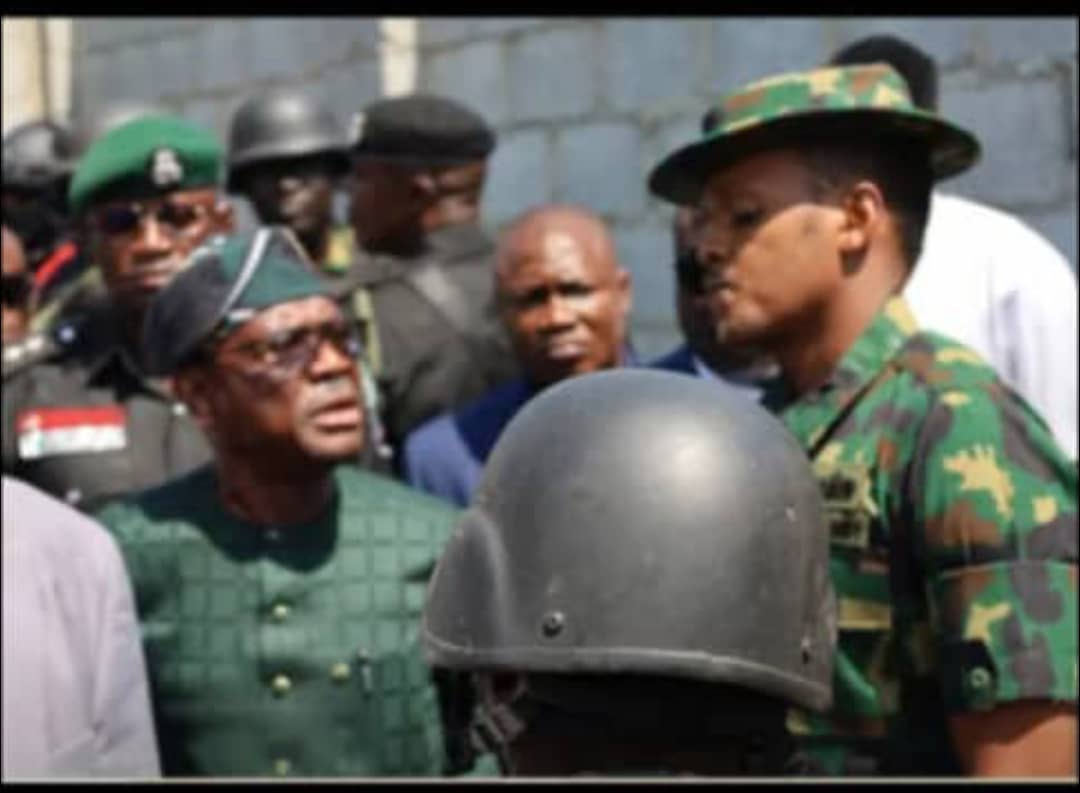
The dramatic face-off between Minister of the Federal Capital Territory, Nyesom Ezenwo Wike, and a junior military officer in the Gaduwa district of Abuja has once again exposed the lingering shadow of military impunity that still hovers over Nigeria’s democracy. More than twenty-five years after the nation’s return to civilian rule, Nigerians should not still be subjected to the spectacle of uniformed men confronting elected or appointed civilian officials in the line of lawful duty. That dark era of decrees and intimidation should have been long buried with the departure of military rule in 1999. Yet, what the country witnessed on that fateful Tuesday was a confrontation that symbolised a troubling question: Are we truly free of the vestiges of military arrogance?
Let us be reminded that the Minister was not visiting a barracks, nor encroaching upon a restricted zone. He was performing his duty within the constitutional boundaries of the FCT Administration — an office that directly represents the President of the Federal Republic of Nigeria. To obstruct him was not to challenge Mr. Wike the man, but to defy the office of the President and the authority of the Nigerian State.
“Even if you are a lieutenant-general or vice admiral, the government must function according to law,” Wike reminded them.
The junior officer’s refusal to allow the Minister access to government-controlled land, and the arrogance with which he responded, was an act of insubordination dressed in khaki. Nigeria’s Constitution leaves no ambiguity: the military is subordinate to civilian authority.
There must be clarity about where true authority lies. Nyesom Wike has been a Local Government Chairman, Chief of Staff, two-term Governor, Minister, and is presently the President’s appointed representative in the nation’s capital. The retired General allegedly connected to the disputed land may have worn stars on his shoulders, but no number of medals elevates one above the laws of the Republic. As for the young Lieutenant who confronted him — by service equivalence, he ranks at best with a local councillor, certainly not a peer of a federal minister. When such a junior officer obstructs the lawful work of a minister, it is not only bad conduct; it borders on institutional rebellion.
The broader concern is the creeping return of militarism into civil space. On the roads of Abuja, citizens still endure the swagger of armed men who treat uniforms as licences for lawlessness. The Gaduwa episode was therefore not an isolated quarrel — it was a symbol of a deeper problem: the failure of some officers, serving and retired, to mentally demobilise from the habits of absolute power. If democracy must survive, discipline must begin from the barracks. The Chief of Army Staff and the Defence Headquarters owe the nation an inquiry and, where necessary, disciplinary measures. Silence in the face of such misconduct only emboldens future defiance.
The land at the centre of the dispute reportedly links to retired top officers and large-scale private development. If that claim is true, it raises critical questions: Was the plot legitimately allocated? How did a public green zone become a private estate? What is the source of the funds involved? These are not questions of sentiment but of transparency and accountability. The FCT Administration must publish a detailed account of the land’s ownership and revoke any illegal claim. Impunity, no matter the rank of those involved, must not be permitted to thrive.
Those cheering the officers for confronting Wike should reflect on the dangerous precedent it sets. Today it is Wike; tomorrow, it may be a governor, a minister, or any civilian official. A nation that normalises defiance against constituted authority invites chaos. Wike represents the President; thus, to insult or obstruct him in his lawful duty is to insult the office of the Commander-in-Chief himself. This was not merely a personal affront; it was an institutional challenge that touches the very soul of Nigeria’s democratic order.
Nigeria must draw a line between military service and civil governance. The military’s nobility lies in its obedience to lawful authority, not in defiance of it. We must resist any drift back to the era of decrees and intimidation. The rule of law must be upheld — not by words but by consequence. The FCT incident should serve as a reminder that power in a democracy is not measured by rank but by constitutional mandate. Those who bear arms do so under the authority of the Republic, not above it. No Nigerian, big or small, soldier or civilian, should ever stand in the way of lawful governance. This confrontation must be treated not as a spectacle but as a warning — that the endurance of our democracy depends on everyone, in and out of uniform, submitting to the rule of law. The Constitution, not the gun, remains the ultimate authority in the Republic.
Perspective from Ayanfejesu Kiaz
But honestly, wit the kind of citizens we are, we don’t deserve a better nation.
Our sense of right and wrong changes wit our emotions and who’s involved.
When the powerful use soldiers outside their lawful duty to oppress ordinary citizens, we all shout, protest, and cry foul.
But now dat those same soldiers are being used to intimidate the FCT Minister, the chief executive of the capital city, from doing his lawful job, suddenly, bcos you dislike Wike, the soldiers have become heroes
Not in our Constitution or the Military Act dat says soldiers have any role in land protection or civil disputes.
This selective outrage is our real problem.
When wrong becomes right bcos it favors our bias, the nation sinks deeper.
In the end, we’ll all be alright, just not as we handle situations.
© Ayanfejesu Kiaz


Buratai Pays Tribute to Ihejirika at 70, Hails Mentorship and Legacy of Leadership
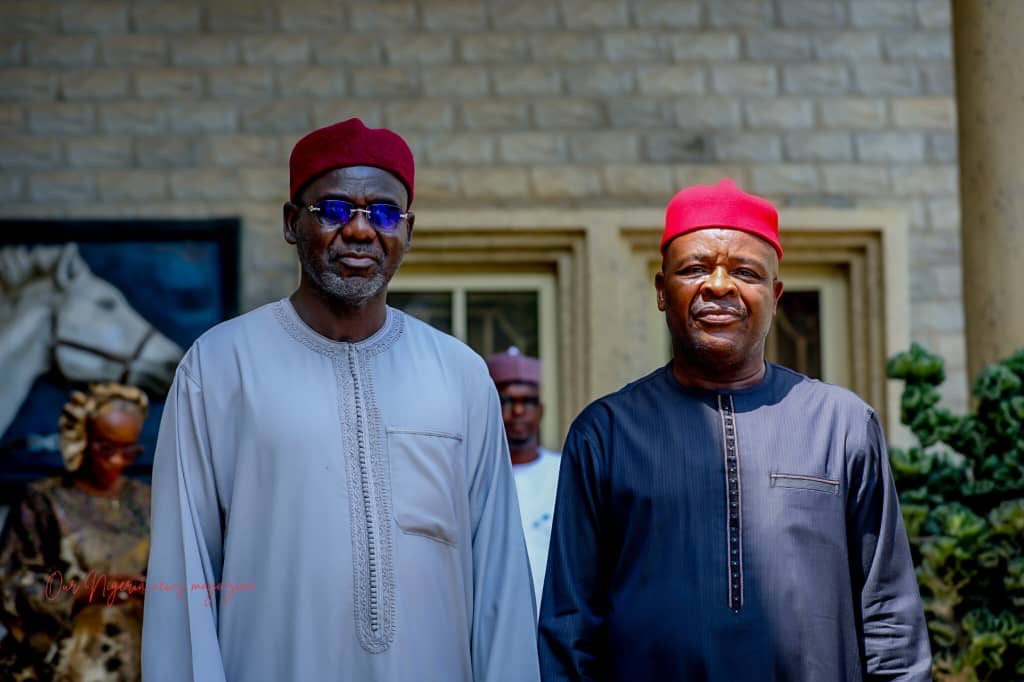
Former Chief of Army Staff and Nigeria’s immediate past Ambassador to the Republic of Benin, Lt. Gen. (Rtd) Tukur Yusuf Buratai, has paid a glowing tribute to his predecessor, Lt. Gen. OA Ihejirika, as the retired General marks his 70th birthday.
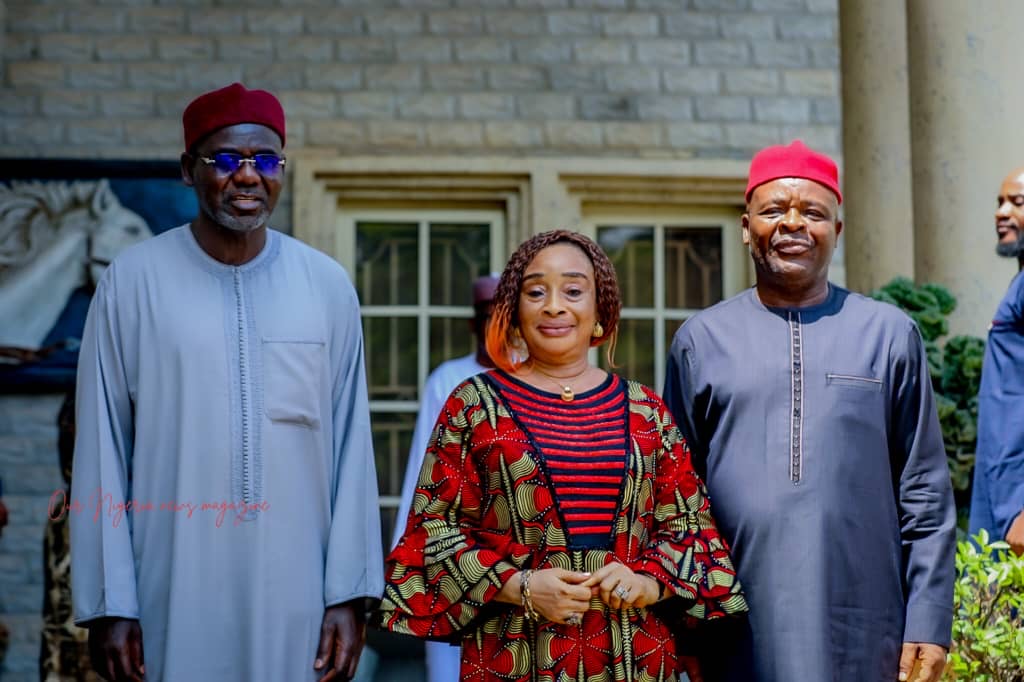
In a heartfelt message released in Abuja on Friday, Buratai described Ihejirika as not only a distinguished soldier and statesman, but also a commander, mentor, and “architect of leadership” whose influence shaped a generation of senior military officers.
Buratai recalled that his professional rise within the Nigerian Army was significantly moulded under Ihejirika’s command, citing key appointments that defined his career trajectory.
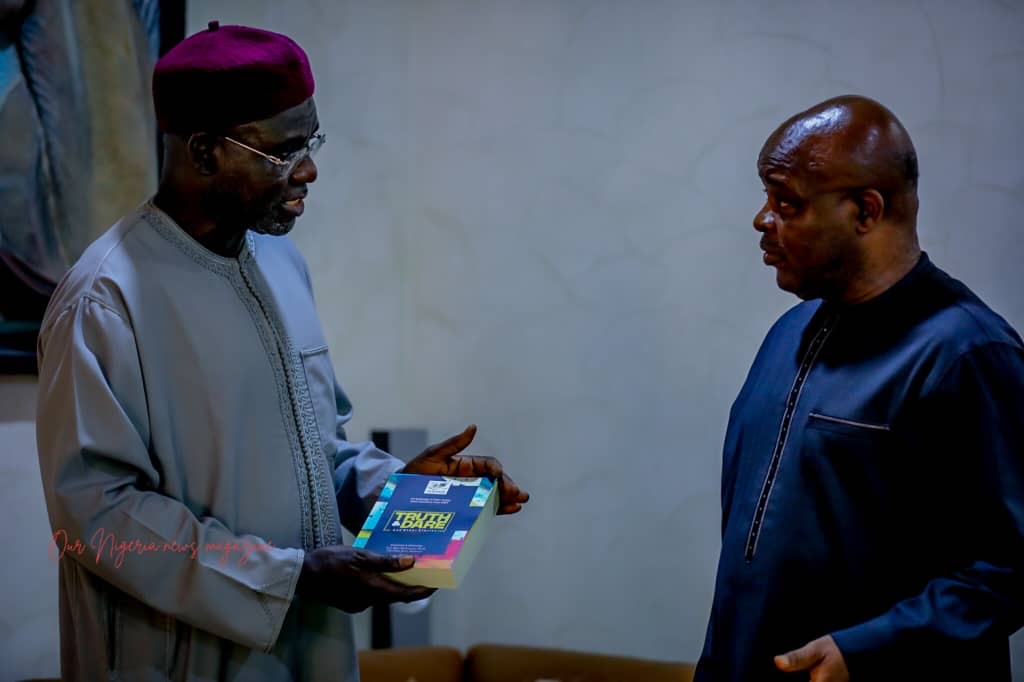
According to him, the trust reposed in him through early command responsibilities, including his first command posting at Headquarters 2 Brigade and later as Commandant of the Nigerian Army School of Infantry, laid a solid foundation for his future leadership roles.
“These opportunities were not mere appointments; they were strategic investments in leadership,” Buratai noted, adding that such exposure prepared him for higher national responsibilities.
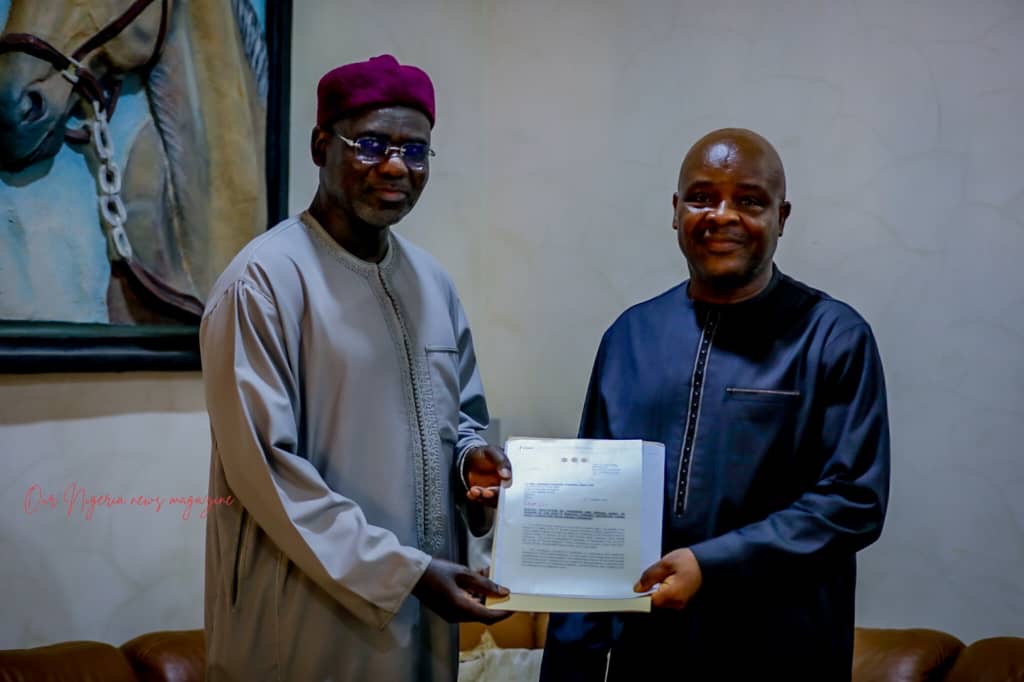
He further acknowledged that the mentorship and professional grounding he received under Ihejirika’s leadership were instrumental in his eventual appointment as Chief of Army Staff and later as Nigeria’s Ambassador to the Republic of Benin.
Buratai praised Ihejirika’s command philosophy, describing it as professional, pragmatic, and mission-driven. He said the former Army Chief led by example, combining firm strategic direction with a clear blueprint for excellence that continues to influence military leadership practices.
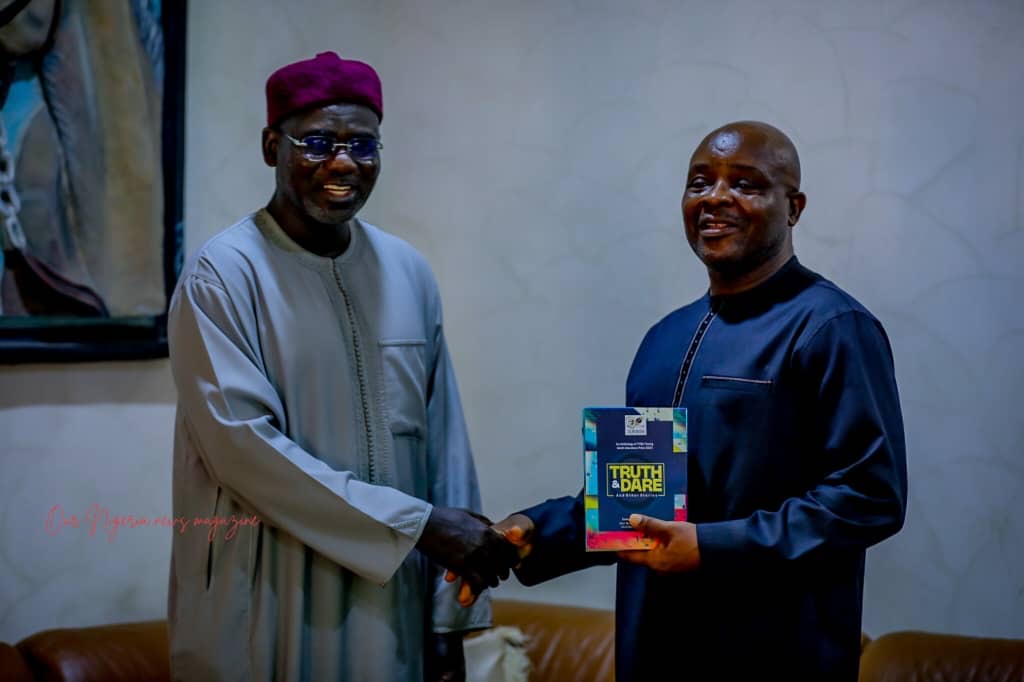
“At seventy, General Ihejirika has earned the right to reflect on a legacy secured,” Buratai stated, praying for good health, peace, and enduring joy for the retired General as he enters a new decade.
He concluded by expressing profound gratitude for the leadership, mentorship, and lasting example provided by Ihejirika over the years.
The tribute was signed by Lt. Gen. Tukur Yusuf Buratai, who described himself as a grateful mentee and successor, underscoring the enduring bonds of mentorship within the Nigerian Army’s top leadership.



-

 celebrity radar - gossips6 months ago
Why Babangida’s Hilltop Home Became Nigeria’s Political “Mecca”
-

 society6 months ago
Power is a Loan, Not a Possession: The Sacred Duty of Planting People
-

 news6 months ago
THE APPOINTMENT OF WASIU AYINDE BY THE FEDERAL GOVERNMENT AS AN AMBASSADOR SOUNDS EMBARRASSING
-

 Business6 months ago
Batsumi Travel CEO Lisa Sebogodi Wins Prestigious Africa Travel 100 Women Award