
society
Sambisa Bloodletting: When Boko Haram Turned Its Guns on ISWAP


Sambisa Bloodletting: When Boko Haram Turned Its Guns on ISWAP.
By George Omagbemi Sylvester | Published by SaharaWeeklyNG.com
“The Deadly Turf War That Shakes the Lake Chad Basin.”
A new and grisly chapter has opened in Nigeria’s long-running insurgency; once bitter rivals in name only, Boko Haram and the Islamic State West Africa Province (ISWAP) have for months been fighting not merely for recruits or haulage routes, but for outright territorial control. The latest and most savage manifestation of that internecine war erupted in and around Sambisa and the islands of the Lake Chad corridor, a cascade of assaults that left scores dead, dozens of boats seized and whole communities re-traumatised. Initial field accounts and media investigations put the toll at roughly two hundred militants killed in clashes over the weekend, with Boko Haram reported to have overrun several ISWAP camps and seized key naval assets.
That figure (horrific even in a conflict long accustomed to horror) must be read in context. The Lake Chad Basin has been a theatre of not only cross-border criminality and smuggling, but also of militant adaptation: riverine skirmishes, sudden amphibious raids and the seasonal ebb and flow of civilians and fighters. For years ISWAP and what remains of Boko Haram’s Shekau-loyal factions have alternated between cooperation, coexistence and murderous rivalry. The latest operations, however, were not mere hit-and-run attacks; they were coordinated attempts to seize island strongholds that generate revenue (through fishing taxes and illicit trade) and provide safe havens from military strikes.
Why this flare-up now matters (and why it should alarm us) boils down to three brutal facts. First, when jihadi factions fight each other, civilians pay the price: reprisals, forced displacements and collective punishments typically follow. Second, the victor in a factional fight can absorb weapons, boats and fighters; materially strengthening itself for renewed attacks on towns, garrisons and humanitarian convoys. Third, infighting makes conflict dynamics less predictable and therefore harder for security forces and relief agencies to plan for or to counter. For communities around Sambisa and the Lake Chad islands, the immediate consequence is the collapse of whatever fragile protection existed and a fresh round of displacement and hunger.
UNIDIR → Building a more secure world.
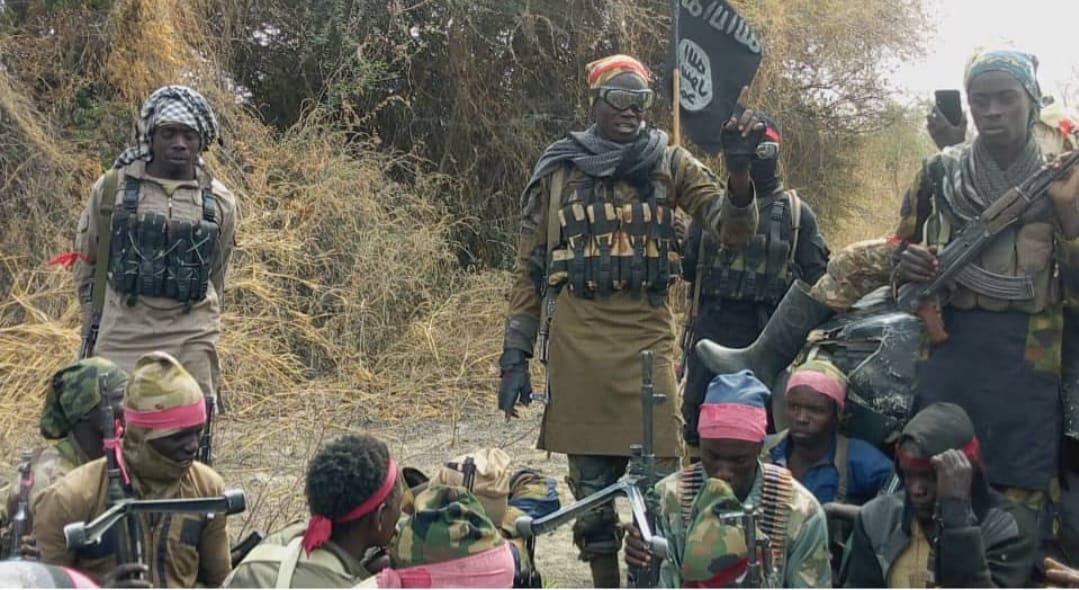
On the ground, the fighting reportedly featured dozens of motorised canoes and heavily armed gunmen which is a reminder that the Lake Chad is no backwater but a strategic corridor. Reports say Boko Haram fighters swept across several ISWAP-held islands, capturing boats and weaponry and inflicting heavy casualties on ISWAP personnel. Local vigilante sources and intelligence leaks described scenes of charred camps and the frantic flight of surviving fighters toward mainland villages. If confirmed, the seizure of riverine assets is strategically significant: control of boats equals control of movement, supplies, taxation points and crucially, escape routes.
Scholars and analysts who have followed the jihadist evolution in north-east Nigeria warn that this is not a mere squabble among thugs; it is the latest phase of a long adaptive conflict. Vincent Foucher, a leading researcher on the Lake Chad jihadist landscape, captures the larger truth: “jihad in the Lake Chad Basin is here to stay.” The line is blunt, but the point is stark; these factions are resilient, they learn from one another and they exploit gaps in state capacity to regenerate. That resilience helps explain why gains against one group are often temporary and why civilian recovery remains painfully fragile.
A tactical victory for Boko Haram in Sambisa (if sustained) raises grave long-term risks. Where one faction consolidates, it does not merely defend borders: it governs, taxes and recruits. It also acquires the spoils of war, captured materiel and the bargaining chips of prisoners and local informants. ISWAP, by contrast, has built an internationalised technical edge in recent years, claiming sophisticated propaganda, reportedly better coordination with transnational ISIS networks and more disciplined battlefield practices. The competition between a predatory, territorially assertive Boko Haram and a bureaucratised, outward-looking ISWAP is not abstract: it shapes attack profiles, civilian targeting and the geography of violence.
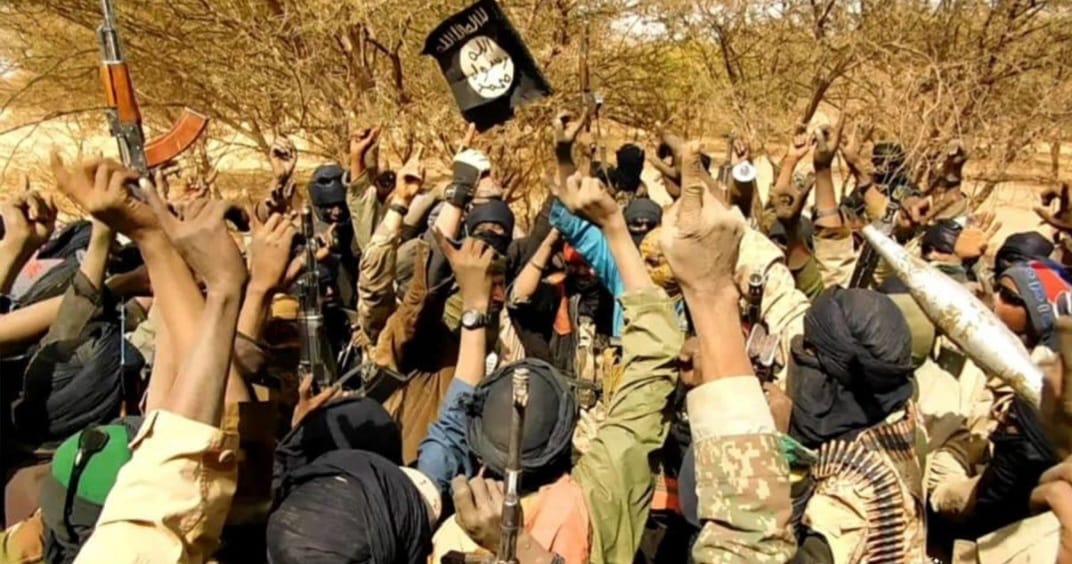
What should the Nigerian state and regional partners do? First, stabilisation requires not only kinetic pressure but also rapid civilian protection and humanitarian access. Too often, military wins are undone by the absence of safe returns, reconstruction and meaningful local security arrangements. Second, the region needs sharper, coordinated intelligence (maritime and riverine surveillance in particular) to prevent future seizures of boats and to protect displaced fishing communities. Third, long-term deradicalisation and socio-economic investment in affected communities remain essential; without economic alternatives and credible local governance, the vacuum will be filled again. These are not novel prescriptions, but the Sambisa incidents make them urgent once more.
There is a cautionary counterpoint, too: factional fighting does not automatically benefit the state. When insurgents bleed each other, they can also become more ruthless or more opportunistic; consolidating areas where they can operate freely, or launching terror attacks to signal continued potency. The 2016 schism that birthed ISWAP taught analysts that fragmentation can produce new, more adaptive organisations rather than a longed-for weakening. That lesson is especially important for policymakers tempted to celebrate intra-militant carnage as a win.
For the ordinary people of Sambisa and the Lake Chad littoral, the technical arguments about strategy are cold comfort. Families who returned to their farms after government assurances now find themselves running again; fishermen who paid protection to one group discover their boats confiscated by another. Humanitarian agencies warn that renewed violence will reverse months of fragile progress: food stocks will run low, clinics will close and education (already the first casualty of this insurgency) will be postponed indefinitely. The indirect death toll from hunger, disease and interrupted health care will be the slow, shameful shadow of this weekend’s headlines.
Finally, the Sambisa clashes are a reminder that Nigeria’s security challenge is not merely military but political. Long-term peace will not be won by force alone. It requires the restoration of state legitimacy, accountable local governance, economic opportunity and regional cooperation across Nigeria, Chad, Niger and Cameroon. Until those building blocks are in place, the islands of Lake Chad will remain prize and prey in equal measure and Sambisa will keep teaching the same brutal lesson: in a failed security market, violence simply repackages itself. As Vincent Foucher warns, the jihadist presence here is unlikely to vanish quietly; the only question is whether a savage contest for spoils will give way to yet another calibrated threat to civilians and statehood.
—
Reported and written by George Omagbemi Sylvester for SaharaWeeklyNG.com
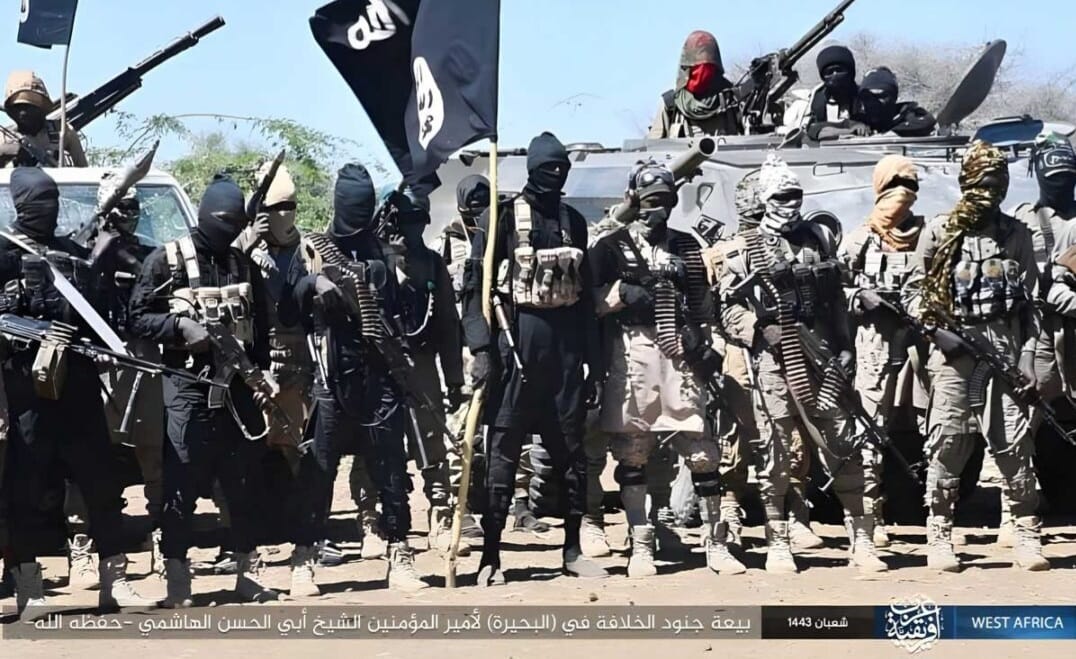
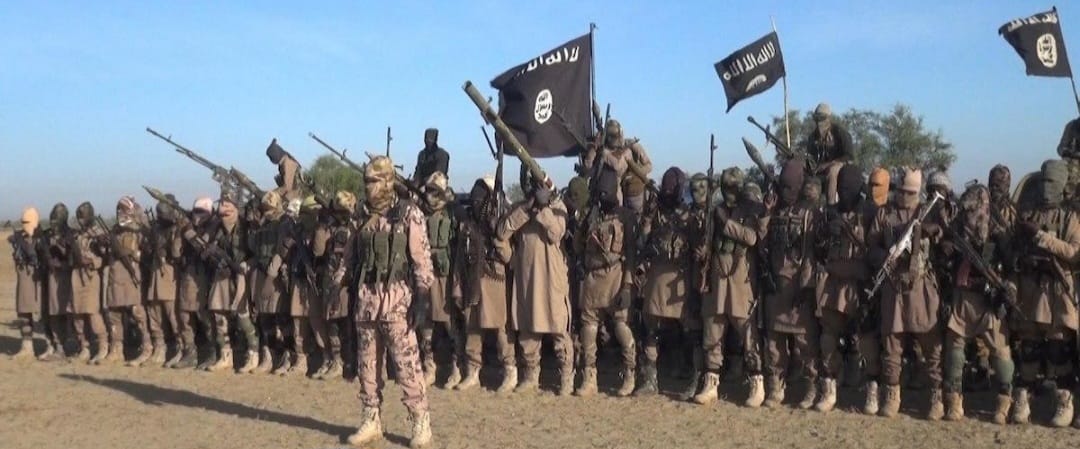




TY BURATAI HUMANITY CARE FOUNDATION CONDOLES WITH BIU EMIRATE OVER TRAGIC ATTACK
In a profound expression of sorrow, the TY Buratai Humanity Care Foundation has extended its heartfelt condolences to the families of the victims and the entire people of Biu Emirate, Borno State, following the recent tragic attack attributed to Boko Haram. This devastating assault, which occurred at a work site in northeastern Nigeria, claimed the lives of dozens, including brave soldiers committed to protecting the nation.
In a statement released to the press and signed by the Chairman of the foundation, Ibrahim Dahiru Danfulani Sadaukin Garkuwan Keffi/Betara Biu, the Grand Patron of the Foundation, His Excellency Amb. Lt. Gen. Tukur Yusufu Buratai CFR (Rtd), former Chief of Army Staff, described the incident as “one too many senseless, barbaric, and ruthless displays of inhumanity.” His Excellency emphasized the heartbreaking impact of such attacks on innocent, hardworking citizens striving to make a positive difference in their communities.
The Grand Patron praised the swift and decisive response of military personnel during this critical time, underscoring their brave commitment to safeguarding the nation. He called upon them to maintain this momentum, commending their courage and sacrifice in the face of adversity. “May Almighty Allah forgive their souls and grant them Aljannah Firdouse,” he remarked, encouraging the nation to honor their spirit of sacrifice as they rally together to rebuild and restore hope across the region.
In his statement, Gen. Buratai highlighted the importance of collective action in overcoming the challenges posed by insecurity, urging concerned citizens to increase their efforts in fostering a virile community that future generations can cherish. “Together, we can surmount these troubles,” he asserted, calling on all patriotic leaders and citizens to unite in the fight against violence and insecurity.

The TY Buratai Humanity Care Foundation remains committed to supporting initiatives that promote peace, security, unity, and prosperity. As the foundation extends its condolences to the bereaved, it also calls upon all segments of society to collaborate in creating a better and safer future. May Allah guide and protect the nation and lead it toward enduring peace. Amen.
society
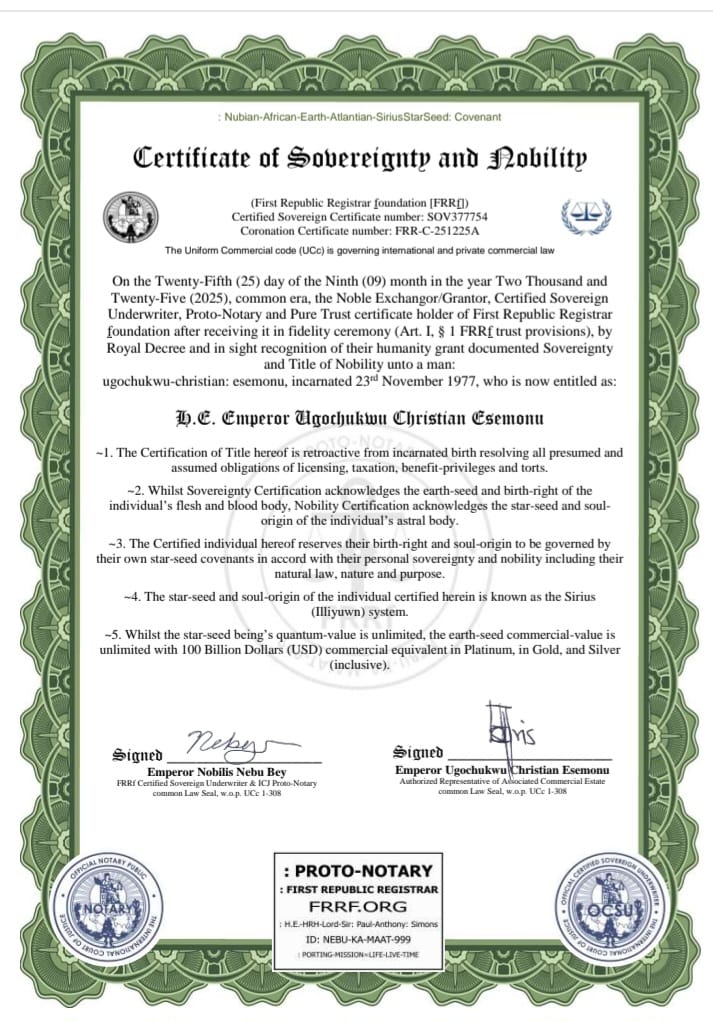
Rt Hon Treasure Edwin Inyang Appointed Secretary General to the Government of UKA (Worldwide)

Rt Hon Treasure Edwin Inyang Appointed Secretary General to the Government of UKA (Worldwide)*
January 29, 2026 – A prestigious appointment has been announced in the reign of Emperor Solomon Wining 1st, recognizing Rt Hon Treasure Edwin Inyang as the *Secretary General to the Government of UKA (Worldwide)*. The official certificate, designated STE.001-1 E, was presented to Rt Hon Inyang during a ceremonial investiture.
As Secretary General, Rt Hon Treasure Edwin Inyang will *monitor and coordinate* the implementation of government policies and programmes, serve as an advisory institution to the Government, drive policy formulation, harmonization, and implementation, and oversee the activities of ministries, agencies, and departments.
The appointment was proclaimed by *Emperor Prof. Dr. Solomon Wining*, Emperor of the United Kingdom of Atlantics and Empire Worldwide, and co-signed by *Empress Prof. Dr. Sriwan Kingjun*, Empress of Attica Empire, under the auspices of the 5 Billions Humanitarian Projects Incorporated.
The ceremony underscores the commitment to strengthening governance and humanitarian initiatives within the UKA (Worldwide) jurisdiction, effective immediately in the reign of Emperor Solomon Wining 1st.
GENERAL BULAMA BIU MOURNS BOKO HARAM VICTIMS, CALLS FOR UNITY AND RENEWED EFFORTS FOR PEACE
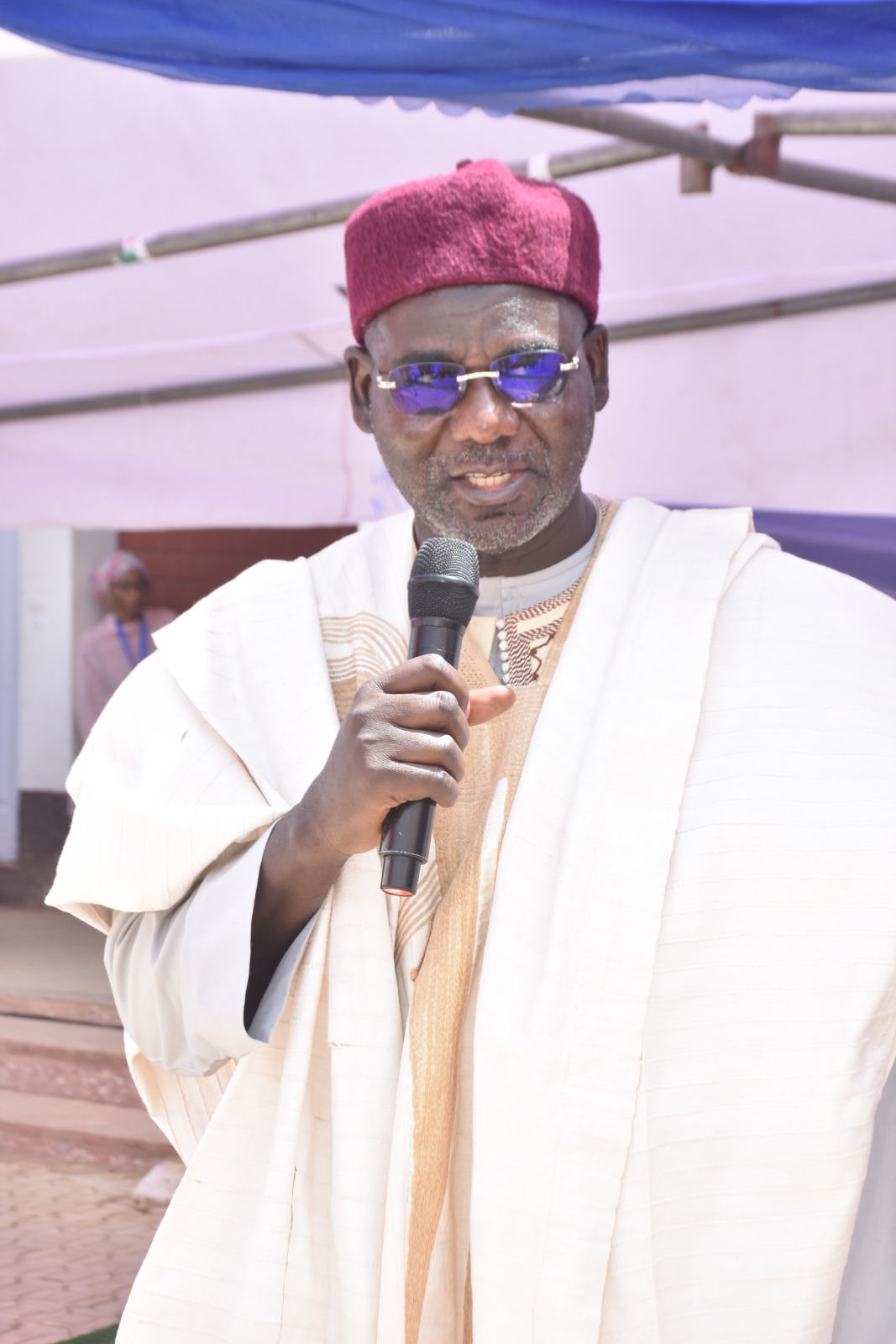
In a solemn message of condolence and resolve, Major General Abdulmalik Bulama Biu mni (Rtd), the Sarkin Yakin of Biu Emirate, has expressed profound grief over a recent deadly attack by Boko Haram insurgents on citizens at a work site. The attack, which resulted in the loss of innocent lives, has been condemned as a senseless and barbaric act of inhumanity.
The revered traditional and military leader extended his heartfelt sympathies to the bereaved families, the entire people of Biu Emirate, Borno State, and all patriotic Nigerians affected by the tragedy. He described the victims as “innocent, peaceful, hardworking and committed citizens,” whose lives were tragically cut short.
General Biu lamented that the assault represents “one too many” such ruthless attacks, occurring at a time when communities are already engaged in immense personal and collective sacrifices to support government efforts in rebuilding devastated infrastructure and restoring hope.
In his statement, he offered prayers for the departed, saying, “May Almighty Allah forgive their souls and grant them Aljannan Firdaus.” He further urged the living to be encouraged by and uphold the spirit of sacrifice demonstrated by the victims.
Emphasizing the need for collective action, the retired Major General called on all citizens to redouble their efforts in building a virile community that future generations can be proud of. He specifically commended the “silent efforts” of some patriotic leaders working behind the scenes to end the security menace and encouraged all well-meaning Nigerians to join the cause for a better society.
“Together we can surmount the troubles,” he asserted, concluding with a prayer for divine intervention: “May Allah guide and protect us, free us from this terrible situation and restore an enduring peace, security, unity and prosperity. Amin.”
The statement serves as both a poignant tribute to the fallen and a clarion call for national solidarity in the face of persistent security challenges.


-

 celebrity radar - gossips6 months ago
Why Babangida’s Hilltop Home Became Nigeria’s Political “Mecca”
-

 society5 months ago
Power is a Loan, Not a Possession: The Sacred Duty of Planting People
-

 Business6 months ago
Batsumi Travel CEO Lisa Sebogodi Wins Prestigious Africa Travel 100 Women Award
-

 news6 months ago
THE APPOINTMENT OF WASIU AYINDE BY THE FEDERAL GOVERNMENT AS AN AMBASSADOR SOUNDS EMBARRASSING