
society
Gavel in a Quiet Hand — South Africa Hands Over G20 Presidency to the United States in a Low-Key Exchange

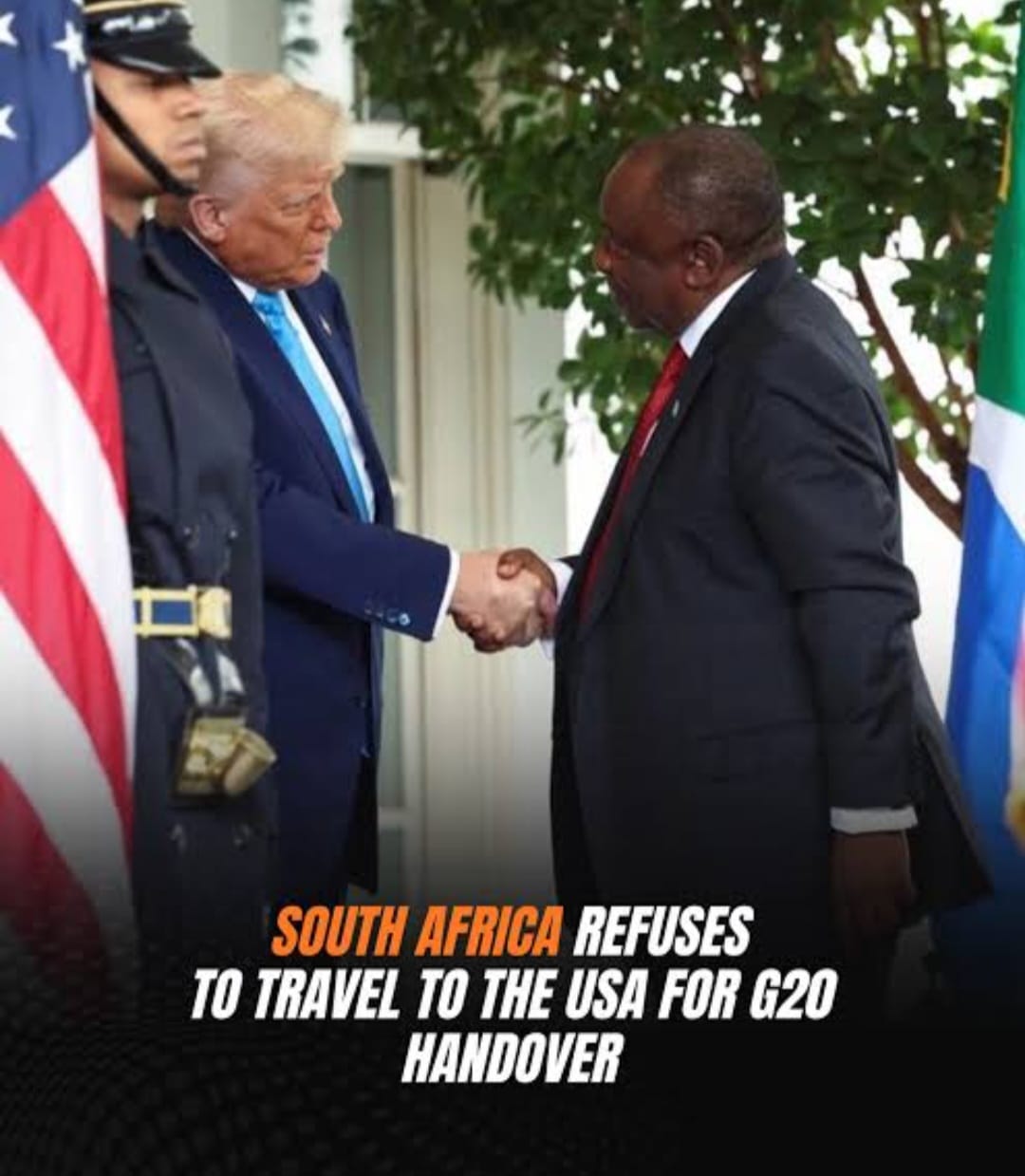
Gavel in a Quiet Hand — South Africa Hands Over G20 Presidency to the United States in a Low-Key Exchange.
By George Omagbemi Sylvester | Published by saharaweeklyng.com
“In a subdued ceremony overshadowed by diplomatic friction and leadership absences, Johannesburg’s historic G20 closes with pressing questions about debt, climate and whether the Global South’s priorities will survive a U.S. presidency.”
South Africa’s moment as the first African country to hold the G20 presidency (a year-long opportunity to place the continent’s development challenges squarely on the global agenda) ended not with fanfare but with a quiet diplomatic exchange. The handover of the G20 presidency to the United States was conducted in a low-key ceremony at the Department of International Relations and Cooperation (DIRCO) in Pretoria, reflecting an atmosphere of strained protocol and frayed trust between hosts and a recalcitrant partner.
That muted final act belies the substance of what South Africa attempted across its presidency year: to shift the G20’s attention toward the acute vulnerabilities of low-income nations; debt distress, climate adaptation finance, fair access to critical minerals and the industrialisation that creates jobs. South Africa’s presidency, which officially ran from 1 December 2024 until 30 November 2025, foregrounded the theme “Solidarity, Equality, Sustainability” and elevated an Africa-centred workstream through the G20 Africa Expert Panel chaired by Trevor Manuel.
Yet the handover was complicated by geopolitics. Washington’s decision to send a low-level delegation (a chargé d’affaires rather than a head of state or senior minister) and earlier threats by the U.S. administration to boycott parts of the summit turned the symbolic gavel exchange into a diplomatic tightrope. South African officials and commentators had signalled a preference for a discreet transfer to avoid escalation; both capitals publicly agreed to keep the ceremony understated. Still, the optics were telling: a gavel passed in a modest office, not on the summit stage, at the end of what was meant to be a historic African summit.
Why does the tone of a handover matter? Because presidencies shape agendas in tangible ways. South Africa used its term to push the G20 toward concrete measures on debt sustainability and energy-transition finance; priorities that speak directly to fragile economies across Africa and the Global South. The adopted leaders declaration in Johannesburg contained language urging more support for climate adaptation, for debt relief mechanisms and for financing pathways that do not deepen dependency. Those are not decorative commitments; they are lifelines for countries teetering under rising interest rates, climate shocks and shrinking fiscal space.
Trevor Manuel, who led the Africa Expert Panel, captured the seriousness of the moment: “A lack of cooperation between nations will only stagger progress for a shared global vision on growth and development.” His intervention (and the panel’s recommendations) were intended to lock the G20 into a programme that treats the economic fragility of poorer nations as central to global stability, not as peripheral charity. Whether that message will survive the baton-pass to the United States is the central unanswered question of the handover.
Independent analysts are blunt. Saharaweeklyng.com warned that South Africa’s debt focus will be “TESTED” once the United States assumes the chair, suggesting that a shift in priorities is likely when a presidency changes hands and when major economies return to centre stage. The concern is not hypothetical: G20 workstreams require political will and continuity; absent a champion in the White House, negotiations and financing mechanisms for debt relief and energy transition could stall.
This is not merely bureaucratic bookkeeping. Debt restructurings, climate finance windows and technical support for sustainable mineral value chains determine whether African economies industrialise on their own terms or remain suppliers of raw inputs. The Johannesburg declaration and the Africa Expert Panel’s report together presented a blueprint for mobilising international financial institutions (notably the IMF and the World Bank) toward large-scale instruments that could cushion vulnerable economies. Those proposals, if implemented, would alter the development trajectory of entire regions. South Africa’s presidency made that case with unusual moral urgency; the handover now places the future of those proposals at the mercy of shifting political winds.
There are broader diplomatic lessons here. First, hosting the G20 in Africa was a symbolic victory for multipolarity; an assertion that the Global South must have space to set priorities. South Africa’s leaders used the platform to highlight food security, critical minerals and technology for sustainable development. Second, the low-key handover underscores how fragile that assertion can be in the face of unilateral moves by major powers. If a presidency can be effectively downplayed by a boycott or downgraded representation, the multilateral norm of cooperative stewardship is weakened.
Though, let us not mistake formality for failure. Johannesburg produced an outcomes document that, while imperfect, enshrined new language on climate justice and debt relief that advocates can now hold future presidencies to account for. The G20 Africa Expert Panel’s recommendations (formally handed to President Cyril Ramaphosa in November and widely publicised during the summit) give civil society, African finance ministries and international partners a common text to reference in future negotiations. That institutional memory matters.
For South Africa and the African continent, the imperative is clear: CONVERT DIPLOMATIC SPOTLIGHT into INSTITUTIONAL LEVERAGE. That means two things in practice. One, African country must consolidate their proposals into measurable targets and funding requests that multilateral banks and creditor nations cannot easily ignore. Two, South Africa must insist that the incoming presidency fixtures (working groups, technical committees and follow-up mechanisms) include explicit timelines and funding commitments. The soft handover cannot become an excuse for policy atrophy.
The United States now inherits not only a gavel but also a public expectation: oversee a G20 that treats the Global South’s vulnerabilities as collective security risks. If Washington chooses to deprioritise debt relief and climate adaptation finance, it will not merely disappoint African governments; it will undermine the practical foundations of global economic stability. Conversely, if the U.S. presidency embraces the Johannesburg agenda even partially, it could demonstrate that G20 leadership transcends partisan domestic politics. That choice will have consequences felt in capitals from Pretoria to Lagos to New Delhi.
The low-key nature of the handover should not obscure the scale of what was achieved and what remains at stake. South Africa’s G20 year has left a record: a set of proposals, a leaders declaration that acknowledges Africa’s voice and an expert panel report that maps pragmatic pathways. The task ahead is to ensure that these instruments become action, not archive. As Trevor Manuel warned and as South African diplomacy has implicitly argued throughout this presidency, cooperation (not posturing) is the currency of global progress. The world now waits to see whether the United States will treat that currency as legal tender.
In the quiet room in Pretoria where the gavel changed hands, the photograph will be modest and the exchanges measured. But the stakes are anything but small. The next twelve months will test whether the G20 can be more than a theatrical passing of symbols or whether it can be an instrument that translates the moral urgency of Johannesburg into binding, financed commitments for those most at risk. South Africa has passed the baton. The world must now decide whether it will run with the agenda or let it fall.







Gen CG Musa Support Group Celebrates Grand Patron as 2025 Man of the Year
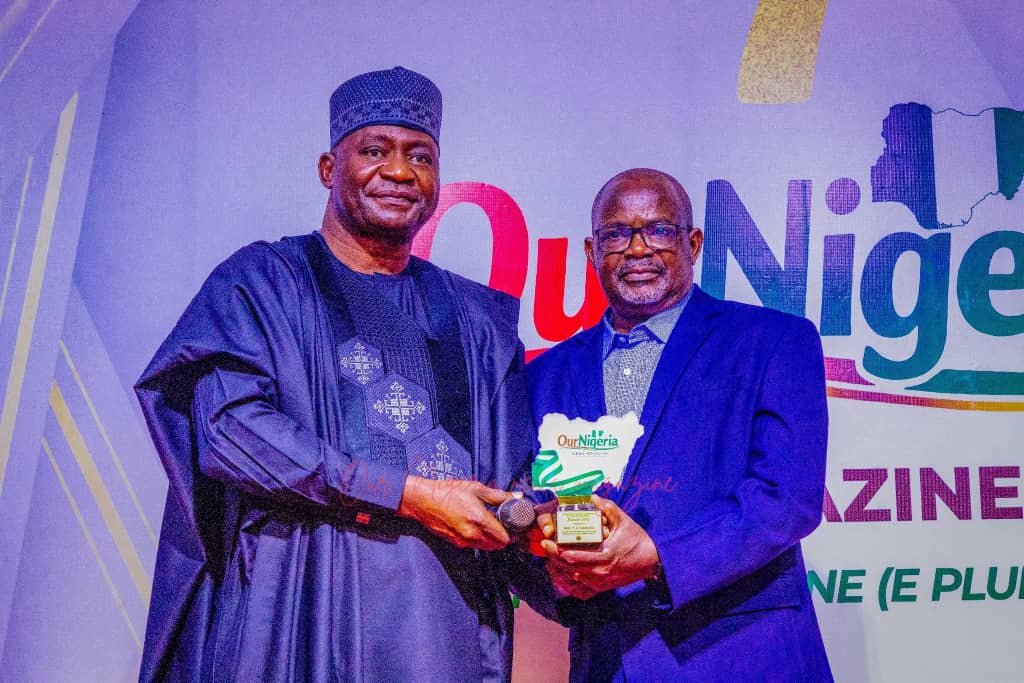
The Gen CG Musa Support Group has extended its warmest congratulations to its Grand Patron, His Excellency Gen. Christopher Gwabin Musa OFR (Rtd), the Honourable Minister of Defence, following his prestigious designation as the 2025 Man of the Year by OurNigeria News Magazine.
In a statement released to the press and signed by the Director General of the Support Group, Ibrahim Dahiru Danfulani, the Sadaukin Garkuwan Keffi/Betara Biu, the group hailed the recognition as a fitting tribute to a leader of exceptional character and accomplishment.
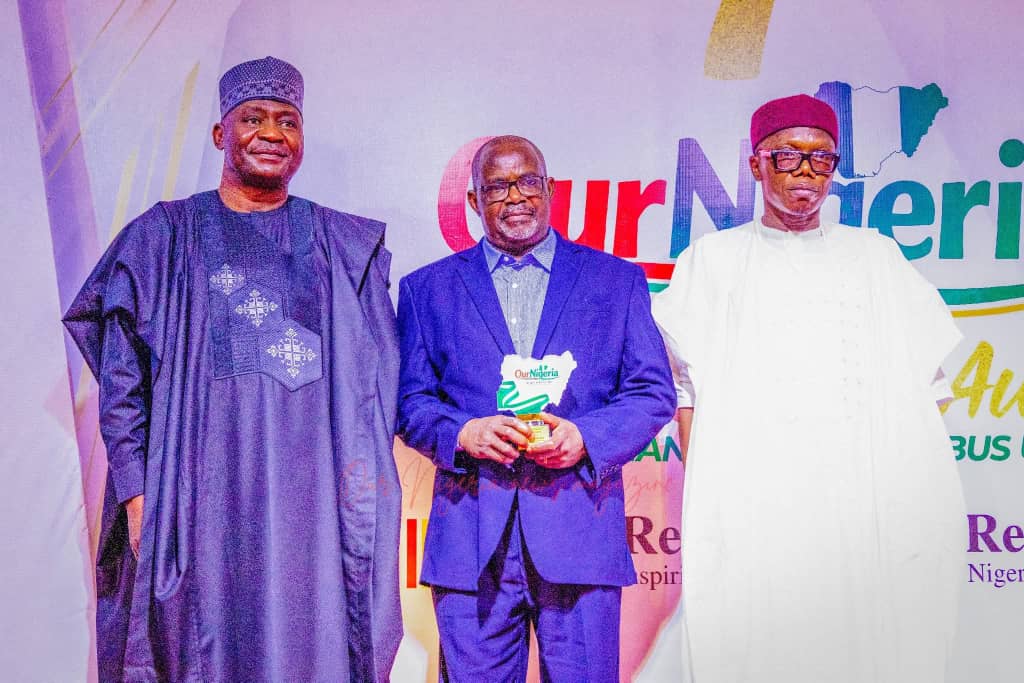
The statement illuminated the distinction of the award, emphasizing that it transcends the formal titles of “General” and “Minister.” It celebrated the core of the man himself—a leader renowned for his profound humility, incredible kindness, and genuine respect for all individuals. “People see the legacy and the title,” the statement noted, “but some of us are lucky to know the man behind it.”
The Support Group underscored that this accolade is a direct acknowledgment of the Minister’s exemplary personal conduct. It is an award not merely for the office he holds, but for the consistent humility he carries into every room and every interaction, a quality that has defined his leadership both in and out of uniform.
The honour also serves as a powerful validation of General Musa’s distinguished and unblemished track record of service to the nation. His decades of dedicated service within the military, which culminated in his ascension to the pinnacle as the Chief of Defence Staff prior to his retirement, are cited as the foundational pillars of his esteemed reputation.
The Gen CG Musa Support Group expressed profound gratitude to OurNigeria News Magazine for its discerning choice, noting that the award serves as a significant source of encouragement for the Honourable Minister. It reaffirms the nation’s appreciation for leadership that blends strength with compassion, strategic vision with unwavering integrity, and lofty achievement with grounded humanity.
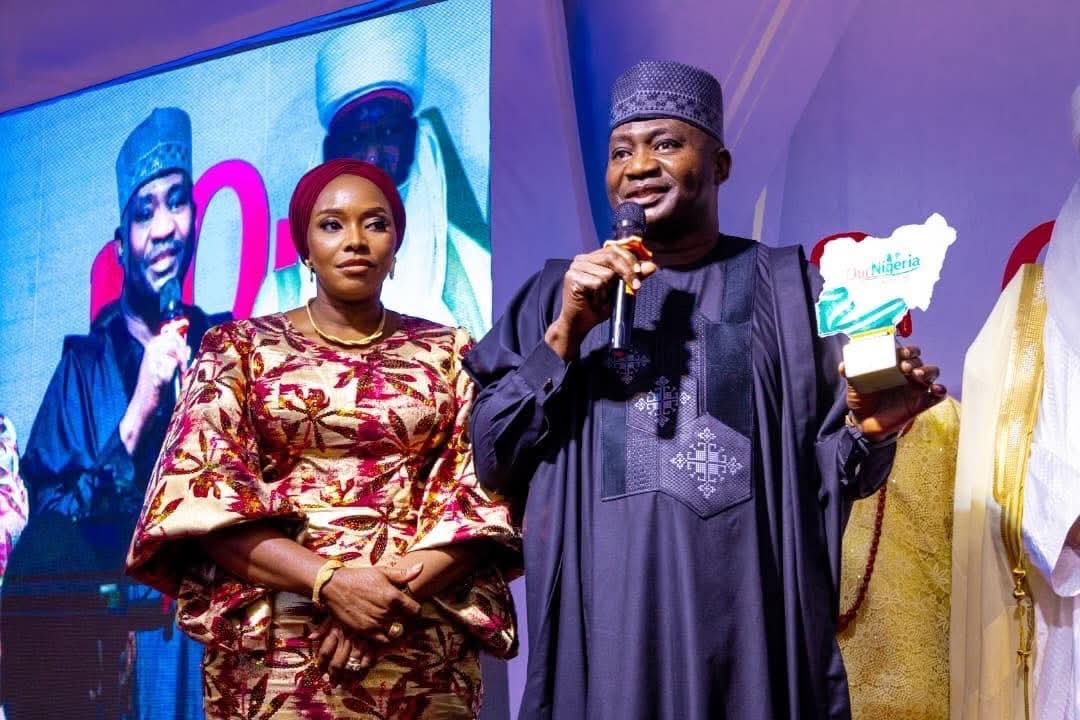
This recognition solidifies General Christopher Gwabin Musa’s status not only as a defender of the nation but as a paragon of virtuous leadership, whose influence and example continue to inspire confidence and respect across Nigeria.
About the Gen CG Musa Support Group:
The Gen CG Musa Support Group is a collective dedicated to promoting the ideals and supporting the leadership of His Excellency Asiwaju Bola Ahmed Tinubu GCFR and His Excellency Gen. Christopher Gwabin Musa, celebrating their service and contributions to national peace, security, and unity.
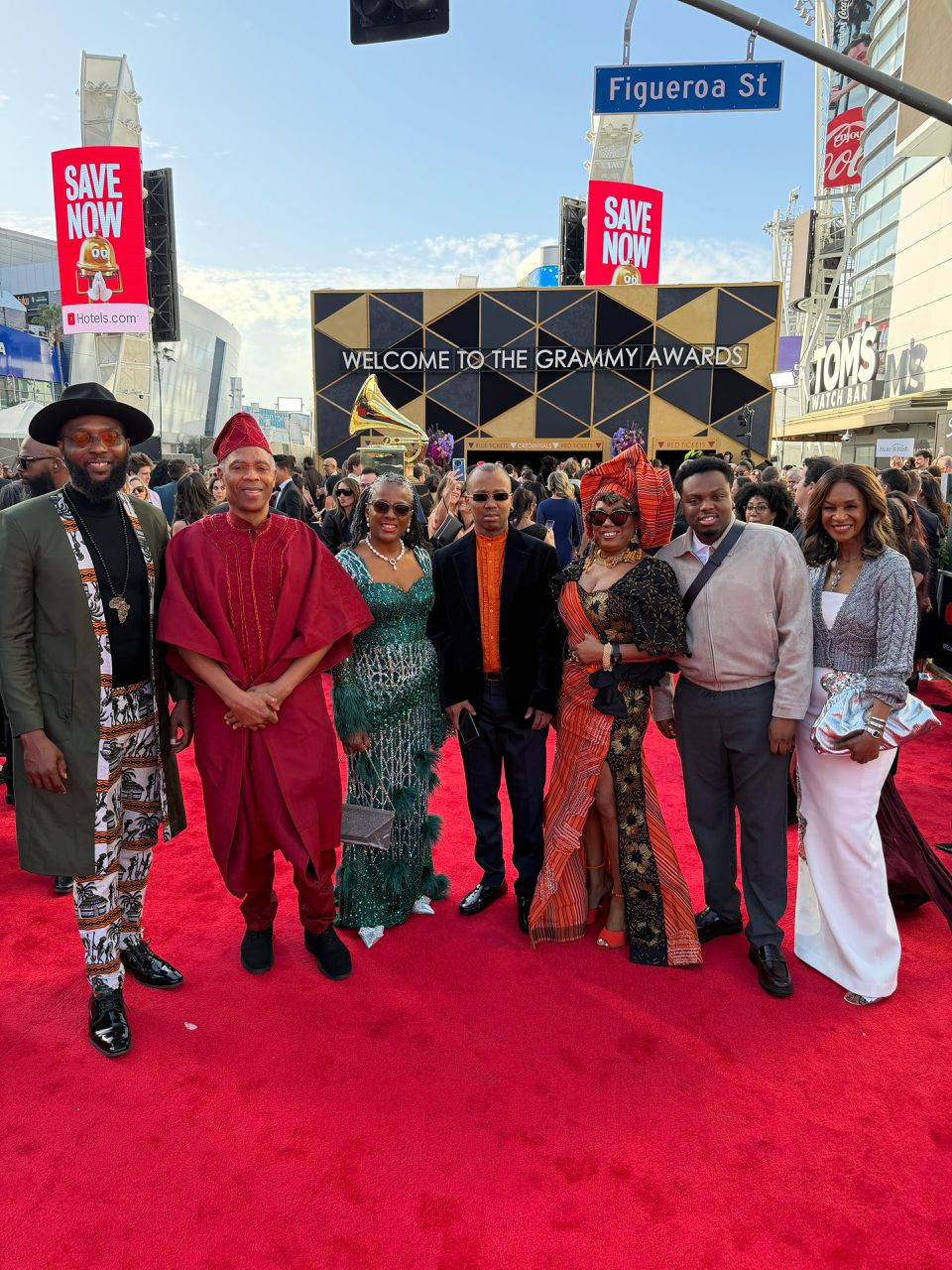
Baba Kuboye, Fela Kuti’s Nephew, Gains Global Spotlight as Grammys 2026 Beckon
Baba Kuboye, a Grammy Award nominated Afrobeat artist and nephew of legendary Afrobeat pioneer Fela Anikulapo Kuti is fast cementing his place as one of the most dynamic voices in contemporary African music, with growing global attention ahead of the 2026 Grammy Awards.
The Lagos-born musician earned a Grammy nomination through his contribution to the Contemporary Blues Album by Antonio Vergara, a milestone that underscores his rising influence beyond Afrobeat into global music spaces. Son of respected Afro-Jazz musicians Fran and Tunde Kuboye, Baba’s artistic journey is deeply rooted in a rich family legacy that blends music, activism and cultural consciousness.
Raised in a vibrant musical household in Lagos, Baba Kuboye grew up surrounded by live performances at his parents’ famed jazz hub, Jazz 38, where he began performing at an early age. His close relationship with his uncle, Fela Kuti, profoundly shaped his sound and philosophy, inspiring a commitment to socially conscious music that speaks truth to power.
In 2023, Baba Kuboye reached a major career milestone when he showcased his EP, From Ikoyi With Horns, at the globally acclaimed SXSW Festival in the United States, performing alongside his 13-piece band. One of the standout tracks from the project, Ikoyi Boy, won Best Afrobeat Song at the Hollywood Independent Music Awards, further solidifying his international appeal.
Known for his innovative fusion of traditional Afrobeat rhythms with contemporary sounds, Baba Kuboye’s music addresses pressing social issues including racism, mental health, and inequality, echoing the protest-driven roots of Afrobeat while speaking to modern realities.
Beyond the stage, Baba Kuboye continues to shape the industry as the founder of Down 4 Whateva Entertainment, recognized as the first minority-owned independent Afrobeat label in the United States. Through this platform, he is championing cultural authenticity and creating opportunities for emerging African talents.
His work has received international exposure on platforms such as BET and MTV, alongside honours including the Stardust Award from North Texas Performing Arts.
As anticipation builds toward the Grammy 2026 season, Baba Kuboye stands as a powerful symbol of Afrobeat’s global evolution, rooted in heritage, driven by purpose and resonating across continents.
Fans can stream Afroverse: The Album by Baba Kuboye on all major digital music platforms and follow him on social media:
Instagram: @Babakuboye
X (Twitter): @Babakuboye
TikTok: @Babakuboye

Nigeria will be at peace when youths are gainfully employed
By Ifeoma Ikem
A philanthropist, Mr Calistus Chukwuedozie says Nigeria will be at peace when its youths are gainfully employed and in turn solve the problem of insecurity across the nation.
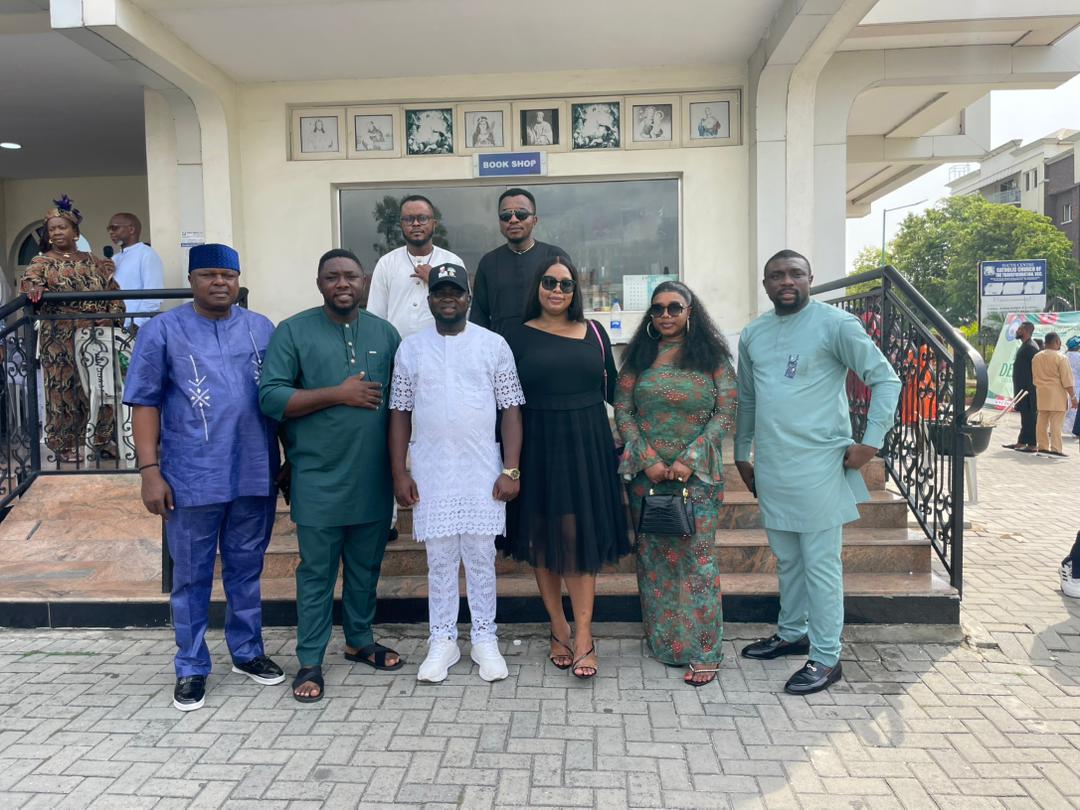
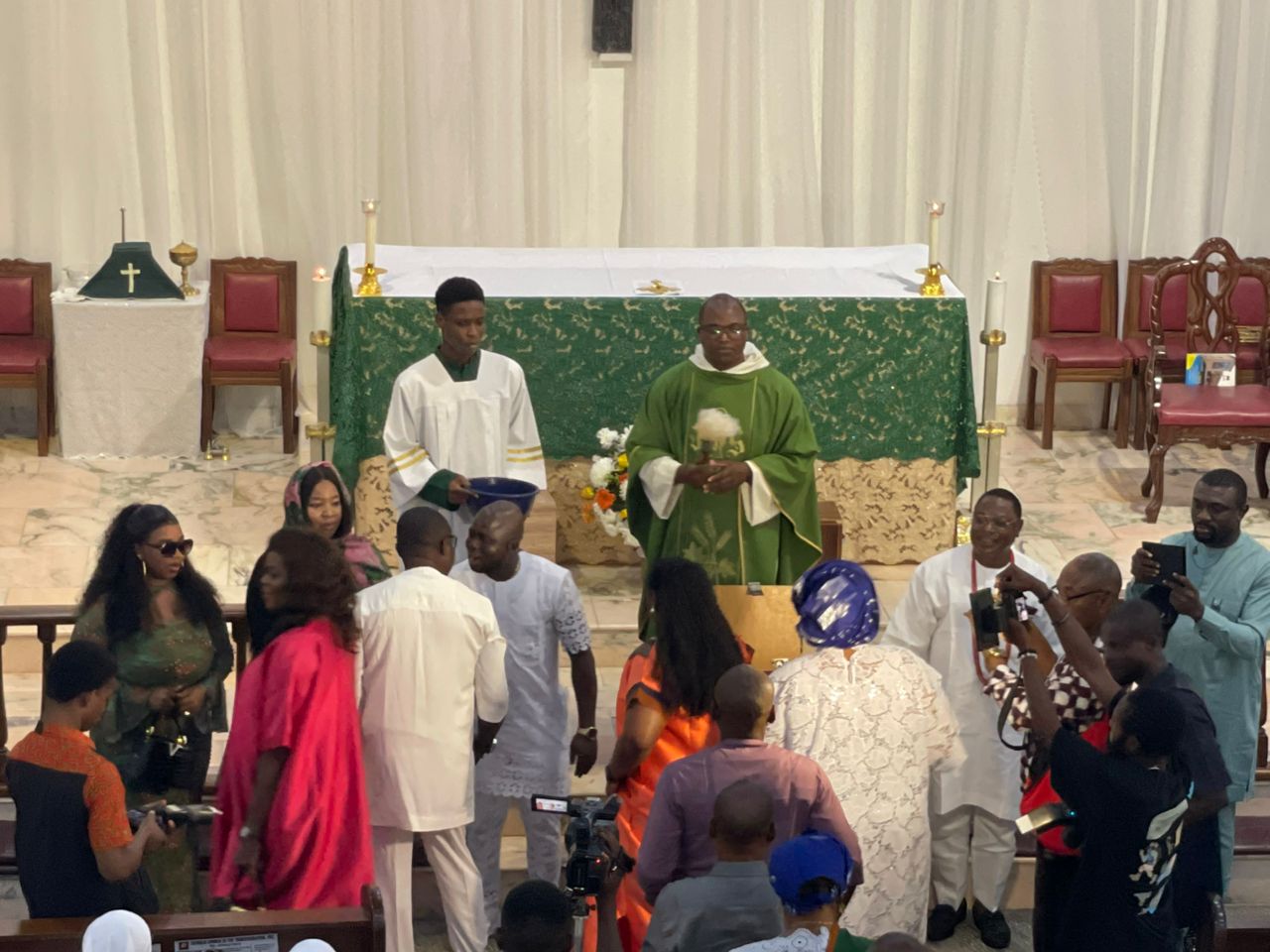
Chukwuedozie, a past President of the Rotary Club, Victoria, Lagos made the assertion at the memorial thanksgiving in honour of his late father, Pa Anthony Onuchukwu Chukwuedozie at Catholic Church of Transfiguration, VGC, Lagos,.
He said he observed first-hand how employment can help curb insecurity when he travelled to his home town Ihiala, Anambra state for his father’s burial.
He credited Onyema’s employment initiatives in Mbosi, Ihiala, where at least one person per household reportedly benefits from job opportunities within Air Peace as a major factor fostering calm, unity and economic stability in the area.
“I was at home for almost one month during my father’s burial ceremony and noticed that there was no report of kidnapping, robbery and criminal activities in my community.
“When I made enquiry, I was told that the Chairman of Air piece, Allen Onyema, gave over 250 youths of the community employments and promised them more jobs.
“With what he did for the community, he was able to solve the problem of insecurity and the youths listened to him when he advised them to shun crime.
“ I for one have more than 100 people under my employment.
“Families forced their bad children to give up crime and renounce it and many of them have turned new leaves.’’
He reiterated that if well to do people in each community in the South East or Nigeria at large should replicate what Allen Onyema did, every youth will be gainfully employed and nobody will be a willing tool in the hands of criminals.
`The government on their own should liaise with Banks to give soft loans to many people who want to start small scale businesses.
`Many of our youths have learnt one trade or the other, but have no money to set up their businesses.
If they can get access to soft loans for their businesses, the nation will be a greater and peaceful place do businesses.’’
Chukwuedozie, the CEO of MICCALLY AUTOS, who also spoke about the enduring values his father stood for said the man’s life journey was defined by principle, discipline and service to humanity.
He described his father as a man deeply rooted in integrity, adding that his father’s remarkable life as a soldier, teacher and farmer reflected both strength and nurture.
Beyond his career paths, Pa Chukwuedozie’s greatest legacy, according to his son, was his unwavering commitment to raising all seven of his children into accomplished academic and business professionals.
“In my ancestral home, Ihiala, my father was widely revered as a community leader whose counsel and character commanded respect.’’
He commended the Inspector General of Police for his efforts in ensuring stability and safety of all citizens.
“The peace I experienced during my stay at home was a direct result of sustained communal engagement and youth empowerment.
“I also advocate for broader government inclusion in education and skills acquisition programs for the youths as productive engagement remains one of the most effective tools against insecurity and social vices.’’
The memorial event drew tributes from notable guests, including Chief Edwin Eze Ogidigha of Oraifite, Chairman of Yamaha Sub-Saharan Africa who described Pa Chukwuedozie as a man whose influence extended far beyond his immediate family.
He praised the late patriarch for positively shaping generations through his character, discipline and wisdom.
He said that the remarkable achievements and values seen in his children stand as living proof of a life well lived.
A guest Onwa of idemili, Nnamdi Ifebi who spoke in the same vein on security said that the steps that the governor of Anambra State has taken to address the issue of security have also yielded positive results.
“What miscreants were doing before now, thinking that they were untouchable is now a thing of past. I commend the governor and security agencies for their good job.”
As prayers were offered and stories shared, the memorial thanksgiving became more than a remembrance.
It evolved into a celebration of legacy, community impact and the quiet power of a man who lived with honour.
In every tribute echoed a singular truth that Pa Chukwuedozie may have departed this world, but the principles he lived by will continue to walk boldly through the lives he touched.


-

 celebrity radar - gossips6 months ago
Why Babangida’s Hilltop Home Became Nigeria’s Political “Mecca”
-

 society6 months ago
Power is a Loan, Not a Possession: The Sacred Duty of Planting People
-

 Business6 months ago
Batsumi Travel CEO Lisa Sebogodi Wins Prestigious Africa Travel 100 Women Award
-

 news6 months ago
THE APPOINTMENT OF WASIU AYINDE BY THE FEDERAL GOVERNMENT AS AN AMBASSADOR SOUNDS EMBARRASSING