
society
Pretoria in Mourning: 11 Dead, 14 Wounded as Gunmen Storm Hostel in Saulsville – A Nation Demands Answers

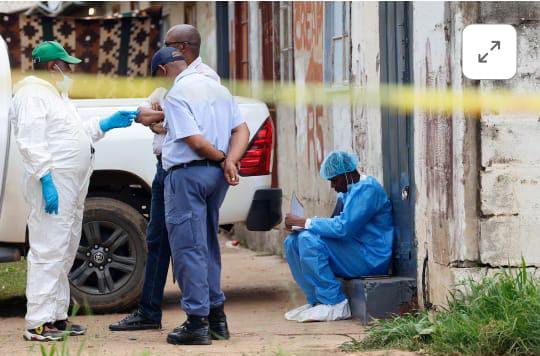
Pretoria in Mourning: 11 Dead, 14 Wounded as Gunmen Storm Hostel in Saulsville – A Nation Demands Answers.
By George Omagbemi Sylvester | Published on saharaweeklyng.com
“Shocking mass-shooting at illegal “SHEBEEN” hostel bar exposes deep-rooted crisis of crime, guns and social decay in South Africa.”
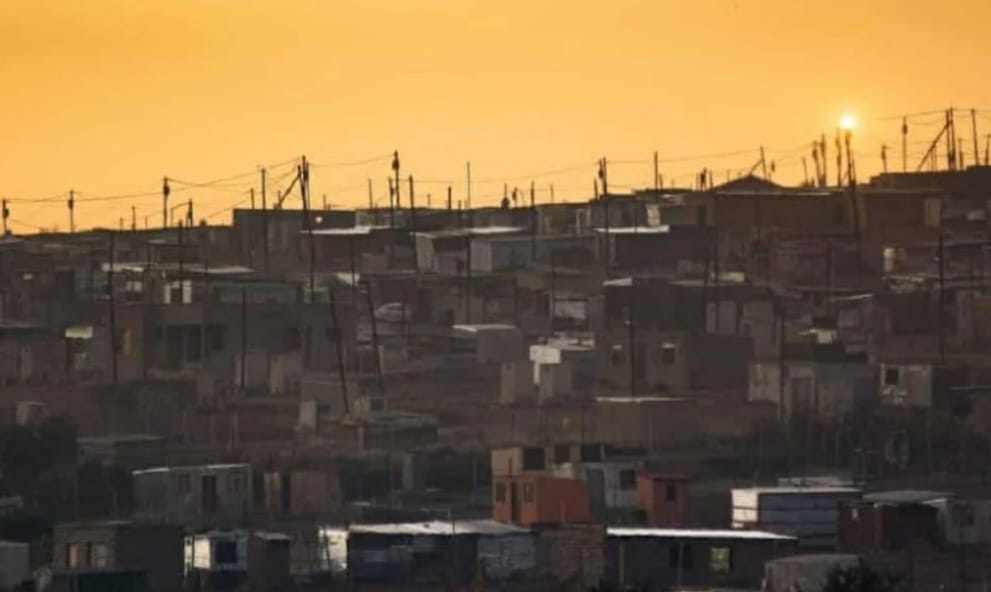
In the early hours of Saturday, December 6, 2025, the township of Saulsville (located in Atteridgeville, some 18 kilometres west of Pretoria) was once again plunged into grief and outrage. A group of armed men forced their way into a hostel that doubled as an illegal “SHEBEEN” (bar) and unleashed indiscriminate gunfire on dozens of unsuspecting patrons. By the time the smoke cleared, at least 11 people lay dead and 14 more were wounded with many seriously. Among the dead were three children: a 3-year-old boy, a 12-year-old boy and a 16-year-old girl. The youngest victim reportedly belonged to the owner of the shebeen.
According to a statement issued by the South African Police Service (SAPS), at least three unknown gunmen entered the hostel shortly after 4:15 a.m. local time and began firing randomly at a group of people who were drinking. In total, police say 25 individuals were shot, 14 of them seriously enough to be hospitalised.
By afternoon, SAPS spokesperson Athlenda Mathe confirmed that one more victim had succumbed to their wounds in hospital with raising the death toll to 12. Investigators from the Forensic and Ballistics Units combed the scene of horror, while a manhunt was launched for the suspects.
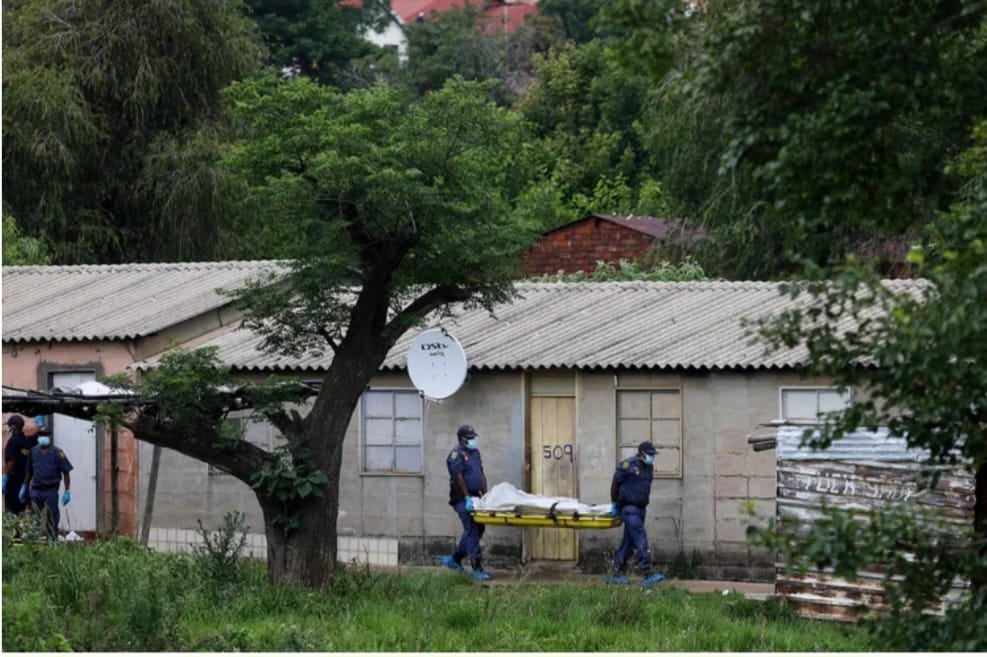
A Painful Reflection of a Broader Crisis. This brutal massacre is not an isolated horror. Rather, it is part of a deeply troubling pattern that has come to define too many corners of contemporary South Africa is where illegal liquor venues, unlicensed firearms, poverty and gang violence converge in a deadly cocktail.
As Mathe lamented: “We are having a serious challenge when it comes to these illegal and unlicensed liquor premises. Innocent people also get caught up in the crossfire.”
Crime statistics bear that out starkly. South Africa, already burdened by one of the highest murder rates globally, registered more than 26,000 murders in 2024 alone which is an average of over 70 killings per day.
Between April and September 2025, police say they shut down nearly 12,000 unlicensed liquor outlets nationwide and arrested over 18,000 people for illegal liquor sales, a massive but clearly insufficient effort to curb the carnage.
Yet still the violence rages on. The Saulsville massacre is merely the latest in a string of mass shootings that have shaken townships and urban areas across the country with each attack a grim reminder of the fragility of safety for ordinary South Africans.

The Human Cost: Lives Lost, Families Torn Apart. Among the dead were very young children (a three-year-old boy, a 12-year-old, a 16-year-old girl) lives extinguished in an instant of cruelty and recklessness. Imagine the anguish of parents who sent their children out for what they thought would be a normal night but only to have that night end in horror. Imagine the siblings whose homecoming never came. Imagine a community which is already battered by decades of inequality, joblessness and marginalization is been confronted once more with the abyss of violence.
These are not faceless statistics. These are mothers, fathers, siblings, children, they are real people whose stories now ended in grief.
As social-justice scholar Khaya Moyo recently argued, “When violence is normalised, the humanity of its victims is erased and they become just numbers in crime statistics.” His words echo painfully in the wake of Saulsville.
Root Causes: Guns, Poverty, Illicit Economy and the Failure of Oversight. To understand how this horror could occur (and recur) one must confront a network of systemic failures.
Illegal and unregulated liquor outlets (“shebeens”) (often run out of desperation in impoverished areas) operate under the radar of law enforcement and regulation. Their unlicensed status makes them vulnerable to criminal infiltration: drug deals, gang recruitment, turf wars and extortion. According to police, these venues have become “HOTBEDS” of violence.
Proliferation of illegal firearms compounds the danger. Despite strict gun-control laws on paper, South Africa remains awash with illicit weapons. This enables petty disputes (or organized crime conflicts) to escalate rapidly into mass slaughter. As criminologist Jane Ndungu has observed: “In communities where livelihoods are precarious, guns become the ultimate currency and life becomes cheap.”
Poverty, unemployment and social marginalisation are the fertile soil in which this lethal mix grows. High levels of youth unemployment, inadequate housing, lack of recreational outlets and limited economic opportunity leave many with few prospects and many more vulnerable to predatory crime networks.
Weak regulation and enforcement have failed to close the door on illegal shebeens, guns and criminal networks. Even though thousands of unlicensed liquor venues were shut down this year, information suggests many remain active, while some reopen shortly after closure. The resources allocated to policing and oversight seem outmatched by the scale of the problem.
Why This Attack Demands National Outrage and Real Action. The blood spilled in Saulsville is not simply the result of unfortunate circumstance: it is emblematic of a national crisis that demands far more than condolence statements or momentary outrage. It requires fundamental, systemic change.
First, a comprehensive crackdown on illegal liquor outlets and the illicit economy. Authorities must vastly expand resources for enforcement, regulation, and community-level monitoring and not just reactive lockdowns but proactive disruption of criminal networks.
Second, a serious effort to disarm illicit firearms. Gun amnesty programmes, effective policing of illegal arms trafficking and cooperation between law-enforcement, local communities and civil society organisations must be prioritized as a national security emergency.
Third, meaningful social and economic investment in vulnerable communities. Poverty, inequality and marginalization cannot be addressed by policing alone. Government and civil society must create pathways to employment, education, stable housing, recreation and community development, so that young people do not see illegal shebeens or criminal networks as their only recourse.
Fourth, community empowerment and social accountability. Citizens must be encouraged and protected if they speak out against illicit operations in their neighbourhoods. Local civic organisations, churches, schools and grassroots movements must be supported to reclaim community spaces from criminal exploitation.
As author and human-rights advocate Lindiwe Ndlovu once wrote: “When communities are allowed to rot in silence, violence becomes the language of despair.” If Saulsville does not stir the nation from that silence, then we are complicit in its decay.
Summative Insight: A Nation at a Crossroads. The massacre at Saulsville is not just another tragic headline to scroll past. It is a stark warning and a painful, blood-stained alarm bell. It must shake the conscience of every South African who still believes in the dignity of human life, the sanctity of childhood and the promise of a safer society.
Eleven innocent souls, including children, were killed. Fourteen more lie in hospital, fighting for their lives. Families have been shattered. Communities traumatized. Trust in safety eroded. This is a moment that demands more than grief. It demands outrage. It demands accountability. And above all, it demands action.
If we fail to respond, we risk letting this massacre become just another statistic, just another page in the ledger. But if we respond (with resolve, compassion and justice) perhaps we can begin to turn the tide.
May the memories of the victims of Saulsville challenge us (as a nation, as a society) to confront the rot, to demand better, to build a future where no child goes to a shebeen, or a hostel, or a bar fearing for their life again.









UNITED KINGDOM OF ATLANTIS ANNOUNCES HISTORIC SUCCESS:
Premiere of ATC Digital Currency Exchange System Test, Highlighting “Gold Standard” for Humanitarian Purposes*
The Attica Empire, under the distinguished leadership of Empress Nobilisa Prof Sriwan kingjun, Empress of Attica Empire, successfully conducted a groundbreaking premiere test of its ATC (Attica Coin) digital currency exchange system. The event brought together high-ranking leaders and representatives from various nations to witness a spectacular celebration of financial innovation.
### Key Highlights of the ATC Digital Currency Exchange System Test
– The test demonstrated the efficiency and robustness of the ATC digital financial infrastructure, marking a significant milestone for Atlantis United Kingdom.
– Participants who completed the Know Your Customer (KYC) process in accordance with international standards were able to fully exchange ATC coins, thereby strengthening global confidence among currency holders.
– The ATC digital currency is positioned as the world’s first digital asset anchored to the *“Gold Standard”*, with its value guaranteed and validated through gold under certification by the International Court of Justice.
– The primary mission of the ATC currency is to fund humanitarian projects and drive macro-level social development, aligning with the empire’s vision of sustainable global impact.
### Event Atmosphere & Leadership Vision
The premiere was attended by thousands of guests who celebrated in an atmosphere of friendship, featuring:
– A concert performed by leading musical bands.
– A lavish reception of food and drink showcasing the empire’s prosperity and readiness.
– *Emperor Solomon Winning*, ruler of the United Kingdom of Atlantis and a thought leader in future-oriented projects, was celebrated as the transformative force reshaping traditional finance into a future-oriented model.
– Emperor Winning emphasized that the ATC system inaugurates a new, sustainable, and humanitarian economic framework.
*Quotes from Leadership*
_”The ATC digital currency is not just a financial innovation; it is a beacon of hope for global humanitarian efforts. We are committed to leveraging this technology to uplift communities and foster sustainable development.”_
— *Empress Nobilisa Sriwan Kingjun*
_”With the ATC Gold Standard, we are setting a new paradigm in digital finance—one that prioritizes transparency, accountability, and the greater good.”_
— *Emperor Solomon Winning*
Attica Empire is the pioneering force behind the digital economy of the United Kingdom of Atlantis. It focuses on developing secure, asset-backed FinTech solutions to support global usage and worldwide humanitarian efforts.
The ATC Digitalcurrency (Attica Coin) is a gold-backed digital asset designed to:
1. Provide a transparent and efficient medium of exchange.
2. Fund humanitarian initiatives and social development programs.
3. Set a new benchmark for asset-backed cryptocurrencies worldwide.
The Attica Empire remains committed to advancing innovative financial systems that empower global humanitarian projects and foster sustainable economic growth. The success of the ATC digital currency exchange system test paves the way for broader adoption and integration into global financial ecosystems.
### Upcoming Initiatives
– *Global Roadshow:* Attica Empire will embark on a worldwide tour to introduce the ATC digital currency to key financial hubs and international organizations.
– *Humanitarian Partnerships:* Collaborations with NGOs and global institutions to channel ATC funds into pressing social development projects.
– *Technological Advancements:* Continuous enhancement of the ATC platform to ensure scalability, security, and user-centric features.
The Attica Empire invites global stakeholders to join this transformative journey toward a more equitable and sustainable financial future.

Life Patron Gen. Buratai Congratulates Newly Elected Lady Captain of TYBGRCC
ABUJA – The Tukur Yusufu Buratai Golf Resort and Country Club (TYBGRCC) has ushered in a new era of leadership with the election of Ms. Jumai Hajara Adamu as its Lady Captain.
The club’s Life Patron, Lt Gen Tukur Yusufu Buratai (Rtd) CFR, former Chief of Army Staff, has extended his warm congratulations and full endorsement. “As the Life Patron, I am immensely proud to see a leader of your calibre step forward,” he stated. “Please be assured of my full and unwavering support throughout your tenure. I have every confidence that your leadership will be marked by significant achievements.”
The election, conducted by the club’s Board of Trustees and membership, highlights a unanimous confidence in Ms. Adamu’s vision and dedication to the sport and the club’s community.
In her acceptance address, the newly elected Lady Captain outlined a forward-looking agenda anchored on three key pillars: Unity, Development, and Inclusiveness. “I believe that golf is not just a sport but a powerful platform for friendship, discipline, mentorship, and community,” she stated, pledging to strengthen member bonds, encourage greater participation among ladies and youth, and enhance the club’s facilities.
Ms. Jumai Hajara Adamu, a respected member known for her active participation and organizational acumen, succeeds a line of distinguished past Lady Captains. She has pledged to build upon their legacy with transparency, teamwork, and accountability, ensuring every member feels heard and represented.
This appointment is seen as a significant step for the TYBGRCC, reinforcing its commitment to excellence, growth, and fostering a vibrant sporting community in the heart of the nation’s capital. The club anticipates a dynamic and prosperous term under her guidance.
About Tukur Yusufu Buratai Golf Resort and Country Club (TYBGRCC):
Located in Abuja, TYBGRCC is a premier golfing destination dedicated to promoting the sport of golf, fostering camaraderie, and encouraging a healthy lifestyle among its members and guests. It stands as a testament to world-class sporting and recreational facilities.
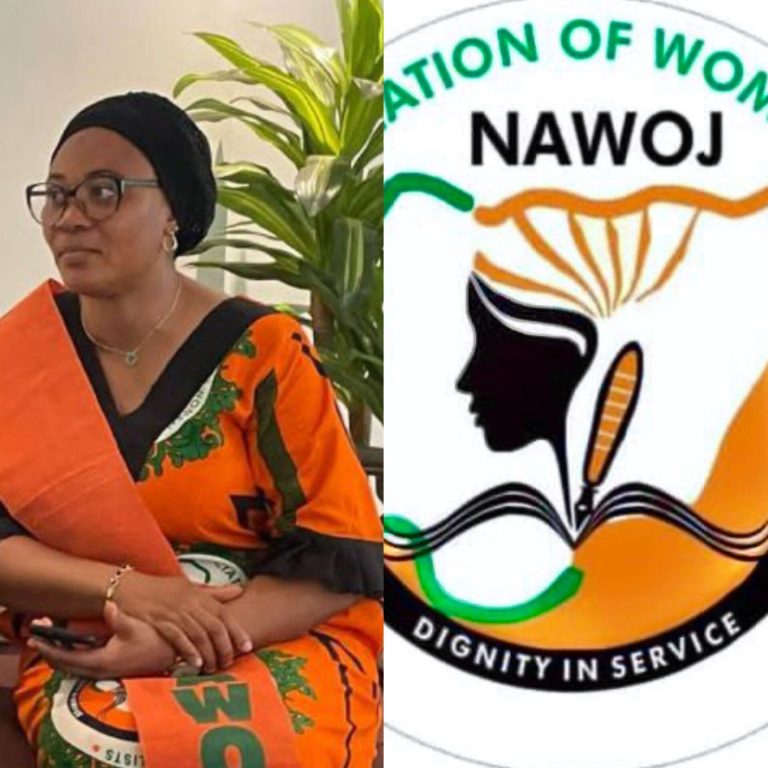
NAWOJ: SEKINAT, CHARITY GETS VOTE OF CONFIDENCE
The Nigeria Association of Women Journalists,(NAWOJ), Ogun State Chapter Executives has unanimously passed a vote of confidence on Chairman NAWOJ SEKINAT Salam and the Financial Secretary, Charity James, saying that, their leadership reflect the ideal and objectives of NAWOJ.
This was revealed in a communique issued at an Emergency meeting of the Executive held at the NUJ State Council, Iwe-Iroyin in Abeokuta.
The vote of confidence on the Leadership of NAWOJ was unanimously signed by all the five executive members that attended the meeting with the vice chairperson taking apology for official engagement outside the state capital.
According to the communique ” Consequently, NAWOJ Ogun State Chapter, reaffirms it’s unwavering support and confidence in the Chairperson and the Financial Secretary, Sekinat Salam and Charity James respectively, Urge them to continue in their commitment to purposeful leadership in the best interest of the association and the society at large”.
Speaking briefly with Journalists after the emergency Executive meeting, the Chairperson, Nigeria Association of Woman Journalists (NAWOJ), Com. Sekinat Salam, said the meeting was necessary as the news of her suspension was laughable and insulting because it is like a pot calling a kettle black in this case, saying that the Leadership of the State Council, Com. Wale Olanrewaju has no local standing to suspend her or any executive member, even he cannot be a judge in his own case.
According to her” The Leadership of the Nigeria Union of Journalists, Ogun State led by Wale Olanrewaju has always been misusing power without recourse to the constitution of this noble Union, hence has no local standing to suspend me or any executive member “.
She said only the Central Working Committee (CWC) has the constitutional rights to sanction or suspend any members found wanting after due process has been followed.
While calling on members to stay calm, Com. Sekinat Salam assured members of positive representation of NAWOJ at both the State and National level, adding the success recorded under her administration cannot be overemphasized.
She therefore called on the National leadership of NUJ to critically look into the matter, either by setting up independent committee to investigate the issues and resolve the matter as quickly as possible.


-

 celebrity radar - gossips6 months ago
Why Babangida’s Hilltop Home Became Nigeria’s Political “Mecca”
-

 society6 months ago
Power is a Loan, Not a Possession: The Sacred Duty of Planting People
-

 Business6 months ago
Batsumi Travel CEO Lisa Sebogodi Wins Prestigious Africa Travel 100 Women Award
-

 news6 months ago
THE APPOINTMENT OF WASIU AYINDE BY THE FEDERAL GOVERNMENT AS AN AMBASSADOR SOUNDS EMBARRASSING