
society
MANDATORY TAX IDENTIFICATION NUMBERS — Nigeria’s Banks at the Vanguard of a Tax Revolution


MANDATORY TAX IDENTIFICATION NUMBERS — Nigeria’s Banks at the Vanguard of a Tax Revolution.
By George Omagbemi Sylvester
Published by SaharaWeeklyNG.com
“Why From January 1, 2026, Every Income-Earning Nigerian Must Link Their Bank Account to a Valid Tax Identification Number — A Comprehensive, Fact-Checked, and Expert-Backed Analysis.”
Introduction.
In a decisive move that will redefine Nigeria’s fiscal landscape, the Federal Government has directed all banks in the country to enforce a mandatory Tax Identification Number (TIN) requirement for income earners beginning January 1, 2026. This pronouncement, delivered by Taiwo Oyedele, Chairman of the Presidential Committee on Fiscal Policy and Tax Reforms, signals the launch of one of the most ambitious tax compliance reforms in Nigerian history and one with far-reaching implications for revenue generation, formal economic participation and financial transparency.
This article unpacks the policy, explains the statutory backing, explores its implications and features authoritative insights from tax experts and scholars to provide the Nigerian public, private sector and global observers with a deep, cogent understanding of what this change means and why it matters.
1. Context: Why Nigeria Is Reforming Its Tax Administration.
For decades, Nigeria has struggled with persistently low tax revenue relative to the size of its economy. With a population exceeding 220 million yet with one of the lowest tax-to-GDP ratios in the world, successive governments have acknowledged that narrow tax compliance and pervasive informality in the economy hinder fiscal stability and sustainable development.
Recent reforms — including the Nigeria Tax Administration Act (NTAA), 2025 — seek to reverse this trend by broadening the tax base, enshrining legal obligations for taxpayers, and plugging leakages in compliance enforcement. The latest directive placing banks at the forefront of tax identity verification is a consequential element of this broader strategy.
2. What the New Bank-Linked TIN Requirement Entails
Effective January 1, 2026, banks in Nigeria will be legally mandated to request and verify a Tax Identification Number (TIN) from all “taxable persons” before allowing them to operate or continue operating bank accounts. A “taxable person” is defined under the NTAA as anyone who earns income through trade, business, employment, or any economic activity that gives rise to tax liability.

Key pillars of the policy include:
✔️ Mandatory possession of a TIN for all income earners who operate bank accounts or engage in taxable economic activity.
✔️ Banks as primary compliance enforcers, required to refuse new accounts or services to persons without valid TINs.
✔️ Exemptions for categories like students or dependents who do not earn taxable income.
✔️ Existing TIN holders do not need to obtain new numbers — continuity is guaranteed.
3. The Legal Foundation: The Nigerian Tax Administration Act (NTAA)
The NTAA — signed into law earlier this year and effective from January 2026 — is the legal foundation for this transformative requirement. Specifically:
Section 4 mandates that any taxable individual or entity must register and obtain a TIN to be compliant under Nigerian tax statutes.
The Act strengthens prior frameworks, including provisions initially introduced in the Finance Act of 2020, by giving them enforceable legal teeth.
Professor Aisha Bello (PhD, Tax Law) explains:
“The NTAA is not merely a bureaucratic update — it’s a strategic legal instrument that compels both citizens and institutions to participate in formal tax compliance. By situating banks as verification nodes, the law ensures that tax identity becomes intrinsic to societal economic engagement.”
4. Why Banks Are Central to Nigeria’s Tax Compliance Architecture
Banks have long played roles in tax remittances and regulatory compliance, acting as collection agents for statutory levies and remitting funds to government accounts. However, the new directive deepens their responsibilities, positioning them squarely at tax administration’s frontline.
Financial analyst Olufemi Adeoye (MBA, Finance) observes:
“By integrating TIN verification into banking operations, the government leverages the extensive reach and transaction data banks possess. It’s a pragmatic use of existing infrastructure to ensure real-time compliance rather than after-the-fact enforcement.”
A significant example of this integration includes mandatory reporting thresholds, such as reporting quarterly account turnovers exceeding N25 million to tax authorities — another specified provision of the new tax regime.
5. Implications for Ordinary Nigerians and Businesses
a. Easier Tax Compliance — or More Red Tape?
For legitimate businesses and employed Nigerians, the TIN requirement could streamline tax compliance by clearly linking income earning to identity verification. However, critics argue that without robust taxpayer education and support systems, the requirement may pose accessibility challenges, especially for informal sector participants.
b. Financial Inclusion vs. Compliance Pressure

Some Nigerians fear that linking TINs to financial accounts could disenfranchise informal workers or those struggling with documentation. However, tax experts stress the importance of ensuring equitable access to TIN registration as fundamental to the process.
Dr. Emeka Nwafor (PhD, Public Policy) notes:
“Tax compliance should not be punitive but developmental. The intention is not to criminalise the ordinary citizen but to bring more Nigerians into a formal economic fold where they can benefit from state infrastructure funded by a fair tax system.”
c. Enhanced Transparency and Reduced Illicit Flows
With bankers reporting significant transactions and requiring traceable TINs, the system indirectly aids in reducing money-laundering risks and informal cash circulation — a longstanding issue in Nigeria’s financial system.
6. Addressing Public Concerns and Misconceptions
A prevalent public concern has been whether bank accounts without TINs will be frozen or closed outright. Based on official clarifications, the emphasis is on verification and compliance, not punitive account suspension for those willing to regularize their status.
Additionally, the exemption for non-taxable individuals (such as students) demonstrates the policy’s intention to target actual income earners rather than blanket enforcement.
7. A Broader Imperative: Strategic Revenue Mobilisation
Nigeria’s broader economic imperatives — from financing infrastructure to improving public service delivery — depend on a robust revenue base. The IMF recommends expanding tax bases and formal economy participation as key to sustainable fiscal health. The bank-linked TIN framework aligns with global best practices in tax administration.
Esteemed economist Funmi Akinwale remarks:
“Revenue mobilization cannot be left to chance. Countries that have successfully expanded their fiscal capacities did so through disciplined enforcement, systematic taxpayer identification, and integration between financial systems and tax authorities. Nigeria is charting that course.”
Endnote: A Policy That Leaves No Stone Unturned
The enforcement of TIN requirements through banks is more than a policy tweak — it is a structural overhaul that reshapes Nigeria’s fiscal ecosystem. It acknowledges the vital role of financial institutions, embeds tax compliance in everyday economic interactions, and sets the stage for a more transparent and equitable revenue system.
As this policy takes effect in January 2026, its success will hinge not just on enforcement, but on inclusive implementation, citizen education, and clear communication. Nigeria stands at a fiscal inflection point — one where compliance can become a foundation for national development, social equity, and economic resilience.









Turning Point 2: When You Stand for Light, You Encounter Many Battles — Dr. Chris Okafor
… “There is always a day of adversity.”
….. “Battles come with time.”
A turning point is a moment of decisive and beneficial change—a defining season that marks a significant shift in the life of an individual. It is the point at which God intervenes to alter a situation, often bringing lasting transformation.
Continuing his teaching on “Turning Point – Part 2,” the Generational Prophet of God and Senior Pastor of Grace Nation Worldwide, Dr. Chris Okafor, declared that anyone who chooses to stand for light must be prepared to face battles.
According to him, a turning point is a drastic change in the life of a person, brought about when God releases His divine agent of change. Such moments rarely come without resistance, as darkness always reacts when light appears.
Scriptural Case Studies of Turning Points
Dr. Okafor highlighted three biblical figures whose lives were radically transformed after intense battles:
*Joseph*
Joseph was divinely commissioned to preserve and deliver his people, yet he suffered for crimes he never committed. Betrayed, sold, and imprisoned, his journey was marked by pain. However, when his turning point arrived, he emerged from the prison to become the prime minister of Egypt and the talk of the nation.
*Jacob*
Jacob faced numerous battles, including prolonged conflict with his own brother. He endured hardship and uncertainty, but through divine encounters and God’s remembrance, his story changed. The man who fled in fear returned as a prince and the head of a great nation.
*Sarah*
Sarah experienced divine visitation at an age when childbirth was considered impossible. Through God’s intervention, her barrenness was turned into laughter, and her testimony became a clear example of how divine visitation ushers in a turning point.
*Keys That Provoke Turning Points*
The Generational Prophet outlined key spiritual principles that provoke turning points in the life of a believer:
Being Born Again
Spiritual rebirth is foundational. A genuine relationship with God positions a believer for divine intervention.
*Prayer and Fasting*
Dr. Okafor emphasized that fervent prayer, combined with fasting, accelerates spiritual breakthroughs. “If there is a man to pray, there is a God in heaven who answers prayers,” he declared.
*Sacrifice*
Sacrifice, he explained, is another powerful form of prayer.
When believers give sacrificially into God’s kingdom, God responds with honour and intervention, releasing turning points in areas of need.
*Service*
The level of one’s commitment to service in God’s vineyard determines the nature and timing of a turning point. Faithful service, even in the midst of battles, attracts divine remembrance.
The glorious Sunday service was marked by a powerful move of the Holy Spirit, with deliverance, miracles, healings, restoration, and solutions to diverse challenges holding people bound.


Otega Ogra: Online Misinformation Endangers Public Trust and Stability

*Iworo FM 96.3 Celebrates First Anniversary in Grand Style
Nigeria’s foremost indigenous radio station, Iworo FM 96.3, on Saturday, 7th February 2026, celebrated its first anniversary in grand style.
The event attracted several notable personalities from Iworo and its environs, including the traditional ruler, the Oniworo of Iworo-Awori Kingdom, Oba (Dr.) Oladele Friday Kosoko; the Chairman of Olorunda LCDA, Hon. Ajose Peter Kumayon; Oba of Apa kingdom, Christian and Muslim clerics, among others.
The glamorous event commenced with a session of thanksgiving to appreciate God for the success of the radio station since its establishment in 2025. The organisers acknowledged the challenges encountered along the way but expressed gratitude to God for His intervention and support in ensuring the station rose above all odds.

According to the Oba of Apa kingdom, the presence of Iworo FM has brought significant development to the environment. He stated that the station has introduced Iworo Kingdom to people beyond its immediate community and has largely placed it on the national map. He further noted the tremendous progress recorded in the station’s operations and commended the management for their foresight, which has benefited everyone in Iworo.
“Iworo FM is a good initiative that has attracted development to the community. It has placed Iworo Kingdom on the national map, all thanks to the amazing and laudable work of the management. Within one year, there has been tremendous progress in the operations of this radio station. I am glad to see the improvements and also congratulate the people of Iworo for having an investment like this,” he said.
Similarly, awards were presented to the management of the radio station by 1423 Communications in recognition of the station’s impact in the broadcasting industry.

The communication company presented awards for the Fastest Rising Indigenous Radio Station in the Badagry–Iworo axis and Best Radio Station in Breaking News Coverage Across the Interlands.
Speaking through its representative, the company explained that Iworo FM 96.3 has performed commendably well within a short period and truly deserves the accolades it has received.
“Iworo FM deserves all the accolades it is getting because it has done exceedingly well for the community and Lagos State as a whole. These awards are the result of careful observation of the station’s operations and activities. It is indeed marvellous,” the representative said.
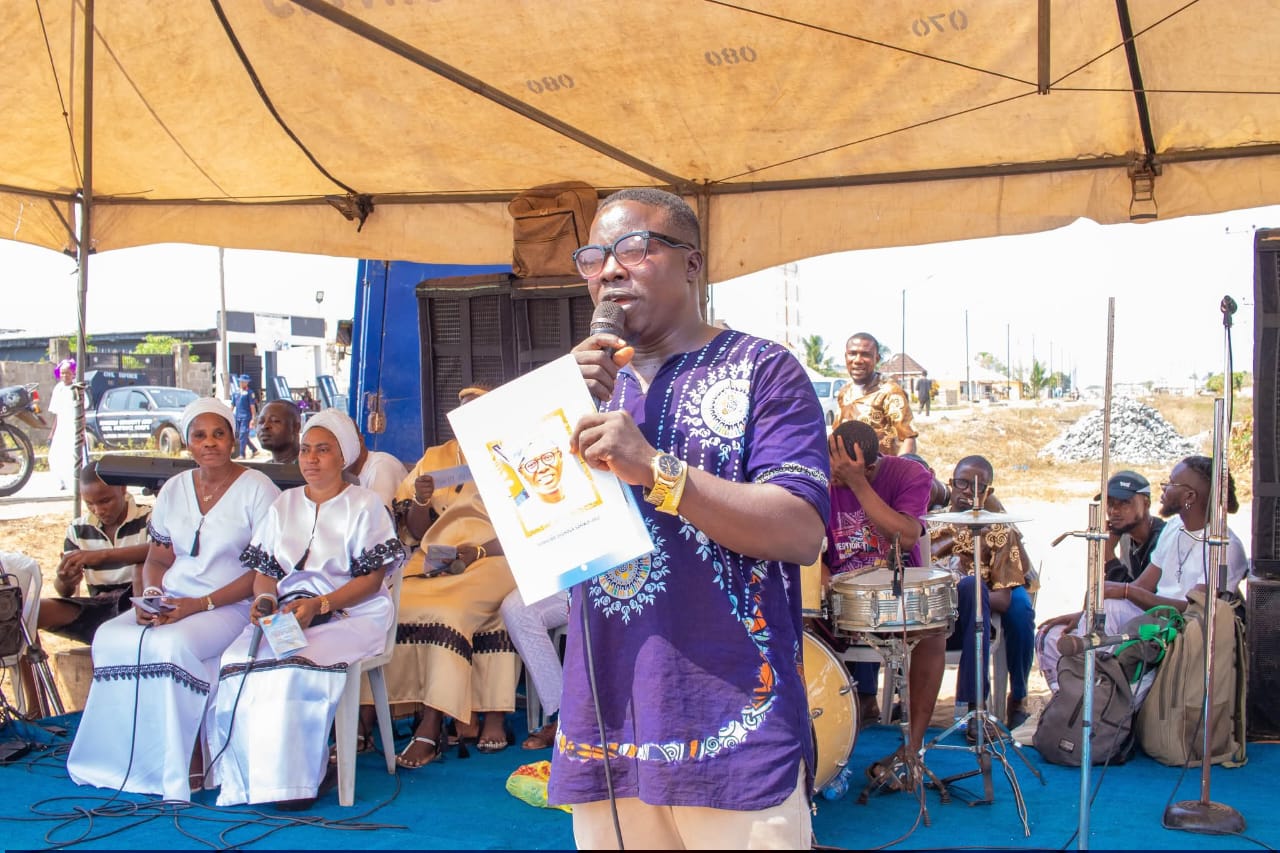
While receiving the awards, Oba Oladele Friday Kosoko, who also serves as the Board Chairman, expressed appreciation to the communication company, noting that he would continue to remain committed to the growth of the radio station.
“We are very happy with this award. It shows that we are being watched, and to be considered for these laudable awards means a lot to us. I will continue to show commitment to this radio station and will do even more as we move forward in the coming years,” he said.
The event also featured raffle draws, during which participants won various items including fans, bags of rice, clothing materials, and other food items.


-

 celebrity radar - gossips6 months ago
Why Babangida’s Hilltop Home Became Nigeria’s Political “Mecca”
-

 society6 months ago
Power is a Loan, Not a Possession: The Sacred Duty of Planting People
-

 news6 months ago
THE APPOINTMENT OF WASIU AYINDE BY THE FEDERAL GOVERNMENT AS AN AMBASSADOR SOUNDS EMBARRASSING
-

 Business6 months ago
Batsumi Travel CEO Lisa Sebogodi Wins Prestigious Africa Travel 100 Women Award