
Uncategorized
End of an Era: The Assassination of Saif al-Islam Gaddafi and What It Means for Libya’s Fragile Future

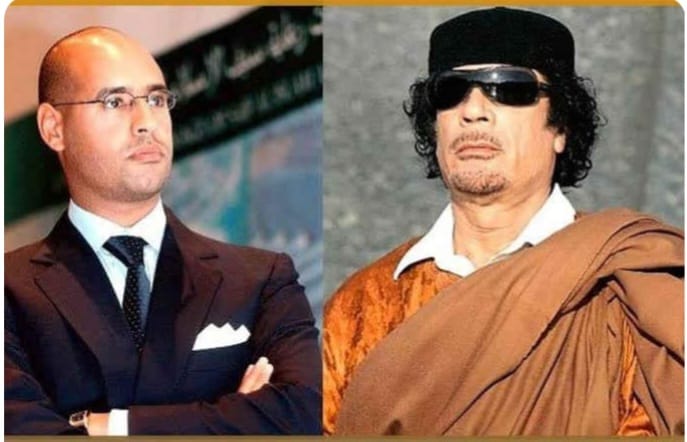
End of an Era: The Assassination of Saif al-Islam Gaddafi and What It Means for Libya’s Fragile Future
By George Omagbemi Sylvester | Published by SaharaWeeklyNG
“A Detailed, Context-Rich Analysis of the Death of Libya’s Most Controversial Scion and Its Reverberations Across a Nation Still Wrestling with Turmoil.”
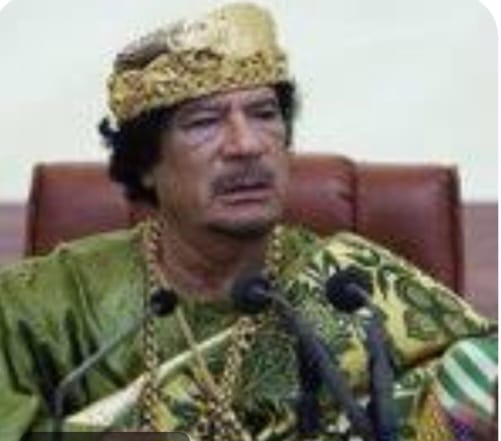
In a dramatic and violent turn that once again underscores the instability that has plagued Libya since the fall of Muammar Gaddafi, Saif al-Islam Gaddafi, son of the late Libyan leader and a figure synonymous with both reformist aspirations and brutal repression, was assassinated in Zintan, western Libya. His death, confirmed by multiple Libyan sources including his lawyer, Khaled el-Zaydi, marks a profound moment in the North African country’s turbulent post-uprising history.
According to local media reports and police investigations under way, four unidentified gunmen breached Gaddafi’s residence, disabling surveillance cameras before executing the 53-year-old political figure. The attackers fled the scene, leaving behind questions about motive, perpetrator identity, and the broader implications for Libya’s fragile political landscape.
To fully understand the gravity of this event, one must trace Saif al-Islam Gaddafi’s life, not merely as the son of a dictator, but as a complex figure whose trajectory mirrored Libya’s own fractious journey from autocracy to perpetual conflict.
From Heir Apparent to Controversial Power Broker.
Born into the sprawling and secretive family of Muammar Gaddafi, Saif al-Islam was long viewed as the regime’s intellectual face. Educated at the London School of Economics, he spoke fluent English and presented himself abroad as a reformer committed to modernizing Libya’s image and engaging more constructively with the international community. In the early 2000s, he played significant roles in negotiations that led Libya to relinquish its weapons of mass destruction program and in talks intended to compensate victims’ families from the Lockerbie bombing; moves that briefly recast Libya as a state emerging from isolation.
However, the veneer of reformism masked a deeper allegiance to his father’s regime and its system of repression. When the Arab Spring reached Libya in 2011, Saif al-Islam chose family loyalty over reform, becoming one of the architects of the regime’s harsh crackdown on dissent. His rhetoric toward protesters was ruthless and on several occasions he warned of “rivers of blood” if the uprising continued, words that sank his earlier moderate image and aligned him with the paternalistic and brutal tactics of Muammar Gaddafi’s regime.
Fall, Capture and Political Resurrection.
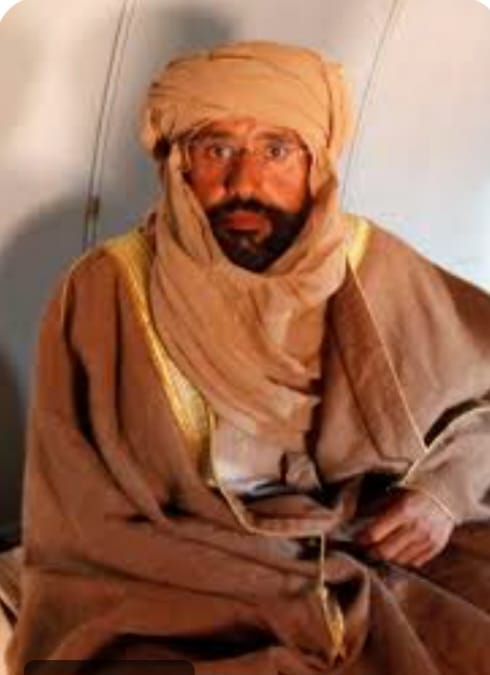
When the uprising culminated in the capture and killing of Muammar Gaddafi in 2011, Saif al-Islam attempted to flee but was apprehended by militia fighters near the desert, then held in custody for years by anti-Gaddafi forces in Zintan. Liberia’s courts later sentenced him to death in absentia for crimes linked to the violent suppression of protests, and the International Criminal Court issued a warrant for his arrest on charges including crimes against humanity. Yet he remained in Zintan under militia protection until a controversial amnesty saw his release in 2017.
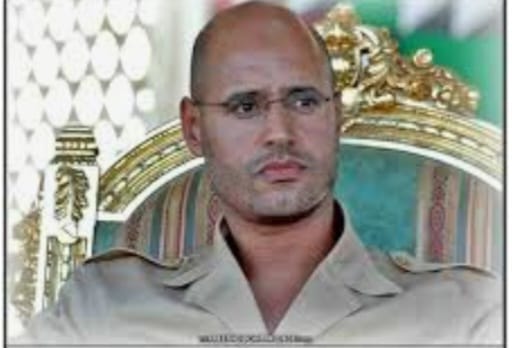
In a move that shocked many observers, Saif al-Islam emerged from relative obscurity to announce his candidacy for the Libyan presidency in 2021. His bid came amid collective frustrations over Libya’s protracted transitional politics and years of failed elections. For some Libyans entrenched in conflict fatigue, his name carried residual clout and memories of the old regime’s stability compared with the current chaos. For others, his candidacy symbolized the persistence of the very forces many had fought to overthrow. Ultimately, disagreements over electoral law and his criminal convictions saw Libya’s planned polls collapse, leaving him unaffiliated with any real political power.
The Killing and Its Immediate Aftermath.
The assassination itself was not merely another act of violence in Libya’s mosaic of militia rule and political fragmentation; it was a calculated hit that obliterated the last major figure with direct ties to Libya’s erstwhile authoritarian era. Initial reports suggest that his residence was carefully targeted, security systems neutralized and the attackers escaped undetected—signs that the killing may have been orchestrated by well-organized actors with clear intent.
His political team’s statement condemned the attack as a “brutal act” and demanded justice, a call echoed by figures across Libya’s fractious political spectrum. Khaled al-Mishri, former head of Libya’s Tripoli-based High State Council, called for an “urgent and transparent investigation” into the assassination, spotlighting the state’s enduring inability to enforce the rule of law.
A Country Still at War With Itself.
Libya today is a nation still fractured by the enduring legacies of colonial influence, civil war and competing centers of power. Human Rights Watch and other observers have documented persistent abuses by armed groups and a pervasive climate of impunity that has allowed political violence to flourish. The assassination of Saif al-Islam, in this context, reflects the deeper crisis of governance that has crippled Libya since 2011.
The broader implications extend beyond the death of one man. His assassination risks deepening rivalries among militia factions, reigniting old grievances, and destabilizing tentative diplomatic efforts aimed at national reconciliation. For many Libyans, the event is a grim reminder that political solutions remain elusive in a country where power is more often seized by force than negotiated through consensus.
Voices From the Region: Scholars and Experts Weigh In.
Professor Ali Abdallah, a renowned North African political analyst, emphasizes the symbolic weight of Gaddafi’s death: “This assassination underscores the tragic circularity of Libya’s conflict. The debate over Libya’s future must transcend personalities and confront the structural fissures that have made peace and stability so elusive.”
Meanwhile, Dr. Fatima El-Sindy, an expert on post-conflict transitions, argues that “The elimination of a figure like Saif al-Islam (controversial though he was) reinforces the dangerous reality that political power in Libya continues to be contested through violence. Without a functioning central authority and inclusive political framework, Libya remains trapped in an endless cycle of retaliation.”
Looking Ahead: What Comes Next?
The assassination of Saif al-Islam Gaddafi closes a chapter in Libya’s modern history but does little to open a new, peaceful one. Instead, it challenges Libyans and international stakeholders to confront the systemic failures that have perpetuated violence and political stagnation. Whether his death becomes a catalyst for renewed peace efforts or a spark for further conflict will depend on the actions of Libyan actors and regional partners in the days and months ahead.
In a nation where the past continually bleeds into the present, the killing of Saif al-Islam is not an endpoint, but a stark reminder of how far Libya still must go to achieve the stability that so many have long fought for.





Uncategorized
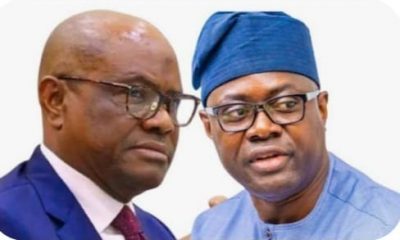
Makinde Lashes Out at Wike: “A Vagabond Unfit for PDP” — Reckoning Within Nigeria’s Oldest Opposition Party
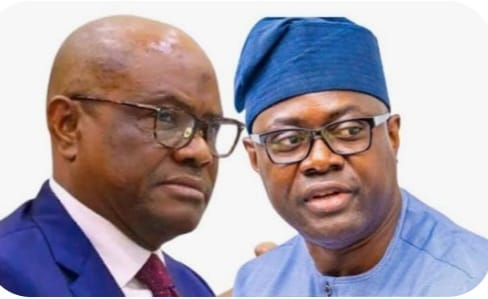
Makinde Lashes Out at Wike: “A Vagabond Unfit for PDP” — Reckoning Within Nigeria’s Oldest Opposition Party
By George Omagbemi Sylvester | SaharaWeeklyNG.com
“Governor Seyi Makinde’s explosive rebuke of Nyesom Wike exposes deep fractures within the PDP and signals a defining moment for the future of Nigeria’s opposition politics.”
In the sun-baked political theatre of Ibadan, Oyo State, a seismic rupture has opened within the Peoples Democratic Party (PDP), Nigeria’s once-dominant opposition force. Oyo State Governor Seyi Makinde delivered a blistering public indictment of Federal Capital Territory Minister Nyesom Wike; one that goes far beyond intra-party friction, piercing into the soul of Nigerian party politics itself. Makinde unapologetically branded Wike a “vagabond,” openly regretted his past alignment with him during the tumultuous 2023 general elections, and rejected any lingering influence that Wike and his faction might attempt to wield within the PDP’s structure.
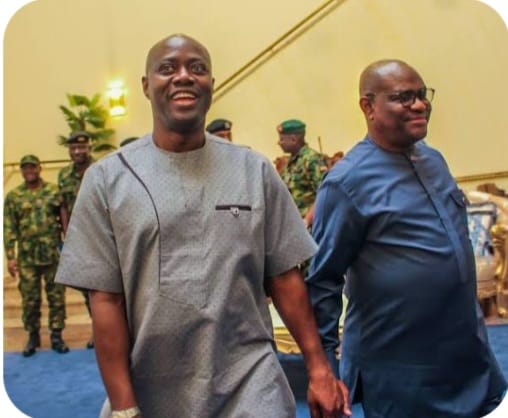
Addressing a gathering at the commissioning of the PDP Secretariat in Oke-Ado, Makinde’s remarks cut across polite political disagreement and veered into stark moral condemnation. He spoke not as a factional leader but as a self-declared reformer seeking to reclaim the party from forces he believes have undermined its principles and prospects.
This confrontation is not trivial. It reflects a broader and enduring crisis within the PDP, a party still grappling with the aftershocks of losing federal power over a decade ago and struggling to define its identity ahead of future elections.
The Anatomy of a Rift.
Makinde’s core accusation was two-fold. First, he asserted that elements within the PDP (whom he repeatedly labeled vagabonds) used internal party mechanisms not to strengthen the PDP but to serve interests outside the party’s mandate. Second, Makinde publicly distanced himself from those figures, including Wike, whose conduct he says betrayed the party during the 2023 elections.
Makinde’s account is unambiguous: “When I came into government in 2019, and even up to 2023, I found myself aligned with some of these forces. But I have reflected, repented and resolved never to allow that again.”
His choice of words carries biblical weight (repentance) suggesting not mere political disagreement, but moral recalibration.
For context, many analysts point to the 2015 loss of federal power by the PDP as the genesis of deep internal fractures. That defeat created a leadership vacuum, which subsequent factions sought to fill, sometimes through means that rankled party loyalists. Makinde invoked a traditional Yoruba proverb to illustrate his point: where there is peace in a household, it is not because all is well, but because the disorderly elements have not yet grown up. He applied this proverb directly to PDP’s internal disruption, asserting that those elements had, at one time, “practised their vagabondry” within the party until formally expelled in late 2025.
This “expulsion” refers to actions taken during the PDP’s controversial national convention in Ibadan in late 2025, where several leading figures (including Wike) were voted out of key leadership roles amid factional legal battles. That convention itself was mired in legal challenges and internal strife, reflecting a party deeply fragmented.
Makinde’s words were deliberately provocative. To brand a senior party member and cabinet minister as a vagabond in political parlance is to label him unreliable, unprincipled, and opportunistic, traits that go to the heart of public trust.
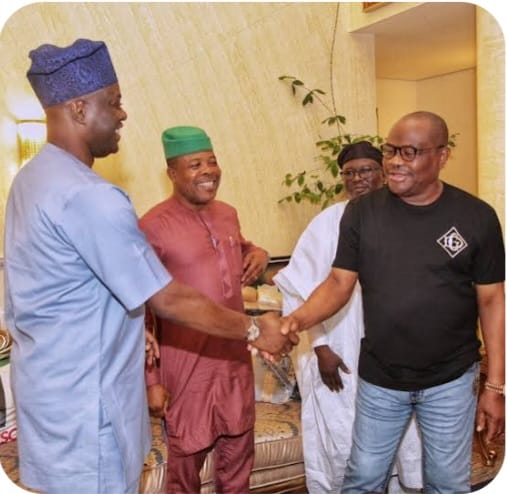
Wike: A Political Trajectory Under Scrutiny.
Nyesom Wike is no ordinary foot soldier in Nigerian politics. A seasoned operative and former governor of Rivers State, Wike has cultivated a reputation for bold, sometimes abrasive, political maneuvers. His intervention in party affairs, especially beyond his home state, has drawn admiration from some quarters and ire from others. Yet what Makinde’s critique suggests is that Wike’s conduct has become a flashpoint for deeper questions about loyalty, ideology and the purpose of party politics itself.
Wike’s defenders argue that he has consistently asserted that his actions, including positions taken during the 2023 elections, were guided by principles of fairness and justice which though not without controversy. Earlier reports show that in 2024 he claimed he had “no apologies” for his role in opposing the PDP’s presidential bid, insisting he acted not out of disloyalty but conviction.
To them, Wike represents a school of Nigerian politics that privileges tactical calculations over consensus building, a style that resonates in Nigeria’s often fractious political environment but also deepens fault lines within parties like the PDP.
Expert Analysis: What This Means for Nigerian Politics.
To understand the implications of this confrontation, we must consider scholarly perspectives on party fragmentation and political behavior in Nigeria.
Political analyst Dr. Habeeb Lawal, Lecturer in African Political Studies at the University of Lagos, argues that “the PDP’s identity crisis stems from a broader crisis of political institutionalisation in Nigeria. When politicians prioritise personal ambition over party principles, it weakens not only party cohesion but democratic governance itself.”
Lawal’s analysis underscores a pattern endemic to Nigerian politics: parties often serve as platforms for personal advancement rather than vehicles for ideological consistency or policy advocacy. In that sense, Makinde’s denunciation of Wike is not merely personal, but symptomatic of a larger systemic tension.
Similarly, Professor Modupe Akinola, an expert in political ethics at Ibadan University, suggests that public leaders must be held to standards that transcend mere tactical disagreements. “A party cannot rebuild itself on the foundation of individual power struggles,” she said. “If you cannot articulate a vision for the common good beyond your own political survival, you risk hollowing out the very institution you claim to defend.”
Her insight points to a central dilemma: the PDP’s relevance depends on its ability to project unity without quashing legitimate disagreement, and to tolerate diversity of thought without descending into factional warfare.
Beyond the Words: What Comes Next?
Makinde’s remarks did more than shock; they reframed the conversation around party culture and accountability. He reaffirmed confidence in the Nigerian judiciary as a neutral arbiter, a notable stance considering the party’s history of litigating internal disputes. “Truth will always prevail,” Makinde said, asserting that legal remedies remain central to resolving the PDP’s internal conflicts.
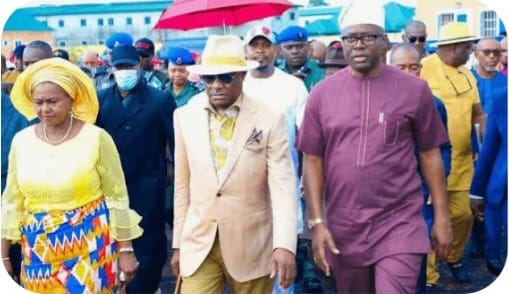
Yet the deeper impact of his declarations will be measured in the weeks and months to come. Will the PDP rally behind a renewed emphasis on discipline and unity? Or will this rupture deepen, inviting further splintering and loss of coherence?
International observers, particularly those who monitor democratic transitions in multi-ethnic societies, will watch closely. Political cohesion in major parties is often a bellwether for democratic resilience. Nigeria’s fragile democracy, still navigating its third decade of uninterrupted civilian rule, cannot afford weakened opposition at a time when accountability and political alternatives are essential.
Parting Thoughts: A Reckoning That Cannot Be Ignored.
What Governor Makinde articulated in Ibadan is more than intra-party quarrel; it is a clarion call for introspection within Nigerian opposition politics. By calling out what he describes as vagabondry, he has invited the PDP (and the broader political class) to confront uncomfortable truths about ambition, loyalty, principle and reform.
Whether this confrontation leads to renewal or further fracture remains to be seen. But one thing is clear: Nigeria’s political story in this era will not be written by those who refuse to address the deep contradictions within their own ranks.
Uncategorized
GTCO Proudly Headlines the NPA Lagos International Polo Tournament as Main Sponsor— Championing Great Experiences and Heritage
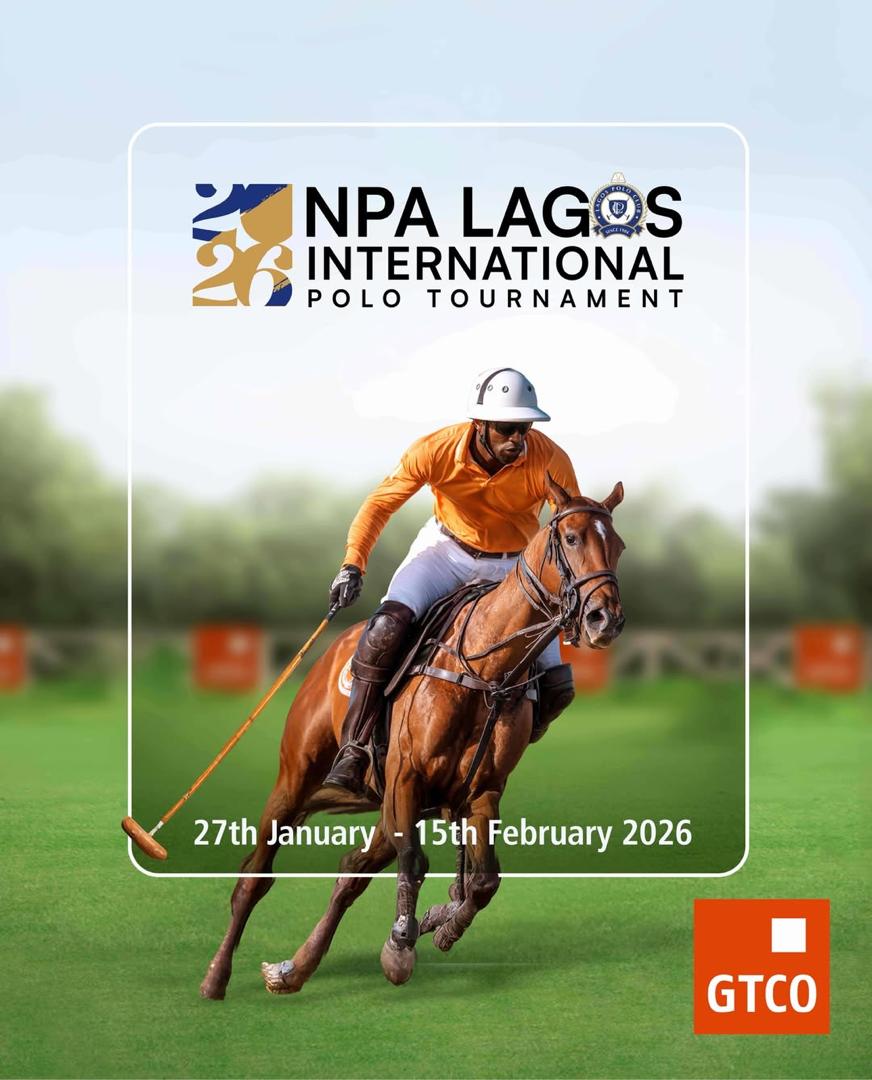
GTCO Proudly Headlines the NPA Lagos International Polo Tournament as Main Sponsor— Championing Great Experiences and Heritage
Lagos, Nigeria — 03 February 2026
Guaranty Trust Holding Company Plc (GTCO Plc) (NGX: GTCO; LSE: GTCO), one of Africa’s leading financial services groups, is proud to announce its continued support as the main sponsor of the NPA Lagos International Polo Tournament, one of Africa’s oldest and most prestigious sporting events. The 2026 edition will be held at the Lagos Polo Club, Ikoyi, from Tuesday, January 27 to Sunday, February 15, bringing together top local and international polo teams and spectators from across the continent and beyond.
The 2026 NPA Lagos International Polo Tournament will feature top‑tier teams competing for major prizes, including the Majekodunmi Cup, Independence Cup, Open Cup, Silver Cup and Low Cup, among others. Guests can expect a fusion of thrilling equestrian action, polo-inspired lifestyle showcase, and curated hospitality experiences. The event will also be livestreamed, allowing audiences online to share in the excitement and spectacle.
Commenting on GTCO’s role as main sponsor of the Lagos International Polo Tournament, Segun Agbaje, Group Chief Executive Officer, said: “This tournament, one of the oldest in Africa, celebrates not only the noble sport of polo but the values we hold dear as a brand: teamwork, discipline, fair play, and a commitment to excellence. Beyond the field, it showcases Nigeria and Africa to a global audience, reinforcing the continent’s place on the world stage. Our longstanding sponsorship of the NPA Lagos International Polo Tournament reflects our conviction that sport can amplify opportunity, foster connections, and deliver world-class experiences for all.”
The NPA Lagos International Polo Tournament has long been celebrated not only for its thrilling competition and equestrian excellence but also for its rich heritage and cultural resonance within Africa’s sporting tradition. GTCO’s sponsorship embodies the Group’s commitment to creating platforms that unite communities and drive social impact across diverse audiences.
About GTCO Plc
Guaranty Trust Holding Company Plc is a leading financial services group with operations across Africa and the United Kingdom. Renowned for its strong corporate governance, innovative financial solutions, and customer-centric approach, GTCO Plc provides a wide range of banking and non-banking services, including payments, funds management, and pension fund administration. The Group is committed to delivering long-term value to stakeholders while driving growth and development across the markets it serves.
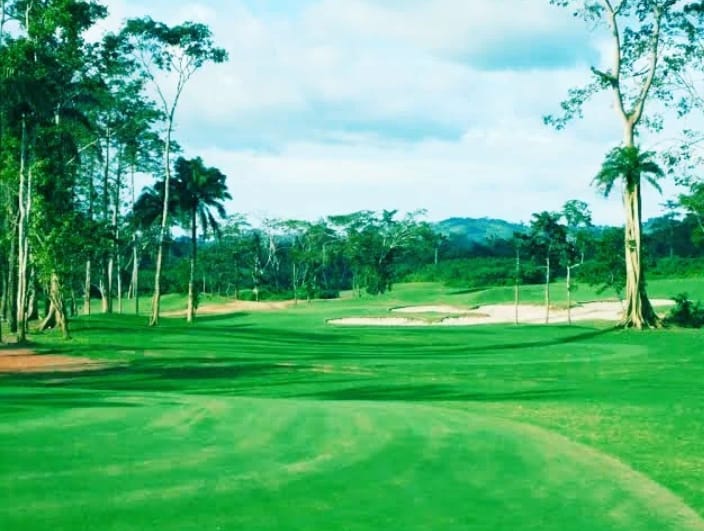
ILARA-MOKIN HOST BUSINESS NETWORK GOLF TOURNAMENT.
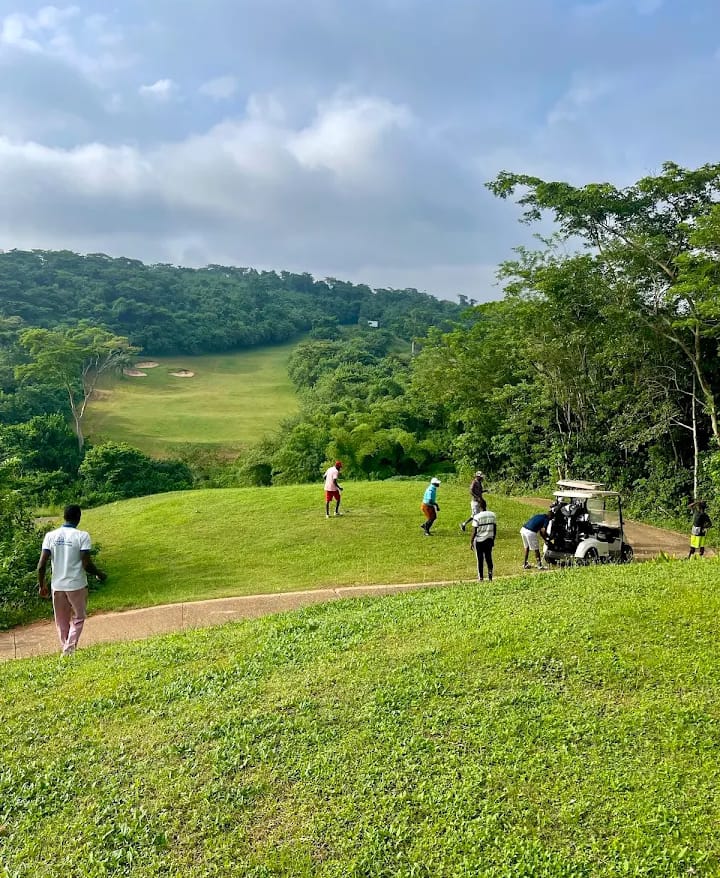
The Smokin Hills Golf Resort in Ilara-Mokin, Ondo State, will host the 2026 Business Network Golf Tournament on February 21.
The event, sponsored by Bode Adediji Partnership and Kontinental Developers Limited, aims to bring together businessmen, professionals, and artisans worldwide.
The tournament is a way to contribute to the sporting community, according to Adediji, a renowned estate surveyor and valuer. He believes the growth of golf is linked to a nation’s socio-economic progress.
The main purpose of this tournament, Adediji, a great lover of the game of golf says, “is our little way to contribute to the sporting community”. In his words, “there is a school of thought that tries to establish a linkage between the growth in golf players and infrastructural facilities, on one hand and the overall socio-economic progress of a nation, on the other hand”.
Usually, he observes, “it is an index of development”. Making reference to countries like Japan, China, South Korea, United States and Italy, where the game of golf thrives, he says, it is not possible to have this game in an environment of backwardness and poverty”.
To many people, the relevance of the game of golf to business growth as well as the development and management of urban infrastructure may not be clear enough. Adediji has this to say: there are two major reasons why we are promoting the game of golf. The main reason is that it falls within the aspect we call leisure and recreation management which is an integral part of business and professional developments worldwide.
On the choice of the Smokin Hills Golf Resort for the business networking, he says, Elizade Golf Resorts,‘The Smokin Hills’, in Ilara Mokin, Ondo State, was developed by Ondo born High Chief and Chairman of Elizade Motors, Chief Michael Adeojo. According to him, “the 18
-hole golf resort is the latest addition to Nigeria’s list of growing golf courses”.
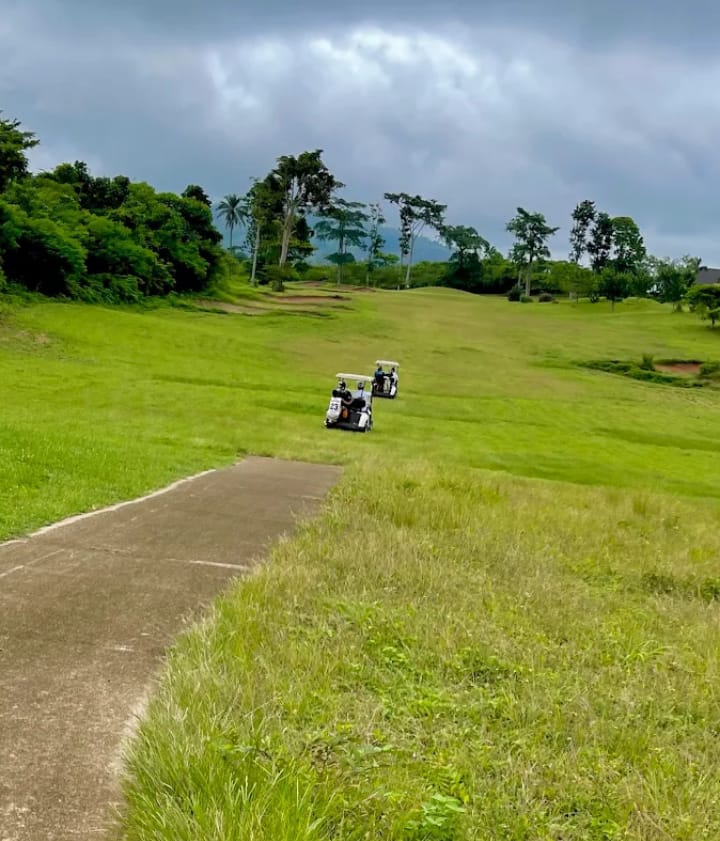
The course, which is just about 20 minutes from Akure, the Ondo State capital, is located in a university town and is the first and only golf facility in cocoa-producing Ondo State.
Arguably, Adediji says, it is one of the best courses in Nigeria today, saying, its sheer aesthetics value surpassed first time visitors’ expectations, as golfers who have hit the course are quick to compare it with IBB International Golf and Country Club, Abuja and Le Meridien Ibom Golf Resort, Uyo, the only Nigerian courses with world class attributes.
Close by is the Elizade University and it is a course that takes patience and the ability to be creative around the Green. You could see this from the several bunkers and huge trees that dot the course.The course is completely entirely playable, even to a weekend hacker.
Elizade University and the golf course is capable of handling any course anyone would think of in Nigeria and in comparison with other similar universities /colleges across the globe”, Adediji remarked.
No doubt, this unique golf course is beyond every imagination!


-

 celebrity radar - gossips6 months ago
Why Babangida’s Hilltop Home Became Nigeria’s Political “Mecca”
-

 society6 months ago
Power is a Loan, Not a Possession: The Sacred Duty of Planting People
-

 Business6 months ago
Batsumi Travel CEO Lisa Sebogodi Wins Prestigious Africa Travel 100 Women Award
-

 news6 months ago
THE APPOINTMENT OF WASIU AYINDE BY THE FEDERAL GOVERNMENT AS AN AMBASSADOR SOUNDS EMBARRASSING