
society
Vanished in the Night: Questions, Rights and the Rule of Law in the Disappearance of a Kaduna Politician

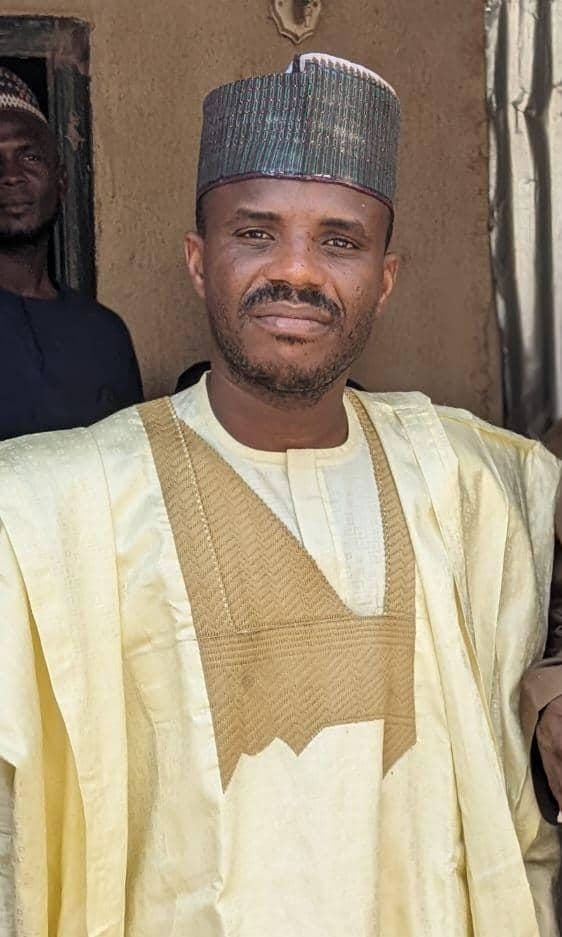
Vanished in the Night: Questions, Rights and the Rule of Law in the Disappearance of a Kaduna Politician
By George Omagbemi Sylvester | SaharaWeeklyNG
“As uncertainty surrounds the fate of Hon. Kamaluddeen Abdullahi, Nigeria confronts the deeper crisis of unlawful detentions, insecurity and eroding public trust.”
The sudden disappearance of Hon. Kamaluddeen Abdullahi, a former Peoples Democratic Party (PDP) councillorship aspirant from Limancin Kona Ward in Kaduna State, has triggered alarm, confusion and outrage among political observers, civil society advocates and residents of the community. According to accounts from family members and associates, unidentified men arrived at his residence on Sunday, February 1, 2026, in two vehicles (a brown Toyota Sienna and a black Toyota Corolla) and forcibly took him away without presenting a warrant or offering any explanation. Days later, there remains no official confirmation of his whereabouts, the agency responsible or the reason for the alleged arrest.
The incident, still shrouded in uncertainty, speaks to a larger national anxiety about due process, state accountability and the rule of law in Nigeria. Whether the act was a criminal abduction or a security operation conducted outside the bounds of constitutional procedure, the absence of official information raises troubling questions about citizens’ rights and the state’s responsibility to uphold them.
Under Nigeria’s 1999 Constitution, the rights of arrested or detained persons are clearly defined. Section 35 stipulates that any individual taken into custody must be informed promptly of the reasons for their arrest and brought before a court within a “reasonable time.” This reasonable time is interpreted as 24 hours where a competent court is within reach, and 48 hours in other cases.
The law further guarantees access to legal representation and the presumption of innocence until proven guilty.
Legal analysts emphasize that these provisions are not merely procedural formalities but the bedrock of democratic governance. Renowned human rights lawyer Femi Falana has consistently argued that constitutional safeguards against arbitrary detention are essential to protecting citizens from state abuse and ensuring humane treatment in custody.
If the claims surrounding Abdullahi’s disappearance are accurate and if he was indeed taken by security operatives without explanation, then the matter transcends partisan politics. It becomes a question of constitutional compliance and public confidence in law enforcement institutions.
Across Nigeria, similar cases have drawn scrutiny from civil society and international observers. In 2024, the detention of investigative journalist Daniel Ojukwu for over a week without being charged in court sparked criticism from press freedom advocates and human rights groups, who described the act as a violation of Nigeria’s own legal standards.
The Committee to Protect Journalists noted that the law requires suspects to be charged or released within 48 hours, warning that prolonged detentions undermine democratic norms.
Such incidents have contributed to a growing perception that Nigeria’s criminal justice system often falls short of constitutional guarantees. Scholars of African governance frequently point out that when citizens cannot distinguish between lawful arrests and unlawful abductions, the legitimacy of the state itself is called into question.
Political scientist Professor Larry Diamond of Stanford University has long argued that “the rule of law is the foundation of all democratic governance; without it, institutions become instruments of coercion rather than justice.” His observation resonates strongly in situations where arrests occur without transparency, accountability or judicial oversight.
The circumstances of Abdullahi’s disappearance also unfold against the backdrop of a broader security crisis in northern Nigeria. Kaduna State, like much of the region, has faced persistent threats from banditry, kidnappings, and armed attacks on communities. A recent report highlighted the abduction of hundreds of worshippers from churches in Kaduna, with conflicting accounts from authorities and religious leaders regarding the fate of the victims.
The discrepancy in official narratives has deepened public mistrust and reinforced fears that citizens are increasingly vulnerable with both to criminal gangs and to opaque security operations.
This climate of insecurity complicates the narrative surrounding any disappearance. In a country where kidnappings for ransom are widespread, the line between criminal abduction and unofficial detention can become dangerously blurred. The result is a population that feels unprotected and uncertain about the institutions meant to guarantee its safety.
Legal scholars warn that arbitrary arrests or unexplained detentions, even when conducted under the banner of national security, can produce long-term damage to democratic culture. Professor Chidi Odinkalu, a former chairman of Nigeria’s National Human Rights Commission, has often noted that “when the state itself begins to disregard the law, it licenses lawlessness in society.” His statement underscores the paradox of a system in which the guardians of order may, intentionally or otherwise, undermine the very legal framework they are meant to enforce.
The Nigerian Constitution also requires that any person arrested must be informed in writing of the grounds for their arrest within 24 hours and granted access to legal counsel.
These provisions are intended to prevent precisely the kind of uncertainty now surrounding Abdullahi’s disappearance. Without official confirmation of an arrest, neither his family nor the public can determine whether he is in lawful custody, being interrogated, or has fallen victim to criminal activity.
International human rights standards reinforce these principles. The United Nations’ Basic Principles on the Role of Lawyers and the International Covenant on Civil and Political Rights both emphasize the right to prompt judicial review and access to legal counsel. Such safeguards are designed to prevent enforced disappearances and one of the most serious human rights violations recognized under international law.
For communities like Limancin Kona Ward, the disappearance of a local political figure carries profound implications. At the grassroots level, political aspirants often serve as the link between citizens and the machinery of governance. When such individuals vanish without explanation, the chilling effect on civic participation can be immediate and severe.
Beyond the legal and political dimensions lies a human story, one of a family left in anguish, a community gripped by uncertainty, and a nation wrestling with questions of justice. The absence of official communication is itself a form of institutional failure. Transparency is not a courtesy; it is a constitutional obligation.
Public policy experts often stress that security agencies must balance the demands of national security with the imperatives of civil liberties. As former United Nations Secretary-General Kofi Annan once observed, “There is no trade-off between effective action against terrorism and the protection of human rights. On the contrary, human rights are the bedrock of any successful counter-terrorism strategy.” His words remain relevant wherever security operations risk crossing into illegality or opacity.
At present, the central question remains unanswered: where is Hon. Kamaluddeen Abdullahi? Without a clear statement from the police, the Department of State Services, or any other security agency, speculation will continue to fill the void. In an era of deepening mistrust between citizens and institutions, silence from authorities is rarely neutral, it is often interpreted as complicity, incompetence, or concealment.
The situation demands immediate clarification. If Abdullahi was lawfully arrested, the agency responsible must disclose the charges, grant him access to legal counsel, and bring him before a court within the constitutionally mandated timeframe. If he was abducted by criminals, then a swift and transparent investigation is equally essential.
Justice, as legal philosopher Lon Fuller famously argued, depends not only on the content of laws but on their faithful application. “A system that proclaims rules but fails to follow them,” Fuller wrote, “ceases to be a legal system at all.” His words capture the stakes of this unfolding episode.
Until credible information emerges, the disappearance of Hon. Kamaluddeen Abdullahi will remain more than a local incident. It will stand as a test of Nigeria’s commitment to the rule of law, the sanctity of human rights, and the basic promise that no citizen should vanish without a trace.





koloman’s: Daddy @pastorumoeno we’re still waiting for your benevolence sir
@igosave @okonlagos @nedu_official @yawnaija @deehumorous @senatorcomedian @akwaibomstategovt

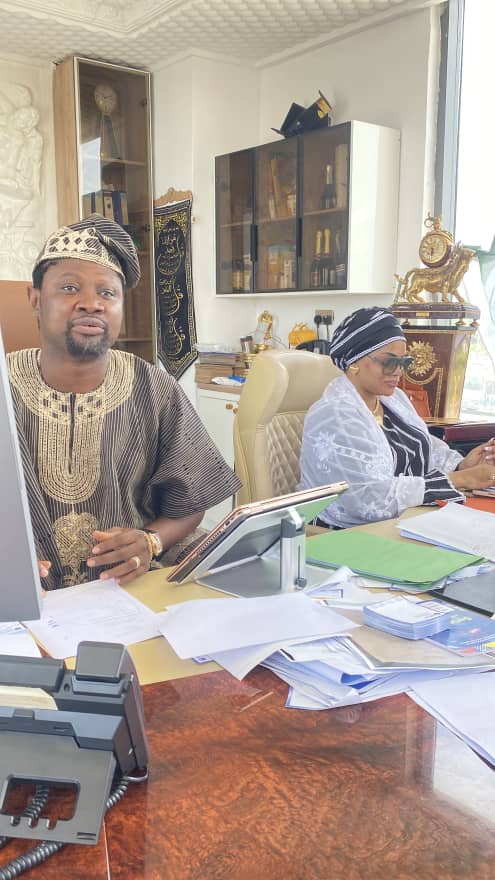
Harmony Garden CEO Empowers Widows with Enhanced Welfare Support
EPE, LAGOS — The Chief Executive Officer of Harmony Garden and Estate Development Limited, Hon. Dr. Saheed Audullahi Mosadoluwa, popularly known as Mr. Ibile, has reaffirmed his commitment to humanitarian service by extending increased welfare support to widows in Epe.
The gesture came during a visit by members of the Widows Association of Nigeria, Epe Branch, who gathered in large numbers on Tuesday to express appreciation for what they described as sustained generosity and life-changing support.
The engagement was marked by emotional testimonies, as several beneficiaries recounted how the initiative has improved their living conditions and restored hope. Many offered prayers for the philanthropist, describing his intervention as timely and impactful amid prevailing economic challenges.
One of the beneficiaries, Mrs. Folorunsho Quadri, commended Dr. Mosadoluwa’s consistent support, noting that the initiative has helped restore dignity among widows in the community. She revealed that members receive ₦100,000 quarterly, alongside a monthly stipend recently increased from ₦10,000 to ₦20,000 to cushion the effects of economic hardship.
According to her, the assistance goes beyond financial relief, providing emotional strength and encouragement for widows striving to rebuild their lives.
Responding, Dr. Mosadoluwa expressed gratitude for the visit and reiterated that his philanthropic activities are rooted in a genuine desire to give back to society. He emphasized that true wealth lies in the positive impact one makes in the lives of others, adding that supporting vulnerable groups remains a core priority.
The real estate developer also addressed concerns surrounding Harmony Garden, assuring the public of the company’s commitment to transparency and integrity, particularly in its land transactions.
He dismissed speculations linking his humanitarian gestures to political ambitions, maintaining that his actions are driven solely by compassion and a sense of social responsibility.
Dr. Mosadoluwa further urged the widows to make judicious use of the support while remaining resilient and hopeful despite life’s challenges.
Observers say the initiative highlights the increasing role of private sector players in complementing government efforts toward social welfare and community development.
Harmony Garden and Estate Development Limited continues to expand its presence in Nigeria’s real estate sector, while strengthening its reputation as a socially responsible organisation dedicated to improving lives.


society
We Die Here” – Court Defied as FGCKOSA Vows All-Out Fight to Save Federal Government College Kano Land
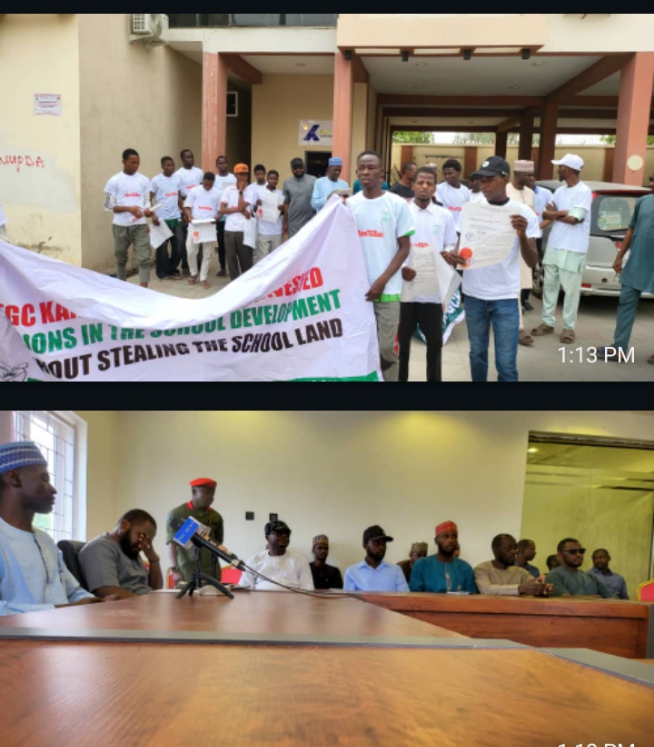
“We Die Here” – Court Defied as FGCKOSA Vows All-Out Fight to Save Federal Government College Kano Land
The Federal Government College Kano Old Students Association (FGCKOSA) has issued a fiery declaration of war against what it calls the illegal encroachment on its alma mater’s land, accusing unnamed parties of continuing construction work in brazen defiance of a court order.
In a passionate press statement released on Wednesday, the association declared that the land of the historic unity school is “not for sale, not for trade, not for negotiation,” and vowed to fight “legally, socially, and institutionally” without retreat or surrender.
According to FGCKOSA, the association acted swiftly after the encroachment came to light, engaging the Federal Ministry of Education, mobilising across media platforms, and securing an ex parte court order in Suit No. K/323/2026 before Honourable Justice Ubale Yusuf Muhammad of the Kano State High Court. The order, served on all parties by Saturday, April 11, 2026, commanded an immediate halt to all activity on the land.
However, the association reports that on Monday, an officer of the Kano State High Court, accompanied by alumni members, visited the site and found workers still present. The court order was served directly to school authorities, yet, FGCKOSA alleges, work has continued unabated.
Describing the act as “a brazen, shameless, and reckless act of impunity,” the association’s national president, Shoyinka Shodunke, said in the statement: “This is not development. This is racketeering. This is not enterprise. This is greed masquerading as progress.”
The statement reminded Nigerians that unity schools are “cradles of leadership, crucibles of character, and cathedrals of national unity,” warning that to violate them is to “vandalise Nigeria’s future.” It called on citizens, the federal government, and the press to declare where they stand, noting that “nations do not collapse from a lack of gold; they collapse when those entrusted with power lose their moral compass.”

FGCKOSA further announced that it has established a foundation to raise funds for upgrading the school’s infrastructure—but stressed that this would be done “without conceding a single inch of land.” The statement ended with a fierce vow drawn from the school’s anthem: “On that glorious day… I vow to revere and thee adore,” adding, “As we say in Nigeria, we die here.”
Shodunke signed off on behalf of the association, declaring: “We will not relent. We will not forget. We will not forgive any assault on our alma mater.”


- Uganda Development Corporation (UDC) to take 82% of Trade ministry budget April 16, 2026
- Merck Foundation marks ‘World Art Day’ through their Film, Song, Media and Fashion Awards 2026 in partnership with Africa’s First Ladies to raise awareness about social & health issues April 15, 2026
- Gabon’s Offshore Comeback: International Oil Companies (IOCs) Return as Exploration Heats Up Ahead of Paris Forum April 15, 2026
- Shell’s Eugene Okpere to Speak at Angola Oil & Gas (AOG) 2026 Amid $1B Angolan Deepwater Drive April 15, 2026
- Oando Joins African Energy Week (AEW) 2026 as Emerald Sponsor as Firm Reports 10% Profit Rise April 15, 2026
- Africa Finance Corporation (AFC) Invests in Dhamana Guarantee Company to Catalyse Local Currency Infrastructure Financing in East Africa April 15, 2026
- WESGRO and Enlit Africa 2026 unite to spotlight the Western Cape’s energy investment opportunity April 15, 2026
- Gianni Merlo re-elected as International Sports Press Association (AIPS) President for sixth and final term in landslide victory April 15, 2026
- African Development Fund approves 1.7 billion CFA francs to boost private sector competitiveness across West African Economic and Monetary Union (WAEMU) countries April 15, 2026
- Knowledge Katti: The Architect Behind Namibia’s Energy Breakthrough April 15, 2026
- Uganda Development Corporation (UDC) to take 82% of Trade ministry budget April 16, 2026
- Merck Foundation marks ‘World Art Day’ through their Film, Song, Media and Fashion Awards 2026 in partnership with Africa’s First Ladies to raise awareness about social & health issues April 15, 2026
- Gabon’s Offshore Comeback: International Oil Companies (IOCs) Return as Exploration Heats Up Ahead of Paris Forum April 15, 2026
- Shell’s Eugene Okpere to Speak at Angola Oil & Gas (AOG) 2026 Amid $1B Angolan Deepwater Drive April 15, 2026
- Oando Joins African Energy Week (AEW) 2026 as Emerald Sponsor as Firm Reports 10% Profit Rise April 15, 2026
- Africa Finance Corporation (AFC) Invests in Dhamana Guarantee Company to Catalyse Local Currency Infrastructure Financing in East Africa April 15, 2026
- WESGRO and Enlit Africa 2026 unite to spotlight the Western Cape’s energy investment opportunity April 15, 2026
-

 news4 months ago
WHO REALLY OWNS MONIEPOINT? The $290 Million Deal That Sold Nigeria’s Top Fintech to Foreign Interests
-

 celebrity radar - gossips3 months ago
Dr. Chris Okafor Returns with Power and Fire of the Spirit -Mounts Grace Nation Altar with Fresh Anointing and Restoration Grace on February 1, 2026
-

 celebrity radar - gossips6 months ago
End of an Era: Nigeria Mourns Evangelist Dr. Uma Ukpai, 80
-

 celebrity radar - gossips4 months ago
Prophet Kingsley Aitafo Releases 2026 Prophecy: ‘Nigeria Will Rise, but the World Must Prepare for Turbulence’