
society
AU Agenda 2063 Nominates Amb. Daniel Koussou as African Union Special Envoy on Oil and Gas


*AU Agenda 2063 Nominates Amb. Daniel Koussou as African Union Special Envoy on Oil and Gas*
The African Union’s Agenda 2063, a distinguished body of Ambassadors committed to advancing the socio-economic transformation of the continent over the next 50 years, has nominated one of his ambassadors, Daniel Koussou, as African Union Special Envoy on Oil and Gas (Continental).
Based on the objectives of The Agenda 2063 the AU’s 50-year framework for structural transformation, sustainable development, and economic integration, Koussou’s high-level advocacy role for oil and gas will focus on ensuring that Africa’s hydrocarbon resources contribute to continental prosperity, industrialization, and energy security.
Additionally, the CEO and Founder of Dau-O-Gik Oil and Gas, will represent the AU in international forums to ensure Africa’s developmental needs are not sidelined in global decarbonization debates.
At the heart of The Agenda 2063 is the vision of an integrated, prosperous, and peaceful Africa, driven by its own citizens and representing a dynamic force in the global arena.
Gentleman par excellence, Koussou, by his track record, embodies the values and aspirations of The Agenda 2063. His nomination therefore is timely and crucial in transforming the vision of The Agenda 2063 into a reality, ensuring that Africa’s future is one of sustainable growth, shared prosperity, and lasting peace.
A distinguished diplomat and global leader, Ambassador Daniel Koussou was recently appointed as one of the key experts leading these discussions by BIGWIL International Community of CEOs and Diplomatic Forum, under the aegis of the International Human Rights Observatory – Africa (IHRO-Africa) tasked to chair the Committee on Economic Diplomacy, Trade, and Investment for the forum’s Nigeria chapter.
Koussou’s leadership and vision, notably, are set to inspire meaningful dialogues about Nigeria’s economic potential and its vital role in international relations.




society
Governor Dauda Lawal Receives Nigerian Air Force Delegation in Gusau to Strengthen Security, Combat Terrorism
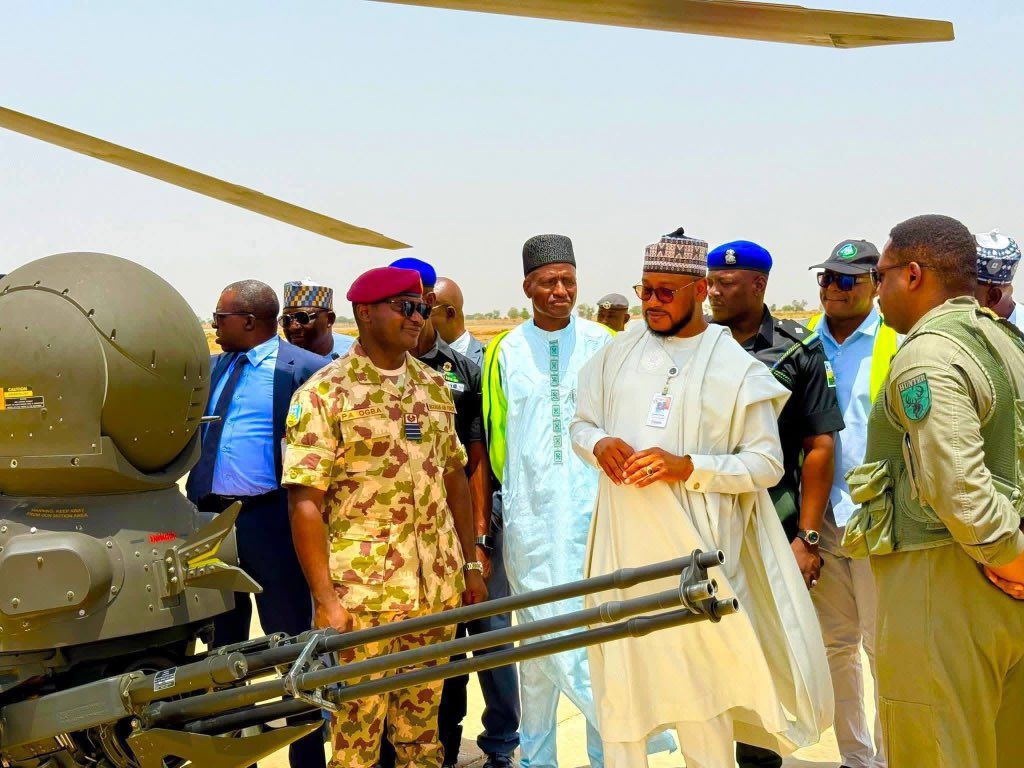
Governor Dauda Lawal Receives Nigerian Air Force Delegation in Gusau to Strengthen Security, Combat Terrorism
Governor of Zamfara State, Dauda Lawal P.hD, received a high-level delegation from the Nigerian Air Force during a strategic visit aimed at strengthening ongoing efforts to combat insecurity across the state.
The visit featured a presentation and inspection of key military air assets, including a combat-equipped helicopter designed for rapid response and real-time operations.
The Governor, alongside top government officials and security chiefs, was briefed on the aircraft’s capabilities, operational features, and its role in tackling banditry and other security challenges.
During the session, Air Force personnel demonstrated key features of the aircraft, including weapon systems and surveillance technology, highlighting its effectiveness in reconnaissance and combat missions.
Governor Lawal expressed strong interest, inspecting the equipment and asking questions about deployment and coordination with ground forces.
He commended the Federal Government and Air Force leadership for their commitment to restoring peace in Zamfara and reaffirmed his administration’s dedication to supporting all security agencies through collaboration and strategic initiatives.
The visit marks a significant step toward enhancing aerial surveillance and rapid response capabilities in Zamfara, reflecting renewed progress in addressing insecurity in the state.


society
Kenya President H. E Williams Ruto Bestows National Peace Hero Honor on Nigerian Diplomat, Amb. Jonathan Ojadah
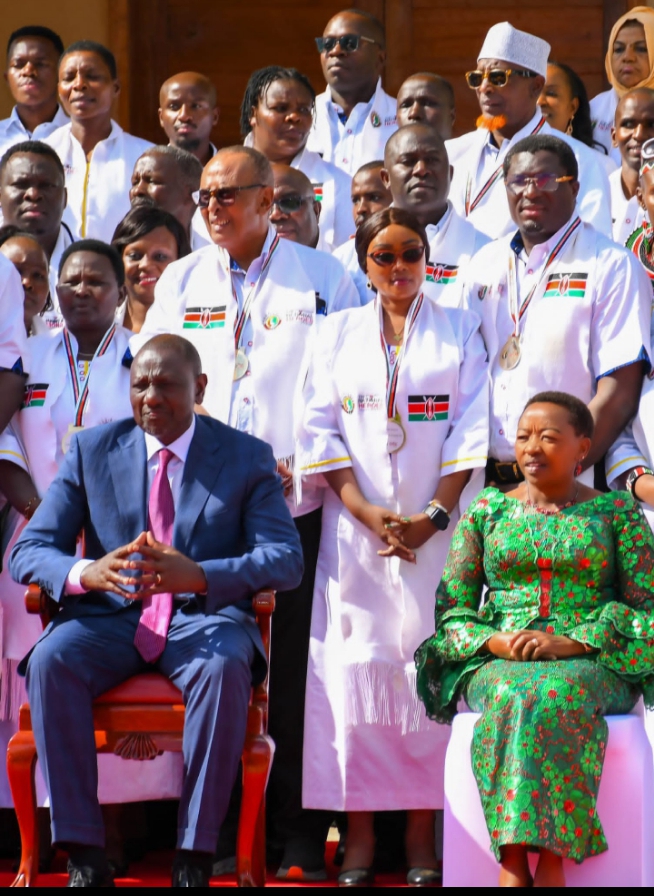
*Kenya President H. E Williams Ruto Bestows National Peace Hero Honor on Nigerian Diplomat, Amb. Jonathan Ojadah*
In a landmark diplomatic moment, Nigerian diplomat Ambassador Jonathan Ojadah has been honored with Kenya’s prestigious National Hero of Peace Medal, a testament to his outstanding contributions to peacebuilding and international cooperation across Africa.
The ceremony, held in Nairobi, witnessed a historic joint presentation of the Medal of Honor by President William Ruto of Kenya and President Bassirou Diomaye Faye of Senegal — symbolizing a pan-African acknowledgment of Ambassador Ojadah’s enduring efforts toward continental unity, conflict resolution, and diplomacy.
The high-profile event is already gaining traction across major television channels, newspapers, and social media platforms, marking a proud moment for both Nigeria and Africa at large.
The celebratory dinner was hosted by former Nairobi Governor, H.E. Mike Sonko, alongside other prominent figures including Bishop John CW and Dr Sophy Kirorei (Mama Sophie).
The dinner event reflected a night of elegance, cultural celebration, and unity, as leaders and supporters gather to celebrate a true icon of peace.
Ambassador Jonathan Ojadah, who holds the Grand Commander of Peace (GCOP) title, continues to inspire global peace initiatives and remains a beacon of hope for a harmonious Africa.
His Excellency, Amb. Dr. Marshall Jonathan Emmamuzo Daniel Ojadah is a Nigerian Diplomat, Businessman, humanitarian & Philanthropist.
A native of Aviarha, Isoko North LGA in Delta State, Nigeria., A distinguished personality in the realm of international trade and investment diplomacy With an expansive mastery in both bilateral and multilateral commerce, He is poised as a significant figure in global economic arenas.
Amb. Jonathan has worked with different diplomats in several high level dialogues including the EU, AU & UN in countries such as Germany, United Kingdom, Canada, Lithuania , DR Congo, Ethiopia, Rwanda, Zambia, Tanzania, Morocco, Kenya, Cameroon, Ghana and Uganda .
He is actively involved in various initiatives promoting international cooperation and diplomacy aimed at promoting sustainable peace and prosperity globally. Some of his notable achievements and initiatives include:
– Advocating for the rights of marginalized communities and promoting social justice.
– Consolidating Peaceful co-existence of societies in Africa
– Promoting sustainable development and climate change mitigation efforts
– Facilitating cultural exchange programs and educational initiatives between countries
– Building partnerships with other organizations and stakeholders to promote peace and prosperity globally.
He has participated in various UN events, conferences and Peace Support Initiatives.
Beyond his professional pursuits, Diplomat Jonathan’s profound philanthropy has been a beacon of hope for many. His dedication to humanitarian cause is further exemplified by the establishment of the Arise O Nigeria Empowerment Initiative, A non-governmental organization (NGO) , launched with the support of UN Women Executives in 2016, a testament to his commitment to empowering vulnerable groups, advocating for the marginalized, tirelessly working towards the attainment of the United Nations Sustainable Development Goals (SDG) in Nigeria.
His Excellency, Amb. Dr.Jonathan Ojadah is presently holding an elective position as the UNIPGC Global President and Chairman of the Supreme Council.
Amb. Jonathan Ojadah’s work with UNIPGC has helped to promote the organization’s goals and objectives, and has contributed to its reputation as a respected and influential international organization.
He has served as the Diplomatic Head Of Mission for Africa and Permanent Representative to the United Nations Hqtrs, New York, USA for the International Royal Diplomatic Club of the United Nations, Lithuania EU.
H. E Amb Dr. Jonathan’s mantle is adorned with over 15 Leadership, merit, and achievers awards, some of which include:
2024 U.S. President Joe Biden’s Lifetime Presidential Achievement Award. which attracted congratulatory messages from top dignitaries worldwide, including Her Excellency, Chief Dr. Jewel Howard Taylor, former Vice President of Liberia; Congresswoman Sheila Jackson Lee of the 18th Congressional District of Texas, USA; Hon. Kevin Uguru, Member of the German Parliament; and others.
United Nations Rescue Marshall , FIN-FORBES Best of Africa Outstanding Leadership Personality in Sustainable Peace Building, Diplomacy & Governance Award 2023 nominated by the Foreign Investment Network (FIN) UK. A recognition of his relentless efforts, unwavering dedication, and steadfast commitment to humanitarian services.
This prestigious FIN-FORBES Award recognition is a culmination of his consistent and impactful Sustainable Development projects that have significantly improved community and organizational effectiveness. These initiatives have also amplified the capabilities of his international team, leading to remarkable accomplishments and thus, meriting him the distinguished FIN-FORBES Award of Excellence, which he was honored with in London, UK, on July 19th, 2023.
In a further commendation of his service. H.E. Amb Dr. Jonathan Ojadah, was bestowed with the Euroknowledge Leadership Award at the British Parliament, House Of Lords. London UK on the 24th Of Nov. 2023.
Honorary Doctorate Causa from ISMT University in the Benin Republic, recognizing his scholarly contributions and societal impact.
ICON of Societal Development award by the Yoruba Youth Assembly, symbolizing his influence and positive change across various communities.
Ambassador Dr. Jonathan Ojadah’s accolades continues with another prestigious ICON of Societal Transformation award, bestowed upon him by the Northern Youths Peace Ambassadors of Nigeria. This honor celebrates his efforts in fostering unity, development, and peace among the diverse communities across Nigeria
Moreover, his work and influence extend beyond national boundaries, earning him the prestigious African Leadership Award. This award highlights his exemplary leadership qualities and his significant contributions to the advancement of African communities through sustainable development and peace-building initiatives.
Amb. Jonathan is presently the Grand Patron of the SPARTAN EAGLES OF NIGERIA.
Ambassador Dr. Jonathan’s illustrious career and philanthropic endeavors have established him as a beacon of Inspiration and a catalvst for positive change. not just in Africa but on the global stage.
Ambassador Jonathan have partnered with organizations with established Offices across the Globe for Professional Consultancy Services in Business Development & Investment Promotion serving as a Reliable Trusted Global Investment & Financial Portfolio Advisor/ Consultancy Company.

Elegance with Ambition: How QweenEbbah Turned Fame into Enterprise
*Lagos, Nigeria* – In an era where influence meets enterprise, *Ebbah Blessing Oghenerukevwe*, popularly known as *QweenEbbah*, is redefining success beyond the runway. Her evolution from celebrated beauty queen to wellness entrepreneur is a story of ambition, reinvention, and purpose that continues to inspire a new generation of African women.
Born and raised in Sapele, Delta State, QweenEbbah’s journey reflects a fierce determination to stand out beyond her environment. While acknowledging her parents’ role in her upbringing, she emphasizes that an internal drive to rise above limitations shaped her identity.
“I did not just want to be seen as a regular Sapele girl,” she says — a mindset that would later propel her into national and continental recognition.
Her breakthrough came in 2017 when she won the prestigious *Most Elegant Girl in Nigeria* title, a victory that brought her into the national spotlight. Today, she also holds the title of *Miss Africa United Nations*, further cementing her influence and presence on the global stage.
For QweenEbbah, pageantry was never just about beauty — it was about platform and purpose. She describes her inspiration as a “deep desire to embody elegance, confidence, and purpose,” using each crown to inspire and uplift others.
Her time in the pageant world became a masterclass in personal and professional development. It strengthened her confidence, instilled discipline through consistency and self-improvement, and refined her public image with poise and intentional representation. These qualities became the bedrock of her entrepreneurial journey.
Transitioning from pageantry to business, QweenEbbah ventured into the beauty and wellness industry, driven by a passion for helping people feel confident in their own skin. This vision birthed *House of Splash*, a spa brand focused on advanced skincare services and curated lifestyle offerings, including beauty accessories tailored for women.
According to QweenEbbah, the business was born out of a desire to create transformative self-care experiences while addressing gaps in quality service delivery within Nigeria’s beauty space.
Like many founders, her journey has not been without challenges. She highlights maintaining consistent service quality, managing a reliable team, building customer loyalty, and navigating rising operational costs as key hurdles.
Her approach has been strategic and disciplined: setting clear service standards, investing heavily in staff training, prioritizing customer satisfaction, and maintaining consistent branding and marketing. This structure has positioned House of Splash as both professional and deeply client-focused.
In a competitive market, House of Splash distinguishes itself through personalized customer experience and uncompromised service quality. Each client receives careful attention from consultation through aftercare, with strong emphasis on hygiene, premium products, and a calm, rejuvenating environment.
As a beauty professional, QweenEbbah practices what she promotes. She maintains a disciplined self-care routine, prioritizes a healthy lifestyle, and continuously updates her knowledge of global industry trends — ensuring she embodies the standards her brand represents.
Beyond her business, QweenEbbah remains a voice of encouragement for aspiring entrepreneurs, particularly young women and former beauty queens. Her advice is clear and pragmatic: start with purpose, stay consistent, invest in your skills, and build a strong personal brand.
She underscores the importance of resilience, noting that challenges are inevitable but growth and commitment will set individuals apart.
Looking ahead, QweenEbbah has ambitious plans to expand House of Splash into new cities and explore opportunities within the hair industry, signaling a broader vision for dominance across the beauty and wellness value chain.
Currently single and without children, she remains fully focused on building her brand and legacy.
For those interested in connecting with her or experiencing her services, QweenEbbah is accessible across multiple platforms:


Facebook: Splashup Skin-Spa Arena
Instagram: @splash_up_skincarespa | @d_splashup_spa_arena
TikTok: @dsplashupspaarena


- President receives Bishop of Port Victoria, reinforces State–Church collaboration on social priorities April 15, 2026
- World Bank Group’s International Finance Corporation (IFC) and Citi Sign Borrowing Facility to Expand Local Currency Financing in South Africa April 15, 2026
- Uganda: Manufacturers, traders ask gov’t to stay tax increases April 15, 2026
- Eritrea: Sports and educational week in Assab sub-zone April 15, 2026
- Cabo Verde Shapes Africa’s Health Future at High-Level World Health Organization (WHO) Regional Consultation April 15, 2026
- Critical Minerals Africa Group to Speak at Invest in African Energy Forum in Paris April 14, 2026
- Talentz MEDIA Announces Strategic Partnership with Ghanaian Artist Kwaku Cenima to Launch “Emotional Scene” April 14, 2026
- South African Local Government Association (SALGA) and The Global Trust Project announce municipal pilot under new three-year Memorandum of Understanding (MoU) April 14, 2026
- TotalEnergies Strikes New Oil Discovery Offshore Congo Amid National Drive Toward 500,000 barrels per day (BPD) April 14, 2026
- Africa Finance Corporation (AFC) Delivers Côte d’Ivoire’s First Project Finance Green Bond for Landmark Solar Plant April 14, 2026
- President receives Bishop of Port Victoria, reinforces State–Church collaboration on social priorities April 15, 2026
- World Bank Group’s International Finance Corporation (IFC) and Citi Sign Borrowing Facility to Expand Local Currency Financing in South Africa April 15, 2026
- Uganda: Manufacturers, traders ask gov’t to stay tax increases April 15, 2026
- Eritrea: Sports and educational week in Assab sub-zone April 15, 2026
- Cabo Verde Shapes Africa’s Health Future at High-Level World Health Organization (WHO) Regional Consultation April 15, 2026
- Critical Minerals Africa Group to Speak at Invest in African Energy Forum in Paris April 14, 2026
- Talentz MEDIA Announces Strategic Partnership with Ghanaian Artist Kwaku Cenima to Launch “Emotional Scene” April 14, 2026
-

 news4 months ago
WHO REALLY OWNS MONIEPOINT? The $290 Million Deal That Sold Nigeria’s Top Fintech to Foreign Interests
-

 celebrity radar - gossips3 months ago
Dr. Chris Okafor Returns with Power and Fire of the Spirit -Mounts Grace Nation Altar with Fresh Anointing and Restoration Grace on February 1, 2026
-

 celebrity radar - gossips4 months ago
Prophet Kingsley Aitafo Releases 2026 Prophecy: ‘Nigeria Will Rise, but the World Must Prepare for Turbulence’
-

 celebrity radar - gossips6 months ago
End of an Era: Nigeria Mourns Evangelist Dr. Uma Ukpai, 80