
Politics
OGUN VISIONARIES READY TO HOLD SECOND EDITION OF TOWN HALL MEETING IN IJEBU ODE


OGUN VISIONARIES READY TO HOLD SECOND EDITION OF TOWN HALL MEETING IN IJEBU ODE
As part of its commitment to participatory democracy, Ogun Visionaries for Yayi has announced plans to hold the second edition of its Town Hall Meeting on Thursday, 12th February, at RONTEX Hall Events Centre, opposite the Old Burial Ground, Ibadan Road, Ijebu-Ode, Ogun State. The event is scheduled to commence at 11:00 a.m.
This was disclosed in a press release signed by Hon. Monsur Oloyede, Chairman of the Planning Committee, who assured that the programme would be one of the best town hall engagements organised by the group.
According to him, the town hall meeting is aimed at bringing together the people of Ogun State—particularly stakeholders from Ogun West—to further enlighten and mobilise support for the 2027 gubernatorial ambition of Senator Solomon Adeola (Yayi).
The Honourable Minister of Health, Dr. Adekunle Isiaq Salako, will serve as Chairman of the Occasion, while Dr. Fatimat Oluwakemi Binta Shoge will be the Chair person
The. Mother of the Day is Otunba Dr. Aderonke Kolade Cairo, the Eeta Iyalode Bobakeye Obinrin Akileand Grand Matron of Ogun Visionaries.
The Keynote Address will be delivered by Rt. Hon. Tunji Egbetokun, former Speaker of the Ogun State House of Assembly, while Hon. Onadeko Onanusi, former Member of the House of Assembly, will serve as Guest Speaker.
The Royal Fathers of the Day are:
Oba Adedotun Odunneye Odusanya, JP, Osijiya II, Olu of Odonselu, Alaro Kingdom, Ijebu and Oba Kazeem Adesina Salami, Ilufẹmiloba I, Osobia, Paramount Ruler of Makun-Omi.
Dr. Niyi Osoba will also feature as Speaker of the Day.Chief Segun Ojolowo Ojuko
The Ogboye of Ota Aworiland
Fmr SSA on housing to Ogun State also will deliever speech that day
Discussants for the programme include Hon. Tola Banjo, Olootu Bolaji Adeniji, and Princess Florence Feyikemi, while Chief Ajiroba Dapo Oke, Register Tai Solarin federal University of education Ijagun, will serve as Chief Reviewer/Rapporteur
The Director-General of Ogun Visionaries for Yayi, Hon. Odunleye Odunjo, will be the Chief Host of the event.




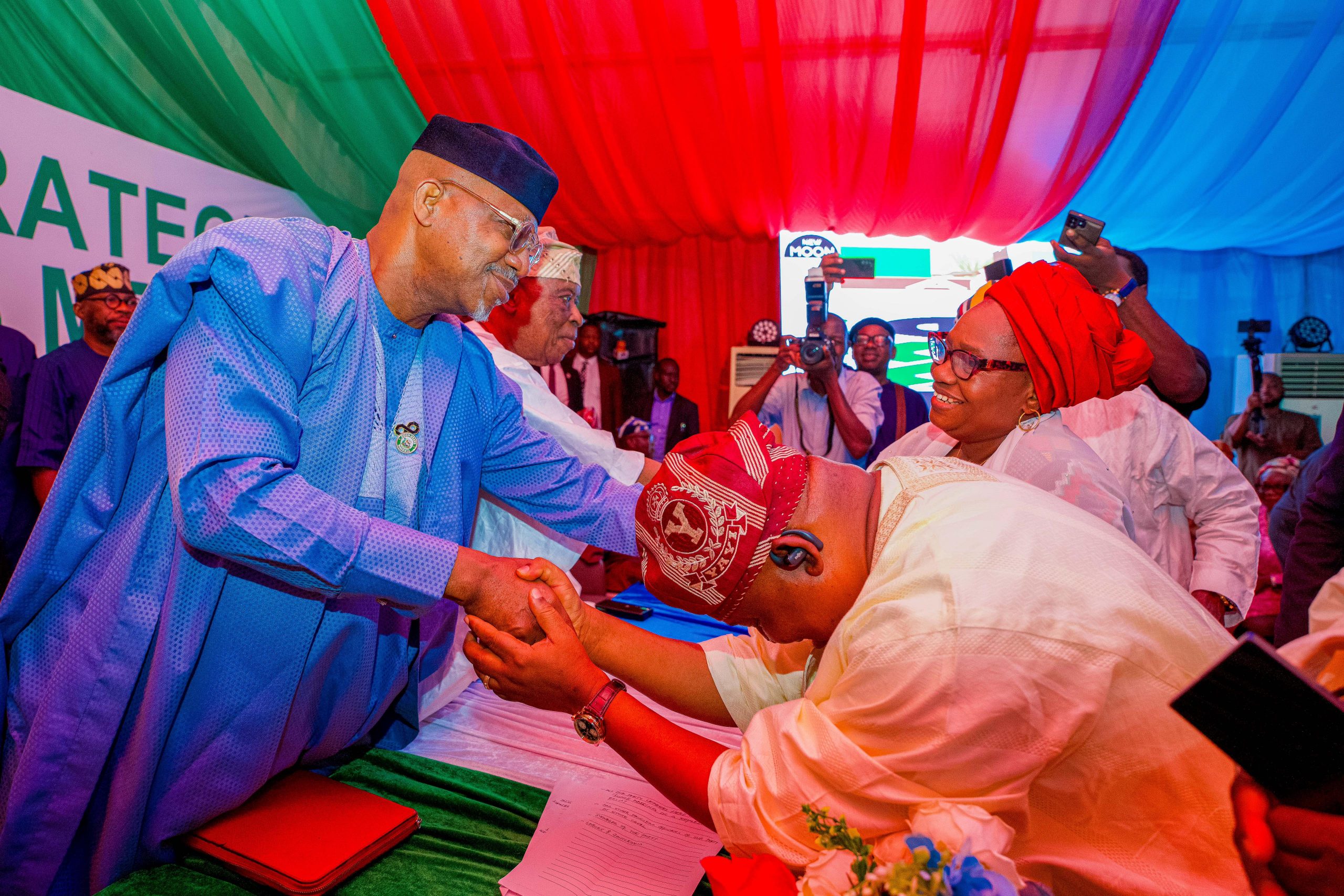
APC Picks Adeola Yayi as Consensus Candidate, Declares ‘New Ogun State Is Born’
ABEOKUTA, OGUN STATE — The Ogun State chapter of the All Progressives Congress (APC) has adopted Solomon Olamilekan Adeola, popularly known as Yayi, as its consensus governorship candidate ahead of the 2027 election.
The decision was announced on Monday, April 13, 2026, during a high-level party congress held in Abeokuta, drawing party leaders and stakeholders from across the state.
Governor Dapo Abiodun, who presided over the gathering, said the consensus arrangement was a strategic move to promote equity and inclusiveness, particularly by addressing what he described as a decades-long marginalisation of Ogun West Senatorial District in the state’s leadership structure.
He noted that the decision reflects a deliberate effort by the party to rotate power fairly among the state’s senatorial zones.
“Nothing will give me more joy than to fulfill the dreams of my predecessors — especially ensuring that Ogun West produces the next governor,” Abiodun said.
“I look forward to a time when I will sit proudly with my successor and my fellow former governors at the swearing-in of a new APC governor.”
Amid applause from party faithful, the governor formally unveiled Adeola as the party’s flagbearer, describing him as the most suitable candidate to lead the state into its next phase of development.
The announcement triggered jubilant reactions, with chants of “Yayi” echoing across the venue.
In his acceptance speech, Adeola expressed gratitude to party leaders and members, describing his emergence as a product of unity, sacrifice, and collective vision.
“I believe in oneness and the unity of our dear state and Ogun West by extension,” he said, pledging to justify the confidence reposed in him.
Adeola highlighted Ogun State’s growing economic relevance, noting its status as one of Nigeria’s most industrialised states. He promised to consolidate existing gains while advancing policies that would further drive development and prosperity.
“I will not let you down. I promise to keep the flag flying and maintain the unity, peace, and progress achieved in Ogun State,” he added.
Using a nautical metaphor, the senator assured party members of steady leadership, saying, “The ship I’m about to take over, I will make sure that it does not derail.”
He also emphasized inclusiveness, pledging to unite all factions within the party and across the state, regardless of political differences.
“By the grace of God, I will do my utmost best to keep every member of our great party together and ensure that we remain one indivisible family,” he said.
Declaring a new chapter for the state, Adeola proclaimed, “A new Ogun State is born,” promising a renewed focus on unity, development, and shared prosperity.
The endorsement, which took place during the APC Strategic Caucus Meeting, is widely seen as a defining moment in Ogun State politics, setting the stage for the 2027 governorship race and signaling strong internal cohesion within the ruling party.



“Ajadi Stabilised Party in Crisis,” Oyo Secretary Forum Hails His Role in PDP Unity
The Oyo State governorship aspirant under the Peoples Democratic Party (PDP), Olufemi Ajadi Oguntoyinbo, on Sunday reaffirmed that his ambition to serve the people of Oyo State is driven by a desire to sustain the developmental strides of Governor Seyi Makinde, whom he described as a “talk-and-do leader.”
He made this known while hosting executive members of the Secretary Forum from the 33 local government areas of the state at his residence in Ibadan.
“Governor Seyi Makinde has done well for Oyo State. I aspire to ensure continuity of this good governance and build on the solid foundation already laid,” Ajadi said.
The PDP gubernatorial aspirant expressed appreciation to the forum for honouring his invitation, despite the short notice, noting that their unity and turnout reflected a shared commitment to the state’s progress.
I thank you all for coming. This kind of unity shows that we are ready to work together for the future of Oyo State,” he added.
Earlier, the Secretary Forum, comprising political appointees across the 33 local governments, pledged support for Ajadi’s ambition, describing him as a unifying figure within the Oyo PDP.
Speaking on behalf of the forum, the forum’s secretary, Mr. Oyelami Joel, commended Ajadi’s role in stabilising the party during its challenging period.
“He came into the party at a time of internal crisis and has worked tirelessly to unite members. His consultations across the state are visible to all,” he noted.
In her remarks, the forum’s coordinator, Mrs. Tope Alice Aworele from Egbeda Local Government, described Ajadi’s political activities as impactful across the state.
“Your efforts are visible in every nook and cranny of Oyo State. We pray that God crowns your work by making you the party’s flag bearer,” she said.
Ahmed Kazeem said members were pleased to honour Ajadi’s invitation despite the short notice, emphasising their political relevance at the grassroots.
“We are all active political stakeholders appointed under Governor Makinde. Some of us are even former local government chairmen. Our presence here today shows our collective strength and interest,” he said.
Kazeem further stressed that the full attendance demonstrated the seriousness of the forum.
Similarly, Kareem Kazeem from Ibadan South-East Local Government highlighted the significance of the turnout and prayed for Ajadi’s success, urging him to emulate Makinde’s governance style if given the party’s ticket.
Other speakers echoed similar sentiments, describing Ajadi as accessible and committed to party unity.
Mrs. Olaniyi Oluwafunke, Secretary from Ogbomoso North, said Ajadi’s track record and outreach had distinguished him among other aspirants.
“No aspirant has engaged us the way Ajadi has done. That is why we are here—to interact with him and understand his vision,” she said.
She added:
“We have one voice. No aspirant has brought us together like this. We are ready to work with Ajadi.”
In his vote of thanks, Alhaji Hammed Hassan Elerukanfila called for inclusive governance, urging Ajadi to prioritise rural development alongside urban planning if elected governor.
Special prayers were offered for the success of Ajadi’s ambition, bringing the gathering to a close on a note of optimism and political solidarity.
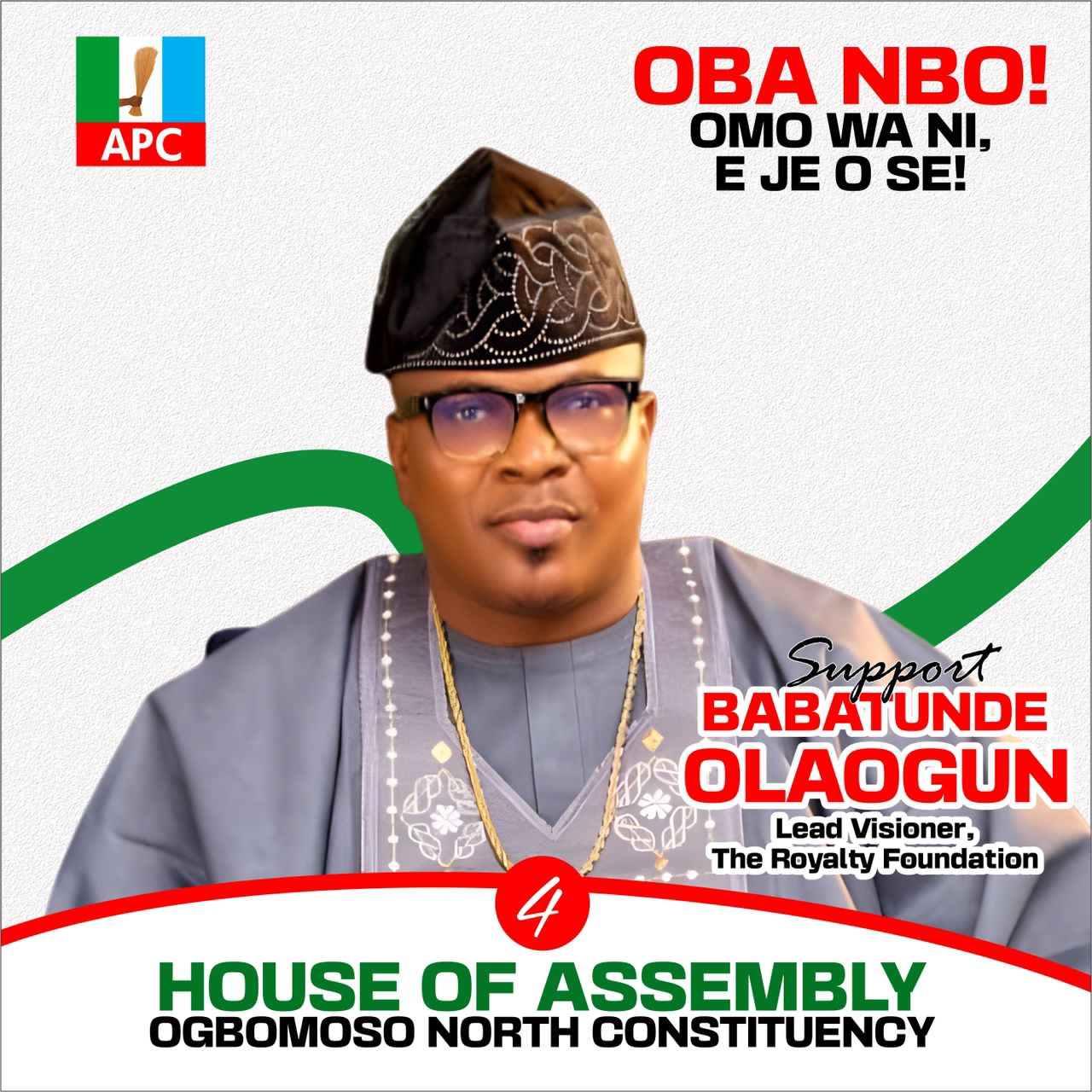
OLAOGUN URGES APC TO PRIORITISE COMPETENCE OVER PROPAGANDA AHEAD OF 2027 POLLS
Ogbomoso, Oyo State — A chieftain of the All Progressives Congress (APC) and aspirant for the Ogbomoso North Constituency, Babatunde Amos Olaogun, has called on party leaders and stakeholders to prioritise competence, capacity, and proven track record over propaganda as preparations intensify for the 2027 general elections.
In a statement addressed to constituents and party stakeholders, Olaogun expressed concern over moves within the party to adopt a consensus candidate, warning that such a process must not undermine merit or the overall interest of the constituency.
While reaffirming his loyalty to the APC and respect for party supremacy, the aspirant stressed that the essence of political participation is to ensure quality representation and effective leadership.
“Consensus must not become an excuse to sacrifice merit on the altar of convenience or propaganda. Our constituency deserves more than slogans,” he said.
Olaogun, who described himself as a scientist, administrator, and entrepreneur, said his diverse professional background positions him to deliver evidence-based leadership, attract developmental projects, and provide responsive representation to the people of Ogbomoso North.
Highlighting his past engagements, he noted that even without holding elective office, he has contributed to the welfare of constituents through medical outreaches, educational scholarships, and the provision of examination forms for students.
He assured constituents that greater impact would be achieved if given the party’s mandate, promising quality legislation, strategic empowerment programmes, and people-oriented governance
The APC aspirant also appealed to party leaders, delegates, and stakeholders to place the interest of Ogbomoso North above all considerations in selecting a candidate.
“Let us choose a candidate who can win and, more importantly, can perform. Let us choose capacity over clout, and track record over empty promises,” he urged.
Olaogun further encouraged constituents to actively engage party leaders in the decision-making process, insisting that the constituency cannot afford another cycle of under-representation.
As political activities gradually build up ahead of 2027, his remarks add to the growing conversation within party ranks on the need for credible and competent candidates to drive grassroots development.


- Senegal Rewrites the Rules of its Hydrocarbon Boom as Minister Birame Soulèye Diop Heads to African Energy Week 2026 in October April 13, 2026
- bp Bets Big on Namibia’s Deepwater Frontier with New Offshore Blocks April 13, 2026
- Merck Foundation declared Gabon First Lady as Ambassador of “More than a Mother” to build healthcare capacity, break infertility stigma, and support girl education April 13, 2026
- Changpeng Zhao (CZ) Releases Freedom of Money, a Memoir Reflecting on the Rise of Crypto and the Story Behind Binance April 13, 2026
- South Africa: Select Committee to Undertake Oversight to Municipalities in the Free State, North West and Gauteng April 13, 2026
- Africa Data Centres partners with Oni-Tel to enhance data centre connectivity in South Africa April 13, 2026
- Seychelles: 9th Indian Ocean Conference – Minister Barry Faure conducts bilateral meetings on the margins of the Indian Ocean Conference April 13, 2026
- Complete Professional Fighters League (PFL) Africa: Pretoria Results and Photos - Nkosi Ndebele defeats Michele Clemente in a bantamweight classic shootout in the main event April 12, 2026
- Seychelles Backs United Arab Emirates (UAE) Statement, Calls for De-escalation and Respect for International Law April 11, 2026
- TotalEnergies’ Africa Senior Vice President (SVP) Mike Sangster to Spotlight Expanding Project Pipeline at Paris Forum April 11, 2026
- Senegal Rewrites the Rules of its Hydrocarbon Boom as Minister Birame Soulèye Diop Heads to African Energy Week 2026 in October April 13, 2026
- bp Bets Big on Namibia’s Deepwater Frontier with New Offshore Blocks April 13, 2026
- Merck Foundation declared Gabon First Lady as Ambassador of “More than a Mother” to build healthcare capacity, break infertility stigma, and support girl education April 13, 2026
- Changpeng Zhao (CZ) Releases Freedom of Money, a Memoir Reflecting on the Rise of Crypto and the Story Behind Binance April 13, 2026
- South Africa: Select Committee to Undertake Oversight to Municipalities in the Free State, North West and Gauteng April 13, 2026
- Africa Data Centres partners with Oni-Tel to enhance data centre connectivity in South Africa April 13, 2026
- Seychelles: 9th Indian Ocean Conference – Minister Barry Faure conducts bilateral meetings on the margins of the Indian Ocean Conference April 13, 2026
-

 news4 months ago
WHO REALLY OWNS MONIEPOINT? The $290 Million Deal That Sold Nigeria’s Top Fintech to Foreign Interests
-

 celebrity radar - gossips3 months ago
Dr. Chris Okafor Returns with Power and Fire of the Spirit -Mounts Grace Nation Altar with Fresh Anointing and Restoration Grace on February 1, 2026
-

 celebrity radar - gossips4 months ago
Prophet Kingsley Aitafo Releases 2026 Prophecy: ‘Nigeria Will Rise, but the World Must Prepare for Turbulence’
-

 celebrity radar - gossips6 months ago
End of an Era: Nigeria Mourns Evangelist Dr. Uma Ukpai, 80