
Politics
Lack of Understanding or Legitimate Concern? Otti’s Defence of Tinubu’s Tax Reform Sparks National Debate

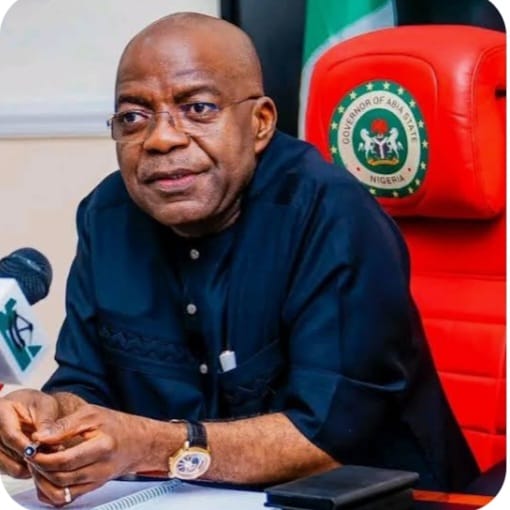
Lack of Understanding or Legitimate Concern? Otti’s Defence of Tinubu’s Tax Reform Sparks National Debate
By George Omagbemi Sylvester | SaharaWeeklyNG
“Abia Governor Alex Otti argues critics misunderstand the overhaul of Nigeria’s tax laws, but the controversy reveals deeper anxieties about governance, transparency and economic strain.”
When Abia State Governor Alex Otti publicly defended President Bola Ahmed Tinubu’s newly enacted tax reform laws on February 13, 2026, he did more than just push back at critics, he threw the spotlight back on a fulcrum issue dividing Nigeria’s political and economic classes. Otti’s assertion that Nigerians attacking the tax policy “lack understanding” crystallises a broader fracture in public discourse over fiscal policy, governance and the future of the Nigerian economy.

The comments from Governor Otti came amid an intensifying national conversation over sweeping tax reforms signed into law in June 2025, designed to modernise Nigeria’s tax architecture and expand revenue mobilisation. These reforms (long in the making and championed by a Presidential Fiscal Policy and Tax Reforms Committee chaired by Prof. Taiwo Oyedele) mark the most far‑reaching overhaul of federal tax laws in decades. They include restructuring the Federal Inland Revenue Service into the National Revenue Service (NRS), establishing a Tax Appeal Tribunal and Ombudsman Office, and unifying revenue collection frameworks to improve transparency and efficiency.
Governor Otti’s praise for the new legislation resonated with elements of his own fiscal thinking. Drawing on economic positions he articulated nearly a decade ago, he argued that key principles now entrenched in the law reflect sound fiscal reasoning and long‑standing proposals to strengthen Nigeria’s economic foundations. “Almost 10 years ago, I wrote about the fiscal side of things,” Otti said. “When I read the new tax reform law, I saw many of those arguments reflected in it. I thank Prof. Oyedele. When people attack him, they don’t understand.”
Yet, while Otti’s intervention was meant to de‑escalate public criticism, it instead exposed how complex and emotionally charged the issue of taxation has become in Nigeria. Critics, both inside and outside government, argue that the reforms have not been adequately explained to citizens and that many fear the measures will aggravate hardship amid already high costs of living. One prominent voice of dissent, fiscal policy analyst Aborisade, warned that without transparency and clear communication on how tax revenues will be collected and returned to the people, “these reforms risk becoming deeply unpopular.” Critics also highlight that any tax increase implemented without demonstrable improvements in public services could fuel resentment and mistrust in governance.
That mistrust is not abstract. For years, Nigeria has struggled with weak tax compliance, low revenue‑to‑GDP ratios compared with other emerging economies, and public scepticism over how government revenues are utilised. Many Nigerians remember episodes where policy changes were not accompanied by visible improvements in infrastructure, healthcare or power delivery, reinforcing the belief among skeptics that new taxes equate to greater burden with little reward.
For supporters like Otti and others in government policy circles, the reforms represent a long‑overdue attempt to widen the tax net and reduce Nigeria’s chronic dependence on volatile oil revenues. Advocates argue that a modernised tax system can enhance domestic revenue mobilisation, reduce fiscal deficits, and create a more resilient economy. They point out that reforms provide exemptions and reliefs for low‑income earners and small businesses and are aimed at building a fairer, more transparent system for all stakeholders.
Still, bridging the gap between these competing narratives is challenging. Opposition voices contend that even well‑designed tax policy may fail if the state lacks the capacity to implement it equitably or if the public’s confidence in leadership remains weak. “Without accountability and clear benefits for their contributions, any tax reform risks becoming deeply unpopular,” Aborisade emphasised, warning that heavy taxation without trust can fracture the social contract.

The debate over Tinubu’s tax reform illustrates a deeper truth about contemporary Nigeria: that economic policy no longer exists in a vacuum but is deeply intertwined with public sentiment, political legitimacy, and social cohesion. As one respected economist put it, “Taxation is not just a fiscal tool, it is a trust‑building exercise between the state and its citizens.” When that trust is fragile, even technically sound reforms can be seen as punitive rather than constructive.
Analysts suggest that meaningful public engagement (including sustained information campaigns, transparent revenue utilisation reporting and constructive dialogue with civil society) is essential to soothe anxieties and build confidence in the new system. Without this, what began as an effort to stabilise public finances could widen political and social divides.
In defending the tax reforms, Governor Otti has framed the challenge as one of comprehension rather than critique. But the controversy unfolding across Nigeria is not simply about misunderstanding; it underscores a profound gap between policy design and public perception. For a reform of this magnitude to succeed, Nigerians must be assured not only of its economic merits, but also of its fairness, transparency and tangible impact on everyday lives.
As the implementation phase continues through 2026 and beyond, the Tinubu administration, state governments and economic stakeholders face the critical task of translating legislative change into broader public trust – a task as difficult as any technical reform the tax laws themselves seek to achieve.





Politics
CONGRATULATORY MESSAGE TO APC CONSENSUS GOVERNORSHIP CANDIDATE, SENATOR SOLOMON OLAMILEKAN ADEOLA YAYI
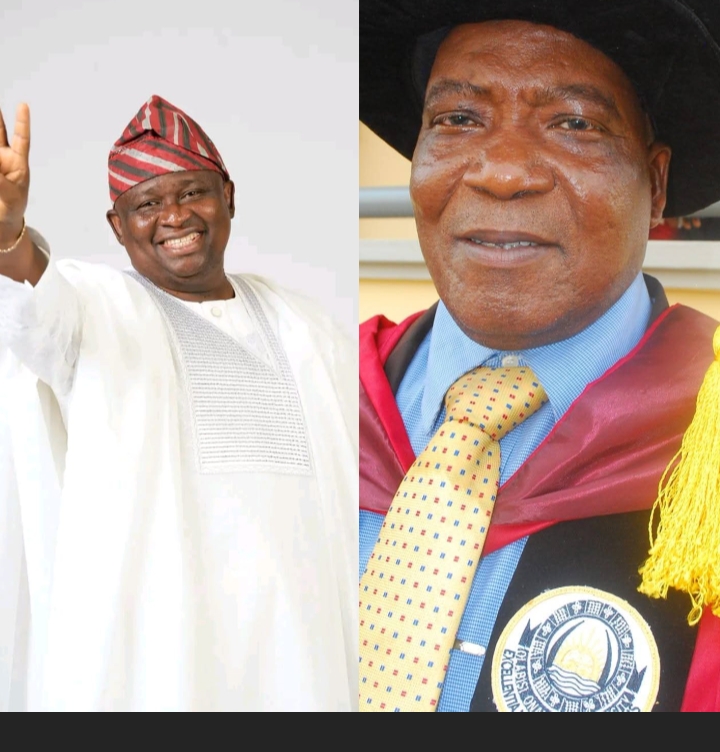
CONGRATULATORY MESSAGE TO APC CONSENSUS GOVERNORSHIP CANDIDATE, SENATOR SOLOMON OLAMILEKAN ADEOLA YAYI*
On behalf of our Grand Patron, Dr. Tunde Osinowo (Pepperito Jnr.), we leaders and Members of Ogun East for Yayi heartily congratulate Senator Solomon Olamilekan Adeola (Yayi) for being the consensus Governorship candidate of our party, APC, in the 2027 election.
This is marvelous and indeed great in the sight of God.
Without mincing words, the choice of Yayi by the party stakeholders is the best and the most surest assurance to coast the Party to victory at the general elections come February, 2027.
We commend the maturity, dispositions and spirit of sportsmanship with which all the Gubernatorial aspirants embraced the decision and extended hands of fellowship to Senator Solomon Olamilekan Adeola Yayi, the Gubernatorial Hopeful.
We beseech God to grant Yayi and all of us, leaders, followers and supporters, the enablements to see him duly elected as Governor of Ogun State at the general election in Jesus mighty name.
We congratulate the incoming Governor of Ogun State and our Excellency in waiting, Yayi.
This is Yayi O’clock.
Praise God!
Mo yo fun e, mo yo fun ra mi.
Lagos Remains Center of Nigeria’s Economy, Says Obasa
The Speaker of the Lagos State House of Assembly, Rt. Hon. Mudashiru Ajayi Obasa, has reaffirmed Lagos as the heartbeat of Nigeria’s economy, stressing that despite Abuja being the Federal Capital Territory, Lagos continues to drive the nation’s economic strength.
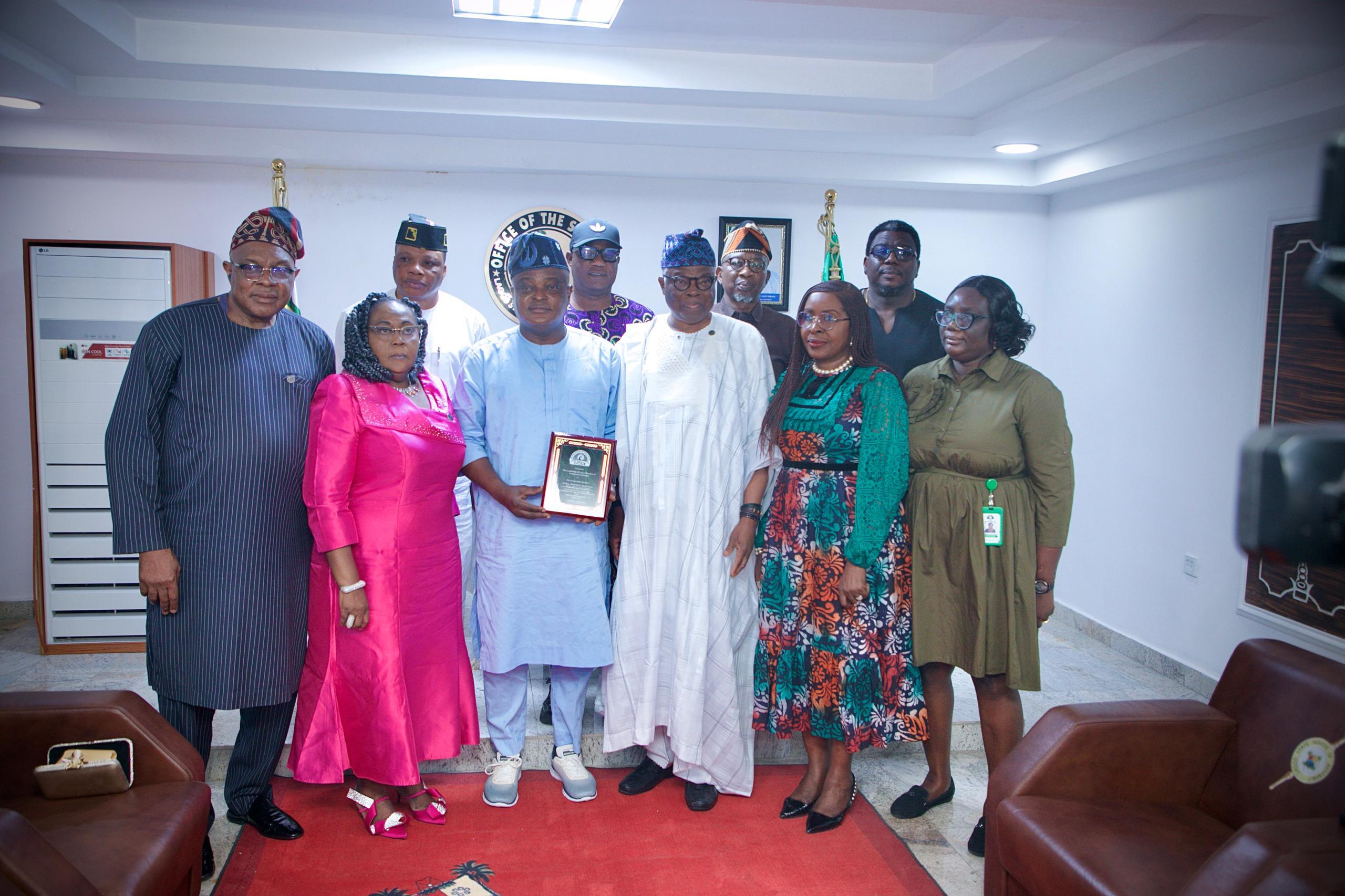
Obasa made this declaration on Thursday, April 16, when he received the new leadership of the Lagos Chamber of Commerce and Industry (LCCI), led by its President, Engr. Leye Kupoluyi, during a courtesy visit to the Assembly.
The Speaker emphasized that Lagos remains the best destination for investment in Nigeria, citing landmark legislations such as the Public Private Partnership Law, the Employment Trust Fund Law, and the Lagos State Lottery Law as evidence of the Assembly’s commitment to creating a business-friendly environment. He noted that these laws were designed to support entrepreneurs, attract investors, and sustain Lagos’s position as the economic hub of the country.
“Lagos is the center of Nigeria’s economy. We have always been pro-business and pro-people, and our laws reflect this commitment. Lagos is strategically placed to be the leading light of Africa, geographically, economically, and otherwise,” Obasa stated.
Earlier, Engr. Kupoluyi appreciated the Assembly’s initiatives and called for stronger collaboration between the legislature and the business community. He urged the House to continue enacting policies that would ease business operations and foster economic growth in the state.
The LCCI delegation included Chief Varkey Verghese, MFR (Hon. Life Vice President), Sir Ladi Smith (Vice President), Princess Layo Bakare-Okeowo (Vice President), Dr. Chinyere Almona, FCA (Director General), Dr. Sunnie Omeiza-Michael (Director, Research & Advocacy), and Mrs. Akintunde Temitope (Director, International).
Members of the House present were Hon. Stephen Ogundipe, Hon. Oladele Ajomale, Hon. Jubril AbdulKareem and Hon. Bonu Solomon and Hon. Ajayi. Also in attendance was Clerk of the House Mr. Lekan Onafeko, alongside aides to the Speaker.
The meeting underscored the shared vision of both institutions to position Lagos not only as Nigeria’s economic powerhouse but also as a continental leader in commerce and development.
Amupitan: Why the ADC is Chasing Shadows
Sanya Oni
It is no surprise that the African Democratic Congress is insistent on the immediate resignation of the chairman of the Independent National Electoral Commission, Prof. Joash Amupitan. First, was for the ‘high crime’ of seeking to play safe over a judgment of the court which demanded that ADC’s feuding parties and INEC under the leadership of Amupitan in particular take no further step to present the court with a fait accompli over a matter before it. Not sufficient to play the judge and jury in its own cause, it also insists on treating the appearance of any position deemed contrary to its own as treasonable.
Now, they want the head of the electoral body served on the platter over an alleged pro-President Bola Tinubu tweet in 2023. And so determined to press its case, the ADC, in a statement by its rambunctious National Publicity Secretary, Bolaji Abdullahi, would on Saturday, lob yet another charge at the INEC boss for what it claimed were attempts (by who?) to erase the digital trail of the offending tweet – which it also says amounted to a dangerous cover-up that undermined the credibility and neutrality of Nigeria’s electoral system.
Talk of an unproven tweet suddenly becoming an issue over which the chief electoral umpire’s integrity is not only being called into question but constituting the grounds for demanding for his head!
Of course, save for the party’s army of salesmen with their all-familiar talking points on prime time television, few Nigerians would be surprised by such antics which border on desperation. Before now, the party had, much earlier, raised the alarm over what it described as a calculated plot to impose a one-party state ahead of the 2027 general elections, accusing the ruling All Progressives Congress (APC) of using INEC to weaken opposition parties.
Let’s take a look at the tragedy of a party which seeks to pride itself as a leading opposition but has done practically nothing to earn its stripes. It started with a horde of angry, internally displaced politicians overrunning the organs of a once-marginal party, the ADC in a spectacular act of a hostile take-over. Unfortunately, if the image presented by the party from the outside at the time was one of cohesion, it certainly did not help that the invaders neither possessed the patience nor the discipline to undertake the required due diligence! Now that it turns out that what they thought they had bought with pride was in every sense, a damaged good, Nigerians as a whole are being blackmailed, accused of being an accessory to their grand act of dereliction.
Yet, as the presidential candidate of the party in the 2023, general election, Dumebi Kachikwu, would care to remind, the takeover bid, being a flawed process is akin to erecting a castle on shifting sand. The tenure of the so-called chairman of the party, Ralph Nwosu, with whom the invaders negotiated, had long been rendered invalid by the effluxion of time. Not only that, the constitution of the party also made clear that those seeking the leadership of the party must have spent no less than two years in the party! These are supposed to be the issues before the courts!
Across the states, it is the same story of a party riven with crises from top to bottom. Yet, convinced that their good – as illegitimate as could be – was already theirs for keeps, the caretakers-turned undertakers plodded on, choosing to ignore the feelings of a section of the party hierarchs that needed to be placated. With just enough crude blackmail, impunity, cash and more cash in their armoury to waltz through, the conquistadors actually assumed they were unstoppable.
Of course, they pretended that the court processes are merely a side-show. The Federal High Court ruling which required the invaders to show cause why the prayers of the aggrieved ADC members should not be granted was thought of as a joke; the same way the judgment of the appellate court which directed the parties to return to status quo ante bellum was deemed by the ADC invaders a non-binding opinion hence their plans to proceed with a convention fraught with potential legal jeopardy.
To the invaders – Mark, Rauf Aregbesola et al, their interpretation, as against that of INEC with its tilt on neutrality – was sacrosanct.
While these drag on, trust the lawyers with their boring whining about how Section 83 of the Electoral Act, 2026 ousts the jurisdiction of the courts. Yes, it provides that “No court in Nigeria shall entertain jurisdiction over any suit or matter pertaining the internal affairs of a political party” as if that effectively translates to shutting the doors of mediation to aggrieved party men even on issues bordering on their rights or non-observance of party constitutions. In like manner, it is like the express provisions of Section 6(6)(b) which also provides that: “The judicial powers vested in accordance with the foregoing provisions of this section – shall extend to all matters between persons, or between government or authority and to any persons in Nigeria, and to all actions and proceedings relating thereto, for the determination of any question as to the civil rights and obligations of that person” has suddenly become superfluous in the current electoral cycle!
To return to the Amupitan matter: Should anyone be fooled by the orchestrated blackmail by those whose record private and public can’t hold a candle to Amupitan’s? Certainly not with what I had earlier described as a programmed de-legitimisation of the 2027 elections by overrated political actors being already an open book. Sure enough, the matter, in the coming days, would not be whether or not the gentleman from Kogi can take the heat, but how far those in the business of concocting lies would go to undermine the process simply because the odds are not going their way. While they are at it, they have still not told Nigerians how the lone individual – out of 37 odd Resident Electoral Commissioners (RECs) and 12 National Commissioners, with two representing each of the six geopolitical zones, has suddenly become the ultimate decider of how things will go in 2027.
Reminds of the bad workman perennially blaming his tools.
First published in The Nation on April 14, 2026


- African Development Bank, The European Stability Mechanism (ESM) sign Memorandum of Understanding to enhance cooperation April 16, 2026
- Seeing the Unseen – How Canon is Protecting East Africa’s Coral Reefs April 16, 2026
- Sintana Listing Signals New Era for Local Ownership in Namibia’s Oil and Gas Sector April 16, 2026
- The crisis in the Middle East could cost Africa 0.2 percent in economic growth in 2026 April 16, 2026
- Namibia International Energy Conference (NIEC) 2026: Namibia Fast-Tracks Oil Law Reform as President Nandi-Ndaitwah Pushes Amendment Bill Ahead of First Oil April 16, 2026
- Africa’s Energy Wealth: Why Good Governance Must Power a Just Transition (By Sola Adebawo) April 16, 2026
- Emirates and Wesgro sign Memorandum of Understanding (MoU) to Stimulate Inbound Tourism to the Western Cape April 16, 2026
- Banco Sol’s Angola Oil & Gas (AOG) 2026 Sponsorship Affirms Drive to Finance Angolan Service Companies April 16, 2026
- Uganda Development Corporation (UDC) to take 82% of Trade ministry budget April 16, 2026
- Merck Foundation marks ‘World Art Day’ through their Film, Song, Media and Fashion Awards 2026 in partnership with Africa’s First Ladies to raise awareness about social & health issues April 15, 2026
- African Development Bank, The European Stability Mechanism (ESM) sign Memorandum of Understanding to enhance cooperation April 16, 2026
- Seeing the Unseen – How Canon is Protecting East Africa’s Coral Reefs April 16, 2026
- Sintana Listing Signals New Era for Local Ownership in Namibia’s Oil and Gas Sector April 16, 2026
- The crisis in the Middle East could cost Africa 0.2 percent in economic growth in 2026 April 16, 2026
- Namibia International Energy Conference (NIEC) 2026: Namibia Fast-Tracks Oil Law Reform as President Nandi-Ndaitwah Pushes Amendment Bill Ahead of First Oil April 16, 2026
- Africa’s Energy Wealth: Why Good Governance Must Power a Just Transition (By Sola Adebawo) April 16, 2026
- Emirates and Wesgro sign Memorandum of Understanding (MoU) to Stimulate Inbound Tourism to the Western Cape April 16, 2026
-

 news4 months ago
WHO REALLY OWNS MONIEPOINT? The $290 Million Deal That Sold Nigeria’s Top Fintech to Foreign Interests
-

 celebrity radar - gossips3 months ago
Dr. Chris Okafor Returns with Power and Fire of the Spirit -Mounts Grace Nation Altar with Fresh Anointing and Restoration Grace on February 1, 2026
-

 celebrity radar - gossips6 months ago
End of an Era: Nigeria Mourns Evangelist Dr. Uma Ukpai, 80
-

 celebrity radar - gossips4 months ago
Prophet Kingsley Aitafo Releases 2026 Prophecy: ‘Nigeria Will Rise, but the World Must Prepare for Turbulence’