
Politics
NATIONAL UNVEILING OF THE IGBO PRESIDENCY PROJECT (IPP)

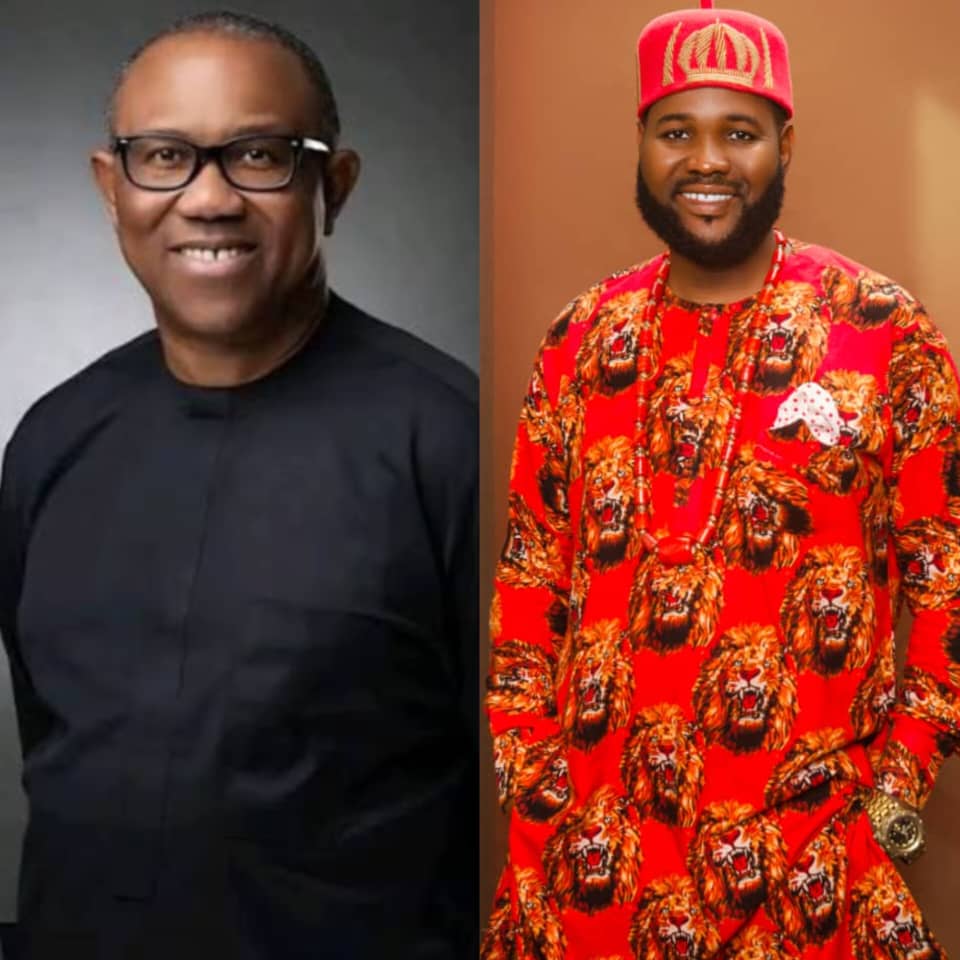
NATIONAL UNVEILING OF THE IGBO PRESIDENCY PROJECT (IPP)
The Peaceful Path Toward Equity, Unity and Democratic Representation for the Igbo People of Nigeria
1. Introduction & Rationale
The Igbo Presidency Project (IPP) is a peaceful, pro-Nigeria, and pan-Igbo political advocacy initiative established by the Igbo Heroes and Icons Foundation. It is dedicated to the pursuit, in perpetuity, of electing—constitutionally and democratically—a President of Igbo extraction in the Federal Republic of Nigeria.
The IPP is premised on the principle that every major ethnic group in Nigeria must participate fairly in the leadership and governance of the nation, especially one that has contributed immensely to Nigeria’s unity, independence, economy, and democratic culture.
Since the early formation of political parties in Nigeria in the 1940s, the Igbo have been deeply active in the struggle for self-government and eventual independence. Notably, Igbo-led political movements viewed Nigeria as one indivisible entity and deliberately embraced inclusiveness, accommodating Nigerians of all tribes, religions, and ethnic backgrounds in leadership structures. This spirit was exemplified under the leadership of Dr. Nnamdi Azikiwe, whose NCNC reflected equitable representation across the North, West, and East.
The struggle for equitable rights and representation for the Igbo people is therefore non-negotiable, irreversible, and essential for national peace, cohesion, justice, and sustainable development.
This project calls upon Igbo communities in Southeast Nigeria, throughout the Nigerian federation, and across the global diaspora to unite in a common civic purpose: the restoration of dignity, representation, and rights through constitutional means.
2. Historical Context: Who Are the Igbo?
The Igbo are one of Nigeria’s three largest ethnic groups, concentrated in the southeastern region of the country, including Abia, Anambra, Ebonyi, Enugu, Imo, and parts of Delta and Rivers States. Estimates place the Igbo population at roughly 45 million people today, with vibrant diaspora communities across Europe, North America, the Caribbean, and West Africa.
Unlike many West African societies, traditional Igbo political organization was decentralized, rooted in autonomous villages and republican consensus systems rather than centralized kingdoms. This indigenous tradition fostered entrepreneurship, achievement through individual merit, and a culture of civic engagement.
Historically, the Igbo demonstrated uncommon sacrifices for Nigerian unity. For example:
In 1957, when Britain offered self-government to the regions if two agreed, Dr. Azikiwe rejected the offer because he believed the North should not be left behind, comparing Nigeria to “a fleet of ships” that must not abandon one vessel mid-voyage.
In 1959, Azikiwe again rejected an offer from Chief Awolowo that would have made him Prime Minister, choosing instead a coalition that preserved national balance and prevented crisis.
These are among the countless sacrifices made by the Igbo in the interest of peace and stability in Nigeria.
The Igbo also experienced one of the most tragic episodes in African post-colonial history—the Nigerian Civil War (1967–1970)—which resulted in the death of over one million civilians, mostly Igbo.
3. Post-War Reality: Marginalisation and Structural Exclusion
Despite their sacrifices, the post-war experience of the Igbo has been marked by deep structural injustice.
After the civil war, Igbo citizens who had legitimate bank savings were given only twenty pounds sterling, regardless of the amounts they held. This was followed by the declaration of many Igbo-owned homes as “abandoned properties,” particularly in Rivers State, where such properties were undervalued, seized, and sold under discriminatory conditions.
Other patterns of exclusion include:
Persistent relocation and dispossession of Igbo traders in Lagos and other states
Unequal state creation, leaving the Southeast with fewer states than other zones
Systematic denial of key national security and judicial positions to qualified Igbo citizens
Tenure extensions deliberately preventing Igbo succession in strategic offices
These realities continue to fuel perceptions of second-class citizenship, despite the Igbo having no other homeland outside Nigeria.
4. Systematic Injustice and the Unrewarded Sacrifices of the Igbo People
The call for an Igbo Presidency cannot be separated from the long record of sacrifices the Igbo have made for the unity, stability, and progress of Nigeria—sacrifices that have too often been met with exclusion rather than recognition.
From the earliest days of Nigeria’s amalgamation, through the independence struggle and the turbulent years that followed, the Igbo have consistently acted in favour of one united Nigeria, even at great cost to themselves. The massacres of 1953, the pogroms of 1966–1967, and the catastrophic genocide of the civil war remain among the darkest chapters in Nigeria’s history. Yet, despite these wounds, the Igbo people have repeatedly chosen forgiveness, reintegration, and renewed commitment to the Nigerian project.
One of the most defining sacrifices occurred in 1957 when Britain offered self-government to Nigeria’s regions on the condition that two of the three major regions accept. While the Western Region agreed and the North declined, Dr. Nnamdi Azikiwe—then leader of the Eastern Region—also refused, insisting that Nigeria must move forward together and that the North should not be left behind. Had he accepted, Nigeria would likely have fractured permanently into separate countries. The survival of Nigeria’s federation today is therefore inseparable from Igbo statesmanship and restraint.
Even in the political arrangements preceding independence, Igbo leaders repeatedly accepted less advantageous positions in order to preserve national balance. In 1959, Dr. Azikiwe declined the opportunity to become Prime Minister through a southern coalition, choosing instead a weaker ceremonial role to avoid pushing the North into opposition at independence—a decision he described as becoming “a prisoner in a gilded cage.”
Yet, rather than being honoured for such nation-building sacrifices, the Igbo have endured decades of collective demonization and structural punishment. The January 1966 coup was unfairly stamped an “Igbo coup,” despite evidence that Igbo officers played key roles in crushing the coup and that Igbo senior officers were also among its victims. No other ethnic group in Nigeria has been so persistently stigmatized in this manner.
Following the civil war, policies such as the infamous “twenty pounds” restitution—regardless of the savings Igbo citizens held—represented not reconciliation but economic devastation. The seizure of Igbo properties through the “abandoned property” system further dispossessed thousands of families, many of whom never recovered their homes, investments, or dignity.
In contemporary Nigeria, these patterns of exclusion continue through unequal representation in federal appointments, denial of career progression within national institutions, politically motivated removals of Igbo technocrats, and systematic sidelining of the Southeast in strategic national committees and decision-making structures.
Recent developments—including disproportionate ministerial allocations, dismissals of Igbo professionals from key economic agencies, and increasing threats of economic disenfranchisement in major commercial centres such as Lagos—reinforce the reality that marginalisation is not historical alone, but ongoing.
The consistent lesson is clear: patriotism has too often been rewarded with exclusion, and sacrifice has been met with structural imbalance. In a true democracy, such a pattern is unsustainable.
Therefore, the demand for an Igbo President is not a plea for favour, but a legitimate call for justice, equity, and national stability. Nigeria cannot continue to thrive while one of its most nation-building peoples remains permanently shut out of the highest office. The time has come to correct this imbalance peacefully, constitutionally, and democratically—by giving the Igbo people their rightful place in the leadership of their only homeland: Nigeria
5. National Justification for an Igbo Presidency
Beyond questions of ethnic sentiment, the demand for an Igbo President must be understood as a legitimate national necessity rooted in Nigeria’s history, contributions, sacrifices, and the principles of equity that sustain stable federations. The Igbo Presidency Project (IPP) is not an agitation against Nigeria, but rather a call for Nigeria to finally reflect its own democratic ideals through inclusive leadership representation.
The Igbo people are among the original occupants of their homeland long before colonial amalgamation created modern Nigeria. Since that colonial union, the Igbo have demonstrated an enduring instinct for national development, contributing immensely across all spheres of human endeavour—agriculture, commerce, industry, education, health, sports, and civic life. Their presence has never been limited to the Southeast; rather, the Igbo are uniquely pan-Nigerian in settlement, enterprise, and integration.
A defining characteristic of the Igbo is their uncommon openness to other ethnic nationalities. They are widely known for hospitality, inter-ethnic coexistence, and cross-cultural family ties. In many cases, Igbo families living outside their homeland adopt names and identities from host communities, reflecting deep social integration. Even Dr. Nnamdi Azikiwe, Nigeria’s foremost nationalist, gave Yoruba names to his first children born in Lagos—symbolic of the Igbo spirit of belonging everywhere in Nigeria.
Igbo communities also record the highest patterns of inter-tribal marriages across Nigeria, producing generations of Nigerians whose identities embody unity itself. This makes the Igbo question not merely regional but fundamentally national: no group has more invested emotionally, socially, and economically in Nigeria’s collective survival than the Igbo.
Economically, the Igbo remain among the most productive drivers of Nigeria’s internal trade and industrial energy. There is virtually no Nigerian town where Igbo entrepreneurs, artisans, builders, mechanics, traders, and professionals are absent. Their reputation for adaptability, innovation, and resilience has made them indispensable to Nigeria’s commercial ecosystem. This entrepreneurial culture is deeply rooted in the Igbo republican tradition—decentralized governance, merit-based advancement, and competitive excellence.
Historically, Igbo leadership has repeatedly demonstrated visionary commitment to national progress. A striking example is the industrial foresight of Dr. Michael Okpara, Premier of Eastern Nigeria, who proposed a steel complex that would have transformed Nigeria’s industrial base decades earlier. The federal refusal of this initiative, followed by its later fragmented execution outside the East, reflects a broader pattern of missed opportunities and structural sidelining of Eastern contributions.
Even after the civil war, highly qualified Igbo technocrats such as Dr. Eze Melari played central roles in national projects like Ajaokuta Steel, only to be removed through political manoeuvres that undermined competence and delayed national development. Nigeria’s failure to industrialize effectively cannot be separated from the systematic exclusion of capable contributors due to political imbalance.
The post-war era further entrenched Igbo marginalisation through policies such as the infamous “twenty pounds” restitution regardless of savings, and the widespread seizure of Igbo properties under the “abandoned property” framework. These actions reinforced perceptions of second-class citizenship for a people with no other homeland but Nigeria.
Politically, the exclusion of the Southeast from the presidency remains one of the clearest structural injustices in Nigeria’s leadership history. Since independence, nearly all regions have produced multiple Heads of State or Presidents, through democratic and military transitions alike, while the Southeast has remained the most persistently denied zone in the highest office of the land.
Equity demands fairness. In any federation, peace and stability are sustained when all major components feel represented at the centre. Continued denial breeds alienation, while inclusion fosters loyalty, trust, and unity.
The Igbo Presidency Project therefore represents more than an ethnic aspiration—it is a democratic correction, a moral restoration, and a strategic necessity for national renewal. Nigeria’s problems are not insurmountable, but they require competent, merit-driven, nationally invested leadership. The Igbo have consistently demonstrated these qualities across generations.
It is time, morally and politically, to allow the long-marginalised Southeast to contribute at the highest level—not as a concession, but as a rightful step toward a more balanced, prosperous, and united Nigeria.
6. The Igbo in Contemporary Nigeria & the Global Diaspora
Today, Igbo communities remain deeply engaged in national life and international diaspora networks. Igbo excellence is globally visible in entrepreneurship, innovation, literature, and governance.
Notable examples include:
Ngozi Okonjo-Iweala, globally respected for her economic leadership
Philip Emeagwali, credited with pioneering breakthroughs in computing
Indigenous industrial innovators such as Ezekiel Izuogu and Innoson Motors, often under-supported despite their contributions
The continued neglect of Igbo potential is not merely an ethnic issue—it is a national development failure.
7. Vision, Mission and Values of IPP
Vision
A united, equitable, democratic Nigeria where all peoples, including the Igbo, share power, dignity, and opportunity at the highest level.
Mission
To mobilize Igbo communities—locally, nationally, and internationally—to build consensus, political strategy, and civic engagement that culminates in the constitutional election of an Igbo President.
Core Values
Peaceful Advocacy
Civic Empowerment
Equity and Fairness
Inclusivity
Democratic Participation
8. Strategic Objectives
Advocacy & Sensitisation: Promote awareness among Igbo communities and Nigerians at large about the importance of equitable representation in national leadership for peace and unity.
Voter Education: Ensure widespread knowledge of electoral processes, civic rights, and political organization.
Diaspora Mobilization: Build a global network of supporters to complement grassroots and national efforts.
Partnership & Alliances: Engage like-minded groups interested in inclusive governance across Nigeria and globally.
Leadership Development: Groom and mentor future leaders from the Igbo community geared toward national service and presidency eligibility.
Data & Research: Conduct rigorous historical, political, and sociological studies to inform policy proposals and strategic direction.
9. Proposed Sub-Projects & Campaign Programmes
To ensure the IPP is systematic and sustainable, the following sub-projects and campaign initiatives are proposed:
A. Igbo Political Empowerment Academy (IPEA)
A specialized institution for political training, civic education, leadership readiness, and strategic campaigning.
B. Global Igbo Civic Forum (GICF)
A diaspora network that fosters global dialogue, lobbying, and resource mobilisation supporting the IPP agenda.
C. Youth Engagement & Future Leaders Programme
Focused on mentoring Igbo youths in political processes, debate, advocacy, and public service.
D. Media and Narrative Counter-Campaign (MNCC)
To counter misinformation, promote positive Igbo narratives, and build bridges with national and international media.
E. Research & Policy Development Wing
A think-tank producing position papers, policy proposals, and historical analyses to support constitutional arguments and widespread understanding.
F. Cultural Revival & Identity Project
This engages arts, festivals, language preservation, and cultural education to strengthen pride and identity among Igbo youth and diaspora.
10. Organisation & Structure of IPP
The IPP will be governed by a hierarchical and inclusive framework to ensure accountability, representation and grassroots engagement:
The Governing Council – Highest decision-making body of IPP consisting of esteemed Igbo Heroes and Icons.
Board of Trustees – Founders of the Igbo Heroes and Icons Foundation.
National Executive Committee – National leadership team.
International/Diaspora Executive Committee – Global coordination body.
Zonal & State Executive Committees – State-level governance structures.
Local Government & Ward Executive Committees – Grassroots organisation.
Polling Unit Grassroots Committees – Base ten-member bodies per polling unit to mobilise citizens.
11. Call to Action
This is a clarion call for peace, unity, and democratic equity. We invite Igbo youths, elders, professionals, women leaders, and all stakeholders of goodwill—inside and outside Nigeria—to join in advancing this historic cause.
By joining hands, minds, logistics, financial and intellectual resources, we can realize a Nigeria of equal opportunities (COEO)—a nation that celebrates diversity and includes all peoples meaningfully in its leadership structures.
Our Tomorrow Starts Today!
SIGNED
HON. PRINCE CHINEDU NSOFOR (KPAKPANDO NDIGBO)
NATIONAL COORDINATOR IGBO PRESIDENCY PROJECT AND FOUNDING PRESIDENT IGBO HEROES AND ICONS FOUNDATION
19/02/2026




Politics
CONGRATULATORY MESSAGE TO APC CONSENSUS GOVERNORSHIP CANDIDATE, SENATOR SOLOMON OLAMILEKAN ADEOLA YAYI
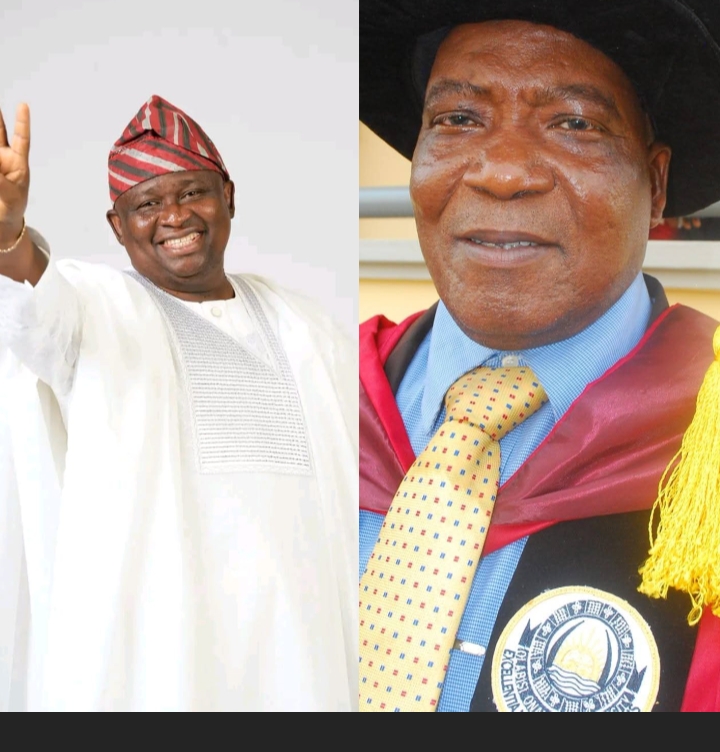
CONGRATULATORY MESSAGE TO APC CONSENSUS GOVERNORSHIP CANDIDATE, SENATOR SOLOMON OLAMILEKAN ADEOLA YAYI*
On behalf of our Grand Patron, Dr. Tunde Osinowo (Pepperito Jnr.), we leaders and Members of Ogun East for Yayi heartily congratulate Senator Solomon Olamilekan Adeola (Yayi) for being the consensus Governorship candidate of our party, APC, in the 2027 election.
This is marvelous and indeed great in the sight of God.
Without mincing words, the choice of Yayi by the party stakeholders is the best and the most surest assurance to coast the Party to victory at the general elections come February, 2027.
We commend the maturity, dispositions and spirit of sportsmanship with which all the Gubernatorial aspirants embraced the decision and extended hands of fellowship to Senator Solomon Olamilekan Adeola Yayi, the Gubernatorial Hopeful.
We beseech God to grant Yayi and all of us, leaders, followers and supporters, the enablements to see him duly elected as Governor of Ogun State at the general election in Jesus mighty name.
We congratulate the incoming Governor of Ogun State and our Excellency in waiting, Yayi.
This is Yayi O’clock.
Praise God!
Mo yo fun e, mo yo fun ra mi.
Lagos Remains Center of Nigeria’s Economy, Says Obasa
The Speaker of the Lagos State House of Assembly, Rt. Hon. Mudashiru Ajayi Obasa, has reaffirmed Lagos as the heartbeat of Nigeria’s economy, stressing that despite Abuja being the Federal Capital Territory, Lagos continues to drive the nation’s economic strength.
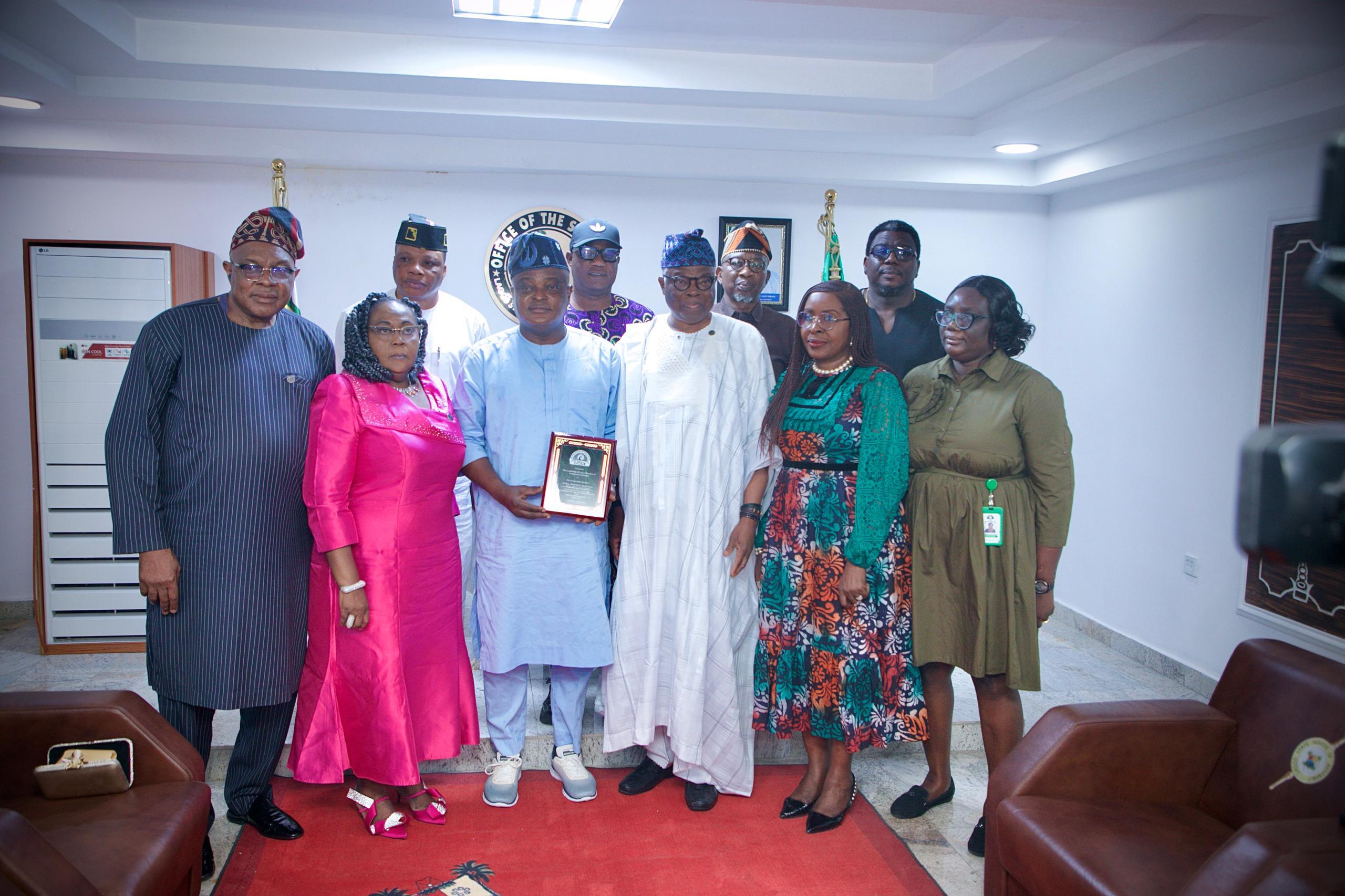
Obasa made this declaration on Thursday, April 16, when he received the new leadership of the Lagos Chamber of Commerce and Industry (LCCI), led by its President, Engr. Leye Kupoluyi, during a courtesy visit to the Assembly.
The Speaker emphasized that Lagos remains the best destination for investment in Nigeria, citing landmark legislations such as the Public Private Partnership Law, the Employment Trust Fund Law, and the Lagos State Lottery Law as evidence of the Assembly’s commitment to creating a business-friendly environment. He noted that these laws were designed to support entrepreneurs, attract investors, and sustain Lagos’s position as the economic hub of the country.
“Lagos is the center of Nigeria’s economy. We have always been pro-business and pro-people, and our laws reflect this commitment. Lagos is strategically placed to be the leading light of Africa, geographically, economically, and otherwise,” Obasa stated.
Earlier, Engr. Kupoluyi appreciated the Assembly’s initiatives and called for stronger collaboration between the legislature and the business community. He urged the House to continue enacting policies that would ease business operations and foster economic growth in the state.
The LCCI delegation included Chief Varkey Verghese, MFR (Hon. Life Vice President), Sir Ladi Smith (Vice President), Princess Layo Bakare-Okeowo (Vice President), Dr. Chinyere Almona, FCA (Director General), Dr. Sunnie Omeiza-Michael (Director, Research & Advocacy), and Mrs. Akintunde Temitope (Director, International).
Members of the House present were Hon. Stephen Ogundipe, Hon. Oladele Ajomale, Hon. Jubril AbdulKareem and Hon. Bonu Solomon and Hon. Ajayi. Also in attendance was Clerk of the House Mr. Lekan Onafeko, alongside aides to the Speaker.
The meeting underscored the shared vision of both institutions to position Lagos not only as Nigeria’s economic powerhouse but also as a continental leader in commerce and development.
Amupitan: Why the ADC is Chasing Shadows
Sanya Oni
It is no surprise that the African Democratic Congress is insistent on the immediate resignation of the chairman of the Independent National Electoral Commission, Prof. Joash Amupitan. First, was for the ‘high crime’ of seeking to play safe over a judgment of the court which demanded that ADC’s feuding parties and INEC under the leadership of Amupitan in particular take no further step to present the court with a fait accompli over a matter before it. Not sufficient to play the judge and jury in its own cause, it also insists on treating the appearance of any position deemed contrary to its own as treasonable.
Now, they want the head of the electoral body served on the platter over an alleged pro-President Bola Tinubu tweet in 2023. And so determined to press its case, the ADC, in a statement by its rambunctious National Publicity Secretary, Bolaji Abdullahi, would on Saturday, lob yet another charge at the INEC boss for what it claimed were attempts (by who?) to erase the digital trail of the offending tweet – which it also says amounted to a dangerous cover-up that undermined the credibility and neutrality of Nigeria’s electoral system.
Talk of an unproven tweet suddenly becoming an issue over which the chief electoral umpire’s integrity is not only being called into question but constituting the grounds for demanding for his head!
Of course, save for the party’s army of salesmen with their all-familiar talking points on prime time television, few Nigerians would be surprised by such antics which border on desperation. Before now, the party had, much earlier, raised the alarm over what it described as a calculated plot to impose a one-party state ahead of the 2027 general elections, accusing the ruling All Progressives Congress (APC) of using INEC to weaken opposition parties.
Let’s take a look at the tragedy of a party which seeks to pride itself as a leading opposition but has done practically nothing to earn its stripes. It started with a horde of angry, internally displaced politicians overrunning the organs of a once-marginal party, the ADC in a spectacular act of a hostile take-over. Unfortunately, if the image presented by the party from the outside at the time was one of cohesion, it certainly did not help that the invaders neither possessed the patience nor the discipline to undertake the required due diligence! Now that it turns out that what they thought they had bought with pride was in every sense, a damaged good, Nigerians as a whole are being blackmailed, accused of being an accessory to their grand act of dereliction.
Yet, as the presidential candidate of the party in the 2023, general election, Dumebi Kachikwu, would care to remind, the takeover bid, being a flawed process is akin to erecting a castle on shifting sand. The tenure of the so-called chairman of the party, Ralph Nwosu, with whom the invaders negotiated, had long been rendered invalid by the effluxion of time. Not only that, the constitution of the party also made clear that those seeking the leadership of the party must have spent no less than two years in the party! These are supposed to be the issues before the courts!
Across the states, it is the same story of a party riven with crises from top to bottom. Yet, convinced that their good – as illegitimate as could be – was already theirs for keeps, the caretakers-turned undertakers plodded on, choosing to ignore the feelings of a section of the party hierarchs that needed to be placated. With just enough crude blackmail, impunity, cash and more cash in their armoury to waltz through, the conquistadors actually assumed they were unstoppable.
Of course, they pretended that the court processes are merely a side-show. The Federal High Court ruling which required the invaders to show cause why the prayers of the aggrieved ADC members should not be granted was thought of as a joke; the same way the judgment of the appellate court which directed the parties to return to status quo ante bellum was deemed by the ADC invaders a non-binding opinion hence their plans to proceed with a convention fraught with potential legal jeopardy.
To the invaders – Mark, Rauf Aregbesola et al, their interpretation, as against that of INEC with its tilt on neutrality – was sacrosanct.
While these drag on, trust the lawyers with their boring whining about how Section 83 of the Electoral Act, 2026 ousts the jurisdiction of the courts. Yes, it provides that “No court in Nigeria shall entertain jurisdiction over any suit or matter pertaining the internal affairs of a political party” as if that effectively translates to shutting the doors of mediation to aggrieved party men even on issues bordering on their rights or non-observance of party constitutions. In like manner, it is like the express provisions of Section 6(6)(b) which also provides that: “The judicial powers vested in accordance with the foregoing provisions of this section – shall extend to all matters between persons, or between government or authority and to any persons in Nigeria, and to all actions and proceedings relating thereto, for the determination of any question as to the civil rights and obligations of that person” has suddenly become superfluous in the current electoral cycle!
To return to the Amupitan matter: Should anyone be fooled by the orchestrated blackmail by those whose record private and public can’t hold a candle to Amupitan’s? Certainly not with what I had earlier described as a programmed de-legitimisation of the 2027 elections by overrated political actors being already an open book. Sure enough, the matter, in the coming days, would not be whether or not the gentleman from Kogi can take the heat, but how far those in the business of concocting lies would go to undermine the process simply because the odds are not going their way. While they are at it, they have still not told Nigerians how the lone individual – out of 37 odd Resident Electoral Commissioners (RECs) and 12 National Commissioners, with two representing each of the six geopolitical zones, has suddenly become the ultimate decider of how things will go in 2027.
Reminds of the bad workman perennially blaming his tools.
First published in The Nation on April 14, 2026


- African Development Bank, The European Stability Mechanism (ESM) sign Memorandum of Understanding to enhance cooperation April 16, 2026
- Seeing the Unseen – How Canon is Protecting East Africa’s Coral Reefs April 16, 2026
- Sintana Listing Signals New Era for Local Ownership in Namibia’s Oil and Gas Sector April 16, 2026
- The crisis in the Middle East could cost Africa 0.2 percent in economic growth in 2026 April 16, 2026
- Namibia International Energy Conference (NIEC) 2026: Namibia Fast-Tracks Oil Law Reform as President Nandi-Ndaitwah Pushes Amendment Bill Ahead of First Oil April 16, 2026
- Africa’s Energy Wealth: Why Good Governance Must Power a Just Transition (By Sola Adebawo) April 16, 2026
- Emirates and Wesgro sign Memorandum of Understanding (MoU) to Stimulate Inbound Tourism to the Western Cape April 16, 2026
- Banco Sol’s Angola Oil & Gas (AOG) 2026 Sponsorship Affirms Drive to Finance Angolan Service Companies April 16, 2026
- Uganda Development Corporation (UDC) to take 82% of Trade ministry budget April 16, 2026
- Merck Foundation marks ‘World Art Day’ through their Film, Song, Media and Fashion Awards 2026 in partnership with Africa’s First Ladies to raise awareness about social & health issues April 15, 2026
- African Development Bank, The European Stability Mechanism (ESM) sign Memorandum of Understanding to enhance cooperation April 16, 2026
- Seeing the Unseen – How Canon is Protecting East Africa’s Coral Reefs April 16, 2026
- Sintana Listing Signals New Era for Local Ownership in Namibia’s Oil and Gas Sector April 16, 2026
- The crisis in the Middle East could cost Africa 0.2 percent in economic growth in 2026 April 16, 2026
- Namibia International Energy Conference (NIEC) 2026: Namibia Fast-Tracks Oil Law Reform as President Nandi-Ndaitwah Pushes Amendment Bill Ahead of First Oil April 16, 2026
- Africa’s Energy Wealth: Why Good Governance Must Power a Just Transition (By Sola Adebawo) April 16, 2026
- Emirates and Wesgro sign Memorandum of Understanding (MoU) to Stimulate Inbound Tourism to the Western Cape April 16, 2026
-

 news4 months ago
WHO REALLY OWNS MONIEPOINT? The $290 Million Deal That Sold Nigeria’s Top Fintech to Foreign Interests
-

 celebrity radar - gossips3 months ago
Dr. Chris Okafor Returns with Power and Fire of the Spirit -Mounts Grace Nation Altar with Fresh Anointing and Restoration Grace on February 1, 2026
-

 celebrity radar - gossips4 months ago
Prophet Kingsley Aitafo Releases 2026 Prophecy: ‘Nigeria Will Rise, but the World Must Prepare for Turbulence’
-

 celebrity radar - gossips6 months ago
End of an Era: Nigeria Mourns Evangelist Dr. Uma Ukpai, 80