
Business
“Our government has been helping states to realise their developmental plans irrespective of political parties’ – President Buhari

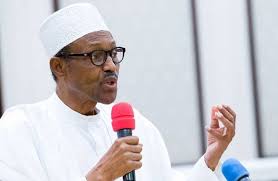

President Muhammadu Buhari has declared that change can not be attained on a bed of roses and demanded understanding of Nigerians while he deals with the ailing economy.
He also described the newly completed Osogbo Government High school built by the Governor of Osun state, Mr Rauf Aregbesola as an educational legacy that must be emulated by other states of the federation.
Speaking while commissioning the state-of-the-art school to commemorate the 25th creation anniversary of the state in Osogbo yesterday, President Buhari stated that his government has been doing all it could to assist state governments to realise their developmental plans irrespective of their political parties.
His words: “Our government has been helping states to realise their developmental plans irrespective of political parties. We are here to commission Osogbo Government High School, one of the legacy projects of Rauf Aregbesola.
“The facility here is worthy of emulation by other states. What we are witnessing here is a fulfilment of our government policy on education.
“The economy of scales in this edifice is unquantifiable and so we must seize the opportunities the school has in stock.
“During our campaigns, we promised our people positive and progressive change. But history has taught us that change does not come as easy as that. Change will come after much hard work, patience and perseverance. We promise that we shall do everything for our country and our people and this won’t be long in coming,”.
“As you are aware, the purpose of state creation is to bring leaders of government closer to the people, accelerate development, promote patriotic spirit and engender self-sufficiency”.
“I am glad to note that efforts are in place for Osun to achieve these desire goals”.
“With our progressive governance system in place, I believe it will only be a matter of time before more will be done that will quicken the pace of development all over the country”.
“In a federal system, states and local governments are the centres of development, our administration has been helping the states, not just to survive the harsh economic and financial weathers, but to realise their developmental objectives as well, irrespective of the political party in place. We will continue to do this”.
“In our party’s manifesto, we promised to provide free and qualitative basic education by implementing the Basic Education Act. We also promised to make education more cost-effective, even as we devote not less than 10 percent of the budget on education”.
“There should be a substantial commitment of energy and resources to education by all the levels of government. This is how we can renew our society and shape the future of our children”.
“We promised the Nigerian people positive and progressive change during our campaign. We are not and shall not be deterred from that noble undertaking”.
“But as we have learnt from history, change has never been attained by nation states on a bed of roses, but rather, through patience, perseverance and steadfastness”.
“We are quite aware of the pains and incoveniences that have been the lot of the citizenry in the past one year as we strive to faithfully implement our programmes in fulfilment of our change agenda”.
“We are however comforted by the real change and progress we have made in fighting corruption and restoring integrity to government; providing security for lives and property; and positioning the government for effectiveness and especially deregulating the oil sector”.
“We must also not forget the fiscal discipline that has nor characterised government business at all levels. This indeed is how it should be and we are determined to introduce and implement actions and measures that will entrench the change mantra in our individual lives just as we are doing in curtailing excessive waste and rent seeking in governance”.
“We are determined to remain on track as we strive to deliver to rescue the country from past mistakes in fulfilment of our promise of improving the conditions of our people and makinf Nigeria a prosperous country”.
Speaking earlier, the Governor of Osun, Ogbeni Rauf Aregbesola commended President Buhari for his leadership qualities, saying that Buhari since his assumption of office has not disappointed the many patriots.
He also lauded the President for facing his job with uncommon courage despite the obvious grim challenges, one of which is declining revenue.
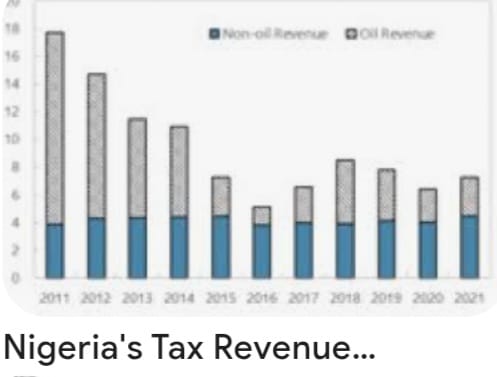
Aregbesola attributed the challenge being faced by the President to the progressive decline in oil receipts to less than 20 per cent of what it was shortly before he came to office.
He noted that the shortfall in oil has affected the Federal Government and put not less than 28 states under severe financial strain, adding that if not for the courage of the President and his team, the country could have gone totally bankrupt.
Governor Aregbesola noted that the commissioning of the school is the manifestation of both governments’ commitment to educational development, which is also derived from APC’s ideology and manifesto of providing mass education to the people.
“We are producing the new man. The overall aim is to develop the new man intellectually, socially and morally. This new man is placed in the centre of society who views his own development as part of and for the development of society.
Dignitaries at the event were: the Governor’s of Borno, Oyo and Lagos States Kazeem Shettima, Isiaka Ajimobi and Akinwunmi Ambode respectively; former Governor of the state, Prince Olagunsoye Oyinlola, Minister of Communications, Adebayo Shittu, and former Deputy Governor of Ogun, Segun Adesegun.
Wife of the Osun Governor, Alhaja Sherifat Aregbesola, Deputy Governor of Osun, Mrs Grace Titi Laoye-Tomori were also present at the ceremony.
Others included former Chief of Army Staff, General Alani Akinrinade (rtd) and Air Vice Marshal Oluseyi Petirin (rtd); Speaker of Lagos State, Rt. Hon Mudasir Obasa; Senator Babajide Omoworare (Osun West); Senator Prof. Sola Adeyeye (Osun Central).
Royal fathers at the occasion were Alaafin of Oyo, Oba Lamidi Adeyemi; Ooni of Ife, Oba Adeyeye Ogunwusi; Ataoja of Osogbo, Jimoh Olanipekun; Akinrun of Ikirun, Oba Abdurauf Adedeji; Oluwo of Iwo, Oba AbdulRasheed Adewale Akanbi among others.






Deadline of Compliance: Nigeria’s Urgent Call for Tax Return Filing
By George Omagbemi Sylvester | Published by SaharaWeeklyNG.com
“Shift or Structural Demand? A Declaration of Civic Duty in a Nation at a Fiscal Crossroads.”
In the unfolding narrative of national development and economic reform, few instruments are as defining as tax compliance. For Nigeria, a nation perpetually grappling with revenue shortfalls, structural dependency on a single export commodity, and entrenched informal economic behaviour, the Federal Government’s recent clarification on tax return deadlines is not mere bureaucratic noise. It is a deliberate and inescapable declaration: the social contract between citizen and state must be honoured through transparent, lawful and timely tax reporting.
At its core, the government’s pronouncement is stark in its simplicity and radical in its implications. Federal authorities, speaking through the Chairman of the Presidential Committee on Fiscal Policy and Tax Reforms, Taiwo Oyedele, have made it unequivocally clear that every Nigerian, whether employer or individual taxpayer, must file annual tax returns under the law. This encompasses self-assessment filings by individuals that too many assumed ended once employers deducted pay-as-you-earn taxes from their salaries.
This is not an optional civic suggestion, it is mandatory, backed by statute, and tied to a broader vision of national fiscal responsibility. Citizens can no longer hide behind ignorance, apathy, or false assumptions. “Many people assume that if their employer deducts tax from their salaries, their obligations end there. That is wrong,” Oyedele warned, emphasizing that the obligation to file remains with the individual under both existing and newly reformed tax laws.
The Deadlines and the Reality They Reveal.
Across the federation, state and federal revenue authorities have reaffirmed statutory deadlines in pursuit of compliance. The Lagos State Internal Revenue Service, for instance, moved to extend its filing date for employer returns by a narrow window, reflecting the reality that compliance often lags behind legal timelines. The extension was intended not as leniency, but as a pragmatic effort to allow accurate and complete submissions, underscoring that true compliance rises above mere mechanical ticking of a box.
At the federal level, Oyedele’s intervention was even more fundamental. He reminded Nigerians that annual tax returns for the preceding year must be filed in good faith, with integrity and in respect of the law. This applies regardless of income level including low-income earners who have historically believed that they are outside the tax net. “All of us must file our returns, including those earning low income,” he stated.
Herein lies one of the most challenging truths of contemporary Nigerian governance: widespread tax non-compliance is not just a technical breach of law, it is a deep cultural and structural issue that reflects decades of mistrust between citizens and the state.
The Root of the Problem: Non-Compliance as a Symptom.
Nigeria’s tax culture has long been under scrutiny. Public discourse and economic analysis consistently show that a significant majority of eligible taxpayers do not file annual returns. Oyedele highlighted that even in states widely regarded as tax administration leaders, compliance remains strikingly low, often below five percent.
This widespread non-compliance stems from multiple sources:
A long history of weak tax administration systems, where enforcement was inconsistent and penalties were rarely applied.
A perception that public services do not reflect the taxes collected, eroding the citizenry’s belief in reciprocity.
An informal economy where income often goes unrecorded, making filing seem irrelevant or impossible to many.
Lack of awareness, with many Nigerians genuinely believing that tax liability ends with employer deductions.
The government’s renewed push for compliance directly challenges these perceptions. It signals a shift from voluntary or lax compliance to structured accountability, a stance that aligns with best practices in modern public finance.
Why This Matters: Beyond Deadlines.
At its most profound level, the insistence on tax return filings is about nation-building and shared responsibility.
Scholars of public finance universally agree that a robust tax system is the backbone of sustainable development. As the eminent economist Dr. Joseph E. Stiglitz has observed, “A society that cannot mobilize its own resources through fair taxation undermines both its government’s legitimacy and its capacity to provide for its people.” Filing tax returns is not a mere administrative task, it is a declaration of participation in the collective project of national advancement.
In Nigeria’s context, this declaration carries weight. With the enactment of comprehensive tax reforms in recent years (including unified frameworks for tax administration and enforcement) authorities now possess broader statutory tools to ensure compliance and accountability. These measures, which include electronic filing platforms and stronger enforcement powers, have been framed as fair and equitable, targeting efficiency rather than arbitrariness.
Yet the success of these reforms depends heavily on citizens embracing their civic duties with sincerity. And this depends on mutual trust, the belief that paying taxes yields tangible benefits in infrastructure, education, healthcare, security and social services.
Voices From Experts: Fiscal Responsibility as a Public Ethic.
Tax law experts and economists, reflecting on the compliance push, have underscored a universal theme: taxation without transparency is inequity, but taxation with accountability is empowerment. When managed with fairness, a functional tax system can reduce dependency on volatile revenue sources, stabilise national budgets, and support long-term investment in human capital.
Professor Aisha Bello, a respected authority in fiscal policy, notes that “Tax compliance is not a burden; it is the foundation upon which social contracts are built. A citizen who honours tax obligations affirms the legitimacy of governance and demands better performance in return.”
Similarly, a leading tax scholar, Dr. Emeka Okon, argues that “The era when Nigerians could evade broader tax responsibilities simply because automatic deductions occur at source must end. For a modern economy, every eligible citizen must be part of the formal tax fold not as victims, but as stakeholders.”
These authoritative voices point to an unassailable truth: filing tax returns is both a legal requirement and a moral responsibility, an expression of citizenship in its fullest sense.
Challenges on the Ground: Compliance and Capacity.
While the rhetoric of compliance is compelling, the reality on the ground demands nuanced understanding. Many taxpayers (especially in the informal sector) lack meaningful access to digital platforms and resources for filing returns. For others, the fear of bureaucratic complexity and perceived punitive enforcement deters participation.
The government, for its part, has responded by promoting online systems and pledging greater taxpayer support. Tax authorities are increasingly engaging stakeholders to demystify filing processes, explain requirements and offer assistance. This mix of enforcement and facilitation is essential. As one seasoned revenue specialist observed: “The state cannot compel compliance through force alone; it must earn it through education, simplicity and fairness.”
The Broader Implication: A New Social Compact.
Ultimately, Nigeria’s renewed emphasis on tax return filing transcends administrative deadlines. It is an unequivocal declaration that national development is a shared responsibility, that citizens and state must engage in a transparent, accountable, and reciprocal relationship.
Tax compliance, therefore, becomes far more than a legal act; it becomes a moral claim on the nation’s future.
When citizens file their returns honestly, they affirm their stake in the nation’s destiny. When the government collects taxes transparently and deploys them effectively, it strengthens not only public services but civic trust itself.
In this sense, the deadlines proclaimed by Nigeria’s fiscal authorities mark not an end but a beginning; the beginning of a civic epoch in which accountability replaces apathy, participation replaces indifference and national purpose triumphs over fragmentation.
The road ahead will not be easy. But in demanding compliance, Nigeria is demanding more than tax returns. It is demanding commitment and that, ultimately, is the foundation on which nations are built.


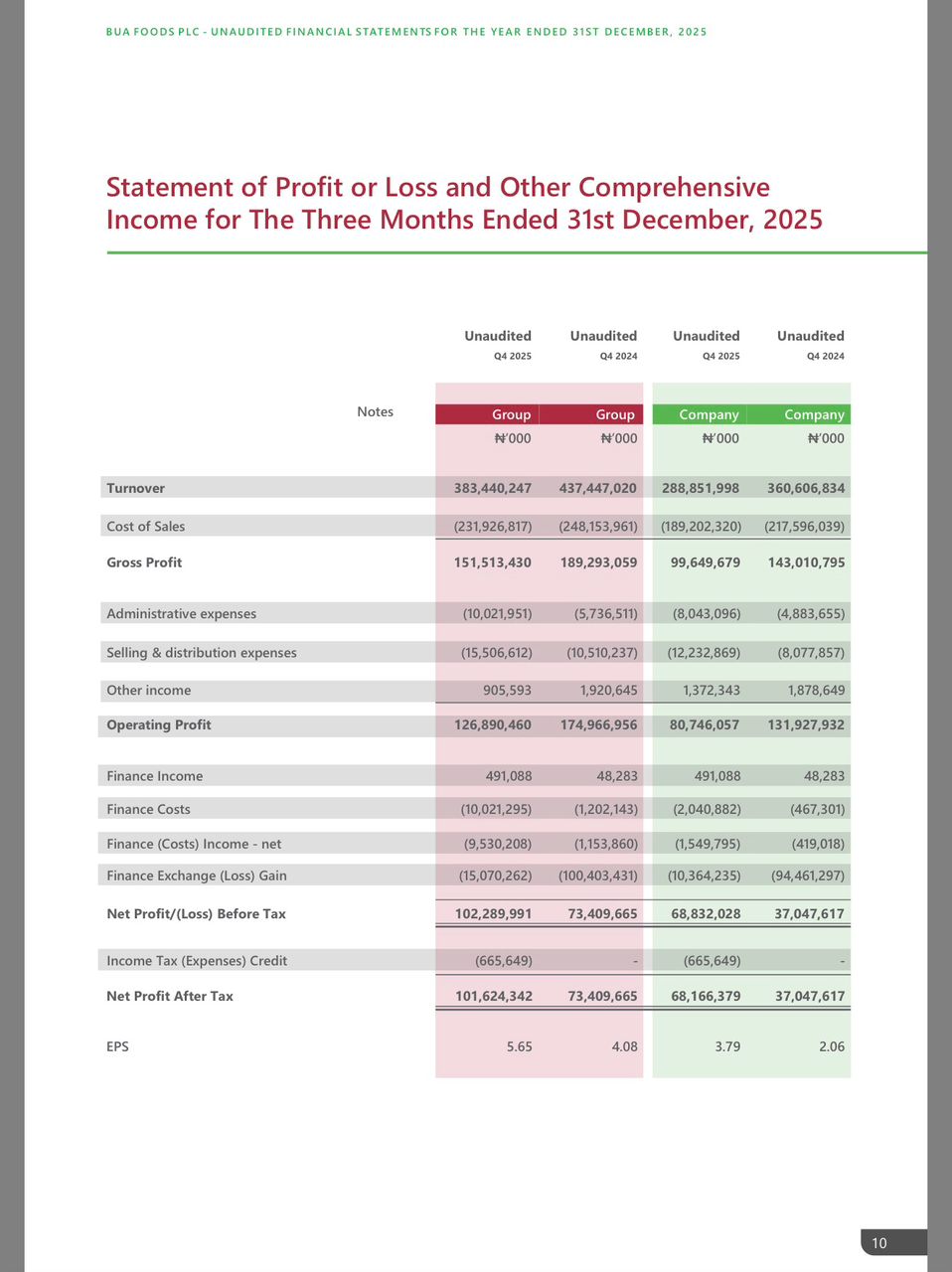
BUA Foods Records 91% Surge in Profit After Tax, Hits ₦508bn in 2025
By femi Oyewale
Business
Adron Homes Unveils “Love for Love” Valentine Promo with Exciting Discounts, Luxury Gifts, and Travel Rewards

Adron Homes Unveils “Love for Love” Valentine Promo with Exciting Discounts, Luxury Gifts, and Travel Rewards
In celebration of the season of love, Adron Homes and Properties has announced the launch of its special Valentine campaign, “Love for Love” Promo, a customer-centric initiative designed to reward Nigerians who choose to express love through smart, lasting real estate investments.
The Love for Love Promo offers clients attractive discounts, flexible payment options, and an array of exclusive gift items, reinforcing Adron Homes’ commitment to making property ownership both rewarding and accessible. The campaign runs throughout the Valentine season and applies to the company’s wide portfolio of estates and housing projects strategically located across Nigeria.
Speaking on the promo, the company’s Managing Director, Mrs Adenike Ajobo, stated that the initiative is aimed at encouraging individuals and families to move beyond conventional Valentine gifts by investing in assets that secure their future. According to the company, love is best demonstrated through stability, legacy, and long-term value—principles that real estate ownership represents.
Under the promo structure, clients who make a payment of ₦100,000 receive cake, chocolates, and a bottle of wine, while those who pay ₦200,000 are rewarded with a Love Hamper. Payments of ₦500,000 attract a Love Hamper plus cake, and clients who pay ₦1,000,000 enjoy a choice of a Samsung phone or a Love Hamper with cake.
The rewards become increasingly premium as commitment grows. Clients who pay ₦5,000,000 receive either an iPad or an all-expenses-paid romantic getaway for a couple at one of Nigeria’s finest hotels, which includes two nights’ accommodation, special treats, and a Love Hamper. A payment of ₦10,000,000 comes with a choice of a Samsung Z Fold 7, three nights at a top-tier resort in Nigeria, or a full solar power installation.
For high-value investors, the Love for Love Promo delivers exceptional lifestyle experiences. Clients who pay ₦30,000,000 on land are rewarded with a three-night couple’s trip to Doha, Qatar, or South Africa, while purchasers of any Adron Homes house valued at ₦50,000,000 receive a double-door refrigerator.
The promo covers Adron Homes’ estates located in Lagos, Shimawa, Sagamu, Atan–Ota, Papalanto, Abeokuta, Ibadan, Osun, Ekiti, Abuja, Nasarawa, and Niger States, offering clients the opportunity to invest in fast-growing, strategically positioned communities nationwide.
Adron Homes reiterated that beyond the incentives, the campaign underscores the company’s strong reputation for secure land titles, affordable pricing, strategic locations, and a proven legacy in real estate development.
As Valentine’s Day approaches, Adron Homes encourages Nigerians at home and in the diaspora to take advantage of the Love for Love Promo to enjoy exceptional value, exclusive rewards, and the opportunity to build a future rooted in love, security, and prosperity.


-

 celebrity radar - gossips6 months ago
Why Babangida’s Hilltop Home Became Nigeria’s Political “Mecca”
-

 society6 months ago
Power is a Loan, Not a Possession: The Sacred Duty of Planting People
-

 Business6 months ago
Batsumi Travel CEO Lisa Sebogodi Wins Prestigious Africa Travel 100 Women Award
-

 news6 months ago
THE APPOINTMENT OF WASIU AYINDE BY THE FEDERAL GOVERNMENT AS AN AMBASSADOR SOUNDS EMBARRASSING
You must be logged in to post a comment Login