
news
How I have governed Kaduna in one month- Nasir El-Rufai


I welcome you all with humility and gratitude to the very first Town Hall meeting we are hosting as a government. It is not yet one month since we were sworn-in, but to the extent that it has pleased Allah to bestow His grace upon us, we have set about doing the work of change that you mandated us to do.
During the campaign, we promised that we shall be engaging and interacting with the public regularly. We pledged that we will provide you regular updates and listen to your feedback, including criticisms and suggestions. Here we are before you today to do as we pledged. As we have started, so we intend to continue, always striving to get better at achieving results.
Immediately after we were sworn-in on 29 May 2015, we reported for duty with the sense of urgency that you demanded. As we expected, we met a state that is broke, and whose schools, hospitals and roads are in poor shape. We knew that a lot of sacrifice will be required to restore the state to good health. This government’s priority is actually growth and development in a safe and secure environment; because we understand that the things that matter are the public goods of quality schools, decent hospitals and good roads; we know that leaders must pursue the creation of a climate that promotes security, social harmony and is therefore conducive to bringing jobs and economic opportunity. Thus our first step was to announce that the deputy-governor and I will be taking a 50% pay cut.
As we took briefings from the ministries, departments and agencies in our very first week, the depth of the financial problem became clearer to us as well as the impact the decades of impunity have had on the mental attitudes of the institutions that constitute the public service. As one astute observer of the situation commented recently, the public service does not serve the public; rather it considers itself as the public and thus serves only itself.
We emphatically reject this mentality. The new government of Kaduna State has therefore declared that the resources of the state will be devoted to serving the public, with schools, hospitals and roads; aiding our farmers and doing our utmost to create jobs. To do that, we must cut the cost of running government. Ours will no longer be the state that has too little left for the needs of the majority of the people.
That is our guiding principle as we reduce costs. And we have taken concrete action in this regard. We have restructured our ministries from 19 to 13. We have also decided that we will have only 13 commissioners, ten special advisers and 12 special assistants. You all remember that the previous government had 24 commissioners, 41 special advisers and about 400 special assistants. But good governance is not about recruiting vast numbers of political appointees. It is about the smallest number that can provide the quality of service that is required.
We are saddened by the condition in which we found the state. But we shall never use that as an excuse for non-performance. It is our duty to do our best always. That is why we are finding creative even if difficult ways to deliver on our promises.
What we have done
In our first month, we have done the following things:
Governance Reforms
Prioritising the People: We have made clear our intention to devote a larger chunk of the state’s resources to providing public services. We have signalled that a government elected by majority vote should serve the majority.
Pay cut: the governor and the deputy governor have taken a voluntary pay cut of 50%, and we have urged other political official holders, elected or appointed, to follow this example.
Cost-cutting: ministries have been reduced from 19 to 13; while your government has committed to appointing only 13 commissioners and the handful of needed special advisers and special assistants. The selection of the Commissioners, Advisers and Assistants will be based on merit, capacity and experience because what is priority to us is getting the necessary skill sets that will facilitate moving the State forward.
Biometric verification: Our government is already conducting biometric verification of its employees in order to update the payroll and provide reliable data as to the precise number of personnel in the public service. Two of Nigeria’s leading banks, UBA and Zenith, are working with us on this project.
Tax Reform Committee: We have set up a committee chaired by Ifueko Omogui, former chairman of the Federal Inland Revenue Service, to review our internal revenue generation structures, systems and laws. The committee will recommend ways by which we can improve our internally generated revenue. This will reduce our dependency on the federal government. We will be masters of our own fate.
Transparency: We have signed up to Open Budget, a tool that enables you to track what we are doing with your money.
Health
Your government has already convened a summit of Kaduna State Healthcare partners to set out the state’s priorities in the Health Sector, and to also ensure that all funds in the health sector are streamlined to ensure an effective coordinated service delivery. The donor community and multilateral agencies attended, along with businesses that are active in the state’s health sector.
Kaduna State has signed an Memorandum of Understanding with General Electric Healthcare to modernise our primary health centers and public hospitals. Both parties have committed to identifying the specific needs of the centers and hospitals, so that modern equipment can be installed to improve the diagnosis and management of patients.
We have signed the 2015 Kaduna State-UNICEF 2015 workplan. The state government is ready with its counterpart funding for the agreed initiatives in healthcare, nutrition, HIV/AIDS, water, sanitation and child protection.
Installation of two dialysis machines and the repair of three dialysis equipment at Barau Dikko Hospital. Arrangements are being made to purchase consumables for the next 12 months so that dialysis will be affordable to Kaduna citizens.
Security
Peace Committee: A committee, chaired by the respected General Martin Agwai, is working to identify the causes of conflict and insecurity in Southern Kaduna and thereafter recommend ways of tackling the problem.
Interstate cooperation: Kaduna State is working with Zamfara, Katsina, Kebbi and Niger States to design a collective approach to common security challenges in the forest ranges that strides our respective States. A meeting is being held today with the respective State Governors and Security Agencies to advance the implementation of this initiative.
Presidential support: Kaduna State has briefed and updated the president on the security challenges, and the president has pledged FG support for the comprehensive security plan.
Relief: We have conducted multiple aerial surveys of the Birnin-Gwari area and have visited affected communities there and in Southern Kaduna, offering medical assistance and condolences.
Prisons: we have visited prisons in Kaduna and Zaria, pursuing rehabilitation of facilities and decongestion. As a result of these efforts, 98 persons awaiting trial for minor offenses were released by the Chief Judge of Kaduna State.
Infrastructure
Zaria Water Project: We have ordered accelerated work to complete this project as a priority item for our government. We have visited the site of the project and reviewed it with the contractors. A firm decision has been taken to commit funds monthly so that the project can be completed by early 2018.
The African Development Bank and Islamic Development Bank, the major funders of the project, have been consulted and they share our desire to speed-up completion. In addition, we are working on a project to upgrade the capacity to supply water to Kaduna residents through a new Kaduna Water Project.
Job creation
Kaduna Cabs: We have initiated a scheme to revive taxi services in our major urban centres. The aim is to create jobs for owner-drivers who will help improve the commuting experience with their comfortable cars and excellent customer service. The scheme is starting with 200 vehicles in Kaduna, and is being implemented in collaboration with Peugeot. We have already placed adverts to invite participation in the scheme.
Indorama: Our drive to attract new investors to the state has attracted positive response from Indorama, a leading player in petrochemicals. They have selected Kaduna as their regional distribution centre. They will be building warehouses, fertilizer blending plant and a training centre in Kaduna.
Shopping Mall: Our main urban centres, including the state capital Kaduna, are lacking modern shopping malls. We have indicated our readiness to partner with capable investors in this sector.
Agriculture
Fertilizer: One of our first actions in office was to stop the unfair practice of allocating subsidized fertilizer to prominent persons to the detriment of ordinary farmers. We launched the 2015 fertilizer sales season in Kachia with a clear structure that sells fertilizers to interested persons from designated sales point. We shall be reviewing and improving the process of procuring and distributing fertilizer to make access easier for the farmers.
A New Agricultural Policy is being prepared with the aim of enhancing the capacity of the sector to create viable jobs; improve farm productivity and raise the involvement of Kaduna citizens in the value chain.
Sanitation
Clean city agenda: We have met the sanitation contractors and have expressed to them our dissatisfaction at the squalid state of our urban areas. We want our towns and cities to be clean, and we shall do it.
Sports
Kaduna has, for the first time in a long while, hosted an international football match when the Super Eagles played a friendly match with Chad at the Ahmadu Bello Stadium. Our people turned out to see the game, showing that Kaduna is a sports city. That impressive turnout has now placed us on the radar to host many competitive matches because the football authorities now know that our great people will actually come to the stadium, fill it up and cheer the players.
What we intend to do
In the following months, we shall be focused on the following issues:
Education: we shall begin implementing our comprehensive agenda to improve education. School repairs, and the provision of facilities like furniture, water and toilets will begin as we fulfill our responsibility to provide a better learning environment. Alongside this, we shall begin to enhance the capacity and quality of the teachers generally, and we shall pay extra attention to getting more and better teachers in English, Maths and Science.
Health: hospital upgrades, in terms of facilities and equipment, will be accelerated as our MoU with GE Healthcare is steadily implemented. We have a commitment to properly equipping our hospitals so that most of our people’s healthcare needs can be met by our own public hospitals.
Township Roads: neighborhood and township roads in our major urban centres will be upgraded to the extent we can within this rainy season.
Transport: our multilayer transport architecture will be executed. That includes preparations, studies and projects to put in place:
– the new cab scheme and expanding to Zaria and Kafanchan,
– a BRT system for mass transit starting with Kaduna,
– a major project to establish Kaduna-Zaria light rail system between Shika and through the Kaduna Metropolis and up to the Refinery,
– new bus and truck terminals in Kaduna, Tafa, Mararaban Jos and Zaria
Security
Comprehensive security plan for Southern Kaduna and the Birnin-Gwari/Giwa axis
Forensic laboratory under the control of our State Internal Security outfit – Operation Yaki – to enhance the investigative capacity of law-enforcement agencies
Clean Cities: We would not allow our urban centres to continue to be defaced by waste. We shall be improving waste collection, then we would introduce sanitary inspectors and engage the public in a voluntary commitment to make our cities clean.
Rural and community development: Under the leadership of our Deputy Governor, we shall be mainstreaming the Millennium Village Pampaida programme as a viable model across our rural communities. It will have components to improve education, healthcare, rural roads and the farming activities that engage most of our rural residents.
Job Creation: your government will undertake direct recruitment of qualified doctors, nurses and teachers to urgently raise the quality of service in our hospitals and schools. We shall also employ at least 50 youths per ward over the next four years, in our initial efforts for traffic control and environmental enforcement. But try as it might, government can only employ a minority of youths who need jobs. Thus we remain focused on creating a favourable climate for the private sector to create jobs.
Textile Revival: We have the support of Mr. President to work on policies and schemes that will revive this sector as viable and sustainable employer of labour. We are cooperating with current and potential textile investors on a package that stimulates the value-chain from cotton farming to garmenting.
There is so much to do, with fewer resources. But we have no option than to deliver quality performance for the people who have invested so much hope in us. We need your understanding and support for the difficult decisions that we must take if we are to serve you to the best of our ability. We will need committed people in and out of government to contribute to achieving the goals we have set out.
We are not shrinking government for its own sake. We are making government leaner so that it can work better for you. Let us all make sacrifices for change.
The call


news
Former Pension Reform Task Team Chairman, Dr. Abdulrasheed Maina, Hospitalised After Sudden Collapse in Abuja
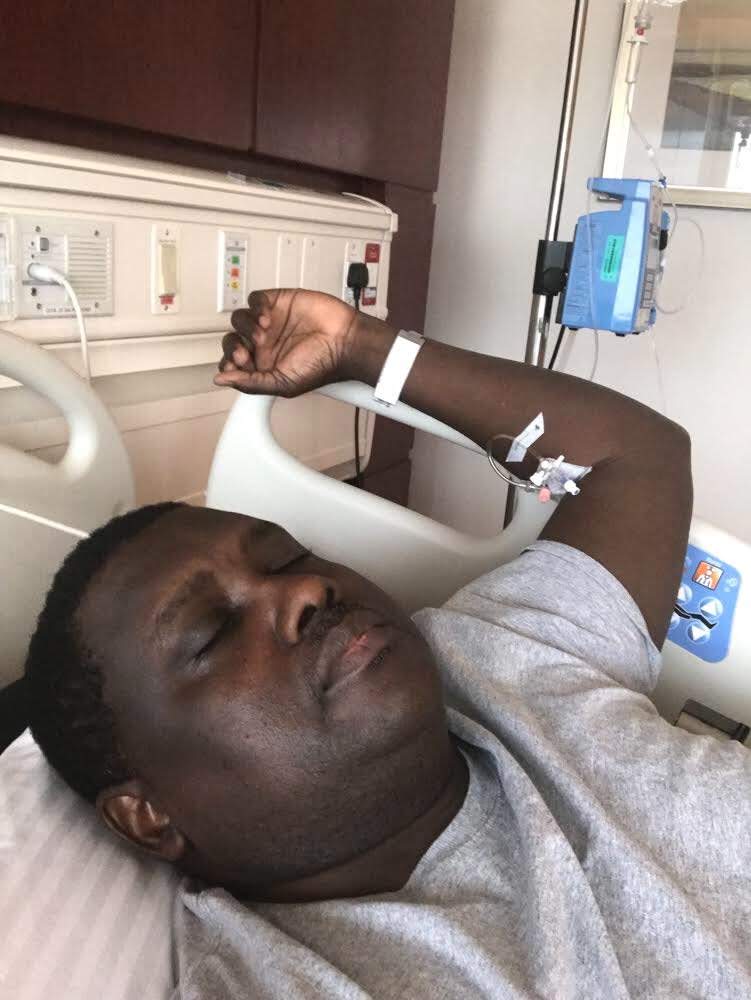
Former Chairman of the Pension Reform Task Team (PRTT), Dr. Abdulrasheed Maina, on Tuesday evening slumped while attempting to access his office premises in Abuja and was immediately rushed to a private hospital for urgent medical care.
The incident occurred after complications arising from an untreated knee injury reportedly caused him to lose balance and fall on a staircase, resulting in a head impact that required immediate medical attention from personnel at the scene.
Confirming the development in an official statement, Emmanuel Umahi Ekwe, Esq., Media Assistant to Dr. Abdulrasheed Maina, speaking on behalf of his family, said the former pension reform chief was promptly stabilised and transferred to a private medical facility in the Federal Capital Territory, where he is currently under close supervision by a team of doctors.
According to the statement, preliminary medical evaluations indicate that Dr. Maina remains under observation, while specialists have advised that arrangements for a possible air ambulance evacuation may be considered should his condition require advanced or specialised treatment.
The situation has drawn concern from associates, professional colleagues, and well-wishers across the country, given Dr. Maina’s prominent role in Nigeria’s public sector and pension reform initiatives.
His family has appealed to the public for prayers, understanding, and respect for privacy during this critical period, assuring that further updates will be communicated as developments unfold.
news
President Tinubu in Turkey: Guard of Honor and Strategic Agreements Signal New Era in Bilateral Relations
By Prince Adeyemi Shonibare
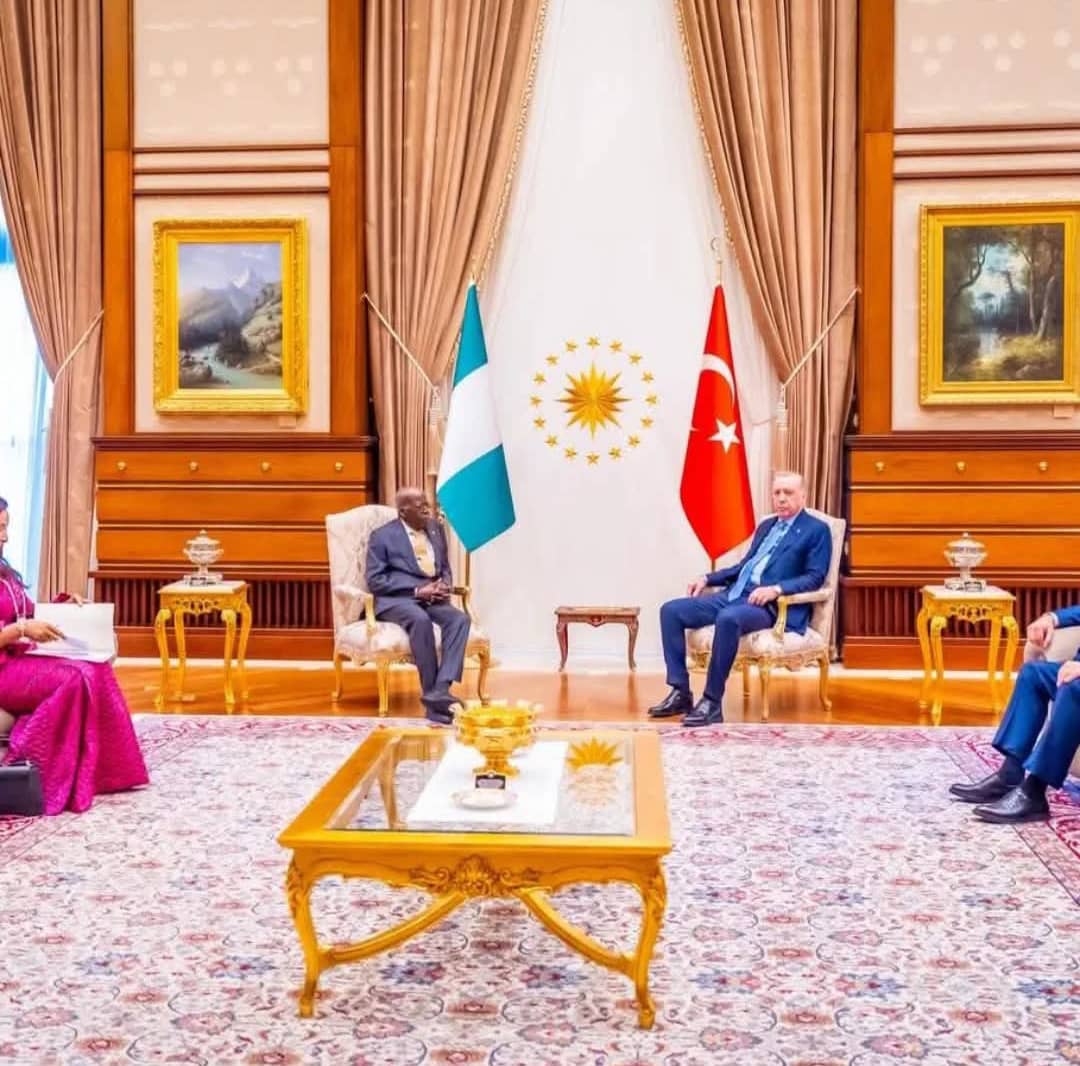
President Bola Ahmed Tinubu, GCFR, was accorded a full guard of honor during his official state visit to Turkey, a ceremonial reception reserved for world leaders and a strong signal of the respect Nigeria commands on the global stage.
The ceremony, held at the Turkish Presidential Complex in Ankara, featured military pageantry, national anthems, and formal protocol before high-level bilateral talks commenced.
The Presidency confirmed that President Tinubu briefly stumbled due to a camera cable while proceeding to the presidential lodge but stood up immediately and continued his engagements without interruption, stressing that the incident had no impact on the visit or his health.
More importantly, the visit delivered substantive diplomatic and economic outcomes. During talks with Turkish President Recep Tayyip Erdoğan on January 27, 2026, Nigeria and Turkey signed nine cooperation agreements and memoranda of understanding, covering military cooperation, higher education, diaspora policy, media and communication, halal accreditation, diplomatic training, and the establishment of a Joint Economic and Trade Committee (JETCO).
At a joint press conference, President Tinubu emphasized the need to deepen cooperation in security, trade, and economic development, while President Erdoğan reaffirmed Turkey’s support for Nigeria’s fight against terrorism and commitment to strengthening strategic ties.
With Turkey’s strengths in defense technology, intelligence, education, and industrial capacity, the agreements open new opportunities for technology transfer, security collaboration, trade expansion, and human capital development.
In essence, the Turkey visit stands as a diplomatic success, defined not by a fleeting moment, but by honor, respect, and concrete agreements that advance Nigeria’s security, economy, and international standing.
By Prince Adeyemi Shonibare
Preface: The Necessity of Historical Context
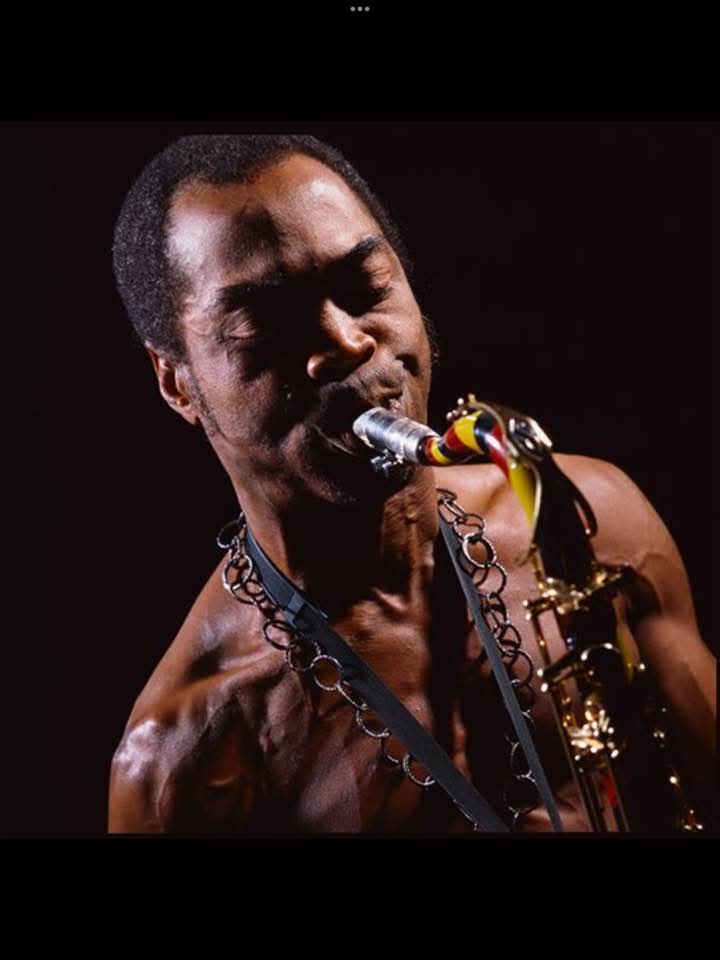
Every generation seeks its heroes. In music, this instinct often manifests through comparison—an exercise that frequently reveals more about contemporary taste than historical contribution. In recent years, public discourse, amplified by social media, has juxtaposed Fela Aníkúlápó Kuti with global Afrobeats icons, most notably Wizkid, provoking the recurring question of “greatness” in Nigerian music.
This essay does not diminish the accomplishments of Nigeria’s contemporary stars, whose global visibility is unprecedented. Rather, it offers a scholarly contextualization—one that distinguishes between musical origination and musical succession, and between cultural architecture and commercial dominance—while situating Fela Aníkúlápó Kuti firmly within the category of historical inevitability.
The Problem with Simplistic Comparison
Comparing Fela Aníkúlápó Kuti with contemporary Afrobeats performers is, by scholarly standards, inherently flawed.
Fela’s work transcended performance. He engineered an entire musical and ideological system, fused political philosophy with sound, and permanently altered the trajectory of African popular music. His output represents cultural authorship, not entertainment calibrated to market demand. Fela’s music is timeless precisely because it was never designed to be fashionable.
A Yoruba proverb captures this distinction with enduring clarity:
“Ọmọ kì í ní aṣọ púpọ̀ bí àgbà, kó ní akísà bí àgbà.”
A child may own many clothes, but he cannot possess the rags of an elder.
The proverb is not dismissive. It is instructive. It speaks to accumulated depth—experience earned, systems built, and legacies forged through time rather than trend.
Musicians and Artistes: A Necessary Distinction
A rigorous analysis requires conceptual precision. Fela Aníkúlápó Kuti was a musician in the classical and intellectual sense: a composer, arranger, bandleader, employer of musicians, multi-instrumentalist, theorist, and cultural philosopher. His work demanded mastery of form, orchestration, ideology, and discipline.
Fela composed extended works, trained orchestras, performed entirely live, and embedded African political consciousness into rhythm, harmony, and structure.
By contrast, many contemporary stars—though exceptionally gifted and globally successful—operate primarily as artistes: interpreters of sound whose work prioritizes studio production, performance aesthetics, and commercial reach. This is not a hierarchy of worth, but a distinction of function. Fela’s music demanded study and confrontation; contemporary Afrobeats prioritised accessibility, pleasure, and global circulation—often without courting antagonism.
Afrobeat: An Ideological Invention
Afrobeat, as conceived by Fela, was not merely a genre. It was an ideological framework. Jazz, highlife, Yoruba rhythmic systems, call-and-response traditions, and political chant were fused into a resistant, uncompromising form.
Modern Afrobeats—by Wizkid, Burna Boy, and others—are adaptations and descendants, not replicas. They have expanded Africa’s global cultural footprint, but expansion does not erase origination. Fela’s Afrobeat remains the undiluted prototype upon which contemporary success rests.
Enduring Legacy Beyond Mortality
Fela Aníkúlápó Kuti passed in 1997, yet his influence has intensified rather than diminished. His legacy is evidenced by:
– Continuous academic study across global universities.
– International bands, many formed by people not alive at the time of his death, performing his works.
– FELABRATION, now a global annual cultural event.
– Broadway and international stage adaptations inspired by his life and music.
– Lifetime achievement and posthumous recognition by the Grammy Awards.
– Cultural centres, festivals, and scholarly conferences generating lasting intellectual and economic value.
This constitutes cultural permanence, not nostalgia.
Reconsidering Wealth and Sacrifice
Measured monetarily, Fela was not among the wealthiest musicians of his era. His radicalism came at an immense personal cost. He was beaten repeatedly. His mother, Funmilayo Ransome-Kuti, was killed. His home was burned. Original artistic archives were destroyed during state-sanctioned violence by unknown soldiers, even though history records who authorised the actions.
Yet Fela gave voice to generations—from Ojuelegba to Mushin, Ajegunle to Jos, Abuja, and even the privileged enclaves of today’s ọmọ baba olówó. He toured globally with an unusually large band long before satellite television or social media could amplify his reach.
Like Wole Soyinka and Chinua Achebe, Fela’s wealth exists beyond currency. It resides in influence, citation, adaptation, and endurance.
National and Global Recognition
Fela received a state burial in Lagos—an extraordinary acknowledgment from a military government he relentlessly criticised. Nations rarely honour dissenters so formally.
Globally, his stature aligns with figures such as James Brown, Elvis Presley, and the Rolling Stones—artists whose music reshaped identity, politics, and social consciousness.
The Crowned Princes: Wizkid and the Ethics of Reverence
Nigeria’s modern stars—Wizkid, Burna Boy, 2Face Idibia, Davido, Tiwa Savage, Tems, Olamide, among others—have achieved extraordinary global success. They are wealthier, more mobile, and more visible internationally than previous generations, and they deserve their accolades.
Wizkid, in particular, has consistently demonstrated reverence rather than rivalry toward Fela Aníkúlápó Kuti.
Femi Aníkúlápó Kuti has publicly stated:
“Wizkid loves Fela like a father.”
Wizkid has repeatedly supported FELABRATION, never demanding performance fees. The only times he has not appeared were occasions when he was not in the country. He has remixed Fela’s music, bears a Fela tattoo on his arm, and openly acknowledges Fela’s primacy.
A senior associate and long-time friend of Wizkid has affirmed that Wizkid adores Fela, would never equate himself with him—“in this world or the next”—and that recent tensions were reactions to provocation rather than assertions of equivalence.
This distinction matters. Wizkid’s posture is one of inheritance, not competition.
Seun Kuti and the Burden of Legacy
Seun Kuti is a musician of conviction and lineage. Yet relevance is best secured through original contribution rather than reactive comparison. Fela’s legacy does not require defence through controversy; it is already settled by history.
As William Shakespeare observed:
“The fault, dear Brutus, is not in our stars,
But in ourselves, that we are underlings.”
—Julius Caesar
The weight of inheritance can inspire greatness or provoke restlessness. History rewards those who build upon legacy, not those who contest it.
The Songs That Made Fela Legendary
Among the works that cemented Fela’s immortality are:
– Zombie
– Water No Get Enemy
– Sorrow, Tears and Blood
– Coffin for Head of State
– Expensive Shit
– Shakara
– Gentleman
– Teacher Don’t Teach Me Nonsense
– Roforofo Fight
– Beasts of No Nation
These compositions remain sonic textbooks of resistance.
Fela in the Digital Age
Had Fela lived in the era of social media, his voice would have resonated far beyond Africa. His music would have found kinship among global movements confronting inequality, oppression, and social injustice.
“Music is the weapon.”
—Fela Aníkúlápó Kuti
Weapons, unlike trends, endure.
Placing Greatness Correctly
Fela Aníkúlápó Kuti’s greatness does not require comparison. He is the great-grandfather of Afrobeat—the musical and cultural architect who cleared the roads upon which today’s Afrobeat princes now travel.
Honouring contemporary success does not diminish historical achievement. To understand Nigerian music’s global relevance is to understand Fela. History, when read correctly, is both generous and precise.
Prince Adeyemi Shonibare writes on culture, music history, and African creative industries. He is a media and events consultant based in Nigeria.


-

 celebrity radar - gossips6 months ago
Why Babangida’s Hilltop Home Became Nigeria’s Political “Mecca”
-

 society6 months ago
Power is a Loan, Not a Possession: The Sacred Duty of Planting People
-

 Business6 months ago
Batsumi Travel CEO Lisa Sebogodi Wins Prestigious Africa Travel 100 Women Award
-

 news6 months ago
THE APPOINTMENT OF WASIU AYINDE BY THE FEDERAL GOVERNMENT AS AN AMBASSADOR SOUNDS EMBARRASSING
You must be logged in to post a comment Login