
celebrity radar - gossips
Real reasons Veteran Actress, Opeyemi Ayeola left the acting scene


Veteran actress, Opeyemi Ayeola, in an interview with SaharaWeekly talked about the main reasons she left the scene and why she relocated to the UK. She also made known her intention and plans she has for her career.
Excerpts below:
Q- HAVE you relocated to Nigeria?
R- No, I’ve not. I just come from time to time to work. I have my children over there.
Q- Is it not stressful to come and work here?
R- It’s not. It is not stressful at all. It is something I enjoy doing and I keep doing it and I want to keep doing and my husband is very supportive.
Q- didn’t you miss your fans and the industry while living in UK?
R- I wouldn’t lie to you, I did miss them but my children and husband have made up for it.
Q- Things have gone different now unlike before, what have been the challenges?
R- Well, things are now different. Sometimes in a good way and sometimes in a bad way. It depends. Sometimes I feel good about it and sometimes I don’t feel too good about it so it depends on the angle I’m looking at it from. We have a lot of producers around unlike we used to. We now have a lot of youths that are doing very well which is the good part of i9t and we have too many people doing too many wishy-washy things. I think it is balancing itself. We have positive things and negative things.
Q- strangely, you still remain relevant..( cuts in)
R- I kind of feel it is grace. A lot of my colleagues can’t even leave for a year, they would want to die or something. I think it is by his mercies and grace of God. I have left for over 5years or more and I’m so honored and grateful to all my friends, fans, people who know me and those that don’t for accepting me back. It is just grace.
Q- The latest film we’ve seen you in was the one with Ibrahim shatta and it was wonderful. How have you been able to maintain that talent and zeal?
R- Well, it is a talent and a story in the bible says if you don’t use your talent well, God will take it from you. So, it is a talent I have to use to glorify God, glorify people God surrounded me with, and use it to entertain people. It is a talent and I’m not the kind of person that feels she knows everything. I learn a lot from new actors that are good and veterans. I’m back now and I have to try and meet up with the trends. It’s a second face for me.
Q- So, what are you working on presently?
R- Right now, I don’t have my own project yet because I just released my latest production and I need to give it sometime to sell. It’s a mixture of English and Yoruba. I’m a Yoruba speaking person, Yoruba films made me and I’ll never forget my root but this one is a mixture of Yoruba and English reason being that I want my message to cross every angle. Speaking English directly from the film helps a lot, it helps with the sales. It also helps in passing across the message to the audience.
Q- If you had the opportunity, would you take the decision of leaving the country?
R- Yes, I would because I’ve my lovely children. I never regretted leaving the country because my children are priceless. I had to take that break to have them. They are my joy, they are more than anything but maybe I would have done that differently and not go just li9ke that because I see it as fortune to come back and be accepted and that is why I said it is grace working for me. So, I would have done that differently rather than just going like that.
Q- why not stick to Nigeria because of your career?
R- You want my husband to send me out of the house? (Laughs) I come like three times in a year and I love it. I struggle. The weather alone makes me struggle. I’ve never lived in a posh place, never worked in a posh place. I’m used to the traffic, the noise, it makes me feel I’m living, I missed it.
Q- What has kept your marriage going?
R- The first thing is there is no smooth marriage. We have our differences and our times. I’m sure he has got times when he feels like ‘oh God, why did I marry this person’’? Marriage is two different people with different upbringing, different mentality, different religion, and different beliefs coming together. There will be clashes. What I think has kept my marriage moving is prayer. When you put God in the middle of a particular subject, it is going to go well. I’ve got times when I feel like packing my bags and leave; he has got times like that too. I tell people that celebrities marriages break, don’t blame the person involved. What about the other party? Do you know what he is throwing at that person? Let me give you a typical example. My husband met me acting, if not for acting, he wouldn’t have noticed me; maybe we wouldn’t have crossed part. Now we are married, you know acting is my desire and my dream and I have to do it but he says no more acting, it is cancelled. We are going to clash. Marriage won’t work. I’ll implore people to think about the other party too. I’m not saying my marriage isn’t going to last but if it doesn’t, don’t blame me. I’m human too; I’ve got flesh, blood and water flowing into my body.
Q- Though you are married, you definitely have male admirers, how do you handle your male fans?
R- I tell my husband that anytime I go out and nobody admires me, Forget the fact that I don’t wear jewel, then something is wrong with me. It is either my pancake isn’t working or I need to change my make-up or the way I dress or something. My admirers make me know if I’m still in the market or not so I tell my husband that he shouldn’t mess with me because if he does, another person will catch my fish. So I try my best, I’m a married woman. There is little I can do to help situation. If you want a relationship with me, unfortunately, there is nothing I can do concerning that. If you want to be friends with me, why not? I try to be as friendly as I can but everything has a limit. I have to consider my husband before doing stuffs with someone.





celebrity radar - gossips
Buratai Congratulates Newly Elected TYBGRCC Executive, Commends Transparent 2026 Polls
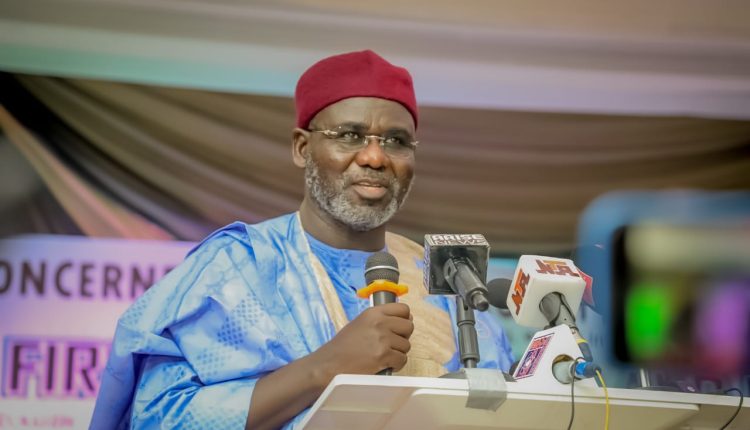
Buratai Congratulates Newly Elected TYBGRCC Executive, Commends Transparent 2026 Polls
February 2, 2026
celebrity radar - gossips
AANI CELEBRATES BRIGADIER-GENERAL S. K. USMAN (RTD), mni (SEC 40, 2018), ON HIS BIRTHDAY
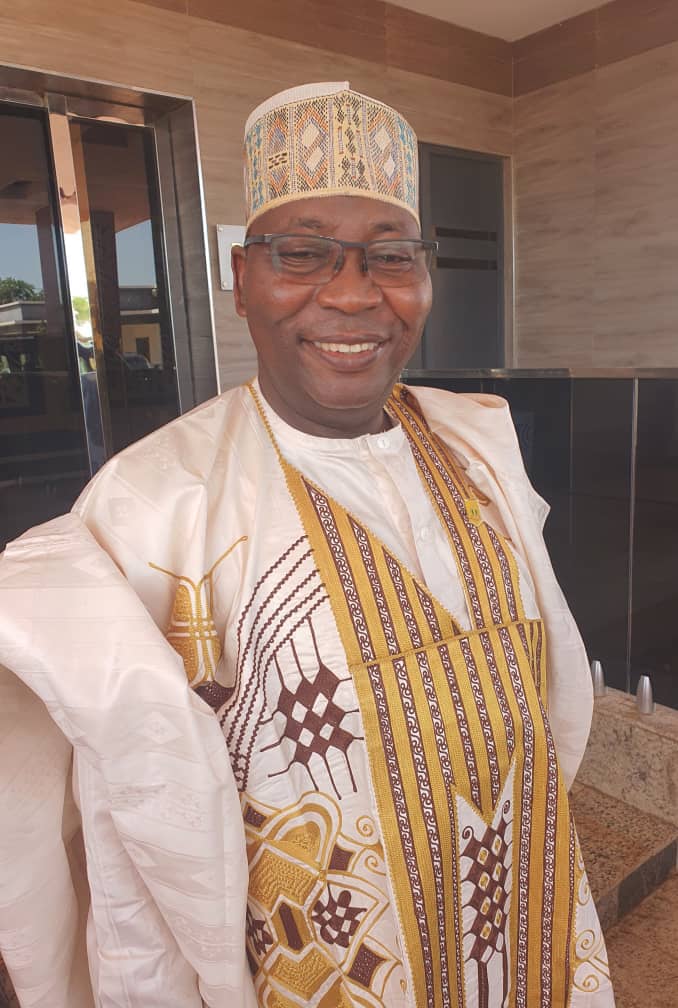
*AANI CELEBRATES BRIGADIER-GENERAL S. K. USMAN (RTD), mni (SEC 40, 2018), ON HIS BIRTHDAY
On behalf of the National Executive Committee and the entire AANI family, the President of the Alumni Association of the National Institute (AANI), Ambassador Emmanuel Obi Okafor, mni, warmly felicitates with Brigadier-General S. K. Usman (Rtd), mni (SEC 40, 2018), on the occasion of his birthday today, Monday, 2nd February 2026.
Brigadier-General S. K. Usman (Rtd), mni, is a former Director of Army Public Relations (DAPR) of the Nigerian Army, widely respected for his professionalism, strategic communication expertise, and principled leadership. He also served meritoriously as the immediate past National Publicity Secretary of AANI, where he significantly strengthened the Association’s public engagement, visibility, and messaging standards. Since retirement, he remains active as a security consultant and public affairs analyst, offering authoritative insights on national security and governance. He holds the traditional title of Sarkin Yakin Kanwan Katsina and currently serves as Chairman, Board of Trustees of the Confederation of African Journalists (CAJ). Notably, he is fondly acknowledged for mentoring and transforming the current AANI National Publicity Secretary from an engineer into a refined wordsmith.
The AANI family joins his family, friends, colleagues, and mentees in celebrating this distinguished officer, communicator, and mentor, wishing him good health, long life, and continued relevance in national service.
Warm regards,
Engr. Ifeanyi Jude Ngama, mni
National Publicity Secretary, AANI
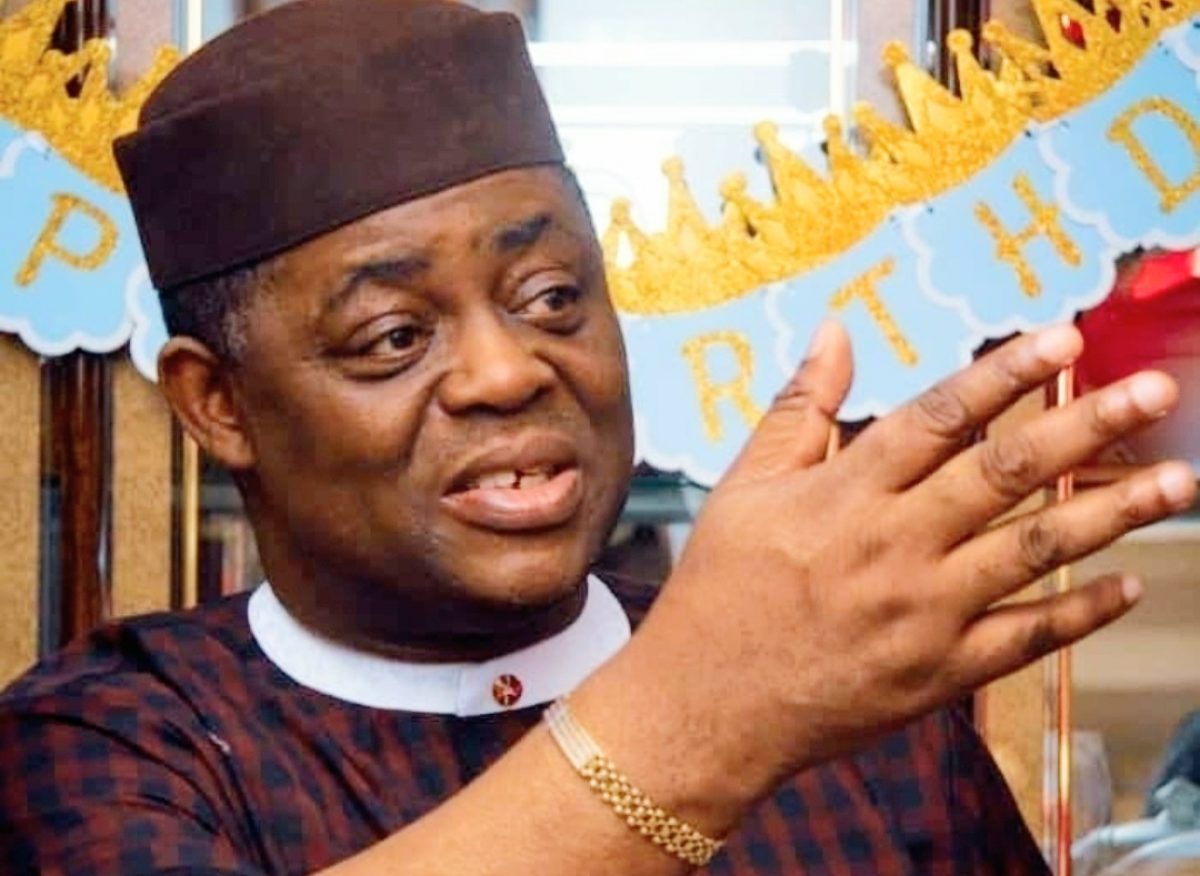
THE ENEMY WITHIN
By Chief Femi Fani-Kayode
The enemy within smirks, mocks and laughs when our President slips and falls to the floor in far away Turkiya.
Oblivious of the fact that a democratically-elected President, whether you like or support him or not, is the living manifestation of our nation and the essence and symbol of our national sovereignty and pride they pray for the worse and celebrate it in the inner recesses of their dark, sinister, twisted and malevolent minds.
They forget that when our President falls it essentially means that our nation falls.
They forget that a true patriot is meant to pray for, cheer on and encourage the leader of his country, whether or not he is in opposition, when he is fighting for the future of our people in a foreign land.
They whisper to themselves in their closets and bedrooms that “finally, this is his end”.
With glee they say to themselves and to their grubby little minions that “at last we have him!”
They assume the worse and they desire for the worse.
They forget that anyone can slip and fall at anytime and that the Holy Bible says “rejoice not over me, O my enemy; when I fall for I shall rise and when I sit in darkness, the LORD will be a light to me”- Micah 7:8.
They forget that it also says “for a righteous man may fall seven times
and rise again but the wicked shall fall by calamity”- Proverbs 24:16.
It is to the glory of God and to the shame of our detractors and the enemy within that though our President slipped and fell in Turkey before the entire world, he rose again with strength and pride like the phoenix and he went on to negotiate and sign numerous bilateral agreements which will bring security, succour and prosperity to our nation with President Erdoğan of Turkiya.
That is the lot of a righteous man and a humble, forgiving and kind-hearted leader and it signifies the fact that the Lord is with him and that the enemy within has failed once again.
Yet they never stop and neither will they ever do so because they are seized of a dark, depraved, diseased and sadistic mind that craves failure and chaos and longs for calamity, tragedy, sorrow, tears and malevolence.
The enemy within just loves it when terrible things happen. Like the accursed masochists that they are, that is their pleasure and delight.
They love to hear the cries of infants and babies and they delight in hearing the wailing of widows and the screaming of orphans.
Consider their reaction to the sad and unfortunate events that took place in Kajuru, Kaduna state earlier this month.
I am as saddened and concerned as anyone else about the abductions of the worshippers that took place there and like everyone else I hope and pray for their rescue and safe return back home at the soonest.
I am however constrained to make the following observations and I do so with pain and sorrow.
The reality is that the enemy within, namely a handful of political leaders in the opposition who seek to undermine and discredit our Government and to destabilise our country and who are working in collaboration with foreign powers are part of those that are secretly encouraging and, I suspect, facilitating the abduction of Christians in Nigeria because they make political capital out of it.
They secretly crave it yet openly condemn it because it suits their purpose and it confirms the narrative that they want to establish.
For some it proves that Christians are being targetted in Nigeria and it plays into the Christian genocide and persecution narrative which the Americans have gladly cottoned on to and for others it feeds the erroneous suggestion that having a Christian candidate for the opposition or a Christian running mate for our President in 2027 are the answers to the problem and the only way of proving that Christians are safe and treated with humanity in our country.
Both views do not fully recognise the depth and complexity of the problem and can therefore be fairly described as simplistic, myopic and misplaced because the situation is much more complex than that.
Worse still the specious lies and dubious political motives that fuel this thinking are irresponsible and disingenious.
You cannot play politics with peoples lives and liberty, take advantage of their misery and suffering and use them as pawns in a deadly game of political chess.
Worse still you cannot attempt to distort the narrative, misinform the world and perpetuate and peddle the nonsensical falsehood that only Christians are being abducted and killed by the terrorists in our country and that only Churches are being burnt down whilst Mosques are left standing. This is simply not true.
The reality is that Muslims are also being abducted in massive numbers and a more accurate and honest categerisation of the situation we are faced with would have been that both Christian and Muslim Nigerians are “not safe” in parts of Northern Nigeria because of mass abductions and not just Christians.
Even this categorisation may not be accurate and is possibly unfair because it negates the efforts and successes that the the Nigerian military, the Minister of Defence, the Minister of State for Defence, the National Security Advisor and the Nigerian security forces and Intelligence agencies together with numerous notable Governors from the Northern states like the Governor of Kaduna, the Governor of Kwara, the Governor of Yobe, the Governor of Borno, the Governor of Sokoto and a number of other key Northern leaders such as Vice President Kashim Shettima, Senator Abdul Aziz Yari, Senator Aliyu Wamakko, Senator Shehu Umar Buba and a number of others have made in curbing this menace.
The truth is that for every person that has been abducted hundreds have been protected and delivered from attempts at abduction and virtually every single one of those that were actually abducted before Kajuru have been rescued and returned home safely.
That in itself is encouraging though it does not negate or underplay the problem we have and the challenge we collectively face.
It simply means that despite the problems and challenges and the politically-motivated expressions of angst and concern of the usual suspects at least some progress is being made.
It is deeply saddening and troubling that ANYONE is abducted or killed in the first place and this represents a failure in our efforts to achieve 100% security for Nigerians in the midst of what is essentially an open and horrendous guerrila war where civilian populations are purposely targetted and a massive and unprecedented armed rebellion and relentless insurgency is in full play.
However we must acknowledge that our successes in this respect both in the prevention of even more killings and abductions and in terms of recovery and rescue of those taken is very good.
Sadly people people tend to focus on the failures and remain silent in the face of the successes which is most unfair.
What is even more unfair and extreemly dangerous is to continuously frame the entire matter in religious terms.
I am amongst those that did so in the past but six years ago, after much research and extensive travelling all over the more distant parts of the core North for an investigation into the matter and an extensive 5 week tour my eyes opened and I came to appreciate the fact the Muslims were being targetted with equal ferocity and in equal measure.
This is a fact that the media and most Southern Nigerians, for reasons I cannot fathom or comprehend, appear to ignore and choose to play down and it begs the question whether Muslim lives are considered as being as sacred and precious as Christian ones in their eyes?
The criminals and terrorists that carry out these atrocities do not care whether it is Christians or Muslims that they terrorise, traumatise, kill or abduct. They only care that their victims are Nigerians.
Their war is not against Christians alone but against the Nigerian state and the Nigerian people, both Christian and Muslim.
It is in this light that we must view this harrowing challenge and once we do so we will be in a better position to confront it, defeat the enemy, eliminate the threat and put both our local and foreign detractors to shame.
Permit me to continue this contribution with a sincere and heartfelt word for Mr. Peter Obi, a notable member of the Nigerian opposition.
I refer to your post on the terrible events that took place in Kajuru on Sunday 18th January 2026.
I share your concerns for the safety of those abducted but unlike you mine are from the heart and I am not expressing those concerns for political gain.
At a time like this we should be praying for the rescue of the worshippers and assisting and encouraging our Government to ensure their safe return.
Instead of doing so you are sheepishly asking “what is happening in our country” as if you, your supporters and your insincere and divisive rhetoric are not part of the problem.
You feign concern and focus on the negative never offering support or giving credit to whom it is due when things go well and are done properly.
For example have you ever had the decency or prescence of mind to commend the efforts of the gallant men of our Armed Forces and security agencies or acknowledged the number of people and lives they have successfully defended and saved?
Have you ever considered the fact that many of them are paying the supreme price every day on the frontlines in their attempt to protect and guard the realm and prevent the barbarians from climbing over our walls?
Have you ever thanked them for this or publicly expressed solidarity with or support for them? I doubt it.
Our greatest problem are people like you that openly crave for and secretly celebrate chaos, lawlessness, division and carnage and that see the propagation and execution of such evil as a justification for your futile and pitiful attempt to discredit the Government and gain sympathy and support for yourself.
Simply put you seek to harvest the misery of our people in the same way that some harvest human organs and you celebrate their pain, suffering and tears.
Relevant here are the words of Mr. Dennis Amachree, a former Assistant Director of the DSS, who said the following:
“most of these mass abductions are carried out to spite the Government in power: there are fifth columnists and complicit actors within the system and by the time the Government reacts the damage has already been done”.
I am constrained to ask whether you are part of those that are actually behind these abductions and insurgency simply for political gain?
Let me be clear: this is a question and not an allegation but whatever the answer is (and I do not claim to know it) kindly save your crocodile tears and insincere concern for the welfare and safety of our people whether it be in Kaduna or elsewhere. We know you don’t mean it.
The only thing that is important to you is that all our institutions fail and our nation is burnt to ashes in a religious and ethnic conflagration so that you and your cohorts can divide our country, break it into pieces and share what is left of it amongst yourselves.
Be rest assured that that will NEVER happen and you will NEVER achieve your objectives.
Whatever our challenges may be as a nation and whatever obstacles may be placed in our path, I am persuaded that in peace, love, unity, mutual respect and faith we shall SURELY overcome.
Permit me to add the following.
It has come to my attention that when ESN and IPOB terrorists murder Christians and Muslims in the South East you encourage it by saying nothing and endorse it with your resounding silence.
When Muslims are killed in the North, except on the odd occassion, you say nothing because you do not see them as human beings and you could not care less.
When Christians are killed in the North you feign outrage and you celebrate and magnify it, citing it as evidence of “Christian persecution” and “Christian genocide” and encouraging the right-wing lunatic fringe in American politics to latch on to it.
When Christians are not killed in the North you pretend that they are, inflate numbers and fabricate it in an attempt to plant the seeds of religious division and provoke a sectarian war.
What manner of man are you?
Why are you so hell bent on destroying our country and shattering the unity that we are trying to establish and preserve?
Is it your desire to be President over a broken, bleeding and dying Nigeria and to preside over the corpse of a great nation like ours that you are evidently so desperate to murder?
What pleasure can you possibly derive from your dangerous doublespeak and grave antics and what has Nigeria done to you and yours that you so desperately seek her destruction and demise?
We have seen this desperate thirst and quest for power before and we saw how many bodies littered the streets in an attempt to gain it.
It happened on January 15th 1966 with shocking and devastating consequences for those that were behind it and indeed for the entire nation.
May we never see such again.
You do not have to tear Nigeria apart to achieve your ambition of becoming President: God alone gives power to whom He pleases and when he deems it fit.
I have little doubt that when that time comes, years down the line, and He deems it fit to give it to the South East it will certainly NOT be to you.
I say this because there are men and women from your part of the country that are far better and far more deserving and qualified than you and that are neither divisive or obsessed with the division of our country.
Unlike you such men and women proudly consider themselves as being Nigerians and not Biafrans and they do not make a distinction between Muslims and Christians.
They see all Nigerians, whether Christian or Muslim or whether Northerner or Southerner, as being one and the same and that is what we expect and deserve.
They appreciate the fact that the road to power in a democracy is one of peace, inclusiveness and understanding and not one of discord, strife, violence, lies, insults, disinformation, propaganda, division, historical revisionism, inordinate ambition, greed, entitlement and deceit.
Neither do they believe in the stereotyping or demonising of any of our great ethnic nationalities or religious faiths.
These are the basic and fundamental prerequisites that are required for anyone to lead our great nation and in my humble opinion you do not have them and you are incapable of ever cultivating them.
Yet it doesn’t stop there.
You not only turned on your own Obidient supporters and called them “criminals” (an appelation I will not contest with you) after they complained about the fact that you joined the ADC, a political party that you had earlier described as a “structure of criminality” but you also disavowed and disowned them when they resorted to their usual infantile tantrums after it was brought to their attention that you were considering the possibility of being the running mate to the undisputed leader of that party given the fact that you have no hope in hell of winning the presidential primaries.
Yet all that doublespeak, lack of consistency, opportunism and deceit pales into comparison when compared to what you did to your former presidential campaign manager.
You repaid his good with evil by turning your back on him in his time of need and refused to stand by him and support him when he fell ill. For this alone God will never forgive you.
I will not go into what else you did to him because that is for another day but to say the least you were unfeeling, insensitive and callous towards this profoundly good man who many loved and held in high esteem.
The only mistake he made was that he associated himself with you and joined your bandwagon of misguided and irreverent Obidient cheerleaders.
Thankfully towards the end he saw you for what you were, retraced his steps and returned back to us.
Surely you are not the stuff of which real leaders and Presidents are made. Your loyalty is to your vaulting ambition and to no-one and nothing else.
Your new friends in the ADC will attest to that at a later date after you break ranks with them.
These are my words for you Peter. I sincerely hope that you will consider them.
Permit me to end this contribution with the following.
If truth be told Obi sincerely believes that he has the right to the Presidency just as satan believed he had the right to Moses’ body.
When the latter passed on and satan came for his corpse the Holy Bible tells us that Archangel Michael rose up, confronted him, resisted him and boldly pronounced “the Lord rebuke you satan” after which the devil fled.
Today I say, “the Lord rebuke you Peter” and, like satan, you MUST flee.
Just as he had no right to Moses’ body, you have no right to the Nigerian Presidency!
God alone has the exclusive right to give it to whom He deems fit!
Yet one thing is clear: if it is ever Peter Obi we shall rue the day!
This is a man whose supporters celebrated and lept with joy when President Donald Trump threatened us and described our nation as “a disgraced country” and when he said, “we may very well go into that now disgraced country, guns-a-blazing and if we attack, it will be fast, vicious and sweet”.
This was like music to the ears of Obi and his Obidients but when the narrative changed, sanity prevailed and tempers cooled they could not bring themselves to express a word of support, relief or commendation for the Federal Government after it responded to the Americans in a restrained, mature and profound manner, rebuilt the bridges of friendship and understanding, entered into a joint security agreement with them and started working closely with them to combat the menace of terrorism in an atmosphere of camaraderie and mutual respect.
This is not what Obi and his supporters wanted. What they had in mind was for the Americans to attack Nigeria, kill our people, bomb our cities and implement a Maduro-style regime change before carving us up into at least four separate pieces.
As Otunba Bayo Onanuga, the spokesman to President Tinubu said, “we will NEVER forgive or forget Peter Obi for wanting our nation to be attacked and bombed”.
These words reflect the thinking of not just those in Government but of every right-thinking Nigerian patriot.
To add to that as my friend and brother His Excellency Ambassador-Designate Reno Omokri asked in a recent write up,
“How can an individual like Peter Obi who has divided four different parties in Nigeria want to be President?”
This is a pertinent question which needs to be answered and I add the following: how can an individual who refuses to condemn the wanting acts of mass murder, butchery, abduction, torture and intimidation of the ESN and IPOB and a man who, as far as I am aware, has never condemned the Monday ‘sit at home order’ issued by the terrorists throughout his own South-Eastern region aspire or expect to lead our nation?
Surely the very thought of such a prospect is as frightful as it is perverse.
A fundamental requirement and pre-condtion to being the President of a great nation like ours is surely a deep respect and love for and understanding of ALL the people regardless of where they come from or what their religious faith is and a total and complete rejection of terrorism not just in the North but also in the South.
To be selective in this respect is to be divisive and to be divisive is to be destructive. We do not want or need a destructive President.
We want a Commander-in-Chief, like the one we have today, that will at least endeavour to hold us all together as one and not a Divider-in-Chief that will favour his own and seek to turn the rest of us into serfs and slaves.
We have been down that road before and, by God’s grace, we shall NEVER walk it again.
Whatever the case and whoever the enemy within choose to field in 2027 as their presidential candidate one thing remains clear: in a 36 state Federation our ruling party the APC now controls all but 7 states and of the seven one is in alliance with us.
Given this it is clear that only God can stop President Bola Ahmed Tinubu from being re-elected in 2027.
All the subversion, destabilisation, betrayal, hostility, lies, conspiracies and shenanigans that the enemy within, the opposition and their hordes of foreign friends, attack dogs and bellicose trolls have collectively contrived cannot stop or deter him.
I advise them to focus their presidential aspirations on 2031 and forget 2027 because until then there is no vacancy in Aso Rock.
I also urge them to purge themselves of their divisive and subversive ways and their hate and contempt or, failing that, to leave our shores and embark on a journey of no return.
May God bless and defend the Federal Republic of Nigeria.
(Chief Femi Fani-Kayode is the Sadaukin Shinkafi, the Wakilin Doka Potiskum, the Otunba of Joga Orile, the Aare Ajagunla of Otun Ekiti, a former Minister of Culture and Tourism, a former Minister of Aviation, a former Senior Special Assistant to President Olusegun Obasanjo, a Legal Practioner and an Ambassador-Designate of the Federal Republic of Nigeria)


-

 celebrity radar - gossips6 months ago
Why Babangida’s Hilltop Home Became Nigeria’s Political “Mecca”
-

 society6 months ago
Power is a Loan, Not a Possession: The Sacred Duty of Planting People
-

 Business6 months ago
Batsumi Travel CEO Lisa Sebogodi Wins Prestigious Africa Travel 100 Women Award
-

 news6 months ago
THE APPOINTMENT OF WASIU AYINDE BY THE FEDERAL GOVERNMENT AS AN AMBASSADOR SOUNDS EMBARRASSING
You must be logged in to post a comment Login