
Business
I Started as a Camera man.. passed through thick and thin to get to this stage – Planet TV Owner,Wale Akinlabi


Planet TV is a musical channel on GOTV transmitting to the world from south Africa, a couple of weeks ago an affiliation kicked off in Nigeria transmitting from onward building in oregun, ikeja Lagos. The president of the planet image communications both in south Africa and Nigeria is a young Nigerian that has traveled far wide and especially through every nook and cranny of African continent promoting both Africa and Nigeria culture through selling our musical contents. Sahara weekly had the honor of speaking one on one with Mr Wale Akinlabi a man of vision and focus on how it all began and how it has been so far. Enjoy….
Sw: can we meet you sir?
Wale Akinlabi: my name is wale akinlabi the president of planet image communications,the owner of planet TV on GoTV channel 37 and good morning africa on africa magic
Sw: kindly tell us your background
WA:I hail from oyo alafin in oyo state and happens to be the first child in a family of seven. I studied theater arts from lagos state university,bachelor of arts(BA)visual & performing arts, I’m married with 2 beautiful kids from the most beautiful woman(smiles)
Sw: Recently you unveiled planet T.V a music channel on cable network in nigeria apart from the planet TV in south Africa,kindly tell us how and when planet TV started?
WA: Planet TV actually originated from Nigeria. I started the company in 1990 but as a one man business there was not much to write home about . So in year 2000 after resigning my appointment from where I was working I went into full operation.
Sw: As at that time were you still in Nigeria?
WA: I relocated to south africa in 2004,the beginning in south Africa was also not rosy. I was just there with nothing but just hoping for the best,in 2008 things started improving and I got planet image registered
Sw: earlier you talked about resigning your appointment to fully concentrating on planet TV from which company did you resign?
WA: I was working with Audio visual first( AVF) who actually owns this facility before resigning in year 2000
Sw: For you to set up planet TV in south Africa you must have recorded a huge success?
WA: (smiles) we still can not deny the fact that planet TV has come of age inspite of the fact that we still target the sky as our limit
SW: what makes planet TV different from the others ?
WA: we strive to stand ahead of others in our programming, we target both the youth and the matured audience and try to balance the two. As for our picture quality, we broadcast with HD and also transmit with the most powerful and effective transmitting machine from South Africa which is the latest technology in terms ot transmission, we are only the only one using it in Nigeria while all others make do with satellite dish which is not always reliable, when it rains the signal becomes unstable.
Sw: that is quite wonderful!!!
WA: that is not all,we are the first cable TV channel with live interaction,so we could feel the pulse of our viewers and give it instant attention,they tell us what music to play and we put it on their screen immediately …
SW: what prompted the decision to have a live interactions while others are not so inclined….
WA: like every other youth, everybody has a vision but the way we actualise our dreams is what brings about the difference, it depends on how individual go by it. Another point of note is the fact that we all have dreams but not all are given the grace to actualise our dreams. All in all I give glory to God for making my dreams come to life.
SW: life is not always a bed of roses, along the line the road must have been rough and bumpy, what are the challenges?
WA: it has not been an easy journey all through. I passed through thick and thin to get to this stage . Like I told you earlier,1990 till 2000 when I resigned at my working place to fully concentrate on my own project,I was not getting anything but only sacrificing time, energy and capital,the situation continued till we left Nigeria’s shore in 2004
SW: once in south Africa,things turned around for good?
WA: Not immediately ,the first few years in south Africa was full of unrewarding efforts making it the same old story, it was self determination coupled with patience and lot of sacrifice that saw us through and we had an upturn in the business. My brother the challenges were tough and discouraging but above all I give all the glory to God for where we are today..
Sw: let’s get on how you found your self in the media world,was it a dream or somehow accidental?
WA: I actually started from the scratch. Its a long story but I’ll take time to tell you to the barest details
SW: Go on,I’m all ear sir?
WA: (sigh) I passed through all aspects of production
,Started as a cameraman, I later moved to Galaxy TV owned by Steeve OJO, I was working as an editor,I was one of the first set of people that built and developed galaxy tv in ibadan, I trained virtually all the editors and also doing the broadcast. One thing I can say about steeve ojo is the fact that he would not tolerate half measure . He made me work hard and every body said he was using me but the fact remains that I was building myself morally,physically and technically. He employed me as an editor but made me understand professional camera handling. We rotate different departments,it was him that turned me into an animator, my dexterity on it with time made all my friends call me animation,it became my nick name .
SW: so you moved from minor camera operation to editing and from there to animation?
WA: you are right,it was when I moved to AVF that I became content producer
Sw: Hmmm Jack of all trades- (cuts in)
WA: master of all (General laughter) so imagine you going through all these processes,knowing almost everything in all facets of it. Setting up your own company will no doubt be an easy thing.
Sw: so in one word experience has really worked positively for you ?
WA: exactly after knowing all the rudiments of each departments nothing should stop one from reaching the sky. When I started the planet TV because I could do everything I made myself the capital. I would do the capital work and later edit the stuff, after editing I would send the content to where I want it to go . It was really a humble beginning.
SW: Planet TV having been on GoTV for couple of years what positive impact have you made on Africa magic?
WA: I myself have made positive impact that would linger on for quite a long time. Good morning africa which is totally one of the best breakfast show in the continent of africa is my brain child ,it started in 2009 in south africa . After watching africa magic for a long time,I conceptualized the program and started selling the content for africa magic…
SW: ok ,that was when you started selling content for them ?
WA: Nooo…I started selling content for them in 2004,before the good morning africa, I was commission to get contents for them so I started producing small small contents like the ”star zone featuring Nigerian stars on their channel, growing time, weekend plus,home trend,chillers,design & life style , design & automobile and so on …
SW: that is quite a lot sir but before I go, to every hard working and commitment there must be one or two benefits or let me say reward, have you ever been awarded before ?
WA: we give all Glory to God!to God be the glory I have been awarded the following accolades!!(1) Best television producer with the most african content 2012 by african achievers award at kings college united kingdom, (2)media excellence 2011by leaders voice magazine south africa,(3)entrepreneur of the year 2011 by Applause magazine united kingdom,(4) Heritage award 2014, excellence media practice & profound commitment to success 2014 by supreme magazine. And by the grace Of God more are still coming our ways…
SW: Whao!!! what an achievement! So at this juncture sir what would you tell those who aspire to become a TV channel owner like you?
WA: patience,endurance and sacrifice because it can never be an instant success,it takes a whole lot of time. But with God All things are possible
SW: thank you very much sir for your quality time….




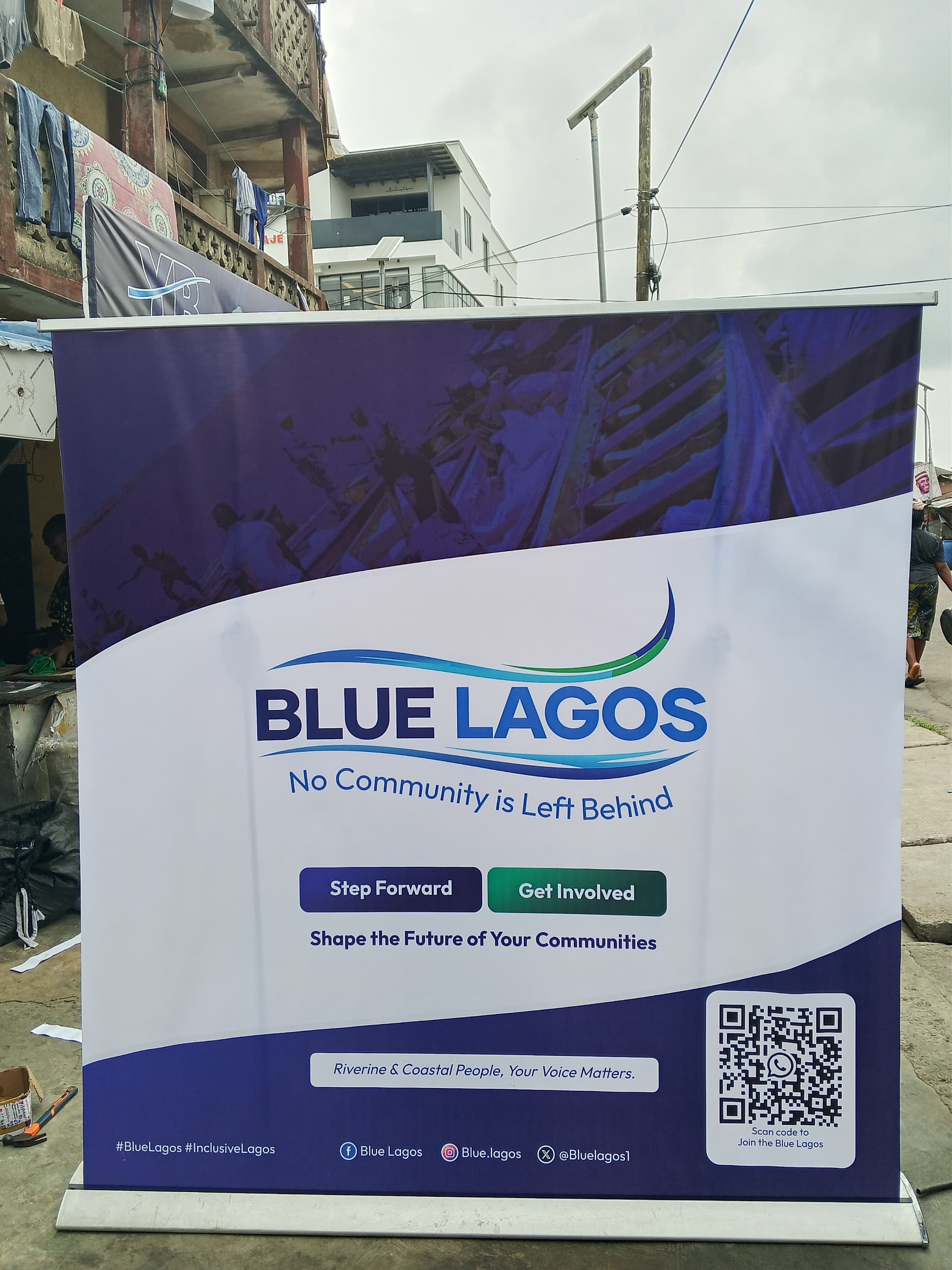
Blue Lagos Launches Community Sensitisation and Engagement Campaign in Riverine Areas
Blue Lagos has officially commenced its community sensitisation and engagement campaign across riverine and coastal communities in Lagos State.
The initiative is designed to amplify the voices of underserved communities, raise awareness on civic responsibilities, and highlight the unique challenges faced by residents living along the waterways.
Through on-ground interactions and digital advocacy, Blue Lagos aims to foster inclusive participation and ensure that no community is left behind.
Speaking on the campaign, The Director of Mobilisation & Community Engagement for the Blue Lagos Team, Hon. Ashade Abdul-Salam emphasized the importance of engaging directly with residents to better understand their daily realities, from access to basic services and transportation challenges to opportunities for development and improved governance.


The campaign will feature community visits, short sensitisation videos, interactive sessions, and stakeholder engagement, all geared towards empowering residents with the knowledge and tools to actively participate in shaping their future.
Blue Lagos calls on riverine and coastal residents to take advantage of this initiative, share their experiences, and stay informed on civic processes, including voter registration and community development programs.
This campaign marks a significant step towards building stronger connections between communities and decision-makers, while promoting inclusive growth across Lagos State.

For media inquiries, please contact:
Blue Lagos Team via email: [email protected]

One Universe Launches to Redefine How People Find and Pay for Trusted Services
One Universe, a new trusted digital marketplace designed to connect people who need services with skilled professionals, has officially launched and is now available for download on the Apple App Store and Google Play Store.
Built to solve the everyday challenge of finding reliable service providers, One Universe brings trust, convenience, and transparency into one seamless platform. From beauty and lifestyle services to technical, creative, and professional support, users can now discover verified professionals, agree on terms, and complete payments securely – all within the app.
A Safer, Smarter Way to Get Things Done
One Universe was created to eliminate uncertainty in service transactions. The platform enables buyers to find professionals, chat directly, agree on pricing and timelines, and make payments securely. Funds are held safely until the job is completed, ensuring protection for both parties.
Empowering Professionals to Grow
For service providers, One Universe offers a powerful opportunity to showcase skills, receive referrals, build credibility through reviews, and access more customers without the usual barriers. Professionals can focus on delivering quality work while the platform supports visibility, trust, and secure payments.
Introducing the One Universe Recruiter Program
As part of its launch, One Universe is rolling out the Recruiter Program, designed to reward individuals who help grow the community. Recruiters earn incentives by inviting people to join the platform – especially buyers seeking services – thereby helping professionals get more jobs while expanding the ecosystem. The program turns everyday referrals into real value and shared growth for all participants.
Key Features Include:
• Verified professionals across multiple service categories
• Secure in-app payments with buyer and seller protection
• Transparent pricing and direct communication
• Ratings and reviews to build trust
• A growing community driven by referrals and reputation
• Incentives through the Recruiter Program for community growth
*Now Available on iOS and Android*
One Universe is now live and ready for use. Individuals and businesses are encouraged to download the app, explore services, and experience a smarter way to connect and transact.
Download One Universe today:
Apple App Store
https://apps.apple.com/au/app/one-universe/id6753012310
Google Play Store
https://play.google.com/store/apps/details?id=com.oneuniverse.oneuniverse
About One Universe
One Universe is a trusted digital marketplace built to connect people with skilled professionals, making service discovery, engagement, and payment simple, safe, and reliable. The platform is committed to empowering service providers while giving users confidence and peace of mind.
Media Contact:
www.oneuniverse.ng
08083327368
Business
Adron Homes Unveils Sallah Mega Promo with 30% Discount and Exciting Gift Rewards for Subscribers
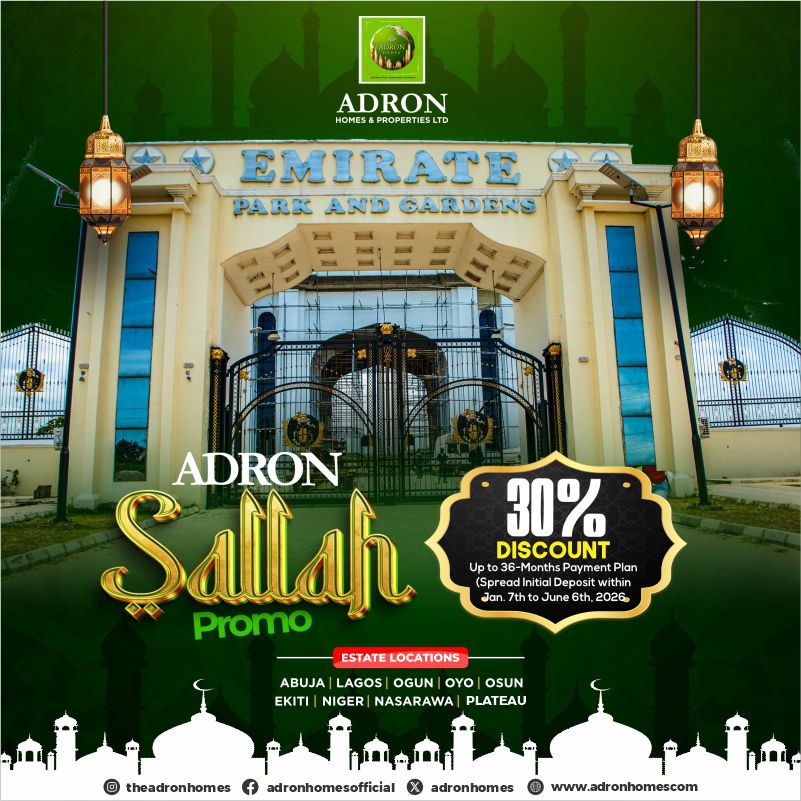
Adron Homes Unveils Sallah Mega Promo with 30% Discount and Exciting Gift Rewards for Subscribers
As the festive spirit of Eid al-Adha (Sallah) approaches, Adron Homes & Properties, Nigeria’s leading real estate company, has announced a nationwide Sallah Mega Promo designed to reward subscribers with unbeatable discounts, flexible payment plans, and exciting gift items.
The limited-time promotional campaign aims to empower Nigerians to celebrate the season of sacrifice with both joy and long-term investment security by making property ownership more accessible and rewarding. Subscribers can enjoy a 30% discount on all plots across Adron estates nationwide, alongside a flexible payment plan of up to 36 months. In addition, clients can spread their initial deposit over four months, easing financial pressure while securing valuable real estate assets.
According to the company, the Sallah promo reflects its continued commitment to providing affordable housing solutions while rewarding both new and existing clients during key festive periods.
“Sallah is a time of giving, sacrifice, and celebration. At Adron Homes, we believe there is no better time to empower families and investors with the opportunity to own land while also receiving valuable gifts that enhance their celebration,” the company stated.
As part of the promo, subscribers will enjoy a wide range of gift rewards tied to their payment milestones. Platinum plot subscribers stand to receive items such as bags of rice ranging from 10kg to 50kg, food packs with chicken and seasoning, goats and rams for Sallah celebrations, and even a cow or a double-door refrigerator for high-value subscribers. Compact plot subscribers will also benefit from gift items including bags of rice, vegetable oil, cartons of noodles, goats, and other household essentials designed to support festive celebrations.
Over the years, Adron Homes & Properties has remained at the forefront of real estate development in Nigeria, consistently delivering affordable luxury and flexible payment structures tailored to a wide range of investors. The Sallah Mega Promo further reinforces the company’s mission to democratize property ownership while strengthening its relationship with clients through value-driven initiatives.
Prospective subscribers are encouraged to take advantage of this limited-time offer by contacting Adron Homes through its official channels.
📲 WhatsApp: +234 805 101 1951
🌐 Website: Adron Homes Official Website
With the Sallah season fast approaching, this promo presents a unique opportunity for Nigerians to celebrate meaningfully by securing their future through real estate investment while enjoying generous festive rewards.


- President receives Bishop of Port Victoria, reinforces State–Church collaboration on social priorities April 15, 2026
- World Bank Group’s International Finance Corporation (IFC) and Citi Sign Borrowing Facility to Expand Local Currency Financing in South Africa April 15, 2026
- Uganda: Manufacturers, traders ask gov’t to stay tax increases April 15, 2026
- Eritrea: Sports and educational week in Assab sub-zone April 15, 2026
- Cabo Verde Shapes Africa’s Health Future at High-Level World Health Organization (WHO) Regional Consultation April 15, 2026
- Critical Minerals Africa Group to Speak at Invest in African Energy Forum in Paris April 14, 2026
- Talentz MEDIA Announces Strategic Partnership with Ghanaian Artist Kwaku Cenima to Launch “Emotional Scene” April 14, 2026
- South African Local Government Association (SALGA) and The Global Trust Project announce municipal pilot under new three-year Memorandum of Understanding (MoU) April 14, 2026
- TotalEnergies Strikes New Oil Discovery Offshore Congo Amid National Drive Toward 500,000 barrels per day (BPD) April 14, 2026
- Africa Finance Corporation (AFC) Delivers Côte d’Ivoire’s First Project Finance Green Bond for Landmark Solar Plant April 14, 2026
- President receives Bishop of Port Victoria, reinforces State–Church collaboration on social priorities April 15, 2026
- World Bank Group’s International Finance Corporation (IFC) and Citi Sign Borrowing Facility to Expand Local Currency Financing in South Africa April 15, 2026
- Uganda: Manufacturers, traders ask gov’t to stay tax increases April 15, 2026
- Eritrea: Sports and educational week in Assab sub-zone April 15, 2026
- Cabo Verde Shapes Africa’s Health Future at High-Level World Health Organization (WHO) Regional Consultation April 15, 2026
- Critical Minerals Africa Group to Speak at Invest in African Energy Forum in Paris April 14, 2026
- Talentz MEDIA Announces Strategic Partnership with Ghanaian Artist Kwaku Cenima to Launch “Emotional Scene” April 14, 2026
-

 news4 months ago
WHO REALLY OWNS MONIEPOINT? The $290 Million Deal That Sold Nigeria’s Top Fintech to Foreign Interests
-

 celebrity radar - gossips3 months ago
Dr. Chris Okafor Returns with Power and Fire of the Spirit -Mounts Grace Nation Altar with Fresh Anointing and Restoration Grace on February 1, 2026
-

 celebrity radar - gossips4 months ago
Prophet Kingsley Aitafo Releases 2026 Prophecy: ‘Nigeria Will Rise, but the World Must Prepare for Turbulence’
-

 celebrity radar - gossips6 months ago
End of an Era: Nigeria Mourns Evangelist Dr. Uma Ukpai, 80
You must be logged in to post a comment Login
You must log in to post a comment.