
Business
FG fight against terrorism suffers setback as US Senators counter bid to acquire Fighter Jets over Shi’ites Massacre

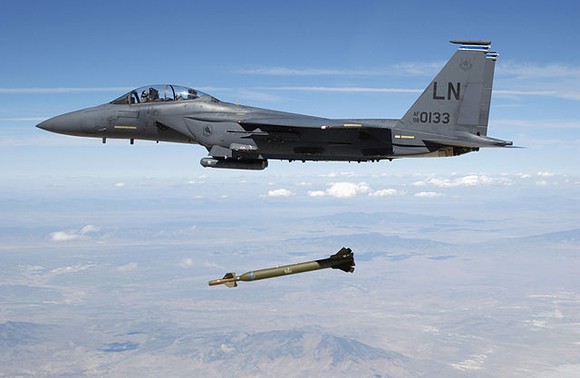

Two US senators have written to the secretary of state not to sell fighter jets to Nigeria
– They claimed issue of human rights concern was a reason for this blockade
– Nigeria was accused of not following court orders in the detention of El-Zakzaky
The Nigerian government has suffered a setback in its fight against terrorism as the United States has been urged not to sell fighter jets to Nigeria over human rights concern.
Donald Trump-led administration had promised to sell 12 weaponised aircraft to Nigeria $600 million but this might have suffered a dip as senators Cory Booker and Rand Paul in a joint letter on Tuesday, June 8, said Nigeria must display concern for human rights first.
The duo in the letter to the US Secretary of State, Rex Tillerson, cited the killing of Shi’ites by the army in early 2015 and the accidental bombing of an IDP camp as reasons why the aircrafts should not be sold to Nigeria.
They noted that although the country was facing Boko Haram insurgency, failure to comply with human rights directives shows the country should not be in custody of these fighter jets.
Read the letter below:
Dear Secretary Tillerson:
“We are writing to convey our concerns regarding reports that you intend to proceed with plans to sell A-29 Super Tucano light attack aircrafts, with mounted machine guns and related parts and logistical support, to help the Nigerian government combat Boko Haram. We request that before you approve this sale, you brief us on the steps Nigeria has taken to investigate and hold accountable those that have committed human rights abuses. We believe the security threats Nigeria is facing are very real but that a sale of this nature, and at this time, is ill-advised. Boko Haram – a 5,000 to 10,000 strong insurgent force with ties to the Islamic State – will not be defeated through expanded air power alone.
“Despite your comments that values will not impact national security policies, we believe proceeding without any clear indications of progress from the Nigerian government on the protection of human rights and enforcement of accountability would run contrary to our national security objectives.
“With proper training of pilots, the sale of more sophisticated aircraft could lead to more accurate targeting of insurgents by the Nigerian Air Force and potentially a reduction of civilian casualties. But there is evidence that the Nigerian military routinely flouts the laws of war and there remains an absence of adequate safeguards and accountability mechanisms. This means that the Tucano aircraft could be used in a manner inconsistent with international human rights and humanitarian law – and that ultimately helps to strengthen Boko Haram.
“Given that the Nigerian military still lacks the ability to mount a sophisticated counterinsurgency cooperation combining group and air assets, and the A-29 airframes will not be ready for delivery for at least another year at the earliest, we see no rush to complete the sale. Because this sale is an important point of leverage to encourage critical reforms necessary to defeat Boko Haram, we recommend that you require the Nigerian government to complete these steps before proceeding with the sale. Some of the important and specific benchmarks that would show progress include:
“Progress from the authorities in Abuja on the Kaduna government’s investigation into the December 2015 alleged massacre on Shiite Muslims in the northeastern town of Zaria, where at least 347 members of the Islamic Movement of Nigeria, a Shia Muslim group, were killed by army soldiers. Credible organizations found that the army’s attack was unjustified. An investigation launched by the local Kaduna government found the General Officer in command of the army to have authorized the massacre and recommended prosecution. Nearly a year after this report was published, there has been no follow-up from the federal government in Abuja. Authorities also failed to comply with a court order for the release of the movement’s leader, Ibraheem El Zakzaky, and his wife who remain in detention without charges since December 2015.
“Completion of the investigation into the January 2017 attack on a displaced persons camp in Rann, northeastern Nigeria, by the Nigerian Air Force, which killed at least 236 people and injured thousands more. The government was quick to acknowledge the attack, which officials said was an accident, and agreed to undertake an investigation but it has yet to be finalized and then made available to the public. Even if it was accidental, the Rann incident demonstrates the urgent need for safeguards and accountability.
“Progress on a fair investigation into the 2014 killing by the Nigerian security forces of over 600 people, on the heels of Boko Haram’s attack on Giwa army barracks. Hundreds of mostly unarmed detainees, including children, were killed in extrajudicial executions and likely buried in mass graves around the city.
“At the same time, there continues to be additional allegations of corruption, abuse, and misconduct throughout the Nigerian military. While some soldiers have been released or retired, there has yet to be any real or meaningful accountability for the systemic challenges that have plagued Nigeria’s security forces for decades. Without addressing these problems at an institutional level, reform is merely cosmetic and will only perpetuate longstanding patterns of abuse, which could serve as propaganda for Boko Haram and other insurgent groups seeking to discredit the Nigerian government.
“We are concerned that the decision to proceed with this sale will empower the government to backtrack even further on its commitments to human rights, accountability, and upholding international humanitarian law, which in turn could spur greater unrest and violence, particularly in the northeastern part of the country. Accordingly, we strongly urge you to reconsider your decision to sell A-29 Super Tucano light attack aircrafts to Nigeria without any meaningful reform or any clear safeguards in place. Instead we recommend you make clear to Abuja that the sale of these aircraft can proceed only if there is positive and measurable progress on reforming the security institutions.”.




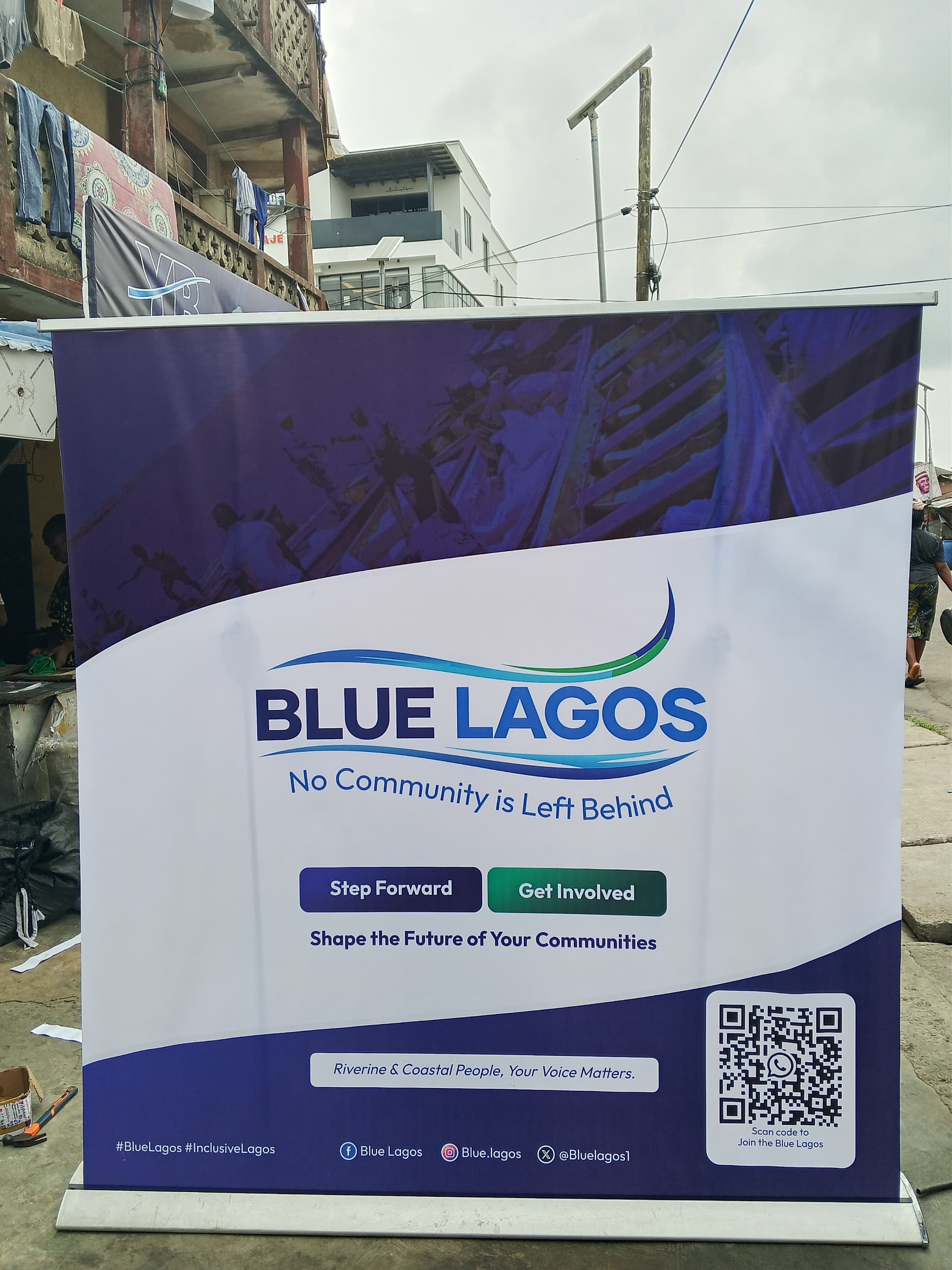
Blue Lagos Launches Community Sensitisation and Engagement Campaign in Riverine Areas
Blue Lagos has officially commenced its community sensitisation and engagement campaign across riverine and coastal communities in Lagos State.
The initiative is designed to amplify the voices of underserved communities, raise awareness on civic responsibilities, and highlight the unique challenges faced by residents living along the waterways.
Through on-ground interactions and digital advocacy, Blue Lagos aims to foster inclusive participation and ensure that no community is left behind.
Speaking on the campaign, The Director of Mobilisation & Community Engagement for the Blue Lagos Team, Hon. Ashade Abdul-Salam emphasized the importance of engaging directly with residents to better understand their daily realities, from access to basic services and transportation challenges to opportunities for development and improved governance.


The campaign will feature community visits, short sensitisation videos, interactive sessions, and stakeholder engagement, all geared towards empowering residents with the knowledge and tools to actively participate in shaping their future.
Blue Lagos calls on riverine and coastal residents to take advantage of this initiative, share their experiences, and stay informed on civic processes, including voter registration and community development programs.
This campaign marks a significant step towards building stronger connections between communities and decision-makers, while promoting inclusive growth across Lagos State.

For media inquiries, please contact:
Blue Lagos Team via email: [email protected]

One Universe Launches to Redefine How People Find and Pay for Trusted Services
One Universe, a new trusted digital marketplace designed to connect people who need services with skilled professionals, has officially launched and is now available for download on the Apple App Store and Google Play Store.
Built to solve the everyday challenge of finding reliable service providers, One Universe brings trust, convenience, and transparency into one seamless platform. From beauty and lifestyle services to technical, creative, and professional support, users can now discover verified professionals, agree on terms, and complete payments securely – all within the app.
A Safer, Smarter Way to Get Things Done
One Universe was created to eliminate uncertainty in service transactions. The platform enables buyers to find professionals, chat directly, agree on pricing and timelines, and make payments securely. Funds are held safely until the job is completed, ensuring protection for both parties.
Empowering Professionals to Grow
For service providers, One Universe offers a powerful opportunity to showcase skills, receive referrals, build credibility through reviews, and access more customers without the usual barriers. Professionals can focus on delivering quality work while the platform supports visibility, trust, and secure payments.
Introducing the One Universe Recruiter Program
As part of its launch, One Universe is rolling out the Recruiter Program, designed to reward individuals who help grow the community. Recruiters earn incentives by inviting people to join the platform – especially buyers seeking services – thereby helping professionals get more jobs while expanding the ecosystem. The program turns everyday referrals into real value and shared growth for all participants.
Key Features Include:
• Verified professionals across multiple service categories
• Secure in-app payments with buyer and seller protection
• Transparent pricing and direct communication
• Ratings and reviews to build trust
• A growing community driven by referrals and reputation
• Incentives through the Recruiter Program for community growth
*Now Available on iOS and Android*
One Universe is now live and ready for use. Individuals and businesses are encouraged to download the app, explore services, and experience a smarter way to connect and transact.
Download One Universe today:
Apple App Store
https://apps.apple.com/au/app/one-universe/id6753012310
Google Play Store
https://play.google.com/store/apps/details?id=com.oneuniverse.oneuniverse
About One Universe
One Universe is a trusted digital marketplace built to connect people with skilled professionals, making service discovery, engagement, and payment simple, safe, and reliable. The platform is committed to empowering service providers while giving users confidence and peace of mind.
Media Contact:
www.oneuniverse.ng
08083327368
Business
Adron Homes Unveils Sallah Mega Promo with 30% Discount and Exciting Gift Rewards for Subscribers
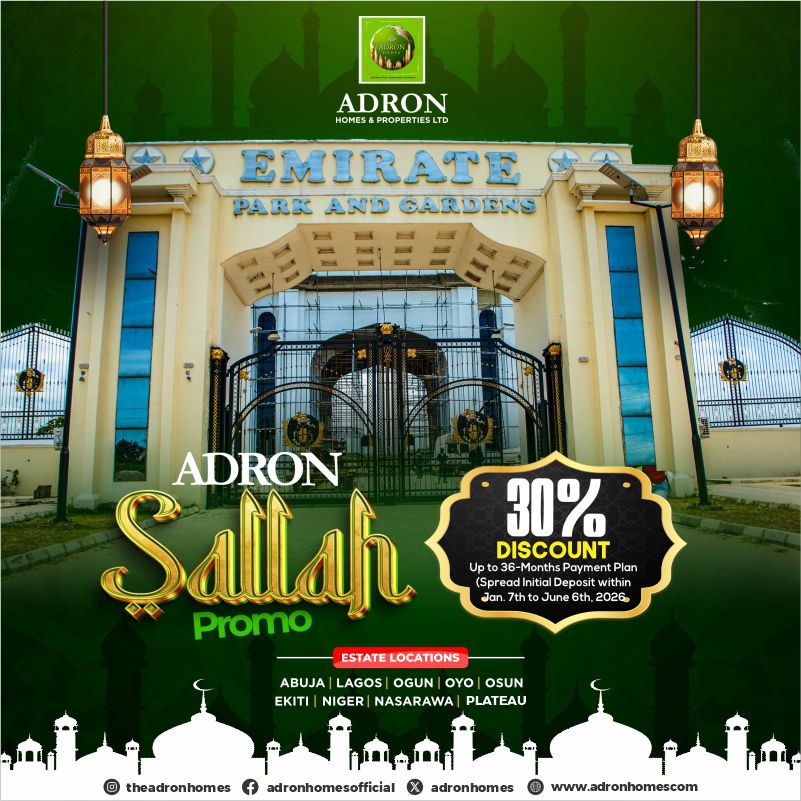
Adron Homes Unveils Sallah Mega Promo with 30% Discount and Exciting Gift Rewards for Subscribers
As the festive spirit of Eid al-Adha (Sallah) approaches, Adron Homes & Properties, Nigeria’s leading real estate company, has announced a nationwide Sallah Mega Promo designed to reward subscribers with unbeatable discounts, flexible payment plans, and exciting gift items.
The limited-time promotional campaign aims to empower Nigerians to celebrate the season of sacrifice with both joy and long-term investment security by making property ownership more accessible and rewarding. Subscribers can enjoy a 30% discount on all plots across Adron estates nationwide, alongside a flexible payment plan of up to 36 months. In addition, clients can spread their initial deposit over four months, easing financial pressure while securing valuable real estate assets.
According to the company, the Sallah promo reflects its continued commitment to providing affordable housing solutions while rewarding both new and existing clients during key festive periods.
“Sallah is a time of giving, sacrifice, and celebration. At Adron Homes, we believe there is no better time to empower families and investors with the opportunity to own land while also receiving valuable gifts that enhance their celebration,” the company stated.
As part of the promo, subscribers will enjoy a wide range of gift rewards tied to their payment milestones. Platinum plot subscribers stand to receive items such as bags of rice ranging from 10kg to 50kg, food packs with chicken and seasoning, goats and rams for Sallah celebrations, and even a cow or a double-door refrigerator for high-value subscribers. Compact plot subscribers will also benefit from gift items including bags of rice, vegetable oil, cartons of noodles, goats, and other household essentials designed to support festive celebrations.
Over the years, Adron Homes & Properties has remained at the forefront of real estate development in Nigeria, consistently delivering affordable luxury and flexible payment structures tailored to a wide range of investors. The Sallah Mega Promo further reinforces the company’s mission to democratize property ownership while strengthening its relationship with clients through value-driven initiatives.
Prospective subscribers are encouraged to take advantage of this limited-time offer by contacting Adron Homes through its official channels.
📲 WhatsApp: +234 805 101 1951
🌐 Website: Adron Homes Official Website
With the Sallah season fast approaching, this promo presents a unique opportunity for Nigerians to celebrate meaningfully by securing their future through real estate investment while enjoying generous festive rewards.


- President receives Bishop of Port Victoria, reinforces State–Church collaboration on social priorities April 15, 2026
- World Bank Group’s International Finance Corporation (IFC) and Citi Sign Borrowing Facility to Expand Local Currency Financing in South Africa April 15, 2026
- Uganda: Manufacturers, traders ask gov’t to stay tax increases April 15, 2026
- Eritrea: Sports and educational week in Assab sub-zone April 15, 2026
- Cabo Verde Shapes Africa’s Health Future at High-Level World Health Organization (WHO) Regional Consultation April 15, 2026
- Critical Minerals Africa Group to Speak at Invest in African Energy Forum in Paris April 14, 2026
- Talentz MEDIA Announces Strategic Partnership with Ghanaian Artist Kwaku Cenima to Launch “Emotional Scene” April 14, 2026
- South African Local Government Association (SALGA) and The Global Trust Project announce municipal pilot under new three-year Memorandum of Understanding (MoU) April 14, 2026
- TotalEnergies Strikes New Oil Discovery Offshore Congo Amid National Drive Toward 500,000 barrels per day (BPD) April 14, 2026
- Africa Finance Corporation (AFC) Delivers Côte d’Ivoire’s First Project Finance Green Bond for Landmark Solar Plant April 14, 2026
- President receives Bishop of Port Victoria, reinforces State–Church collaboration on social priorities April 15, 2026
- World Bank Group’s International Finance Corporation (IFC) and Citi Sign Borrowing Facility to Expand Local Currency Financing in South Africa April 15, 2026
- Uganda: Manufacturers, traders ask gov’t to stay tax increases April 15, 2026
- Eritrea: Sports and educational week in Assab sub-zone April 15, 2026
- Cabo Verde Shapes Africa’s Health Future at High-Level World Health Organization (WHO) Regional Consultation April 15, 2026
- Critical Minerals Africa Group to Speak at Invest in African Energy Forum in Paris April 14, 2026
- Talentz MEDIA Announces Strategic Partnership with Ghanaian Artist Kwaku Cenima to Launch “Emotional Scene” April 14, 2026
-

 news4 months ago
WHO REALLY OWNS MONIEPOINT? The $290 Million Deal That Sold Nigeria’s Top Fintech to Foreign Interests
-

 celebrity radar - gossips3 months ago
Dr. Chris Okafor Returns with Power and Fire of the Spirit -Mounts Grace Nation Altar with Fresh Anointing and Restoration Grace on February 1, 2026
-

 celebrity radar - gossips4 months ago
Prophet Kingsley Aitafo Releases 2026 Prophecy: ‘Nigeria Will Rise, but the World Must Prepare for Turbulence’
-

 celebrity radar - gossips6 months ago
End of an Era: Nigeria Mourns Evangelist Dr. Uma Ukpai, 80
You must be logged in to post a comment Login
You must log in to post a comment.