
Politics
How Otoge Movement And Offa Robbery Caused A Revolt For Saraki In Kwara Politics

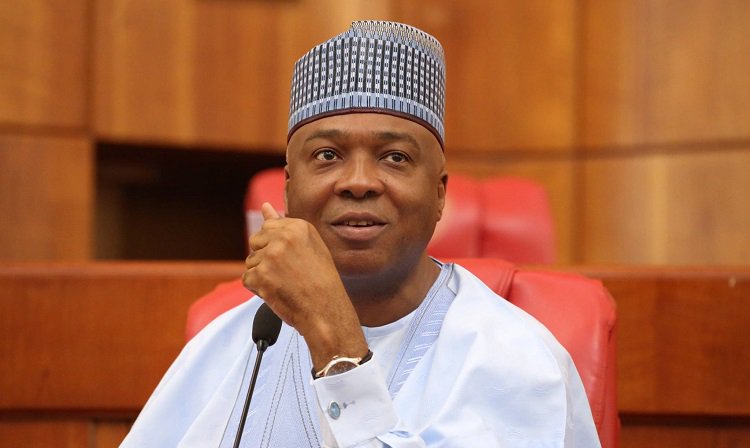
In 2011, Bukola Saraki retired his father, Olusola Saraki,
from politics by backing Abdulfatah Ahmed against Gbemisola, his own younger
sister, in the governorship race. Their father had been the godfather Kwara
politics for decades and the popular saying was: “Anywhere Saraki goes, Kwara
goes.”
After controversially installing Bukola, his first son, as governor in 2003,
Saraki – who was senate leader in the second republic – wanted the younger
sister as the next governor and pulled every trick in the book. He failed,
Bukola had his way and the conclusion was that Kwara now had a new godfather.
Well, not for too long. Bukola’s reign lasted for exactly eight years. He will
not be returning to the senate and, except his party,the PDP, wins the
presidential election and he gets a key position, the senate president may be
on his way to political oblivion.
The nation’s number three citizen was defeated in the Kwara central senatorial
district race by Ibrahim Oloriegbe of the All Progressives Congress (APC) who
polled 123,808 votes to defeat Saraki’s 68,994 – a margin of 54,814.
A former governor of Kwara state and two-time PDP presidential aspirant,
Saraki’s defeat is the biggest news so far in the 2019 general election. Here
are five possible factors that may have caused Saraki’s fall.
THE ‘O TO GE’ MOVEMENT
For some years now, Kwara residents have been under the leadership of the
Saraki family, a culture many refer to as the ‘Saraki dynasty’. Saraki’s late
father, Olusola, was known for installing governors. In 2003, his son took over
from Mohammed Lawal as governor of the state, an office he held for two terms.
From there, he proceeded to the senate form where he is said to have been
calling the shots in Kwara.
But as time went by, the people were said to have been “fed up” of the
influence from Saraki’s family and gradually, a popular movement known as ‘O to
ge!’ began. Loosely translated as ‘enough is enough’, the movement – or revolt
as you may wish to call it – was spearheaded by key political figures in Kwara
including Abdulrahman AbdulRazak, APC governorship candidate in the state, with
the help of prominent figures there such as Lai Mohammed, minister of
information and culture.
Time and again, Mohammed lamented about the “Saraki dynasty.” The minister once
said: “The main issues here have to do with how our state has been governed in
the past 50 years, 40 of which have been dominated by a single family. What has
happened to the commonwealth, which has been cornered by a single dynasty at
the expense of the people?”
Fun fact: With what we understands that some of the voters did not even
know the name of Saraki’s main challenger; they were simply motivated by “O to
ge”.
Another key factor that led to the ‘downfall’ of Saraki is the popularity of
President Muhammadu Buhari. The president, it was gathered, is even more
popular than Saraki in in most parts of the state.
Interestingly, as the results of the presidential election tickled in, figures
showed Buhari was having a comfortable lead in Kwara against Atiku Abubakar of
the PDP, despite Saraki being his (Abubakar) campaign director-general.
Apart from the fact of the dwindling influence of the Saraki family following
the ‘O to ge’ movement, the presence of Lai Mohammed, the information minister,
helped boost the president’s popularity. In fact, in the build-up of the
elections, Kwara was one of the major states of interest for the president and
of course, the minister acted as the president’s front as events played out.
SORE RELATIONSHIP WITH THE PEOPLE
It is believed that Saraki’s not-so-good relationship with the people of Kwara
robbed him of some votes in the senatorial election.
Some reTheCable claimed to TheCable claimed he does not have a good relationship
with the people like his late father Olusola. “He is not free with his people
like his father was,” a resident said when asked about the senate president.
“People used to throng to their house when the father was alive but not
anymore.”
OFFA ROBBERY
On April 5, 2018, armed robbers attacked banks in Offa, Kwara state, killing 33
people, including pregnant women and 12 police officers. It later emerged that
some of the suspects had links to Saraki and the Kwara state government. This
created a major PR disaster for Saraki as he became publicly involved in a spat
with the police hierarchy.
http://gyonlineng.com/end-of-the-saraki-dynasty-kwara-politics/
The tragedy shook Offa to his very roots and apparently tarnished the image of
Saraki in the state, and this might have contributed in no little to cutting
down his influence and hurting his political fortune.
While addressing a press conference in Lagos earlier this year, Oloriegbe had
accused Saraki’s family of not sharing in the “common heritage” of the people
of the state. He also made it a point of duty to restore the state’s “lost
values”.
The APC candidate had said: “In the past 16 years, our society has been in the
grip of people who do not share our common values and heritage. They are
dealers whose concerns are at variance with the people’s aspirations. They are
leaders with (an) inordinate appetite for wealth acquisition. They are
political voyagers and power merchants. They don’t share our Islamic values and
culture of leadership.”
‘WRATH OF CIVIL SERVANTS’
A key factor that dealt a massive blow on Saraki’s ambition is the “poor
welfare” of workers in Kwara state. Residents who spoke to TheCable complained
the civil servants both at state and local government levels are usually not
paid their salaries – and when they eventually get them, the salaries come in
percentages.
“Sometimes, they pay workers as low as 30 percent,” a resident said, adding
that workers have been abandoned over the years.
But Saraki is not the governor – so why direct their frustration at him? “Ask a
typical Kwara man what his issue is and he may tell you Saraki has no paid us,”
another resident told TheCabe. “It is true he is not the governor but he is the
one calling the shots; so the people know if Saraki wants salaries paid, they
will be paid.” Many believe that Kwara resources are still under his control.




Politics
CONGRATULATORY MESSAGE TO APC CONSENSUS GOVERNORSHIP CANDIDATE, SENATOR SOLOMON OLAMILEKAN ADEOLA YAYI
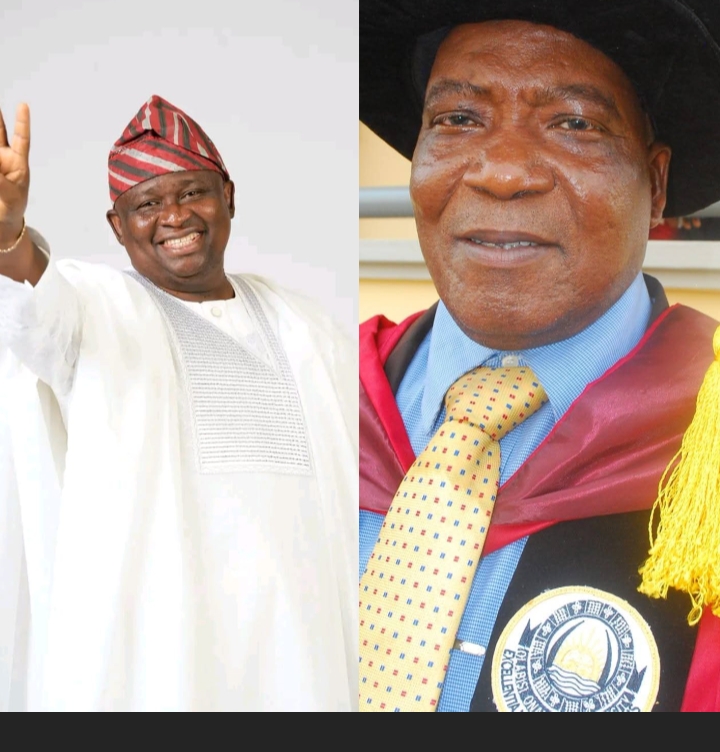
CONGRATULATORY MESSAGE TO APC CONSENSUS GOVERNORSHIP CANDIDATE, SENATOR SOLOMON OLAMILEKAN ADEOLA YAYI*
On behalf of our Grand Patron, Dr. Tunde Osinowo (Pepperito Jnr.), we leaders and Members of Ogun East for Yayi heartily congratulate Senator Solomon Olamilekan Adeola (Yayi) for being the consensus Governorship candidate of our party, APC, in the 2027 election.
This is marvelous and indeed great in the sight of God.
Without mincing words, the choice of Yayi by the party stakeholders is the best and the most surest assurance to coast the Party to victory at the general elections come February, 2027.
We commend the maturity, dispositions and spirit of sportsmanship with which all the Gubernatorial aspirants embraced the decision and extended hands of fellowship to Senator Solomon Olamilekan Adeola Yayi, the Gubernatorial Hopeful.
We beseech God to grant Yayi and all of us, leaders, followers and supporters, the enablements to see him duly elected as Governor of Ogun State at the general election in Jesus mighty name.
We congratulate the incoming Governor of Ogun State and our Excellency in waiting, Yayi.
This is Yayi O’clock.
Praise God!
Mo yo fun e, mo yo fun ra mi.
Lagos Remains Center of Nigeria’s Economy, Says Obasa
The Speaker of the Lagos State House of Assembly, Rt. Hon. Mudashiru Ajayi Obasa, has reaffirmed Lagos as the heartbeat of Nigeria’s economy, stressing that despite Abuja being the Federal Capital Territory, Lagos continues to drive the nation’s economic strength.
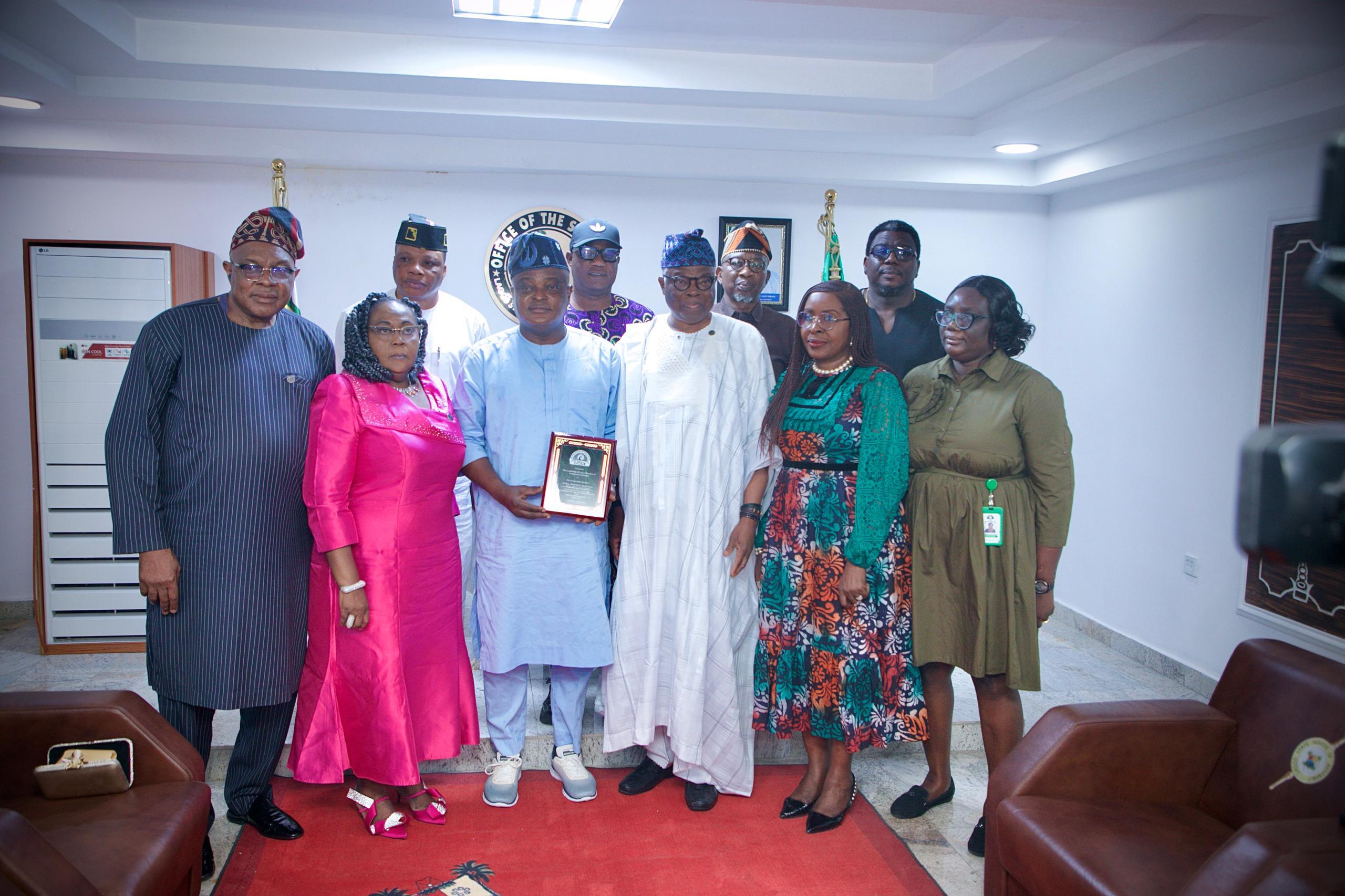
Obasa made this declaration on Thursday, April 16, when he received the new leadership of the Lagos Chamber of Commerce and Industry (LCCI), led by its President, Engr. Leye Kupoluyi, during a courtesy visit to the Assembly.
The Speaker emphasized that Lagos remains the best destination for investment in Nigeria, citing landmark legislations such as the Public Private Partnership Law, the Employment Trust Fund Law, and the Lagos State Lottery Law as evidence of the Assembly’s commitment to creating a business-friendly environment. He noted that these laws were designed to support entrepreneurs, attract investors, and sustain Lagos’s position as the economic hub of the country.
“Lagos is the center of Nigeria’s economy. We have always been pro-business and pro-people, and our laws reflect this commitment. Lagos is strategically placed to be the leading light of Africa, geographically, economically, and otherwise,” Obasa stated.
Earlier, Engr. Kupoluyi appreciated the Assembly’s initiatives and called for stronger collaboration between the legislature and the business community. He urged the House to continue enacting policies that would ease business operations and foster economic growth in the state.
The LCCI delegation included Chief Varkey Verghese, MFR (Hon. Life Vice President), Sir Ladi Smith (Vice President), Princess Layo Bakare-Okeowo (Vice President), Dr. Chinyere Almona, FCA (Director General), Dr. Sunnie Omeiza-Michael (Director, Research & Advocacy), and Mrs. Akintunde Temitope (Director, International).
Members of the House present were Hon. Stephen Ogundipe, Hon. Oladele Ajomale, Hon. Jubril AbdulKareem and Hon. Bonu Solomon and Hon. Ajayi. Also in attendance was Clerk of the House Mr. Lekan Onafeko, alongside aides to the Speaker.
The meeting underscored the shared vision of both institutions to position Lagos not only as Nigeria’s economic powerhouse but also as a continental leader in commerce and development.
Amupitan: Why the ADC is Chasing Shadows
Sanya Oni
It is no surprise that the African Democratic Congress is insistent on the immediate resignation of the chairman of the Independent National Electoral Commission, Prof. Joash Amupitan. First, was for the ‘high crime’ of seeking to play safe over a judgment of the court which demanded that ADC’s feuding parties and INEC under the leadership of Amupitan in particular take no further step to present the court with a fait accompli over a matter before it. Not sufficient to play the judge and jury in its own cause, it also insists on treating the appearance of any position deemed contrary to its own as treasonable.
Now, they want the head of the electoral body served on the platter over an alleged pro-President Bola Tinubu tweet in 2023. And so determined to press its case, the ADC, in a statement by its rambunctious National Publicity Secretary, Bolaji Abdullahi, would on Saturday, lob yet another charge at the INEC boss for what it claimed were attempts (by who?) to erase the digital trail of the offending tweet – which it also says amounted to a dangerous cover-up that undermined the credibility and neutrality of Nigeria’s electoral system.
Talk of an unproven tweet suddenly becoming an issue over which the chief electoral umpire’s integrity is not only being called into question but constituting the grounds for demanding for his head!
Of course, save for the party’s army of salesmen with their all-familiar talking points on prime time television, few Nigerians would be surprised by such antics which border on desperation. Before now, the party had, much earlier, raised the alarm over what it described as a calculated plot to impose a one-party state ahead of the 2027 general elections, accusing the ruling All Progressives Congress (APC) of using INEC to weaken opposition parties.
Let’s take a look at the tragedy of a party which seeks to pride itself as a leading opposition but has done practically nothing to earn its stripes. It started with a horde of angry, internally displaced politicians overrunning the organs of a once-marginal party, the ADC in a spectacular act of a hostile take-over. Unfortunately, if the image presented by the party from the outside at the time was one of cohesion, it certainly did not help that the invaders neither possessed the patience nor the discipline to undertake the required due diligence! Now that it turns out that what they thought they had bought with pride was in every sense, a damaged good, Nigerians as a whole are being blackmailed, accused of being an accessory to their grand act of dereliction.
Yet, as the presidential candidate of the party in the 2023, general election, Dumebi Kachikwu, would care to remind, the takeover bid, being a flawed process is akin to erecting a castle on shifting sand. The tenure of the so-called chairman of the party, Ralph Nwosu, with whom the invaders negotiated, had long been rendered invalid by the effluxion of time. Not only that, the constitution of the party also made clear that those seeking the leadership of the party must have spent no less than two years in the party! These are supposed to be the issues before the courts!
Across the states, it is the same story of a party riven with crises from top to bottom. Yet, convinced that their good – as illegitimate as could be – was already theirs for keeps, the caretakers-turned undertakers plodded on, choosing to ignore the feelings of a section of the party hierarchs that needed to be placated. With just enough crude blackmail, impunity, cash and more cash in their armoury to waltz through, the conquistadors actually assumed they were unstoppable.
Of course, they pretended that the court processes are merely a side-show. The Federal High Court ruling which required the invaders to show cause why the prayers of the aggrieved ADC members should not be granted was thought of as a joke; the same way the judgment of the appellate court which directed the parties to return to status quo ante bellum was deemed by the ADC invaders a non-binding opinion hence their plans to proceed with a convention fraught with potential legal jeopardy.
To the invaders – Mark, Rauf Aregbesola et al, their interpretation, as against that of INEC with its tilt on neutrality – was sacrosanct.
While these drag on, trust the lawyers with their boring whining about how Section 83 of the Electoral Act, 2026 ousts the jurisdiction of the courts. Yes, it provides that “No court in Nigeria shall entertain jurisdiction over any suit or matter pertaining the internal affairs of a political party” as if that effectively translates to shutting the doors of mediation to aggrieved party men even on issues bordering on their rights or non-observance of party constitutions. In like manner, it is like the express provisions of Section 6(6)(b) which also provides that: “The judicial powers vested in accordance with the foregoing provisions of this section – shall extend to all matters between persons, or between government or authority and to any persons in Nigeria, and to all actions and proceedings relating thereto, for the determination of any question as to the civil rights and obligations of that person” has suddenly become superfluous in the current electoral cycle!
To return to the Amupitan matter: Should anyone be fooled by the orchestrated blackmail by those whose record private and public can’t hold a candle to Amupitan’s? Certainly not with what I had earlier described as a programmed de-legitimisation of the 2027 elections by overrated political actors being already an open book. Sure enough, the matter, in the coming days, would not be whether or not the gentleman from Kogi can take the heat, but how far those in the business of concocting lies would go to undermine the process simply because the odds are not going their way. While they are at it, they have still not told Nigerians how the lone individual – out of 37 odd Resident Electoral Commissioners (RECs) and 12 National Commissioners, with two representing each of the six geopolitical zones, has suddenly become the ultimate decider of how things will go in 2027.
Reminds of the bad workman perennially blaming his tools.
First published in The Nation on April 14, 2026


- African Development Bank, The European Stability Mechanism (ESM) sign Memorandum of Understanding to enhance cooperation April 16, 2026
- Seeing the Unseen – How Canon is Protecting East Africa’s Coral Reefs April 16, 2026
- Sintana Listing Signals New Era for Local Ownership in Namibia’s Oil and Gas Sector April 16, 2026
- The crisis in the Middle East could cost Africa 0.2 percent in economic growth in 2026 April 16, 2026
- Namibia International Energy Conference (NIEC) 2026: Namibia Fast-Tracks Oil Law Reform as President Nandi-Ndaitwah Pushes Amendment Bill Ahead of First Oil April 16, 2026
- Africa’s Energy Wealth: Why Good Governance Must Power a Just Transition (By Sola Adebawo) April 16, 2026
- Emirates and Wesgro sign Memorandum of Understanding (MoU) to Stimulate Inbound Tourism to the Western Cape April 16, 2026
- Banco Sol’s Angola Oil & Gas (AOG) 2026 Sponsorship Affirms Drive to Finance Angolan Service Companies April 16, 2026
- Uganda Development Corporation (UDC) to take 82% of Trade ministry budget April 16, 2026
- Merck Foundation marks ‘World Art Day’ through their Film, Song, Media and Fashion Awards 2026 in partnership with Africa’s First Ladies to raise awareness about social & health issues April 15, 2026
- African Development Bank, The European Stability Mechanism (ESM) sign Memorandum of Understanding to enhance cooperation April 16, 2026
- Seeing the Unseen – How Canon is Protecting East Africa’s Coral Reefs April 16, 2026
- Sintana Listing Signals New Era for Local Ownership in Namibia’s Oil and Gas Sector April 16, 2026
- The crisis in the Middle East could cost Africa 0.2 percent in economic growth in 2026 April 16, 2026
- Namibia International Energy Conference (NIEC) 2026: Namibia Fast-Tracks Oil Law Reform as President Nandi-Ndaitwah Pushes Amendment Bill Ahead of First Oil April 16, 2026
- Africa’s Energy Wealth: Why Good Governance Must Power a Just Transition (By Sola Adebawo) April 16, 2026
- Emirates and Wesgro sign Memorandum of Understanding (MoU) to Stimulate Inbound Tourism to the Western Cape April 16, 2026
-

 news4 months ago
WHO REALLY OWNS MONIEPOINT? The $290 Million Deal That Sold Nigeria’s Top Fintech to Foreign Interests
-

 celebrity radar - gossips3 months ago
Dr. Chris Okafor Returns with Power and Fire of the Spirit -Mounts Grace Nation Altar with Fresh Anointing and Restoration Grace on February 1, 2026
-

 celebrity radar - gossips6 months ago
End of an Era: Nigeria Mourns Evangelist Dr. Uma Ukpai, 80
-

 celebrity radar - gossips4 months ago
Prophet Kingsley Aitafo Releases 2026 Prophecy: ‘Nigeria Will Rise, but the World Must Prepare for Turbulence’
You must be logged in to post a comment Login
You must log in to post a comment.