
society
LAWMA’s Waste Management Academy takes off in Lagos

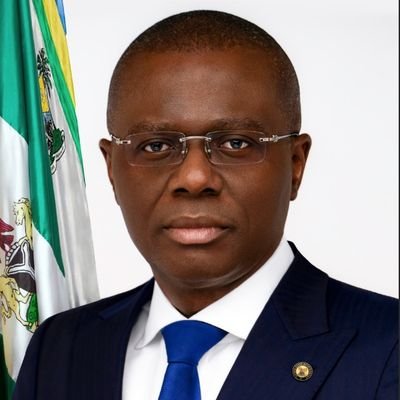
Lagos Waste Management Authority (LAWMA) has established an academy to provide quality education, proper engagement and adequate sensitisation in helping people to make informed and strategic decisions about waste management in the State.
The LAWMA Academy, which is first of its kind by any waste management authority in Nigeria would provide knowledge hub for credible hands on tutelage and certification in solid waste management.
LAWMA Academy is an educational arm of LAWMA that engages innovative approach to support corporate and personal development and drive social responsibility among citizens. The Academy renders several programmes and services with the goal to improve waste literacy and promote good waste management practices to Reduce, Reuse and Recycle.
The Academy, which was established to raise next generations of scholars and entrepreneurs in waste management, is charged with the responsibility of implementing first-class educational programme in waste management aimed at changing the social order, promote care and respect for the environment and open up business opportunities for people in the waste management sector.
It would also develop a platform for collaborative partnership in waste management geared towards knowledge acquisition and career and business development for individual, organisations and institutions whilst promoting adoption and implementation of sustainable waste management practices to general public.
It would also provide structured trainings and workshops on waste management for all stakeholders which include; public and private entities and individuals involved in generation, collection, transportation, utilisation, recycling and disposal of waste in Lagos State and beyond with trainings and courses that promote standard ethics, integrity and compliances to waste management and environmental regulations.
LAWMA is an agency of Lagos State Government statutorily charged with management of solid waste in the state and it remains the pace setter for waste management in Nigeria. LAWMA since its inception has adopted several programmes and strategies to manage waste in Lagos State, most of which did not suffice to bring about the desired change.
Lagos State based on its special status as the economic hub of Nigeria, rapid population growth, urbanization and industrialization, has a direct impact on the volume of waste being generated on daily basis in the State, and the social disposition of the populace towards waste management is highly unsatisfactory and most corporate organisations and businesses still lack the basic information and technical know how on proper waste handling.
To address issues of waste management in Lagos State, LAWMA has been up to the task in ensuring that all the nooks and crannies of Lagos are clean and safe to prevent communicable diseases and ensures no stone is left unturned in managing waste in the Centre of Excellence.
Having come to the realization that provision of quality education, proper engagement and adequate sensitisation on waste management practices are required to promote acceptability and conformity to laws and regulations in its sector, LAWMA was propelled to come up with the LAWMA Academy in a time like this.
LAWMA through the Academy will partner and work collaboratively with other sectors of the economy to promote the concept of a sustainable environment and achieve objectives of the Academy, which is to raise the next generation of Solid Waste Management scholars and entrepreneurs; connect the government, academia and institutions for a workable reform in the waste sector; create a hub for people to network, share ideas and espouse practices that will increase awareness and knowledge in waste management and train participants in skills and knowledge required to be competitive in the waste global economy. It will also groom responsible citizens that are capable of changing the social order in waste management and provide children with a variety of individualized and creative summer learning experience in waste management.
LAWMA Academy is in partnership with some academic institutions, research institutes, professional bodies in the environmental sector and identified stakeholders in other sectors including private, government and NGOs for a workable implementation the various programs and activities.
It will also promote the adoption of waste management into school curriculums from primary to tertiary level and work closely with higher institutions of learning to facilitate certification trainings in waste management and inclusion of waste management as one of the courses for Bachelor, Masters and P.hD degrees.
The Academy will also provide an experience forum for participants to gain practical skills and unique opportunities to learn, exchange existing practices, discuss challenges and develop a better informed decision-making process in waste management.
The Academy is offering key services, which are Internship programme, Organisational Training, Specialty Training in Waste Management, Summer School for students, Waste Summit and Waste Competition. All the services are geared toward promoting standard ethics, integrity and compliances to waste management and Environmentally regulations by individuals, corporations, professionals, and businesses in Lagos State.
The Internship Programme is an intensive training platform that will engage individuals on sustainable waste practices and also improve their employability skills. This programme will enroll applicants between age of 18 and 28 for internship experience with LAWMA through different learning processes and the interns will have the opportunity to be trained on execution of waste management tasks as well as data gathering and research.
The organisational trainings is certification training for professionals, business owners, other waste management agencies and waste handlers in corporate environment and industries. The training will introduce corporate organisations and others to the fundamentals of public and corporate waste handling focusing on best practices to reduce, reuse, recycle and manage the resultant waste.
The Specialised Training will be designed for interested applicants in special area of interest in waste management and trainings on special area of interest like waste fleet management, waste business, waste to wealth and forensic waste analysis, among others will be offered based on individual interests.
The Summer School is for students in primary and secondary schools. At the summer school, students would be exposed to the concept of waste management through some students Educational programmes in waste management at LAWMA’s facilities for about two to four weeks.
For the LAWMA Waste Challenge Competition, the Academy would organise periodic quiz and essay competitions on waste management and schools and individuals would apply to participate online, and prizes and awards will be presented to winners.
The Annual Waste Management Summit would focus on addressing contemporary waste management and environmental issues. During the summit, professionals, academia, policy makers and other stakeholders are would apply to participate.
Certificate on completion of waste management training with LAWMA will be issued to trainees at the end of the programme and it will be displayed in offices and corporations. It is expected that after completion of services offered by the LAWMA Academy, the trainees would be well informed and trained to adopt good waste management practices, develop a Solid Waste Management plan for their facilities and support government’s efforts to increase awareness on a cleaner environment, instill behavioral change and prevent indiscriminate waste disposal. The participants would also be exposed to business opportunities embedded in the waste management sector, enhance understanding of standards tools for waste minimization via reduce, reuse and recycle concept.
The Project Partners and sponsors of the LAWMA Academy would comprise private business owners, corporate entities, government Ministries Departments and Agencies (MDAs). It would also include academia, institutions, waste management and recycling companies, environmental friendly organisations, NGOs and other executives who share common value and passion for empowering the younger generations and promoting a cleaner and better environment.






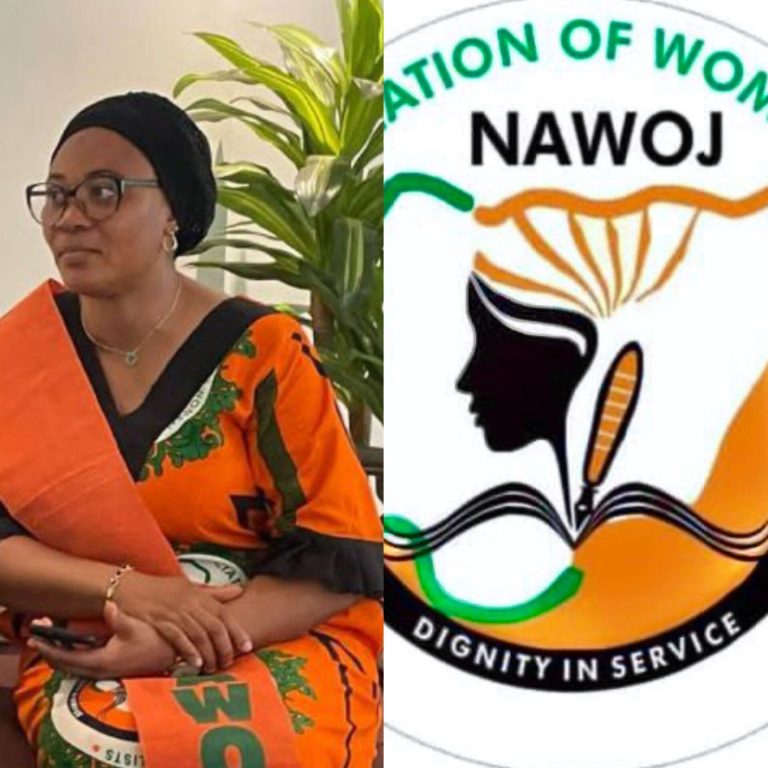
NAWOJ: SEKINAT, CHARITY GETS VOTE OF CONFIDENCE
The Nigeria Association of Women Journalists,(NAWOJ), Ogun State Chapter Executives has unanimously passed a vote of confidence on Chairman NAWOJ SEKINAT Salam and the Financial Secretary, Charity James, saying that, their leadership reflect the ideal and objectives of NAWOJ.
This was revealed in a communique issued at an Emergency meeting of the Executive held at the NUJ State Council, Iwe-Iroyin in Abeokuta.
The vote of confidence on the Leadership of NAWOJ was unanimously signed by all the five executive members that attended the meeting with the vice chairperson taking apology for official engagement outside the state capital.
According to the communique ” Consequently, NAWOJ Ogun State Chapter, reaffirms it’s unwavering support and confidence in the Chairperson and the Financial Secretary, Sekinat Salam and Charity James respectively, Urge them to continue in their commitment to purposeful leadership in the best interest of the association and the society at large”.
Speaking briefly with Journalists after the emergency Executive meeting, the Chairperson, Nigeria Association of Woman Journalists (NAWOJ), Com. Sekinat Salam, said the meeting was necessary as the news of her suspension was laughable and insulting because it is like a pot calling a kettle black in this case, saying that the Leadership of the State Council, Com. Wale Olanrewaju has no local standing to suspend her or any executive member, even he cannot be a judge in his own case.
According to her” The Leadership of the Nigeria Union of Journalists, Ogun State led by Wale Olanrewaju has always been misusing power without recourse to the constitution of this noble Union, hence has no local standing to suspend me or any executive member “.
She said only the Central Working Committee (CWC) has the constitutional rights to sanction or suspend any members found wanting after due process has been followed.
While calling on members to stay calm, Com. Sekinat Salam assured members of positive representation of NAWOJ at both the State and National level, adding the success recorded under her administration cannot be overemphasized.
She therefore called on the National leadership of NUJ to critically look into the matter, either by setting up independent committee to investigate the issues and resolve the matter as quickly as possible.
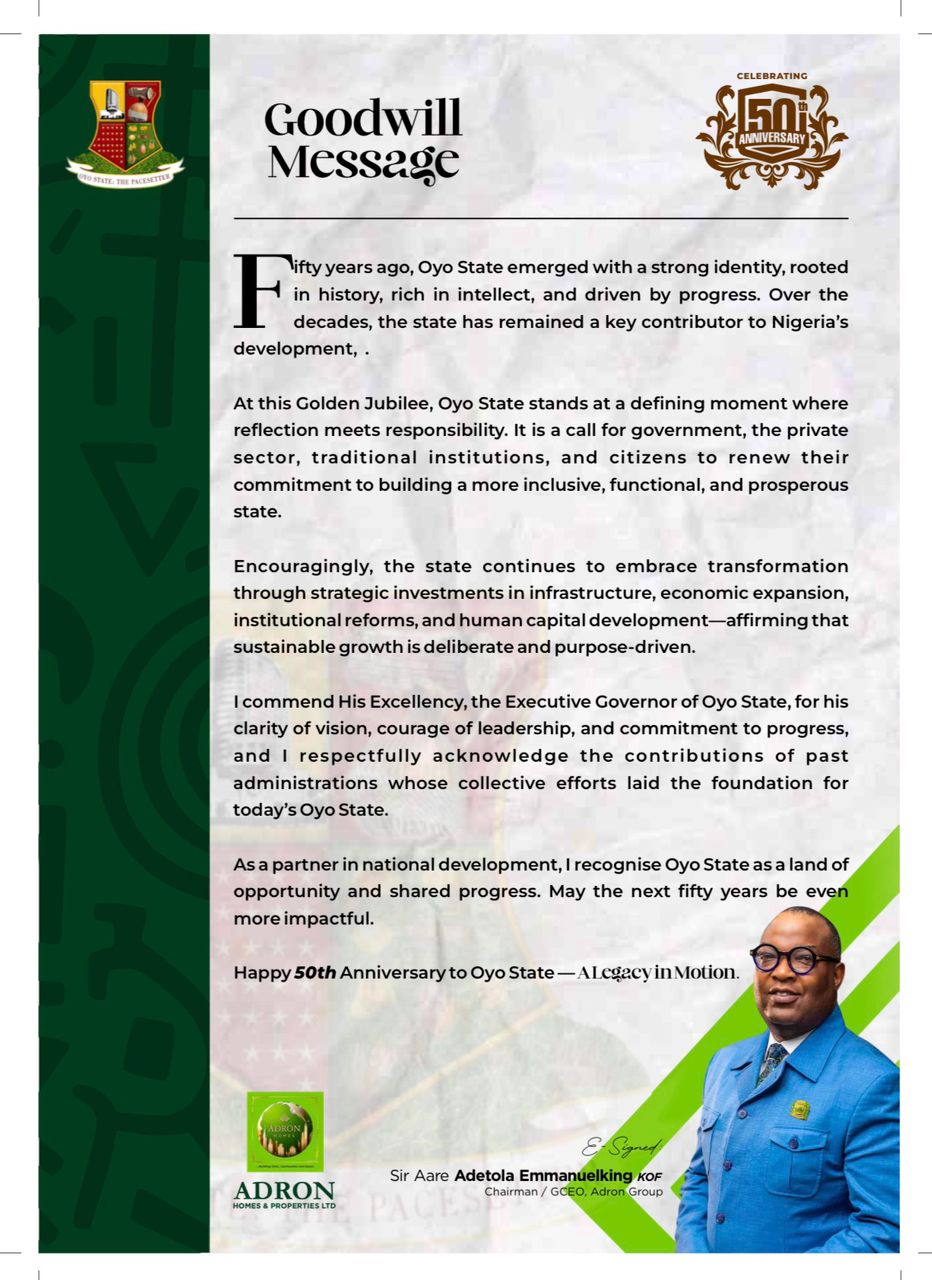
Adron Homes Chairman Congratulates Oyo State on 50 Years of Progress
The Chairman and Chief Executive Officer of Adron Homes and Properties Limited, Aare Adetola Emmanuelking, has congratulated the Government and people of Oyo State as the state marks its 50th anniversary, describing the occasion as a celebration of resilience, cultural pride, and sustained progress.
He noted that since its creation, Oyo State has remained a strong contributor to Nigeria’s socio-economic and cultural development, emerging as a hub of commerce, education, and innovation.
According to him, the Golden Jubilee offers a moment for reflection and renewed commitment by government, private sector players, traditional institutions, and citizens toward building a more inclusive and prosperous state.
Aare Emmanuelking commended the state’s ongoing transformation through investments in infrastructure, economic expansion, and human capital development, adding that sustainable growth is deliberate and must remain purpose-driven.
He also praised the leadership of the current administration while acknowledging the contributions of past leaders whose efforts laid the foundation for today’s Oyo State.
Reaffirming Adron Homes’ commitment to national development, he described Oyo State as a land of opportunity. He wished the state continued peace and prosperity, expressing confidence that the next fifty years will bring even greater achievements for the Pace Setter State and its people.
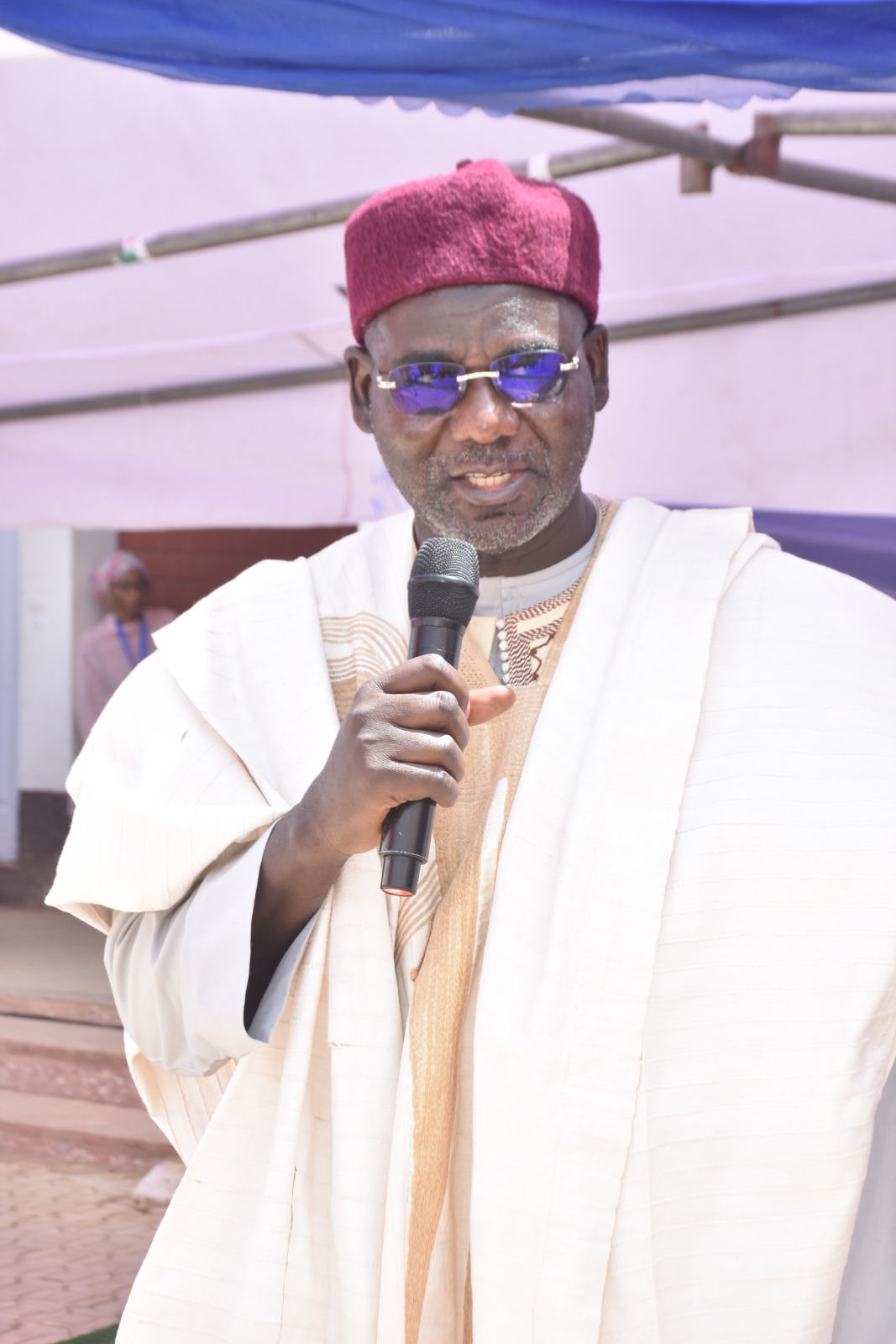
TY BURATAI HUMANITY CARE FOUNDATION CONDOLES WITH BIU EMIRATE OVER TRAGIC ATTACK
In a profound expression of sorrow, the TY Buratai Humanity Care Foundation has extended its heartfelt condolences to the families of the victims and the entire people of Biu Emirate, Borno State, following the recent tragic attack attributed to Boko Haram. This devastating assault, which occurred at a work site in northeastern Nigeria, claimed the lives of dozens, including brave soldiers committed to protecting the nation.
In a statement released to the press and signed by the Chairman of the foundation, Ibrahim Dahiru Danfulani Sadaukin Garkuwan Keffi/Betara Biu, the Grand Patron of the Foundation, His Excellency Amb. Lt. Gen. Tukur Yusufu Buratai CFR (Rtd), former Chief of Army Staff, described the incident as “one too many senseless, barbaric, and ruthless displays of inhumanity.” His Excellency emphasized the heartbreaking impact of such attacks on innocent, hardworking citizens striving to make a positive difference in their communities.
The Grand Patron praised the swift and decisive response of military personnel during this critical time, underscoring their brave commitment to safeguarding the nation. He called upon them to maintain this momentum, commending their courage and sacrifice in the face of adversity. “May Almighty Allah forgive their souls and grant them Aljannah Firdouse,” he remarked, encouraging the nation to honor their spirit of sacrifice as they rally together to rebuild and restore hope across the region.
In his statement, Gen. Buratai highlighted the importance of collective action in overcoming the challenges posed by insecurity, urging concerned citizens to increase their efforts in fostering a virile community that future generations can cherish. “Together, we can surmount these troubles,” he asserted, calling on all patriotic leaders and citizens to unite in the fight against violence and insecurity.
The TY Buratai Humanity Care Foundation remains committed to supporting initiatives that promote peace, security, unity, and prosperity. As the foundation extends its condolences to the bereaved, it also calls upon all segments of society to collaborate in creating a better and safer future. May Allah guide and protect the nation and lead it toward enduring peace. Amen.


-

 celebrity radar - gossips6 months ago
Why Babangida’s Hilltop Home Became Nigeria’s Political “Mecca”
-

 society6 months ago
Power is a Loan, Not a Possession: The Sacred Duty of Planting People
-

 Business6 months ago
Batsumi Travel CEO Lisa Sebogodi Wins Prestigious Africa Travel 100 Women Award
-

 news6 months ago
THE APPOINTMENT OF WASIU AYINDE BY THE FEDERAL GOVERNMENT AS AN AMBASSADOR SOUNDS EMBARRASSING