
society
Rape of 13 Year- Old- Girl : Residents, Landlords , Gives Cool Tavern Relaxation Center A Clean Bill Over Alleged Complicity

By Ifeoma Ikem
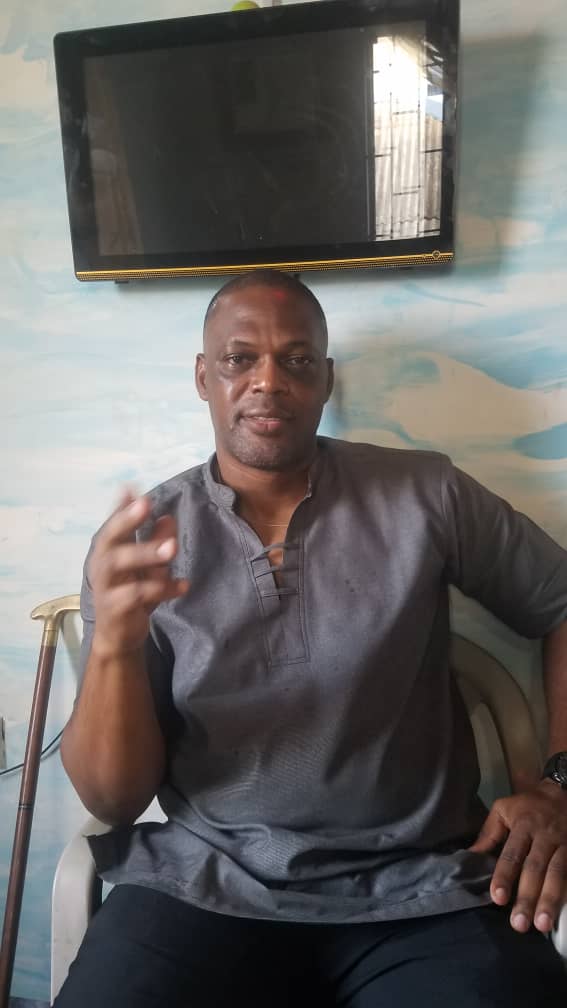
Residents and Landlords Association in Egan area of Lagos, have given management of ‘The Cool Tavern Relaxation Center’, a clean bill over alleged complicity in the rape of a 13 -year – girl , Adepeju Adebayo. Absolving the hotel management of any wrongdoing, some residents who extolled the stalling qualities of the Chairman of the hotel, Engineer Gbenga Ajibulu ,said he has contributed immensely to the empowerment of youths and development in the area.
A Youth leader and mechanical Engineer, who identified himself as Kehinde Biodu,argued that from the stand point of what the hotel owner had done in the training,development and engaging the youths in positive programmes that have helped in curtailing their youthful exuberance, Ajibulu cannot be accused of creating any room for such dastardly acts perpetrated by Toheeb Mustapha and sukomi.
This is even as the landlords Association in the area have protested in solidarity of Engineer Ajibulu, while vouching on his integrity.
Speaking with Saharaweekly who visited the area on investigation, the Chairman of the Landlords Association, Mr. Vincent Ejeh, blamed the suspects who he confirmed are not residents in their area for dragging the name of their peaceful environment into the mud. ” We have seven streets making up our Association and since 2019 when this Center was established, we have not seen or heard of any untoward activity inimical or detrimental to our residents or youths”. “The hotel owner has been magnanimous enough to allow us to be using his hotel premises every first Saturdays of each month for our meeting and as parents, we have not seen or associated his hospitality center with any criminal or Anti social behaviours”. ” Besides, The Management of The Cool Tavern Relaxation Center ,was instrumental to why bad boys, criminal elements have relocated from our area.”
This he has done by collaborating with us and has contributed immensely towards security and street lighting of the major street.
Infact,Engineer Ajibulu, maintains a private security Personnel from Nelly Securities and some fierce looking bouncers that tend to ward off criminal elements in our area .
He has also financially assisted our Association greatly in the installation of the security gate and halogen energy lighting around his facility. ” Collaborating what Mr. Ejeh said, Vice chairman of the Group, Mr. Magnus Nnamdi Ogbue, regreted what he called the unfortunate and Ugly incident that took place on October 6th ,2020. Mr. Ogbue , who is a retired Civil servant, praised Ajibulu, for being a humble, gentle and easygoing de- tribalized Nigerian, who has allowed his cooperate social responsibility to benefit the entire community.”
In an interview with Engineer Ajibulu, he denied any alleged complicity by his management,describing the incident as a one off occurrence. According to him, ” The Rape gang deceived his staff by using a matured Lodger to book for the said room, subsequently, the legal lodger , sought for permission to be allowed to receive his family members in his room but unknown to the management, they had planned to commit the dastardly act.” “We never heard the girls’ screaming or any suspicious activity and never knew such happened until police invited us .
To make matters difficult for us, the victim did not complain or report the incident to our security officers”. he said. lamenting, Engineer Ajibulu suspected that the incident was a plot by some of the criminal elements that fled the area, after he engaged the police and other security Agencies to route them out, “they planned the incident to tarnish the good image of his hotel”. ” You know this Egan is backward and inhabited by many questionable characters, I am of the opinion that because of the security arrangements i had put in place in the wake of 2019 when we started operations, which made them flee the area, they are trying to fight back by plotting this crime”. He assured the Public that the Center have now tightened its security measures and operations, noting that sure incident would never re occur again” , he concluded .
It would be recalled that on October 6th, 2020, less than one week after the Inspector General Of Police , IGP Adamu Mohammad , vowed to apprehend fleeing suspects that gang raped and murdered 12 – year – Old Favour Ikechukwu at Ejigbo area of Lagos, Another minor , a 13- year – old JSS 3 student , Adepeju Adebayo, was allegedly subjected to a brutal and bloody rape,that left her partially paralyzed in the hospital.
The said gang rape which has elicited wide criticism and condemnation from residents, was said to have been perpetuated at The Cool Tavern Relaxation Center, Oremeji street, off Isuti road, Egan, Igando, by two suspects, Toheeb Mustapha and Sukomi, now on the run. Mustapha was said to have been arrested following resilience exhibited by the Igando Divisional Police Officer, CSP Taiwo Kasumu, and his operatives, whose prompt response, some residents said, led to the early apprehending of the kingpin, also known as ” Sir Small ” in the crime world Our undercover reporter who visited the hotel, reported that one of the fleeing gang member named Sukomi, alias “Ikamula or G33 ,a motor Mechanic by profession and ex student of Edu Grammar school, now residing at Ita Alhaji street, ikotun , had earlier booked a room in the hotel on Monday, October 5th, 2020, to prepare the ground for their dastardly actions.
On Tuesday afternoon, while the victim’s Mother had gone out in search of her family’s daily bread, “Sir Small ” said to be the gang leader and master mind of the rape, had creeped into the victim’s house and lured her into the hotel, where they were said to have taken turns in raping her, until she started bleeding profusely,coupled with the excruciating and agonizing pain she revealed, she felt on the lower region of her abdomen .
Sensing danger, the gang was said to have waited until night, as they quickly packaged and dumped their bleeding victim in front of her house.
According to a resident, who spoke to our reporter on the grounds of anonymity, for fear of reprisal attack, he said, “When we assisted the Police to arrest the fleeing ” Sir Small” , the gang leader,he confirmed that he is a Generator mechanic and a resident of Alfa Igonna street, Odo, Egan.
He claimed to have graduated from Russell Grammar school in 2018, where he said he met the girl they raped. though he said that they were not friends back then.” Our Source also stated that the 20 years old suspect, “Sir small ” who confessed to the crime,denied any ritual connotation or deployment of charms or “juju” in perpetrating the crime.Also claimed he re established contact with the victim, two years after he left school , through her phone contact that he collected from the victims school mate.
According to one of our source, the master mind of the rape said he regretted his actions while the victim was protesting, however he denied that the girl was a virgin before the rape . At the Isuti Road Health Center, where the victim was initially rushed to,due to what a nurse described as excessive bleeding, Adepo was seen soaked in her own blood, while reeling in pains. She was said to have told her now distraught mother, that she met ” Sir Small ” on Facebook before the incident.
A hospital source confirmed that despite the bleeding and pain the victim was undergoing, she was stitched three places on her virgina , before she was transferred to Mirabel medical facility last Friday for further investigations and treatment. Mustapha, was on Monday, October 12th, 2020, arraigned before a Lagos Magistrate Court for defilement by the Igando police Division .









Ajadi, Peter Obi, Adeleke, Others Join Makinde at Oyo@50 Thanksgiving Service
The leading gubernatorial aspirant of the Peoples Democratic Party (PDP) in Oyo State, Ambassador Olufemi Ajadi Oguntoyinbo, on Sunday joined Governor Seyi Makinde, former Anambra State Governor and 2023 Labour Party presidential candidate, Mr Peter Obi, the wife of the Osun State Governor, Chief (Mrs) Titilola Adeleke, and other eminent dignitaries at a Thanksgiving Service marking the seventh day of activities commemorating the 50th anniversary of Oyo State.
The service, held at the Cathedral of St. Peter’s, Aremo, Ibadan, drew a large congregation of worshippers, political leaders, traditional rulers, and stakeholders across the state and beyond, underscoring the significance of the golden jubilee celebration.
Speaking with journalists on the sidelines of the event, Ambassador Ajadi congratulated Governor Makinde, former Governor and Olubadan of Ibadanland, Oba Rashidi Adewolu Ladoja, and other stakeholders for steering the state to its historic milestone, describing the anniversary as a moment for reflection, gratitude, and renewed commitment to progress.
Oyo State at 50 is not just a celebration of years; it is a celebration of the strength, resilience and enduring spirit of our people,” Ajadi said. “I congratulate His Excellency, Engineer Seyi Makinde, Oba Rashidi Adewolu Ladoja and all stakeholders for sustaining the legacy of excellence, unity and progress that the Pacesetter State represents.”
He praised the people of the state for their resilience over the decades. He acknowledged the collective efforts of past and present leaders who have contributed to Oyo State’s political stability, economic growth and rich cultural heritage since its creation in 1976.
Ajadi, an entrepreneur and philanthropist, noted that the golden jubilee provides an opportunity for both leaders and citizens to critically assess the journey so far and recommit themselves to building a more inclusive and prosperous future.
“As we celebrate this golden anniversary, we must reflect on where we are coming from, where we are today and where we want to be,” he said. “Oyo State has produced great leaders, intellectuals, professionals and cultural icons.
He also commended the state government for designing a commemorative programme that blends intellectual engagement with the celebration of excellence, stressing that such initiatives help preserve history while inspiring younger generations.
Earlier, Governor Makinde, while addressing the congregation, said that although his tenure would end in May 2027, the team with which he has delivered good governance remains intact and prepared to continue the state’s development trajectory in different capacities.
The governor, who read the second Bible lesson from Matthew 5:1–12, attributed his emergence as governor in 2019 after eight years of political contest to divine grace, describing his administration as a “new beginning” for Oyo State.
“I was the eighth civilian governor of Oyo State, and in the Bible, the number eight signifies a new beginning,” Makinde said. “God has been merciful to us, and we will continue to govern in accordance with His will and guidance for the people of Oyo State.”
He assured residents of continuity in governance, emphasising that while he would exit office at the end of his tenure, members of his team would remain committed to serving the state.
“We have a team that is still intact. It is only Seyi Makinde that will go out; the members of the team are there to continue the work for the people of Oyo State,” he stated.
In a goodwill message, former Anambra State Governor and Labour Party presidential candidate in the 2023 general elections, Mr Peter Obi, lauded Makinde’s leadership style and the transformation witnessed in the state under his administration.
Oyo State is a city of knowledge and a city of hope,” Obi said. “I thank Governor Makinde for faithfully serving the people. Nigeria is not a poor country, but a poorly governed one, and what we are seeing in Oyo State is an example of using public resources for public good.”
Dignitaries at the event included the wife of the governor, Her Excellency Engr Tamunominini Olufunke Makinde; wife of the Osun State Governor, Chief (Mrs) Titilola Adeleke; former First Lady of Oyo State, Chief (Mrs) Mutiat Ladoja; Chief Judge of Oyo State, Hon. Justice Iyabo Yerima; Secretary to the State Government, Prof. Musibau Babatunde; and several other government officials, traditional rulers and political leaders.
society
UKA Announces Appointment of Hon AMB Asari St-Hill Bahamas/atlantian as Chief of Staff to Reigning Monarch Emperor Solomon Winning
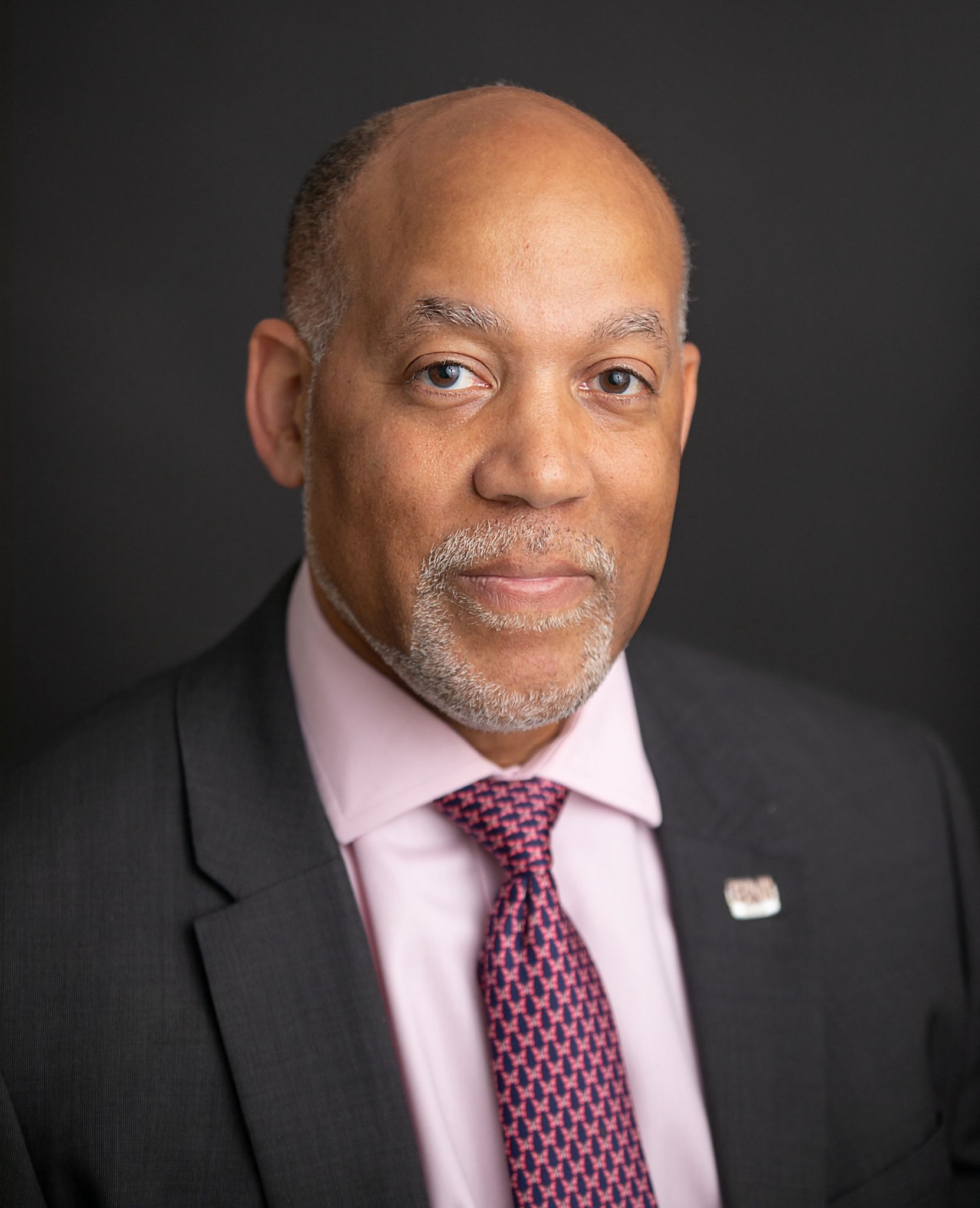
UKA Announces Appointment of Hon AMB Asari St-Hill Bahamas/atlantian as Chief of Staff to Reigning Monarch Emperor Solomon Winning
The United Kingdom of Atlantis (UKA) proudly announces the appointment of *Honorable Ambassador Asari St-Hill, A Bahamas/atlantian* as *Chief of Staff* to the Reigning Monarch, *Emperor Solomon Winning*. The official appointment ceremony was conducted on February 1st, 2026, and marked with the presentation of an Appointment Certificate (UKA 001 -1/2026).
Key Details of the Appointment
– *Hon AMB Asari St-Hill, A Bahamas/Atlantian* has been entrusted with the prestigious role of Chief of Staff, to serve the Reigning Monarch under the UKA GLOBAL ADMINISTRATOR TO UKA ROYAL THRONE of Emperor Solomon Winning, the sovereign of the United Kingdom of Atlantis.
– The appointment signifies a strategic enhancement of the monarch’s administrative and operational capabilities, aligning with the empire’s vision of efficient governance and global humanitarian leadership.
– The certificate of appointment bears the *Royal Seal of the Empire* and the endorsement of *EMP Noblis Solomon Winning*, affirming the legitimacy and authority of the designation.
Role of the Chief of Staff…👇
The Chief of Staff will be responsible for:
1. Managing the day-to-day operations of the monarch’s office.
.2. Act as Principal Aid to the Reigning Monarch and coordinates activities of staff.
3. Serves as one of the confidence to the Reigning Monarch.
4. Organised Reigning monarch appointment, meetings and engagement.
5. Review, vet documents, speaches, correspondence intended for The Reghning Monarch.
6. The Chief of Staff shall work and take instructions from the Global Administrator to the Throne in order to strengthen the entire administration of the Reigning Monarch in order to position UKA as the largest Empire in modern history.
Emperor Nobiliis Solomon Winning is the transformative leader of the United Kingdom of Atlantis, driving innovative projects in finance, humanitarian efforts, and global development. His reign focuses on merging traditional monarchical values with modern technological advancements, exemplified by initiatives like the ATC digital currency.
The United Kingdom of Atlantis (UKA) is a sovereign entity dedicated to fostering global unity, humanitarian progress, and financial innovation. It operates under a regal framework that blends imperial tradition with futuristic economic strategies, including asset-backed digital currencies and sustainable development programs.
_”The appointment of Hon AMB Asari St-Hill as Chief of Staff strengthens our administrative excellence and underscores our commitment to visionary leadership.”_
— *Emperor Solomon Winning*
The United Kingdom of Atlantis looks forward to achieving new milestones in governance and global impact under the stewardship of Emperor Solomon Winning and his esteemed Chief of Staff, Hon AMB Asari St-Hill.

Gen CG Musa Support Group Celebrates Grand Patron as 2025 Man of the Year
The Gen CG Musa Support Group has extended its warmest congratulations to its Grand Patron, His Excellency Gen. Christopher Gwabin Musa OFR (Rtd), the Honourable Minister of Defence, following his prestigious designation as the 2025 Man of the Year by OurNigeria News Magazine.
In a statement released to the press and signed by the Director General of the Support Group, Ibrahim Dahiru Danfulani, the Sadaukin Garkuwan Keffi/Betara Biu, the group hailed the recognition as a fitting tribute to a leader of exceptional character and accomplishment.

The statement illuminated the distinction of the award, emphasizing that it transcends the formal titles of “General” and “Minister.” It celebrated the core of the man himself—a leader renowned for his profound humility, incredible kindness, and genuine respect for all individuals. “People see the legacy and the title,” the statement noted, “but some of us are lucky to know the man behind it.”
The Support Group underscored that this accolade is a direct acknowledgment of the Minister’s exemplary personal conduct. It is an award not merely for the office he holds, but for the consistent humility he carries into every room and every interaction, a quality that has defined his leadership both in and out of uniform.
The honour also serves as a powerful validation of General Musa’s distinguished and unblemished track record of service to the nation. His decades of dedicated service within the military, which culminated in his ascension to the pinnacle as the Chief of Defence Staff prior to his retirement, are cited as the foundational pillars of his esteemed reputation.
The Gen CG Musa Support Group expressed profound gratitude to OurNigeria News Magazine for its discerning choice, noting that the award serves as a significant source of encouragement for the Honourable Minister. It reaffirms the nation’s appreciation for leadership that blends strength with compassion, strategic vision with unwavering integrity, and lofty achievement with grounded humanity.

This recognition solidifies General Christopher Gwabin Musa’s status not only as a defender of the nation but as a paragon of virtuous leadership, whose influence and example continue to inspire confidence and respect across Nigeria.
About the Gen CG Musa Support Group:
The Gen CG Musa Support Group is a collective dedicated to promoting the ideals and supporting the leadership of His Excellency Asiwaju Bola Ahmed Tinubu GCFR and His Excellency Gen. Christopher Gwabin Musa, celebrating their service and contributions to national peace, security, and unity.


-

 celebrity radar - gossips6 months ago
Why Babangida’s Hilltop Home Became Nigeria’s Political “Mecca”
-

 society6 months ago
Power is a Loan, Not a Possession: The Sacred Duty of Planting People
-

 Business6 months ago
Batsumi Travel CEO Lisa Sebogodi Wins Prestigious Africa Travel 100 Women Award
-

 news6 months ago
THE APPOINTMENT OF WASIU AYINDE BY THE FEDERAL GOVERNMENT AS AN AMBASSADOR SOUNDS EMBARRASSING