
society
COVID-19: Buhari’s Ministers Divided Over Cancellation Of NIN Registration

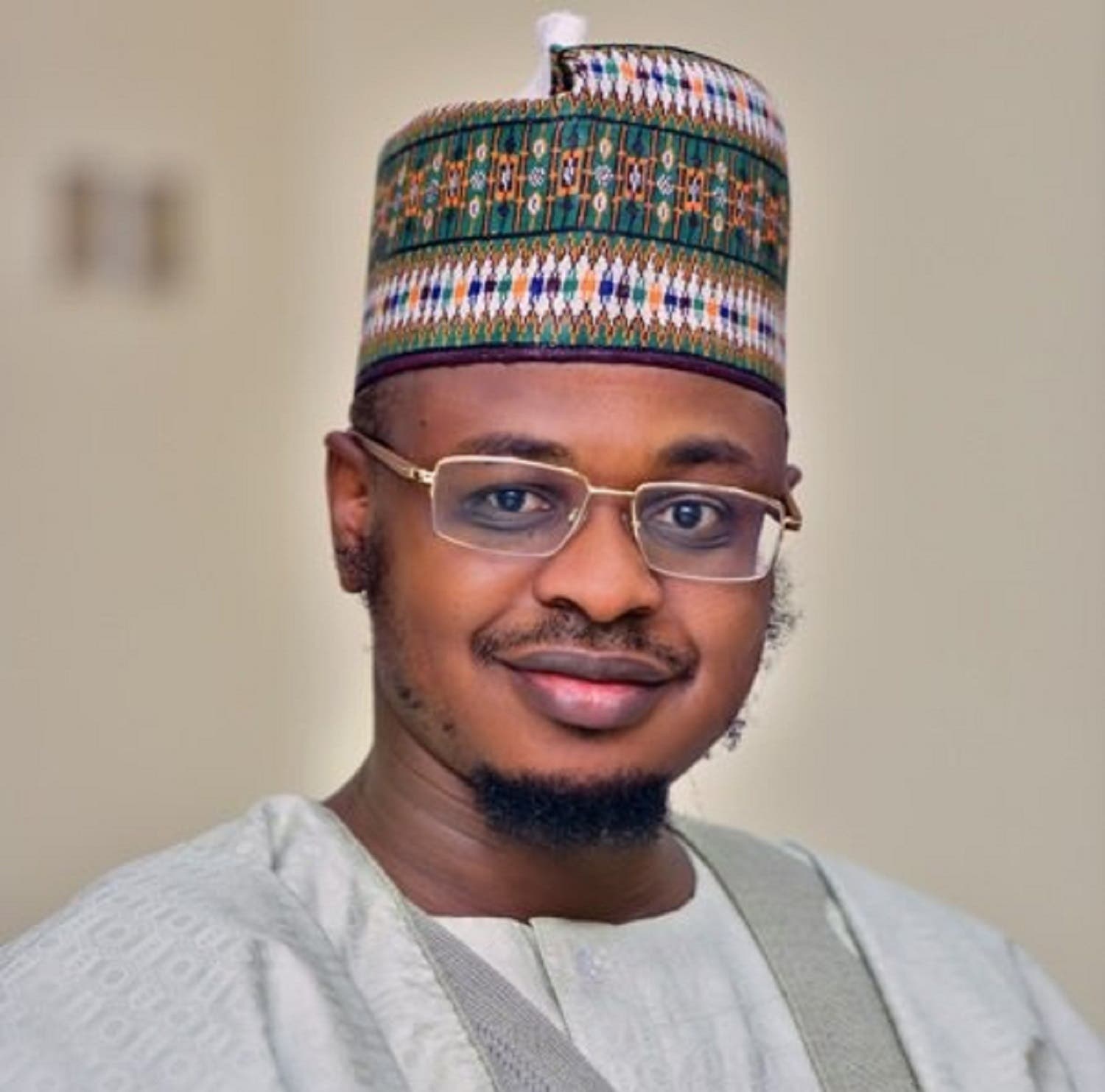
The ongoing National Identification Number (NIN) enrolment exercise in the midst of the deadly second wave of COVID-19 has caused a sharp division among President Muhammadu Buhari’s ministers.
A presidency source said the issue has thrown the ministers into opposing camps as majority of them want the exercise suspended while the other camp, led by Dr. Isa Ali Pantami, Minister of Communications and Digital Economy, wants the exercise to continue.
Since the commencement of the exercise, there have been concerns as crowds thronged the offices of the National Identity Management Commission (NIMC) and registration centres after the Nigerian Communications Commission (NCC) directed telecommunication companies to block SIM cards not registered with NIN.
The rush by applicants is intended to beat the February 9 deadline for registration, verification, and subsequent linking of NIN to Subscribers Identification Modules (SIM) cards. Crowds defied COVID-19 safety protocols such as social distancing and wearing of facemasks which, many fear, may trigger the spread of the virus.
On Monday, Olorunnimbe Mamora, the Minister of State for Health, said the Federal Government may suspend the exercise to avoid the spread of COVID-19 as a result of large crowds. He said the NIMC needs to reorder the whole process so as to ensure that crowds are well-managed and the people protected.
“I don’t feel good looking at the picture where people are gathered in multitudes. It’s like a super spreader event which we don’t like, but I’m also aware that the relevant ministry, which is the communications and digital economy, is looking at this,” Mamora said.
Speaking with our correspondent on Thursday, our source said the development and the rising cases of COVID-19 had caused a sharp division among the president’s cabinet.
“Right now, we have two camps in the cabinet. There is a camp which believes that the registration exercise is not a life and death matter and should be suspended to a reasonable period when COVID-19 would have gone or drastically reduced. This camp is in the majority.
“However, there is another camp which believes that the exercise should go ahead as the registration is crucial to curtailing the rising wave of insecurity in the country. This camp, led by the Minister of Communications, believes that the exercise can continue if people are orderly. I believe the president will review the situation and take appropriate decisions soon,” the source said.
When contacted, an official in the Ministry of Communications said the exercise could go ahead if the NIMC staff were proficient, noting that the enrollees take responsibility for their health and safety and security agents help maintain orderliness.
According to her, if the Independent National Electoral Commission (INEC) can conduct governorship elections in Edo and Ondo in the midst of the pandemic without hitches, then the NIMC should be able to do likewise.
Speaking on the development, Monday Ubani, a former Second Vice-President of the Nigerian Bar Association (NBA), said anyone saying the exercise should continue in the midst of the COVID-19 pandemic was unreasonable.
He said: “It doesn’t require any person to know that if any person wants this exercise to continue, in the light of the deadlier era we are now with COVID-19, it means the person is not reasonable.
“They are saying the exercise is for security, is it not about the security and safety of the lives of Nigerians?
“You are at the same time risking their lives by asking them to congregate and cluster in an environment where they will be exposed to the deadlier COVID-19 that is ravaging the entire world.
“Does it require anyone to know that that is unreasonable? How will any person even support such a thing?
“How will President Buhari support the idea that people should congregate and be made to be infected with the disease? Yet, every day, the government is reeling out guidelines, asking us to observe safety protocols. You have set up a Presidential Task Force that is looking into the matter of COVID-19 and they have given us briefings on what to do to observe protocols, at the same time, you are asking people to congregate and be exposed to the virus?
“The person asking Nigerians to go ahead with the exercise has an ulterior motive that is sinister. He is the only one that knows the reason why he is doing this.”
On its part, the Peoples Democratic Party (PDP), Lagos State chapter, said the development had clearly revealed division, lack of coordination, and internal crisis in the Buhari administration.
While declaring support for the registration, the party’s Publicity Secretary, Taofik Gani, however, said it shouldn’t be done in an atmosphere that may endanger the lives of Nigerians.
“To us in the PDP, it is just another reflection of the division, lack of coordination, and internal crisis in the government of President Muhammadu Buhari. That is why Nigerians have lost hope and have given up on this government. They have made things far worse for the populace.
“How can we have such disagreement in the government? The other time, Pantami said on television that the law on NIMC and the National Identity Card was passed 13 years ago and everybody must be registered within six months.
“The question he should have been asked is, when did he (Pantami) register? We in the PDP support the fact that people must be registered to curtail the influx of foreigners into the country but it must not be done punitively or targeted to punish Nigerians or put their lives at risk of this pandemic,” he said.
Matthew Ogunba, a lawyer and rights activist, said the exercise was to distract Nigerians from the failures of the Buhari administration.
He also said: “It is disheartening that ministers that should put heads together to solve Nigeria’s problems are working at cross purposes.
“The exercise should be suspended. No two ways about it. If you remember, the minister ordered the exercise during the period the National Assembly asked President Buhari to appear before them. It is just a ploy to distract Nigerians from the failures of the government. Nothing more,” he said.
However, Prof. Tunde Adeniran, a former Minister of Education, said the registration should continue but the government must find a solution to the surging crowds at the venues through the use of technology.
“My position on the issue is that it must continue because Nigerians have a way of trying to run away from challenges. When challenges occur, we are supposed to face them. This is the age of technology. We should be able to devise ways, in spite of the pandemic, to handle such simple issues as this one on registration. The people who are in charge should be resourceful and think through to find a solution to this challenge.
“That is the essence of their going to school. They should use their brains to find solutions to problems, not that they will see a problem, they run away and the problem remains. Nobody knows when COVID-19 will go. We are praying that, by the grace of God, it should go in the next one or two months.
“At the same time, there is no certainty about that. So, we will have to live our lives. We should not shut down our lives simply because we have this challenge. We should find solutions and I believe that Nigerians are creative enough to find solutions to any problem once they are determined to do so,” Adeniran said.








Gen CG Musa Support Group Celebrates Grand Patron as 2025 Man of the Year
The Gen CG Musa Support Group has extended its warmest congratulations to its Grand Patron, His Excellency Gen. Christopher Gwabin Musa OFR (Rtd), the Honourable Minister of Defence, following his prestigious designation as the 2025 Man of the Year by OurNigeria News Magazine.
In a statement released to the press and signed by the Director General of the Support Group, Ibrahim Dahiru Danfulani, the Sadaukin Garkuwan Keffi/Betara Biu, the group hailed the recognition as a fitting tribute to a leader of exceptional character and accomplishment.

The statement illuminated the distinction of the award, emphasizing that it transcends the formal titles of “General” and “Minister.” It celebrated the core of the man himself—a leader renowned for his profound humility, incredible kindness, and genuine respect for all individuals. “People see the legacy and the title,” the statement noted, “but some of us are lucky to know the man behind it.”
The Support Group underscored that this accolade is a direct acknowledgment of the Minister’s exemplary personal conduct. It is an award not merely for the office he holds, but for the consistent humility he carries into every room and every interaction, a quality that has defined his leadership both in and out of uniform.
The honour also serves as a powerful validation of General Musa’s distinguished and unblemished track record of service to the nation. His decades of dedicated service within the military, which culminated in his ascension to the pinnacle as the Chief of Defence Staff prior to his retirement, are cited as the foundational pillars of his esteemed reputation.
The Gen CG Musa Support Group expressed profound gratitude to OurNigeria News Magazine for its discerning choice, noting that the award serves as a significant source of encouragement for the Honourable Minister. It reaffirms the nation’s appreciation for leadership that blends strength with compassion, strategic vision with unwavering integrity, and lofty achievement with grounded humanity.

This recognition solidifies General Christopher Gwabin Musa’s status not only as a defender of the nation but as a paragon of virtuous leadership, whose influence and example continue to inspire confidence and respect across Nigeria.
About the Gen CG Musa Support Group:
The Gen CG Musa Support Group is a collective dedicated to promoting the ideals and supporting the leadership of His Excellency Asiwaju Bola Ahmed Tinubu GCFR and His Excellency Gen. Christopher Gwabin Musa, celebrating their service and contributions to national peace, security, and unity.
Baba Kuboye, Fela Kuti’s Nephew, Gains Global Spotlight as Grammys 2026 Beckon
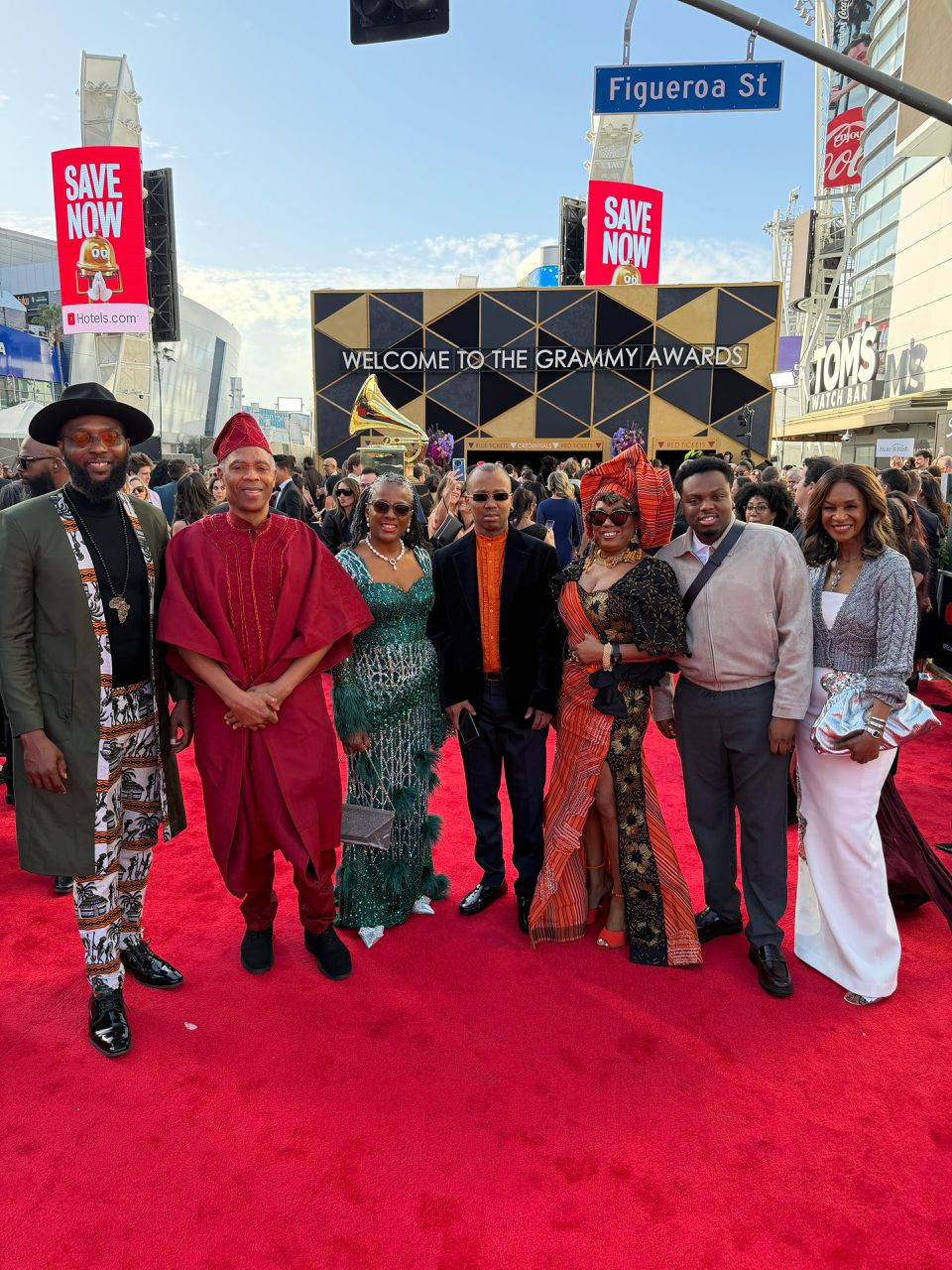
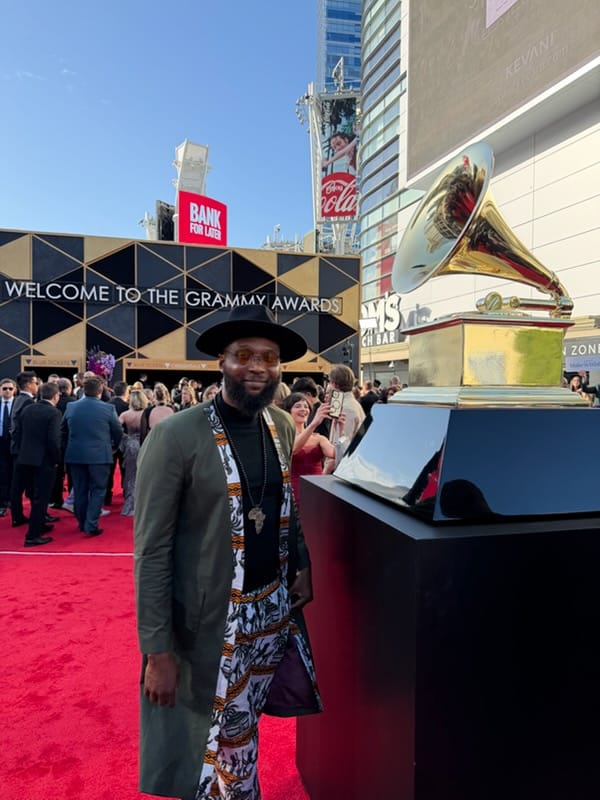
Baba Kuboye, a Grammy Award nominated Afrobeat artist and nephew of legendary Afrobeat pioneer Fela Anikulapo Kuti is fast cementing his place as one of the most dynamic voices in contemporary African music, with growing global attention ahead of the 2026 Grammy Awards.
The Lagos-born musician earned a Grammy nomination through his contribution to the Contemporary Blues Album by Antonio Vergara, a milestone that underscores his rising influence beyond Afrobeat into global music spaces. Son of respected Afro-Jazz musicians Fran and Tunde Kuboye, Baba’s artistic journey is deeply rooted in a rich family legacy that blends music, activism and cultural consciousness.
Raised in a vibrant musical household in Lagos, Baba Kuboye grew up surrounded by live performances at his parents’ famed jazz hub, Jazz 38, where he began performing at an early age. His close relationship with his uncle, Fela Kuti, profoundly shaped his sound and philosophy, inspiring a commitment to socially conscious music that speaks truth to power.
In 2023, Baba Kuboye reached a major career milestone when he showcased his EP, From Ikoyi With Horns, at the globally acclaimed SXSW Festival in the United States, performing alongside his 13-piece band. One of the standout tracks from the project, Ikoyi Boy, won Best Afrobeat Song at the Hollywood Independent Music Awards, further solidifying his international appeal.
Known for his innovative fusion of traditional Afrobeat rhythms with contemporary sounds, Baba Kuboye’s music addresses pressing social issues including racism, mental health, and inequality, echoing the protest-driven roots of Afrobeat while speaking to modern realities.
Beyond the stage, Baba Kuboye continues to shape the industry as the founder of Down 4 Whateva Entertainment, recognized as the first minority-owned independent Afrobeat label in the United States. Through this platform, he is championing cultural authenticity and creating opportunities for emerging African talents.
His work has received international exposure on platforms such as BET and MTV, alongside honours including the Stardust Award from North Texas Performing Arts.
As anticipation builds toward the Grammy 2026 season, Baba Kuboye stands as a powerful symbol of Afrobeat’s global evolution, rooted in heritage, driven by purpose and resonating across continents.
Fans can stream Afroverse: The Album by Baba Kuboye on all major digital music platforms and follow him on social media:
Instagram: @Babakuboye
X (Twitter): @Babakuboye
TikTok: @Babakuboye

Nigeria will be at peace when youths are gainfully employed
By Ifeoma Ikem
A philanthropist, Mr Calistus Chukwuedozie says Nigeria will be at peace when its youths are gainfully employed and in turn solve the problem of insecurity across the nation.
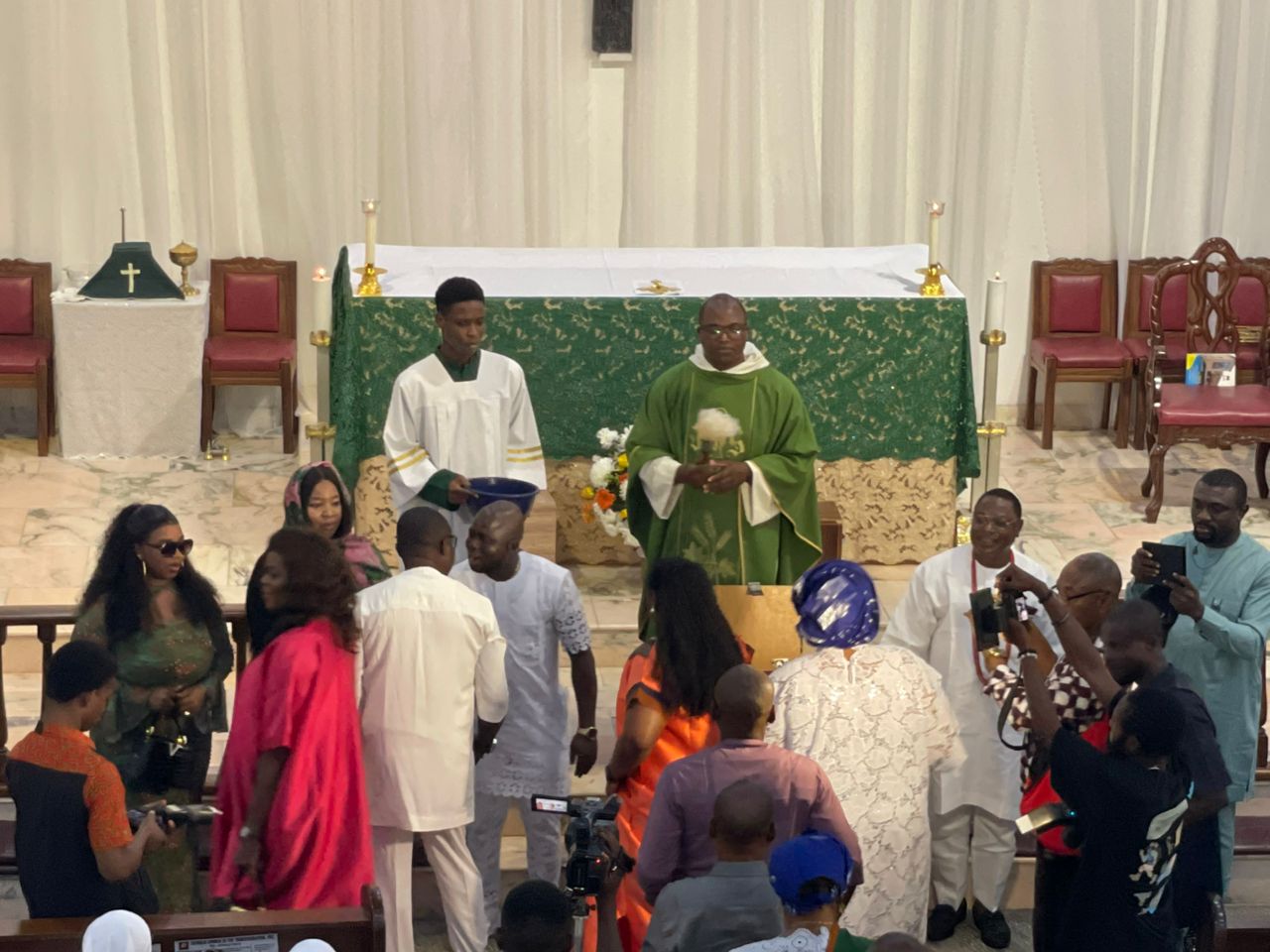
Chukwuedozie, a past President of the Rotary Club, Victoria, Lagos made the assertion at the memorial thanksgiving in honour of his late father, Pa Anthony Onuchukwu Chukwuedozie at Catholic Church of Transfiguration, VGC, Lagos,.
He said he observed first-hand how employment can help curb insecurity when he travelled to his home town Ihiala, Anambra state for his father’s burial.
He credited Onyema’s employment initiatives in Mbosi, Ihiala, where at least one person per household reportedly benefits from job opportunities within Air Peace as a major factor fostering calm, unity and economic stability in the area.
“I was at home for almost one month during my father’s burial ceremony and noticed that there was no report of kidnapping, robbery and criminal activities in my community.
“When I made enquiry, I was told that the Chairman of Air piece, Allen Onyema, gave over 250 youths of the community employments and promised them more jobs.
“With what he did for the community, he was able to solve the problem of insecurity and the youths listened to him when he advised them to shun crime.
“ I for one have more than 100 people under my employment.
“Families forced their bad children to give up crime and renounce it and many of them have turned new leaves.’’
He reiterated that if well to do people in each community in the South East or Nigeria at large should replicate what Allen Onyema did, every youth will be gainfully employed and nobody will be a willing tool in the hands of criminals.
`The government on their own should liaise with Banks to give soft loans to many people who want to start small scale businesses.
`Many of our youths have learnt one trade or the other, but have no money to set up their businesses.
If they can get access to soft loans for their businesses, the nation will be a greater and peaceful place do businesses.’’
Chukwuedozie, the CEO of MICCALLY AUTOS, who also spoke about the enduring values his father stood for said the man’s life journey was defined by principle, discipline and service to humanity.
He described his father as a man deeply rooted in integrity, adding that his father’s remarkable life as a soldier, teacher and farmer reflected both strength and nurture.
Beyond his career paths, Pa Chukwuedozie’s greatest legacy, according to his son, was his unwavering commitment to raising all seven of his children into accomplished academic and business professionals.
“In my ancestral home, Ihiala, my father was widely revered as a community leader whose counsel and character commanded respect.’’
He commended the Inspector General of Police for his efforts in ensuring stability and safety of all citizens.
“The peace I experienced during my stay at home was a direct result of sustained communal engagement and youth empowerment.
“I also advocate for broader government inclusion in education and skills acquisition programs for the youths as productive engagement remains one of the most effective tools against insecurity and social vices.’’
The memorial event drew tributes from notable guests, including Chief Edwin Eze Ogidigha of Oraifite, Chairman of Yamaha Sub-Saharan Africa who described Pa Chukwuedozie as a man whose influence extended far beyond his immediate family.
He praised the late patriarch for positively shaping generations through his character, discipline and wisdom.
He said that the remarkable achievements and values seen in his children stand as living proof of a life well lived.
A guest Onwa of idemili, Nnamdi Ifebi who spoke in the same vein on security said that the steps that the governor of Anambra State has taken to address the issue of security have also yielded positive results.
“What miscreants were doing before now, thinking that they were untouchable is now a thing of past. I commend the governor and security agencies for their good job.”
As prayers were offered and stories shared, the memorial thanksgiving became more than a remembrance.
It evolved into a celebration of legacy, community impact and the quiet power of a man who lived with honour.
In every tribute echoed a singular truth that Pa Chukwuedozie may have departed this world, but the principles he lived by will continue to walk boldly through the lives he touched.


-

 celebrity radar - gossips6 months ago
Why Babangida’s Hilltop Home Became Nigeria’s Political “Mecca”
-

 society6 months ago
Power is a Loan, Not a Possession: The Sacred Duty of Planting People
-

 Business6 months ago
Batsumi Travel CEO Lisa Sebogodi Wins Prestigious Africa Travel 100 Women Award
-

 news6 months ago
THE APPOINTMENT OF WASIU AYINDE BY THE FEDERAL GOVERNMENT AS AN AMBASSADOR SOUNDS EMBARRASSING