
news
Brace up for more prosperous years ahead, Abiodun tells Ogun workers


Brace up for more prosperous years ahead, Abiodun tells Ogun workers
By Olorunfemi Adejuyigbe
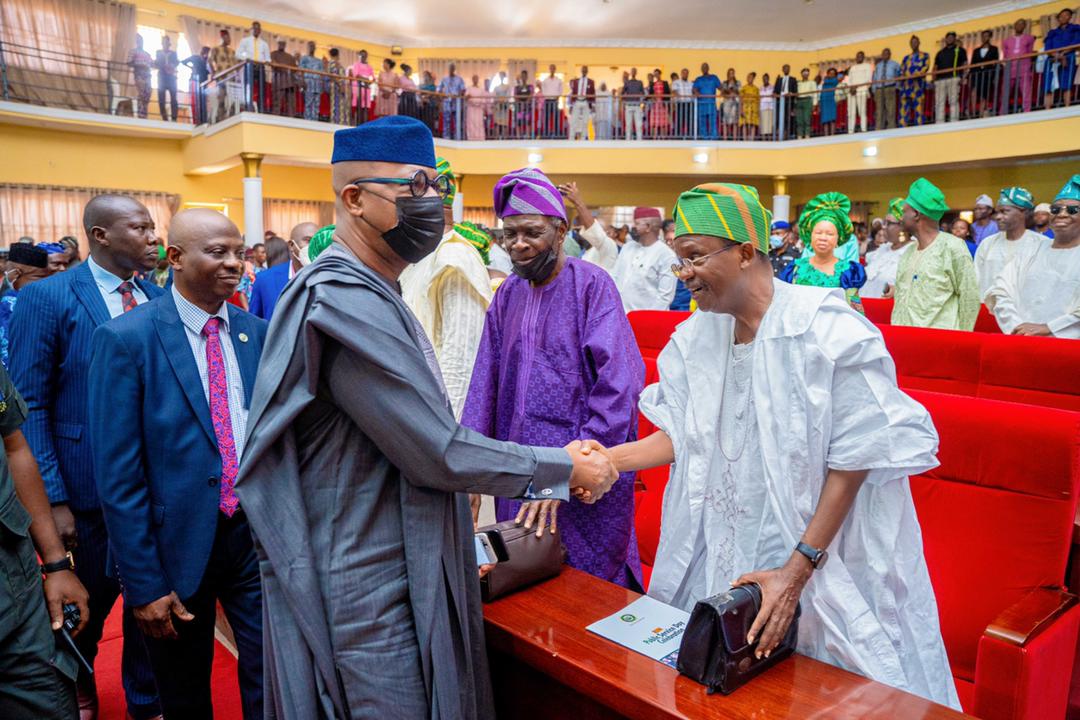
Ogun State Governor, Prince Dapo Abiodun, has charged the state workforce to brace up for more prosperous years ahead as his government is set to conduct the 2021/2022 promotional exercise.
Speaking at the 2022 Public Service Day Celebration, held at the Oba’s Complex, Oke-Mosan, Abeokuta, Prince Dapo Abiodun acknowledged the great contributions of the State workers, noting that his administration will continue to improve on their welfare.
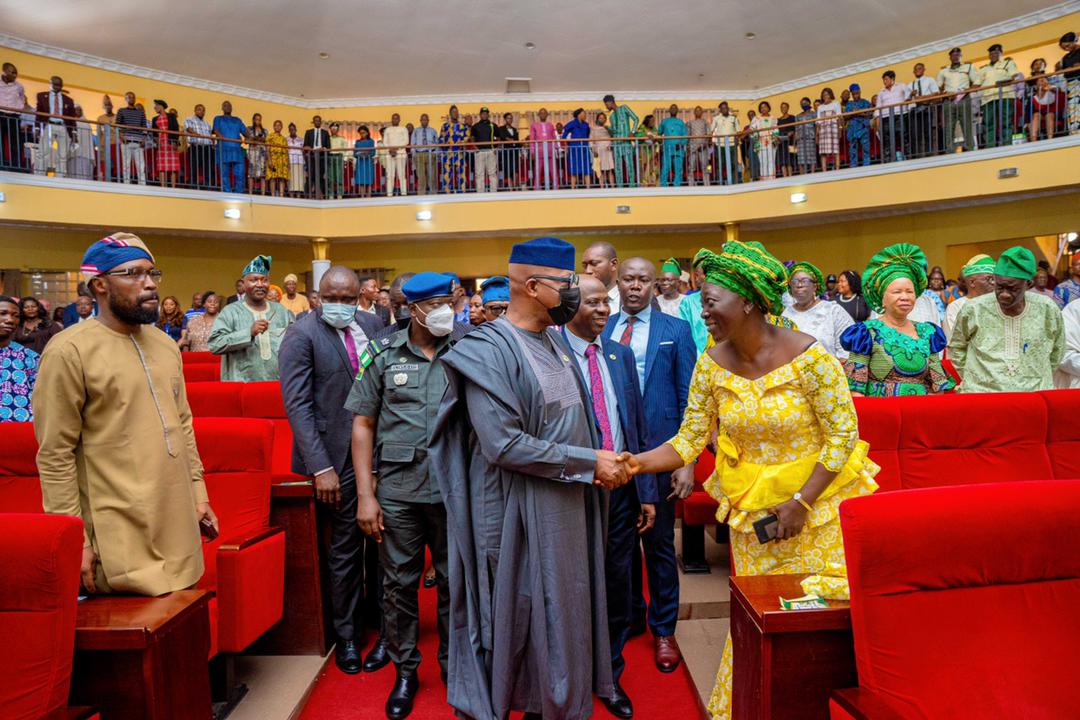
Urging the workers to exercise patient, Abiodun said the government would soon address all the issues that has to do with the welfare of workers that will improve the economic capabilities of the state.
He thanked them for their support and resilience since the inception of the current administration, stating that the state generated over N100bn as Internally Generated Revenue (IGR), which was made possible through the cooperation and collaboration of the workforce.
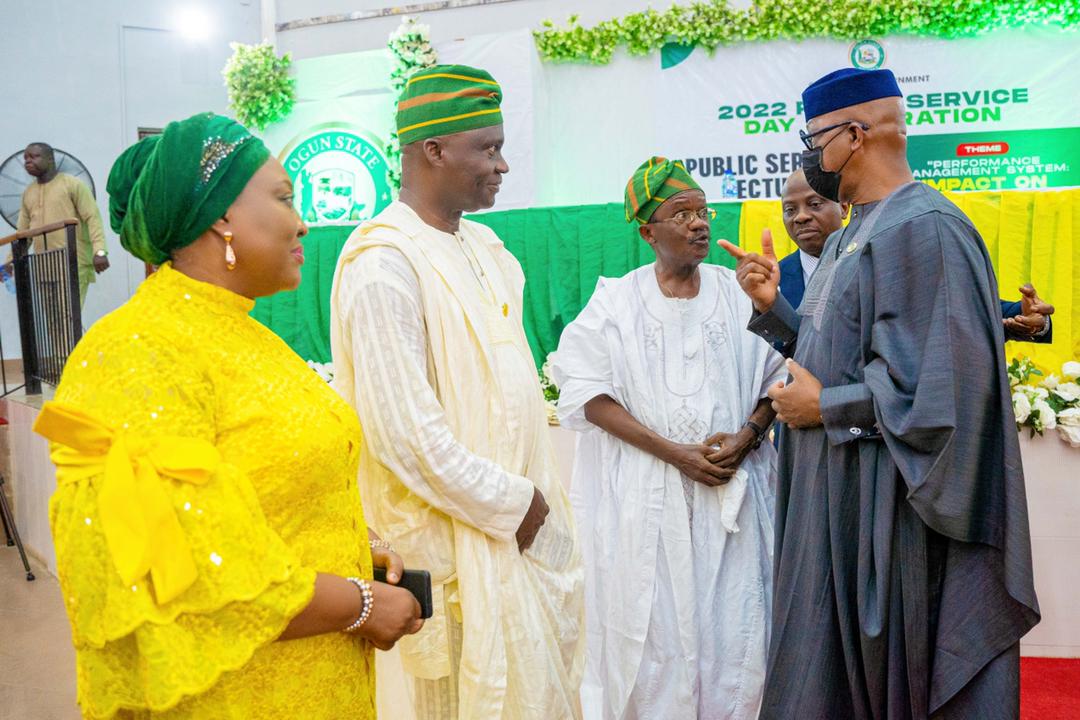
While assuring the workers of prompt payment of salaries and improve welfare packages, governor Abiodun informed that government has resolved to make all appointments to higher positions in the ministry, Department and agencies, MDAs on merit in order to achieve efficiency and professionalism in accordance with the objectives of the the founding fathers.
The man at the helm of affair at the gateway state charged the workers to embrace diligence and efficiency as their watchword and be in tune with lastest technology for more effective and efficient job delivery.
In his goodwill message, Speaker of the House of Assembly, Rt. Hon. Olakunle Oluomo, while congratulating the State workers, acknowledged their service which has made them the best in the country, urging them to keep the flag flying.
” I want to congratulate you and wish you well. I am proud of you. You are the best in the country and please, continue to be the best”, he counselled.
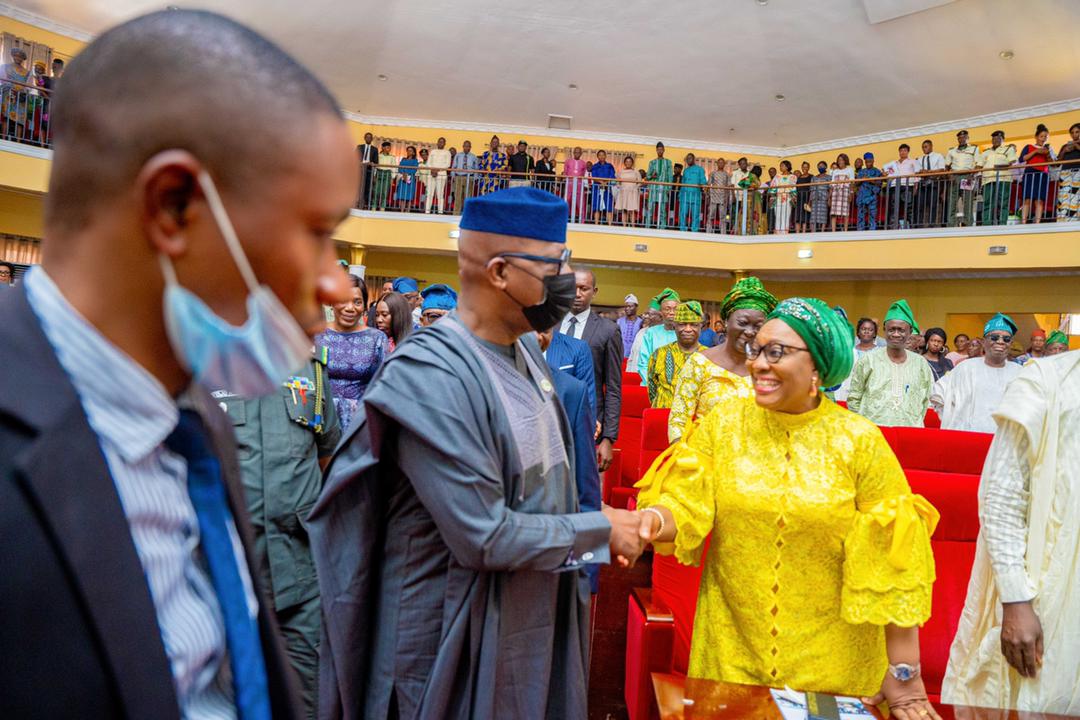
In his welcome address, the Head of Service, Dr. Nafiu Aigoro, noted that the workers are the bridge between government and the governed and have contributed to the development of the State.
Appreciating the State governor for providing the necessary ambience in work places, the Head of Service stated that this has led to efficient service delivery, calling on them not to relent but work towards improving their professionalism.
He said the event was to reappraised past performances and strategies for the future, calling on the workers to take advantage of the programme to evolve new ways to effectively carry out their duties.
Former Head of service, Chief Babatunde Osunkoya, in his good will message, noted that the State was noted for excellence in all human endeavours and stressed the need for the workers maintained the standard.
In a lecture titled “Performance Management System: Implication on Productivity”, the guest lecturer, Mr. Alex Taiwo, stated that it was the duty of management to ensure that the activities of the workers are in tandem with the wiser objectives of government.
He said performance management system apart from providing platforms for the employees to perform, helps in fostering open dialogue and communication between the government and the governed.
Speaking on the purpose of performance management system, Mr. Taiwo posited that it provide feedback, determines individual training needed and help overall performance and productivity, while the benefits includes fairness in promotion process, boost motivation and general staff turn over as well as accountability and efficient service delivery.





news
President Tinubu in Turkey: Guard of Honor and Strategic Agreements Signal New Era in Bilateral Relations
By Prince Adeyemi Shonibare
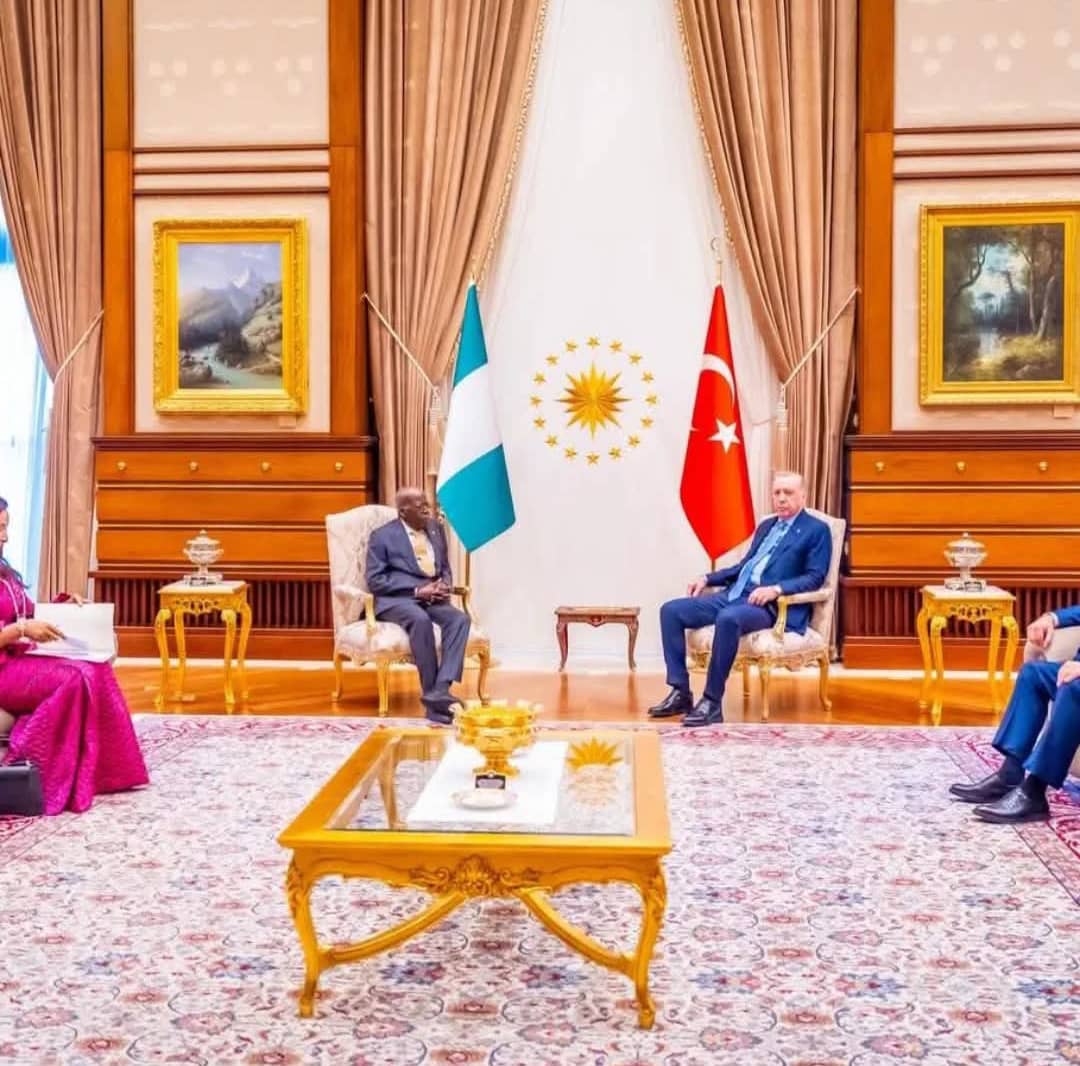
President Bola Ahmed Tinubu, GCFR, was accorded a full guard of honor during his official state visit to Turkey, a ceremonial reception reserved for world leaders and a strong signal of the respect Nigeria commands on the global stage.
The ceremony, held at the Turkish Presidential Complex in Ankara, featured military pageantry, national anthems, and formal protocol before high-level bilateral talks commenced.
The Presidency confirmed that President Tinubu briefly stumbled due to a camera cable while proceeding to the presidential lodge but stood up immediately and continued his engagements without interruption, stressing that the incident had no impact on the visit or his health.
More importantly, the visit delivered substantive diplomatic and economic outcomes. During talks with Turkish President Recep Tayyip Erdoğan on January 27, 2026, Nigeria and Turkey signed nine cooperation agreements and memoranda of understanding, covering military cooperation, higher education, diaspora policy, media and communication, halal accreditation, diplomatic training, and the establishment of a Joint Economic and Trade Committee (JETCO).
At a joint press conference, President Tinubu emphasized the need to deepen cooperation in security, trade, and economic development, while President Erdoğan reaffirmed Turkey’s support for Nigeria’s fight against terrorism and commitment to strengthening strategic ties.
With Turkey’s strengths in defense technology, intelligence, education, and industrial capacity, the agreements open new opportunities for technology transfer, security collaboration, trade expansion, and human capital development.
In essence, the Turkey visit stands as a diplomatic success, defined not by a fleeting moment, but by honor, respect, and concrete agreements that advance Nigeria’s security, economy, and international standing.
By Prince Adeyemi Shonibare
Preface: The Necessity of Historical Context
Every generation seeks its heroes. In music, this instinct often manifests through comparison—an exercise that frequently reveals more about contemporary taste than historical contribution. In recent years, public discourse, amplified by social media, has juxtaposed Fela Aníkúlápó Kuti with global Afrobeats icons, most notably Wizkid, provoking the recurring question of “greatness” in Nigerian music.
This essay does not diminish the accomplishments of Nigeria’s contemporary stars, whose global visibility is unprecedented. Rather, it offers a scholarly contextualization—one that distinguishes between musical origination and musical succession, and between cultural architecture and commercial dominance—while situating Fela Aníkúlápó Kuti firmly within the category of historical inevitability.
The Problem with Simplistic Comparison
Comparing Fela Aníkúlápó Kuti with contemporary Afrobeats performers is, by scholarly standards, inherently flawed.
Fela’s work transcended performance. He engineered an entire musical and ideological system, fused political philosophy with sound, and permanently altered the trajectory of African popular music. His output represents cultural authorship, not entertainment calibrated to market demand. Fela’s music is timeless precisely because it was never designed to be fashionable.
A Yoruba proverb captures this distinction with enduring clarity:
“Ọmọ kì í ní aṣọ púpọ̀ bí àgbà, kó ní akísà bí àgbà.”
A child may own many clothes, but he cannot possess the rags of an elder.
The proverb is not dismissive. It is instructive. It speaks to accumulated depth—experience earned, systems built, and legacies forged through time rather than trend.
Musicians and Artistes: A Necessary Distinction
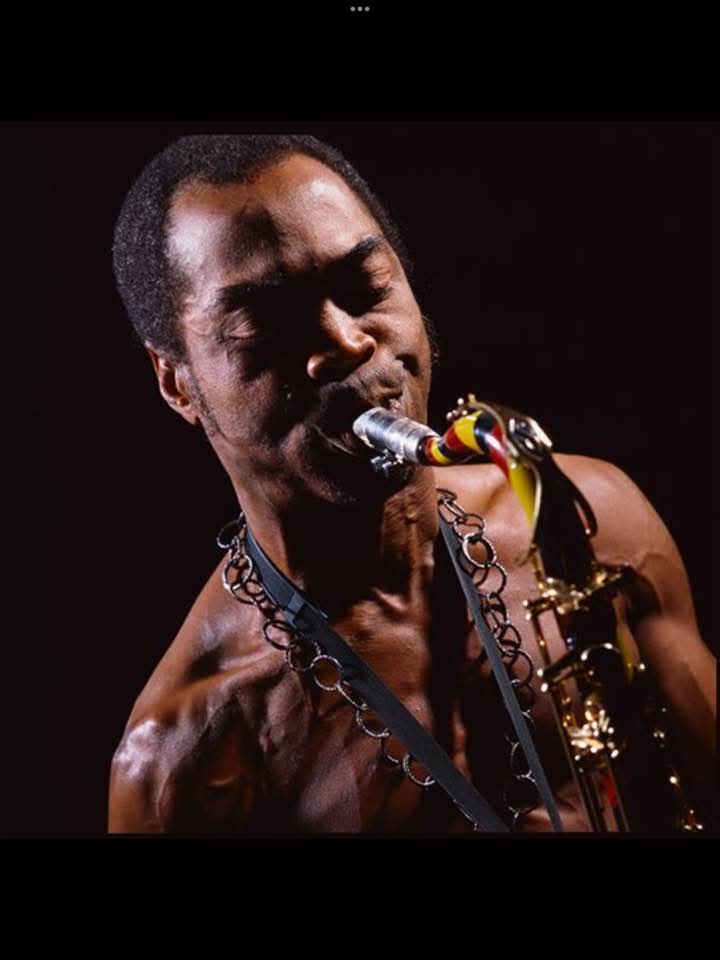
A rigorous analysis requires conceptual precision. Fela Aníkúlápó Kuti was a musician in the classical and intellectual sense: a composer, arranger, bandleader, employer of musicians, multi-instrumentalist, theorist, and cultural philosopher. His work demanded mastery of form, orchestration, ideology, and discipline.
Fela composed extended works, trained orchestras, performed entirely live, and embedded African political consciousness into rhythm, harmony, and structure.
By contrast, many contemporary stars—though exceptionally gifted and globally successful—operate primarily as artistes: interpreters of sound whose work prioritizes studio production, performance aesthetics, and commercial reach. This is not a hierarchy of worth, but a distinction of function. Fela’s music demanded study and confrontation; contemporary Afrobeats prioritised accessibility, pleasure, and global circulation—often without courting antagonism.
Afrobeat: An Ideological Invention
Afrobeat, as conceived by Fela, was not merely a genre. It was an ideological framework. Jazz, highlife, Yoruba rhythmic systems, call-and-response traditions, and political chant were fused into a resistant, uncompromising form.
Modern Afrobeats—by Wizkid, Burna Boy, and others—are adaptations and descendants, not replicas. They have expanded Africa’s global cultural footprint, but expansion does not erase origination. Fela’s Afrobeat remains the undiluted prototype upon which contemporary success rests.
Enduring Legacy Beyond Mortality
Fela Aníkúlápó Kuti passed in 1997, yet his influence has intensified rather than diminished. His legacy is evidenced by:
– Continuous academic study across global universities.
– International bands, many formed by people not alive at the time of his death, performing his works.
– FELABRATION, now a global annual cultural event.
– Broadway and international stage adaptations inspired by his life and music.
– Lifetime achievement and posthumous recognition by the Grammy Awards.
– Cultural centres, festivals, and scholarly conferences generating lasting intellectual and economic value.
This constitutes cultural permanence, not nostalgia.
Reconsidering Wealth and Sacrifice
Measured monetarily, Fela was not among the wealthiest musicians of his era. His radicalism came at an immense personal cost. He was beaten repeatedly. His mother, Funmilayo Ransome-Kuti, was killed. His home was burned. Original artistic archives were destroyed during state-sanctioned violence by unknown soldiers, even though history records who authorised the actions.
Yet Fela gave voice to generations—from Ojuelegba to Mushin, Ajegunle to Jos, Abuja, and even the privileged enclaves of today’s ọmọ baba olówó. He toured globally with an unusually large band long before satellite television or social media could amplify his reach.
Like Wole Soyinka and Chinua Achebe, Fela’s wealth exists beyond currency. It resides in influence, citation, adaptation, and endurance.
National and Global Recognition
Fela received a state burial in Lagos—an extraordinary acknowledgment from a military government he relentlessly criticised. Nations rarely honour dissenters so formally.
Globally, his stature aligns with figures such as James Brown, Elvis Presley, and the Rolling Stones—artists whose music reshaped identity, politics, and social consciousness.
The Crowned Princes: Wizkid and the Ethics of Reverence
Nigeria’s modern stars—Wizkid, Burna Boy, 2Face Idibia, Davido, Tiwa Savage, Tems, Olamide, among others—have achieved extraordinary global success. They are wealthier, more mobile, and more visible internationally than previous generations, and they deserve their accolades.
Wizkid, in particular, has consistently demonstrated reverence rather than rivalry toward Fela Aníkúlápó Kuti.
Femi Aníkúlápó Kuti has publicly stated:
“Wizkid loves Fela like a father.”
Wizkid has repeatedly supported FELABRATION, never demanding performance fees. The only times he has not appeared were occasions when he was not in the country. He has remixed Fela’s music, bears a Fela tattoo on his arm, and openly acknowledges Fela’s primacy.
A senior associate and long-time friend of Wizkid has affirmed that Wizkid adores Fela, would never equate himself with him—“in this world or the next”—and that recent tensions were reactions to provocation rather than assertions of equivalence.
This distinction matters. Wizkid’s posture is one of inheritance, not competition.
Seun Kuti and the Burden of Legacy
Seun Kuti is a musician of conviction and lineage. Yet relevance is best secured through original contribution rather than reactive comparison. Fela’s legacy does not require defence through controversy; it is already settled by history.
As William Shakespeare observed:
“The fault, dear Brutus, is not in our stars,
But in ourselves, that we are underlings.”
—Julius Caesar
The weight of inheritance can inspire greatness or provoke restlessness. History rewards those who build upon legacy, not those who contest it.
The Songs That Made Fela Legendary
Among the works that cemented Fela’s immortality are:
– Zombie
– Water No Get Enemy
– Sorrow, Tears and Blood
– Coffin for Head of State
– Expensive Shit
– Shakara
– Gentleman
– Teacher Don’t Teach Me Nonsense
– Roforofo Fight
– Beasts of No Nation
These compositions remain sonic textbooks of resistance.
Fela in the Digital Age
Had Fela lived in the era of social media, his voice would have resonated far beyond Africa. His music would have found kinship among global movements confronting inequality, oppression, and social injustice.
“Music is the weapon.”
—Fela Aníkúlápó Kuti
Weapons, unlike trends, endure.
Placing Greatness Correctly
Fela Aníkúlápó Kuti’s greatness does not require comparison. He is the great-grandfather of Afrobeat—the musical and cultural architect who cleared the roads upon which today’s Afrobeat princes now travel.
Honouring contemporary success does not diminish historical achievement. To understand Nigerian music’s global relevance is to understand Fela. History, when read correctly, is both generous and precise.
Prince Adeyemi Shonibare writes on culture, music history, and African creative industries. He is a media and events consultant based in Nigeria.

Years after a petition alleging abuse of office, intimidation and institutional misconduct was submitted against operatives of the Economic and Financial Crimes Commission, Hajia Mazangari has drawn public attention to the matter once again, expressing concern over what she described as prolonged institutional silence and the absence of any known resolution.
The controversy arose from a bank draft transaction involving a sum running into several millions of naira, reportedly issued in the name of “EFCC Clients Account” and handed over to one Habibu Aliyu.
According to the account contained in the petition, Hajia Mazangari was later contacted by her bank and informed that an EFCC operative allegedly approached the bank, requesting that the draft earlier issued by her be cashed into another personal account.
The bank reportedly declined the request, insisting that the draft could only be re-issued in the name of a new beneficiary in compliance with established banking regulations. Attempts by Hajia Mazangari, through her solicitor, to retrieve the original bank draft allegedly resulted in hostility from Habibu Aliyu and Ruqqaya Ibrahim, with the situation escalating into what the petition described as sustained malice, intimidation and humiliation.
“It is as a result of this unending malice, torture and humiliation that we passionately plead to you, sir, to save our client who has been run aground by people with personal vendetta disguising as public officers,” the petition read.
In a further petition dated 14 January 2020 and addressed to the then Attorney-General of the Federation and Minister of Justice, Abubakar Malami, through her counsel, Ibrahim Salawu, Esq., Hajia Mazangari alleged that Habibu Aliyu (a former staff of the EFCC), Ruqqaya Ibrahim (a serving EFCC staff), Mohammed Goje (a serving EFCC staff) and one Mustafa Gadanya (a former staff of the EFCC) had, on various occasions, stormed her family residence in Kaduna.
According to the petition, copies of which were obtained by our correspondent in Abuja, the individuals allegedly accused her, her son and his associates of being involved in a pension scam, insisting that they were “neck-deep” in the alleged fraud and would be dealt with and made to face prosecution.
Hajia Mazangari maintained that the accusations were unfounded and that the repeated visits amounted to intimidation and abuse of authority.
In a related development at the time, counsel to Ahmed and Fatima Mazangari, Barrister Ibrahim Salawu, also wrote to the Chief Judge of the FCT High Court seeking the reassignment of their case to another court, following the elevation of the presiding judge to the Court of Appeal and the resultant irregular sittings of the court.
Despite the seriousness of the allegations contained in the petitions, efforts to obtain an official response from the EFCC at the time reportedly proved abortive.
Years later, Hajia Mazangari maintains that the institutional silence that greeted her complaints has persisted. She faulted the former Chairman of the EFCC, Ibrahim Magu, for allegedly failing to address the concerns raised in the petitions.
She further accused the former Attorney-General of the Federation, Abubakar Malami, of failing to intervene or cause a review of the matter despite being formally notified.
According to her, the situation has not changed under the current leadership of the EFCC, which she claims has continued in what she described as the same pattern of silence and inaction, leaving the issues raised unresolved several years after the petitions were submitted.
She also raised concerns over the continued service of an officer identified as Mohammed Goje at the EFCC office in Gombe, noting that other officers of similar standing were reportedly dismissed in the past for corrupt practices. She questioned why no publicly known disciplinary or investigative outcome has emerged from her complaints.
Hajia Mazangari stressed that her decision to speak out again is not based on any fresh incident, but on the need to draw public attention to an unresolved matter which, in her view, underscores broader concerns about institutional accountability. She called on relevant authorities and oversight bodies to revisit the petitions and ensure that the issues raised are conclusively addressed in accordance with the law.
When contacted for comments on the allegations and the renewed public attention surrounding the matter, the Economic and Financial Crimes Commission had not responded as at the time of filing this report.
However, the Commission is hereby afforded the right of reply and is free to present its position or clarifications on the issues raised.


-

 celebrity radar - gossips6 months ago
Why Babangida’s Hilltop Home Became Nigeria’s Political “Mecca”
-

 society6 months ago
Power is a Loan, Not a Possession: The Sacred Duty of Planting People
-

 Business6 months ago
Batsumi Travel CEO Lisa Sebogodi Wins Prestigious Africa Travel 100 Women Award
-

 news6 months ago
THE APPOINTMENT OF WASIU AYINDE BY THE FEDERAL GOVERNMENT AS AN AMBASSADOR SOUNDS EMBARRASSING