
Politics
Osun guber and Oyetola’s fulfilled mandate

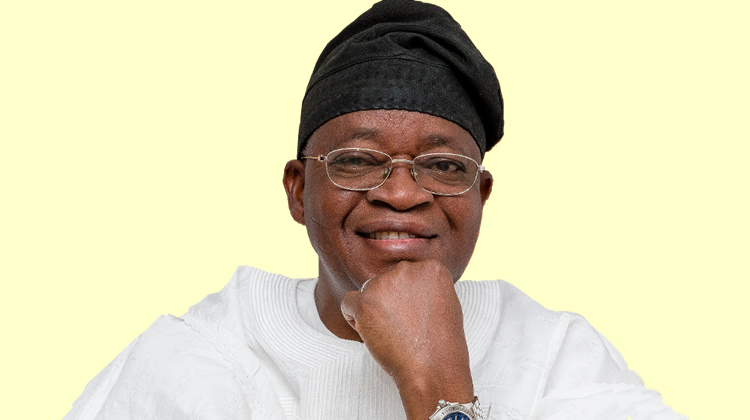
Osun Guber and Oyetola’s fulfilled mandate
By Abiodun Komolafe
“You (Governor Oyetola) are doing well. You will complete this term and do another term.’
– HRM Oba Munirudeen Lawal, Timi of Ede
As a young boy growing up, back then in the village, under the tutelage of his paternal grandmother, yours sincerely was treated to the fact that ‘promises are sacred obligations, which must be fulfilled.’ Grandma taught me that ‘failure to make good one’s promises always end up impugning the character profile of the defaulter’; and that ‘promises made good confer on the promisor the Omoluabi integrity.’ After all,‘a ri se la ri ka; a ri ka baba iregun’ (what you do today could be the ‘game changer’ in the nearest future). Much later in life, especially, with my appointment as the pioneer Administrative Secretary of one of Nigeria’s foremost sociocultural organisations, the Afenifere Renewal Group (ARG), my eyes opened to the fact that ‘iyan ogun odun a maa jo ni lowo’ (what goes around comes around).
Well, while my little contributions to Nigeria’s sociocultural emancipation are already being documented for future use, the general belief is that people can do something and get away with it. But it is not so with the society! Why? There is a way the society chronicles events; then tells those that follow. And the cycle continues!
A promise fulfilled is a psychological attribute and it is inborn. It is a habit, not something you do fortuitously. Most importantly, it is a standard measure of the quality of character. While the reliability or otherwise of a promise is testable, based on antecedents, the psychology of the followership is also something that builds trust through precedents and antecedents of events and social happenings. The other loud truth is that the people reckon with the ‘now’ more than what has happened. Yes, it doesn’t have to be in the management of a government’s affairs because a man like Gboyega Oyetola, the incumbent governor and the All Progressives Congress (APC) candidate in the July 16, 2022 Osun governorship poll, already has an edge in that area. For the records, the Obafemi Awolowos of this world also started that way! But then, this is a disadvantage to the opposition. For instance, though the Peoples’ Democratic Party (PDP) has a dearth of good things that could be established, what has added to its despair is that the now-drained and docile opposition has no sellable products with which to woo the electorate again, having been out of power for 12 years.
Beyond the pall of politics, the last four years as Osun governor has shown Oyetola as a leader who understands the complexity of the issues at stake and how to confront all the stubborn situations that have hitherto resisted remedy. On assumption of office, one of his first tasks was the review of the education policy which, as we all know, affects not only the present but also the future of the State. It is about the children! Prior to his inauguration, parents were unhappy about certain policies enacted by the immediate past administration; as such, were groaning. But the governor courageously spoke to those things which, from all indications, had the propensity to become a monumental embarrassment to the elite.
Never a frivolous manager of men and materials, Oyetola initiated a move that recognised the backlog of the pending welfare packages for the State workers and took care of them. Now, a situation whereby civil servants got promoted without cash-backing, thereby leaving them on the same salary scales for years, has become a thing of the past. Good to learn that he has also keyed into the melodious tune of the minimum wage payment. Quite interestingly, not every state is paying it, even as we speak! Still, the governor is paying full salaries! Unarguably, things would have been terrible, had workers’ monthly salaries not been paid, or paid in half. Of course, that Oyetola has succeeded in building integrity profile is a political capital! That the workers believe in the governor as a promise fulfiller is a testament to dream! That he has been able to weather the storm of paucity of funds to provide basic amenities for the people, even employed more hands into the State’s civil service attests to the character of this indefatigable administrator. That is why the civil servants, for example, will remain with him. Despite all efforts by some people to pull them away, they have refused.
Typical of him, Oyetola has in the last four years stayed focused, taking his time to proffer solutions to problems as they come. Instead of running upandan, banking on the ravenous culture of uncertainty, or embracing the theatrics of a disappointing search for disinterested international investors, this sure and better candidate opted to stay back at home, defining concrete objectives, raising the vision, and showing to the world that a sustainable pathway to development is possible. During the period under review, more than 2000 kilometres of roads have either been constructed or reconstructed; with a promise to do more, if re-elected. For most of these roads like the 13.15km Ada-Igbajo and the 20km Ejigbo–Ara-Oje-Ede, even the 16.55km Osogbo-Kelebe-Iragbiji, it has been a case of ‘governments come, governments go, but these roads remained unattended to’; until he came in and got them fixed! Impliedly, those who are yet to get their share of the goodies are sure candidates for ‘awa lo kan’ slogan.
Oyetola’s passion for the Health sector is such that, at the rural areas, residents should have the best of medical services. Equally, his approach to the Ilesa water project is like bringing water out of the rock for which the ancient town and its environs will never remain the same. Added to these is his promise to improve on the security situation of the State which, in any case, is not doing badly, presently. The rise in the number, and monthly stipends of OYES cadets are also worthy of mention, because it takes money to take care of all that. With the zeal which the governor is approaching the needs of the Agriculture sector, what stops ‘Cocoa House’ from being erected in Osun before the expiration of his second term in office? Is it any wonder Oyetola is the man to beat, any day?
The hallmark of a good leader is his ability to realize that change begins with selflessness and sacrifice; that discipline is very germane to effective leadership; and that political process gets corrupted when unfettered pursuit of money becomes a way of life. Had the Oyetola-led Administration left the Flyover Bridge at Olaiya in Osogbo undone, another government would, someday, have done it, by which time the cost and allied implications will have increased. It will also affect its quality. In other words, that the governor has done one within his first tenure means he is able to do another.
Osun governorship election is just days away! Won’t reelecting Gboyega Oyetola to pilot the affairs of Osun for the next four years be the best thing to happen to the State? Or, will cutting the nose to spite the face as a way of resolving political differences be found to work wonders? From all indications, hasn’t Osun State gone too far to look back?
May the Lamb of God, who takes away the sin of the world, grant us peace in Osun State!
KOMOLAFE wrote in from Ijebu-Jesa, Osun State ([email protected])





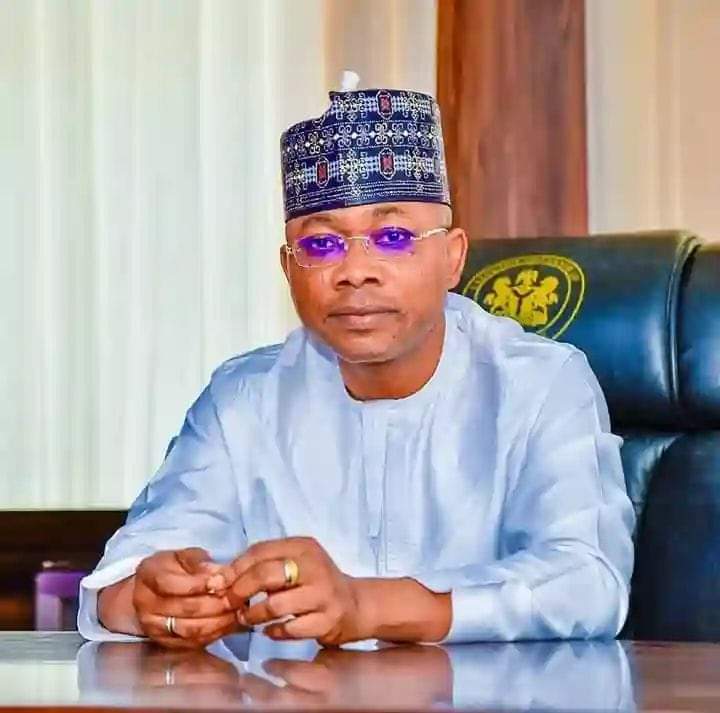
Kogi’s Quiet Shift: Reviewing Governor Ododo’s First 24 Months in Office
By Rowland Olonishuwa
On Tuesday, Kogi State paused to mark two years since Alhaji Ahmed Usman Ododo took the oath as Executive Governor. Across government circles, community halls, and everyday conversations, the anniversary was more than a date on the calendar; it was a milestone that invites both reflection and renewed optimism. A moment to look back at how far the state has travelled in just twenty-four months, and where it is heading next.
Since assuming office in January 2024, Ododo has steered the state through a period of measured consolidation, delivering strategic interventions across security, infrastructure, human capital, and economic revitalisation that are beginning to translate into real improvements for residents.
Governor Ododo stepped into office at a time when expectations were high, and confidence in public institutions needed rebuilding.
His response to these was not loud declarations, but steady consolidation, strengthening structures, restoring order in governance, and setting a clear direction. Over time, that calm approach has become his signature: leadership that listens first, plans carefully, and moves with purpose.
Security has remained the most urgent concern for Nigerians, and Kogi residents are no exceptions; the Ododo-led administration has treated it as such. From deploying surveillance drones to support intelligence operations to recruiting and integrating local hunters and vigilante personnel into formal security frameworks, the government has built a layered safety net.
For farmers returning to their fields, travellers moving along highways, and families in rural communities, the impact is simple and deeply personal: fewer fears, quicker response, and growing confidence that the government is present and concerned about the ordinary people.
Infrastructural development has followed the same practical logic. Roads have been rehabilitated, easing movement for traders and commuters. Budget priorities have shifted toward capital projects and human development, while revived facilities like the Confluence Rice Mill now provide farmers with real economic opportunity. For many households, this means better income prospects, stronger local trade, and renewed belief that development is no longer a distant promise.
Health and education are not left out; the Ododo-led administration has expanded free healthcare services and supported students through examination funding and institutional improvements.
Parents who once struggled with medical bills and school fees have felt relief. Young people preparing for their futures now see government investment not as abstract policy but as something that touches their daily lives.
Governance reforms, from civil service strengthening to new legislative frameworks, have quietly improved how government functions. Salaries are more predictable, public offices are more responsive, and local government structures are more coordinated. These may not always make headlines, but they shape how citizens experience leadership every day.
As the second year anniversary celebrations fade into routine today and Governor Ododo enters his third year in office, the true meaning of the anniversary will continue to linger on.
Two years may not have solved every challenge in the Confluence State -no government ever does, by the way- but they have set a tone of stability, responsiveness, and direction. The next phase will demand deeper impact, broader reach, and sustained security gains.
But for many in Kogi State, the story of the past twenty-four months is already clear: steady hands on the wheel, and a journey that is firmly underway.
Olonishuwa is the Editor-in-Chief of Newshubmag.com. He writes from Ilorin
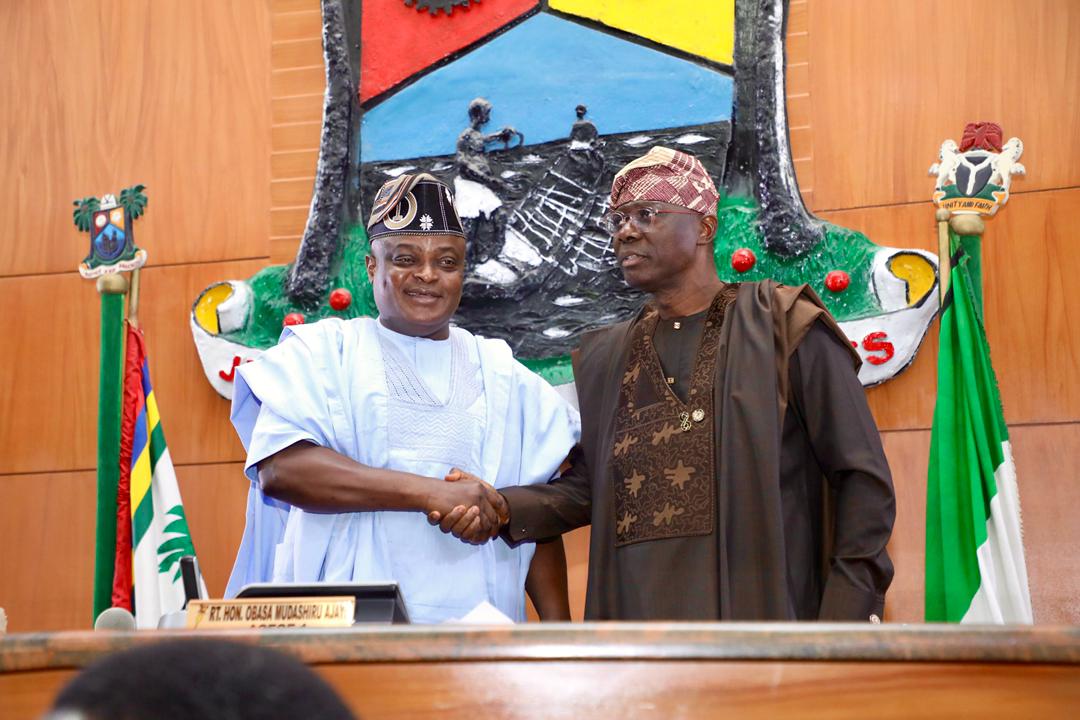
Lagos Assembly Debunks Abuja House Rumour, Warns Against Election Season Propaganda
The Lagos State House of Assembly has described as misleading and mischievous the widespread misinformation that it budgeted for the purchase of houses in Abuja for its members in the 2026 Appropriation Law.
This rebuttal is contained in a statement jointly signed by Hon. Stephen Ogundipe, Chairman, House Committee on Information, Strategy, and Security, and Hon. Sa’ad Olumoh, Chairman, House Committee on Economic Planning and Budget.
Describing the report as a deliberate and disturbing falsehood being peddled by patently ignorant people, the statement reads, “There is no provision whatsoever in the 2026 Budget for the purchase of houses in Abuja or anywhere else for members of the Lagos State House of Assembly. The report is a complete fabrication and a product of political mischief intended to misinform the public.
“The Lagos State House of Assembly does not operate in Abuja. Our constitutional responsibilities, constituencies, and legislative duties are entirely within Lagos State. It is, therefore, illogical, irrational, and irresponsible for anyone to suggest that legislators would appropriate public funds for personal housing outside their jurisdiction.”
The statement emphasised that the budget is already in the public domain and accessible for scrutiny by discerning Lagosians and Nigerians alike. It reiterated that the Lagos State Government operates a transparent budget that speaks to the needs of the people and the demands of a megalopolis.
“We view this rumour as part of a wider attempt at election-season propaganda, designed to erode public trust, sow discord, and malign democratic institutions.”
The chairmen further clarified that the 2026 capital expenditure of the House of Assembly is less than 0.04% of the total CAPEX of the state, which clearly demonstrates the culture of prudence, accountability, and fiscal responsibility that guides the legislature. However, they noted, “Historically, the House does not even access up to its approved budget in many fiscal years.”
They stressed that the Assembly remains fully committed to excellence, transparency, good governance, and the collective welfare of the people of Lagos State, in line with the objectives of the 2026 Budget of Shared Prosperity.
“We therefore challenge those behind this harebrained allegation to produce credible evidence or retract their statements forthwith. Failure to do so may attract appropriate legal actions.
“We urge Lagosians and the general public to disregard this baseless rumour and always verify information from official and credible sources.”
Politics
Democracy in the Crosshairs: How Nigeria’s Ruling APC Weaponises Power and Silences Dissent
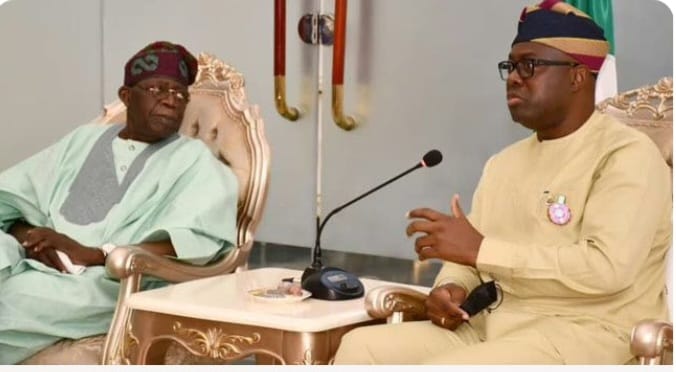
Democracy in the Crosshairs: How Nigeria’s Ruling APC Weaponises Power and Silences Dissent.
By George Omagbemi Sylvester | Published by saharaweeklyng.com
“Tinubu’s Government, the EFCC and the Strategic Undermining of Opposition Governors”.
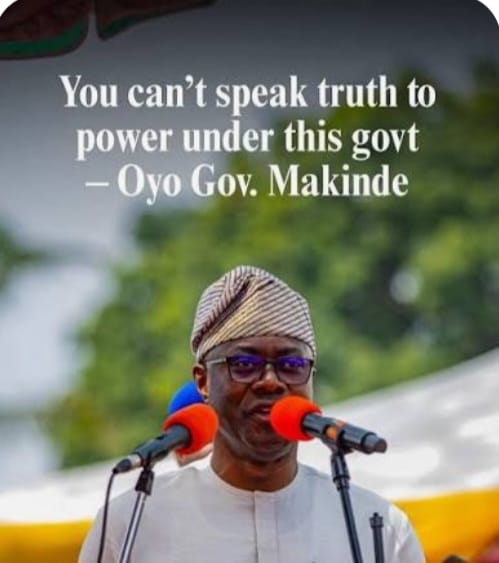
In a striking indictment of Nigeria’s current political reality, Governor Seyi Makinde of Oyo State declared that “you cannot speak truth to power in this dispensation”, directly accusing the administration of President Bola Ahmed Tinubu of intolerance for dissent and an erosion of democratic norms.
Makinde’s remarks (made during a public event in Ibadan on January 25, 2026) were more than a local governor’s lament. They crystallised a mounting national frustration: that Nigeria’s political landscape has tilted dangerously toward executive overreach, institutional capture and political engineering.
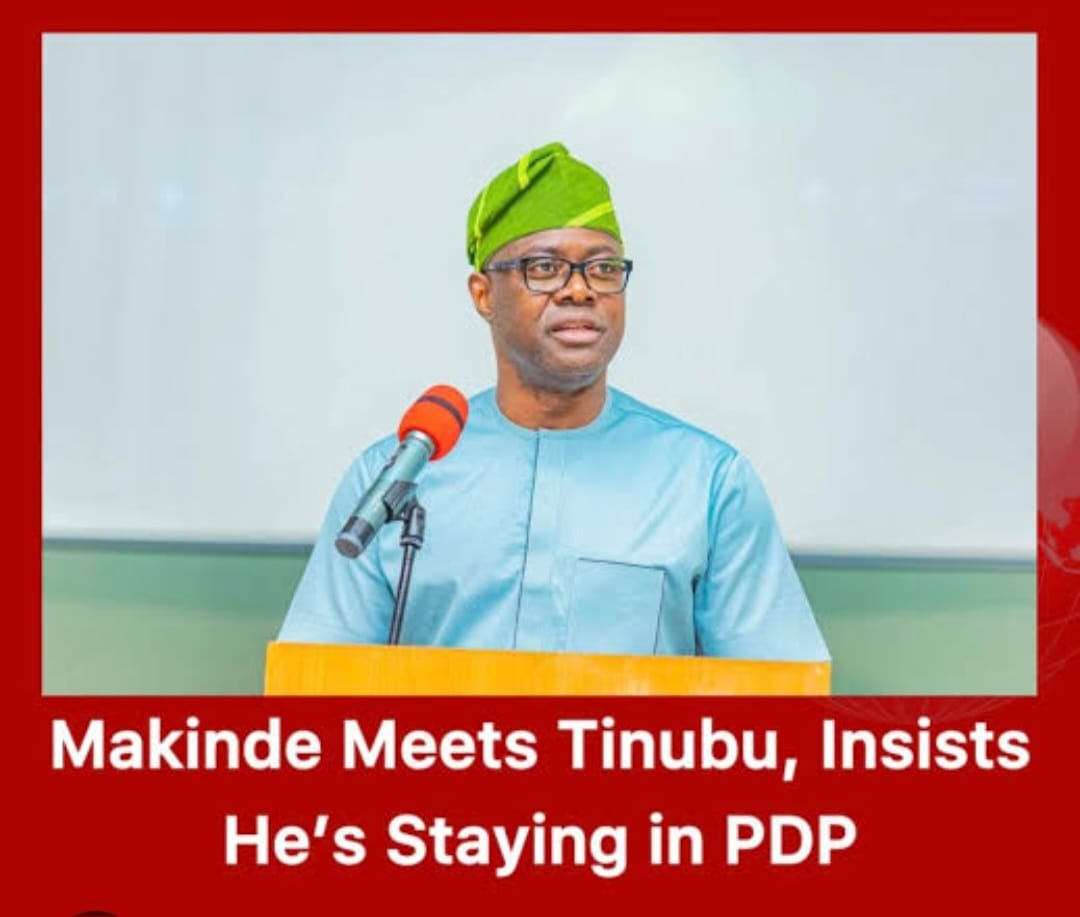
This narrative is not isolated. Across Nigeria, governors from opposition parties have defected to the ruling All Progressives Congress (APC) in numbers unprecedented in the nation’s democratic history. Critics argue that these defections are not merely voluntary political choices, but part of a strategic pressure campaign leveraging federal power and institutions to fracture opposition influence.
At its centre lies Nigeria’s principal anti-graft agency – the Economic and Financial Crimes Commission (EFCC).
The EFCC: Anti-Graft Agency or Political Instrument? Founded to combat corruption, the EFCC’s constitutional mandate is to investigate and prosecute financial and economic crimes across public and private sectors. Its legal independence is enshrined in statute and it has historically pursued high-profile cases, including recovery of nearly $500 million in illicit assets in a single year, demonstrating its capacity for tackling corruption.
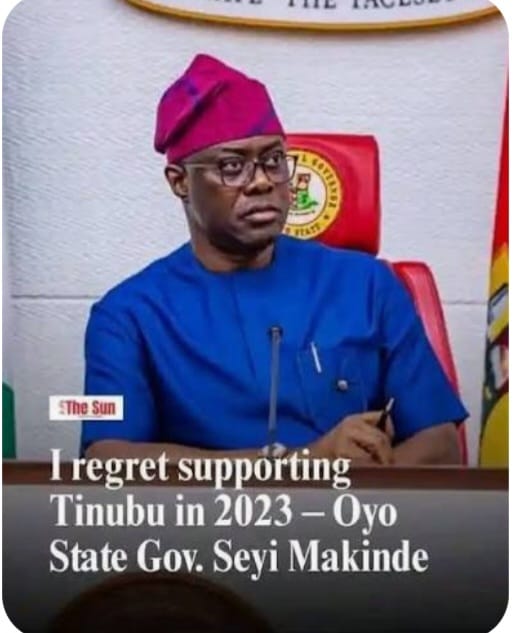
However, critics now claim that under the Tinubu administration, the EFCC’s prosecutorial power is being perceived (if not deployed) as a political instrument.
Opposition leaders, including former Vice President Atiku Abubakar and coalition parties such as the African Democratic Congress (ADC), have publicly accused the federal government of using anti-corruption agencies to intimidate opposition figures and governors, effectively pressuring them into aligning with the APC.
In a statement released in December 2025, opposition figures alleged that institutions such as the EFCC, the Nigerian Police and the Independent Corrupt Practices and Other Related Offences Commission were being selectively wielded to weaken political competitors rather than combat financial crime impartially.
This is not merely rhetorical noise. The opposition’s grievances centre on several observable patterns:
Reopened or New Investigations Against Opposition Figures: The ADC pointed to recent abnormal reactivation of long-dormant cases or new inquiries into financial activities involving senior opposition politicians. These, they argue, often arise shortly before critical elections or political realignments.
Alleged Differential Treatment: According to opponents of the current administration, individuals who have defected to the APC appear less likely to face sustained legal scrutiny or prosecution in EFCC proceedings, even in cases of credible allegations of mismanagement.
Timing of Actions: The timing of certain high-profile investigations, emerging ahead of the 2027 general elections, reinforces perceptions that anti-graft measures are tailored to political cycles rather than legal merit.
The EFCC and Presidency have publicly denied these allegations, insisting that the commission operates independently and pursues corruption irrespective of political affiliation and that Nigeria’s democratic freedoms (including party choice and mobility) remain intact.
Yet the perception of bias, once systemic, is hard to erase, especially when political actors deploy powerful state machinery with strategic timing and selective intensity.
Defections and Power Realignment: A Democracy at Risk? Since 2023 and particularly through 2025, a remarkable number of state governors and senior political leaders have crossed over from opposition parties (notably the Peoples Democratic Party – PDP) to the APC. Though defections are normal in Nigeria’s fluid political system, the scale and speed in recent years are historically noteworthy, raising critical questions about underlying incentives.
The SaharaWeeklyNG reported Makinde’s comments within the broader context of a political climate where dissenting voices face greater obstacles than at any time in recent democratic memory.
Governors who remain in opposition find themselves squeezed between growing federal assertiveness and dwindling political capital. Some analysts argue that the combination of federal resource control, political appointments and influence over public agencies exerts tangible pressure on subnational leaders to align with the ruling party for political survival. This dynamic, they contend, undermines competitive party politics and weakens Nigeria’s multiparty democracy.
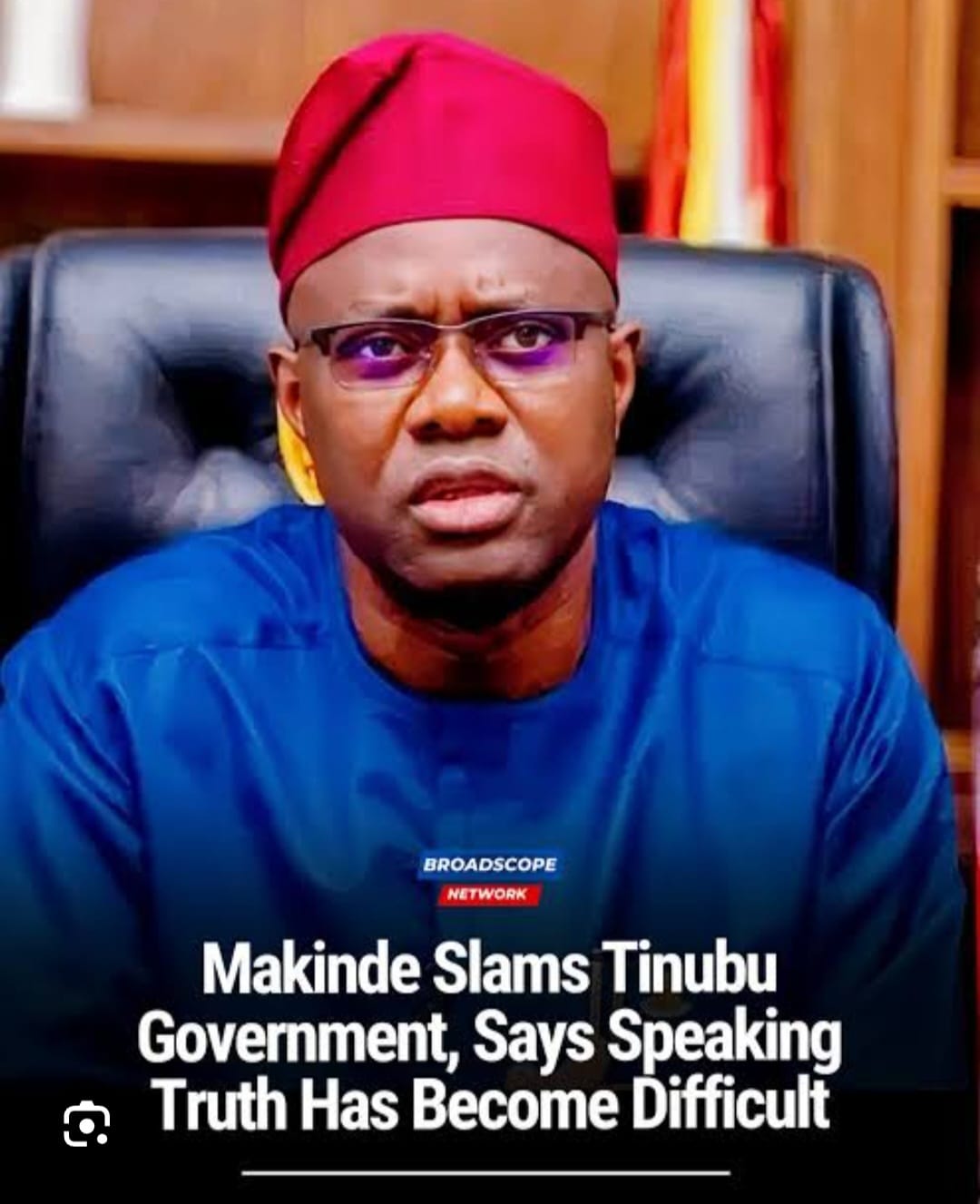
Speaking Truth to Power: What Makinde’s Critique Exposes. Governor Makinde’s core grievance (that it is increasingly difficult, perhaps perilous, to speak truth to power) resonates widely among civil society actors, political analysts and democratic advocates:
“YOU CANNOT SPEAK TRUTH TO POWER IN THIS DISPENSATION,” Makinde declared, specifically citing the government’s handling of contentious tax reform bills as an example where dissent was neither welcomed nor transparently debated.
Makinde’s critique reflects deeper structural concerns:
Exclusion of Key Stakeholders: Opposition leaders and state executives report being marginalised from meaningful consultation on national policies affecting federal-state relations, revenue sharing and fiscal reforms.
Institutional Intimidation: The perception that state politicians become targets of federal legal scrutiny after taking firm oppositional stances (real or perceived) discourages robust democratic debate.
Erosion of Opposition Space: A symbiotic effect of party defections and institutional pressure is a shrinking viable space for genuine political opposition, weakening checks and balances essential to democratic governance.
A respected political scientist, Dr. Aisha Bello of the University of Lagos, recently argued that “when opposition becomes fraught with state leverage instead of ideological competition, the very foundation of democratic contestation collapses,” adding that “a government that shies away from criticism risks inversion into autocracy.”
Another expert, Prof. Chinedu Eze, former dean of political studies at Ahmadu Bello University, warned that “selective use of anti-corruption agencies as political tools corrodes public trust and ultimately delegates justice into the hands of incumbents rather than independent courts.” These observations echo growing public skepticism.
The Way Forward: Strengthening Democracy and Institutions. Nigeria’s path forward depends on restoring confidence in democratic norms and institutional independence.
Transparent EFCC Processes: Civil society groups and legal scholars are advocating for enhanced transparency in anti-graft investigations, including clear prosecutorial thresholds and independent audits of case initiation and closures.
Judicial Oversight: Strengthening the judiciary’s capacity and independence is critical to ensuring that allegations of political weaponisation do not go unchecked. Courts must remain the ultimate arbiters of evidence and guilt.
Political Reforms: Advocates demand reforms to party financing, federal-state fiscal relations, and consultation mechanisms to reduce incentives for defections driven by federal resource leverage.
Public Engagement: A more informed and engaged civil society, anchored by independent media and civic education, must hold both government and opposition accountable for adherence to democratic principles.
Beyond The Present Moment.
Governor Makinde’s assertion that it is no longer tenable to “speak truth to power” under the current administration reflects unsettling trends in Nigeria’s evolving democratic landscape. While the EFCC and the Presidency maintain that anti-corruption efforts are independent and constitutionally grounded, opposition leaders (backed by political data and patterns of defections) argue that state power is being used to consolidate one-party dominance and undermine political pluralism.
At this critical juncture, Nigeria must choose between entrenching competitive democracy or sliding toward a political monopoly where dissent is subdued, institutions compromised, and power concentrated.
For Nigeria’s democratic ideals to survive (and thrive) its leaders and citizens must ensure that speaking truth to power remains not a perilous act of defiance but an honoured pillar of national life.


-

 celebrity radar - gossips6 months ago
Why Babangida’s Hilltop Home Became Nigeria’s Political “Mecca”
-

 society6 months ago
Power is a Loan, Not a Possession: The Sacred Duty of Planting People
-

 Business6 months ago
Batsumi Travel CEO Lisa Sebogodi Wins Prestigious Africa Travel 100 Women Award
-

 news6 months ago
THE APPOINTMENT OF WASIU AYINDE BY THE FEDERAL GOVERNMENT AS AN AMBASSADOR SOUNDS EMBARRASSING