
SECURITY
NAOSRE Monthly Security Review: Nigeria At The Mercy Of Tactless Security Chiefs

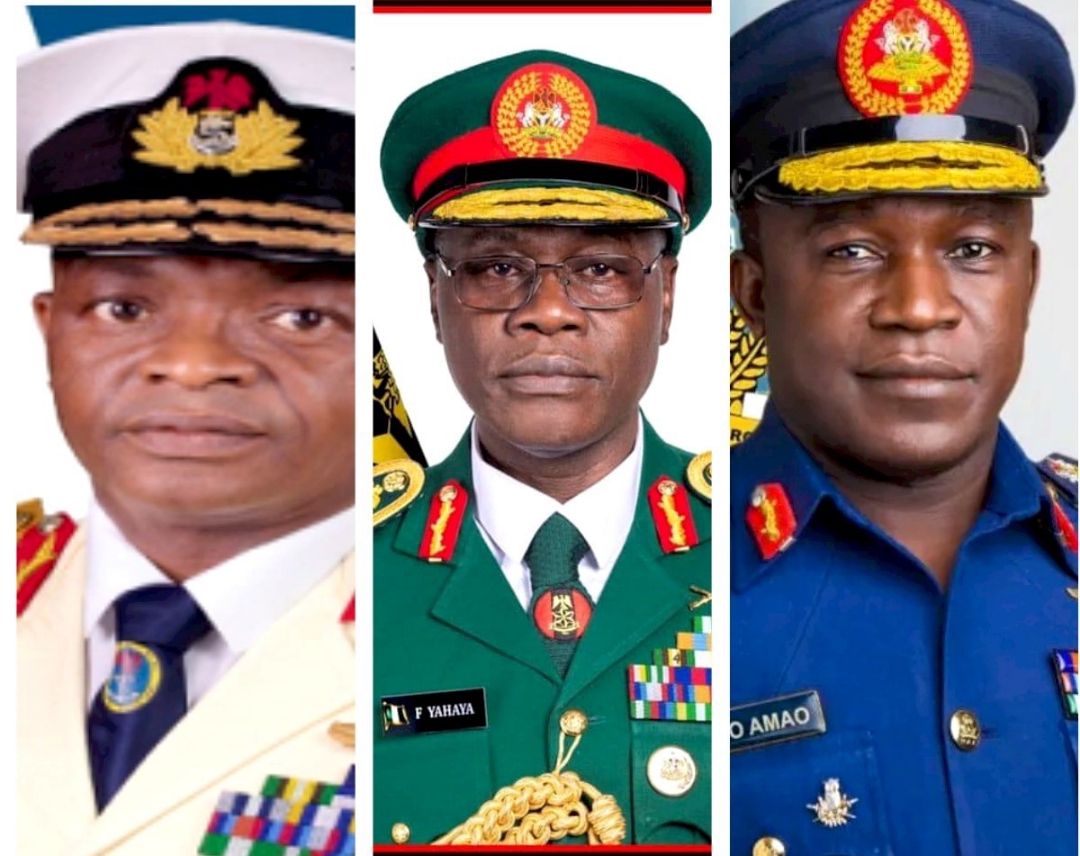
NAOSRE Monthly Security Review: Nigeria At The Mercy Of Tactless Security Chiefs
In late July and barely few hours after terrorists threatened to abduct Nigeria’s President and Commander-in-Chief, President Muhammadu Buhari and Kaduna Governor Nasir el’Rufai in a viral video, troops of the elite Presidential Guards Brigade were ambushed and attacked by terrorists along the Bwari-Kubwa road where a Captain, Lieutenant and six soldiers reportedly lost their lives in the capital city of Abuja.
An aspect of the narratives indicated that one of the terrorists’ targets, in that major onslaught against the Nigeria government, was the campus of Nigerian Law School in Bwari.
For fear of further attacks, management of schools closed down schools and communicated parents on the urgent need to take their children home.
Veritas University, a Roman Catholic owned university, located in Bwari Local Government Council of Abuja, shut down academic activities following security reports indicating that terrorists could attack and abduct students of the school after foiled attempt at the Nigerian Law School, sited some few kilometres apart.
In like manner, the Federal Ministry of Education, for fear of impending bandits and terrorists’ attacks, directed the immediate closure of all unity schools domiciled in Abuja, while ordering immediate evacuation of students.
Before then, Islamic State West Africa Province militants,a breakaway faction of Boko Haram, attacked the Presidential Advance Team to Katsina State before the last Sallah Holidays.
In addition and within the same period under review, specifically in the first week of July, ISWAP used explosives and guns to attack Kuje Prison in Abuja.
About six cars and buses were damaged during the attack. Four prisoners and a security official were also killed.
Over 800 prison inmates escaped during the attack with about half of them still at large. Those still at large include over 60 Boko Haram suspects.
Without doubt, the fall of Abuja to terrorists is the peak of humiliation as a country.
The tactless and amoebic defence and security arrangement, implemented by security chiefs have advertised Nigeria as the most retrogressive in the comity of countries in the world.
Shutting down of schools because of insecurity is very worrisome and the lowest a country can descend as nonexistent.
Banditry sector has been created. Within the last few months, the banditry sector would have done over a billion dollar from ransom taking.
So bad has the situation been that Governor Mohammed Matawalle of Zamfara State directed citizens in the state to obtain guns to defend themselves against bandits, a move many see as a sign of final collapse of Nigeria.
Zamfara government equally gave orders for immediate closure of markets in three senatorial districts as a result of the escalating activities of terrorists in various parts of the State.
To demonstrate its seriousness, governor Matawalle has concluded arrangement to distribute 500 forms to each of the 19 Emirates in the state for those willing to obtain guns to defend themselves.
Reacting to the development, human rights lawyer, Femi Falana, SAN described it as “A free-for-all affair,” adding that “These are all signs of imminent collapse of the Nigeria state.”
With all these, it is instructive to note that whenever armed gang controls the instrument of violence, then the state has collapsed or is about to collapse.
The enormity of the security challenges across Nigeria is the best definition of a failed state.
In the face of all this, the Islamic State West Africa Province, ISWAP and Boko Haram seem to be in perfect control of the entire Nigeria system.
Where are the Service Chiefs made up of the Chief of Army Staff, Chief of Air Staff, Chief of Navy Staff and the Inspector General of Police?
In the 2022 budget, passed and signed by President Muhammadu Buhari, Ministry of Defence is to spend the sum of N1.52billion on security operations as well as various sums for capital expenditure and welfare packages for officers.
Despite this humongous sum at the disposal of service chiefs, soldiers are deployed into terrorists’ enclaves blind with double-barrel guns even when technology is the ultimate instrument in modern warfare.
No single intelligence is deployed into operations.
What sends jitters into the spines of innocent citizens is the way ISWAP kills and captures Nigeria’s elite soldiers like chicken.
If elite soldiers from the presidential guard are on a mission to rescue people in distress, aren’t they supposed to be ready for trouble? How come they just got captured and killed by a so called rag-tag army of vandals?
If elite soldiers can be routed so easily, where are the helpless and hapless civilians to turn to?
Over time, the National Association of Online Security Reporters, NAOSRE, has lived up to its billing by encouraging citizens, through numerous editorial persuasions, to co operate with military personnel in the fight against insurgency.
But it does seem that service chiefs who are at the commanding heights to co ordinate all supporting channels for result driven operations are square pegs in round holes.
The failure of the security chiefs partly informed the reasons the once cohesive administrative posture of the legislative and executive arms of government at the federal level has been punctuated with Senators baying for the blood of President Buhari with impeachment threats.
The Senators are of the conviction that the ambush and killing of a platoon of the elite Brigade of Guards in Abuja are enough warnings that the terrorists are possibly planning to overrun the federal capital, adding that the Commander in Chief is a failure.
Indeed, insecurity is spreading fast. Those very close to the seat of power and perceived safe areas in Abuja are afraid.
Abuja residents are scared. Some are already relocating to other places and countries. The situation at hand is that bad.
Available information on insecurity indicates that terrorists on the rampage across the country have attacked about 16 military bases since mid 2022.
In most instances, the attacks led to the killing of about 800 soldiers have been killed in different parts of the country.
Despite huge funding and incessant presidential directives to the military and other security agencies to deal decisively with terrorists through bilateral and multilateral arrangements to tackle the trans-border and maritime crimes, given that some of our security challenges are imported into Nigeria by foreign elements, the Nigerian Army, Navy and Airforce under the command of service chiefs, have been lame duck.
This ugly development may have informed the reasons the House of Representatives’ Committee on Defence urged the Federal Government to engage mercenaries to tackle the growing insecurity.
Chairman of the committee, Honourable Babajimi Benson, who is in the vanguard of this option, got an upvote from a retired Brigadier General, John Sura, who described as unacceptable the way soldiers are being killed by terrorists, pointing at lack of cohesion and synergy among the security agencies.
Looking at it differently, a security consultant, Mr Jackson Lekan-Ojo, enthused that the bandits have become brazen, saying, “The bandits or terrorists are fighting offensively and the military are fighting defensively. These terrorists have brought the battle to our doorsteps. They are no longer waiting for us to cross to meet them. Imagine being confronted on one’s doorstep and being defeated. Our security system and apparatus are very weak and that is what gives them the audacity to come and fight offensively in our military bases.”
Corroborating Lekan-Ojo’s position, Mr Yemi Adeyemi, another security consultant, lamented saying “How can some miscreants say they want to kidnap the President? For you to know that they were not joking about it, they attacked the presidential guards brigade which is supposed to be the most fortified brigade of the Nigerian Army and killed some officers and men. They went again to Zuba and killed a man there. All the blame should go to the service chiefs who should implement presidential directives to the letter in line with national interests.”
Notably, the spate of insecurity in Nigeria has reached an alarming stage. It has become all encompassing.
From the north to the south; from the east to the west, from one geo-political zone to the other, there’s always a scary story to tell. And the story is that insecurity is spreading like wild fire.
It has become such a dastardly situation where no one is safe and the problem is escalating and totally getting out of control.
Travel in Nigeria, whether by road, rail, air or sea has become a nightmare. Homes and places of business are not safe because the bandits are on the prowl.
To be in prison is not safe either. Terrorists are invading prisons and releasing prisoners across states in the federation.
The consequence of such action is that criminals released from prisons increase the numerical strength of those already in the bush.
Having a retinue of guards does not guarantee safety.
In the south-west, there’s a surge in armed robbery, kidnapping, herder-farmer conflicts and banditry.
The Ondo State Church experience happened not too long ago.
The agitation for Biafra with its now accompanying killings, commercial crime, kidnapping, herder-farmer clashes, attacks by unknown gunmen, and banditry is now holding sway in the southeast.
In the south-south, kidnapping is not completely over.
Boko Haram insurgency and the Islamic State of West Africa Province have been holding sway for years in the northeast.
Ethno-religious killings and banditry are known to have taken a centre-stage in the north-west.
From all indications, the escalating rate of insecurity has cost Nigeria over 11% of its GDP worth N119 billion and projects worth N12 trillion were abandoned across Nigeria due to insecurity and other challenges.
The global peace index for 2021 compiled by the Institute for Economics and Peace ranked Nigeria 146th out of 163 countries with a score of 2.712, while among sub-Saharan African countries the country was ranked 39th out of 44 countries examined in the region.
According to experts, insecurity affects economic growth by drying out investments, increasing unemployment, and dwindling government revenue, among others.
To a very large extent, nothing is new. But what is required is new strategy to keep the county safe.
For instance, after the amnesty by late President Yar’ Adua, a militant leader backed out. His name was John Togo.
He went back to the creek and started a massive campaign of violence against oil installations and the Military.
John Togo was highly trained and intelligent.
But Yaradua will have none of it.
He gave the Military clear directives to get John Togo.
The military went after John Togo. There was no hiding place for him.
He was first smoked out of his hideout and shot but escaped. His men took him to a hospital, the Military came after him but again he escaped narrowly before they came.
He ran to the creeks but the order from the President was clear.
Get John Togo! It was a clear order. There was no in-between. The Military never relented.
Thinking he was safe in his fortress, his new location was found and fighter jets dropped bombs on his camp. He and his men perished. That was the end of John Togo.
No terrorist or bandit is bigger than the might of the Nigerian military or federal government.
If this was achieved by service chiefs at that time, it can be achieve now.
Therefore, the problems, really, are the service chiefs who are tactless and ineffective.






SECURITY
COMPTROLLER KOLA OLADEJI: THE TRAILBLAZING CUSTOMS CHIEF WHO TRANSFORMED BORDER SECURITY AND REVENUE GENERATION AT FOU ZONE A
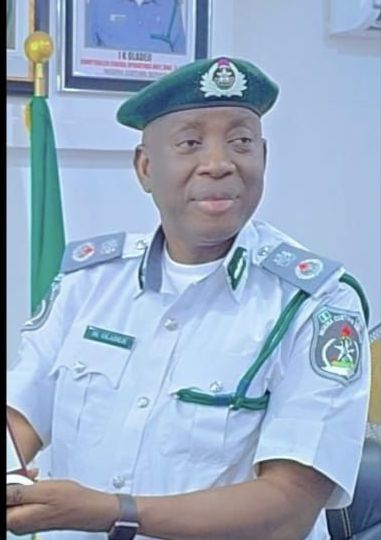
COMPTROLLER KOLA OLADEJI: THE TRAILBLAZING CUSTOMS CHIEF WHO TRANSFORMED BORDER SECURITY AND REVENUE GENERATION AT FOU ZONE A
Sahara Weekly Unveils That In the often chaotic landscape of Nigeria’s border security and revenue collection, one individual has emerged as a transformative leader: Comptroller Kola Oladeji, the immediate past Comptroller of the Federal Operations Unit (FOU) Zone A. Over the course of his 12-month tenure, Oladeji has not only revolutionized Customs operations within that region but has also set a new standard for effective, compassionate, and intelligent border protection in 21st-century Africa. His strategic interventions and leadership approach have created a model that may pose a significant challenge for his successor to fill the substantial gaps left by his redeployment.
Comptroller Oladeji attributes his remarkable achievements to the unwavering support and guidance he received from the current Comptroller General of Customs, CGC Bashir Adewale Adeniyi, as well as the collaboration from all members of the Management of the Service. This backing not only facilitated smoother operations but also empowered him to fulfill his mandate with remarkable efficiency. Under his leadership, the FOU Zone A experienced enhanced operational effectiveness, improved revenue collection, and strengthened border security measures, paving the way for a more organized and secure customs process that benefits both the government and the citizens.
The data available presents a compelling narrative of success; however, it is important to note that as of Wednesday, April 23, there was a noticeable absence of FOU Zone A operatives on the roads of Lagos. Despite this lack of visible presence, the FOU ‘A’, led by the former Comptroller Oladeji, continued to fulfill its primary mission effectively. In recent operations, the unit conducted significant seizures, including a cache of arms and ammunition in Oshodi, Lagos, all based on reliable intelligence. Remarkably, these operations were carried out without seeking media attention, underscoring the commitment of the team to their duties and the delicate nature of their work. Such efforts highlight the ongoing commitment to maintaining security and public safety, even amidst challenges in visibility and outreach.
The impressive performance he has displayed is a direct extension of the outstanding work he accomplished while serving as the Coordinator of the Joint Border Patrol Team for the North West Zone – Sector 2. During his tenure in this role, he not only demonstrated strong leadership and strategic planning but also fostered collaboration among various agencies to enhance border security. His successful initiatives and commitment to excellence in this position ultimately paved the way for his transition to the Federal Operations Unit (FOU) Zone A, where he continues to build on his accomplishments and drive positive results.
When Oladeji took the helm at the Federal Operations Unit (FOU) Zone A, few could have anticipated the remarkable turnaround that would follow. Under his leadership, Zone A exceeded its 2024 revenue target by an astonishing 57.6%, transforming it into Nigeria’s premier revenue-generating unit within the Customs Service. Faced with the challenge of operating without direct control over any major ports, Oladeji and his dedicated team set an ambitious approved revenue target of ₦569 million. Through strategic initiatives, heightened enforcement, and intensified anti-smuggling operations, they achieved a staggering revenue collection of ₦896 million. This achievement not only underscores Oladeji’s exceptional leadership skills but also reflects his ability to innovate and maximize resources in a challenging environment.
But Oladeji’s impact wasn’t just about the figures. It was about a total overhaul, changing the way things were done, shattering off mediocrity. The days of violent clashes with smugglers are behind us. In their place is “Operation Swift Sting” – a smart, intelligence-driven strategy that blends the latest surveillance tech with good old-fashioned detective work. The outcomes have been nothing short of amazing: ₦18 billion worth of contraband seized, including 10,000 donkey skins valued at ₦8 billion that were just moments away from being illegally exported.
One of the most telling seizures was the interception of 11,870 cutlasses, which sent shockwaves through criminal networks in the Southwest. This wasn’t just a Customs operation; it was a proactive move to prevent potential violence. Other seizures read like a list of threats to national security: 50,000 bags of foreign rice that could harm local farmers, 191,000 liters of diverted PMS, 7,861kg of cannabis, and 37,630 doses of Tramadol – each interception a significant step against the forces undermining Nigeria’s stability.
What set Oladeji’s approach apart wasn’t just what he seized, but how he did it. His philosophy was refreshingly straightforward: “We don’t chase smugglers – we outsmart them.” This mindset led to a revenue surge in July 2024, reaching ₦133 million, a 245% increase from the previous year, achieved not through brute force but through careful document checks and demand notices. It proved that brains are far more effective than brawn in customs operations.
The House of Representatives Committee on Customs witnessed this transformation firsthand during their oversight visit. Committee Chairman Leke Abejide didn’t hold back: “What we’ve seen here redefines Customs excellence.” In an organization often linked with controversy, Oladeji built something truly remarkable – a high-performance operation that resists corruption while balancing strict enforcement with community engagement.
As Nigeria faces an economic crossroads, the Oladeji model offers more than just success stories; it provides a roadmap. A roadmap for how technology can outsmart smuggling networks. A roadmap showing that revenue generation and humane enforcement can go hand in hand. And, most importantly, a roadmap highlighting how visionary leadership can turn even the toughest government institutions around.
With the Fourth Mainland Bridge and Lekki Deep Sea Port set to open soon, Oladeji’s strategic position allows him to achieve even greater results. If he’s accomplished this much in just 15 months, imagine the possibilities if his innovative approach were applied nationwide. In a time that craves transformative leadership, Kola Oladeji has not only raised the bar for customs operations – he’s demonstrated what’s achievable when skill, creativity, and courage come together in Nigeria’s public service.
The takeaway is clear: Nigeria’s fight for economic security doesn’t need more weapons – it needs more leaders like Oladeji. Leaders who recognize that true security comes not from guns, but from the smart use of law, technology, and, above all, principled leadership. A remarkable feat of Comptroller Oladeji ‘s tenure was the huge quantum of seizures recorded without firing a single shot at any Nigerian, nor recording a Protest of Nigerians. As his reforms gain national attention, one truth stands out: this is what happens when Nigeria’s brightest minds are given the chance to serve.
Business
Elon Musk’s Team Accuses FEMA of Misusing $59 Million to House Illegal Migrants in Luxury Hotels

Elon Musk’s Team Accuses FEMA of Misusing $59 Million to House Illegal Migrants in Luxury Hotels
Elon Musk’s Department of Government Efficiency (DOGE) has made serious allegations against the Federal Emergency Management Agency (FEMA), claiming that the agency misused $59 million to accommodate illegal migrants in luxurious hotels.
The billionaire entrepreneur revealed this in a tweet on Monday morning, stating that the discovery was made last week. According to Musk, the funds were intended for American disaster relief but were instead diverted in violation of national regulations.
He wrote: “The @DOGE team just discovered that FEMA sent $59M LAST WEEK to luxury hotels in New York City to house illegal migrants. Sending this money violated the law and is in gross insubordination to the President’s executive order. That money is meant for American disaster relief and instead is being spent on high-end hotels for illegals! A clawback demand will be made today to recoup those funds.”
The revelation has sparked controversy, with critics arguing that FEMA’s allocation of funds should prioritize American citizens affected by disasters. The allegations have also intensified scrutiny on FEMA, which has faced previous accusations of financial mismanagement.
An inspector general audit recently revealed that FEMA mishandled nearly $10 billion in COVID-19 relief funds. The audit stated that $8.1 billion in costs remained questionable, while $1.5 billion was allocated prematurely and could have been better utilized for other emergencies.
As scrutiny mounts, former President Donald Trump has reportedly considered abolishing FEMA, describing the agency as “a disaster.” To address these concerns, Trump has established a council, led by Homeland Security Secretary Kristi Noem and Defense Secretary Pete Hegseth, to review FEMA’s operations and propose necessary reforms by late June.
The allegations against FEMA have triggered a broader debate on the proper allocation of taxpayer funds and the government’s role in disaster management. More updates are expected as the situation develops.

Shepherd freight Cargo services Now in Lagos and Ibadan Nigeria.





-

 celebrity radar - gossips6 months ago
Why Babangida’s Hilltop Home Became Nigeria’s Political “Mecca”
-

 society6 months ago
Power is a Loan, Not a Possession: The Sacred Duty of Planting People
-

 Business6 months ago
Batsumi Travel CEO Lisa Sebogodi Wins Prestigious Africa Travel 100 Women Award
-

 news6 months ago
THE APPOINTMENT OF WASIU AYINDE BY THE FEDERAL GOVERNMENT AS AN AMBASSADOR SOUNDS EMBARRASSING