
Uncategorized
Gov. Abiodun to Inaugurate Governing Councils of Tertiary Institutions on Thursday

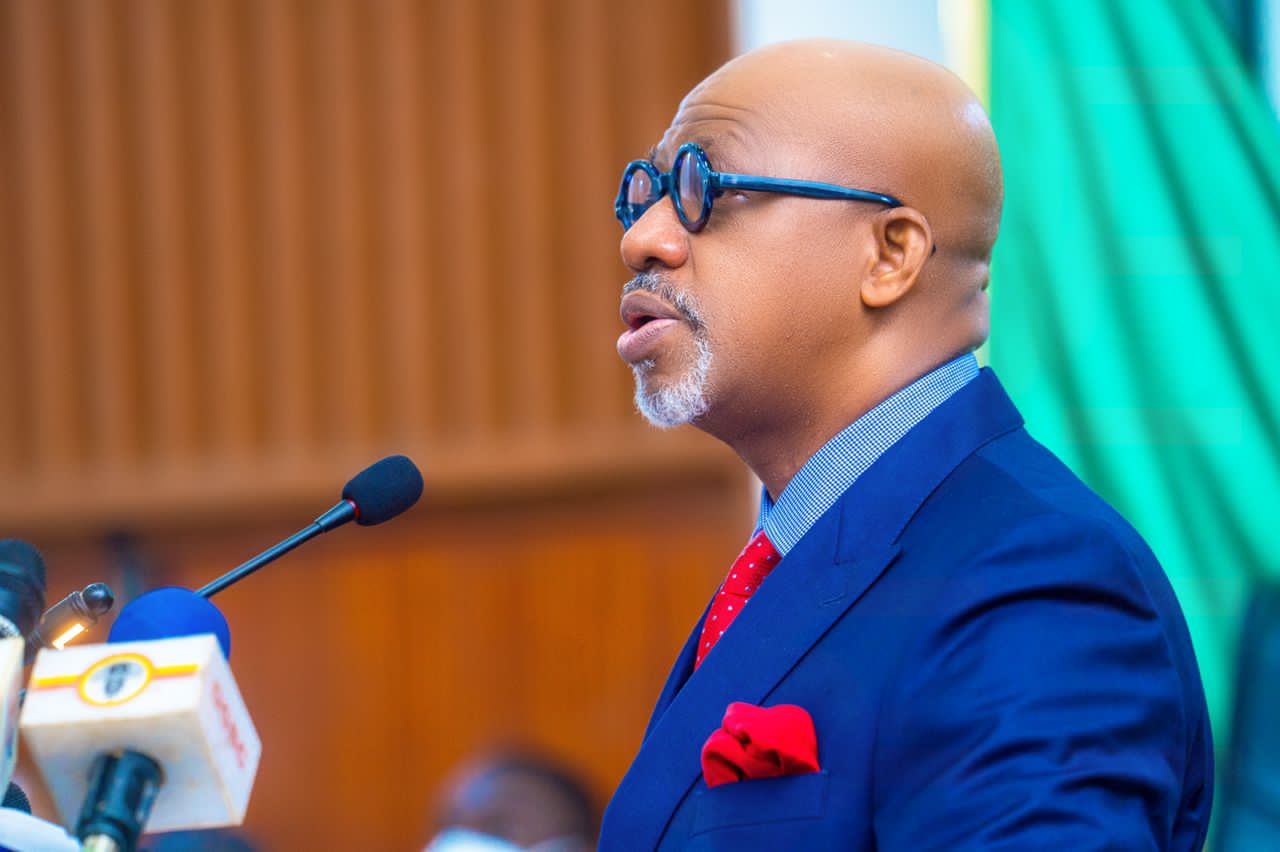
Gov. Abiodun to Inaugurate Governing Councils of Tertiary Institutions on Thursday

Ogun State governor, Prince Dapo Abiodun is set to inaugurate the governing councils of the two state-owned universities and six polytechnics, as well as that of the State Library Board, on Thursday, 25th August, 2022.
Governing Councils to be inaugurated include those of the Olabisi Onabanjo University, Ago Iwoye; Tai Solarin University of Education, Ijagun; Moshood Abiola Polytechnic, Abeokuta; Ogun State Institute of Technology, Igbesa; Gateway Polytechnic, Saapade; Abaraham Adesanya Polytechnic, Ijebu-Igbo; D.S. Adegbenro Polytechnic, Itori and Ogun State College of Health Technology, Ilese.
A statement signed by the Commissioner for Education, Science and Technology, Prof. Abayomi Arigbabu in Abeokuta on Tuesday said the inauguration ceremony will hold at the Cinema Hall of the June 12 Cultural Centre, Kuto, Abeokuta at 11am prompt.
The statement further said the composition of the Governing Council will “strengthen governance and administration in the institutions and render their performance more responsive to the dictates of the State Government’s Building Our Future Together Agenda.”
The members of the Councils are as follows:
OLABISI ONABANJO UNIVERSITY
S/N
NAME
POSITION
1
PROF. TOYIN ASHIRU
PRO-CHANCELLOR & CHAIRMAN
2
MR. KUNLE OGUNMEFUN
MEMBER
3
CHIEF JOJU FADAIRO
MEMBER
4
CHIEF ADEPEGBA OTEMOLU
MEMBER
5
CHIEF (MRS.) MATILDA IYABO APAMPA
MEMBER
TAI SOLARIN UNIVERSITY OF EDUCATION
S/N
NAME
POSITION
1
PROF. RAHMAN BELLO
PRO-CHANCELLOR & CHAIRMAN
2
PROF. TAIWO OSIPITAN
MEMBER
3
IYALODE ALABA LAWSON
MEMBER
4
PROF. ADEWALE ROLAND SOLARIN
MEMBER
5
SENATOR GBOLAHAN DADA
MEMBER
MOSHOOD ABIOLA POLYTECHNIC
S/N
NAME
POSITION
1
PROF. KAMAL BALOGUN
CHAIRMAN
2
MR. SEGUN SENBANJO
MEMBER
3
DR. RABIU KUSIMO
MEMBER
4
MR. WOLE SOWOLE
MEMBER
5
HON. KAMORU ODUNTAN
MEMBER
6
CHIEF RASHEED OLUSOGA ADENUSI
MEMBER
OGUN STATE INSTITUTE OF TECHNOLOGY, IGBESA
S/N
NAME
POSITION
1
CHIEF KOLA SORINOLA
CHAIRMAN
2
CHIEF SABITU FALILU
MEMBER
3
EVANG. KEHINDE AKINSOJI
MEMBER
4
ALHAJI DAUDA AFOLABI OLOKUN
MEMBER
5
OTUNBA AKEEM ADIGUN
MEMBER
6
MR. TUNDE ODULAJA
MEMBER
GATEWAY POLYTECHNIC, SAAPADE
S/N
NAME
POSITION
1
DR. YEMI OGUNBIYI
CHAIRMAN
2
ALHAJI RAIMI ADISA SAROMI
MEMBER
3
CHIEF FOHUN ABIOLA
MEMBER
4
OTUNBA (DR.) ADELEKE ADEDOYIN
MEMBER
5
CHIEF DUROJAIYE AIYEDOGBON
MEMBER
6
CHIEF ALLI ADELANI AJIBODE
MEMBER
ABRAHAM ADESANYA POLYTECHNIC, IJEBU-IGBO
S/N
NAME
POSITION
1
ALHAJA SALMOT BADRU
CHAIRMAN
2
DR. GBOLADE OSINOWO
MEMBER
3
JIDE AKINOLUGBADE
MEMBER
4
SHINA SOFOLA
MEMBER
5
CHIEF JIDE OJUKO
MEMBER
6
CHIEF MUSBAU AYINDE OBANLA
MEMBER
D.S ADEGBENRO POLYTECHNIC, ITORI
S/N
NAME
POSITION
1
AMB. TOYE OKANLAWON
CHAIRMAN
2
CHIEF JAMES DINA
MEMBER
3
SUNDAY SOWUNMI
MEMBER
4
CHIEF KAYODE SODIYAN
MEMBER
5
CHIEF MUFTAU AKANDE AJIBOLA
MEMBER
6
DR. KAYODE OLUNUGA
MEMBER
OGUN STATE COLLEGE OF HEALTH TECHNOLOGY, ILESE
S/N
NAME
POSITION
1
OTUNBA KUNLE KALEJAIYE SAN
CHAIRMAN
2
CHIEF JOHNSON OGUNDEKO
MEMBER
3
ALHAJI MUSBAU AREMU ADEBESIN
MEMBER
4
ACP LAMIDI ODULAWA RTD.
MEMBER
5
ALHAJI AZEEZ MUHAMMED
MEMBER
6
CHIEF DELE ODULAJA
MEMBER
To join the Council members as approved by the Governor and Visitor to these institutions are
i. the Permanent Secretary, Ministry of Education, Science and Technology
ii. Permanent Secretary, Ministry of Finance
iii. Representatives of the Senate of the Universities,
iv. Representatives of the Academic Board of the Polytechnics
v. Representatives of the Congregation of each of the institutions and
vi. Representatives of the Alumni of the institutions
The statement added that “also to be inaugurated on Thursday and at the same venue is the State Library Board with the following members:
(i) Prof. Segun Awonusi – Chairman
(ii) Mrs Bamidele Makinde – Member
(iii) Dr.(Mrs) Ayodele Olubunmi Womiloju – Member
(iv) Dr. Adebambo A. Oduwole (CLN) – Member
(v) Dr. (Mrs) Oyinade Tomori – CLN – Member
(vi) Barrister Tosin Adesanya – Member
(vii) Otunba Wasiu Taiwo – Member
(viii) Mr. Ogunyinka Bernard Olanrewaju – Member
(ix) Mr. Taye Solarin Sogbesan – Member
(x) Mr. Vincent F. Giwa CLN – Member
“Guests are expected to be seated in the hall by 10:30 am.”
Signed:
Prof. Abayomi A. Arigbabu
Hon. Commissioner, Ministry of Education, Science and Technology,
Abeokuta




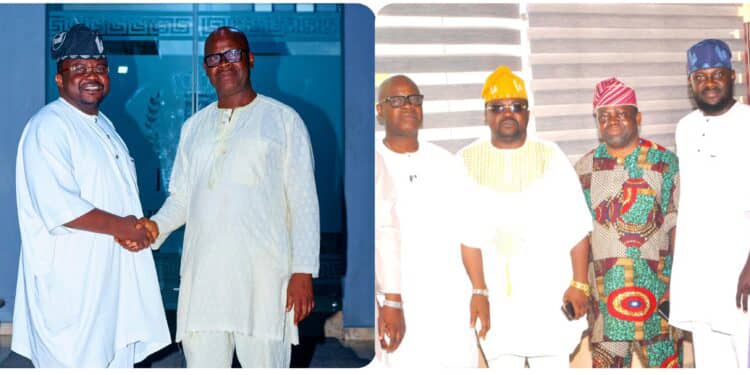
Ajadi Visits Ilaji Resort, Commends Sanusi’s Vision for Oyo’s Economic Growth
The leading gubernatorial aspirant in Oyo State under the Peoples Democratic Party (PDP), Olufemi Ajadi Oguntoyinbo, has lauded the transformative impact of private-sector investment on the state’s economy, following a courtesy visit to Ilaji Hotels and Sports Resort in Akanran, Ibadan.
Ajadi, who was warmly received on Sunday by the resort’s founder, Chief Dr Dotun Sanusi, described the facility as a symbol of what visionary leadership and indigenous enterprise can achieve in driving rural development, job creation, and tourism growth.
Speaking during the visit, Ajadi commended Sanusi’s commitment to Oyo State’s economic advancement, noting that Ilaji Resort stands as a model for sustainable development outside urban centres.
“What I have seen here today is not just a business venture, but a bold statement of belief in Oyo State’s potential,” Ajadi said. “Chief Sanusi has demonstrated that with vision, dedication, and strategic investment, we can transform our rural communities into thriving economic hubs. This aligns perfectly with my agenda to expand opportunities, empower our people, and sustain development across the state.”
[4/13, 6:34 PM] johnsonakinpelu: The PDP gubernatorial aspirant emphasised that his governorship ambition is rooted in supporting initiatives that promote local enterprise, tourism, and youth employment, adding that partnerships between government and private investors would be a priority if elected.
In his remarks, Sanusi, popularly known as Ilaji, expressed delight at hosting Ajadi and his entourage, describing the visit as encouraging for investors in the state.
“I am honoured to receive Ambassador Ajadi here at Ilaji Resort,” Sanusi said. “This project was born out of a desire to give back to society, create jobs for our youths, and showcase the rich cultural and tourism potential of Oyo State. When leaders recognise and support such efforts, it strengthens our resolve to do more.”
Sanusi further stressed the importance of continuity in governance and policies that encourage investment, noting that consistent support from government actors is crucial for long-term economic growth.
The visit also attracted notable political stakeholders, including the former Ona-Ara Local Government Chairman, Hon. Taiwo Oke, Hon. Bass Oloko, and Ajadi’s personal assistant, Kilamuwaye Badmus, among others.
Observers at the event described the meeting as a convergence of political leadership and entrepreneurial vision, highlighting the growing importance of collaboration in addressing developmental challenges in Oyo State.
Analysts see Ajadi’s visit to Ilaji Resort as part of his broader engagement with key stakeholders across sectors, as he continues to build momentum ahead of the 2027 governorship race.

FOPCHEN Calls for Dialogue as Court Fixes May 28 for Continuation
OTA, OGUN STATE — Proceedings in a widely followed legal case resumed on March 24, 2026, at the High Court of Ogun State, Ota Division, ending with a fresh adjournment as the court fixed May 28, 2026, for continuation.
During the session, legal representatives for all parties restated their positions and addressed preliminary matters, laying the groundwork for more substantive arguments at the next hearing. Observers noted that the case continues to attract significant public attention due to its perceived implications for law, culture, and societal values.
The Foundation for the Protection of Cultural Heritage in Nigeria (FOPCHEN) used the occasion to reiterate its call for constructive national dialogue. The group emphasized that while the judicial process must be respected, broader societal engagement remains essential.
According to the organization, issues relating to values, responsibility, and cultural identity should not be confined solely to courtroom deliberations but should involve active participation from various sectors of society.
Legal analysts present at the proceedings described the matter as one with far-reaching implications, noting that arguments advanced in court could shape future interpretations surrounding sensitive cultural and moral questions.
The presiding judge subsequently adjourned the case to May 28, granting all parties time to refine their submissions and respond to issues raised during the hearing.
As anticipation builds ahead of the next court date, Nigerians across different sectors continue to monitor developments closely, keen to see how the judiciary navigates the delicate balance between constitutional rights and cultural expectations.
Uncategorized
CRG: Politicians Must Stop Witch-Hunting, Focus on Nation Building — Says NYSC Cleared Deputy Speaker Since 2023
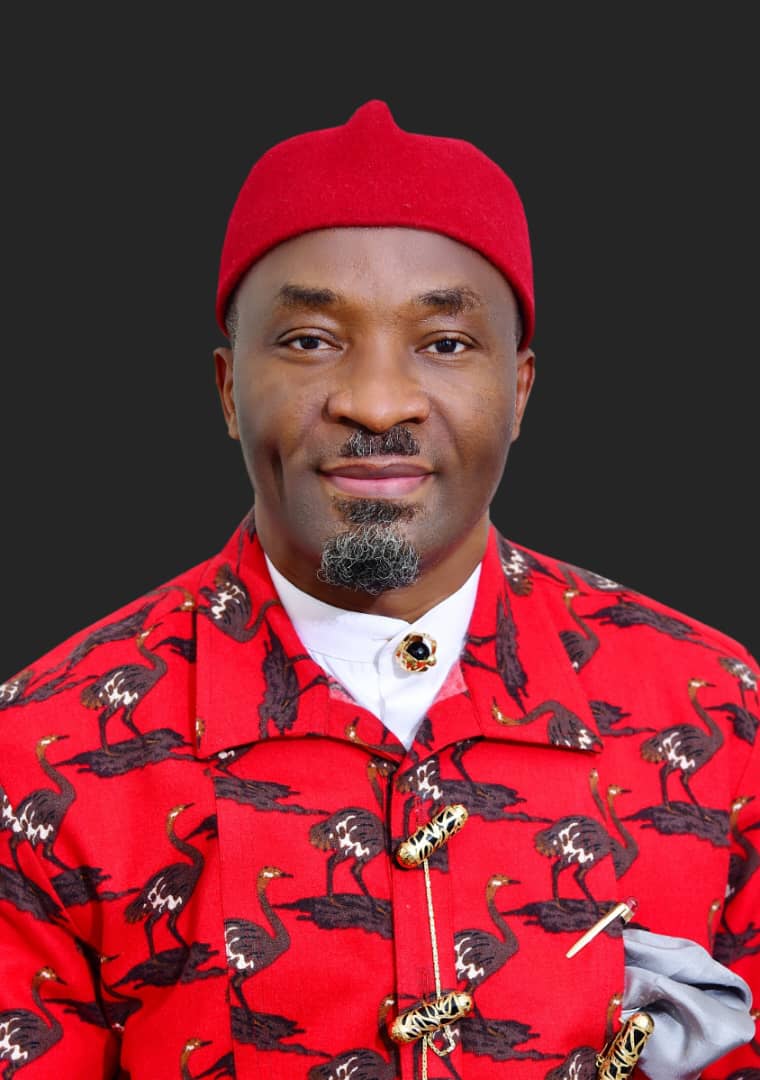
CRG: Politicians Must Stop Witch-Hunting, Focus on Nation Building — Says NYSC Cleared Deputy Speaker Since 2023
By: Boye Ola
The Centre for Responsible Governance (CRG) has called on political actors and interest groups to desist from what it described as needless witch-hunting of the Deputy Speaker of the House of Representatives, Benjamin Okezie Kalu, following renewed controversies surrounding his National Youth Service Corps records.
The organisation noted that the clarification by the National Youth Service Corps (NYSC) regarding the matter is not a recent development, as a formal verification letter had already been issued as far back as May 23, 2023.
The letter, referenced NYSC/CCD/VER/10/5.1/VOL1/02, had already addressed and cleared the questions surrounding the Deputy Speaker’s NYSC records.
Reacting to the renewed debate, the spokesman of the Centre,
Obande George, said it was troubling that issues which had already been clarified by a competent national institution were being resurrected for political purposes.
According to him, the time has come for political actors to move away from destructive engagements and concentrate on building the nation.
“It is important to note that the NYSC had already issued a verification letter dated May 23, 2023 addressing the matter.
Reopening issues that have already been clarified by a competent authority suggests that some individuals are more interested in political witch-hunting than in national progress,” George said.
The CRG stressed that democracy thrives when institutions are respected and their determinations are accepted in good faith rather than constantly questioned for political advantage.

George also commended the Deputy Speaker for demonstrating maturity and composure throughout the controversy, despite what he described as sustained provocations.
“Honourable Benjamin Kalu has shown remarkable calm and maturity in the face of intense public scrutiny and political provocation.
Instead of engaging in unnecessary public confrontation, he allowed institutions to speak through their records.”
The Centre warned that Nigeria’s political culture must evolve beyond constant character attacks and sensational allegations, which often distract public officials from their responsibilities.
According to the organisation, the country’s development requires constructive engagement among political actors rather than continuous attempts to discredit opponents.
“Nigeria cannot move forward if political energy is constantly spent on digging up allegations and amplifying rumours. Our leaders and political actors must redirect their focus to governance, policy and nation building.”
CRG therefore urged Nigerians to rely on verified information from credible institutions and avoid spreading speculative claims that could damage reputations or destabilise public discourse.
The organisation reiterated that respect for due process and institutional integrity remains essential for strengthening Nigeria’s democracy.

@The Centre for Responsible Governance, Email: [email protected], Instagram: crgngo6, Twitter: crgng06, Threads: crgngo6


- African Development Bank, The European Stability Mechanism (ESM) sign Memorandum of Understanding to enhance cooperation April 16, 2026
- Seeing the Unseen – How Canon is Protecting East Africa’s Coral Reefs April 16, 2026
- Sintana Listing Signals New Era for Local Ownership in Namibia’s Oil and Gas Sector April 16, 2026
- The crisis in the Middle East could cost Africa 0.2 percent in economic growth in 2026 April 16, 2026
- Namibia International Energy Conference (NIEC) 2026: Namibia Fast-Tracks Oil Law Reform as President Nandi-Ndaitwah Pushes Amendment Bill Ahead of First Oil April 16, 2026
- Africa’s Energy Wealth: Why Good Governance Must Power a Just Transition (By Sola Adebawo) April 16, 2026
- Emirates and Wesgro sign Memorandum of Understanding (MoU) to Stimulate Inbound Tourism to the Western Cape April 16, 2026
- Banco Sol’s Angola Oil & Gas (AOG) 2026 Sponsorship Affirms Drive to Finance Angolan Service Companies April 16, 2026
- Uganda Development Corporation (UDC) to take 82% of Trade ministry budget April 16, 2026
- Merck Foundation marks ‘World Art Day’ through their Film, Song, Media and Fashion Awards 2026 in partnership with Africa’s First Ladies to raise awareness about social & health issues April 15, 2026
- African Development Bank, The European Stability Mechanism (ESM) sign Memorandum of Understanding to enhance cooperation April 16, 2026
- Seeing the Unseen – How Canon is Protecting East Africa’s Coral Reefs April 16, 2026
- Sintana Listing Signals New Era for Local Ownership in Namibia’s Oil and Gas Sector April 16, 2026
- The crisis in the Middle East could cost Africa 0.2 percent in economic growth in 2026 April 16, 2026
- Namibia International Energy Conference (NIEC) 2026: Namibia Fast-Tracks Oil Law Reform as President Nandi-Ndaitwah Pushes Amendment Bill Ahead of First Oil April 16, 2026
- Africa’s Energy Wealth: Why Good Governance Must Power a Just Transition (By Sola Adebawo) April 16, 2026
- Emirates and Wesgro sign Memorandum of Understanding (MoU) to Stimulate Inbound Tourism to the Western Cape April 16, 2026
-

 news4 months ago
WHO REALLY OWNS MONIEPOINT? The $290 Million Deal That Sold Nigeria’s Top Fintech to Foreign Interests
-

 celebrity radar - gossips3 months ago
Dr. Chris Okafor Returns with Power and Fire of the Spirit -Mounts Grace Nation Altar with Fresh Anointing and Restoration Grace on February 1, 2026
-

 celebrity radar - gossips4 months ago
Prophet Kingsley Aitafo Releases 2026 Prophecy: ‘Nigeria Will Rise, but the World Must Prepare for Turbulence’
-

 celebrity radar - gossips6 months ago
End of an Era: Nigeria Mourns Evangelist Dr. Uma Ukpai, 80