
society
Bawa’s Suspension: Arewa Group Identifies Top Officials For Sanction

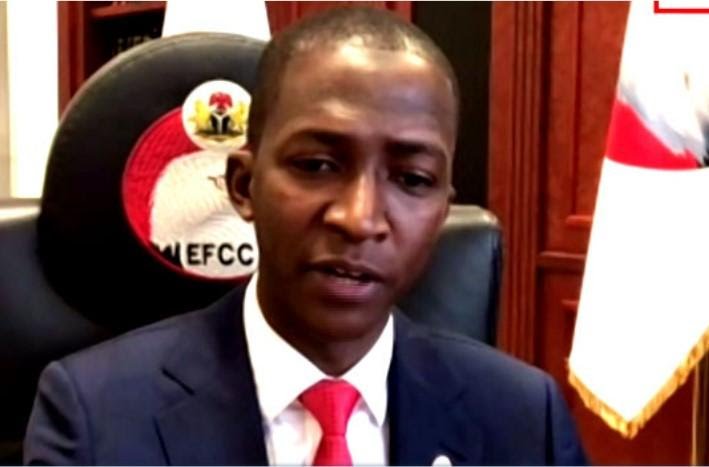
Bawa’s Suspension: Arewa Group Identifies Top Officials For Sanction
The Arewa Youth Comsultative Forum (AYCF) has commended President Bola Tinubu for the swiftness with which he suspended the Chairman of the Economic and Financial Crimes Commission, Abdulrasheed Bawa.
The AYCF, in a statement on Thursday, described Bawa as compromised saying his suspension was a reassurance from the current administration that it would not condone the widespread corruption that characterised the last administration.
The statement signed by AYCF’s National President, Alhaji Yarima Shettima, also called for the total overhauling of the EFCC and the suspension of top officials of the agency including those considered as Bawa’s alleged accomplices.

The group named Bawa’s Chief of Staff, Hadiza Ibrahim Gamawa, and the Chairman, Monitoring Unit 1, Abuja, Shehu Ala, as those who needed to be thoroughly investigated.
READ THE FULL STATEMENT BELOW:
On behalf of the youths of Northern Nigeria, the Arewa Youths Consultative Forum wishes to express is deeply appreciation for the swift action taken by President Bola Ahmed Tinubu of suspending the widely believed compromised Chairman of the Economic and Financial Crimes Commission, Abdulrasheed Bawa, indefinitely, and ordering thorough investigation of the activities of the agency under his watch.
The move by Mr President is a reassurance of his government’s commitment to addressing the sceptre of endemic, widespread corruption and political avarice that characterised the eight-year tenure of previous administration attributable to a lack of application of relevant laws against corrupt practices among officials of the regime and the apparent compromise of the EFCC under Abdulrasheed Bawa.
While welcoming the federal government action against Bawa, we are also of the view that it needs to extend the measure to include a total overhaul of the EFCC to flush out remnants of Abdulrasheed Bawa’s accomplices entrenched in top positions of the agency.
As we expect thorough investigations to expose and punish the extent of compromise and complicity of Bawa, it is equally expected that his major accomplices such as his Chief of Staff, Hadiza Ibrahim Gamawa, be suspended as well and subjected to investigation and subsequent prosecution.
There are incontrovertible facts that the children of the said Chief of Staff Gamawa who is married to a naval officer were trained in expensive foreign schools.
This inadvertently raises the question of the source of the funds used for such expensive training in addition to several assets owned by the said Gamawa.
Another principal collaborator in Bawa’s serial atrocities that also needs to be investigated is the Chairman, Monitoring Unit 1, Abuja, Shehu Ala.
With regards to the fate that befell Bawa, we consider it a bad lesson for the young generation of Nigerians. We categorically state that Bawa has been a huge disappointment for the young people of Nigeria who are supposed to be the natural claimants to the task of shaping the future of the Nigerian society.
Bawa himself apart from his incompetent handling of the EFCC boss has also acquired massive assets in unexplained and suspicious circumstances that need to be investigated.
He is also on record as having indulged in flamboyant lifestyle that involved expensive family trips abroad at will.
Other incontrovertible evidences around that Bawa is majorly responsible for all the damaging economic policies pursued by the former Central Bank Governor, Godwin Emefiele that had sunk the nation into deep crisis and brought about mass sufferings on innocent citizens.
While we once again hail the government action against corrupt practices and officers with corrupt tendencies, we pray that the likes of Bawa shall never again be entrusted with positions of responsibility only to end up letting down the youth constituency.
Meanwhile, we have abiding faith, that in view of his upbringing and eminent legal background, the acting chairman of the EFCC, Abdulkarim Chukkol, cannot afford to disappoint the nation and would pursue the war against corruption with decency and decorum in accordance with the rule of law.
Thank you.
Yarima Shettima,
NATIONAL PRESIDENT,
AYCF




Security, Economy in Focus as Buratai Chairs Aminu Kano Memorial Event
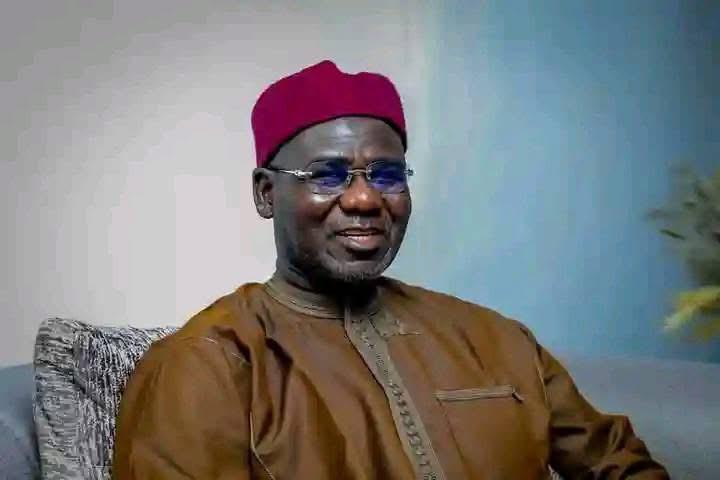
KANO, NIGERIA — Former Chief of Army Staff, Tukur Yusuf Buratai (Rtd), will chair the 24th Annual Symposium commemorating the 43rd memorial anniversary of Aminu Kano, with a strong focus on regional security and economic cooperation in West Africa.

The high-level event, scheduled for Friday, April 17, 2026, at the Sa’adu Zungur Auditorium, Mambayya House in Kano, is expected to convene policymakers, academics, and security experts to examine the evolving role of Economic Community of West African States in maintaining peace and stability across the subregion.
With the theme “ECOWAS and Regional Peace in West Africa: The Security and Economic Implications for Nigeria,” the symposium comes at a critical time when West Africa continues to grapple with security threats, political transitions, and economic pressures.
Buratai, who also served as Nigeria’s Ambassador to the Republic of Benin, is expected to bring his extensive military and diplomatic experience to bear in steering discussions around collective security, cross-border threats, and the strategic importance of regional alliances. His leadership as Chairman of the Occasion underscores the significance attached to the symposium’s deliberations.
The event will be hosted by the Vice Chancellor of Bayero University, Kano, Haruna Musa, while the Governor of Kano State, Abba Kabir Yusuf, will serve as Chief Host.
Katsina State Governor, Dikko Radda, is billed as the Special Guest of Honour, adding further political weight to the gathering.
The symposium will also feature a keynote address by Nazifi Abdullahi Darma, a former Commissioner for Internal Services at the ECOWAS Commission, who is expected to provide insights into the bloc’s internal mechanisms and policy direction.
Other notable discussants include former Comptroller-General of the Nigeria Immigration Service, Muhammed Babandede, and Professor Samaila Suleiman of the Department of History, Bayero University, Kano.
Organised by Mambayya House, Aminu Kano Centre for Democratic Studies, the annual symposium remains a key intellectual platform dedicated to preserving the legacy of Aminu Kano while addressing contemporary governance and security challenges.
Analysts note that Buratai’s central role as Chairman is particularly significant given Nigeria’s frontline position in regional security dynamics. His presence is expected to shape robust conversations on how ECOWAS can better respond to insurgency, military coups, and transnational crime while strengthening economic integration among member states.
The symposium is slated to commence at 9:00 a.m., drawing participants from across government, academia, and civil society in what promises to be a timely and impactful engagement on West Africa’s future.
*BOI, GIZ seals strategic partnership to drive enterprise growth, boost climate resilience*
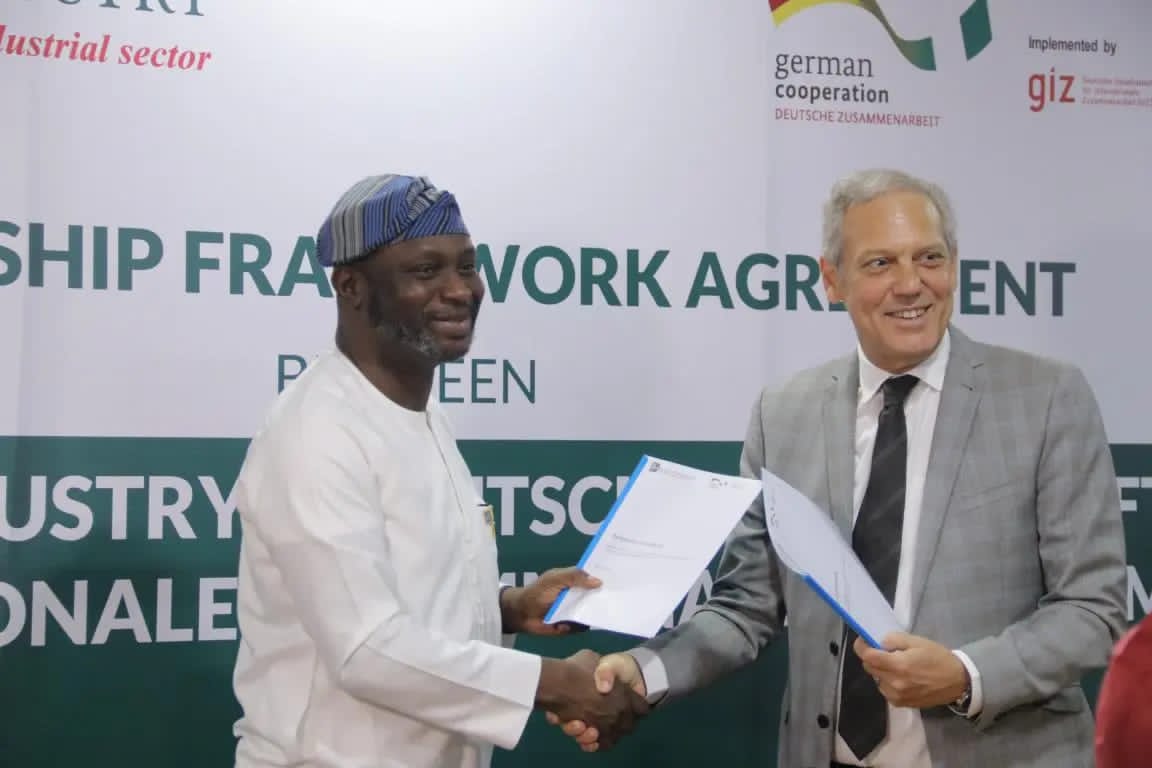
Bank of Industry (BOI), Nigeria’s foremost Development finance institution and a globally recognised organisation specialising in international development cooperation with countries, the German Agency for International Cooperation (GIZ), on Wednesday April 15, 2026, signs a Partnership Framework Agreement to drive sustainable innovation and economic development for large enterprise, and Micro, Small and Medium Enterprises (MSMEs) sector in Nigeria.
The partnership is hinged on delivering coordinated interventions across key strategic pillars including access to finance, entrepreneurship development, capacity building, and market access; and integrates focused support for climate finance and renewable energy investments; and a robust alignment with global sustainability priorities that enables MSMEs to as engines of economic development.
With this landmark agreement, BOI and GIZ are positioned to mutually ensure that capacity building efforts for businesses focuses on strengthening the technical and institutional capabilities of BOI’s Business Development Service Providers (BDSPs), equipping them to deliver higher-impact advisory services to the Bank’s customers; as well as enshrine a structured vocational training provided under the ICSS (Inspire, Create, Start and Scale) entrepreneurship programme to enhance productivity, workforce quality and overall business competitiveness to MSMEs.
The central pillar of this year’s partnership framework is it women’s economic empowerment through targeted financing initiatives; agribusiness development and rural enterprise growth; and climate-focused investment imperative to scale its renewable energy and energy efficiency financing portfolio.
BOI will strategically deepen its efforts to secure endorsement with the Green Climate Fund (GCF) with support from GIZ, a German-led development agency.
Speaking at the announcement ceremony, MD/CEO, Bank of Industry (BOI), Dr. Olasupo Olusi, said “This partnership is about closing the gap between enterprise potential and enterprise reality. Too many Nigerian businesses, particularly MSMEs, have the ideas, the drive, and the market opportunity, but lack the financing, technical capacity, or market access needed to scale. This partnership reflects our unwavering commitment to constantly form new partnerships to strengthen the entrepreneurial ecosystem in Nigeria. By combining our financing expertise with our partner’s international development experience, we are building a comprehensive framework that will directly translate into jobs, innovation, affordable, long-term financing and sustainable growth for MSMEs in Nigeria.”
In his remarks, Country Director, GIZ Nigeria and ECOWAS, Dr. Magnus Wagner, said, “This partnership demonstrates our joint commitments to strengthening Nigeria’s private sector and to advancing sustainable and inclusive economic growth. Through this partnership, we aim to support small and medium enterprises. We are trying more to look at SME, formalized business, which is the resilient backbone of Nigeria’s economy. So, we would like to work, we have decided in areas such as climate and sustainable finance, renewable energy and energy efficiency, entrepreneurship and innovation, women’s economic empowerment, agribusiness and rural transformation, and digital trade and market access. We look forward to a close and successful collaboration with the Bank of Industry, one that delivers tangible results for business, communities, and the country and the population as a whole”.
ADC Convention: We Are Unstoppable; “We Dare To Stand Up,” – Rauf Aregbesola
By Shaba Gbenga
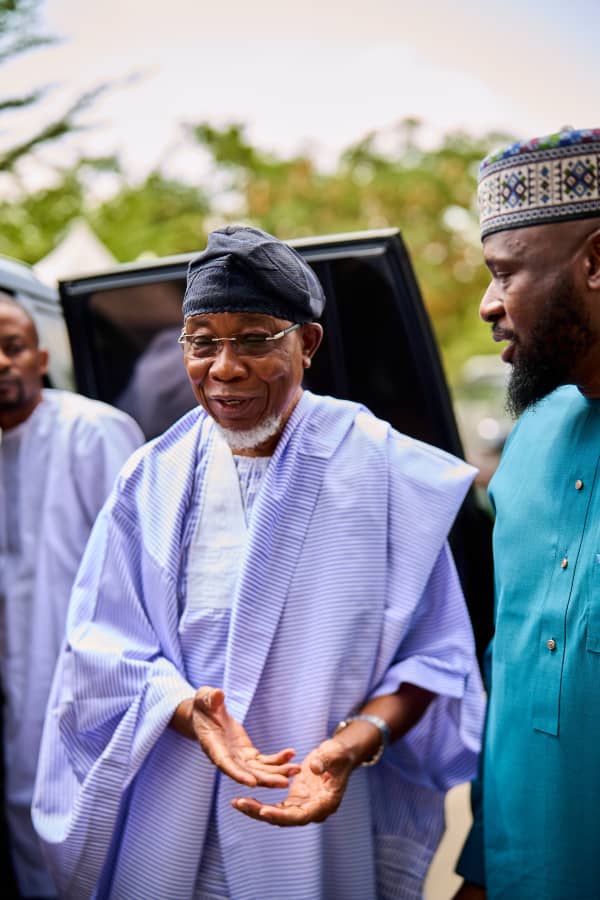
In Abuja, under the charged atmosphere of a convention that felt more like a declaration of intent than routine political gathering, Rauf Aregbesola stood before party faithful and delivered a message anchored on inevitability and resistance, insisting that just as no force can halt the rising of the sun, the African Democratic Congress cannot be stopped. Speaking at the party’s 8th National Convention, he cast the ADC not merely as an opposition platform but as a movement forged in defiance, determined to confront what he described as a system defined by incompetence and drift.
He painted a stark portrait of the nation’s economy, reducing official narratives to what he implied were illusions detached from the lived reality of Nigerians. According to him, the figures speak more honestly than any government statement ever could. A currency that has fallen from about seven hundred naira to the dollar to roughly one thousand four hundred, he argued, represents not just depreciation but a complete erosion of economic stability in a country heavily dependent on imports. The ripple effects, he noted, are visible everywhere, from the soaring cost of fuel to the daily struggle of workers who now find the simple act of going to work financially burdensome. In his telling, an economy once strained is now suffocating, and the promise of renewed hope has become a refrain repeated without substance, an echo stretched across years without delivery.
Yet beyond the numbers, he directed his sharpest criticism at what he described as a troubling absence of empathy at the highest levels of leadership. He recalled moments of national grief where, in his view, presence was replaced with distance and compassion substituted with protocol. Communities struck by violence, he suggested, were left to grapple not only with loss but with the symbolism of a leadership that appeared removed from their pain. For him, these were not isolated incidents but defining examples of a deeper disconnect between the governed and those in power, a gap he warned could no longer be ignored.
He then turned to the controversy surrounding the legitimacy of the convention itself, methodically defending the processes that led to the current leadership structure within the party. He traced decisions, meetings, and resolutions, insisting that due process had been followed and acknowledged at every stage. His frustration was reserved for the electoral body, which he accused of abandoning neutrality and failing in its responsibility by refusing to monitor the convention despite formal notification. In his view, such actions were not mere administrative lapses but deliberate steps in a broader design to narrow Nigeria’s political space ahead of the next general election.
From there, his argument widened into a critique of what he described as a dangerous normalization of political manipulation. He questioned a system where, in his words, wrongdoing is increasingly shielded by law and strategy, warning that when illegality becomes a tool rather than an offence, democracy itself begins to lose meaning. Drawing from the legacy of Chief Obafemi Awolowo, he framed opposition not as an inconvenience to power but as its necessary conscience, a force meant to challenge excess and preserve balance. Without it, he cautioned, the country risks sliding quietly into a future where elections become formalities and leadership transitions resemble coronations rather than choices.
Still, his message was not without forward motion. He spoke of a party reorganizing itself from the ground up, refining its policies, strengthening its internal structures, and preparing for the contests ahead. Losses in recent elections, he admitted, had exposed weaknesses, but they had also provided lessons the party intends to build on. What emerged from his address was not a claim of perfection but a declaration of readiness, a belief that momentum is shifting and that the groundwork for a different political outcome is being laid.
As he closed, the rhythm of his speech returned to its central theme, one of courage and inevitability. The struggle, he implied, is not merely about power but about principle, not just about winning elections but about restoring direction. In that conviction, he urged those still watching from the sidelines to make a choice, warning that moments demanding clarity leave little room for neutrality. For him and for the movement he represents, standing up is no longer optional, and in that act of defiance, he placed his faith in victory, not just for a party, but for a nation he believes can still be reclaimed.


- Merck Foundation marks ‘World Art Day’ through their Film, Song, Media and Fashion Awards 2026 in partnership with Africa’s First Ladies to raise awareness about social & health issues April 15, 2026
- Gabon’s Offshore Comeback: International Oil Companies (IOCs) Return as Exploration Heats Up Ahead of Paris Forum April 15, 2026
- Shell’s Eugene Okpere to Speak at Angola Oil & Gas (AOG) 2026 Amid $1B Angolan Deepwater Drive April 15, 2026
- Oando Joins African Energy Week (AEW) 2026 as Emerald Sponsor as Firm Reports 10% Profit Rise April 15, 2026
- Africa Finance Corporation (AFC) Invests in Dhamana Guarantee Company to Catalyse Local Currency Infrastructure Financing in East Africa April 15, 2026
- WESGRO and Enlit Africa 2026 unite to spotlight the Western Cape’s energy investment opportunity April 15, 2026
- Gianni Merlo re-elected as International Sports Press Association (AIPS) President for sixth and final term in landslide victory April 15, 2026
- African Development Fund approves 1.7 billion CFA francs to boost private sector competitiveness across West African Economic and Monetary Union (WAEMU) countries April 15, 2026
- Knowledge Katti: The Architect Behind Namibia’s Energy Breakthrough April 15, 2026
- African Mining Week to Highlight Africa’s Artisanal and Small-Scale Mining (ASM) Transformation Amidst $8.5T Resource Potential April 15, 2026
- Merck Foundation marks ‘World Art Day’ through their Film, Song, Media and Fashion Awards 2026 in partnership with Africa’s First Ladies to raise awareness about social & health issues April 15, 2026
- Gabon’s Offshore Comeback: International Oil Companies (IOCs) Return as Exploration Heats Up Ahead of Paris Forum April 15, 2026
- Shell’s Eugene Okpere to Speak at Angola Oil & Gas (AOG) 2026 Amid $1B Angolan Deepwater Drive April 15, 2026
- Oando Joins African Energy Week (AEW) 2026 as Emerald Sponsor as Firm Reports 10% Profit Rise April 15, 2026
- Africa Finance Corporation (AFC) Invests in Dhamana Guarantee Company to Catalyse Local Currency Infrastructure Financing in East Africa April 15, 2026
- WESGRO and Enlit Africa 2026 unite to spotlight the Western Cape’s energy investment opportunity April 15, 2026
- Gianni Merlo re-elected as International Sports Press Association (AIPS) President for sixth and final term in landslide victory April 15, 2026
-

 news4 months ago
WHO REALLY OWNS MONIEPOINT? The $290 Million Deal That Sold Nigeria’s Top Fintech to Foreign Interests
-

 celebrity radar - gossips3 months ago
Dr. Chris Okafor Returns with Power and Fire of the Spirit -Mounts Grace Nation Altar with Fresh Anointing and Restoration Grace on February 1, 2026
-

 celebrity radar - gossips4 months ago
Prophet Kingsley Aitafo Releases 2026 Prophecy: ‘Nigeria Will Rise, but the World Must Prepare for Turbulence’
-

 celebrity radar - gossips6 months ago
End of an Era: Nigeria Mourns Evangelist Dr. Uma Ukpai, 80