
society
A Journey of Resilience: US-Based Nigeria returnee Samsondeen Goloba Path Through Adversity and the Ongoing Pursuit for Justice”

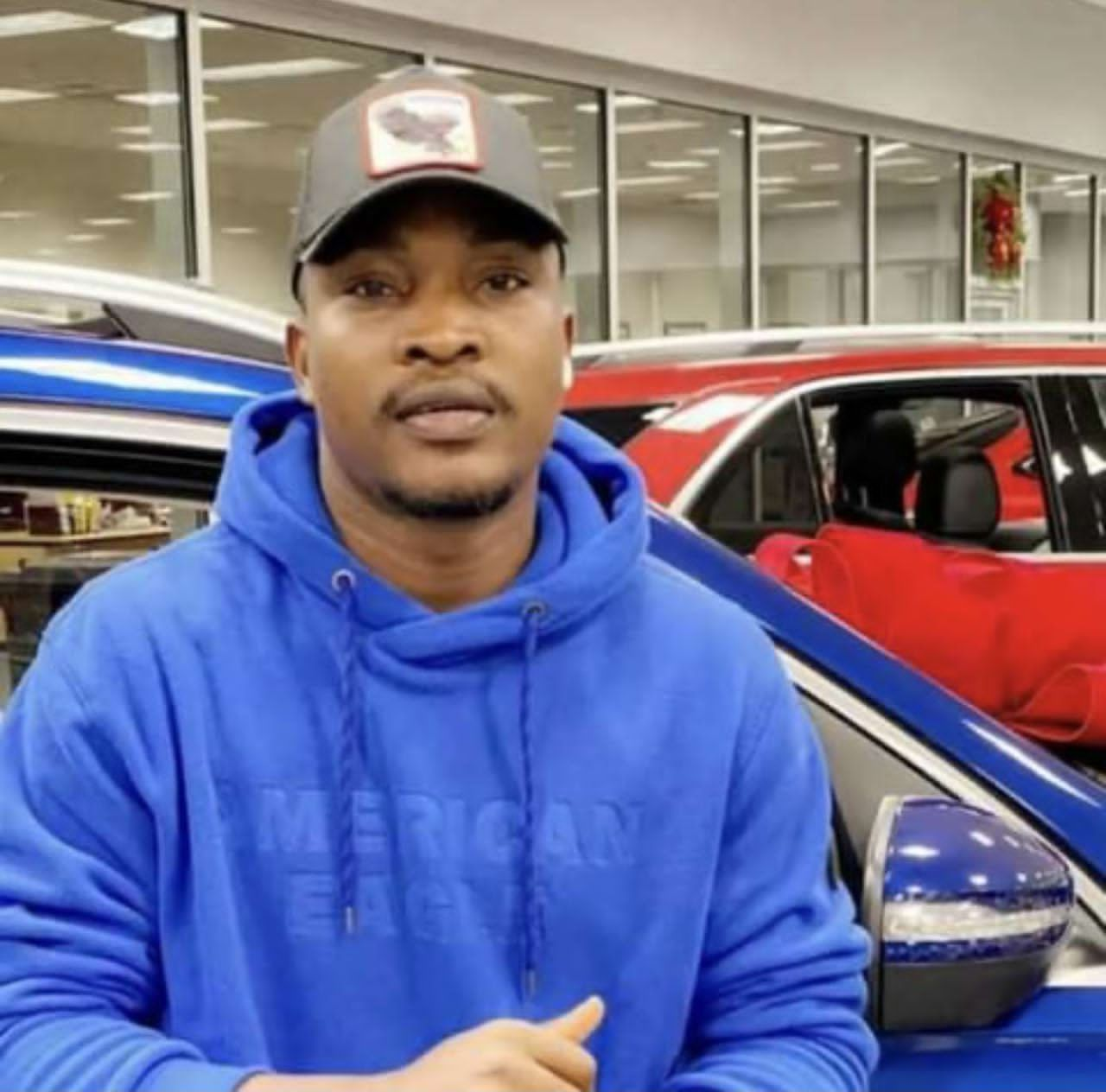
“A Journey of Resilience: US-Based Nigeria returnee Samsondeen Goloba Path Through Adversity and the Ongoing Pursuit for Justice”
In a heartfelt and brave account, Samsondeen Goloba has shared a powerful narrative of enduring tragedy, discrimination, and a relentless quest for justice. This story spans decades and continents, unveiling the challenges faced by an individual due to their sexual orientation in a society deeply rooted in tradition and bias.

This narrative begins in the aftermath of his father’s passing in May 2003, a crucial moment that set the stage for the tumultuous journey ahead. The loss of his father brought significant changes to his family dynamics, exposing a darker side marked by hostility and discrimination against his mother and her children. It was during this trying period that his mother exhibited unwavering resilience and commitment to her faith and her children’s education amidst the chaos.
Fast forward to 2005, Samsondeen mother started a fabric business in the lively town of Ilasa, Lagos. As a devout Christian, Samsondeen mother sought spiritual protection by attending a local church, the Apostolic Church of God, led by Pastor Tony Ikechukwu. During this spiritual journey, their lives intersected with Pastor Tony Ikechukwu, who exploited Samsondeen’s vulnerability under the guise of spiritual guidance.
In a society that showed no tolerance for homosexuality and clung to tradition, Samsondeen endured unimaginable suffering in silence. It wasn’t until 2006, when he gathered the courage to confide in his mother, that the veil of secrecy began to lift. Her love and concern for his safety prompted a report to the authorities, but justice remained frustratingly elusive as Pastor Tony Ikechukwu evaded accountability.
After revealing his sexual orientation, Samsondeen found himself caught in a nightmarish cycle of persecution. He became an outcast in his own community, enduring physical abuse, constant humiliation, and societal rejection. Despite these relentless trials, he tenaciously pursued his education, facing further challenges during his time at Lagos State University (LASU). His mere presence on campus made him a target for discrimination and abuse.
In 2015, Samsondeen’s quest for a life free from discrimination and prejudice led him to the United States. Here, he met his wife, Jasmine, and began the arduous process of rebuilding his life. Tragically, upon Samsondeen’s return to Nigeria, his dear friend Kola Adeyemi Buta, along with two other victims, Akeem Ajaiy and David Akinola, met a violent end in Ajax, Lagos, Nigeria. They were victims of a heinous hate crime by the OPC (Odua People Congress) due to their sexual orientation. Kola’s tragic fate highlights the urgent need for justice and transformation in a society that continues to perpetuate hate crimes against the LGBTQ+ community.
Samsondeen’s traumatic journey stands as a testament to his resilience and unwavering determination. His story serves as a reminder that no one should have to endure such torment due to their sexual orientation. He implores the Nigerian government and law enforcement to seek justice for Kola’s death and emphasizes the importance of eradicating discrimination and violence against the LGBTQ+ community.
In Samsondeen’s courage, we find hope and inspiration. His story calls for justice, compassion, and transformation in a society that must progress towards acceptance and empathy. May Kola’s tragic loss be a catalyst for ending discrimination and sparking profound change and progress in Nigeria and around the world.




society
Dominion City to Host Global Camp Meeting, “2 Nights of Glory” 2026 in Lagos, Enugu …Calls for Moral Renewal
*Dominion City to Host Global Camp Meeting, “2 Nights of Glory” 2026 in Lagos, Enugu
…Calls for Moral Renewal
Lagos – Dominion City has announced plans to host its annual Global Camp Meeting alongside a special “2 Nights of Glory” gathering in April 2026, with events scheduled to be held simultaneously in Lagos and Enugu.
The week-long programme is expected to draw tens of thousands of participants onsite and millions of virtual attendees from across the globe.
The Global Camp Meeting will run from Wednesday, April 1 to Monday, April 6, featuring daily sessions at 8:00 a.m. and 5:00 p.m. The “2 Nights of Glory” is slated for Friday, April 3 and Saturday, April 4 at the Golden Heart Place, Km 22 Lekki-Epe Expressway, beside Lagos Business School, Ajah, Lagos.
Organised by Dominion City, a global church focused on raising transformational leaders, the conference will centre on revival, spiritual renewal, and practical teachings. This year’s theme, “Redigging the Wells of Our Fathers,” underscores a call to return to foundational values and principles.
Speaking ahead of the event, Nobbert Onaga, President, Golden Heart Foundation and Senior Pastor, DC Lagos & Europe, emphasised the need for moral reawakening as a pathway to national transformation. He described the Church as “the pillar and foundation of truth,” noting that the conference aims to confront moral decline and restore core values within society.
“We are going back to foundational truths that established the Church. These truths will help repair societal damage and reposition the Church as a source of hope and light,” Onaga said.
Also speaking, Shola Olapade, Senior Pastor of Dominion City Headquarters, highlighted the Church’s role in addressing ethical and cultural challenges, particularly among young people. He added that the programme would go beyond spiritual teachings to include sessions on artificial intelligence, innovation, business, media, arts, and career development.
“We are equipping people not just spiritually, but with relevant 21st-century skills to thrive in today’s world,” Olapade noted.
The conference will feature teachings and ministrations from a lineup of international ministers, including Dr. David Ogbueli, Dr. Charles Ndifon, Andres Bisonni, Pastor Randy Mitchell, Apostle Ikechukwu Peter Nnajiofor, Dr. Ferdinand Nweke, Apostle Ben Hanyani Ndobe, Evangelist Dan Scott, and Dr. Chiefo Ejiofobiri.
Music ministrations will also be led by notable gospel artists such as Grace Idowu, Rhema Onuoha, Once More Six, David Nkennor, Anthony Kani, and GUC.
Organisers disclosed that over 30,000 participants are expected to attend in person, with free transportation provided from designated locations across Lagos to ease access. In addition, free medical services will be offered daily, building on previous outreaches that benefited over 1,700 people.
To ensure safety and order, more than 200 traffic marshals will be deployed in collaboration with relevant authorities.
Beyond its spiritual impact, organisers project that the event will stimulate local economic activity across hospitality, transportation, and retail sectors.
The Global Camp Meeting remains a key platform for spiritual impartation, leadership development, and societal transformation, aligning with Dominion City’s mission to equip believers to influence their communities positively.
Participation is open to the public, with registration available online for both physical and virtual attendance. //END.//
*PHOTO CAPTIONS:*
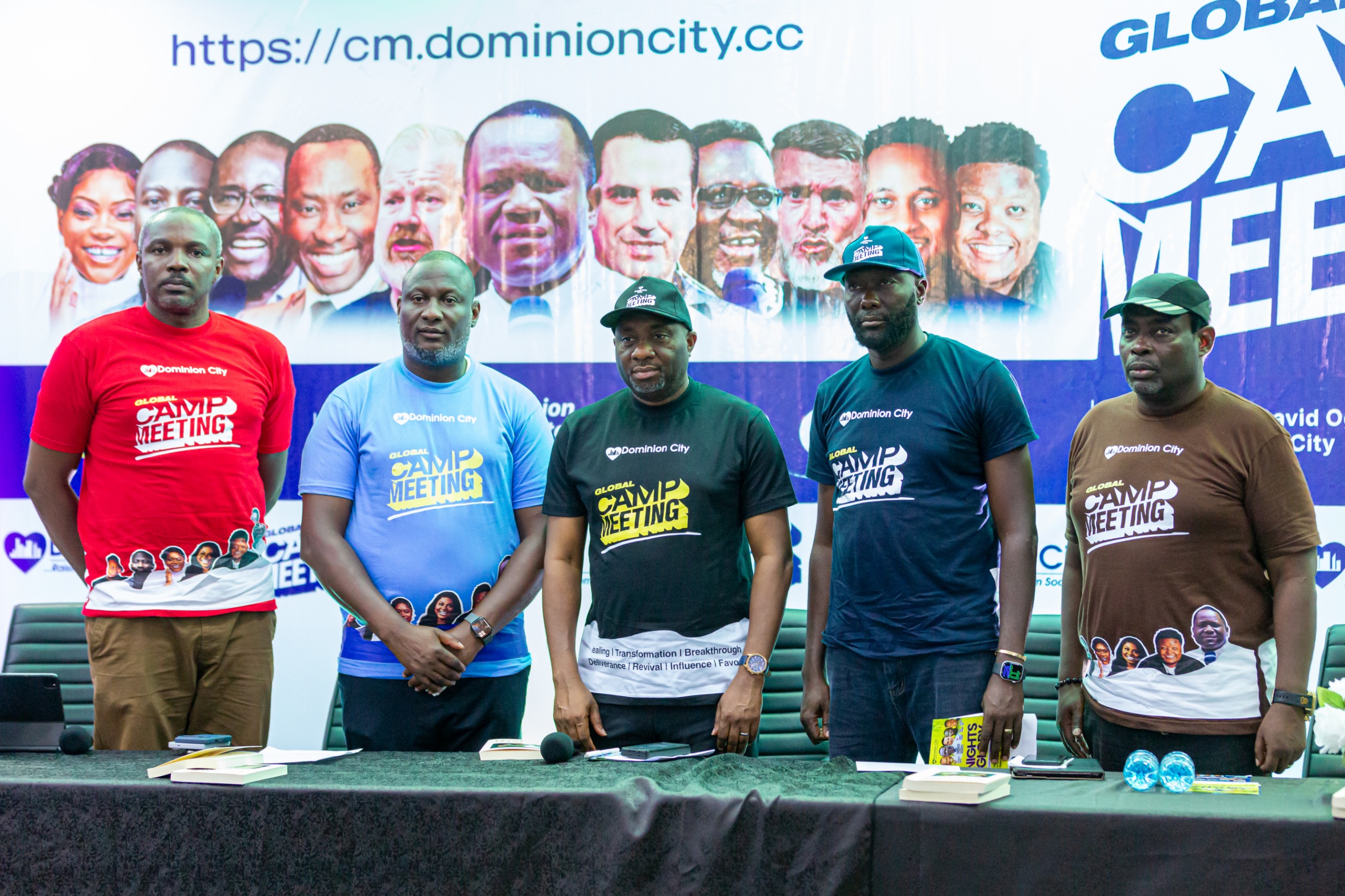
L-R: Dr. Godwin Efobi, Head, Medical Team, Dominion City Headquarters (DCHQ); Pastor Shola Olapade, Senior Pastor, DCHQ; Pastor Nobbert Onaga, President, Golden Heart Foundation and Senior Pastor, DC Lagos & Europe; Pastor Chuks Anochie, Head of Security and Traffic Control, Dominion City Headquarters (DCHQ), Camp Meeting 2026; Pastor Josh Tim Vaduchi, Head of Event & Programmes, DCHQ, during the press briefing of the forthcoming Global Camp Meeting, held the weekend of 2026 at the Dominion City Headquarters (DCHQ), Lagos.
L-R: Pastor Chuks Anochie, Head of Security and Traffic Control, Dominion City Headquarters (DCHQ), Camp Meeting 2026; Pastor Shola Olapade, Senior Pastor, DCHQ; Pastor Nobbert Onaga, President, Golden Heart Foundation and Senior Pastor, DC Lagos & Europe; Dr. Godwin Efobi, Head, Medical Team, DCHQ; and Pastor Josh Tim Vaduchi, Head of Event & Programmes, during the press briefing of the forthcoming Global Camp Meeting, held over the weekend in 2026 at the Dominion City Headquarters (DCHQ), Lagos.
society
Oloworo of Oworosoki Kingdom, Oba Babatunde Saliu, Felicitates President Bola Ahmed Tinubu at 74

Oloworo of Oworosoki Kingdom, Oba Babatunde Saliu, Felicitates President Bola Ahmed Tinubu at 74
By Adeyemi Obadimu
The Oloworo of Oworosoki Kingdom, His Royal Majesty, Oba Babatunde Saliu, Elebo II, has extended warm felicitations to the President of the Federal Republic of Nigeria, Bola Ahmed Tinubu, GCFR, on the occasion of his 74th birthday.
In a goodwill message issued from his palace, the revered monarch described President Tinubu as a visionary statesman, a courageous reformer, and an indefatigable democrat whose lifelong commitment to nation-building continues to shape Nigeria’s progress.
Oba Babatunde Saliu praised the President’s unwavering dedication to public service, noting that his leadership has ushered in a new phase of economic reform, infrastructural renewal, and institutional strengthening across the country.
According to the monarch, the President’s Renewed Hope Agenda has begun yielding tangible relief and renewed confidence among citizens, reflecting his determination to reposition Nigeria for sustainable growth and prosperity.
“President Bola Ahmed Tinubu has demonstrated exceptional resilience, strategic foresight, and a deep love for Nigeria. His administration’s bold initiatives are laying the foundation for long-term national transformation. At 74, he remains steadfast in his resolve to build a stronger, more united, and economically vibrant nation,” the monarch stated.
Oba Babatunde further commended the President’s legacy of leadership, describing him as a bridge-builder, a mentor to many leaders, and a symbol of democratic stability. He acknowledged the President’s decades of sacrifice and contribution to the advancement of democracy in Nigeria.
On behalf of the Oworosoki Kingdom, the royal father prayed for divine wisdom, sound health, and renewed strength for the President to successfully complete the noble reforms and developmental strides he has embarked upon for the benefit of all Nigerians.
“As Your Excellency marks 74 remarkable years, we pray that Almighty God grants you long life, continued wisdom, and the fortitude to steer our great nation toward greater heights. May your days be filled with strength and grace as you continue to serve Nigeria with distinction,” Oba Babatunde Saliu added.
President Bola Ahmed Tinubu clocks 74 as a leader whose enduring influence, bold reforms, and steadfast patriotism remain central to Nigeria’s ongoing journey of national renewal.
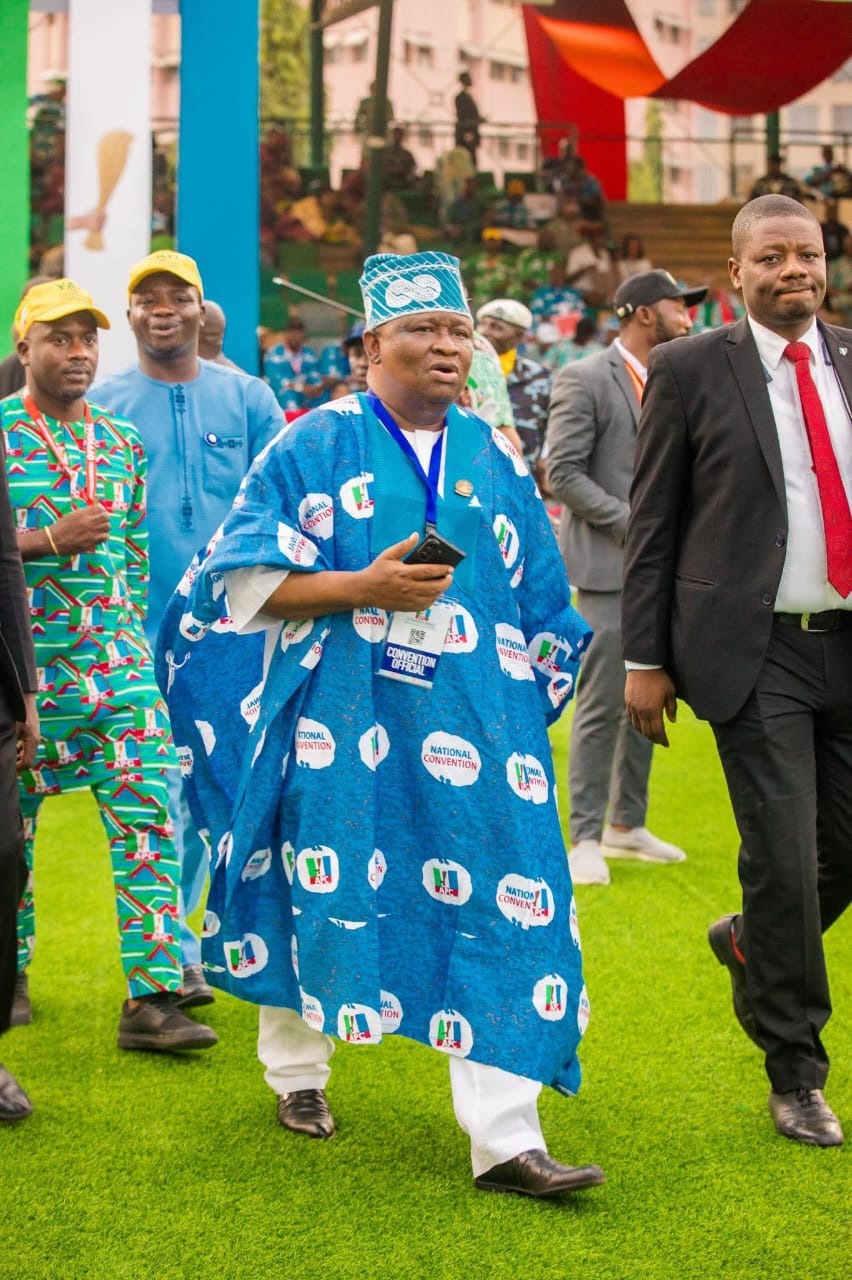
NO GOING BACK: YAYI REAFFIRMS COMMITMENT AT APC NATIONAL CONVENTION 2026
Senator Solomon Olamilekan Adeola, popularly known as Yayi, has once again reaffirmed his unwavering commitment to progressive leadership, unity within the party, and the continuous advancement of national development.
The distinguished Senator, currently representing Ogun West Senatorial District in the National Assembly, made this known on Saturday, March 28, 2026, during the just-concluded National Convention of the All Progressives Congress (APC) held at the historic Eagle Square in Abuja.
The convention, which brought together party leaders, elected officials, stakeholders, and thousands of party faithful from across the federation, served as a platform for strengthening internal unity, reviewing the party’s achievements, and charting a strategic course for the future of the ruling party.
Senator Adeola attended the high-profile political gathering alongside his wife, Chief (Mrs) Temitope Adeola. The couple joined other prominent leaders and stakeholders in reaffirming their loyalty to the ideals and collective vision of the party.
Reflecting on the significance of the convention, Senator Adeola Yayi described the event as more than just a routine political gathering.
According to him, it was a moment that provided an opportunity for deep reflection on the journey so far, renewed unity among members, and a stronger commitment to the progressive ideals upon which the party was founded.
In his words:
“On Saturday, March 28, 2026, my dear wife, Temitope, and I had the honour of attending the National Convention of the All Progressives Congress at Eagle Square, Abuja.
“It was a moment of reflection, unity, and renewed commitment as we engaged with party leaders and members on the progress we have made and the work that lies ahead.
“As Yayi, I remain resolute in strengthening our shared vision, advancing progressive ideals, and delivering meaningful results for the people we serve.
“Together, we move forward – stronger, focused, and committed to a greater future.”
The statement by the distinguished lawmaker further underscored a powerful and unmistakable message – one of consistency in leadership, dedication to effective service delivery, and an unshakable determination to contribute meaningfully to the development of both Ogun State and Nigeria as a whole.
Observers at the convention noted that the gathering helped reinforce alliances within the party while also energizing members ahead of future political engagements. With renewed enthusiasm and strengthened political relationships emerging from the convention, many political pundits believe Senator Adeola’s vision remains firmly anchored on progress, unity, and inclusive development.
For Yayi and his supporters, the message from the convention is clear and unequivocal: there is no going back on the commitment to progressive governance, people-oriented leadership, and the collective pursuit of a greater and more prosperous future for all.


-

 society6 months ago
Religion: Africa’s Oldest Weapon of Enslavement and the Forgotten Truth
-

 news4 months ago
WHO REALLY OWNS MONIEPOINT? The $290 Million Deal That Sold Nigeria’s Top Fintech to Foreign Interests
-

 society6 months ago
“You Are Never Without Help” – Pastor Gebhardt Berndt Inspires Hope Through Empower Church (Video)
-

 celebrity radar - gossips2 months ago
Dr. Chris Okafor Returns with Power and Fire of the Spirit -Mounts Grace Nation Altar with Fresh Anointing and Restoration Grace on February 1, 2026