
Politics
A Nation Betrayed: How NASS Budget Padding Exposes Tinubu’s Complicity and the Rot in Nigeria’s Leadership. By George Omagbemi Sylvester


A Nation Betrayed: How NASS Budget Padding Exposes Tinubu’s Complicity and the Rot in Nigeria’s Leadership.
By George Omagbemi Sylvester
In a disturbing revelation that should outrage every patriotic Nigerian, civic-tech organization BudgIT has uncovered a monumental financial scandal in the 2025 budget, one that shatters every illusion of fiscal responsibility under the Bola Ahmed Tinubu administration. According to BudgIT’s damning analysis, the National Assembly padded the 2025 Appropriation Act by inserting 11,122 projects worth a staggering ₦6.93 trillion, projects not proposed by any Ministries, Departments or Agencies (MDAs), but smuggled in by lawmakers.
This is not a clerical oversight, but a calculated and treacherous move. More importantly, this raises one inescapable question: Why did President Bola Tinubu sign this fraudulent budget into law if he was genuinely against it? The answer is simple, brutal and damning: because he is part of the collaboration. This is not just corruption, it is institutional betrayal. It is the final confirmation that the war in Nigeria is not between political parties but between the corrupt elite and the suffering Nigerian masses.

The Anatomy of Budget Padding
Let us first understand the scale of this treachery. The 2025 national budget, totalling ₦28.7 trillion, now has nearly 25% padded content, courtesy of lawmakers’ “constituency projects.” These are not national priorities or economically strategic programs. These are politically motivated insertions designed to enrich contractors linked to lawmakers, reward political loyalty and in some cases, simply launder money.

BudgIT revealed that several of these projects are duplicated, vague, inflated or outrightly useless, such as the procurement of hundreds of boreholes and solar streetlights in areas that do not even have roads, schools or hospitals. These are not investments; they are tools of financial cannibalism.
A similar trend happened in previous years, but never on this scale. In 2021, former President Buhari complained that the National Assembly inserted over 1,000 projects worth ₦150 billion. Now, under Tinubu, that figure has ballooned to ₦6.93 trillion; which is nearly forty-six times higher. This is not reform. This is regression at gunpoint.
Tinubu’s Silence is Complicity
To sign such a budget, fully aware of its fraudulent padding, is not a mistake, this is an endorsement. President Tinubu, known for his political astuteness and Machiavellian tactics, cannot claim ignorance. BudgIT’s report was based on public records. If civic groups could uncover this, then surely the Office of the President, with all its resources, was also aware.
Yet, Tinubu raised no alarm. He signed it into law. Why?
Because the padding was politically convenient. This budget is not just a fiscal document, it is a loyalty purchase agreement. As the APC seeks to consolidate power ahead of 2027, especially in light of its underwhelming performance, it is using state resources to bribe lawmakers across party lines. These padded projects are political IOUs for securing second-term endorsements and collapsing opposition platforms.
This is not democratic governance. This is budgetary banditry, orchestrated under the guise of legislative “oversight.”
The Cost to the People

While the so-called leaders gorge themselves on fake projects and fraudulent allocations, ordinary Nigerians are gasping for breath. Inflation is above 33%, food inflation is at 40%, unemployment remains sky-high and naira continues to hemorrhage value, trading at nearly ₦1,500 to the dollar. Meanwhile, the masses are told to “tighten their belts” while the political elite expands theirs.
Public infrastructure is collapsing. Schools remain underfunded, hospitals are glorified mortuaries and insecurity has become a permanent fixture. Yet ₦6.93 trillion enough to build 20 world-class universities or electrify entire regions has been carved out as a political slush fund.
Dr. Obiageli Ezekwesili, former Minister of Education and former Vice President of the World Bank for Africa, once noted, “The problem with Nigeria is not lack of resources. It is the deliberate theft of the commonwealth by a few.” That is exactly what this budget represents: a theft of historic proportions, blessed by the presidency, executed by lawmakers and paid for by the blood and sweat of ordinary Nigerians.
A Nation Held Hostage
The fundamental betrayal here is not just the money. It is the normalization of impunity. Nigeria has become a hostage state where lawmakers legislate for themselves, the executive protects the corrupt and the judiciary often dances to the tune of power. The 2025 budget saga is not just another scandal, it is a window into how deeply broken the Nigerian state has become.
Even worse is the sheer arrogance with which this fraud is being executed. No lawmaker has denied BudgIT’s report. No investigation has been ordered. The Presidency has remained silent and the APC, whose manifesto once promised “fiscal discipline,” has said nothing.
Silence is not just death anymore, it is endorsement. Every day this padded budget stands unchallenged, democracy dies a little more.
Calls for Action
This cannot be allowed to stand. Civil society must rise. Journalists must demand answers. Every Nigerian must understand that this is not politics this is plunder. The 2025 budget must be reviewed, the padded projects must be removed and those responsible must face prosecution.
Section 81(1) of the Nigerian Constitution empowers the President to prepare and lay before the National Assembly an annual budget. However, it also states in Section 80(4) that “no moneys shall be withdrawn from any public fund other than in the manner prescribed by the National Assembly.” This legal ambiguity has been weaponized by both the legislature and the executive to enrich themselves while the nation bleeds.
This is where the people must draw the line. Budget padding is not just bad governance, it is treason against the Nigerian people. Those who participate in it, approve it or benefit from it must be named, shamed and prosecuted.
Final Thoughts: Time for a Revolution of Accountability
The time for timid reform is over. Nigeria needs a revolution not of guns, but of accountability, transparency and civic outrage. If the President will not fight corruption, then the people must. If lawmakers will not serve the people, they must be voted out even if it means starting from scratch.
History will not be kind to the collaborators of this budget. And neither should we.
As Martin Luther King Jr. once said, “Our lives begin to end the day we become silent about things that matter.” The 2025 budget scandal matters. It is a defining moment in the fight for Nigeria’s soul. And we must not remain silent.





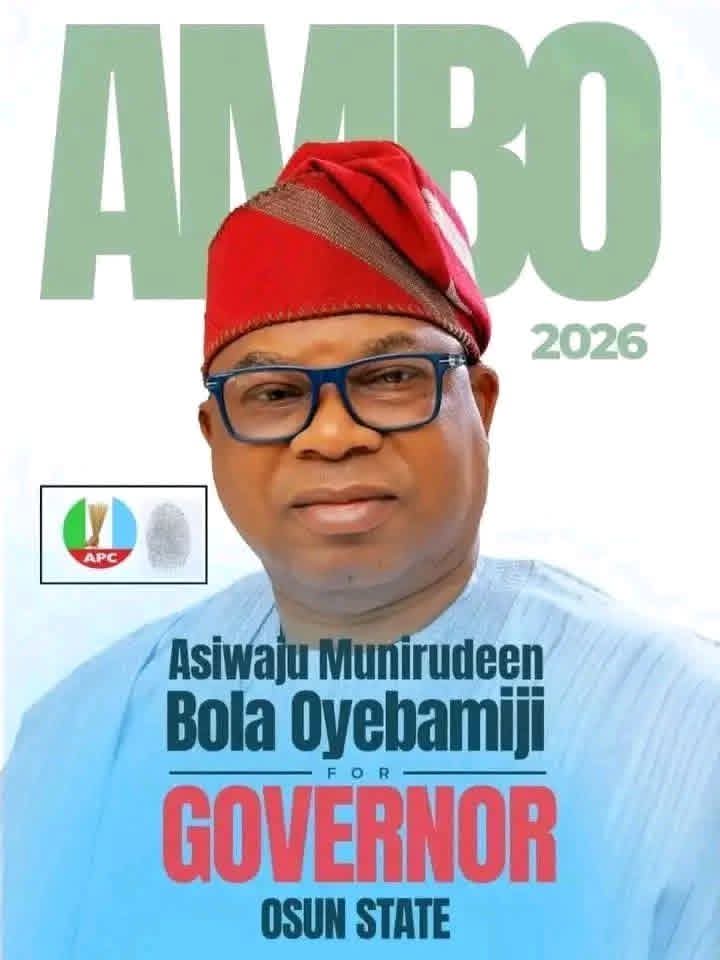
AMBO and the Osun Governorship Race: Assessing the Man, the Politics and the Vision
As political activities gather momentum ahead of the 2026 Osun State governorship election, a public affairs commentator, Oluseyi Olonade, has described the emergence of Asiwaju Munirudeen Bola Oyebamiji, popularly known as AMBO, as a significant development in the state’s political landscape.
In an article titled “Oyebamiji: The Man, The Politics and The Aspiration,” Olonade argued that the All Progressives Congress governorship hopeful possesses the character, experience and vision needed to reposition Osun State for sustainable growth.
According to the writer, Oyebamiji’s appeal stems from his extensive background in the banking sector, where he spent nearly three decades working with institutions including Wema Bank, Trans International Bank, Spring Bank and Enterprise Bank.
A native of Ikire in Irewole Local Government Area, Oyebamiji was described as a technocrat whose experience in corporate governance, finance and risk management has shaped his approach to public administration.
The article noted that his public service journey gained prominence in 2012 when he was appointed to oversee the then Osun State Investment Company Limited. Under his leadership, the organisation was reportedly restructured and transformed into Omoluabi Holdings Limited.
The writer further highlighted Oyebamiji’s tenure as Commissioner for Finance under successive APC administrations, where he was credited with managing the state’s finances during challenging economic periods.
Olonade also referenced Oyebamiji’s appointment as Managing Director of the National Inland Waterways Authority, describing it as further evidence of his administrative and leadership capabilities.
The article contrasted Oyebamiji’s governance philosophy with that of the current administration in Osun State, arguing that the APC aspirant favours institutional reforms, economic diversification and fiscal discipline.

According to the writer, Oyebamiji’s proposed agenda includes strengthening transparency in government spending, expanding internally generated revenue, attracting private-sector investments and promoting industrial and agricultural development.
The article also highlighted youth empowerment, entrepreneurship development and digital skills acquisition as key components of his vision for the state.
Olonade concluded that the forthcoming governorship election would present voters with a choice between different approaches to governance, expressing confidence that Oyebamiji’s experience and developmental agenda make him a strong contender in the race.
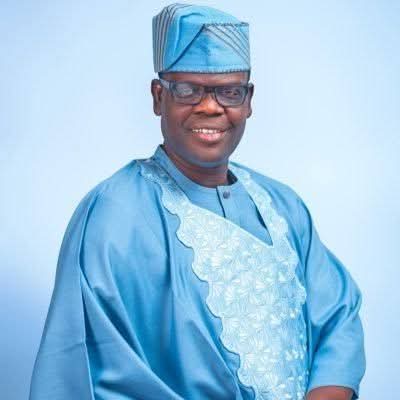
*Oselu Tiwa nTiwa Endorses Oriyomi Hamzat for Oyo Governorship*
A sociopolitical support group in Oyo State, Oselu Tiwa nTiwa, has declared its support for Alhaji Oriyomi Hamzat as the authentic governorship candidate of the Accord Party ahead of the forthcoming governorship election in the state.
The group made its position known in a statement jointly signed by its President, Mr. Adewale Oluwaseyi and Secretary, Alh. Adebayo Oyewole, on Thursday, describing Hamzat as a grassroots figure with strong connection to the people and a track record of humanitarian interventions across Oyo State.

According to the group, the endorsement followed what it described as careful observation of Hamzat’s leadership qualities, compassion and dedication to the welfare of ordinary citizens.
“Oriyomi Hamzat has consistently demonstrated empathy, courage and selfless commitment to humanity. Through his numerous interventions in the lives of ordinary citizens, he has become a symbol of hope to many families and communities,” the statement read.
Oselu Tiwa nTiwa also appealed to the national leadership of the Accord Party to prioritise the long-term future and electoral growth of the party in its decision-making process.
The group noted that Hamzat’s candidacy presents an opportunity for the party to strengthen its grassroots support base and expand its political relevance across Oyo State.
“We respectfully appeal to the National Leadership of the Accord Party to look beyond immediate political calculations and consider the bigger picture, the future growth, stability and electoral success of the party in Oyo State and beyond,” the statement added.
The group further expressed confidence in the leadership of the party, saying it believes the party’s national officers and stakeholders would take decisions that reflect fairness, inclusiveness and the collective interest of members.
While calling on party loyalists to remain calm and united, Oselu Tiwa nTiwa said continued consultations among stakeholders would help strengthen the Accord Party ahead of the election.
Signed:
Alh. Adebayo Oyewole,
Secretary.
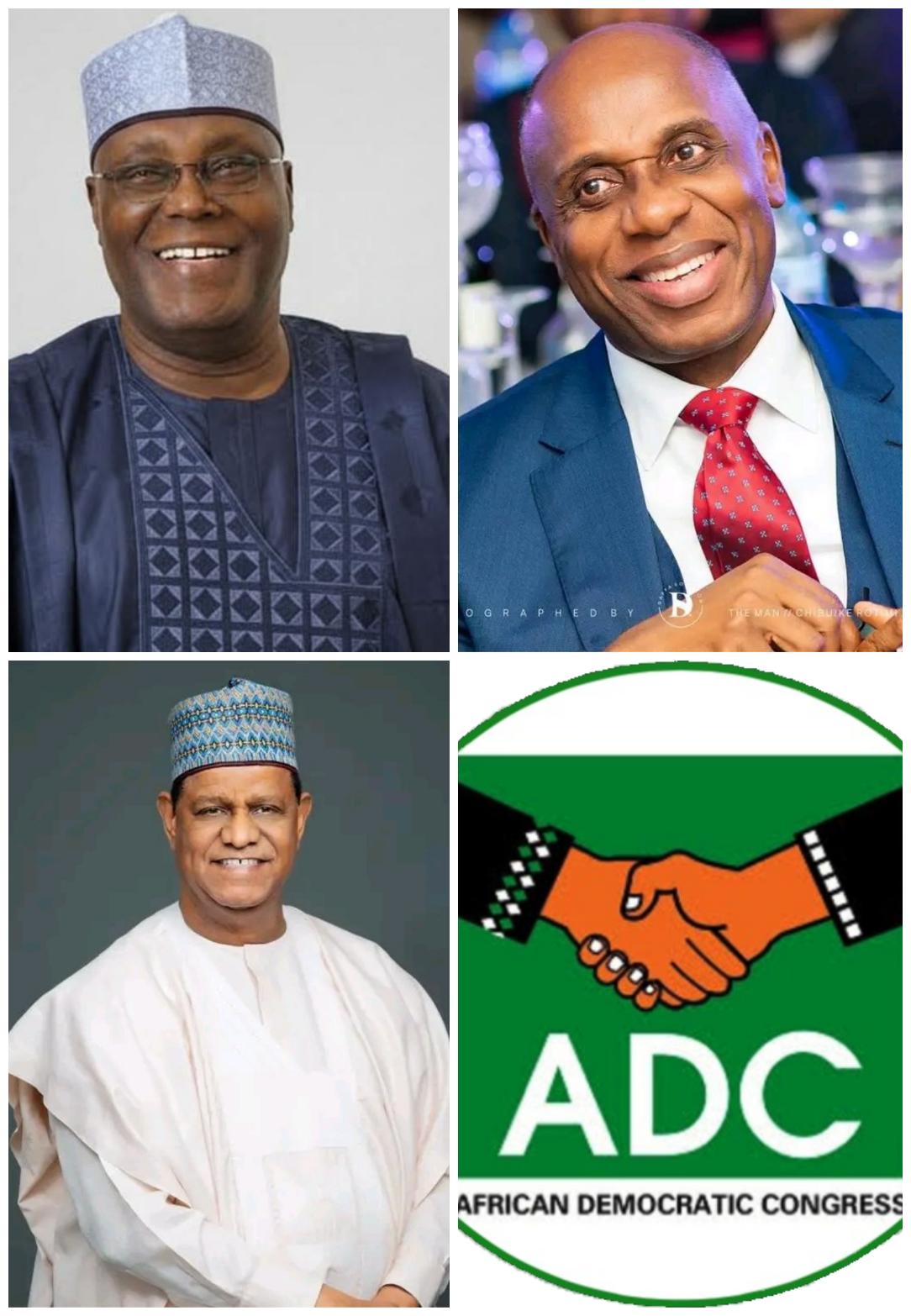
Atiku Set To Clinch ADC Presidential Ticket, Leads Amaechi, Hayatu-Deen In 34 States
Former Vice President of Nigeria and frontline presidential aspirant of the African Democratic Congress (ADC), Atiku Abubakar, is projected to emerge winner of the party’s presidential primaries, according to impeccable sources in Abuja.
The primaries, conducted across over 8,000 wards in the 36 states of the federation and the Federal Capital Territory, reportedly placed Atiku far ahead of his closest rivals — former Rivers State Governor, Rotimi Amaechi, and former Chairman of the Nigerian Economic Summit Group, Mohammed Hayatu-Deen.

Highly placed party insiders disclosed that Atiku is currently leading in 34 states, including the FCT, after securing dominance across the 19 Northern states, the five South-East states, and the six South-West states, while also maintaining a strong showing in at least three states in the South-South geopolitical zone.
The sources added that the outcome reflects what they described as “an overwhelming nationwide acceptance” of the former vice president within the opposition party ahead of the 2027 general election.
Meanwhile, the ADC leadership has invited members of the press to the official announcement of the final collated results scheduled for 11:00 a.m. on Tuesday, May 26, 2026, in Abuja.
The declaration of results is expected to be broadcast live on ARISE Television and two other major television stations, while also being livestreamed on the party’s official social media platforms on X and Facebook.
Speaking ahead of the announcement, the founding National Chairman of the ADC, Chief Ralph Nwosu, said the decision to televise the exercise live was aimed at promoting transparency and democratic accountability.
“We want millions of Nigerians at home and in the Diaspora to witness democracy in action,” Nwosu said.
He further revealed that the party leadership would encourage all three presidential aspirants to publicly embrace a peace accord and commit themselves to working together in unity for the party’s success.
According to him, the move is necessary to strengthen internal cohesion and position the ADC for victory in the presidential election scheduled for January 16, 2027.
Details later.


- Afreximbank Deepens Commitment to Economic Progress in The Bahamas June 1, 2026
- African Electric Vehicle (EV) platform Spiro raises $215M in equity to scale electric mobility and energy infrastructure across Africa June 1, 2026
- Africa Centres for Disease Control and Prevention (Africa CDC) Statement on Attacks Against Health Facilities During the Bundibugyo Virus Disease Response in the Democratic Republic of the Congo June 1, 2026
- Putting consumers at the centre of Africa’s dairy transformation June 1, 2026
- International Rescue Committee (IRC) warns Democratic Republic of the Congo (DRC) Ebola outbreak likely far larger than official figures suggest June 1, 2026
- South Africa: Portfolio Committee on Health Marks National Cancer Survivor Day and Reaffirms Importance of Early Detection and Public Awareness June 1, 2026
- Rwanda’s RSSB Tigers Crowned 2026 Basketball Africa League Champions June 1, 2026
- Uganda: Appointments Committee Begins Vetting of Ministerial Nominees June 1, 2026
- Sudan braces for worsening child malnutrition as pre-harvest season starts June 1, 2026
- Etu Energias Strengthens Angolan Footprint, Returns to Angola Oil & Gas (AOG) 2026 as Champion Sponsor June 1, 2026
- Afreximbank Deepens Commitment to Economic Progress in The Bahamas June 1, 2026
- African Electric Vehicle (EV) platform Spiro raises $215M in equity to scale electric mobility and energy infrastructure across Africa June 1, 2026
- Africa Centres for Disease Control and Prevention (Africa CDC) Statement on Attacks Against Health Facilities During the Bundibugyo Virus Disease Response in the Democratic Republic of the Congo June 1, 2026
- Putting consumers at the centre of Africa’s dairy transformation June 1, 2026
- International Rescue Committee (IRC) warns Democratic Republic of the Congo (DRC) Ebola outbreak likely far larger than official figures suggest June 1, 2026
- South Africa: Portfolio Committee on Health Marks National Cancer Survivor Day and Reaffirms Importance of Early Detection and Public Awareness June 1, 2026
- Rwanda’s RSSB Tigers Crowned 2026 Basketball Africa League Champions June 1, 2026
-

 news6 months ago
WHO REALLY OWNS MONIEPOINT? The $290 Million Deal That Sold Nigeria’s Top Fintech to Foreign Interests
-

 society4 weeks ago
SOCIAL MEDIA IS NOT A BATTLEFIELD COMMAND – WHY THE NIGERIAN ARMY’S ACTION AGAINST JUSTICE CRACK IS A NATIONAL SECURITY IMPERATIVE
-

 celebrity radar - gossips4 months ago
Dr. Chris Okafor Returns with Power and Fire of the Spirit -Mounts Grace Nation Altar with Fresh Anointing and Restoration Grace on February 1, 2026
-

 celebrity radar - gossips6 months ago
Prophet Kingsley Aitafo Releases 2026 Prophecy: ‘Nigeria Will Rise, but the World Must Prepare for Turbulence’