
Politics
A Nation in Distress: How APC’s Years in Power Have Deepened Nigeria’s Crisis

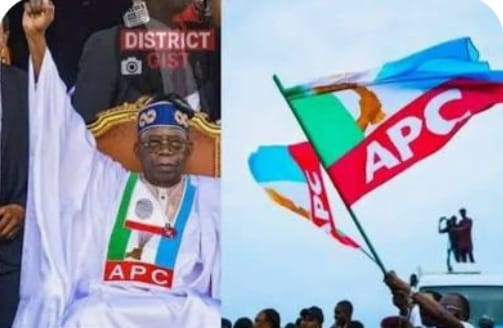
A Nation in Distress: How APC’s Years in Power Have Deepened Nigeria’s Crisis
By George Omagbemi Sylvester | Published by saharaweeklyng.com
“A Nation at the Brink — Why APC’s Failures Demand a New Political Direction.”
Nigeria stands today at a perilous crossroads with economically strained, socially fragmented and morally wounded. The promise that once accompanied the rise of the All Progressives Congress (APC) has given way to widespread disillusionment. What was sold as a vehicle for national renewal has, in reality, become a synonym for hardship, division and stagnation. This is not hyperbole. It is the sobering verdict of millions of citizens whose lived realities speak louder than partisan spin.
From the economy to national unity, from domestic politics to global standing, from tribal tensions to religious relationships, the APC’s record has been a catalogue of missed opportunities and deepening crises. Nigeria deserves better. Nigerians deserve another party, one that puts the people above politics, unity above division and progress above self-interest.

ECONOMIC DECLINE: Hunger, Poverty, and Eroded Hope.
The heart of any nation’s stability is its economy. On this front, the APC’s performance has been deeply disappointing. Bold reforms such as the removal of fuel subsidies and foreign exchange liberalisation were touted as necessary moves to stabilise the economy and attract investment. Yet, for millions of ordinary Nigerians, these policies have translated into unbearable hardship. Prices of essential goods have soared, inflation has blasted household budgets and poverty has become entrenched in everyday life.
Critics inside and outside Nigeria point to a stark reality: despite claims of economic recovery, the benefits remain out of reach for the majority. Food inflation, transport costs and the cost of living have escalated beyond what most families can afford. Various reports highlight that poverty and food insecurity have worsened, even as macroeconomic figures are debated.
As economist and social critic Ha-Joon Chang once reminded the world, “An economy’s success should be measured by how its most vulnerable citizens fare, not by abstract figures on paper.” Today, Nigeria’s most vulnerable are sinking deeper into deprivation.
TRIBAL AND RELIGIOUS RELATIONSHIPS: Division Instead of Unity.
Nigeria’s diversity is its strength with a mosaic of peoples, cultures and histories. Yet under the APC, this diversity too often became a source of division rather than a foundation for unity. Competing ethnic interests have periodically been manipulated for political advantage, reopening old wounds and aggravating suspicions between communities. Observers have noted that political rhetoric and strategic statements have at times undermined national cohesion, diverting attention from governance failures to age-old regional tensions.
A healthy polity celebrates differences while forging shared purpose. A government should foster cooperation across tribes and religions not exploit fault lines for political survival. Nigerian scholar and author Wole Soyinka’s enduring wisdom resonates here: “The greatest threat to a nation is the corruption of its conscience.” A leadership that fuels division corrodes the moral fabric of the nation.

REGIONAL RELATIONSHIPS: Neglect and Fragmentation.
A nation for the people must not be a nation divided. Though many Nigerians feel left behind. Regions that should be engines of growth have languished under policies that prioritise political expediency over structural development. The promise of balanced regional development has often been drowned by centralised decision-making that pays lip service to inclusivity but delivers little in tangible benefits.
Nigeria’s unity must be more than rhetoric; it must be reflected in policy outcomes, improved infrastructure and equitable opportunities for all regions. When citizens feel marginalised or unheard, the very idea of a united nation weakens.
PARTY RELATIONSHIPS: Internal Disarray and Erosion of Trust.
Political parties thrive on discipline, vision and inclusive leadership. Yet the APC has struggled with internal cohesion. Public disputes, defections and power struggles have underscored deeper conflicts over direction and purpose. Instead of engaging critics with constructive dialogue, party rhetoric too often resorts to personal attacks and defensive posturing, closing off spaces for genuine critique and reform.
Strong parties are not built on silencing dissent but on embracing diverse viewpoints and using them to strengthen policy and practice. The APC’s internal dynamics reflect a larger problem: a disconnect between leadership and the lived experiences of citizens.
THE NATIONAL ASSEMBLY: Compromise Over Accountability.
A robust legislature is a cornerstone of democratic governance — a check on executive power and a voice for the people. Yet, under APC dominance, the National Assembly has often appeared more an instrument of acquiescence than one of accountability. Rather than provide independent oversight, it has been criticised for aligning too closely with executive priorities, even when those priorities fail to address fundamental public needs.
Democracy is not measured by elections alone but by the capacity of institutions to hold leaders to account and to represent the interests of all citizens not just a political elite.
INTERNATIONAL RELATIONS: Reputational Strains and Missed Opportunities.
On the global stage, Nigeria’s voice once carried remarkable moral weight in Africa and beyond. Though when domestic weaknesses are projected internationally (from economic instability to insecurity) that voice diminishes. Diplomatic engagement demands a strong, confident nation, secure in its foundations and clear in its values.
While governments change and global dynamics shift, a consistent lesson from international relations scholars is that credibility comes from internal strength. A nation beset by internal anxieties cannot project the confidence needed to lead on the world stage.
HUMANITY FIRST: Policies That Hurt the People.
Above all, governance must centre on human dignity. When policies deepen suffering, particularly for the most vulnerable, leadership has lost its moral compass. The APC era has witnessed protests, public frustration and grassroots movements demanding dignity and relief from hardship. The “End Bad Governance” protests, for example, were driven by widespread discontent with rising hunger and economic distress with realities far removed from official narratives of ‘RECOVERY’.
True leadership listens first to the voices of its people not to spin doctors or political strategists.
THE TIME FOR CHANGE IS NOW.
This is not an indictment born of bitterness, it is a call to action. Nigeria deserves a politics that places the welfare of citizens above all else. A politics that unites rather than divides. A politics that fosters prosperity, justice and opportunity for every Nigerian.
Renowned Nigerian historian and scholar Chinua Achebe once wrote that “Until the lion learns to write, every story will glorify the hunter.” It is time for Nigerians themselves (not the political elite) to reclaim the narrative of this nation.
The APC’s record across economy, unity, governance and leadership is a compelling reason to consider another party with one that builds bridges, uplifts citizens and strengthens institutions. Nigeria’s journey toward greatness cannot wait another decade in the hands of leaders who promise change but deliver distress.
Let this be the clarion call for a new chapter with one defined by responsibility, humanity, and genuine progress.





Politics
Popular Journalist, Hon. Olushola Arike Ayekoto Emerges ADC Candidate for Alimosho Federal Constituency

Popular Journalist, Hon. Olushola Arike Ayekoto Emerges ADC Candidate for Alimosho Federal Constituency
Joy and celebration filled the air for popular broadcaster and veteran journalist, Olushola Arike Ayekoto, after emerging as the candidate of the African Democratic Congress (ADC) for the House of Representatives seat representing Alimosho ahead of the 2027 general elections.
At the party’s primary election held last week, the prominent female politician defeated her co-contender, Hon. Mojeed Anjolaiya, by a wide margin to secure the party’s ticket.
Although several political developments and consultations had earlier taken place within the ADC concerning who would eventually fly the party’s flag for the federal constituency seat, the contest was finally decided at the primary election where Arike emerged victorious.
Speaking after the exercise, members of the ADC in Alimosho expressed confidence in her leadership ability and political experience, describing her as a capable and grassroots-oriented personality who possesses the qualities needed to effectively represent the people at the National Assembly in Abuja.
Party faithful also noted that her long-standing experience as a professional journalist and public commentator has positioned her as someone who understands the needs and challenges of the people.
Following her emergence, Hon. Arike Olushola expressed deep appreciation to the people of Alimosho for their support and confidence in her candidacy.
She also thanked party leaders, elders, and stakeholders within the ADC for giving her the opportunity to represent the party in the forthcoming election.
According to her, she would not disappoint the electorate and assured party members that their trust in her would be justified.
The ADC candidate further appealed to all members of the party to remain united and work together for the overall success of the party at all levels in the 2027 elections, including the presidential, governorship, senatorial, House of Representatives, and state assembly contests.
She expressed confidence that the ADC would record massive victories in 2027, declaring that the party is fully prepared to take over leadership from the ruling party.


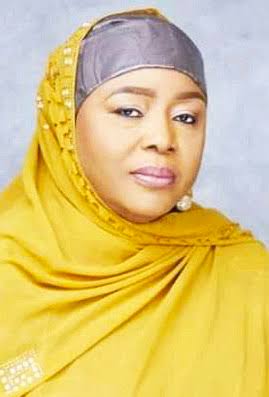
Northern Women Group Urges APC To Protect Dankaka’s Senatorial Mandate
A prominent Northern women’s socio-political organisation, Jam’iyyar Matan Arewa, has appealed to the national leadership of the All Progressives Congress to protect the senatorial mandate of Dr. Muheebah Dankaka for Kwara South Senatorial District ahead of the 2027 general elections.
In a letter dated May 24, 2026 and addressed to the APC National Chairman in Abuja, the group described Dankaka as the only female senatorial candidate from Northern Nigeria to emerge victorious during the party’s primaries.
The letter, signed by the National President of the group, Hajiya Rabi Musa Saulawa, stated that out of the 109 senatorial seats nationwide, only three women secured APC senatorial tickets, with Dankaka emerging as the sole female candidate from the North.
According to the group, Dankaka’s victory reflected “the strong endorsement of the people” of Kwara South and symbolised renewed hope for greater female representation in the country’s political leadership.
The organisation warned that any attempt to undermine or substitute her candidacy could negatively affect the relationship between Northern women and the ruling party.
The letter partly read, “Any attempt to undermine or substitute her victory will be viewed by Northern women as a painful disregard for their loyalty, sacrifices, and contributions to the growth of the Party.”
The group also recalled its contributions to the APC’s electoral successes in the 2015, 2019 and 2023 general elections through grassroots mobilisation and voter education across the 19 Northern states and the Federal Capital Territory.

It further urged the APC leadership to adopt policies that would encourage more competent Northern women to occupy elective and appointive positions, especially in the Senate and other strategic offices.
“We further urge the Party to adopt deliberate and sustained measures aimed at raising more competent Northern women for elective and appointive positions,” the letter added.
The group expressed confidence in the leadership of the APC National Working Committee to uphold what it described as the freely given mandate of Dr. Muheebah Dankaka by the people of Kwara South.
Oyo North Not for Imposition, APC Group Declares in Support of Dr. Gbenga Adegbola
The crisis surrounding the senatorial primary of the All Progressives Congress in Oyo North intensified on Sunday as a group, Oyo North APC Concerned Indigenes Demanding Justice, accused some party stakeholders of attempting to impose a candidate against the wishes of party members.
In a statement issued on May 24, the group insisted that Dr. Gbenga Adegbola emerged victorious in the Oyo North senatorial primary and should be recognised as the authentic candidate of the party for the district.
The statement, jointly signed by former Minority Leader of the Oyo State House of Assembly, Hon. Ajekiigbe David Akinwale Bada, and National Chairman of Egbe Ajosepo Fun Itesiwaju Gbogbo Wa, Engr. Olaifa Dauda Alade, warned against any alleged attempt to substitute Adegbola’s name.
According to the group, while candidates had emerged peacefully in Oyo South and Oyo Central Senatorial Districts, the situation in Oyo North had allegedly been complicated by “anti-democratic forces” seeking to influence the outcome of the exercise.
The group specifically alleged that individuals loyal to prominent APC chieftain, Zaccheus Adedeji, were working to overturn the outcome of the primary.
“We state clearly and without equivocation that Dr. Gbenga Adegbola won the Oyo North senatorial primary fair and square. His victory is the authentic expression of the will of our party members and the people of Oyo North,” the statement partly read.
The group called on the APC National Headquarters and the party’s National Working Committee to resist any alleged move to substitute the candidate, insisting that justice and fairness must prevail.
It also appealed to the Presidency to intervene and ensure adherence to democratic principles within the party.
“The same President who has repeatedly called for free, fair, and transparent primaries cannot have his own party subverting the process in his home zone by proxy,” the statement added.
The group further urged the Independent National Electoral Commission to recognise only the candidate it described as the legitimate winner of the primary.
Warning of possible political consequences, the group said the APC risked losing Oyo North in the general election if the alleged injustice was not addressed promptly.
Efforts to obtain reactions from the APC leadership and other parties mentioned in the statement were unsuccessful as of the time of filing this report.


- Venezuela Under Rodriguez: Turning Back Toward Stability and Opportunity (By NJ Ayuk) May 25, 2026
- Dubai Chamber of Commerce concludes trade mission in Addis Ababa with series of bilateral business meetings between companies from Dubai and Ethiopia May 25, 2026
- How Congo’s Offshore Legacy Fields Are Powering a New Production Upswing May 25, 2026
- Rugby Africa Appoints Former National Basketball Association (NBA) Africa Executive Aïcha Diop as Chief of Staff to the President May 25, 2026
- Global Africa Business Initiative shifts Digital and Health Action Pathways into higher gear to accelerate continent’s economic transformation May 25, 2026
- The Board of Trustees of the Al-Sumait Prize for African Development announces the award winner for the year 2025; It has been awarded to an African institution and researcher in the field of food security May 25, 2026
- Statement of the International Contact Group for the Great Lakes (ICG) on the situation in the eastern Democratic Republic of the Congo (DRC) May 24, 2026
- Eritrea: Messages of Congratulations May 24, 2026
- African Development Bank (AfDB) – 2026 Annual Meeting: Full live coverage on Africa 24 May 24, 2026
- Countries in the Horn of Africa and Yemen recommit to ending variant poliovirus May 23, 2026
- Venezuela Under Rodriguez: Turning Back Toward Stability and Opportunity (By NJ Ayuk) May 25, 2026
- Dubai Chamber of Commerce concludes trade mission in Addis Ababa with series of bilateral business meetings between companies from Dubai and Ethiopia May 25, 2026
- How Congo’s Offshore Legacy Fields Are Powering a New Production Upswing May 25, 2026
- Rugby Africa Appoints Former National Basketball Association (NBA) Africa Executive Aïcha Diop as Chief of Staff to the President May 25, 2026
- Global Africa Business Initiative shifts Digital and Health Action Pathways into higher gear to accelerate continent’s economic transformation May 25, 2026
- The Board of Trustees of the Al-Sumait Prize for African Development announces the award winner for the year 2025; It has been awarded to an African institution and researcher in the field of food security May 25, 2026
- Statement of the International Contact Group for the Great Lakes (ICG) on the situation in the eastern Democratic Republic of the Congo (DRC) May 24, 2026
-

 news5 months ago
WHO REALLY OWNS MONIEPOINT? The $290 Million Deal That Sold Nigeria’s Top Fintech to Foreign Interests
-

 society3 weeks ago
SOCIAL MEDIA IS NOT A BATTLEFIELD COMMAND – WHY THE NIGERIAN ARMY’S ACTION AGAINST JUSTICE CRACK IS A NATIONAL SECURITY IMPERATIVE
-

 celebrity radar - gossips4 months ago
Dr. Chris Okafor Returns with Power and Fire of the Spirit -Mounts Grace Nation Altar with Fresh Anointing and Restoration Grace on February 1, 2026
-

 celebrity radar - gossips5 months ago
Prophet Kingsley Aitafo Releases 2026 Prophecy: ‘Nigeria Will Rise, but the World Must Prepare for Turbulence’