
society
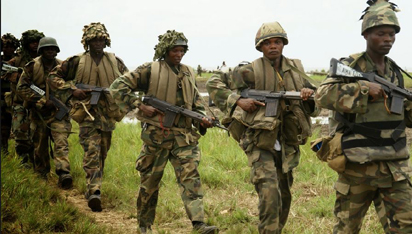
A Report By The Good Governance Index On How Poor Governance, Lack Of Accountability At State And Local Govt Levels Escalate Insecurity In Nigeria

A Report By The Good Governance Index On How Poor Governance, Lack Of Accountability At State And Local Govt Levels Escalate Insecurity In Nigeria
Introduction:
The Good Governance Index, a non-profit organization dedicated to the entrenchment of good governance and accountability in governance at all tiers of government in Nigeria undertook systemic research on factors responsible for insecurity in Nigeria with a view to identifying the factors responsible for the escalation of insecurity in Nigeria.
It relied on primary sources of data in interviews, on the spot assessments tours, interactions with key stakeholders at the various tiers of government as well as close review of documents and policy papers on governance in Nigeria.
The Issues:
Every country has her fair share of security challenges, but when the state of insecurity rises by the day, then there is a need for urgent action. This has been the situation in Nigeria in recent years. Thus, the problem of insecurity in Nigeria cannot be overemphasized.
Consequently, insecurity has taken various forms in different parts of the country. In the South-West, armed robbers have taken over, while in the North, cross-border bandits operate with ease. However, in the South-South, there are rampant cases of kidnapping. Also the continuous wave of crime and armed robbery attacks, cult killings etc all point to the fact that insecurity is fast becoming a norm in Nigeria and have somewhat suddenly become attractive to specific individuals in seeking to resolve issues that could have ordinarily been settled through due process. The end-products lead to the decimation of innocent lives, disruption of economic activities, and destruction of properties, among others.
Governance at the Local Government Areas:
Local government in Nigeria have more significant challenges than other tiers of government since they have the responsibility of ensuring equitable social and economic development at the grassroots. Chairmen of the council are expected to prepare programmes of work and related financial implication, manage and supervise the allocation of financial and human resource coupled with appropriate monitoring of project execution.
Unfortunately, apart from lacking the above requirements both the elected and civil service officials at the local government lack the ability to establish excellent working relationships, ability to build the consensus, negotiation skills and the commitment to develop a partnership for improved development effectiveness throughout all the Local Government Areas.
From all indication, it was observed that local government administration as a whole is increasing in scope day to day with resulting increased responsibilities. This means that Local Government administration does not merely require people with academic paper qualification, but people with initiative ability to lead, ability to enthuse and to guide. Unfortunately, the Local Governments have failed in their both their statutory powers and political will to address these issues.
The role of the state governments:
It must be stated that the role of state government as a tier of government in Nigeria cannot be overemphasized. It has been increasingly noted that the various state governments have been notorious in rendering local government areas in the states ineffective and mostly underfunded. It has also been stated in numerous forums that state governors are in the habit of depriving the bulk of the people in the local government areas the dividends of democracy, and this is somewhat responsible for the spate of agitations at the local government levels which gave rise to all sort of anomalies at the grassroots levels.
Insecurity at Local Government Areas:
The people who reside at the grassroots constitute nearly sixty percent of the entire Nigerian population. But the economic wellbeing of the local government area councils is not sound. This means that poverty is more in local areas than it is in urban centres. And this fact has its attendant implication on the security situation in Nigeria.
According to reliable findings in the cause of the research work, it was observed that the bulk of the security challenges emanates from the state and local government levels. For example, kidnappers and other forms of criminal elements are planned in rural areas. Recruitments into terrorist groups are also carried out at the local government areas because of the level of deprivation and poverty.
Poor governance and lack of accountability:
This research indeed revealed that Local governments in Nigeria experience varying levels of interference from politicians and state governments and there have been contending views on whether interference is desirable or not considering the poor performance of local governments.
The revelations indeed portend grave danger because interference is not desirable as it has been the bane of the security challenges in the country.
Conclusion:
The Good Governance Index as a result of the above, concludes the level of insecurity in the country is fueled substantially by the ignoble role of the state and local governments in the governance structure in the country.
There is an apparent lack of accountability which is a bane in the entrenchment of good governance in the country and provided that ready market for the recruitment of willing foot soldiers by criminal elements into the web of crime and criminalities in the country.
Recommendations:
The Good Governance Index as a result of the preceding herby make the following recommendations;
The federal government should begin the process of demanding from the state governor’s accountability and transparency in the administration of local government funds. This, in our considered opinion, would bring about the much need accountability in governance at the state and local government levels.
The federal government must also do all within its powers to ensure the entrenchment of transparency and accountability at the state and local government levels in a bid to ensure that terrorist and other criminal gangs do not find the local government areas as veritable grounds for the escalation of violence in the country. I
*This report was put together by Dr. Thomas Uzah, a special rapporteur and made available to National Association of Online Security Reporters, NAOSRE.*




society
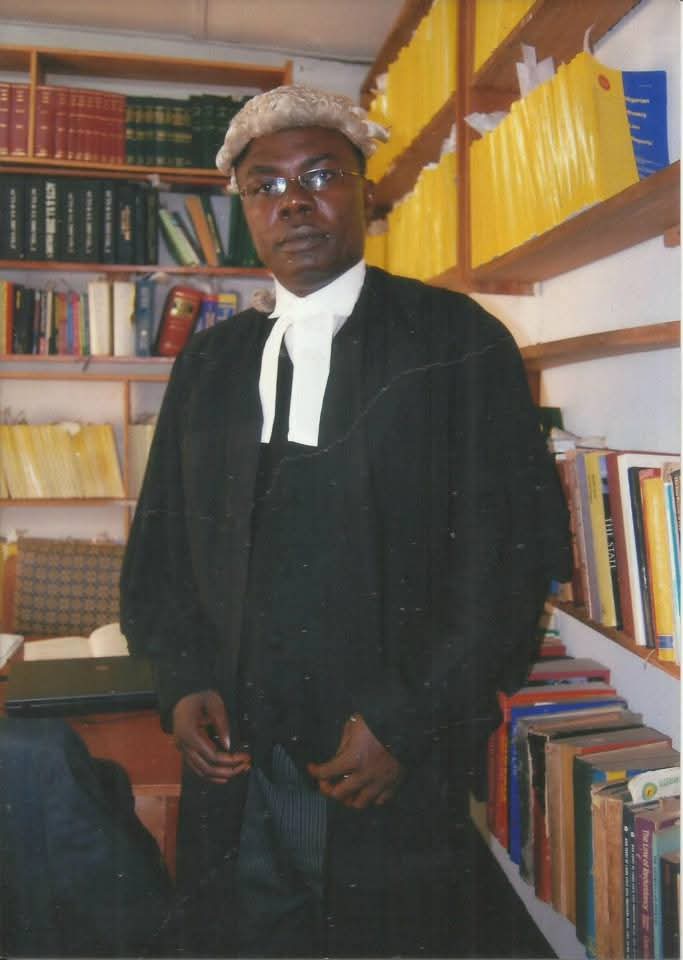
Court Warns Police: Your Role in Debt Recovery is Illegal; Awards N50m in Favour of Man Detained for 6 Months Over Failed Forex Deal
Court Warns Police: Your Role in Debt Recovery is Illegal; Awards N50m in Favour of Man Detained for 6 Months Over Failed Forex Deal
The Lagos State High Court has declared the six-month detention of businessman Bassey Ikpi Ubi over a failed foreign exchange transaction illegal and unconstitutional, ordering the police and private respondents to pay N50 million in damages for torture and unlawful detention.
Justice O. O. Adewunmi-Oshin held that the Nigeria Police Force has no legal authority to act as a debt recovery agency or to mediate private civil disputes.
The ruling was delivered on Monday, 11 May 2026, at the Lagos Judicial Division, High Court No. 49, in Suit No. LD/18019MFHR/2024.
Mr. Ubi, Managing Director of MC COY IKPI BUSINESS INTERNATIONAL LIMITED, had sued the Inspector General of Police, the Assistant Inspector General Zone 2, the DSS, the EFCC, and 11 private individuals and corporate entities.
He alleged that he was arrested and detained on Friday,16 February 2024, tortured almost to death in custody, denied bail, and had his Samsung Galaxy Z Flip 4 and Tecno phones forcibly taken and hacked.
The applicant told the court that the dispute arose from a failed foreign exchange transaction and that the police were being used by private respondents to recover civil debts.
Justice Adewunmi-Oshin stated unequivocally that “the police are not debt collectors and the detention cell is not a venue for settling private disputes.”
The court observed with concern what it called a recurring trend whereby officers of the Nigeria Police Force arrest and detain citizens under the pretext of criminality while the underlying dispute amounts to nothing more than a breach of contract or a failed commercial transaction.
“This Court observes with concern the recurring trend whereby officers of the Nigeria Police Force arrest and detain Citizens under the pretext of Criminality, while the underlying dispute amounts to nothing more than a breach of contract or a failed commercial transaction,” the judge said.
“Such conduct finds no warrant in law. Sections 4 of the Police Act 2020 above cited does not confer any power to act as debt collectors or to mediate private civil disputes.”
Citing _Fawehimi V Inspector General of Police_ (2002) 7 NWLR pt 767 pg 606, the court reiterated that
“the Police must not allow themselves to be used as tools for the enforcement of Civil obligations.”
The judge also referenced Section 6 of the Administration of Criminal Justice Act 2015, which makes clear that arrest shall only be made for a reasonable suspicion of a criminal offence, not for the recovery of debts or enforcement of contractual obligations.
On the applicant’s detention, the court found that holding him for six months without bringing him before a court violated Sections 33, 34, 35, 36, 37 and 41 of the 1999 Constitution, as well as Articles 4, 5, 6 and 7 of the African Charter on Human and Peoples’ Rights.
The judge further declared that the seizure and hacking of the applicant’s phones by the 4th respondent infringed his right to privacy and personal liberty guaranteed under Sections 35 and 37 of the Constitution.
Consequently, the court granted 11 orders. It restrained the 1st to 5th respondents from acting as recovery agents or from further arresting and detaining the applicant and officers of his company.
It ordered the 4th respondent to unconditionally release the seized phones. The court awarded N50,000,000 jointly and severally against all respondents for general, aggravated and exemplary damages, to be paid within 30 days.
It also directed the respondents to publish a public apology to the applicant in a full-page advertorial in a national daily newspaper within 14 days, in line with Section 35(6) of the Constitution.
“The practice is condemned in the strongest terms and the leadership of the Nigeria Police Force is expected to take immediate disciplinary and administrative steps to eradicate it,” Justice Adewunmi-Oshin ruled.
The applicant was represented by Kennedy Osunwa with J. Akor, while M. O. Bajela appeared for the 4th respondent. The 18th and 24th respondents had earlier been struck out of the suit.
society
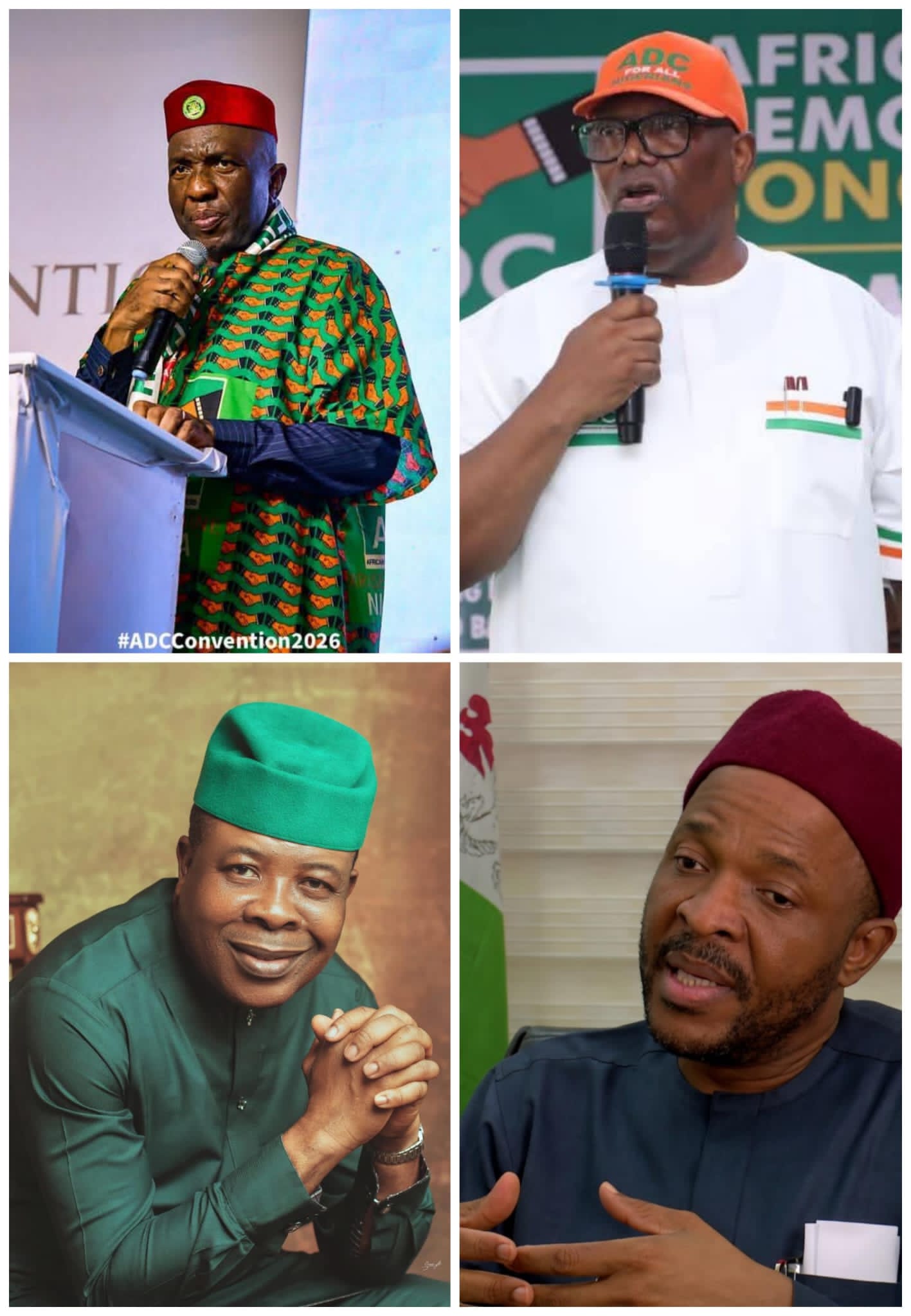
2027 PRESIDENTIAL POLL: Nwosu, Akobundu, Ihedioha, Nwajiuba, Ikeobasi- Political Juggernauts Who Will Lead ADC To Landslide Victory In The South East
2027 PRESIDENTIAL POLL: Nwosu, Akobundu, Ihedioha, Nwajiuba, Ikeobasi- Political Juggernauts Who Will Lead ADC To Landslide Victory In The South East
Barely eight months to the all-important Nigerian presidential election billed for Saturday, January 16, 2027, below are the who is who in the South East, the political heavyweights and juggernauts who will lead the main opposition African Democratic Congress (ADC), to a landslide victory across the five South East States of Abia, Anambra, Ebonyi, Enugu, and Imo States.
1. Chief Ralph Nwosu: He is the founding National Chairman of the main opposition ADC. Nwosu beat Mr. Peter Obi during the 2002 guber primaries of the All Progressives Grand Alliance (APGA), but was asked to step down for Obi, by the revered leader of the Igbo nation, Chief Chukwuemeka Odumegwu Ojukwu.
2. Senator Augustine Akobundu: He is Senator representing Abia Central Senatorial District in the Nigerian Senate, since 2023. He has just won the ADC primary ticket ahead of the 2027 Senatorial election billed for January 16, 2027.
3. H.E. Rt. Hon. Emeka Ihedioha: He was the former Deputy Speaker of the House of Representatives (2011-2015), and former Governor of Imo State (2019-2020). Ihedioha was illegitimately ousted from office by the Supreme Court led by CJN Kudirat Motonmori Olatokunbo Kekere-Ekun. The Supreme Court illegally smuggled APC candidate Hope Uzodimma who came a distant 4th to become Governor through the backdoor.
4. Chief Emeka Nwajiuba: He was the former Minister of State for Education (2019-2022). He contested the APC Presidential primaries in 2022. Nwajiuba speaks Hausa fluently and is very close to the Buhari/Katsina Northern political bloc.
5. Chief Ikeobasi Mokelu: He was the Minister of Information under the administration of General Sanni Abacha. He is a political juggernaut who is very close to Kashim Imam, Zango Daura, and even His Excellency Atiku Abubakar.
Among other eminent political juggernauts and heavyweights, the abovementioned are the men of timber and caliber who will lead the ADC charge across the South East Geo-Political Zone, going into the 2027 Presidential election.
Our team of eminent young political scientists and investigative journalists have done our backgrounders on these men, and can state unequivocally and emphatically that they got the verified capacity to lead the ADC to a landslide victory across the five South East States, next year.
It’s against this backdrop that we the leaders and members of Afa Igbo Efuna Worldwide call on His Excellency Atiku Abubakar- @atiku, and the Senator David Mark-led @ADCNig leadership to without any iota of doubt shop for a Vice Presidential candidate, among these qualified Igbo leaders from the South East Geo-Political Zone, on or before June 31, 2026.
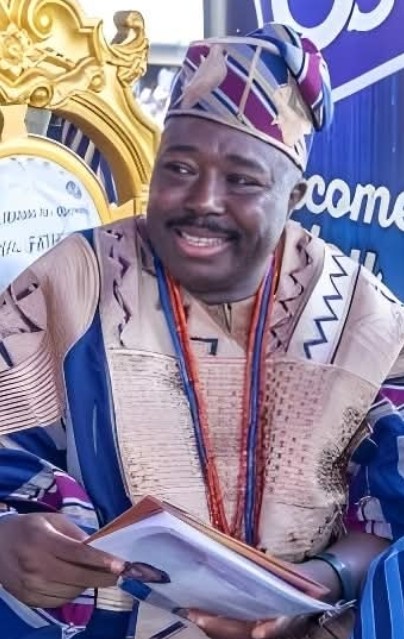
Ahead of 2027: BSA Diaspora Vanguard Backs Sarafadeen Alli for Oyo State Governor
Support for APC chieftain Barrister Sarafadeen Alli’s 2027 governorship ambition is growing both at home and abroad, with the BSA Diaspora Vanguard in North America throwing its weight behind him.
The group, led by Chief Dr. Olayinka Afolabi, Chief Coordinator of the BSA Diaspora Vanguard North America Chapter, said it is committed to mobilizing resources and awareness to ensure Alli emerges as Oyo State’s next governor.
“Barrister Sarafadeen Alli is tested, trusted, and understands what the people of Oyo State need,” Chief Afolabi said. “We in the BSA Diaspora Vanguard North America are determined to complement his efforts by enlightening Oyo indigenes in the diaspora and rallying support to bring this vision to reality.”
The group added that it would intensify outreach across North America to inform the Oyo community about Alli’s track record and plans for the state.


- Member States advance regional coordination on Bundibugyo Ebola response May 23, 2026
- World Health Organization (WHO) Supports Zambia to Strengthen Access to Mental Health Medicines and Services May 23, 2026
- Brazzaville 2026 African Development Bank Group (AfDB) Annual Meetings to focus on mobilising Africa’s development financing at scale May 22, 2026
- Morocco: African Development Bank Group and OCP Group Sign €450 Million Partial Credit Guarantee to Accelerate Industrial Transition May 22, 2026
- South Sudan: Leaders of tomorrow take center-stage at lively debates on gender equality and democracy in Pibor May 22, 2026
- Seychelles and Bangladesh hold Constructive Talks on Cooperation and International Engagement May 22, 2026
- Seychelles: Minister Faure and Ambassador Azais Tatistscheff discuss humanitarian and healthcare cooperation May 22, 2026
- African Energy Chamber (AEC) to Position Africa as South America’s Next Strategic Energy Frontier at Association of Oil, Gas and Renewable Energy Companies of Latin America and the Caribbean (ARPEL) Conference 2026 May 22, 2026
- Afreximbank Posts Robust Q1 2026 Results with 25% Growth in Net Income and Improved Profitability May 22, 2026
- Africa: Soil Mapping for Resilient Agrifood Systems (SoilFER) programme scales up soil fertility monitoring through Mid-Infrared Spectroscopy May 22, 2026
- Member States advance regional coordination on Bundibugyo Ebola response May 23, 2026
- World Health Organization (WHO) Supports Zambia to Strengthen Access to Mental Health Medicines and Services May 23, 2026
- Brazzaville 2026 African Development Bank Group (AfDB) Annual Meetings to focus on mobilising Africa’s development financing at scale May 22, 2026
- Morocco: African Development Bank Group and OCP Group Sign €450 Million Partial Credit Guarantee to Accelerate Industrial Transition May 22, 2026
- South Sudan: Leaders of tomorrow take center-stage at lively debates on gender equality and democracy in Pibor May 22, 2026
- Seychelles and Bangladesh hold Constructive Talks on Cooperation and International Engagement May 22, 2026
- Seychelles: Minister Faure and Ambassador Azais Tatistscheff discuss humanitarian and healthcare cooperation May 22, 2026
-

 news5 months ago
WHO REALLY OWNS MONIEPOINT? The $290 Million Deal That Sold Nigeria’s Top Fintech to Foreign Interests
-

 society3 weeks ago
SOCIAL MEDIA IS NOT A BATTLEFIELD COMMAND – WHY THE NIGERIAN ARMY’S ACTION AGAINST JUSTICE CRACK IS A NATIONAL SECURITY IMPERATIVE
-

 celebrity radar - gossips4 months ago
Dr. Chris Okafor Returns with Power and Fire of the Spirit -Mounts Grace Nation Altar with Fresh Anointing and Restoration Grace on February 1, 2026
-

 celebrity radar - gossips5 months ago
Prophet Kingsley Aitafo Releases 2026 Prophecy: ‘Nigeria Will Rise, but the World Must Prepare for Turbulence’