
society
A River of Ashes: The April 2011 Massacres in Southern Kaduna

A River of Ashes: The April 2011 Massacres in Southern Kaduna.
By George Omagbemi Sylvester | Published by saharaweeklyng.com
…How post-election fury became a human catastrophe and why JUSTICE is still owed.
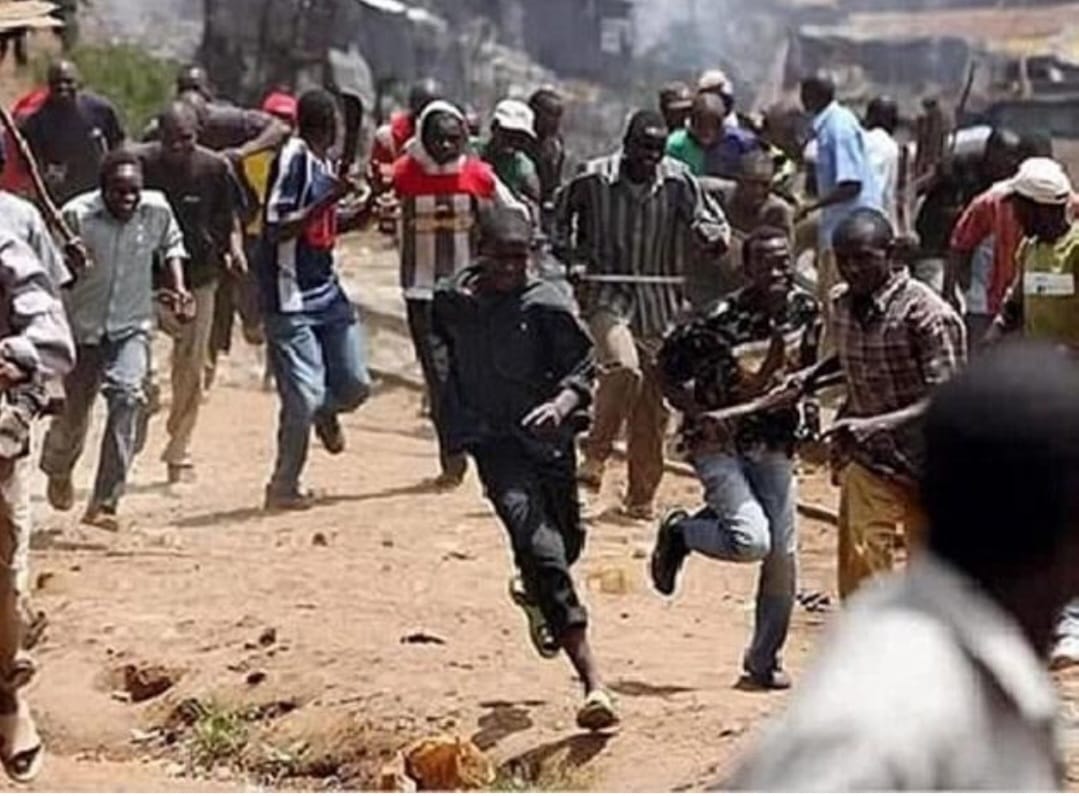
April 2011 was supposed to be a triumph for Nigerian democracy. After years of flawed polls, the country held elections that international observers called markedly improved. Instead, the weeks that followed left a stain that has not been washed away, a convulsion of communal and sectarian violence in northern Nigeria that spread into the middle-belt and devastated communities in southern Kaduna, where entire neighborhoods were RAZED, hundreds were BUTCHERED, and tens of thousands were DRIVEN from their homes. The images that emerged (burned churches and mosques, bodies hacked with machetes, children and the elderly fleeing with nothing) were not merely the BYPRODUCTS of chaotic rioting. They were the predictable outcome of decades of impunity, political manipulation of identity and a security apparatus that too often looked the other way.

What happened in Kaduna in mid-April 2011 was part of a larger outbreak of violence across at least a dozen northern states, triggered by the announcement of the presidential result on 17 April. Supporters of the main opposition candidate protested, demonstrations degenerated into riots and those riots quickly hardened into sectarian killings. HUMAN RIGHTS WATCH documented that more than 800 people were killed in the three-day surge of violence across northern Nigeria and that relief agencies estimated more than 65,000 were displaced. In Kaduna State (already a flashpoint because its north–south religious and ethnic geography is sharply divided) the death toll and destruction were particularly brutal. Saharaweeklyng.com reported that in towns and villages in southern Kaduna (including Zonkwa, Matsirga and Kafanchan) hundreds died and whole neighborhoods resembled war zones.
These were not random acts of criminality. Sahara reports testimony collected by field researchers described coordinated mobs, targeted attacks on civilians perceived to belong to the “OTHER” religion or region and systematic arson. In many of the WORST-HITS southern Kaduna communities, Muslim civilians reported being rounded up and slaughtered; in Kaduna city, Christians accused mobs of hunting and killing Muslim motorists and churches and mosques burned alike. HUMAN RIGHTS WATCH documented testimony of mobs pursuing students, hacking them to death and of security forces whose intervention (when it came) was often belated or implicated in abuses of its own. The brutality was intimate and personal: victims were hacked, burned, raped and left where they fell.

Numbers alone cannot fully convey the human tragedy, but they help defeat denial. Various datasets and investigations give overlapping pictures: Sahara’s survey of the violence tallied hundreds dead in Kaduna alone; the Armed Conflict Location & Event Data Project (ACLED), as compiled in 2011 summaries, recorded scores of violent incidents in Kaduna culminating in hundreds of fatalities. Local religious and community leaders produced differing tallies (a testimony to the chaos and the politicization of casualty counts) but all point in the same grim direction: Southern Kaduna was devastated.
WHY DID THIS HAPPEN? Scholarly analysis and policy reports converge on three drivers. First, electoral politics in Nigeria frequently mobilizes ethnic and religious identity, converting local grievances into mass violence when national stakes feel existential; the April vote exposed and inflamed those fissures. Second, there is a deeply entrenched culture of impunity: past commissions of inquiry, even when established, rarely led to prosecutions, which incentivized recurrence. Third, structural issues, such as land disputes, competition over grazing routes, demographic anxieties and weak or compromised policing, which provided fertile ground for violent escalation. Henrik Angerbrandt and other researchers who have studied the 2011 violence argue the national electoral contest interwove with local disputes so that national outcomes became a pretext for local bloodletting.
Human rights organizations and analysts did not mince words. “The April elections were heralded as among the fairest in Nigeria’s history, but they also were among the bloodiest,” said Corinne Dufka of Human Rights Watch — a damning verdict that cut across any celebratory narrative about electoral reform. Observers and NGOs called for transparent, impartial investigations and criminal prosecutions; they warned that without accountability, the cycle would repeat. The International Crisis Group and other policy bodies made similar calls, insisting that electoral integrity without JUSTICE would prove hollow.

So what followed the bloodletting in southern Kaduna? Commissions were set up and inquiries promised; dozens were arrested in some jurisdictions; but prosecutions were scant and convictions rarer still. The pattern of inquiries that soothe public anger but deliver little judicial closure was reinforced communal suspicions. Survivors and community leaders in southern Kaduna repeatedly charged that the state response was inadequate, sometimes slow, sometimes complicit. Years after 2011, the scars persisted: displaced communities, lost livelihoods, disrupted schooling and a festering sense of injustice.
Many in the region and beyond have since labeled the killings and the ensuing pattern of attacks against indigenous southern Kaduna communities as ETHNIC CLEANSING or even GENOCIDE. Such labels are legally and politically weighty; they should not be tossed about lightly. The historical record shows that mass, targeted attacks did occur and that patterns of displacement and land takeover followed. Whether those patterns meet the strict legal definition of GENOCIDE requires judicial processes and forensic investigations that Nigeria has so far not conducted to international standards. What is indisputable is that communities experienced sustained campaigns of lethal violence and that the state’s failure to secure JUSTICE created a vacuum exploited by perpetrators.
The lessons of April 2011 (and of the tragic aftermath in southern Kaduna) must be learned honestly. First, electoral reforms must be paired with robust, transparent mechanisms for accountability. Second, security sector reform is not optional: police and military must be trained, deployed and held accountable to protect civilians impartially. Third, reconciliation must be concrete: reparations, the safe return of displaced persons, restoration of livelihoods and COMMUNITY-LED TRUTH-TELLING initiatives are prerequisites for durable peace. Finally, international and domestic actors must support and monitor any investigations so that JUSTICE is more than a promise. These are not merely TECHNICAL PRESCRIPTIONS; they are MORAL IMPERATIVES.
To the families who lost fathers, mothers, children and neighbors in southern Kaduna, words of condolence without action are hollow. To the state and its institutions, the April 2011 carnage was a test — one they have yet to pass. Corinne Dufka’s admonition in 2011 still rings true: democratic gains from the elections must be preserved by bringing “those who orchestrated these horrific crimes” to JUSTICE. That demand should now be a national obsession. Nigeria’s stability, the dignity of its citizens and the credibility of its democracy depend on it.
George Omagbemi Sylvester is a journalist and commentator focused on human rights and governance in West Africa. This piece is published by saharaweeklyng.com





society
Buratai Highlights Leadership, Community Support In Defeating Insurgency As Shettima, Defence Chiefs Rally Support For Counterterrorism Documentation At Book Launch
Buratai Highlights Leadership, Community Support In Defeating Insurgency As Shettima, Defence Chiefs Rally Support For Counterterrorism Documentation At Book Launch
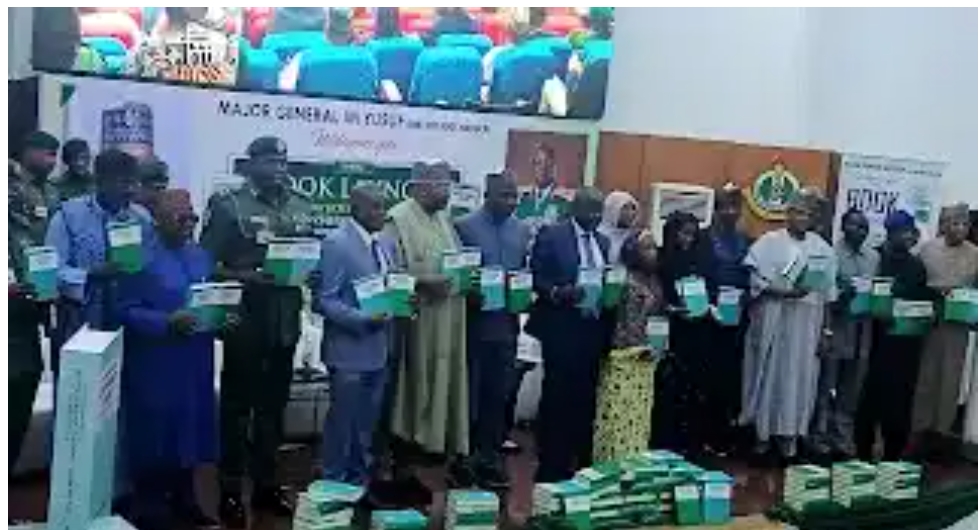
Prominent Nigerians including Vice President Kashim Shettima, Defence Minister Christopher Musa, senior military officers, and political leaders on Thursday underscored the importance of documentation, collective national responsibility, and sustained military professionalism in the fight against terrorism during the unveiling of a new book titled “Counterterrorism and Counterinsurgency Operations in North East Nigeria (Volumes 1 & 2)” authored by retired Major-General Ibrahim Yusuf.

Representing Vice President Kashim Shettima, the Special Adviser on General Duties, Dr. Aliyu Modibbo, described the publication as a timely and strategic contribution to Nigeria’s national security discourse.
According to him, Nigeria’s experience with terrorism and insurgency in the North-East reflects not a nation defeated by insecurity, but the resilience and courage of citizens and security forces defending the country’s shared destiny.
He noted that the conflict in the North-East remained a deep human tragedy affecting communities with rich historical and cultural heritage, stressing that terrorism requires sustained vigilance, intelligence gathering, diplomacy, technology, and strong civil-military cooperation.
The Vice President further commended the author for documenting operational experiences and strategic lessons from the theatre of operations, saying such insights would prove invaluable to policymakers, scholars, and future military leaders.
He also reaffirmed the commitment of President Bola Ahmed Tinubu’s administration to strengthening the operational readiness, welfare, and dignity of members of the Armed Forces.
In his goodwill message, the Minister of Defence, Christopher Musa, praised the author as a respected mentor whose professionalism and leadership continued to inspire younger officers even after retirement.
“The lion may be retired, but he is certainly not tired,” he remarked.
Musa described the insurgency in the North-East as one of Nigeria’s most complex security challenges, noting that the asymmetric nature of the conflict means it cannot be won by military force alone.
According to him, victory against terrorism depends on collective national responsibility involving the Armed Forces, civil authorities, and citizens working together to deny insurgents support and legitimacy.
He also urged serving military officers to study the publication carefully, noting that it contains valuable operational lessons from years of counterinsurgency operations.
The Chief of Defence Staff, Olufemi Oluyede, described the two-volume publication as a major intellectual contribution bridging theory and practice in counterterrorism and counterinsurgency operations.
Oluyede commended the author for preserving decades of operational knowledge gained from commanding the 21 Brigade, 7 Division, and the Multinational Joint Task Force.
He stressed that modern security threats demand continuous learning, adaptation, and proper documentation of operational experiences, adding that the publication would serve as a useful resource for military practitioners, researchers, and policymakers.
Former Chief of Army Staff, Lt. Gen. Tukur Buratai, also applauded the author for documenting operational experiences from the counterinsurgency campaign in the North-East.
Buratai stated that operational success in counterinsurgency warfare depends largely on the quality of commanders in the field and the ability of military leaders to adapt to complex realities.
He recalled the significance of operations such as Deep Punch I and Deep Punch II, as well as the critical role played by the Nigerian Air Force in degrading terrorist capabilities between 2015 and 2017.
According to him, resilient leadership and community support remain crucial elements in defeating insurgency.
Earlier, retired Major-General Ibrahim Yusuf said the publication represented the fulfilment of an eight-year intellectual ambition aimed at contributing to military scholarship and national security discourse.
He explained that the book was inspired by a desire to provide younger military officers and policymakers with first-hand insights into the successes and challenges of counterterrorism operations in Nigeria.
The retired general added that the publication drew from over a decade of operational experience in the North-East and the Lake Chad Basin while deliberately avoiding sensitive information capable of compromising ongoing operations.
He also urged retired military officers to document their operational experiences for future generations, stressing that such efforts are essential for institutional memory and national development.
Reviewing the publication, renowned scholar Eghosa Osaghae described the work as a landmark contribution to military scholarship.
Osaghae noted that the two volumes combine academic depth with practical operational experience, offering insights into intelligence-led operations, joint force coordination, psychological warfare, and post-conflict management.
He added that the publication effectively situates Nigeria’s counterinsurgency experience within the broader realities of modern asymmetric warfare and evolving global security threats.
The event attracted senior serving and retired military officers, heads of security agencies, members of the diplomatic corps, academics, and policymakers from across the country.
society
Oduduwa Integrity Association Announces Adoption of Governor Ademola Adeleke as “Performing Governor” in the Southwest*

Oduduwa Integrity Association Announces Adoption of Governor Ademola Adeleke as “Performing Governor” in the Southwest*
*Osun State, Nigeria* – The Oduduwa Integrity Association, one of the prominent socio-cultural and advocacy groups in the Southwest region, has announced its decision to adopt and publicly recognize Governor Ademola Adeleke of Osun State as a performing governor in the Southwest.
According to the Association, the adoption is based on its independent monitoring of governance and project delivery across the region. The group stated that Governor Adeleke’s administration has demonstrated measurable progress in areas including infrastructure, workers’ welfare, education, and youth empowerment, which aligns with the association’s mandate to promote accountability and good governance.
“This adoption is our way of encouraging performance and responsible leadership,” Evang /Hon Omotoso Banji, the President and Founder of Oduduwa Integrity Association said. “We believe that recognizing leaders who are delivering on their mandate helps strengthen democratic values and motivates others to prioritize the people.”
The Association noted that its adoption does not imply political affiliation but is a non-partisan endorsement of what it describes as visible and verifiable governance outcomes within Osun State. It added that the move is part of its broader initiative to highlight and support public officials across the Southwest who meet its standards for transparency, service delivery, and integrity.
Governor Adeleke’s administration has been marked by policy focus on infrastructural renewal, payment of salary arrears, and investment in grassroots development since assuming office. The Oduduwa Integrity Association said it will continue to monitor and document these efforts as part of its civic oversight role.
The formal adoption ceremony and presentation of recognition materials are expected to be announced in the coming weeks.
The Oduduwa Integrity Association is a Southwest-based civil society and advocacy group committed to promoting good governance, transparency, and accountability across Yoruba-speaking states presided by Evang / Hon Omotoso Banji.The Association conducts independent assessments of public service delivery and engages in community enlightenment programs.
AjilalaOso Day 2026: Women Union Make Donations To Hospital
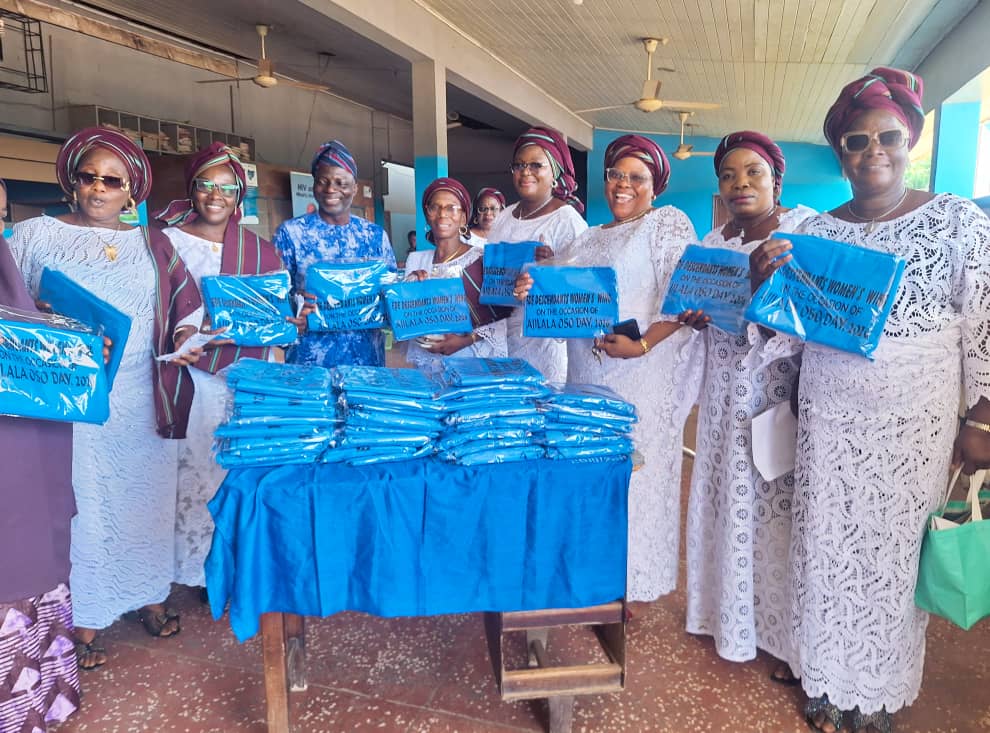
The women wing of the Ede Descendants Union has donated 42 bedsheets and 44 pillow cases to Cottage Hospital, Ede, in Osun State, as part of activities marking preparations for AjilalaOso Day 2026.
The donation was aimed at supporting healthcare services at the hospital while also demonstrating the union’s commitment to community development and humanitarian service.
Members of the union said the gesture formed part of efforts to give back to society and contribute meaningfully to the wellbeing of patients receiving treatment at the health facility.
Speaking during the presentation, the leader of the women wing, Mrs Silifat Shittu, described the initiative as a reflection of the values of compassion, unity and service which AjilalaOso Day represents.
She noted that the annual cultural celebration is not only about showcasing the rich heritage of Ede but also about promoting development-oriented projects capable of impacting lives positively.
The group further urged individuals, organisations and stakeholders in Edeland to continue supporting community-based initiatives aimed at improving the welfare of residents.
Speaking on behalf of the hospital management, the Chief Medical Officer, Dr Isiaka Alade, appreciated the women group for the donation, describing the items as timely and beneficial to patients and the hospital environment.
Chairman of the AjilalaOso Day 2026 Planning Committee, Prince Adewale Laoye while addressing the gathering appealed to other well-meaning individuals and organisations to extend similar gestures to the hospital, noting that some roofing sections of the facility require urgent repairs.
He also commended the women wing of the union for the initiative and support shown to Cottage Hospital.
Prince Laoye, who spoke extensively on the objectives of the AjilalaOso festival, explained that the annual celebration would not only be about funfair and merriment but would also focus on touching the lives of the needy through impactful community projects.
According to him,“We also want associations to have a project executed in Ede every year, such as what the women wing of EDU has done today.”


- Strengthening Zambia’s Readiness for Health Emergencies: From Surveillance to Pandemic Preparedness May 21, 2026
- Economic Community of West African States (ECOWAS) Strengthens Regional Integration Through Cross-Border Cooperation Stakeholders’ Meeting in Abuja, Nigeria May 21, 2026
- Senegal Retains Title as Overall Champion at ECOWAS African Wrestling Tournament (TOLAC 14) May 21, 2026
- Eritrea: Diaspora Nationals Celebrate Independence Day Anniversary May 21, 2026
- Seychelles: President Herminie Visits District Administration Office and Library on La Digue May 21, 2026
- Egypt: President El-Sisi Meets Tunisian Minister Mohamed Ali Nafti May 21, 2026
- Joint statement welcoming the Republic of Togo’s announcement on Visa facilitation for African nationals May 21, 2026
- Advancing Regional Political Commitment and Cross Border Coordination for Ebola Preparedness and Response May 21, 2026
- Morocco: African Development Bank commits €200 Million to boost employability and develop future skills May 21, 2026
- Société Nationale des Pétroles du Congo (SNPC) Targets Global Operator Status as African Energy Chamber (AEC) Engagement Reinforces Congo’s Energy Ambitions May 21, 2026
- Strengthening Zambia’s Readiness for Health Emergencies: From Surveillance to Pandemic Preparedness May 21, 2026
- Economic Community of West African States (ECOWAS) Strengthens Regional Integration Through Cross-Border Cooperation Stakeholders’ Meeting in Abuja, Nigeria May 21, 2026
- Senegal Retains Title as Overall Champion at ECOWAS African Wrestling Tournament (TOLAC 14) May 21, 2026
- Eritrea: Diaspora Nationals Celebrate Independence Day Anniversary May 21, 2026
- Seychelles: President Herminie Visits District Administration Office and Library on La Digue May 21, 2026
- Egypt: President El-Sisi Meets Tunisian Minister Mohamed Ali Nafti May 21, 2026
- Joint statement welcoming the Republic of Togo’s announcement on Visa facilitation for African nationals May 21, 2026
-

 news5 months ago
WHO REALLY OWNS MONIEPOINT? The $290 Million Deal That Sold Nigeria’s Top Fintech to Foreign Interests
-

 society3 weeks ago
SOCIAL MEDIA IS NOT A BATTLEFIELD COMMAND – WHY THE NIGERIAN ARMY’S ACTION AGAINST JUSTICE CRACK IS A NATIONAL SECURITY IMPERATIVE
-

 celebrity radar - gossips4 months ago
Dr. Chris Okafor Returns with Power and Fire of the Spirit -Mounts Grace Nation Altar with Fresh Anointing and Restoration Grace on February 1, 2026
-

 celebrity radar - gossips5 months ago
Prophet Kingsley Aitafo Releases 2026 Prophecy: ‘Nigeria Will Rise, but the World Must Prepare for Turbulence’