
Business
Abia: Court dismisses Ikpeazu’s application to reverse sack

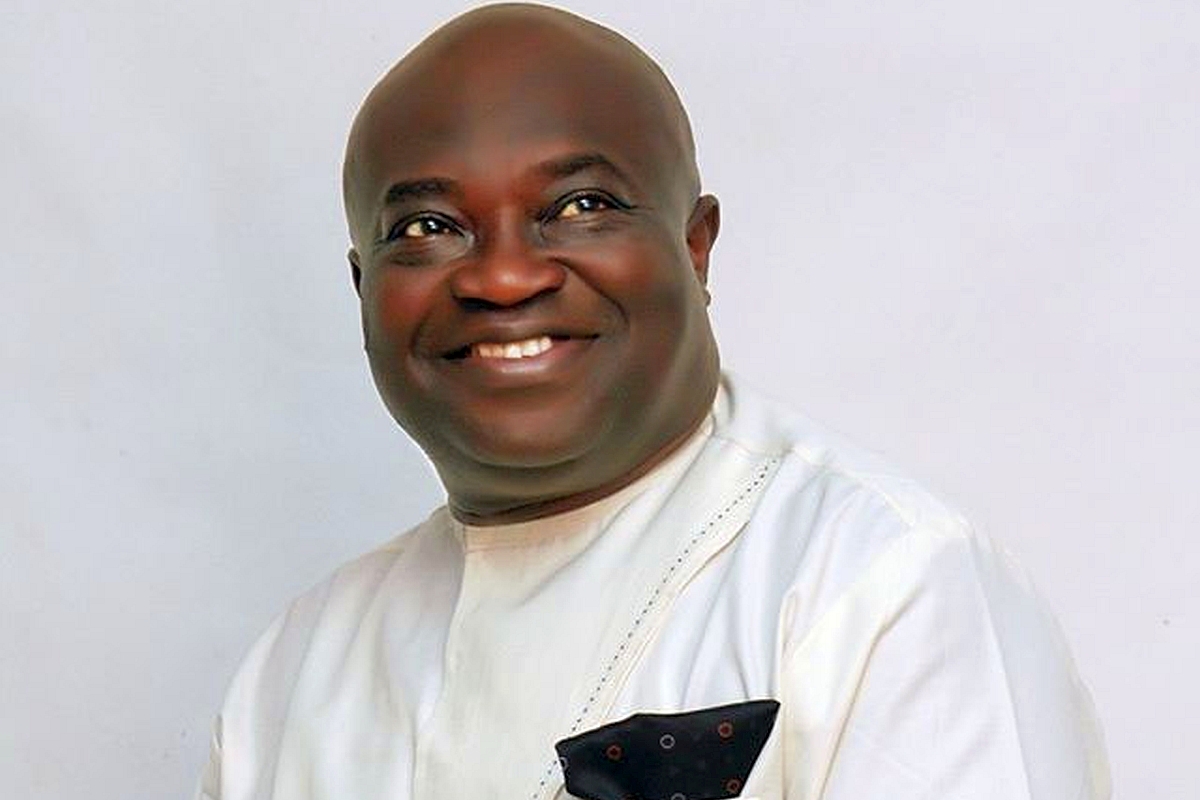

The Federal High Court in Abuja, yesterday, dismissed as lacking in merit an application seeking to set aside the enrolled order of the judgment that sacked Governor Okezie Ikpeazu of Abia State from office. This came on a day presiding judge of the Federal High Court, Owerri, Justice A. I. Alagoa, fixed July 8 to deliver judgment on the tax forgery suit filed against Ikpeazu by a chieftain of Peoples Democratic Party, PDP, in Abia State, Mr. Friday Nwosu.
The court, in a ruling by Justice Okon Abang, maintained that all the orders contained in the judgment it delivered against Ikpeazu on June 27 subsist until they were set aside by the appellate court. Justice Abang gave the ruling on a day the embattled governor, through his team of four Senior Advocates of Nigeria, led by Chief Wole Olanipekun, SAN, applied for an order restraining the beneficiary of the verdict, Mr. Uche Ogah, and the Independent National Electoral Commission, INEC, from executing the judgment.
The judge had, in his judgment, ordered Ikpeazu to vacate his office, even as he directed INEC to immediately issue a fresh certificate of return to Ogah, who came second in the governorship primary election of the PDP. Although INEC had since issued certificate of return to Ogah, another court in Abia State had restrained the Chief Judge from swearing him in.
Ikpeazu wants order set aside Meantime, Ikpeazu, through his lawyers, yesterday, re-approached the high court, praying it to set aside its order dated June 27 that led to the issuance of certificate of return to Ogah. Olanipekun urged the court to take judicial notice that INEC issued certificate of return to Ogah on June 30, despite the fact that it was served with Ikpeazu’s notice of appeal and application for stay of execution at exactly 12:50 p.m on June 28.
He contended that INEC acted wrongly by going ahead to issue the certificate to Ogah, two days after it was served with the appeal processes. Olanipekun told the court that his client had filed “a comprehensive and elaborate notice of appeal,” and was “desirous of speedy and expeditious determination of the matter.” Ogah accuses Ikpeazu of resorting to self-help However, Ogah, who was represented by five SANs, led by Dr. Alex Iziyon, urged the court to refuse Ikpeazu’s prayer for stay of execution of the judgment.
Ogah told the court that Ikpeazu obtained a restraining order from another high court at Osisioma in Abia State that prevented him from being sworn in. He stressed that Ikpeazu got the restraining order from the high court in Abia when his motion for stay of execution was already pending before the court in Abuja. “Where a party has taken to self-help, your lordship should refuse to indulge them further,” he argued.
Responding, Olanipekun said it was Ogah and INEC that “deliberately and calculatively resorted to self-help in order to frustrate both the motion for stay of execution and the pending appeal.” He relied on Order 4 Rule 1(2) of the Judgment Enforcement Rules to argue that there should have been a timeline for enforcement of the June 27 verdict that removed his client. Olanipekun insisted that INEC “illegally tampered with the rest of the case” by issuing certificate of return to Ogah, despite the pending appeal against the judgment.
He also prayed the court to adjourn hearing on the motion for stay of execution until Thursday to enable him respond to a further affidavit filed by Ogah. On its part, INEC lawyer, Mr. Alhassan Umar, told the court that the commission had already issued certificate of return to Ogah as it was ordered to do, before it was served with Ikpeazu’s motion for stay. Umar said though the certificate was signed on June 28, it was, however, handed to Ogah two days later.
According to INEC lawyer, “My lord ordered the 3rd defendant to issue certificate of return forthwith and upon service of the order, my lord, on June 28, the 3rd defendant issued a certificate of return accordingly. “The certificate of return was issued before we were served with the motion on June 28. We had issued the certificate upon being served with the court order. But the actual presentation of the certificate was on June 30. But we had complied with the order of my lord. “We had no difficulty to issue the certificate because election matters are sui-generis. Where the law intends that an appeal should operate as a stay, it is expressly provided so.
In our view, this matter is not regulated by Section 143 of the Electoral Act.” My order sacking Ikpeazu stays —Judge In his ruling, Justice Abang refused to set aside the order containing the judgment against Ikpeazu, even as he adjourned hearing on the motion for stay of execution till Thursday. The judge said he would on that day also decide on an application by Ogah seeking to set aside the restraining order of the High Court in Abia State, as well as an application asking him to set aside the certificate of return INEC issued to Ogah. Justice Abang held that the enrolment order against Ikpeazu was properly signed and issued.
The judge said though section 294 of the constitution allowed the court to get the judgment ready within seven days, he said the registry ensured it was available in four days, owing to pressure from Ikpeazu. He said: “I had jurisdiction to sign the enrolment order as at the time I did so. The court cannot order a sitting governor to vacate his office just for fun.
We are here to settle dispute and I am not afraid to take decision. “Therefore, those going to the media to misinterpret the decision of the court when they have not even taken out time to study the 131-page judgment should take caution.” Judgment on tax forgery suit for July 8 Meanwhile, presiding judge of the Federal High Court, Owerri, Justice A. I. Alagoa, has fixed July 8, to deliver judgment on the tax forgery suit filed against Ikpeazu by Nwosu. Nwosu, who ran for the December 8, 2014, PDP governorship primaries in the state, had accused the governor of submitting a forged tax clearance certificate, praying the court to disqualify him.
Joined in the suit were the PDP, INEC, Ikpeazu and Ogah as 1st, 2nd, 3rd and 4th defendants, respectively. The parties adopted their written addresses. Counsel to Nwosu, F. Unyimadu, prayed the court to grant the prayers of his client by disqualifying Ikpeazu for submitting forged tax certificate and declare him governor. Unyimadu added that the governor was not qualified to run for the primary election.
He further argued that Ogah, who refused to sign the result and petitioned the PDP to conduct another primary election, had forfeited his right to benefit from the exercise. In their separate arguments, counsel to PDP, INEC, Ikpeazu and Ogah, Paul Ananaba (SAN), Jude Nnodum (SAN), Theo Nkire and O.J. Nnadi (SAN), respectively, said Nwosu’s suit lacked merit and urged the court to dismiss it. Earlier, the counsel had opposed an attempt by Ogah’s counsel to leverage on the judgment of the Federal High Court, Abuja, which declared him governor.
This was upheld by the judge, who ruled that he was not bound by the verdict of a court of the same hierarchy. In a related development, Nwosu has filed a notice of appeal on the judgment of the Federal High Court, Abuja, which declared Ogah as governor, praying the court to set it aside and declare him governor.
In a notice of appeal filed against Suit No. FHC/ABJ/CS/71/2016, between Sir Friday Nwanozie Nwosu (Appellant) and Sampson Uchechukwu Ogah, Peoples Democratic Party, Dr. Okezie Victor Ikpeazu, and the Independent National Electoral Commission, as Respondents, Nwosu listed nine grounds of appeal and particulars of error on the judgment delivered by Justice Okon Abang on October 27. While praying the Court of Appeal to set aside the judgment, Nwosu also sought five reliefs: “an order setting aside the declaration of first respondent, Uche Ogah, as the elected governor of Abia State as declared by the trial court. Others include: “an order that the first Respondent, Uche Ogah, is stopped from claiming any right or benefit from the second respondent’s (PDP) Gubernatorial Primary Election of 8/12/2014, in Abia State, having waived his right to do so; an order striking out the first respondent’s (Uche Ogah) suit on the ground that it constitutes an abuse of court process; an order that the suit of first respondent i.e. (Suit No. FHC/ABJ/CS/71/2016) is incompetent and the trial court lacks the jurisdiction to hear and determine the suit.” lNEC must reverse itself —
PDP chieftain Reacting to the development, Mr. Ben Onyechere, a PDP chieftain and former Special Assistant to Dr. Alex Ekwueme, said the rush by INEC to implement the judgment of a Federal High Court that annulled the election of Governor Okezie Ikpeazu of Abia State on the reason that it did not receive the notice of appeal from the governor’s lawyers was a clear indication of a well scripted conspiracy and attempt to disenfranchise the entire Abia electorate. According to him, the judgment is the worst embarrassment that has befallen the judiciary in recent times. He said: “The ruling by Justice Abang is a dangerous trend occurring in an area reputed for high volatility, especially with the presence of a pro-Biafran group whom the governor is labouring to assuage.
It is indeed curious and laughable to behold an INEC official with guilt written all over him on TV saying that they never received notice of appeal from Ikpeazu’s lawyer, only to admit receipt of appeal after perpetrating their plan. “The judge, who turned himself to prosecutor, investigator and adjudicator, refused to determine a simple fact of whether the governor was actually working for government which automatically means his taxes were deductible on monthly basis.
“However, the onus now rests on INEC officials, who have now admitted receipt of the appeal, to quickly reverse themselves without delay to avert the looming disaster in Abia.” Ikpeazu submitted tax certificate in error —Abia PDP Also reacting, Abia State chapter of the PDP, yesterday, said the tax certificate submitted to INEC by Ikpeazu was done in error, saying tax certificate was not one of the requirements to run for the office of governor.
The party also alleged that Ogah had very powerful forces backing him in the fight to sack Ikpeazu as governor of Abia State but did not name the powerful forces. A statement signed by Chief Johnson Onuigbo, Ikechukwu Omenihu, and Sir. Don Ubani, the party’s state chairman, Legal Adviser and Publicity Secretary, respectively, said tax certificate had never been a requirement to run for office of the governor, insisting that Ikpeazu’s aides put it in error.
It said: “Nigerians should be informed that there is no requirement for payment of tax at all or as and when due in the constitution, Electoral Act or INEC nomination form. The tax documents were included in the documents accompanying his nomination form by Dr. Ikpeazu’s aides by mistake. “The tax documents included by aides of Dr. Ikpeazu in the nomination form sent to INEC are genuine and there are absolutely no false entries in them and even if for purposes of argument, there were mistakes in the tax documents, Dr. Ikpeazu was not responsible for such mistakes and the mandate given him by hundreds of thousands of Abia voters cannot be invalidated on the basis of a spurious and unfounded allegation.
Citing some legal decisions, the party said: “We have taken the trouble to set out these few examples of the principles governing our democratic process just to demonstrate to Nigerians what is under attack by Uche Ogah and his cohorts: a sacrosanct mandate donated to Dr. Okezie Ikpeazu by citizens of Abia State. “It is the constitution that sets out the criteria for eligibility to stand for election as governor.
By Section 177 of the 1999 Constitution, there are only four requirements or conditions for eligibility to the office of Governor: citizenship of Nigeria, attainment of 35 years of age, membership/sponsorship of a political party and education up to School Certificate level or its equivalent. “Section 182 of the Constitution sets out other events that could disqualify a candidate and non-payment of tax at all or as and when due is not one of them. There is no requirement for payment of tax under the Electoral Act.
An examination of the nomination form for all elective offices in Nigeria, including for governorship shows clearly that payment of tax is not mentioned and tax receipts or tax clearance certificates are not one of the documents required to be included in the form. “Dr. Ikpeazu’s tax documents were either mistakenly included in the bundle of documents accompanying his Nomination Form by his aides or simply added out of the abundance of caution.” Enforce judgment now—EUF But a group, the Eastern Unity Forum (EUF) has demanded the immediate enforcement of the order of the Federal High Court that removed Ikpeazu from the office as governor of Abia State, urging the Attorney General of the Federation, Inspector General of Police, the Director of the Department of State Services and other security agencies to enforce the court order without further delay and avoid brewing anarchy in the state.
It described the judgment obtained by Ikpeazu as judicial coup, occasioned by impunity which must not be allowed to stand. The group at a press briefing in Abuja, yesterday, by its National President, Chief Emmanuel Okereke and National Secretary, Chief Willy Ezugwu, vowed to mobilize the people to enforce the court judgment if security agencies failed to do their job. Describing the court verdict obtained by the embattled Abia State governor from the state High Court as a judicial coup, the group said: “For Mr. Okezie Ikpeazu to rush to another court of coordinate jurisdiction to arrest the unambiguous judgment delivered by Justice Okon Abang on Monday, June 27, 2016 which ordered that Ogah be sworn in immediately is nothing but a delay tactics and judicial coup that must not be allowed to stand.
We, therefore, call on the Attorney General of the Federation (AGF), the Inspector General of Police (IGP), the Director of Department of State Services (DSS) and all other security agencies and law enforcement agencies of the Federal Government to wake up and be alive to their constitutional duties and ensure that Dr. Uchechukwu Sampson Ogah is sworn in as Abia State governor without further delay.” Declare Alex Otti gov —APGA In another development, the All Progressives Grand Alliance, APGA, Abia State chapter, has faulted the judgment of the Federal High Court which ordered that Ogah be sworn in as the state governor.
A statement signed by APGA state chairman, Augustine Ehiemere, decried the judgment as untenable as the Electoral Act 2010, as amended, forbade any person who did not take part in all stages of the election to be sworn in and insisted that its governorship candidate in the 2015 election, Dr. Alex Otti, remained the lawful candidate who ought to be declared governor. “APGA considers Uche Ogah’s declaration as a huge error, unacceptable to the party, untenable in Nigeria’s 2010 Electoral Act as amended, which forbids any person that did not take part in all the stages of an election from being declared winner.
Since there is no record anywhere to show that Dr. Uche Ogah won the primaries of his party, the PDP, let alone take part in all the stages of the last governorship election in Abia, his declaration as the governor by the court is strange and alien to the law. “Hence, we humbly demand that the appellate court, while upholding Ikpeazu guilty verdict, corrects this huge error by issuing the right order which is to declare the candidate who scored the highest lawful votes, the APGA candidate, Dr. Alex Otti, governor, as he did not only meet all the constitutional requirements and vote spread across the state, but even won more local governments than the sacked Okezie Ikpeazu; this is an incontrovertible fact.”





Fidelity Bank grows gross earnings by 38% to N434.95b in Q1
Fidelity Bank Plc recorded 37.9 per cent growth in gross earnings to N434.95 billion in first quarter 2026 as the international commercial bank continued to expand its core banking market share.
Interim report and accounts of Fidelity Bank for the three months ended March 31, 2026 released at the Nigerian Exchange (NGX) showed that gross earnings rose from N315.42 billion in first quarter 20025 to N434.95 billion in first quarter 2026, representing an increase of 37.9 per cent.
The top-line performance was driven by impressive growth in the bank’s core business operations with interest incomes rising by 22.8 per cent to N314.48 billion in first quarter 2026 as against N256.10 billion in first quarter 2025.
With net interest income at N180.97 billion, the bank closed the period with profit before tax of N92.48 billion. After taxes, net profit stood at N74.47 billion for the three-month period. Earnings per share remained high at N5.69, underlining the capacity of the bank to reward its shareholders.
The balance sheet of the bank also emerged stronger. Total assets crossed the N11 trillion mark to N11.35 trillion by March 2026 compared with N10.46 trillion recorded in December 2025. Customers’ deposits increased from N6.89 trillion to N7.38 trillion. Total equity rode on the back of earnings growth to a 27.5 per cent increase from N1.09 trillion in December 2025 to N1.39 trillion by March 2026.
The first quarter 2026 results further consolidated the strong earnings outlook of the bank, which had successfully completed its recapitalisation amidst impressive earnings performance in 2025.
Fidelity Bank had recorded double-digit growths in interest and non-interest incomes as well as key balance sheet items during the year ended December 31, 2025.
The audited report showed that gross earnings rose from N1.04 trillion in 2024 to N1.52 trillion in 2025, an increase of 45.6 per cent. Interest and similar incomes had grown by 38.7 per cent from N803.1 billion in 2024 to N1.11 trillion in 2025. Fees and commission incomes also rose by 44.7 per cent from N78.4 billion to N113.4 billion. The bank recorded net profit after tax of N242.4 billion in 2025.
The bank’s balance sheet emerged stronger with total assets rising by 18.6 per cent to N10.46 trillion in 2025 as against N8.82 trillion in 2024. Customer deposits increased by 16.1 per cent from N5.94 trillion to N6.89 trillion, reflecting continued franchise strength and an improved funding profile. Net loans and advances meanwhile declined by 2.4 per cent to N4.28 trillion in 2025 as against N4.39 trillion in 2024, attributable to customers paying down on their mature obligations.
The bank had in 2025 strengthened its capital position, with eligible capital rising to N561 billion, above the regulatory minimum of N500 billion for banks with international authorisation. In addition, capital adequacy had remained robust, with Capital Adequacy Ratio of 30.94 per cent by December 2025 as against 23.47 per cent by December 2024.
Managing Director, Fidelity Bank Plc, Dr. Nneka Onyeali-Ikpe, said the first quarter 2026 results reinforced the bank’s strong and resilient business model.
She noted that with the remarkable success of its recapitalisation programme and continuing expansion, Fidelity Bank has entered a new era of growth and impressive returns.
“We are on a stronger footing and confident that we will set new growth records that are reflective of our legacy and the future we are working on,” Onyeali-Ikpe said.
Business
Dangote Refinery Ends Nigeria’s Era of Fuel Import Dependence, Boosts GDP, FX Earnings — EIU
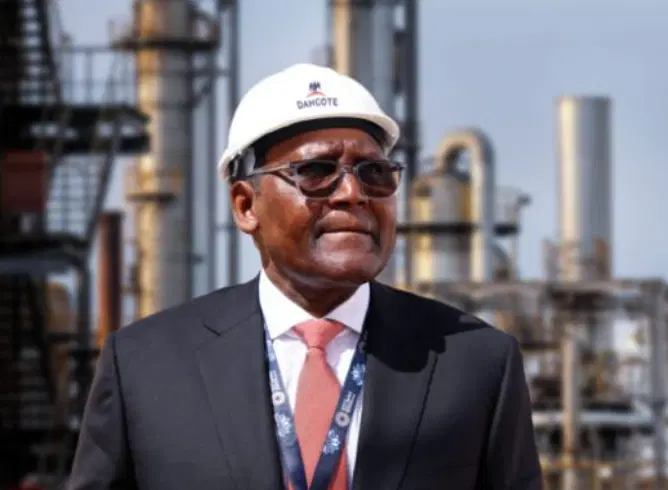
Dangote Refinery Ends Nigeria’s Era of Fuel Import Dependence, Boosts GDP, FX Earnings — EIU
The operational ramp up of the 650,000 barrels per day Dangote Petroleum Refinery & Petrochemicals is fundamentally reshaping Nigeria’s downstream oil sector, significantly reducing the country’s dependence on imported refined petroleum products and strengthening its external position, according to the Economist Intelligence Unit (EIU).
In its latest assessment on Nigeria’s fuel market and regulatory environment, the EIU said the refinery has already transformed a sector that was previously characterised by heavy reliance on imported fuel despite Nigeria being Africa’s largest crude oil producer. The report noted that the refinery met nearly 80 per cent of domestic petrol demand in April and produced enough volumes to satisfy local consumption requirements as operations approached full capacity.
The EIU described Nigeria’s downstream petroleum sector before the refinery as “long dysfunctional”, noting that the country had remained almost entirely dependent on costly imported fuel while producing nearly 1.5 million barrels of crude oil daily.
According to the report, the emergence of the refinery has reduced import dependence, improved domestic fuel availability and strengthened Nigeria’s balance of payments position through lower import demand and rising exports of refined petroleum products.
“The gradual ramp up of the 650,000 barrel/day Dangote refinery since May 2023 has transformed Nigeria’s long dysfunctional downstream sector,” the report stated. “The country’s main refineries, all state owned, had been inoperative for years and Nigeria was almost entirely reliant on costly imported fuel.”
The research and analysis division of The Economist Group, London added that the refinery’s attainment of full operational capacity and its planned expansion would further support Nigeria’s economic growth and foreign exchange earnings over the medium term.
“Meanwhile, the attainment of full capacity at, and an increase in exports from, the Dangote refinery will support real GDP growth and foreign exchange earnings in 2026 and 2027 and beyond, as a planned doubling of the plant’s output comes on stream around the end of the decade,” it added.
Industry analysts said the refinery is increasingly positioning Nigeria as an emerging refining and export hub, altering energy trade flows across Africa and reducing the vulnerability associated with fuel import dependence.
The EIU noted that the refinery’s expansion has coincided with major reforms in Nigeria’s downstream sector, including the removal of fuel subsidies and the introduction of market driven pricing mechanisms.
The report, however, said the transition from a state dominated fuel import structure to large scale domestic refining has triggered resistance from interests linked to the old import regime.
The latest tensions emerged following the decision by the Nigerian Midstream and Downstream Petroleum Regulatory Authority to relax restrictions on petrol imports despite the refinery’s growing capacity to meet domestic demand.
Dangote Industries subsequently initiated legal action, arguing that continued import approvals undermine domestic refining investments and conflict with the objectives of the Petroleum Industry Act, which seeks to encourage local refining capacity and reduce import dependence.
Analysts noted that the availability of large-scale domestic refining capacity has improved Nigeria’s energy security and reduced exposure to external supply shocks and foreign exchange volatility.
The Centre for the Promotion of Private Enterprise also cautioned against unrestrained importation of petroleum products, warning that such a policy could weaken Nigeria’s industrialisation drive and discourage investments in domestic refining.
Chief Executive Officer of CPPE, Muda Yusuf, said continued dependence on imported fuel had historically contributed to pressure on foreign reserves, exchange rate instability and fiscal leakages.
The refinery’s growing impact is also being reflected in Nigeria’s broader macroeconomic indicators. Earlier this month, S&P Global Ratings cited increased domestic refining capacity and rising hydrocarbon exports among the major factors supporting Nigeria’s sovereign credit rating upgrade – the first in 14 years.
Beyond Nigeria, analysts said the refinery is increasingly being viewed as a strategic industrial asset for Africa, where many countries remain heavily dependent on imported fuel despite rising demand for transportation, manufacturing, and power generation.
Business
BREAKING: Court Dismisses $19.6 Million Claim Against NNPCL — Rules Contract Scope Cannot Be Changed Orally
BREAKING: Court Dismisses $19.6 Million Claim Against NNPCL — Rules Contract Scope Cannot Be Changed Orally
In a landmark ruling on Friday, May 22, 2026, the Federal Capital Territory High Court in Abuja threw out a $19.6 million lawsuit filed by Alternate Dimensions Ventures Ltd against the Nigerian National Petroleum Company Limited (NNPCL), affirming a key legal principle: a written contract cannot be expanded through oral agreements or conduct.
Alternate Dimensions had sought $19,600,000 in professional fees, claiming the scope of its Direct Sale, Direct Purchase (DSDP e-pro) contract with NNPCL was orally expanded. Represented by counsel Patrick Peter, the firm argued it was entitled to the revised sum for services rendered under the alleged new terms.
But NNPCL, through its lawyer Ituah Imhanze of KENNA LP, pushed back sharply, arguing that parties are bound exclusively by the clear terms of their written agreement. Imhanze contended that without any written amendment, the claim was legally unsound, and the court agreed.
Delivering judgment, Justice Hamza Mu’azu upheld NNPCL’s defense, stating that the contract was unambiguous and that no evidence was adduced during the trial, which supported the alleged scope expansion. The court further found that NNPCL fully complied with all contractual terms and committed no breach.
Dismissing the suit as meritless, Justice Mu’azu reinforced the doctrine of sanctity of contract: any amendment to a written agreement must be express, unequivocal, and documented, not implied or verbal.
The ruling spares NNPCL from the S19.6 million claim and also a floodgate of similar potential liabilities.


- When women farm better, Eswatini eats better June 3, 2026
- Togo Hosts the 8th Annual Forum of National Volunteer Agencies in the Economic Community of West African States (ECOWAS) Region June 3, 2026
- Indigenous Peoples gravely vulnerable to Ebola epidemic, warn United Nations (UN) independent experts June 3, 2026
- Meeting between Parliamentary Vice-Minister ONISHI and His Excellency (H.E.) Mr. Cosgrow, Principal Minister and Minister for Agriculture, Fisheries and Blue Economy of Seychelles June 3, 2026
- Eritrea: Construction of Elementary School in Gogni Sub-Zone June 3, 2026
- African Union Commission (AUC) Chairperson His Excellency (H.E.) Mahmoud Ali Youssouf highlighted thePermanent Representatives’ Committee (PRC) critical role in advancing the Union’s agenda and laying the groundwork for the forthcoming Mid-Year Coordination Meeting (MYCM) June 3, 2026
- Eritrea: Eighth Grade National Examination Commences June 3, 2026
- Many Africans see justice system as unequal, costly, and slow, Afrobarometer survey reveals June 3, 2026
- Prof. Benedict Oramah to Chair Finance Summit as African Energy Week (AEW) 2026 Prepares for Major Deal Flow June 3, 2026
- The Islamic Development Bank (IsDB) Group Affiliates to Host the 14th Private Sector Forum in Baku, Azerbaijan (16-19 June 2026) June 3, 2026
- When women farm better, Eswatini eats better June 3, 2026
- Togo Hosts the 8th Annual Forum of National Volunteer Agencies in the Economic Community of West African States (ECOWAS) Region June 3, 2026
- Indigenous Peoples gravely vulnerable to Ebola epidemic, warn United Nations (UN) independent experts June 3, 2026
- Meeting between Parliamentary Vice-Minister ONISHI and His Excellency (H.E.) Mr. Cosgrow, Principal Minister and Minister for Agriculture, Fisheries and Blue Economy of Seychelles June 3, 2026
- Eritrea: Construction of Elementary School in Gogni Sub-Zone June 3, 2026
- African Union Commission (AUC) Chairperson His Excellency (H.E.) Mahmoud Ali Youssouf highlighted thePermanent Representatives’ Committee (PRC) critical role in advancing the Union’s agenda and laying the groundwork for the forthcoming Mid-Year Coordination Meeting (MYCM) June 3, 2026
- Eritrea: Eighth Grade National Examination Commences June 3, 2026
-

 news6 months ago
WHO REALLY OWNS MONIEPOINT? The $290 Million Deal That Sold Nigeria’s Top Fintech to Foreign Interests
-

 society1 month ago
SOCIAL MEDIA IS NOT A BATTLEFIELD COMMAND – WHY THE NIGERIAN ARMY’S ACTION AGAINST JUSTICE CRACK IS A NATIONAL SECURITY IMPERATIVE
-

 celebrity radar - gossips4 months ago
Dr. Chris Okafor Returns with Power and Fire of the Spirit -Mounts Grace Nation Altar with Fresh Anointing and Restoration Grace on February 1, 2026
-

 celebrity radar - gossips6 months ago
Prophet Kingsley Aitafo Releases 2026 Prophecy: ‘Nigeria Will Rise, but the World Must Prepare for Turbulence’
You must be logged in to post a comment Login
You must log in to post a comment.