
Politics
Abiodun Faleke and the Human Face of Politics


*Abiodun Faleke and the Human Face of Politics
By Timothy Hemba Hwande
If politics were to be built up into flesh and bone, one that is fashioned into an individual who could speak, legislate, joke around, and empathise— it would be difficult not to imagine Rt. Hon. (Dr.) James Abiodun Faleke as the first thought of such personification. Different from the usual politics of personal enrichment, Faleke’s narrative reads instead as: managerial expertise brought to bear on the messy business of public life, a temperament that privileges service over spectacle, and a tangible imprint on both his immediate constituency and the broader national tableau.
Faleke’s career did not begin in the give-and-take of partisan politicking; it was forged in the precise world of logistics, procurement and management. His professional apprenticeship—from material management to senior commercial roles—translated into a technocratic poise that later marked his public service.
Faleke is a man who has served his people in multiple capacities: from the foundational level of local government in Lagos (where he was pioneer Executive Secretary and later chairman of Ojodu LCDA), to a sustained presence in the House of Representatives representing Ikeja Federal Constituency since 2011. Those biographical certainties matter because they frame Faleke’s politics as cumulative, in the sense of being a career of small, compounding interventions rather than headline-hungry theatrics.
As regards constituency projects in relation to the margins of governance, Faleke’s record, however, suggests his performances are more than just transactional favours to the people he swore to serve; for him they are instruments of empowerment and social calibration. The “Mega Empowerment” Constituency Outreaches of 2025 saw 240 young men and women from across Ikeja, Ojodu, and Onigbongbo local council areas each receive a ₦100,000 cash grant to support their small businesses and entrepreneurial ventures.
In addition to the cash support, over 400 constituents benefited from a wide range of empowerment tools including tricycles, dispatch motorcycles, freezers, generators, popcorn machines, clippers, grinding machines, and juice extractors. Also, 170 participants were selected to undergo business training sessions designed to equip them with the knowledge and skills necessary to sustain their ventures.
Upon completion, each trainee will also receive cash grants to launch or expand their businesses. This is undoubtedly a relentless poverty-alleviation and empowerment scheme reaching the grassroots. For Faleke, this isn’t just empowerment—it’s about economic freedom and dignity.
Beyond ephemeral gestures, Faleke has sponsored and championed legislative measures that carry direct benefits to citizens’ welfare. His sponsorship of amendments to the NYSC Act (advocating life-insurance protection for corps members) and motions to tackle security vulnerabilities via the closure of illegal border routes are examples of how constituency sensibilities (safety for families, dignity for young Nigerians) translate into national legislation. These are not merely symbolic acts; they are legislative inflections aimed at securing lives and livelihoods.
Faleke’s influence is not confined to photo-ops, which many of his colleagues are known for.
Within the legislative architecture he has occupied consequential roles, including chairmanships and committee memberships on finance, anti-corruption and public procurement, where technical competence matters. That Faleke has been entrusted with responsibilities like scrutinising budgets, policing procurement, and framing accountability frameworks therefore reflects both peer recognition and a rare confluence of subject-matter familiarity with public policy.
When a representative who understands supply chains and procurement leads oversight of public spending, the risk of waste diminishes and the prospect of more efficient, people-centred expenditure rises. Constituents in Ikeja who see roads repaired, markets supported and youths trained can therefore trace some of those gains to the steadier, often unseen, governance work Faleke performs in committee rooms. Truly, he is replicating the Renewed Hope agenda of President Tinubu well at the constituency level.
What makes Faleke especially compelling, and what has earned him plaudits even from unexpected quarters, is a demonstrated willingness to place principle above opportunism. Accounts of his political journey reveal moments where standing for institutional integrity cost political capital. The 2015 Kogi governorship episode—in which Faleke was Abubakar Audu’s running mate on a ticket that won the majority of votes before Audu’s untimely death and the subsequent legal wrangling—remains illustrative of a politician who is prepared to contest questionable internal party reassignments through judicial means rather than private compromise. That episode was more than a personal dispute; it was a public lesson about the sanctity of the popular mandate.
It is no surprise that the press and civic organisations alike have, in recent years, painted Faleke as a model of “selfless political doctrine”—not because he is immune to ambition, but because his ambition is often tethered to service.
Observers note a politician who cultivates friendships across aisles, who refuses to let parochialism overpower national interest, and who seeks to translate proximity to executive power into tangible benefits for ordinary citizens.
For the record, awards, honours and the soft currency of recognition have also accompanied Faleke’s career. They are not ends in themselves, but they matter in two ways: first, because they reward long-term investment in public service; second, because they amplify the moral narrative that a politician can be both effective and ethically consistent. Communities in Kogi (his state of origin) and Lagos (his political bedrock) have acknowledged his interventions—from infrastructural pledges to educational initiatives—which have cumulatively projected an image of representation that is distributed rather than hoarded for selfish exploits.
However, the exemplary life of Rt. Hon. Faleke has proven that the impact of a single conscientious legislator does not end at local boundaries; it radiates outward.
To be candid, Faleke is not the sort of politician to promise miraculous solutions. He does not traffic in utopian hyperbole; his is a methodical, iterative politics. Such pragmatic disposition is a virtue in a country that needs steady institutional repair rather than rhetorical bravado.
Evaluating his performance dispassionately yields a simple conclusion: Faleke has been effective within the scope of his mandate. He has delivered constituency projects that ease everyday burdens, sponsored laws that protect citizens, and occupied oversight roles that matter for national fiscal health. That combination of local relevance enjoined with national responsibility is the metric by which representative success ought to be judged.
After all, it is believed that politics is not only about statutes and budgets; it is equally an economy of hope. The emotional currency that Faleke pays converts into a form of legitimacy that technical accomplishments alone cannot buy. How does one downplay the effort of a man who is readily available to his constituents in town halls; a man who pushes so hard for the benefits of those even outside his constituency; a man who shows up in markets to connect with his constituency at the grassroots, listening to their needs, consistently drafting and executing plans to make his people’s lives better?
The loyalty from the tongues that shout Faleke’s name in his constituency isn’t one that was bought, but earned on merit, because constituents who feel seen and supported are likelier to trust institutions; when trust rises, social cooperation follows. In this sense, Faleke’s human face of politics is not mere optics; it is an authentic mechanism rebuilt from decades of misgovernance.
Rt. Hon. James Abiodun Faleke should not be mythologised. He is neither infallible nor omnipotent. But he does offer a valuable template: the professionalised politician who grounds legislative activism in managerial competence, who balances constituent intimacy with national duty, and who places principle above ephemeral convenience. In a nation starved for dependable public servants, his presence—the human face of politics—is a restorative sight.
If Nigerian politics is to evolve beyond bigotry, partisanship, and cyclical disappointment, it will require more practitioners like Faleke: men and women for whom patriotism is not a headline but a daily practice, for whom constituency projects are not charity but capacity-building, and for whom committees are laboratories of accountability rather than chambers of complacency. That is the promise, and the provocation, Abiodun Faleke holds up to a nation in search of steadier custodians of the public trust.
Hwande is writing from Ilorin, Kwara State.




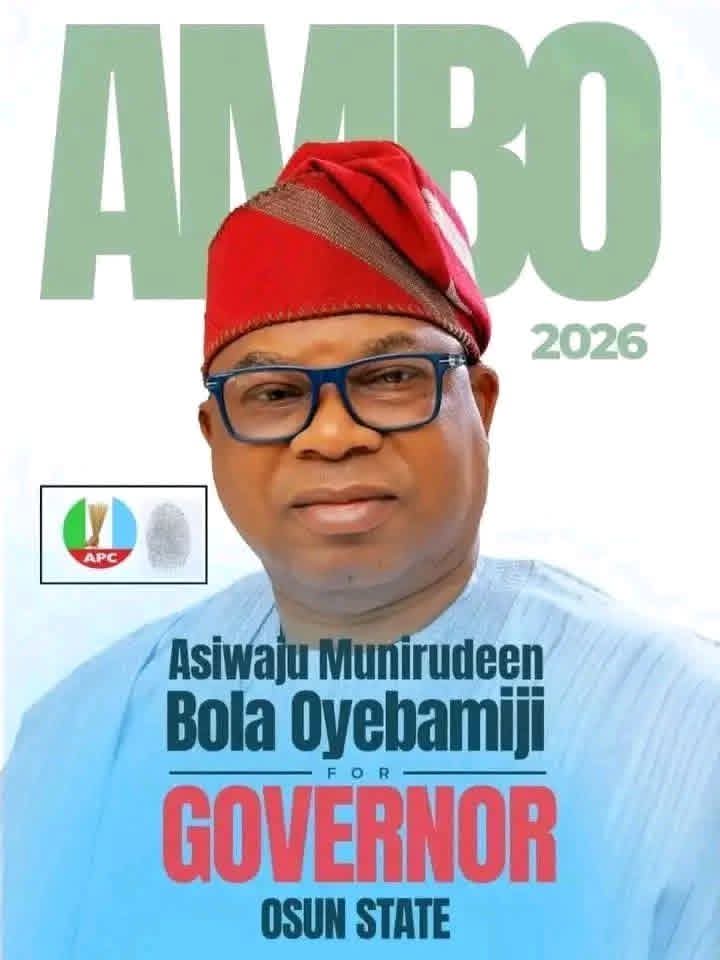
AMBO and the Osun Governorship Race: Assessing the Man, the Politics and the Vision
As political activities gather momentum ahead of the 2026 Osun State governorship election, a public affairs commentator, Oluseyi Olonade, has described the emergence of Asiwaju Munirudeen Bola Oyebamiji, popularly known as AMBO, as a significant development in the state’s political landscape.
In an article titled “Oyebamiji: The Man, The Politics and The Aspiration,” Olonade argued that the All Progressives Congress governorship hopeful possesses the character, experience and vision needed to reposition Osun State for sustainable growth.
According to the writer, Oyebamiji’s appeal stems from his extensive background in the banking sector, where he spent nearly three decades working with institutions including Wema Bank, Trans International Bank, Spring Bank and Enterprise Bank.
A native of Ikire in Irewole Local Government Area, Oyebamiji was described as a technocrat whose experience in corporate governance, finance and risk management has shaped his approach to public administration.
The article noted that his public service journey gained prominence in 2012 when he was appointed to oversee the then Osun State Investment Company Limited. Under his leadership, the organisation was reportedly restructured and transformed into Omoluabi Holdings Limited.
The writer further highlighted Oyebamiji’s tenure as Commissioner for Finance under successive APC administrations, where he was credited with managing the state’s finances during challenging economic periods.
Olonade also referenced Oyebamiji’s appointment as Managing Director of the National Inland Waterways Authority, describing it as further evidence of his administrative and leadership capabilities.
The article contrasted Oyebamiji’s governance philosophy with that of the current administration in Osun State, arguing that the APC aspirant favours institutional reforms, economic diversification and fiscal discipline.

According to the writer, Oyebamiji’s proposed agenda includes strengthening transparency in government spending, expanding internally generated revenue, attracting private-sector investments and promoting industrial and agricultural development.
The article also highlighted youth empowerment, entrepreneurship development and digital skills acquisition as key components of his vision for the state.
Olonade concluded that the forthcoming governorship election would present voters with a choice between different approaches to governance, expressing confidence that Oyebamiji’s experience and developmental agenda make him a strong contender in the race.
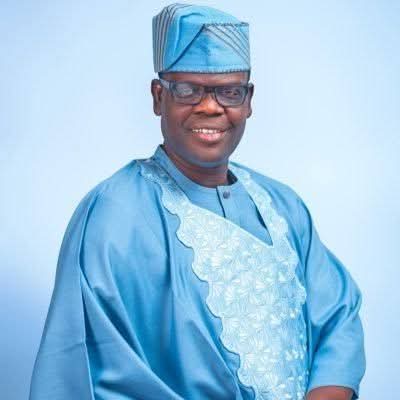
*Oselu Tiwa nTiwa Endorses Oriyomi Hamzat for Oyo Governorship*
A sociopolitical support group in Oyo State, Oselu Tiwa nTiwa, has declared its support for Alhaji Oriyomi Hamzat as the authentic governorship candidate of the Accord Party ahead of the forthcoming governorship election in the state.
The group made its position known in a statement jointly signed by its President, Mr. Adewale Oluwaseyi and Secretary, Alh. Adebayo Oyewole, on Thursday, describing Hamzat as a grassroots figure with strong connection to the people and a track record of humanitarian interventions across Oyo State.

According to the group, the endorsement followed what it described as careful observation of Hamzat’s leadership qualities, compassion and dedication to the welfare of ordinary citizens.
“Oriyomi Hamzat has consistently demonstrated empathy, courage and selfless commitment to humanity. Through his numerous interventions in the lives of ordinary citizens, he has become a symbol of hope to many families and communities,” the statement read.
Oselu Tiwa nTiwa also appealed to the national leadership of the Accord Party to prioritise the long-term future and electoral growth of the party in its decision-making process.
The group noted that Hamzat’s candidacy presents an opportunity for the party to strengthen its grassroots support base and expand its political relevance across Oyo State.
“We respectfully appeal to the National Leadership of the Accord Party to look beyond immediate political calculations and consider the bigger picture, the future growth, stability and electoral success of the party in Oyo State and beyond,” the statement added.
The group further expressed confidence in the leadership of the party, saying it believes the party’s national officers and stakeholders would take decisions that reflect fairness, inclusiveness and the collective interest of members.
While calling on party loyalists to remain calm and united, Oselu Tiwa nTiwa said continued consultations among stakeholders would help strengthen the Accord Party ahead of the election.
Signed:
Alh. Adebayo Oyewole,
Secretary.
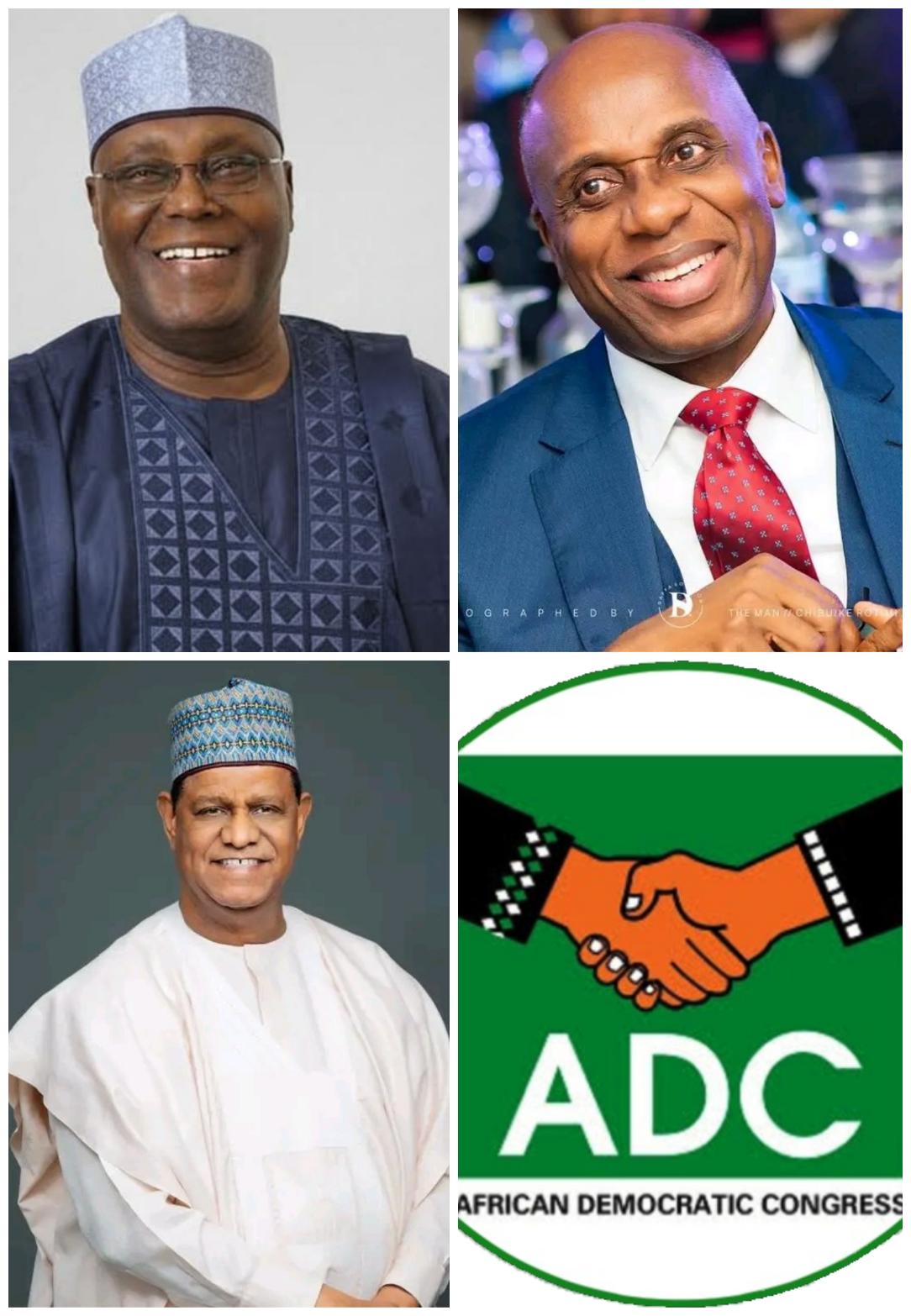
Atiku Set To Clinch ADC Presidential Ticket, Leads Amaechi, Hayatu-Deen In 34 States
Former Vice President of Nigeria and frontline presidential aspirant of the African Democratic Congress (ADC), Atiku Abubakar, is projected to emerge winner of the party’s presidential primaries, according to impeccable sources in Abuja.
The primaries, conducted across over 8,000 wards in the 36 states of the federation and the Federal Capital Territory, reportedly placed Atiku far ahead of his closest rivals — former Rivers State Governor, Rotimi Amaechi, and former Chairman of the Nigerian Economic Summit Group, Mohammed Hayatu-Deen.

Highly placed party insiders disclosed that Atiku is currently leading in 34 states, including the FCT, after securing dominance across the 19 Northern states, the five South-East states, and the six South-West states, while also maintaining a strong showing in at least three states in the South-South geopolitical zone.
The sources added that the outcome reflects what they described as “an overwhelming nationwide acceptance” of the former vice president within the opposition party ahead of the 2027 general election.
Meanwhile, the ADC leadership has invited members of the press to the official announcement of the final collated results scheduled for 11:00 a.m. on Tuesday, May 26, 2026, in Abuja.
The declaration of results is expected to be broadcast live on ARISE Television and two other major television stations, while also being livestreamed on the party’s official social media platforms on X and Facebook.
Speaking ahead of the announcement, the founding National Chairman of the ADC, Chief Ralph Nwosu, said the decision to televise the exercise live was aimed at promoting transparency and democratic accountability.
“We want millions of Nigerians at home and in the Diaspora to witness democracy in action,” Nwosu said.
He further revealed that the party leadership would encourage all three presidential aspirants to publicly embrace a peace accord and commit themselves to working together in unity for the party’s success.
According to him, the move is necessary to strengthen internal cohesion and position the ADC for victory in the presidential election scheduled for January 16, 2027.
Details later.


- Junior Achievement (JA) Africa Delivers 1.6 Million Learning Experiences in a Single Year, Marking Twelve-Fold Growth in Five Years June 5, 2026
- United Nations Mission in South Sudan (UNMISS) helps plant hope among youth on World Environment Day June 5, 2026
- Afreximbank Deepens Engagement with Jamaica to Drive Trade, Investment and Industrialisation June 5, 2026
- World Health Organization (WHO) supports reactive yellow fever vaccination campaign and Bundibugyo virus disease (BVD) preparedness in Liberia June 5, 2026
- Uganda: Museveni pushes for wealth creation through development programmes June 5, 2026
- Africa: UNAIDS calls for renewed global solidarity as UN Secretary-General’s report warns that AIDS is not over and fragile gains are at risk June 4, 2026
- Eritrea: Vocational training provided to college students June 4, 2026
- World Bank Group Launches Ten-Year Strategy to Drive Jobs and Prosperity in Uganda June 4, 2026
- Prof Oramah’s appointments to the Royal African Society Patronage and Kenya’s National Infrastructure Fund herald continued recognition of his global leadership and pan-African impact June 4, 2026
- Africa Finance Corporation Raises Record US$2 Billion Syndicated Loan in Landmark Show of Confidence in Transformational Infrastructure Strategy June 4, 2026
- Junior Achievement (JA) Africa Delivers 1.6 Million Learning Experiences in a Single Year, Marking Twelve-Fold Growth in Five Years June 5, 2026
- United Nations Mission in South Sudan (UNMISS) helps plant hope among youth on World Environment Day June 5, 2026
- Afreximbank Deepens Engagement with Jamaica to Drive Trade, Investment and Industrialisation June 5, 2026
- World Health Organization (WHO) supports reactive yellow fever vaccination campaign and Bundibugyo virus disease (BVD) preparedness in Liberia June 5, 2026
- Uganda: Museveni pushes for wealth creation through development programmes June 5, 2026
- Africa: UNAIDS calls for renewed global solidarity as UN Secretary-General’s report warns that AIDS is not over and fragile gains are at risk June 4, 2026
- Eritrea: Vocational training provided to college students June 4, 2026
-

 news6 months ago
WHO REALLY OWNS MONIEPOINT? The $290 Million Deal That Sold Nigeria’s Top Fintech to Foreign Interests
-

 society1 month ago
SOCIAL MEDIA IS NOT A BATTLEFIELD COMMAND – WHY THE NIGERIAN ARMY’S ACTION AGAINST JUSTICE CRACK IS A NATIONAL SECURITY IMPERATIVE
-

 celebrity radar - gossips4 months ago
Dr. Chris Okafor Returns with Power and Fire of the Spirit -Mounts Grace Nation Altar with Fresh Anointing and Restoration Grace on February 1, 2026
-

 celebrity radar - gossips6 months ago
Prophet Kingsley Aitafo Releases 2026 Prophecy: ‘Nigeria Will Rise, but the World Must Prepare for Turbulence’