
Politics
Abiodun Fetes Ministers Of Ogun Origin, Task Them On ‘Renewed Hope Agenda’

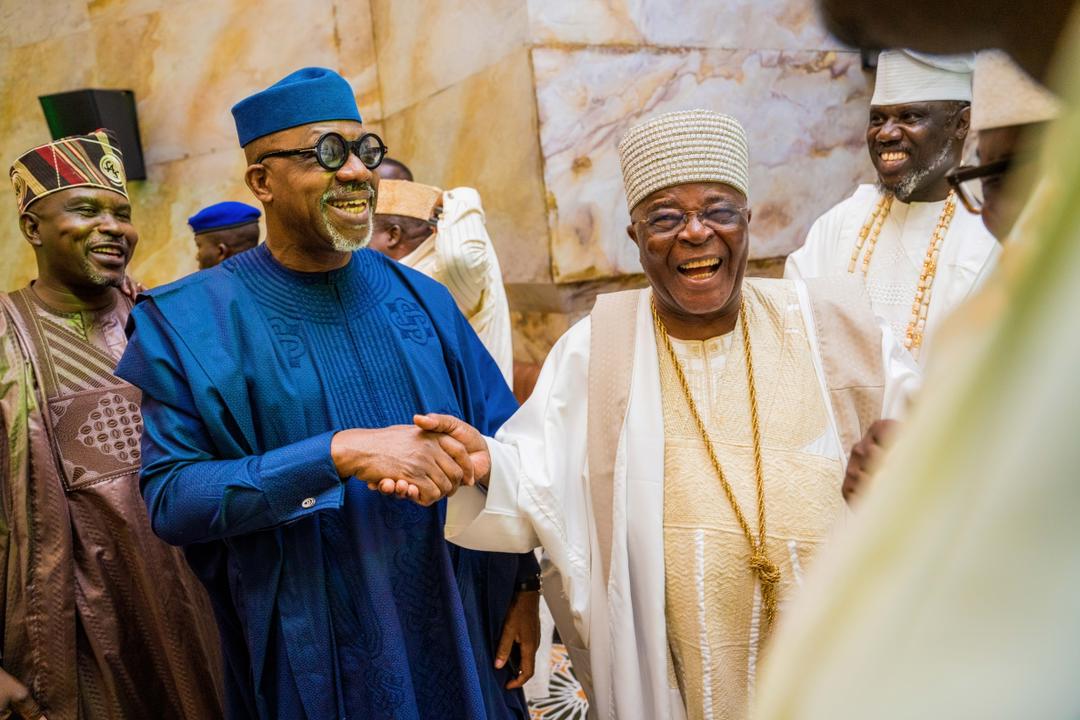
Abiodun Fetes Ministers Of Ogun Origin, Task Them On ‘Renewed Hope Agenda’
Ogun State Governor, Prince Dapo Abiodun, has implored the newly sworn-in ministers from the State to be good representatives of their people and leverage on the experience they have gathered over the years to achieve the ‘Renewed Hope Agenda’ of President Bola Tinubu’s led-administration.
Abiodun, who spoke at a reception organised in honour of the new ministers, Mr Wale Edun, Minister of Finance and Coordinating Minister of the Economy; Dr Ishak Kunle Salako, Minister of State for the Environment and Dr Bosun Tijani, Minister of Communication, Innovation and Digital Economy, held at the SilverBird Galleria, Zone 4, Abuja, also charged them to use their offices to support and compliment the implementation of his administration’s ‘Building Our Future Together Agenda’.
He noted that the State has produced people who have served the nation meritoriously and therefore much is expected of them.
He said: “We are the gateway to Nigeria’s prosperity, the nation’s educational capital, the industrial capital, number one in cassava, poultry, eggs, religious capital, emerging breadbasket of the nation and fast becoming the economic heartbeat of Nigeria. These appointments by Mr. President are a further testament to our first position and the abundant capacity we are known for and possess.
“You have been selected because of your excellent antecedents in the public and private sectors. Your credentials speak for each of you
“Amongst others, you will use your offices to support and compliment the implementation of our Building Our Future Together and our vision which is to create a focused and qualitative governance whilst providing an enabling environment for public-private partnerships which is very fundamental to the economic growth of the state and the individual of our people.”
The governor said his administration has constructed over 400 km of roads, built over 2000 affordable homes, and rehabilitated over 100 Primary Health Centres while over 100 schools were built during his first term in office.
A world-class airport, Governor Abiodun stated was built in less than two years, adding that his government is leading other states in the energy transition by the conversion of state-owned buses from diesel to 100% Compressed Natural Gas and will soon begin the implementation of E-mobility programme aimed at swapping Petrol Okadas for electric ones, all as part of initiatives to cushion the effects of the subsidy removal.
“We will endeavour to have bi-quarterly meetings with you to ensure we sustain this bond that is being established here today. Go forth and do exploits. We do not doubt that you will do us proud. May the Almighty grant you the grace and health so you make the best of the opportunity,” the governor submitted.
Speaking in an interview, the Deputy Governor, Engr. (Mrs.) Noimot Salako-Oyedele said the appointment was an opportunity to serve, emphasizing that with their wealth of experience, coupled with their outstanding qualifications, she is hopeful that they would perform creditably well.
Speaker of the House of Assembly, Rt. Hon. Olakunle Oluomo, on his part, said the appointment of three ministers from the State was the best thing that has happened to the state since the return to democracy in 1999, expressing the hope that they would perform to showcase the stuff the State is made of.
In their goodwill messages, the Alake of Egbaland Oba Aremu Gbadebo described the new ministers as people of high integrity and impeccable character who are ready to serve their fatherland, the Olu of Ilaro, Oba Kehinde Olugbenle, said the appointment was historic in the anal of the state.
The Akarigbo of Remoland, Oba Babatunde Ajayi, represented by the Asiwaju of Remoland, Chief Solomon Onafowokan, said the ministers are trustworthy and dedicated sons of the State who are well equipped to handle any responsibilities, while the Olota of Ota, Oba Abdulkabir Obalanlege, noted that the State is blessed with natural leaders who can excel wherever they find themselves, appreciating the President for finding them worthy to serve in his cabinet.
Responding on behalf of his colleagues, Minister of Communication, Innovation and Digital Economy, Dr Tijani, lauded Governor Abiodun for his infrastructural development and for leveraging technology to drive the State’s economy. He said the State would achieve more when it is fully digitalized.
He stated further: “Ogun is rich in culture, talents, opportunities and resources. We are a great people in Ogun State. I want to assure you that we will work for the good of Ogun State and Nigeria. We will play our parts in line with the President’s Renewed Hope Agenda.”
The occasion attracted important dignitaries including; the governors of Kwara State, AbdulRahman AbdulRazaq and his Imo State counterpart, Sen. Hope Uzodinma, serving and past members of the National Assembly, APC stalwarts in the State, government officials, captains of industry, friends and well-wishers of the ministers, among others.





Politics
Ogun Central To Host Final Zonal Townhall Meeting for Sen. Solomon Olamilekan Adeola, April 30
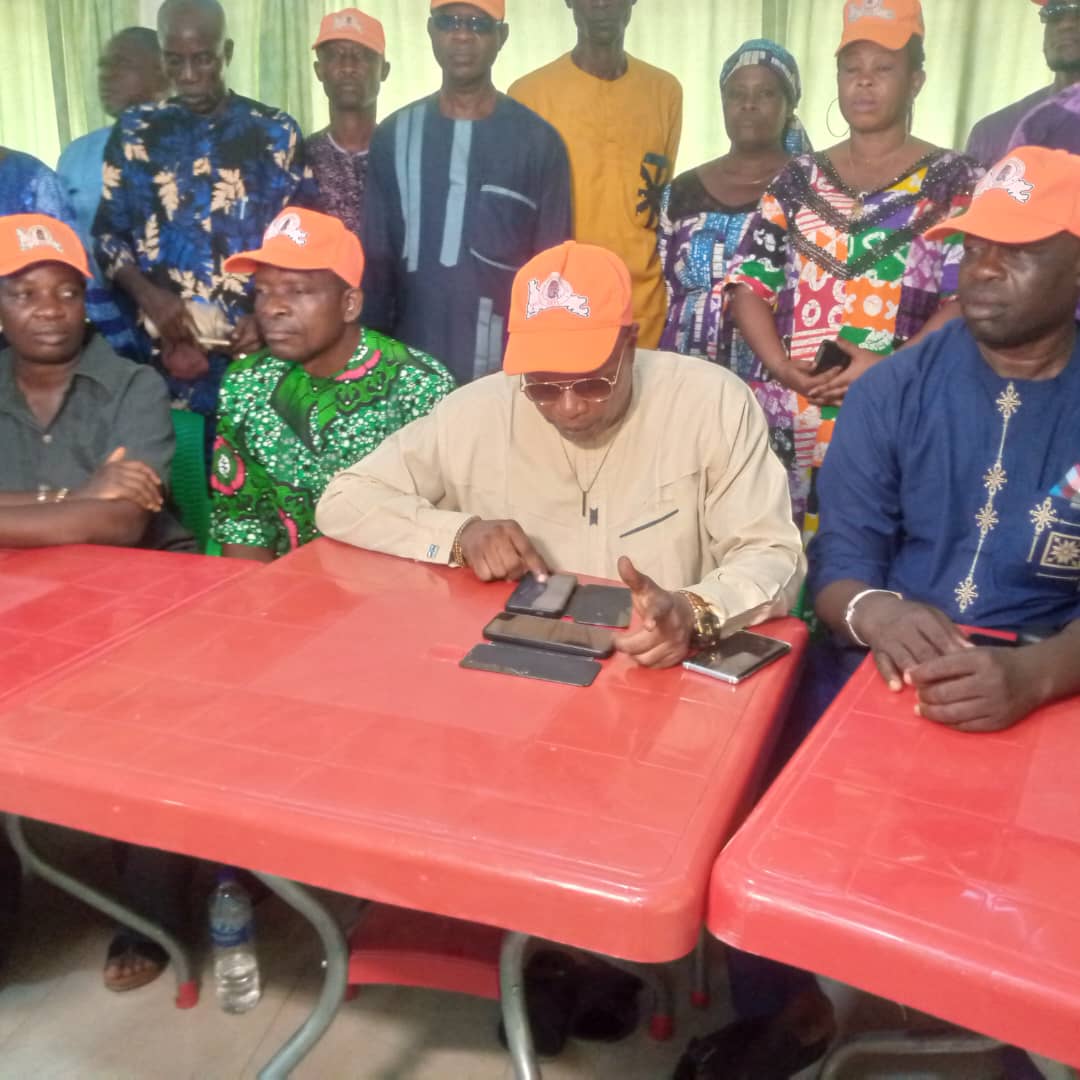
Ogun Central To Host Final Zonal Townhall Meeting for Sen. Solomon Olamilekan Adeola, April 30
-.Removes Hon.Olugbenga Lekuti as Deputy Director General,Ogun East
One of the leading Political Groups, Ogun Visionaries is set to host the final zonal edition of the Sen. Solomon Adeola Yayi town hall meetings in Abeokuta, Ogun State capital. The Ogun Central Edition, scheduled for April 30, 2026, aims to engage the electorate and push for Senator Yayi’s Governorship bid in 2027.
The event is themed ‘Ogun 2027: Yayi For All,’ marking the finale of the zonal town hall meetings.
Addressing Journalists on Tuesday in Abeokuta, Ogun State Capital,the Director General of Ogun Visionaries, Hon. Leye Odunjo, said the meeting will draw key stakeholders from Ogun Central’s political power circle.
Hon.odunjo stated that the event will kick off with a health walk, ‘Ogun Visionaries For Yayi Unity Walk,’ in the morning of April 30, 2026.The walk is themed ‘Let’s Walk for A United and Prosperous Ogun State,’ aiming to rally support for Senator Solomon Olamilekan Adeola Governorship aspiration.
“The town hall meeting is expected to feature prominent personalities, including Senator Solomon Olamilekan Adeola Yayi as the Special Guest of Honour. The event will provide a platform for interaction and engagement with the electorate”.
Ogun Visionaries has successfully held town hall meetings in Ogun West and Ogun East senatorial districts. The Ogun Central Edition is the final zonal meeting before moving to LGAs and wards.
The Director General while acknowledging the support received from various personalities since inception of the group,disclosed that distinguished individuals would be honoured with Award of Recognition during the event.
Odunjo, who is also a Senior Legislative Aide to the Deputy Senate President said “The political atmosphere in Ogun State is reportedly in tune with the people’s yearning for Yayi’s emergence. Ogun Visionaries is at the forefront of making this a reality.
“The event aims to unite stakeholders and push for a prosperous Ogun State. With Senator Yayi’s popularity growing, the meeting is expected to draw a large turnout.
“The Ogun Central Edition will provide a platform for stakeholders to interact and engage with the electorate. The event is seen as a crucial step towards achieving the group’s goals.
“Senator Solomon Olamilekan Adeola Yayi’s presence is expected to energize supporters and further boost his campaign for 2027” he added
Meanwhile, Ogun Visionaries has announced removal of Hon Olugbenga Lekuti as the Deputy Director General, DDG,Ogun East, of the group.
Announcing the removal in a brief statement made available to Journalists, Hon.Odunjo stated that Hon.Lekuti was relieved of the position as a result of his anti -group and anti -Yayi’s acts.
He added that a new Deputy Director General would be announced in due course.
Politics
Political Earthquake in Kano: How, Senator Rabiu Musa Kwankwaso, Nasiru Gawuna’s Move to ADC Reshapes North-West Politics
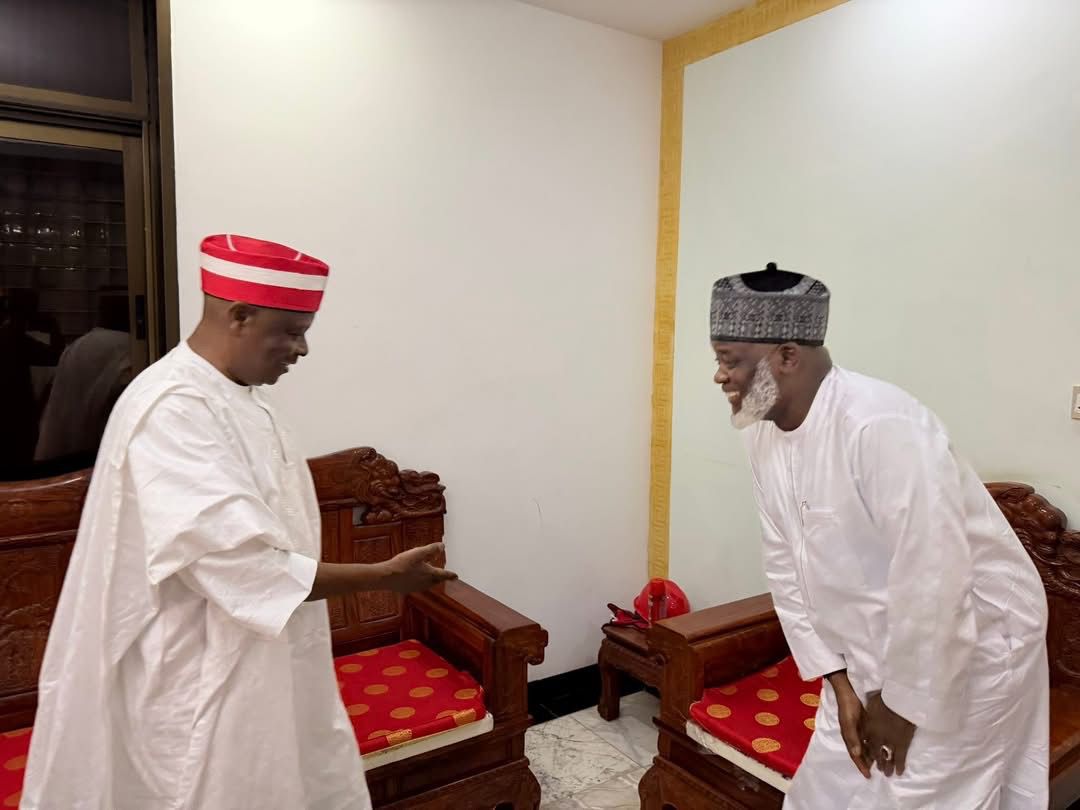
Political Earthquake in Kano: How, Senator Rabiu Musa Kwankwaso, Nasiru Gawuna’s Move to ADC Reshapes North-West Politics
The political atmosphere of Nigeria’s North-West was fundamentally altered on a sweltering afternoon in 2026 after Senator Rabiu Musa Kwankwaso former Governor of Kano State and Former Minister for Defence who is also the “Grand Commander” of the Red-Cap revolution, finalized a move that many viewed as the ultimate masterstroke of his political career. By transitioning from the NNPP to the African Democratic Congress (ADC), Kwankwaso did more than change platforms; he effectively reset the coordinates of the nation’s largest voting bloc.
Senator Kwankwaso’s pedigree is defined by a singular devotion to human capital development and an almost mythical grassroots loyalty preceded him. He turned a local movement, the Kwankwasiyya, into a disciplined, ideological army that transcends traditional party structures. His entry into the ADC instantly transformed a secondary party into a formidable fortress, signaling to the ruling elite that the North-West is no longer a monolith under their control.
The gravity of this shift is most profound in Kano, the heartbeat of Northern commerce. For years, the state was a polarized battlefield between the Kwankwasiyya and established conservative wings. However, the entry of Nasiru Yusuf Gawuna into the same ADC orbit has created a “Kano Super-Alliance” that was previously unthinkable. Kwankwaso, the visionary architect who sent thousands of Kano’s children to global universities, now finds his populist ideology merging with Gawuna’s administrative steadiness and deep-rooted institutional connections.
This synergy is a seismic departure from the politics of “zero-sum” rivalry; it is a calculated fusion of mass appeal and the strategic machinery required to protect and deliver votes.
This move reshuffles the entire North-West deck. As Kwankwaso plants the ADC flag across the region, he is attracting a wave of heavyweights from Kaduna to Sokoto who feel marginalized by the status quo. His political pedigree allows him to speak with a regional authority that others lack, positioning himself as a protector during a time of economic uncertainty. By bringing Gawuna into this fold, the dynamics of Kano politics have shifted from a war of attrition to a coalition of necessity. This alliance creates a “Third Way” that bypasses the failures of the old guard, promising a return to the rapid growth that defined the Kwankwaso years, but with a broader, more inclusive base that could dictate the occupant of Aso Rock in 2027.
Kwankwaso’s career has always been defined by a uniquely personal brand of power. From 1999 to 2015, he served two terms as Governor of Kano State, in addition to roles as Minister of Defence and Senator. While many were surprised by his recent maneuvers; especially following closed-door meetings with President Bola Tinubu, he chose the emerging ADC over the ruling APC.
In the high-stakes theater of Nigerian politics, few events have jolted the region quite like the defection of Nasiru Yusuf Gawuna from the APC to the ADC on March 31, 2026. Coming just twenty-four hours after Kwankwaso’s move, Gawuna’s transition fundamentally has also altered the political calculus in Kano. What makes this moment remarkable is the sheer drama of the reversal. Gawuna’s political journey has been a steady, calculated ascent through Kano’s establishment. He first shot to prominence as Commissioner of Agriculture under Governor Abdullahi Umar Ganduje, earning a reputation for hands-on management in a state where farming is the economic backbone. He eventually rose to Deputy Governor, serving for nearly six years and gaining invaluable executive experience. Beyond partisan politics, Gawuna distinguished himself as Chairman of the Governing Council of Bayero University and, most recently, as Chairman of the Federal Mortgage Bank of Nigeria (FMBN). He resigned from the FMBN on March 27, 2026, citing compliance with presidential directives regarding political appointees.
A look back at the 2023 gubernatorial election reveals just how significant Gawuna is. Running under the APC, he polled over 890,000 votes against the formidable Kwankwasiyya machine. This proved that he is one of the few politicians in Kano who can genuinely compete with Kwankwaso’s electoral machinery. His strength is threefold: he appeals to the youth, the religious establishment (Ulama), and the business community; he has the capacity to split the APC vote; and he has demonstrated he can deliver votes independently of a larger party wave. To understand the magnitude of this defection, one must appreciate the complete inversion of alliances since 2023. Back then, Governor Abba Kabir Yusuf ran on the NNPP ticket with Kwankwaso’s backing, while Gawuna carried the APC banner with Ganduje’s support. By 2027, the roles will likely reverse: Governor Yusuf is positioned to run under the APC with Ganduje’s blessing, while Gawuna is poised to run under the ADC with Kwankwaso’s endorsement.
From the perspective of the Kwankwasiyya movement, Gawuna’s arrival is a “return” rather than a “recruitment,” as he was part of the movement’s pioneer cohort. This narrative neutralizes accusations of opportunism. For his part, Gawuna framed his move in terms of service and divine guidance, with sources indicating he felt marginalized within the APC after his 2023 defeat.
The reaction from within the APC has been one of worry and regret. President Tinubu, recognizing the stakes, reportedly directed party leaders to prevent Gawuna’s move, even offering him an automatic Senatorial ticket for 2027. The failure of this pressure campaign, Gawuna reportedly placed his phone on “Do Not Disturb” and traveled abroad to avoid lobbyists represents a significant defeat for the presidency’s political management. This crisis prompted emergency meetings between President Tinubu, Dr. Ganduje, and Badaru Abubakar at the Presidential Villa to reorganize their strategy.
The long-term implication is the potential break of the APC-PDP duopoly. The ADC is now positioning itself as a genuine “third force” in the North-West. The defection of high-profile figures like Senator Ahmed Babba-Kaita, Senator Aishatu “Binani” Ahmed, and former Justice Minister Abubakar Malami suggests a coordinated realignment. This competition could force more substantive policy debates and reduce the “zero-sum” intensity of regional elections.
The projected 2027 gubernatorial rematch between Gawuna (ADC) and Governor Yusuf (APC) will be a battle between two men with established records. Voters will have a genuine choice between performance and platform rather than just shifting loyalties. As Gawuna put it: “Allah gives power to whom He wants and when He wants.” While the 2027 elections will reveal where that power flows, it is already clear that the political landscape of the North-West will never look the same again.
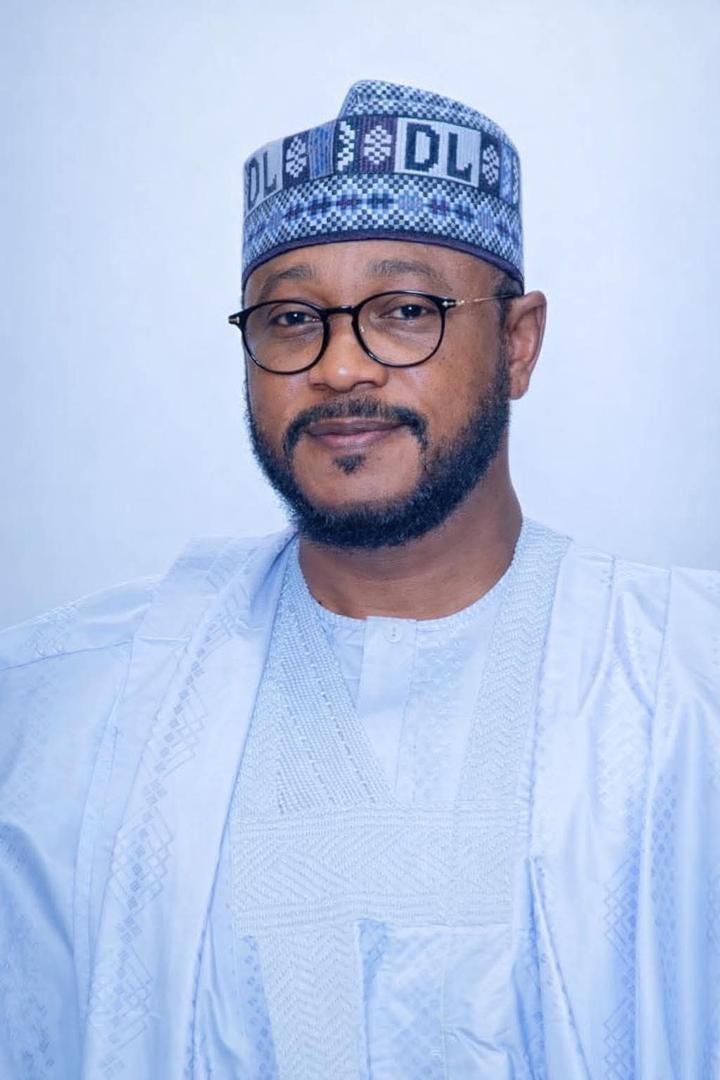
Governor Dauda Lawal Approves Gratuity Payment
The Zamfara State Government, under the visionary leadership of Governor Dauda Lawal, has approved the release of funds for the payment of Gratuity Batch 3 for the 2024/25 period. This decisive action underscores the administration’s unwavering commitment to the welfare of retired civil servants who dedicated years of service to the state’s development.
The Accountant General of the State is already working diligently to ensure that all eligible retirees receive their payments promptly and efficiently, reflecting the government’s resolve to uphold transparency and accountability in the disbursement process.
This timely gratuity payment is a testament to Governor Dauda Lawal’s people-centered leadership, which recognizes the sacrifices and contributions of retirees to the progress and stability of Zamfara State. It also reaffirms the government’s pledge to honor its financial obligations without unnecessary delays.
The Zamfara State Government calls on all retirees in the affected batch to exercise patience as the necessary administrative and financial processes are finalized. Every effort is being made to ensure smooth and uninterrupted payments.
This initiative is part of Governor Dauda Lawal’s broader vision to empower citizens and retirees, strengthen confidence in public service, and sustain the morale of those who have committed their lives to the growth of Zamfara State.


- Afreximbank supports Dangote Group as it targets US$100 billion annual revenue by 2030 April 8, 2026
- Africa's top-ranked Global Reporting Initiative (GRI) Training Partner launches 15th cohort of globally recognized sustainability reporting certification April 8, 2026
- African Energy Chamber (AEC) Intervenes in Landmark Climate Case to Defend Africa’s Energy Future April 8, 2026
- Eswatini opens to investors for first-of-its-kind roadshow April 8, 2026
- Egypt: President El-Sisi Meets Ministers of Electricity, Petroleum April 8, 2026
- Seychelles and Japan explore expanded cooperation and future partnerships April 8, 2026
- President Mahama to headline The Africa Debate 2026 as Ghana-United Kingdom (UK) investment ties deepen April 8, 2026
- Angolan Production Gets New Uplift as Eni’s Guido Brusco Joins Angola Oil & Gas (AOG) 2026 April 8, 2026
- Liquid C2 launches Africa’s first Google Cloud-powered Experience Centre to accelerate Artificial Intelligence (AI) adoption April 8, 2026
- Uganda: Opposition calls for reforms amid rising debt burden April 8, 2026
- Afreximbank supports Dangote Group as it targets US$100 billion annual revenue by 2030 April 8, 2026
- Africa's top-ranked Global Reporting Initiative (GRI) Training Partner launches 15th cohort of globally recognized sustainability reporting certification April 8, 2026
- African Energy Chamber (AEC) Intervenes in Landmark Climate Case to Defend Africa’s Energy Future April 8, 2026
- Eswatini opens to investors for first-of-its-kind roadshow April 8, 2026
- Egypt: President El-Sisi Meets Ministers of Electricity, Petroleum April 8, 2026
- Seychelles and Japan explore expanded cooperation and future partnerships April 8, 2026
- President Mahama to headline The Africa Debate 2026 as Ghana-United Kingdom (UK) investment ties deepen April 8, 2026
-

 news4 months ago
WHO REALLY OWNS MONIEPOINT? The $290 Million Deal That Sold Nigeria’s Top Fintech to Foreign Interests
-

 society7 months ago
“You Are Never Without Help” – Pastor Gebhardt Berndt Inspires Hope Through Empower Church (Video)
-

 celebrity radar - gossips2 months ago
Dr. Chris Okafor Returns with Power and Fire of the Spirit -Mounts Grace Nation Altar with Fresh Anointing and Restoration Grace on February 1, 2026
-

 celebrity radar - gossips4 months ago
Prophet Kingsley Aitafo Releases 2026 Prophecy: ‘Nigeria Will Rise, but the World Must Prepare for Turbulence’