
society
Abiodun lists random kidnapping, cultism biggest security challenges confronting Ogun

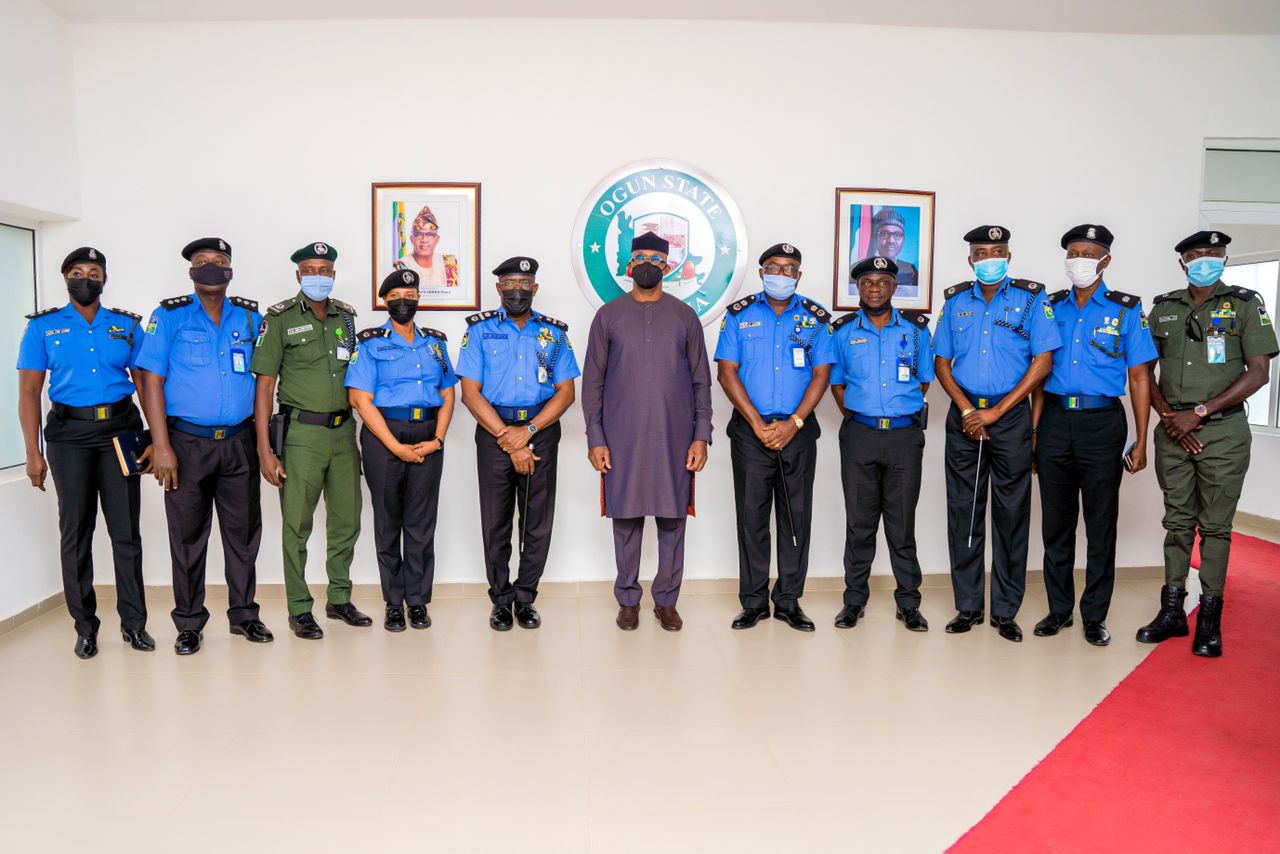
Abiodun lists random kidnapping, cultism biggest security challenges confronting Ogun
Ogun State governor, Dapo Abiodun, has listed random kidnapping and cultism as the biggest security challenges confronting the state.

Abiodun who made this known on Wednesday when he played host to the new Assistant Inspector General of Police in charge Zone 2, Johnson Kokumo in his office at Oke-Mosan, Abeokuta, equally said Ogun with many federal roads would require huge manpower and equipment to monitor criminal activities on the roads.

The governor lauded the Air Wing of the Police Force for helping in combating criminal activities, especially kidnapping in the state.

He commends the AIG for his initiative to provide security at Kara and under the Long Bridge axis of the Lagos-Ibadan Expressway.
Abiodun explained that the Nigerian Army, through its General Officer Commanding (GOC), had pledged to support the state by deploying tracking equipment to track kidnappers, urging men of the Nigeria Police to work in synergy with the Army to achieve the set objective.

“The biggest issues we have today in Ogun State are that of random kidnapping and cult activities.
“I believe that the cult activities have abated now because of the joint efforts of the Nigeria Police, the State Security Services, and the Nigerian Army.
“However, we are still struggling and dealing with issues that relate to the kidnapping of contractors, farmers, and innocent Ogun State residents. We sincerely hope that as we go along in our relationship, we will collaborate to ensure that we reduce this incident of kidnapping to absolute zero”, the governor said.
While describing insecurity as an act of sabotage, he said Ogun has been proactive in the area of security by rejigging the State Security Trust Fund, which according to him, had helped in providing patrol vans, communication, and other gadgets to enable security agencies carry out their functions effectively.
Abiodun, however, thanked President Muhammadu Buhari for approving the use of a Nigeria Police helicopter that has been working and providing air surveillance in the state.
He said: “The use of that helicopter greatly assisted us in reducing the response time to kidnap situations and consequently reduced kidnap situations. I understand that the helicopter has been re-assigned for use somewhere else, it is my hope that AIG, you will use your good office to ensure that the helicopter is redeployed back to Ogun State.
“You will note that Ogun has an unusual amount of federal roads compared to other states. We have the Lagos-Ibadan expressway, Epe-Ijebu-Ode, Sagamu-Ikorodu, and the Lagos-Ota-Abeokuta road, all these are federal roads. We find out that 80 to 90% of the stretch of these roads are in Ogun State and it is humanly impossible for the men of the Nigeria Police to patrol all those roads as adequately as they require
“But each time we have a distress call on any of those locations, either from Yewa, meaning Imeko, Ipokia all the way to Ogun Waterside or Ijebu-Igbo, the helicopter was able to respond swiftly to the distress calls while your men now move in, thereby ensuring that the kidnappers are not able to leave the immediate corridor before the men arrive. I want to use this opportunity to implore that you help us to discuss with your men of the Air Wing to ensure the speedy return of this helicopter”.
Speaking earlier, AIG Kokumo said Zone 2 comprising Ogun and Lagos States police commands were planning a joint operation between the two commands to fight criminals, particularly at Kara and Under the Bridge along the Lagos-Ibadan Expressway.
This, according to him, is to ensure that adequate security is provided for companies, industries, and individuals operating along the axis.
The AIG who hinted that he was in the state on a familiarisation visit, noted that the Zone was working on a synergy between the Marine Olive Units of Lagos and Ogun State command to provide security in the coastal areas.
Kokumo also appreciated the Abiodun-led administration in the state for providing the necessary working tools to the police force, noting “without the commitment of the governor, policing the state would have been difficult”




society
AjadiOyoOmituntun 3.0: Grassroots Walkout, Consultations Boost Ajadi’s Oyo Governorship Momentum
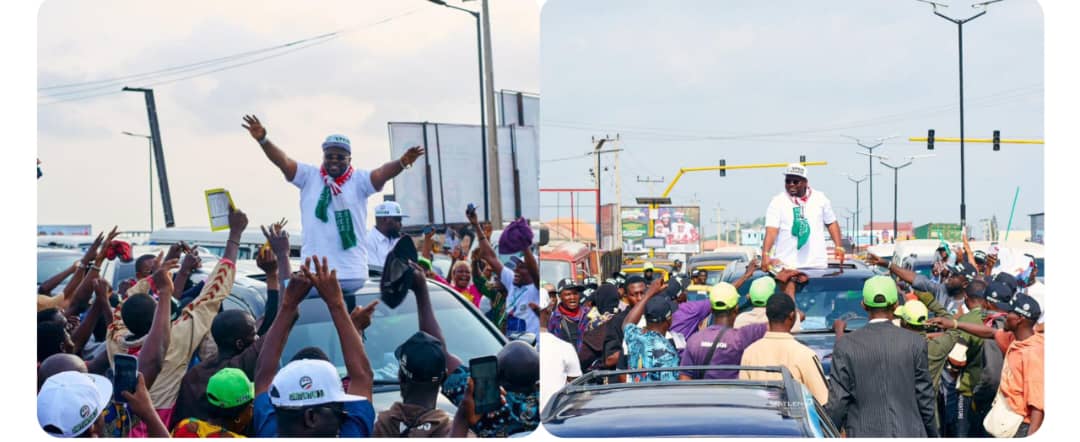
AjadiOyoOmituntun 3.0: Grassroots Walkout, Consultations Boost Ajadi’s Oyo Governorship Momentum
Members of the Peoples Democratic Party (PDP) in Egbeda Local Government Area of Oyo State staged a consultation walkout on Tuesday in support of the governorship aspiration of Ambassador Olufemi Ajadi Oguntoyinbo, reaffirming their confidence in his candidacy ahead of the party’s primaries.
The peaceful political procession, held across major communities within the council area, attracted party leaders, grassroots mobilisers, youths, market vendors, and supporters who described Ajadi as a loyal party member with strong grassroots appeal.
The consultation walkout, which commenced at Osengere in Ward 8—Ajadi’s political base—moved through Gbagi Market, Iwo Road, Monatan, Olodo and Erunmu, drawing enthusiastic reactions from residents and traders who came out to welcome the PDP gubernatorial aspirant and his supporters.
Speaking during the walkout, Ambassador Ajadi expressed appreciation to party members and residents for their show of solidarity, describing the exercise as a demonstration of unity within the PDP in Egbeda.
This show of love from my people in Egbeda Local Government means a lot to me. I am a committed member of the PDP and I remain dedicated to the growth and progress of our great party,” Ajadi said.
He added that his governorship ambition is driven by his desire to consolidate on the achievements of Governor Seyi Makinde and further deepen good governance in Oyo State.
“Our goal is to build on the good governance already established by His Excellency, Governor Seyi Makinde. We want to expand opportunities for our youths, strengthen the local economy and ensure that development gets to every community,” he stated.
At Gbagi International Market, one of the major commercial hubs visited during the walkout, Ajadi addressed traders and artisans, assuring them of inclusive governance if given the mandate.
“I am coming with a clear vision to serve the people of Oyo State. Our administration, by God’s grace, will prioritise traders, artisans and small business owners because they are the backbone of our economy,” he told the cheering crowd.
The walkout was attended by notable PDP leaders including the Chairman of Egbeda Local Government and Oyo State Chairman of the Association of Local Governments of Nigeria (ALGON), Hon. Sikiru Oyedele Sanda; the Political Head/Administrator of Ajorosun LCDA, Hon. Ibrahim Oladebo, popularly known as Simple; the Chief of Staff to the Egbeda Local Government Chairman, Hon. Kabiru Siyanbola; and the PDP Chairman in Egbeda Local Government, Chief Alawe Olawale Ebenezer, among others.
Speaking on the significance of the exercise, Hon. Sanda described Ajadi as a dedicated party man whose aspiration deserves consideration.
“Ambassador Ajadi has demonstrated commitment to the PDP over the years. What we are witnessing today is a reflection of the acceptance he enjoys at the grassroots. Leaders will always consider candidates who have the support of the people,” he said.
Additionally, Chief Alawe noted that the consultation walkout was intended to reaffirm Ajadi’s loyalty to the PDP and to demonstrate his electability.
“Ajadi is not a stranger at our party. He is from Ward 8 here in Egbeda and he has remained consistent. We believe he is marketable and capable of flying the PDP flag if given the opportunity,” he said.
The event also featured entertainment performances by popular juju and gospel musician Otunba Femi Fadipe, popularly known as Femo Lancaster, alongside Bullion Records fast-rising hip-hop artiste Harcher (Abdul Rahman Yusuf), whose musical performances added colour to the political outing and attracted more young supporters.
Party faithful who spoke with journalists during the event said the turnout of supporters and the convoy of vehicles and motorcycles that accompanied the walkout showed the growing acceptance of Ajadi’s aspiration within the local government.
Observers noted that the consultation tour forms part of Ajadi’s ongoing grassroots engagement strategy aimed at strengthening his support base across Oyo State ahead of the PDP governorship race.
The walkout ended with a renewed call by supporters for party leaders to consider Ajadi’s popularity and loyalty to the PDP when the process of selecting the party’s governorship candidate begins.
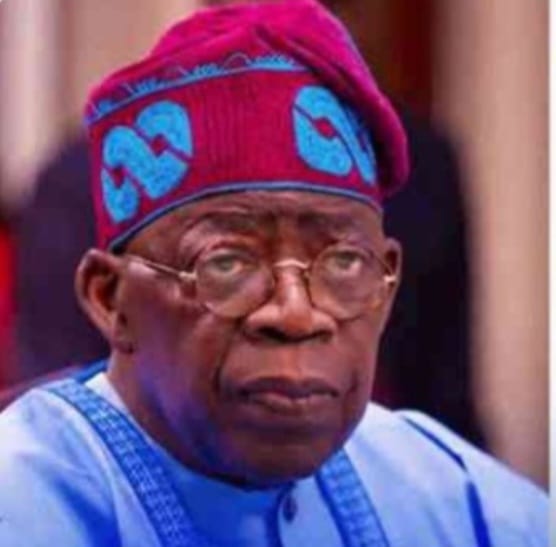
NIGERIA’S EDUCATION STRIDES, GLOBAL ACKNOWLEDGMENT: When Evidence Travels from Jigawa
…as President Tinubu set to commission Africa’s largest schools complex in Lagos
By O’tega Ogra
There is a quiet shift happening in Nigeria’s education system. You will not find it in speeches neither will you find it in long policy documents. But if you look closely, you will see it in something far more difficult to dismiss. Evidence.
Last week in San Francisco, at the Comparative and International Education Society (CIES) conference, data from classrooms in Jigawa State was presented before a global audience. Not projections. Not estimates. A record of what is happening inside a public system in Nigeria. 
That distinction matters. For years, much of what the world has understood about education in countries like ours has been assembled from a distance. National averages. Modelled estimates and reports written long after the fact. What was presented this time came from within. Attendance tracked daily. Teachers reassigned based on need. Classrooms observed as they function. All under a digitalised ecosystem.
In Jigawa, under the JigawaUNITE foundational learning digital programme, the numbers tell a simple story. Within roughly 150 days of implementation which commenced at the end of 2024, 95 previously understaffed schools were fully staffed. Pupil teacher ratio moved from 114:1 to 70:1. Daily attendance rose from 39 per cent to 77 per cent. This remarkable improvement was not achieved by expanding the workforce. It came from reorganising what already existed under a digital umbrella.
There is something instructive in that. Nigeria has never lacked policy. What we have often lacked is the discipline of execution. The ability to take what already exists and make it work as intended. That is where the real shift is beginning to show.
But it would be too convenient to reduce this to one programme.
At the federal level, the direction has also been adjusting. The Minister of Education, Dr. Maruf Tunji Alausa, has placed measurable outcomes, foundational learning, and teacher quality back at the centre of policy. UBEC, the Federal Government’s Universal Basic Education body, continues to drive national interventions around school improvement and teacher development, even as it insists that reform must remain system-led and not fragmented.
The First Lady’s education interventions, through the Renewed Hope Initiative, have reinforced education as a national priority, particularly around access, learning materials, and inclusion. These are different levers, but they are part of the same ecosystem.
And then there is the fiscal reality.
Recent reforms under President Bola Ahmed Tinubu have increased allocations to subnational governments, creating more room for states to act. In a federation like Nigeria, that matters. Because education is not delivered from Abuja. It is delivered in states. In schools. In classrooms.
What Jigawa has done is to use that room and the Executive Governor of the state, the State Universal Basic Education Board, and their partners on the JigawaUNITE project, New Globe, must be given kudos.
However, Jigawa is not alone in this journey.
In Kwara, efforts to align teaching with actual learning levels are beginning to correct a structural mismatch in classrooms. In Lagos and Edo, structured pedagogy and closer monitoring are improving consistency in teaching. Across the entire ecosystem, state governments, federal institutions like UBEC, and delivery partners like NewGlobe are pushing at the same question from different angles.
How do children actually learn better?
In a prior reflection, Ifeyinwa Ugochukwu, VP at NewGlobe, captured the urgency clearly. With the right tools, training, and use of data, foundational learning outcomes can improve at scale. The real risk, she noted, is delay, allowing learning gaps to become permanent.
That warning should not be ignored because the context remains difficult. Nigeria still carries one of the largest out of school populations in the world. Learning gaps remain. Progress in one state does not resolve a national challenge, but it does something else.
It proves that movement is possible.
What was presented in Washington did not claim success. It demonstrated function. It showed that a Nigerian sub-national can generate evidence that holds up in a global room. That reform does not always require something new. Sometimes it requires using what already exists more honestly and more efficiently.
The real question now is whether this remains an exception.
Or whether it becomes a pattern.
Because reform at scale is never built on isolated wins. It is built on systems that can reproduce them.
And perhaps that is why the timing matters.
This week, another subnational, Lagos State, is expected to commission the Tolu Schools Complex in Ajegunle, a sprawling 36-school integrated facility spread across 11.7 hectares, designed to serve over 20,000 students, and described as the largest school community in Africa. 
There is a connection here that should not be missed.
On one hand, a classroom system in Jigawa is learning how to organise itself better. On the other, a state like Lagos is building the physical scale required to carry thousands of learners at once.
One is structure. The other is capacity.
Real progress sits where both meet because education reform is not only about what we build, it is about how well what we build actually works.
For once, the data was not explaining Nigeria from the outside.
It was coming from within.
And it carried weight.
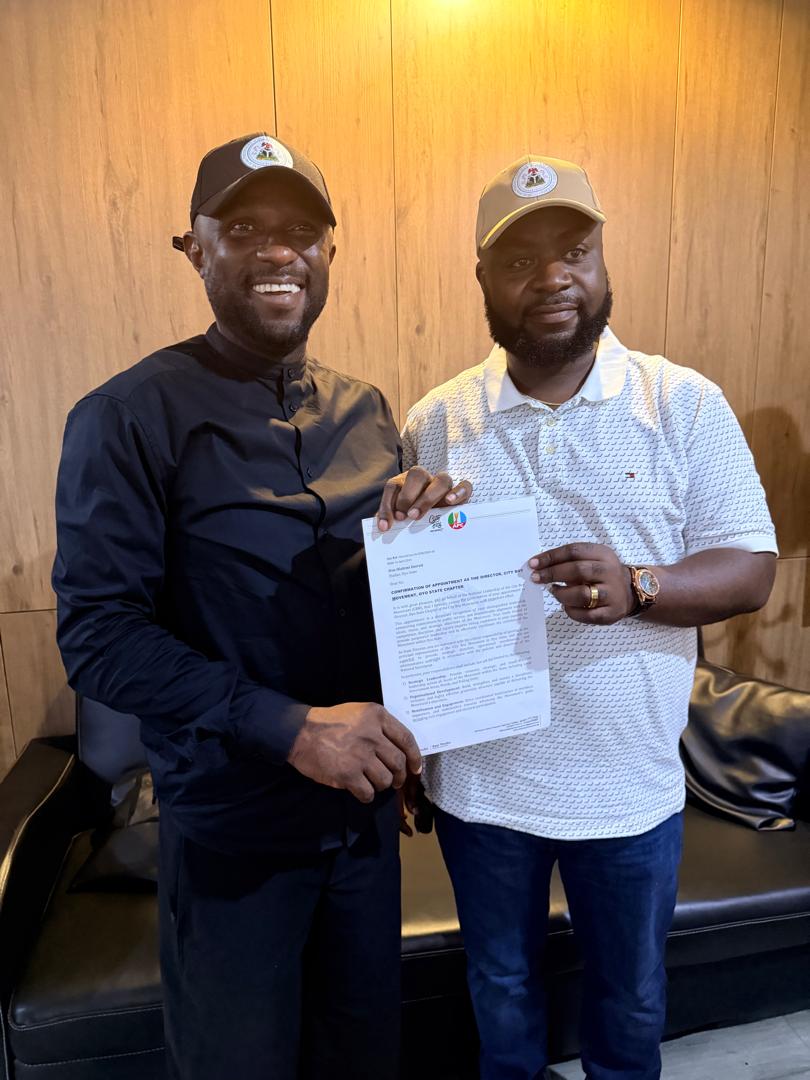
*BREAKING: Onireti Appointed Director-General of City Boy Movement in Oyo State*
The political atmosphere in Oyo State recorded a major development on Monday with the appointment of Hon. Olufemi Onireti as the new Director-General of the City Boy Movement, the grassroots mobilisation structure championing support for President Bola Ahmed Tinubu across the country.
The appointment was announced by the movement’s Director-General, Mr Francis Shoga, in Abuja on Tuesday during the handover of the appointment letter to Onireti.
This is coming days after his resignation from the Peoples Democratic Party (PDP), where he had been an active figure and former House of Representatives candidate.
His new role is expected to reposition the group’s activities and strengthen its outreach ahead of future political engagements in Oyo State.
According to the movement’s leadership, Onireti was chosen based on his “wide political network, proven organisational capacity and strong presence among the youth and grassroots stakeholders.”
Speaking with newsmen, Onireti expressed gratitude for the confidence reposed in him and pledged to deploy his experience to advance the objectives of the City Boy Movement across the state.
Onireti said his decision to join the ruling party was a personal conviction shaped by ongoing political realignments and his commitment to supporting a broader progressive coalition at both state and national levels.
Hon. Onireti added that his appointment followed extensive consultations and harmonisation with his followers.
He assured supporters that his leadership would prioritise inclusiveness, strategic mobilisation and effective communication.
“I am committed to galvanising our structures and ensuring that Oyo State remains a stronghold for the ideals we stand for,” he said.
Political observers note that his appointment may shift the dynamics of political mobilisation in Oyo State, given his influence and recent political moves.
The City Boy Movement is expected to unveil its new operational roadmap in the coming days.
The movement, a prominent youth-driven support platform advancing President Tinubu’s Renewed Hope agenda, positions Onireti to lead its grassroots mobilisation efforts in Oyo as part of its national structure ahead of the 2027 elections.


- Seychelles Strengthens Human Rights Reporting through National Workshop April 8, 2026
- ABB’s Application Configurator brings speed and precision to grid-feeding protection system design April 7, 2026
- Can Equatorial Guinea Reposition as West Africa’s Gas Hub? April 7, 2026
- Afreximbank Partners with African Energy Week 2026 to Drive Africa-Led Energy Deals April 7, 2026
- Merck Foundation Marks ‘World Health Day’ 2026 – Transforming Patient Care in Africa and Beyond through 2600+ Scholarships for Healthcare Providers From 52 Countries April 7, 2026
- Morocco Gas Plan Reset Could Open Door to New Investment Models April 7, 2026
- African Petroleum Producers Organization (APPO) Secretary General Joins Angola Oil & Gas (AOG) 2026 as African Energy Bank Eyes June 2026 Debut April 7, 2026
- Ghanaian Biomedical Specialist Receives International Award April 7, 2026
- Grey Connects the Africa-Canada Money Corridor With Instant Transfers via Interac April 7, 2026
- Nigeria’s Oil Revival in Focus as Petroleum Minister Lokpobiri Joins Paris Energy Forum April 7, 2026
- Seychelles Strengthens Human Rights Reporting through National Workshop April 8, 2026
- ABB’s Application Configurator brings speed and precision to grid-feeding protection system design April 7, 2026
- Can Equatorial Guinea Reposition as West Africa’s Gas Hub? April 7, 2026
- Afreximbank Partners with African Energy Week 2026 to Drive Africa-Led Energy Deals April 7, 2026
- Merck Foundation Marks ‘World Health Day’ 2026 – Transforming Patient Care in Africa and Beyond through 2600+ Scholarships for Healthcare Providers From 52 Countries April 7, 2026
- Morocco Gas Plan Reset Could Open Door to New Investment Models April 7, 2026
- African Petroleum Producers Organization (APPO) Secretary General Joins Angola Oil & Gas (AOG) 2026 as African Energy Bank Eyes June 2026 Debut April 7, 2026
-

 news4 months ago
WHO REALLY OWNS MONIEPOINT? The $290 Million Deal That Sold Nigeria’s Top Fintech to Foreign Interests
-

 society7 months ago
“You Are Never Without Help” – Pastor Gebhardt Berndt Inspires Hope Through Empower Church (Video)
-

 celebrity radar - gossips2 months ago
Dr. Chris Okafor Returns with Power and Fire of the Spirit -Mounts Grace Nation Altar with Fresh Anointing and Restoration Grace on February 1, 2026
-

 celebrity radar - gossips4 months ago
Prophet Kingsley Aitafo Releases 2026 Prophecy: ‘Nigeria Will Rise, but the World Must Prepare for Turbulence’