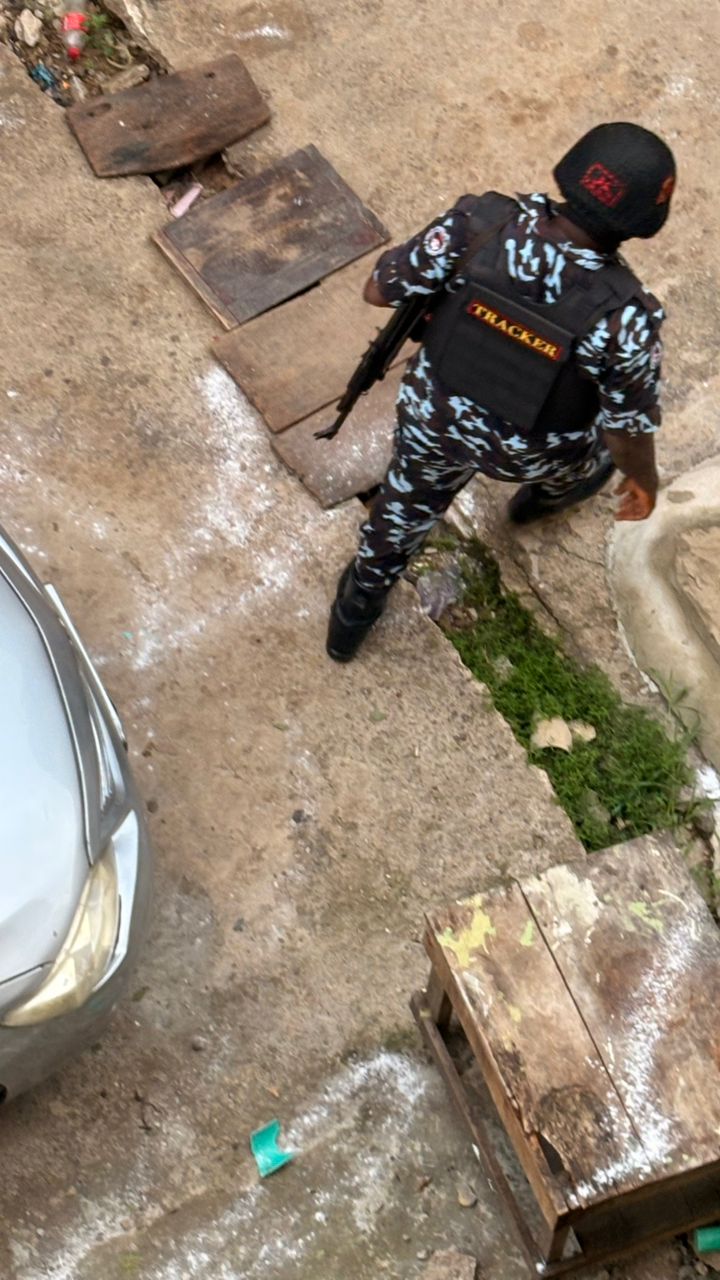
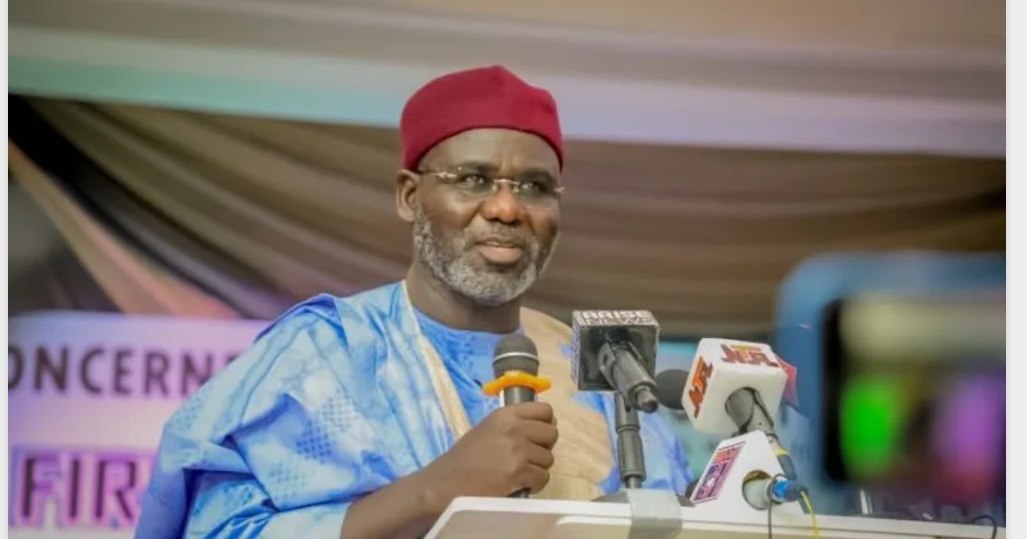
Connect with us

society

Advancing National Security and Economic Prosperity: The Case for NATCOM in Nigeria By James Ezema

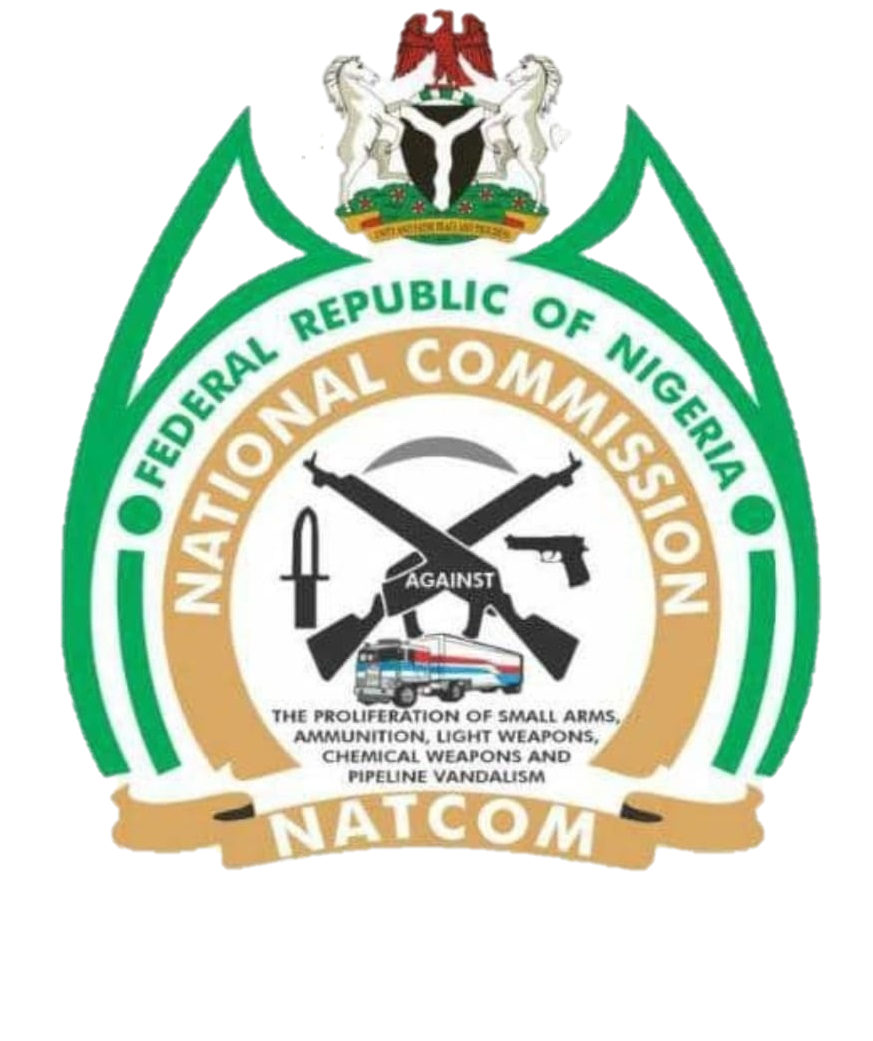
Published

on

Globally, it is a well-known fact that the proliferation of small arms and light weapons poses a significant threat to national security, stability, and economic development in any country. As Nigeria grapples with rising insecurity, it is crucial to address this menace comprehensively without recourse to personal interest or individuals’ pecuniary gains. Nigeria is bigger than  any individual, no matter office we occupy. Therefore, as a Nigerian, in whatsoever capacity we find ourselves, let us remember that it is the country first.
Today, President Bola Ahmed Tinubu’s tenure as the chairman of the Economic Community of West African States (ECOWAS) provides a unique opportunity to establish National Commission for the Control of Small Arms and Light Weapons (NATCOM) in Nigeria as a specialized commission dedicated to controlling the spread of illicit arms. This has become imperative for so many reason, especially because of its potential impact on Nigeria and Nigerian economy so as to be among other member countries that have keyed into the ECOWAS convention.
The ECOWAS Convention on Small Arms and Light Weapons, Their Ammunition, and Other Related Materials is a significant regional initiative aimed at addressing the proliferation and illicit trade of small arms and light weapons within the Economic Community of West African States (ECOWAS) region.
Some key points from the convention adopted by the Conference of ECOWAS Heads of State on June 14, 2006 has its primary objectives including to prevent and combat the excessive accumulation of small arms and light weapons (SALWs) within ECOWAS and to control their circulation. The convention also seeks to address the destabilizing impact of SALWs on peace, security, and stability in the region.
In its key provisions, the convention expanded the existing moratorium on SALWs to include “components and ammunition”, established a stringent waiver procedure for member states wishing to import, export, or manufacture firearms and to this end, each member state is required to create a National Commission on Small Arms and Light Weapons to implement the convention’s resolutions. The national commissions are to play a crucial role in sharing information and experiences related to SALWs.
From the international context, the convention aligns with international efforts to curb the proliferation of SALWs as it considers relevant United Nations instruments, including the UN Protocol on the manufacture and illicit trade in firearms, spare parts, components, and ammunition. Additionally, the convention takes into account other regional and sub-regional initiatives aimed at addressing this issue.
In short, the ECOWAS Convention emphasizes cooperation among member states to control and prevent the spread of small arms and light weapons, contributing to regional peace and security.
In Nigeria, the urgency of addressing small arms and light weapons proliferation cannot be over emphasised, especially when we take patriotic look into the current security challenges in the country.
Small arms and light weapons — such as handguns, rifles, and grenades — have fueled violence, terrorism, and criminal activities across Nigeria’s six geopolitical zones without exception. We all feel it daily in the ongoing banditry, kidnapping for ransom, and secessionist agitations threatening lives, disrupting legitimate activities in our local communities, and hindering economic progress amid hunger and poverty in most parts of the country.
Therefore, NATCOM’s establishment would allow a better coordinated efforts to curb the influx of illegal arms within and outside Nigeria’s ungoverned spaces, given by its already established structure and volunteer workforce.
Secondly, looking at NATCOM’s Mandate and ECOWAS Convention, NATCOM’s primary mandate would be to coordinate and control the proliferation of small arms and light weapons. This aligns with the ECOWAS Convention on Small Arms and Light Weapons, Their Ammunition, and Other Related Materials. By ratifying this convention, Nigeria commits to regional cooperation in combating arms trafficking and promoting peace and security.
Looking at the economic gains, job creation is on top of it all as NATCOM’s activities would create employment opportunities for the Nigerian youths, especially at this time when criminality is on the increase due to high rate of job losses and hash economic realities.
From arms control officers to administrative staff, the commission’s workforce would contribute to reducing unemployment rates in the country while training programmes for arms control and border security would enhance skills and employability in the country.
Also key is enhanced security and investment climate in Nigeria as a safer environment attracts foreign direct investment (FDI) and encourages local businesses to expand. Investors seek stability and predictability. Therefore, NATCOM’s efforts would reduce armed conflicts, safeguard critical infrastructure, and protect businesses. This stability would boost economic growth. Today, power infrastructure are daily vandalized, the businesses and homes in darkness due to increasing activities of unemployed young people in the country.
On improving regional trade and integration, an efficient arms control facilitates cross-border trade. NATCOM’s collaboration with neighboring countries would enhance regional integration. Legal arms trade can thrive without endangering security. This benefits Nigeria’s trade relations within ECOWAS.
The economic toll of insecurity — lost productivity, healthcare expenses, and infrastructure damage — is substantial and NATCOM’s preventive measures would drastically reduce these costs, redirecting resources from security responses to development projects that would yield long-term benefits through its grassroots related operations.
Having established the some of the gains of establishing NATCOM, it is important to note that it must be established by an Act of the National Assembly and signed into law by President Bola Tinubu to give legal framework that ensures the commission’s authority, funding, and operational autonomy.
NCCSALW Vs NATCOM
The National Centre for the Control of Small Arms and Light Weapons (NCCSALW), under the office of the National Security Adviser (NSA), had recently issued a statement that NATFORCE and NATCOM, are not part of Nigeria’s security architecture and have no affiliation with any official security agency, insisting that the outfits are not backed by federal law, lack the authority to recruit, and are not approved to operate as security organizations.
The statement also noted that the National Centre for the Control of Small Arms and Light Weapons (NCCSALW), remains the National Focal Point on Small Arms and Light Weapons in Nigeria, coordinating with all relevant stakeholders to implement the UN and ECOWAS Plans of Action on the control of small arms and light weapons, adding that in 2021, the office of the NSA directed the dismantling of illegal security outfits involved in extorting and harassing Nigerians.
This development prompted this instigative research on National Commission for the Control of Small Arms and Light Weapons (NATCOM), leading to the above exposé on the planned establishment of the Commission and the gains of an Act of the National Assembly, presidential assent, and culminating in an official gazette of the federal government of Nigeria.
Nevertheless, the public was reminded that NATFORCE and NATCOM are not part of Nigeria’s security architecture and have no affiliation with any official security agency.
However, in the course of this investigative research, it was found that the recent statement that was credited to NCCSALW on the activities of NATCOM could be seen in some quarters as an affront on the National Assembly, particularly the 10th Assembly, which listed the recommittal of the NATCOM Bill 2023 on its order paper.
The Media in July 2023 widely reported that the 10th National Assembly has commenced the recommittal process of Bills passed by the 9th Assembly but were neither assented to nor assent withheld by President Bola Ahmed Tinubu before the expiration of the preceding Assembly.
Available records from the office of the Clerk to the National Assembly, according to media reports, showed that Bills that fall into this category, were 44, one of which, is the ECOWAS Convention on Small Arms and Light Weapons, their Ammunition and other Related Materials (Ratification and Enforcement) Bill 2023, otherwise passed as NATCOM Bill 2023, which was earlier transmitted to former President Muhammadu Buhari in April 2023.
Investigations have also revealed that NATCOM inherited a large number of volunteer workforce from NATFORCE and have recruited some of those who have expressed interest.
However, it was found that the volunteers have no terms of service or remunerations attached since NATCOM has not been existing as part of the Nigerian security architecture but as a group of volunteers seeking legal backing to help support the existing national security architecture for a safer country.
These volunteers, it was found, are able bodied Nigerians, including professionals and retirees who have offered their services free of charge and funding their activities from their pockets.
Findings also revealed that the volunteers have patriotically offered themselves to provide intelligence/information on illicit arms and ammunitions in the hands of non-state actors while awaiting presidential assent and official gazetting of the NATCOM Act by President Tinubu — NATCOM has a record of collaboration/complimentary services with the Nigeria Police Force in time past.
In the meantime, the impact of NCCSALW at the office of the NSA, which was established in May 2021 by the administration of former President Muhammadu Buhari, has not been fully felt, hence the security situation and the number of illegal arms and ammunitions flowing into the hands of non-state actors and into many ungoverned spaces in the country still prevails.
Therefore, NCCSALW should instead find a common ground for collaboration, encouragement, and synergy with NATCOM, which has pursued it’s legislative backing for over 10 years for enabling Act and legal teeth, which was eventually gotten when the 9th Assembly passed the NATCOM bill into law and awaiting Presidents assent and with the recommittal of the bill by the 10th Assembly.
It’s is therefore shocking to read the NCCSALW under the office of the NSA portraying itself as though it is seeking to frustrate the ongoing efforts of both NATCOM and the 10th National Assembly who are determined to address the prevailing issue of insecurity in Nigeria.
NCCSALW should explore possibilities for collaboration with NATCOM volunteers just like the Nigeria Police Force did in time past.
While the NCCSALW serves as a stopgap measure, NATCOM’s establishment by an Act of the National Assembly promises a more robust, sustainable approach to small arms control. And by signing the NATCOM Bill into law, President Bola Ahmed Tinubu would have strengthened Nigeria’s security architecture and contribute to regional stability and prosperity
President Tinubu’s leadership as ECOWAS chairman presents a historic moment for Nigeria hence establishing NATCOM would demonstrate our commitment to regional security, youth empowerment, and economic prosperity. By controlling proliferation of small arms and light weapons will pave the way for a safer more prosperous Nigeria. Let us, therefore, patriotically seize this opportunity and build a resilient future for our country and desist from unnecessary inter-agency rivalry which portend a great danger to national security and advances made thus far.
Comrade James Ezema is a journalist and National Vice President (Investigation), Nigerian Guild of Investigative Journalists (NGIJ) and the National President of the Association of Bloggers and Journalists against Fake News (ABLFN). He writes from Abuja, Nigeria via email: [email protected]


James Ezema is a Digital Marketing Executive, human rights campaigner, veteran journalist and political scientist.

He can be reached via +2348035823617 (WhatsApp/Calls/SMS).

society

Atiku, Obi, Kwankwaso, Makinde, Ajadi, Others Converge in Ibadan for Historic Opposition Summit Ahead of 2027

Published

on

Atiku, Obi, Kwankwaso, Makinde, Ajadi, Others Converge in Ibadan for Historic Opposition Summit Ahead of 2027


In a significant political convergence that could reshape Nigeria’s democratic landscape ahead of the 2027 general elections, prominent opposition leaders, including Atiku Abubakar, Peter Obi, Rabiu Musa Kwankwaso, and Oyo State Governor, Seyi Makinde, gathered in Ibadan on Saturday for the National Summit of Opposition Political Parties Leaders.


The high-level summit, held at the Banquet Hall of the Government House Ibadan, also drew the participation of leading gubernatorial aspirant in Oyo State under the Peoples Democratic Party (PDP), Ambassador Olufemi Ajadi Oguntoyinbo, alongside several political heavyweights and stakeholders across party lines.


Convened under the theme, “That We May Work Together for a United Opposition to Sustain Our Democracy,” the summit brought together representatives from major opposition platforms including the Peoples Democratic Party (PDP), Labour Party, New Nigeria Peoples Party (NNPP), African Democratic Congress (ADC), and the Peoples Redemption Party (PRP).


Other notable figures at the summit included former Senate President David Mark, former Osun State Governor Rauf Aregbesola, former Rivers State Governor Rotimi Amaechi, and former Sokoto State Governor Aminu Tambuwal.


Also in attendance were elder statesman Olagunsoye Oyinlola, former Niger State Governor Babangida Aliyu, political economist Pat Utomi, social activist Aisha Yesufu, and former APC National Secretary John Akpanudoedehe, among others.


Speakers and stakeholders at the summit examined critical national issues, including electoral reforms, national security, economic recovery, and the need for stronger democratic institutions, as part of efforts to forge a united opposition front ahead of 2027.


Ambassador Olufemi Ajadi Oguntoyinbo, who actively participated in the summit, spoke with journalists shortly after stepping out of the Banquet Hall. Addressing newsmen, Ajadi described the gathering as a turning point for opposition politics in Nigeria.


“This summit represents a new beginning for the opposition in Nigeria. What we are seeing is a deliberate effort to put aside differences and work towards a common goal,” Ajadi said.


He noted that the collaboration among diverse political actors signals a renewed commitment to national development and democratic consolidation.


Nigerians are looking for direction and credible leadership. The responsibility is on us as opposition leaders to provide that alternative and restore confidence in governance,” he added.


Analysts say the Ibadan summit marks one of the most coordinated efforts by opposition forces in recent years, signaling early realignments and possible coalition-building ahead of the next general elections.


As deliberations continue, political observers believe the outcomes of the summit could significantly influence Nigeria’s political direction, particularly if the unity advocated by participants translates into concrete alliances.

Continue Reading

society

Made-in-Nigeria Exhibition 2026: Abuja and Lagos Set the Stage for a New Era of Local Innovation and Enterprise

Published

on

Made-in-Nigeria Exhibition 2026: Abuja and Lagos Set the Stage for a New Era of Local Innovation and Enterprise


Abuja and Lagos are poised to surge with energy, enterprise, and cultural expression as the Made-in-Nigeria Exhibition 2026 takes centre stage—an event designed not merely to display products, but to redefine perception.


More than a conventional exhibition, this gathering signals a confident assertion of Nigeria’s productive strength. Entrepreneurs, manufacturers, creatives, and industry leaders from across the nation will assemble to present a compelling spectrum of locally made goods. From premium leather craftsmanship and cutting-edge fashion to beauty innovations, agro-based solutions, and artisanal creations, each showcase reflects ingenuity shaped by resilience and ambition.


At the heart of the exhibition lies a deliberate push to elevate emerging brands. Many small businesses operate with limited visibility, often constrained by access and exposure. This platform disrupts that pattern. By offering opportunities such as complimentary booth spaces for selected participants, it opens the door for underrepresented talents to step into the spotlight—not just to sell, but to be seen, evaluated, and remembered.


According to Bola Awosika, the driving force behind the initiative, “This exhibition is about shifting mindsets. Nigerian products are not just alternatives—they are competitive, innovative, and globally relevant. We are creating a space where local brands can be experienced, trusted, and elevated.”

The exhibition will hold biannually in both Abuja and Lagos:


Abuja Edition

• First Edition: 27th–28th June 2026

• Second Edition: 12th–13th December 2026

Lagos Edition

• First Edition: 25th–26th July 2026

• Second Edition: 19th–20th December 2026


Each edition will draw a dynamic mix of participants—buyers scouting quality, investors searching for scalable ideas, media documenting emerging trends, and everyday Nigerians engaging with products that reflect their identity. Conversations sparked within the exhibition halls are expected to extend beyond introductions, evolving into partnerships and long-term collaborations.

The experience itself goes beyond static displays.


Attendees will encounter live demonstrations, immersive product storytelling, interactive sessions, and curated networking opportunities. It becomes less about walking through aisles and more about engaging directly with the pulse of Nigerian creativity and enterprise.


Yet, the exhibition carries a broader economic and cultural message. It challenges consumer habits, urging Nigerians to support domestic production while reinforcing confidence in local capabilities. Every transaction becomes a statement—one that contributes to national growth and industrial sustainability.


For many participants, this platform could mark a pivotal shift. A relatively unknown brand may secure national recognition. A hidden talent could attract strategic investment. An early-stage idea might evolve into a scalable enterprise. The ripple effects are designed to outlast the exhibition itself.


As the momentum builds business owners have started making enquiries and booking stands for each edition, what remains is not just a successful event, but a strengthened narrative—one that positions Nigerian products as credible, competitive, and ready for global markets.


Call to Participate: Affordable Access, Strategic Opportunity


As preparations intensify, the Convener, Bola Awosika, has extended a direct invitation to entrepreneurs, brands, and industry players to seize the opportunity presented by the exhibition.


“We have deliberately structured this exhibition to be inclusive and accessible. With pocket-friendly stand rates, we are removing the usual barriers that prevent many businesses from participating. Vendors can secure their booths at ₦150,000 and ₦200,000 respectively. This is not just a cost—it is an investment in visibility, credibility, and growth. We encourage businesses across Nigeria to take advantage of this platform to position their brands for new markets and opportunities,” she stated.


Beyond vendor participation, she emphasized the importance of collaboration in delivering a world-class event.


“it will be an annual event. We are also calling on corporate organisations, development institutions, and forward-thinking brands to come on board as sponsors and partners. This exhibition is a national platform with significant economic impact, and there is immense value for organisations looking to align with innovation, enterprise, and local content development.”

Interested exhibitors, sponsors, and partners can access more information and secure participation via the official website: www.nigeriaexportsexhibition.com.ng


The exhibition is currently supported by notable institutions including Bank of Industry, Lagos State Internal Revenue Service, and Sahcol, with additional sponsors and partners expected to join as momentum builds.


Powered by Bevents Logistics Synergy, the Made-in-Nigeria Exhibition 2026 stands not as a fleeting showcase, but as a sustained movement—one that redefines how Nigeria sees its own potential and how the world engages with it.


Made-in-Nigeria Exhibition 2026: Abuja and Lagos Set the Stage for a New Era of Local Innovation and Enterprise

Continue Reading

society

Rebalancing The Force: Why Police Visibility Must Reach The Ordinary Citizen

Published

on

Rebalancing The Force: Why Police Visibility Must Reach The Ordinary Citizen


In every functioning society, the true test of policing is not what happens in elite corridors of influence, but what the ordinary citizen experiences on the street.

For too long, that balance has been distorted.

Recent criticism surrounding the redeployment of officers from Zone 2 Command in Lagos has been framed in sensational terms: mass transfers, alleged illegality, internal discontent. But beneath the noise lies a far more important and uncomfortable truth: Nigeria’s policing structure, particularly in high-interest zones, has been uneven, inefficient, and in urgent need of correction.

This is the context within which the actions of the Inspector-General of Police, Olatunji Disu, must be understood.

The ongoing exercise is not incidental. It is the direct outcome of a clearly defined restructuring objective under the leadership of the Inspector-General: one that prioritises the even and adequate distribution of personnel for effective policing across the country.

Zone 2 Command, which oversees Lagos and Ogun States, has evolved over time into something beyond its administrative mandate. Rather than functioning strictly as a supervisory and coordination hub, it has become heavily populated, far beyond operational necessity.

In practical terms, this has meant one thing: a concentration of personnel where they are least needed, and a shortage where they are most needed.

While Zone 2 swelled with officers, reportedly far exceeding standard staffing expectations, divisional police stations, community posts, and rural commands have continued to operate below capacity.

The result?

* Slower response times
* Reduced police visibility in neighborhoods
* Overworked officers in understaffed stations
* Communities left feeling exposed

No serious policing system can justify that imbalance.

Security is not theoretical. It is not a concept measured in internal postings or administrative convenience. It is measured in presence: visible, responsive, and accessible.

When citizens say they do not “feel” the police, what they are really saying is simple: the system is not reaching them.

Redistributing personnel is not punishment. It is not arbitrary. It is the essence of operational policing.

This is precisely the thinking driving the current reforms under IGP Olatunji Disu—the deliberate repositioning of the Force to ensure that policing is not concentrated in a few administrative centres, but extended meaningfully to the communities that need it most.

The Inspector-General’s position is therefore not only defensible, it is necessary:
policing must be felt everywhere.

There is also an open secret that cannot be ignored.

Assignments to certain commands, particularly those linked to high-value civil disputes such as land matters, have historically attracted disproportionate interest. The concentration of officers in such zones is not always driven by operational need, but by perceived opportunity.

This distortion has long undermined equitable deployment.

Correcting it requires more than caution; it requires leadership and resolve, both of which are reflected in the current restructuring agenda of the Inspector-General.

Under the Nigeria Police Act, the Inspector-General of Police retains administrative authority over postings and redeployments within the Force.

Transfers are not extraordinary measures. They are routine instruments of:

* Discipline
* Efficiency
* Institutional balance

To label such actions as “illegal” without reference to any breached statute is to substitute sentiment for law.

More importantly, it distracts from the real issue:
Are officers deployed where Nigerians actually need them?

Nigeria is approaching a critical period.

With elections on the horizon, the demand for:

* Crowd control
* Community intelligence
* Rapid response capability

will increase significantly.

A police force clustered in administrative zones cannot meet that demand.

Lagos needs officers.
Ogun needs officers.
Communities need presence, not paperwork.

There is also a deeper dimension often ignored in public discourse; the welfare of officers themselves.

Overconcentration in some commands and understaffing in others creates:

* Burnout in frontline stations
* Irregular shifts
* Mental fatigue
* Reduced effectiveness

A properly distributed force, one of the core objectives of the current restructuring led by IGP Olatunji Disu allows for:

* Structured shifts
* Better rest cycles
* Improved mental health
* Higher operational efficiency

This is not just about deployment. It is about sustainability.

It is worth noting that previous leaderships have attempted to decongest Zone 2. Those efforts faltered, not because they were wrong, but because they lacked the consistency and institutional backing required to see them through.

Reform, by its nature, is disruptive.

But disruption is not dysfunction.
It is often the first step toward order.

The debate, therefore, should not be:

“Why are officers being transferred?”

The real question is:

Why were so many officers concentrated in one administrative zone while communities remained under-policed?

Until that question is answered honestly, resistance to reform will continue to masquerade as concern.

At its core, policing exists for one purpose: to protect the public.

Not selectively.
Not strategically for advantage.
But universally.

If restructuring ensures that:

* more officers are on the streets,
* more communities are covered, and
* more citizens feel safe,

then it is not just justified, it is imperative.

The common man does not measure policing by internal postings.
He measures it by presence.

And under the current reform-driven leadership, that presence is being deliberately, and necessarily, restored.

Continue Reading

Cover Of The Week

Trending