
society
Africa’s Endless Leadership Curse: Why West, Central and East Africa Remain Trapped in Under Development

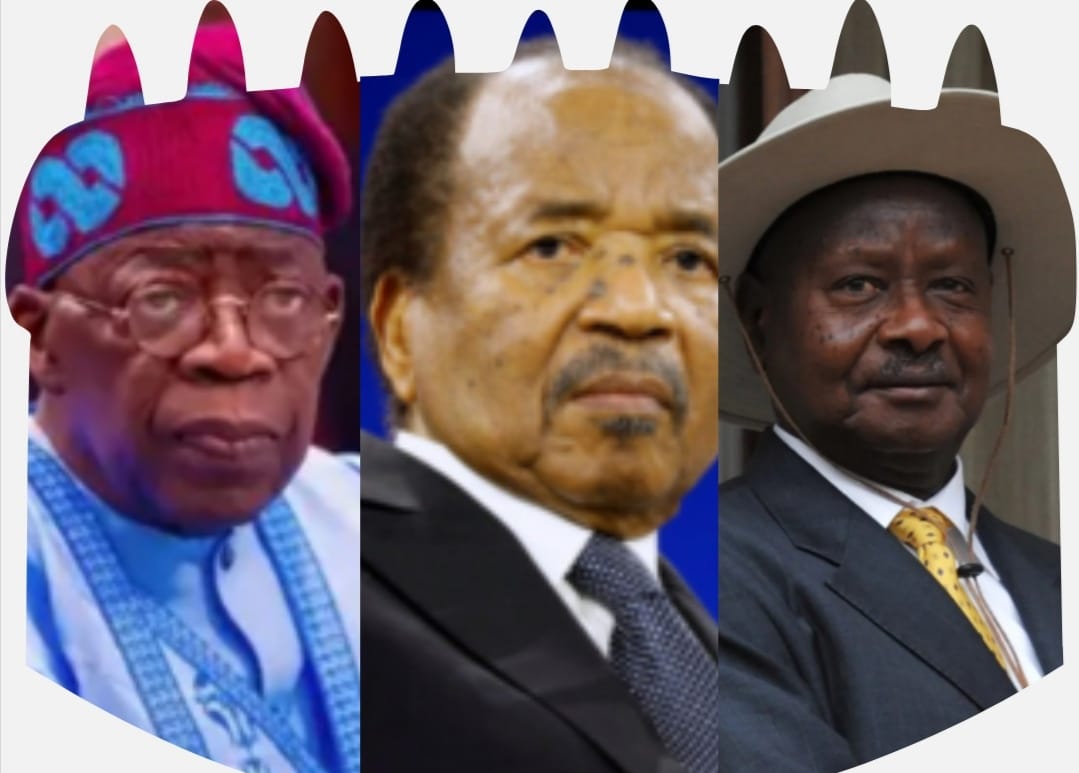
Africa’s Endless Leadership Curse: Why West, Central and East Africa Remain Trapped in Under Development.
George Omagbemi Sylvester | Published by SaharaWeeklyNG.com
“Decades of independence, trillions in natural wealth; yet Africa bleeds under recycled leaders, weak institutions and visionless governance.”
Introduction: The Paradox of Plenty.
More than six decades after independence, Africa remains a continent of contradictions; endowed with immense natural and human resources yet crippled by poverty, corruption and political inertia. From Nigeria’s REVOLVING-DOOR LEADERSHIP to Cameroon’s LONG-STANDING DICTATORSHIP under Paul Biya and Uganda’s near FOUR-DECADE RULE by Yoweri Museveni, Africa’s story reads like a broken record of promises betrayed. The tragedy is not that Africa lacks talent or resources. It is that it lacks visionary leadership and institutional accountability. As the late Chinua Achebe wrote in his classic The Trouble with Nigeria (1983), “The trouble with Nigeria is simply and squarely a failure of leadership.” That timeless diagnosis captures the state of most African nations today, a leadership vacuum sustained by GREED, TRIBALISM and a CULTURE of IMPUNITY.

The Mirage of Independence.
When NIGERIA GAINED INDEPENDENCE IN 1960, it was seen as the BEACON of BLACK HOPE and a nation destined to lead Africa into a new era of prosperity. Similarly, UGANDA and CAMEROON emerged from colonial rule with optimism and promise. Yet, independence merely replaced white rulers with black elites who preserved colonial structures of exploitation.
Since 1979, Nigeria has witnessed over a dozen leadership transitions (from Shehu Shagari to Muhammadu Buhari and now Bola Ahmed Tinubu) yet none have broken the chains of poverty, insecurity and infrastructural decay. Over 200 million Nigerians still share less than 5,000 megawatts of electricity, an amount that powers a single suburb in Johannesburg or London.
Cameroon’s story is even more tragic. Paul Biya, who became president in 1982, is now 92 years old and remains one of the world’s LONGEST-SERVING heads of state. He has ruled mostly from Switzerland, earning the nickname “the ABSENTEE PRESIDENT.” Meanwhile, Yoweri Museveni of Uganda, who seized power in 1986, has altered the constitution twice to abolish term and age limits. Under his regime, dissent is criminalized, opposition silenced and political offices turned into hereditary possessions.
According to Transparency International’s 2024 Corruption Perceptions Index, Nigeria ranked 145th, Cameroon 154th, and Uganda 142nd out of 180 countries and there are proofs that corruption remains INSTITUTIONALIZED not INCIDENTAL.
LEADERSHIP without VISION: The Heart of the Problem.

Africa’s political elite mistake longevity for leadership and charisma for competence. In advanced democracies, continuity means institutional strength; in Africa, it means autocracy. Angela Merkel ruled Germany for sixteen years and left behind a legacy of stability, innovation and fiscal discipline. By contrast, Biya and Museveni’s combined 81 years in power have produced neither industrial transformation nor human capital development.
Professor P.L.O. Lumumba, a respected Kenyan scholar, once said, “Africa is a continent of rulers, not leaders; men who love power more than they love their people.” This statement reflects the psychological foundation of Africa’s crisis, leaders see power as PROPERTY not RESPONSIBILITY.
In Nigeria, leadership recycling has reached absurd proportions. The same politicians who failed in the 1980s still dominate public life today under new party labels. The result is a stagnant political system where innovation is suffocated and accountability absent.

Dr. Ngozi Okonjo-Iweala, Director-General of the World Trade Organization, once observed, “You cannot continue doing the same thing and expect different results. Africa must reform its governance if it must progress.” Yet, the message falls on deaf ears.
The Economic Tragedy of Political Greed.
Africa’s natural wealth is staggering. The continent holds 60% of the world’s arable land, 30% of mineral reserves and 12% of global oil reserves. Nigeria alone has earned over $1 trillion in oil revenue since the 1970s. Yet, the World Bank’s 2024 data shows that over 90 million Nigerians live in extreme poverty. Uganda’s GDP per capita hovers around $1,100, while Cameroon’s remains below $1,600.
Why this paradox? African leaders have chosen CONSUMPTION over PRODUCTION and LUXURY over LEGACY. National budgets are bloated with political overheads while critical sectors like education, health and research receive crumbs. In Nigeria, lawmakers earn one of the world’s highest legislative salaries, with over ₦300 billion spent annually on the National Assembly, yet public schools and hospitals crumble.
In Uganda, billions are spent on presidential security and propaganda while citizens struggle with inflation and unemployment. In Cameroon, decades of centralized power have turned state institutions into extensions of the presidency. Economist Jeffrey Sachs put it bluntly: “Africa’s greatest tragedy is not poverty but the failure of leadership to convert resources into opportunities.”
The Colonial Hangover.
Beyond politics, Africa’s backwardness is rooted in psychological colonization. Many POST-INDEPENDENCE LEADERS INHERITED COLONIAL MENTALITIES; VALUING FOREIGN VALIDATION OVER DOMESTIC INNOVATION. The West and more recently, China, continue to exploit this dependency through AID TRAPS and DEBT DIPLOMACY.
In the Central African region, Chinese loans have financed infrastructure projects that often end in debt crises, while Western corporations plunder resources in exchange for political patronage. The African Union (AU), which should serve as a continental watchdog, has become a gentleman’s club for autocrats. It condemns coups but tolerates constitutional manipulations and rigged elections.
Professor Ali Mazrui once noted, “Africa is the only continent where political independence preceded economic independence.” This imbalance explains why Africa remains economically enslaved despite political sovereignty. Without economic liberation and institutional autonomy, political freedom is a mirage.
The Regional Breakdown: West, Central and East Africa’s Failures.
The uneven development across Africa reflects the different degrees of dysfunction in its regions.

West Africa: plagued by COUPS, TERRORISM and ECONOMIC INSTABILITY. From Mali to Niger and Burkina Faso, military takeovers reflect citizens’ frustration with civilian incompetence. Nigeria, despite being the regional giant, faces WIDESPREAD INSECURITY, INFLATION and GOVERNANCE COLLAPSE.
Central Africa: dominated by DYNASTIC RULERS like Biya (Cameroon), Nguesso (Congo) and Obiang (Equatorial Guinea). These regimes suppress dissent, rig elections and loot state coffers with impunity.
East Africa: projected as stable but largely AUTOCRATIC. Museveni’s Uganda and Kagame’s Rwanda showcase controlled democracies where opposition is tolerated only in theory.
According to the Mo Ibrahim Index of African Governance (2024), the West, Central and East African blocs score the lowest in rule of law, participation and accountability. Citizens’ rights are routinely violated and media freedom is heavily restricted.
The cost of this failure is staggering. The United Nations Development Programme (UNDP) estimates that Africa loses $88 billion annually to illicit financial flows, mostly driven by corruption and capital flight; money that could have built schools, hospitals, industries and done good for its nations.
The Second Liberation: A Call to Conscience.
Africa’s first liberation freed it from colonial rule. The second must free it from corrupt elites and intellectual laziness. Change will not come through foreign aid or borrowed policies but through citizens’ awakening and institutional reform.
The new generation must rise beyond ethnicity and partisan loyalties. Youth must understand that democracy is not about voting every four years but about holding power accountable every day. Civil societies, journalists and reform-minded leaders must form coalitions that challenge the old order.
As Nelson Mandela declared, “Sometimes it falls upon a generation to be great; you can be that great generation.” That call is urgent now more than ever. Africa cannot continue to romanticize its potential while squandering its future.
Final Word: The Courage to Lead.
Africa’s tragedy is not a curse from the gods; but a self-inflicted wound. The continent’s leaders have consistently failed to build nations beyond their tribes and ambitions. Until leadership becomes a duty, not a privilege (until institutions become stronger than individuals) Africa will remain a giant crawling on its knees.
History has shown that no nation develops by accident. LEADERSHIP, ACCOUNTABILITY and VISION are the engines of progress. From Singapore under Lee Kuan Yew to South Korea under Park Chung-hee, nations have transformed through discipline and purpose. Africa must learn this lesson or remain a byword for failure.
As George Omagbemi Sylvester concludes,
“Africa is not cursed; it is simply cursed by those who rule it. Until the throne becomes a place of service and not self-worship, our liberation remains incomplete.”




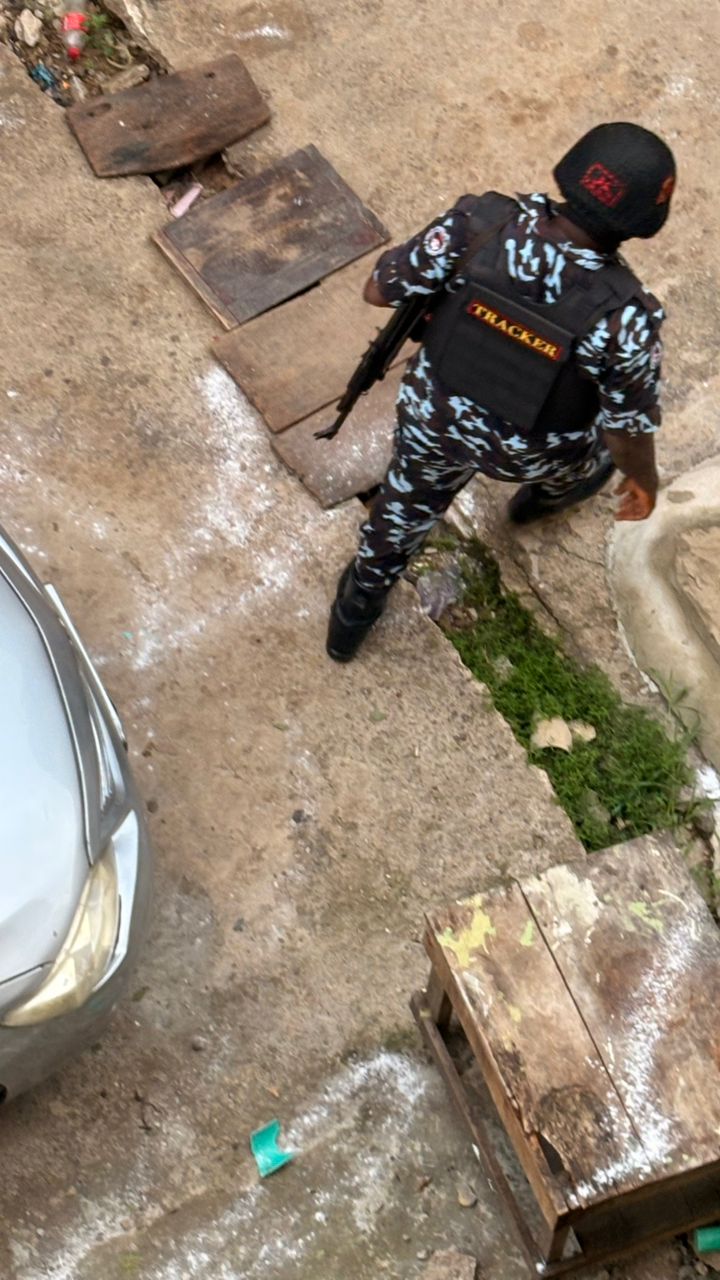
Police Officers Detained as Family Property Dispute Sparks Demolition Controversy in Lagos
By Ifeoma Ikem
A property dispute within the Omotayo-Ojo family has taken a dramatic turn following a controversial demolition exercise at a residential building in Ikosi-Ketu, Lagos State, which reportedly left tenants displaced and led to the detention of some police officers allegedly involved in the operation.

The property, located at 23B Loveall Street, Ikosi-Ketu, has been the subject of a prolonged ownership tussle since the death of its owner, Chief Oludola Omotayo Ojo, the Babaalaje of Imesi-Ile, Osun State, in 2019.
Residents said tension erupted when a group of individuals, accompanied by security operatives, stormed the premises and commenced demolition activities.
According to eyewitnesses, portions of the building were pulled down while tenants rushed to salvage their belongings from affected apartments.
The residents alleged that windows, doors and roofing sheets were damaged during the exercise, exposing parts of the building to the elements and causing significant losses to occupants.
At the centre of the dispute is Mrs Mojisola Omotayo Ojo Alolagbe, who claimed that the property was allocated to her by her late father during his lifetime as a source of financial support.
She alleged that some family members had persistently challenged her ownership claim despite ongoing legal proceedings relating to the administration of the deceased’s estate.
Alolagbe further claimed that the latest incident was part of a series of attempts to wrest control of the property, citing previous cases of alleged vandalism and partial demolition in November 2025, January 2026 and February 2026.
The situation escalated further when reports emerged that police officers allegedly involved in the demolition were later apprehended and conveyed in a Black Maria vehicle over questions surrounding the legality of their participation in the operation.
Sources familiar with the matter said those behind the demolition had initially claimed to be acting on approval from the Lagos State Ministry of Lands. However, the authenticity and extent of such approval could not be independently verified as of the time of filing this report.
The development has generated concern among residents and community members, who questioned the involvement of security personnel in what they described as a civil matter.
Some tenants, who said they had recently renewed their tenancy agreements, lamented the destruction of their property and appealed to the authorities for protection and possible compensation.

They also called for a thorough investigation into the circumstances surrounding the demolition, insisting that the rights of all parties involved should be protected.
Stakeholders have urged the Lagos State Government, security agencies and the judiciary to intervene and ensure that the dispute is resolved through lawful means to prevent further escalation.
The controversy has continued to draw public attention, raising concerns over property rights, estate administration and the role of law enforcement agencies in civil disputes.

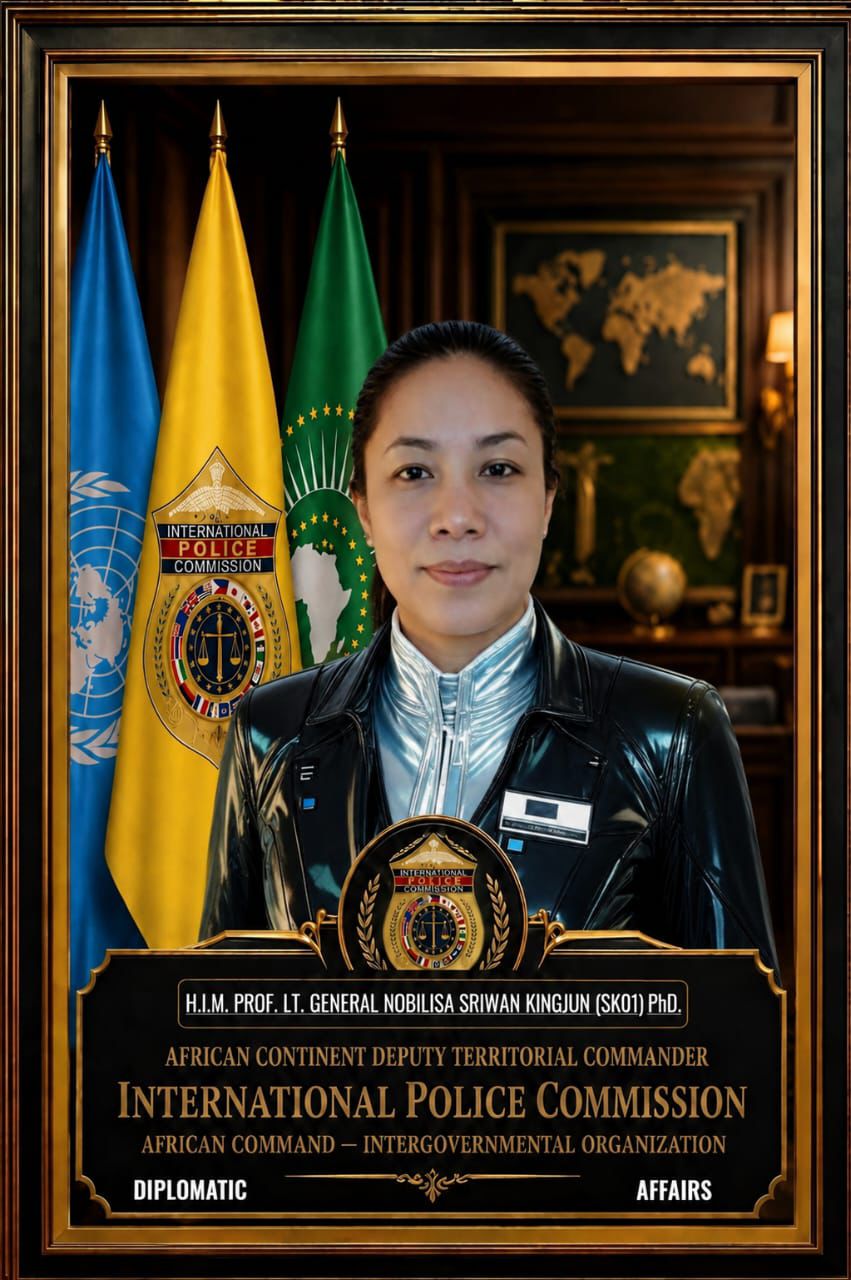
UKA Gears Up for Final ATC Exchangeability Test Run as June Preparations Begin.
May 30, 2026 – As the month of June gathers momentum, the *United Kingdom of Atlantis, UKA*, a sovereign nation has unveiled a series of vital guidelines and preparatory packages to ensure citizens and stakeholders run the *ATC Exchangeability* process effectively.
In an official update, the *President of Atlantic Crown Limited, Empress of Attica Empire UKA*, confirmed that the *Final Test Run of ATC Exchangeability* is scheduled for the month of June 2026. The exercise marks a key phase ahead of the *Official Exchangeability Window, set to run from July 2026 to February 2027*.
### Key Highlights from the Presidential Briefing
1. *Final Test Run – June 2026*
The test run is designed to validate systems, procedures, and user readiness before full activation. Citizens, partners, and designated participants are urged to follow all official advisories released by UKA authorities during this period.
2. *Official Exchangeability Period*
Following the successful completion of the June test run, the Official Exchangeability will commence in july 2026 and we are Expecting Full Exchange ability between July Ending, 2026 to February 2026.
UKA stated that detailed schedules, eligibility requirements, and step-by-step instructions will be communicated progressively through verified UKA channels.
3. *Benefiting Packages for June*
In line with UKA’s commitment to citizen empowerment, the month of June will feature “benefiting packages” aimed at education, preparation, and seamless onboarding. These packages are intended to equip the people of UKA with the knowledge and tools needed for effective participation.
4. *Commitment to Transparency*
Addressing the nation, the Empress of Attica Empire UKA emphasized:
_“Final Test Run of ATC Comes up in The Month of June, As We Prepare For The Official Exchangeability, Between July 2026 To Feb 2027. All Information Will Be Communicated.”_
UKA reaffirmed that only information released through official UKA platforms should be regarded as authoritative.
The United Kingdom of Atlantis is encouraging all citizens, representatives, and interested parties to remain alert to official communications, attend designated orientation sessions, and avoid unofficial sources. UKA’s dedication to order, clarity, and the collective benefit of its people as the nation moves into this significant phase.
For updates, advisories, and participation guidelines, citizens are advised to monitor official UKA communication channels.
United Kingdom of Atlantis, UKA, is a sovereign nation, committed to national development, citizen welfare, and structured economic participation through initiatives such as ATC Exchangeability.
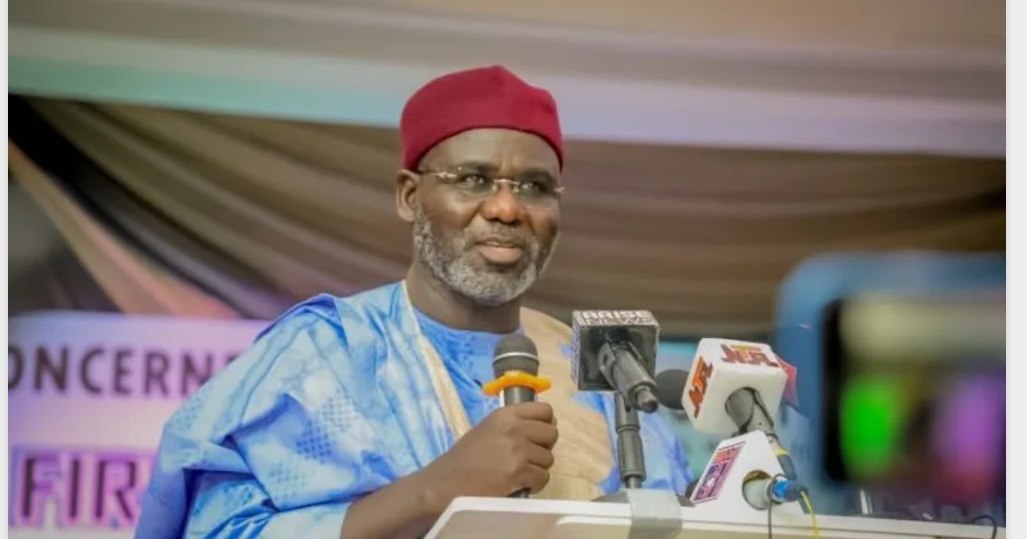
Three Years On, General Buratai Hails Tinubu’s Economic, Security Achievements
Former Chief of Army Staff, Lt. Gen. Tukur Buratai (retd.), has commended President Bola Ahmed Tinubu for what he described as bold economic reforms and improved security efforts as the President marks three years in office.
In a goodwill message on Thursday to commemorate Tinubu’s third anniversary as President and Commander-in-Chief of the Armed Forces, Buratai said the administration had taken courageous decisions that would leave a lasting impact on Nigeria’s development.

According to him, President Tinubu broke a long-standing cycle that had hindered national growth by removing fuel subsidy and implementing foreign exchange reforms aimed at stabilising the naira and strengthening the economy.
He noted that the reforms were beginning to yield positive results, citing the global acceptance of Nigerian debit cards, the gradual revival of local refineries, access to student loans, and ongoing road and infrastructure projects across the country.
“The FCT Administration has also recorded remarkable progress, completing major road projects that remained unfinished for over 16 years,” Buratai stated.
The former army chief also praised the administration’s security efforts, saying renewed military offensives against insurgents, terrorists and bandits had led to notable successes across various parts of the country.
He specifically lauded recent joint operations involving Nigerian and United States forces against Boko Haram and ISWAP in the North-East, as well as intensified counter-banditry operations in the North-West.
“We have seen notorious ISWAP commanders being neutralised. I congratulate the Commander-in-Chief, the Minister of Defence, the Chief of Defence Staff, the Service Chiefs, the Inspector-General of Police and heads of intelligence agencies for their efforts,” he said.
Buratai, however, acknowledged that challenges remained, stressing the need for more aggressive military operations and intelligence-driven strategies in the coming year.
While urging Nigerians to remain hopeful, he said celebrating the President’s achievements did not amount to ignoring the difficulties facing the nation.
“Because you truly care, you have shown the courage to trade short-term comfort for long-term hope. Nigerians need your reassurances, and that is why we remain optimistic and full of confidence,” he added.
The retired military officer reaffirmed his support for the Tinubu administration and expressed confidence that the foundation being laid by the government would deliver a brighter future for the country.
He also prayed for God’s guidance, wisdom, strength and good health for the President as he continues to lead Nigeria.


- World Cup accredited journalists raise concerns over unfair United States (US) visa restrictions, International Sports Press Association (AIPS) calls on FIFA to intervene June 6, 2026
- Ghana: President Mahama arrives in Belarus, lays wreath at Victory Monument June 6, 2026
- Liberia: President Boakai Advances Clean Energy Agenda; Dedicates 20-Megawatt Solar Power Plant at Mount Coffee June 6, 2026
- African Union (AU) Commission Chairperson mourns Passing of the Former Angola Minister of Foreign Affairs June 6, 2026
- Economic Community of West African States (ECOWAS) Welcomes Students on an Educational Visit to Its Headquarters June 6, 2026
- Seychelles: President Patrick Herminie attended Official Opening of Rise and Shine Day Care Centre at Mont Fleuri June 6, 2026
- Faith, fear and trust: Inside Democratic Republic of the Congo's (DR Congo) fight against Ebola June 6, 2026
- Economic Community of West African States (ECOWAS) Commission and Women in Law and Development (WiLDAF) Train Women Cross-Border Traders in The Gambia June 5, 2026
- Eritrea: Seminar to Nationals in The Hague June 5, 2026
- Eritrea: Training on Photography and Video Production June 5, 2026
- World Cup accredited journalists raise concerns over unfair United States (US) visa restrictions, International Sports Press Association (AIPS) calls on FIFA to intervene June 6, 2026
- Ghana: President Mahama arrives in Belarus, lays wreath at Victory Monument June 6, 2026
- Liberia: President Boakai Advances Clean Energy Agenda; Dedicates 20-Megawatt Solar Power Plant at Mount Coffee June 6, 2026
- African Union (AU) Commission Chairperson mourns Passing of the Former Angola Minister of Foreign Affairs June 6, 2026
- Economic Community of West African States (ECOWAS) Welcomes Students on an Educational Visit to Its Headquarters June 6, 2026
- Seychelles: President Patrick Herminie attended Official Opening of Rise and Shine Day Care Centre at Mont Fleuri June 6, 2026
- Faith, fear and trust: Inside Democratic Republic of the Congo's (DR Congo) fight against Ebola June 6, 2026
-

 news6 months ago
WHO REALLY OWNS MONIEPOINT? The $290 Million Deal That Sold Nigeria’s Top Fintech to Foreign Interests
-

 society1 month ago
SOCIAL MEDIA IS NOT A BATTLEFIELD COMMAND – WHY THE NIGERIAN ARMY’S ACTION AGAINST JUSTICE CRACK IS A NATIONAL SECURITY IMPERATIVE
-

 celebrity radar - gossips4 months ago
Dr. Chris Okafor Returns with Power and Fire of the Spirit -Mounts Grace Nation Altar with Fresh Anointing and Restoration Grace on February 1, 2026
-

 celebrity radar - gossips6 months ago
Prophet Kingsley Aitafo Releases 2026 Prophecy: ‘Nigeria Will Rise, but the World Must Prepare for Turbulence’