
society
Africa’s Liberation: Echoes of Mugabe and Gaddafi in the Struggle for True Independence


Africa’s Liberation: Echoes of Mugabe and Gaddafi in the Struggle for True Independence
By George O. Sylvester
When we speak of Africa’s liberation, it’s tempting to confine it to the end of colonial rule, the departure of European governors and the hoisting of new national flags. To revolutionary thinkers like Zimbabwe’s Robert Mugabe and Libya’s Muammar Gaddafi, true liberation was never just political. It was and remains a matter of economic sovereignty, cultural pride and continental unity.
Both men were controversial, even authoritarian. Yet history cannot erase the ideological fire they ignited across Africa. Their speeches, their actions however imperfect continue to provoke debate, inspire movements and remind us that the promise of African freedom is far from fulfilled.
The Colonial Inheritance
European colonization was not merely a conquest of land; it was a calculated dismembering of identity. From the 1884 Berlin Conference to the post-World War II independence movements, colonial powers carved up Africa with little regard for indigenous cultures or long-term development. They imposed foreign languages, looted resources and left behind borders that would later become fault lines of ethnic and political conflict.
By the 1960s, most African nations had achieved formal independence. But beneath the surface, colonial structures remained intact. Economies were still dependent on raw material exports. Local industries were weak or non-existent. Debt became a new mechanism of control. And Western governments and corporations continued to wield disproportionate influence.
It was in this neo-colonial reality that Mugabe and Gaddafi emerged not just as national leaders, but as ideologues of African renaissance.
Mugabe: “The Land is Ours”
Robert Mugabe led Zimbabwe to independence in 1980 after a bloody guerrilla war against Ian Smith’s white minority regime in what was then Southern Rhodesia. An eloquent intellectual and a veteran freedom fighter, Mugabe initially championed reconciliation and development. But by the early 2000s, his focus shifted toward radical land reform.
His justification was unapologetic:
“The land is ours. It is not European. And we have taken it. We have given it to the rightful people of Zimbabwe.”
Mugabe saw the ownership of land as central to the liberation struggle. For decades, white settlers had monopolized Zimbabwe’s most fertile land, while Black Africans remained tenants in their own country. The decision to expropriate white-owned farms, often without compensation, was seen by the West as a violation of property rights. For Mugabe, it was a long-overdue act of justice.
While critics blame these policies for Zimbabwe’s economic collapse and hyperinflation, Mugabe’s defenders argue that he did what few African leaders dared to do, challenge the post-colonial order and reclaim national resources.
As he once stated:
“We are not Europeans. We have not asked for any inch of Europe. So let Europe leave us alone.”
To Mugabe, African independence meant nothing without control over land and resources. His legacy is a warning and a lesson: economic liberation cannot be separated from political freedom.
Gaddafi: “African Unity is the Only Solution”
While Mugabe fought colonial remnants at home, Muammar Gaddafi envisioned a continent freed through unification. After seizing power in Libya in 1969, Gaddafi used his country’s oil wealth to pursue a Pan-African dream. He funded liberation movements across the continent, supported the African National Congress during apartheid and pushed tirelessly for a United States of Africa.
He famously said:
“The Black race shall prevail throughout the world, because it is the most oppressed and dispossessed. Our unity is our weapon.”
Gaddafi advocated for a single African government, army, currency and passport. He argued that only a unified Africa could resist foreign manipulation and control its own destiny. At the African Union summit in 2009, he thundered:
“Africa must unite now or perish. The time for petty nationalism is over. We must speak with one voice to protect our interests.”
Under his leadership, Libya became one of the most developed countries in Africa with free healthcare, free education and the highest Human Development Index on the continent. He proposed an African central bank and monetary fund as alternatives to the IMF and World Bank, which he viewed as instruments of Western neocolonialism.
But Gaddafi’s ambitions made him enemies. His death in 2011 following a NATO bombing campaign and a Western-backed uprising was a stark reminder of how foreign powers still shape Africa’s destiny. Before his fall, he warned African leaders:
“They will create chaos, they will divide you and you will cry for the return of Gaddafi.”
Today, Libya is a fractured state, a shadow of the once ambitious vision he pursued.
Beyond Borders and Ballots
Mugabe and Gaddafi were far from perfect. Mugabe grew increasingly autocratic, suppressing dissent and clinging to power well into old age. Gaddafi ruled Libya with an iron grip, brooking no opposition and building a cult of personality. Their authoritarianism deserves scrutiny.
Yet their core message endures: Africa is not truly free.
Not when multinational corporations extract billions from African soil while local communities remain impoverished.
Not when international lenders dictate economic policies that prioritize debt repayment over development.
Not when culture, history, and identity are diluted by imported values and education systems.
Their critique of neocolonialism remains disturbingly relevant. And their call for African unity, economic Self-determination and cultural revival has yet to be fully answered.
Today’s Betrayal of Revolutionary Ideals
In the 21st century, the ideological clarity of Mugabe and Gaddafi has been replaced by a politics of compromise and dependence. African leaders host elaborate investment forums for former colonial powers, sign away mineral rights to foreign corporations, and implement IMF-led austerity programs.
China’s growing influence in Africa is lauded as an alternative to Western control. Yet, many of these “partnerships” mirror colonial dynamics, resources flow out, while debt and dependency grow.
Meanwhile, Africa’s youth are restless. Unemployment, poverty and lack of opportunity drive many to seek life elsewhere. Migration has become a silent vote of no confidence in African governments.
As Mugabe once observed:
“Africa is not poor. It is just poorly managed.”
The Road Ahead: Real Liberation
Africa’s liberation remains a work in progress. The continent must return to the foundational truths expressed, however imperfectly; by Mugabe and Gaddafi.
1. Economic Sovereignty: African nations must control and process their own resources. Dependency on raw exports and foreign capital is unsustainable.
2. Pan-African Unity: Regional integration must move from rhetoric to reality. Shared infrastructure, trade, currency, and defense mechanisms are vital.
3. Cultural Renaissance: The decolonization of the African mind must accompany the decolonization of the economy. Language, history, and values matter.
4. Youth Empowerment: Africa’s future lies in its youth. Education, entrepreneurship, and civic leadership must be prioritized.
As Gaddafi declared:
“You may kill me, but my ideas will not die.”
Indeed, they have not. The dream of a free, united, and dignified Africa is still alive waiting for bold, visionary leadership to carry it forward. The torch lit by Mugabe and Gaddafi now lies in the hands of a new generation.
Will they pick it up?






Police Officers Detained as Family Property Dispute Sparks Demolition Controversy in Lagos
By Ifeoma Ikem
A property dispute within the Omotayo-Ojo family has taken a dramatic turn following a controversial demolition exercise at a residential building in Ikosi-Ketu, Lagos State, which reportedly left tenants displaced and led to the detention of some police officers allegedly involved in the operation.

The property, located at 23B Loveall Street, Ikosi-Ketu, has been the subject of a prolonged ownership tussle since the death of its owner, Chief Oludola Omotayo Ojo, the Babaalaje of Imesi-Ile, Osun State, in 2019.
Residents said tension erupted when a group of individuals, accompanied by security operatives, stormed the premises and commenced demolition activities.
According to eyewitnesses, portions of the building were pulled down while tenants rushed to salvage their belongings from affected apartments.
The residents alleged that windows, doors and roofing sheets were damaged during the exercise, exposing parts of the building to the elements and causing significant losses to occupants.
At the centre of the dispute is Mrs Mojisola Omotayo Ojo Alolagbe, who claimed that the property was allocated to her by her late father during his lifetime as a source of financial support.
She alleged that some family members had persistently challenged her ownership claim despite ongoing legal proceedings relating to the administration of the deceased’s estate.
Alolagbe further claimed that the latest incident was part of a series of attempts to wrest control of the property, citing previous cases of alleged vandalism and partial demolition in November 2025, January 2026 and February 2026.
The situation escalated further when reports emerged that police officers allegedly involved in the demolition were later apprehended and conveyed in a Black Maria vehicle over questions surrounding the legality of their participation in the operation.
Sources familiar with the matter said those behind the demolition had initially claimed to be acting on approval from the Lagos State Ministry of Lands. However, the authenticity and extent of such approval could not be independently verified as of the time of filing this report.
The development has generated concern among residents and community members, who questioned the involvement of security personnel in what they described as a civil matter.
Some tenants, who said they had recently renewed their tenancy agreements, lamented the destruction of their property and appealed to the authorities for protection and possible compensation.

They also called for a thorough investigation into the circumstances surrounding the demolition, insisting that the rights of all parties involved should be protected.
Stakeholders have urged the Lagos State Government, security agencies and the judiciary to intervene and ensure that the dispute is resolved through lawful means to prevent further escalation.
The controversy has continued to draw public attention, raising concerns over property rights, estate administration and the role of law enforcement agencies in civil disputes.

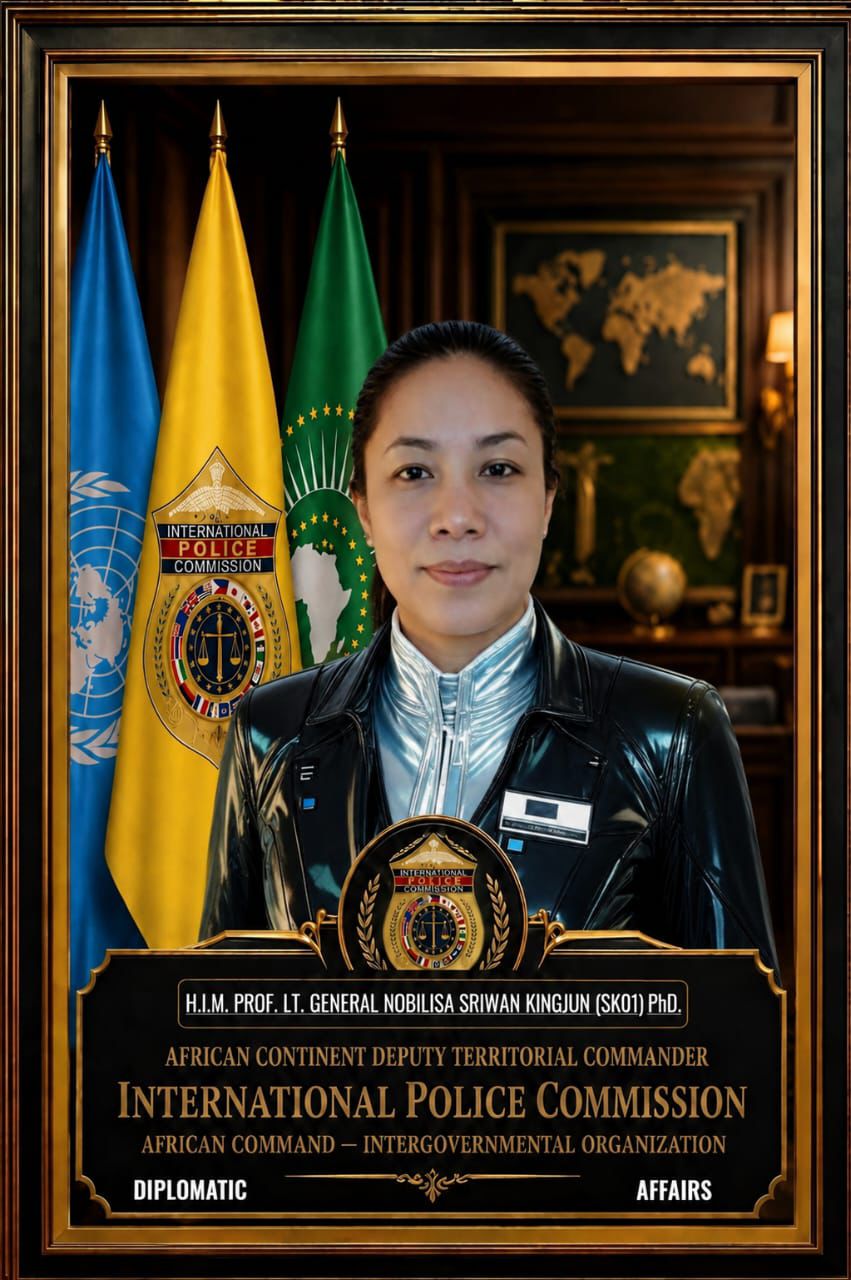
UKA Gears Up for Final ATC Exchangeability Test Run as June Preparations Begin.
May 30, 2026 – As the month of June gathers momentum, the *United Kingdom of Atlantis, UKA*, a sovereign nation has unveiled a series of vital guidelines and preparatory packages to ensure citizens and stakeholders run the *ATC Exchangeability* process effectively.
In an official update, the *President of Atlantic Crown Limited, Empress of Attica Empire UKA*, confirmed that the *Final Test Run of ATC Exchangeability* is scheduled for the month of June 2026. The exercise marks a key phase ahead of the *Official Exchangeability Window, set to run from July 2026 to February 2027*.
### Key Highlights from the Presidential Briefing
1. *Final Test Run – June 2026*
The test run is designed to validate systems, procedures, and user readiness before full activation. Citizens, partners, and designated participants are urged to follow all official advisories released by UKA authorities during this period.
2. *Official Exchangeability Period*
Following the successful completion of the June test run, the Official Exchangeability will commence in july 2026 and we are Expecting Full Exchange ability between July Ending, 2026 to February 2026.
UKA stated that detailed schedules, eligibility requirements, and step-by-step instructions will be communicated progressively through verified UKA channels.
3. *Benefiting Packages for June*
In line with UKA’s commitment to citizen empowerment, the month of June will feature “benefiting packages” aimed at education, preparation, and seamless onboarding. These packages are intended to equip the people of UKA with the knowledge and tools needed for effective participation.
4. *Commitment to Transparency*
Addressing the nation, the Empress of Attica Empire UKA emphasized:
_“Final Test Run of ATC Comes up in The Month of June, As We Prepare For The Official Exchangeability, Between July 2026 To Feb 2027. All Information Will Be Communicated.”_
UKA reaffirmed that only information released through official UKA platforms should be regarded as authoritative.
The United Kingdom of Atlantis is encouraging all citizens, representatives, and interested parties to remain alert to official communications, attend designated orientation sessions, and avoid unofficial sources. UKA’s dedication to order, clarity, and the collective benefit of its people as the nation moves into this significant phase.
For updates, advisories, and participation guidelines, citizens are advised to monitor official UKA communication channels.
United Kingdom of Atlantis, UKA, is a sovereign nation, committed to national development, citizen welfare, and structured economic participation through initiatives such as ATC Exchangeability.
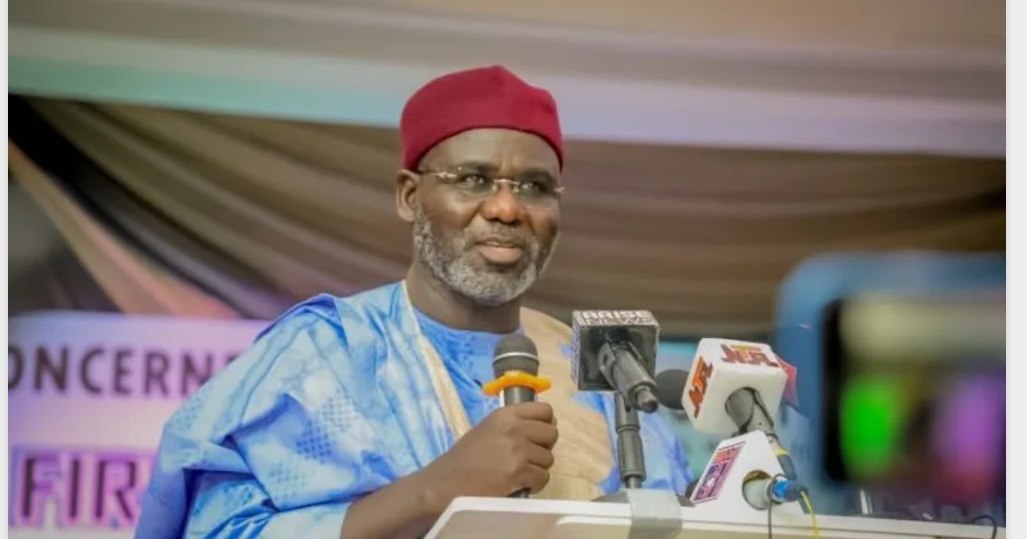
Three Years On, General Buratai Hails Tinubu’s Economic, Security Achievements
Former Chief of Army Staff, Lt. Gen. Tukur Buratai (retd.), has commended President Bola Ahmed Tinubu for what he described as bold economic reforms and improved security efforts as the President marks three years in office.
In a goodwill message on Thursday to commemorate Tinubu’s third anniversary as President and Commander-in-Chief of the Armed Forces, Buratai said the administration had taken courageous decisions that would leave a lasting impact on Nigeria’s development.

According to him, President Tinubu broke a long-standing cycle that had hindered national growth by removing fuel subsidy and implementing foreign exchange reforms aimed at stabilising the naira and strengthening the economy.
He noted that the reforms were beginning to yield positive results, citing the global acceptance of Nigerian debit cards, the gradual revival of local refineries, access to student loans, and ongoing road and infrastructure projects across the country.
“The FCT Administration has also recorded remarkable progress, completing major road projects that remained unfinished for over 16 years,” Buratai stated.
The former army chief also praised the administration’s security efforts, saying renewed military offensives against insurgents, terrorists and bandits had led to notable successes across various parts of the country.
He specifically lauded recent joint operations involving Nigerian and United States forces against Boko Haram and ISWAP in the North-East, as well as intensified counter-banditry operations in the North-West.
“We have seen notorious ISWAP commanders being neutralised. I congratulate the Commander-in-Chief, the Minister of Defence, the Chief of Defence Staff, the Service Chiefs, the Inspector-General of Police and heads of intelligence agencies for their efforts,” he said.
Buratai, however, acknowledged that challenges remained, stressing the need for more aggressive military operations and intelligence-driven strategies in the coming year.
While urging Nigerians to remain hopeful, he said celebrating the President’s achievements did not amount to ignoring the difficulties facing the nation.
“Because you truly care, you have shown the courage to trade short-term comfort for long-term hope. Nigerians need your reassurances, and that is why we remain optimistic and full of confidence,” he added.
The retired military officer reaffirmed his support for the Tinubu administration and expressed confidence that the foundation being laid by the government would deliver a brighter future for the country.
He also prayed for God’s guidance, wisdom, strength and good health for the President as he continues to lead Nigeria.


- Deputy (Dep.) Finance Minister Courts Investors to Transform Ghana’s rice Economy June 4, 2026
- Mobile health services in Kenya reduce the risk of stillbirths June 4, 2026
- JustMarkets Research Highlights Global Growth Divergence as a Key Market Driver June 4, 2026
- African Development Bank Group approves $125 million investment in African Trade and Investment Development Insurance (ATIDI) to expand risk insurance capacity in Africa June 4, 2026
- Congo Energy & Investment Forum 2027 to Position Brazzaville as a Hub for Global Energy Deal-Making June 4, 2026
- Africa Skills Hub (ASH) Transitions to ASH Africa as it Marks 10 Years of Impact June 4, 2026
- When women farm better, Eswatini eats better June 3, 2026
- Togo Hosts the 8th Annual Forum of National Volunteer Agencies in the Economic Community of West African States (ECOWAS) Region June 3, 2026
- Indigenous Peoples gravely vulnerable to Ebola epidemic, warn United Nations (UN) independent experts June 3, 2026
- Meeting between Parliamentary Vice-Minister ONISHI and His Excellency (H.E.) Mr. Cosgrow, Principal Minister and Minister for Agriculture, Fisheries and Blue Economy of Seychelles June 3, 2026
- Deputy (Dep.) Finance Minister Courts Investors to Transform Ghana’s rice Economy June 4, 2026
- Mobile health services in Kenya reduce the risk of stillbirths June 4, 2026
- JustMarkets Research Highlights Global Growth Divergence as a Key Market Driver June 4, 2026
- African Development Bank Group approves $125 million investment in African Trade and Investment Development Insurance (ATIDI) to expand risk insurance capacity in Africa June 4, 2026
- Congo Energy & Investment Forum 2027 to Position Brazzaville as a Hub for Global Energy Deal-Making June 4, 2026
- Africa Skills Hub (ASH) Transitions to ASH Africa as it Marks 10 Years of Impact June 4, 2026
- When women farm better, Eswatini eats better June 3, 2026
-

 news6 months ago
WHO REALLY OWNS MONIEPOINT? The $290 Million Deal That Sold Nigeria’s Top Fintech to Foreign Interests
-

 society1 month ago
SOCIAL MEDIA IS NOT A BATTLEFIELD COMMAND – WHY THE NIGERIAN ARMY’S ACTION AGAINST JUSTICE CRACK IS A NATIONAL SECURITY IMPERATIVE
-

 celebrity radar - gossips4 months ago
Dr. Chris Okafor Returns with Power and Fire of the Spirit -Mounts Grace Nation Altar with Fresh Anointing and Restoration Grace on February 1, 2026
-

 celebrity radar - gossips6 months ago
Prophet Kingsley Aitafo Releases 2026 Prophecy: ‘Nigeria Will Rise, but the World Must Prepare for Turbulence’