
society
Africa’s Real Struggle: RELIGION, TRIBALISM and POLITICAL ROT. Our Greatest Enemies Are Within


Africa’s Real Struggle: RELIGION, TRIBALISM and POLITICAL ROT. Our Greatest Enemies Are Within. (Opinion)
By George Omagbemi Sylvester | Published by SaharaWeeklyNG.com
In 2025, Africa continues to bleed not from the lashes of colonialism, but from self-inflicted wounds of religious fanaticism, tribal bigotry and unchecked political greed. While the continent has achieved independence from colonial rule decades ago, it remains mentally enslaved, economically pillage and socially disoriented by the very people who swore to liberate it. THE PAINFUL TRUTH IS: AFRICA’S BIGGEST PROBLEM IS NOT THE WEST. IT IS AFRICANS.

Religion Without Righteousness. Across Africa today, mega-churches rise like castles, even in the midst of HUNGER-STRICKEN and POVERTY-RAVAGED COMMUNITIES. The new “holy war” is not spiritual but economic. Factories are being converted into religious centers, while jobs vanish into thin air. Clergymen live in obscene opulence, flying private jets and owning fleets of luxury cars, while their followers sleep in makeshift shacks. Instead of producing goods, we now mass-produce prayers.
Nigeria, for example, has more churches per capita than most countries in the world, yet it ranks among the poorest nations globally. The 2024 World Bank data shows that over 71 million Nigerians live in extreme poverty. Contrast this with the net worth of some religious leaders who rank among Africa’s richest individuals. Pastor David Oyedepo is reportedly worth over $150 million, according to Forbes estimates, while many of his congregants survive on less than a dollar a day. This is not faith. This is fraud wrapped in holy garments.

Religious manipulation has replaced colonial indoctrination. Clergy no longer challenge power; they dine with politicians. They bless looters and prophesy victory for criminals in exchange for favors. As Professor Patrick Lumumba rightly said, “Africans have become so religious that they cannot question their religious leaders even when they are clearly wrong.” The pulpit is no longer a sacred place for the truth; it has become a political podium for lies, deception and control.
Tribalism is Africa’s Terminal Cancer. We chant unity in public and sow division in private. In every African election, tribal loyalty often supersedes competence. Nations like Nigeria, South Sudan, Ethiopia, Cameroon and the Democratic Republic of Congo are fragmented along ethnic and tribal lines. Rwanda, once torn apart by the Hutu-Tutsi genocide of 1994, serves as a tragic reminder of what tribalism can cost.
Despite our education, tribal thinking remains deeply entrenched. In Nigeria, the “WE versus THEM” narrative has crippled national cohesion. In South Africa, xenophobia cloaked in tribal solidarity continues to target fellow Africans under the guise of nationalism. In Ethiopia, the Tigray conflict revealed how fragile the union is when tribal supremacy becomes weaponized.
As former UN Secretary-General Kofi Annan once said, “We may have different religions, different languages, different colored skin, but we all belong to one human race.” Sadly, Africa has yet to internalize this.

Tribalism is not cultural pride, it is cultural ignorance when it becomes exclusionary. It stifles innovation, undermines meritocracy and empowers mediocrity. It fuels electoral violence, promotes nepotism, and discourages inter-ethnic cooperation.
Politics of Plunder, Not Progress. Perhaps the greatest tragedy in Africa is its breed of leaders who are GREEDY, SELFISH and UNAPOLOGETICALLY CORRUPT. From state houses to parliaments, political power has become a license to loot. The idea of public service is extinct; what remains is private enrichment under public titles.
Based on the Global Financial Integrity (GFI) report, Africa loses over $88.6 billion annually in illicit financial flows. Most of this money ends up in European banks, offshore tax havens and luxury real estate in Dubai, London and other parts of Europe. While hospitals rot and schools collapse, politicians siphon billions to buy yachts and castles overseas.
In Angola, former President José Eduardo dos Santos and his daughter Isabel reportedly siphoned over $2.1 billion of public wealth. In Nigeria, the late General Sani Abacha looted more than $5 billion, with billions still being recovered decades later. South Africa’s Jacob Zuma presided over what became globally known as “state capture,” a monumental abuse of power by private interests, notably the Gupta family.
These are not isolated incidents; they represent a continent-wide disease. From Zimbabwe’s Mugabe to Equatorial Guinea’s Obiang Nguema, Africa’s leaders have perfected the art of staying in power through manipulation, oppression and division.
As Chinua Achebe warned in his classic The Trouble with Nigeria, “The trouble with Nigeria is simply and squarely a failure of leadership.” That statement remains painfully accurate across the entire continent.
When Will the Healing Begin?
Africa does not need pity. It needs action. We need to stop blaming colonialism for problems created and perpetuated by Africans. Yes, the colonial past was brutal and exploitative, but six decades after independence, the excuse has expired.
The healing begins when: We hold our religious leaders accountable.
The gospel is not a business model. Mosques and churches should be taxed if they become profit-making enterprises. Religious institutions must return to their roles as moral compasses not financial empires.
We dismantle tribal politics. The media, civil society and schools must lead the campaign to promote national identity over tribal loyalty. Young people must be taught to value competence, vision and ethics; not TRIBE or TONGUE.
We prosecute and shame corrupt leaders. Anti-corruption must go beyond political slogans. We must reform our judiciary, empower civil society and adopt technology to track public funds. Leaders must be treated as servants not kings.
We invest in education and critical thinking.
An INFORMED CITIZEN is a DANGEROUS CITIZEN to CORRUPT RULERS. Schools must teach civic responsibility, not just pass exams. As Thomas Jefferson said, “An educated citizenry is a vital requisite for our survival as a free people.”
We must love Africa enough to stay and build.
The exodus of Africa’s best minds to Europe and America must be reversed. Brain drain is not just an economic issue but also a moral one. Who will fix Africa if everyone runs away?
The Time is Now. Africa has the youngest population in the world, with over 60% under the age of 25. This is our greatest hope and greatest risk. If empowered, this generation can rebuild the continent. If ignored, they can burn it down. As Nelson Mandela said, “Young people must take it upon themselves to ensure that they receive the highest education possible so that they can represent us well in the future as future leaders.”
The mirror does not lie. Africa’s true enemy is not COLONIALISM, EUROPE or AMERICA. The true enemy is the preacher selling lies for tithes, the tribal chief selling division for loyalty and the politician selling the future for foreign accounts.
It is time to stop praying for change and start acting for it. Let the healing start. Let the chains we placed on ourselves be broken; by us.

Written by George Omagbemi Sylvester
Published by SaharaWeeklyNG.com




UKA Gears Up for Final ATC Exchangeability Test Run as June Preparations Begin.
May 30, 2026 – As the month of June gathers momentum, the *United Kingdom of Atlantis, UKA*, a sovereign nation has unveiled a series of vital guidelines and preparatory packages to ensure citizens and stakeholders run the *ATC Exchangeability* process effectively.
In an official update, the *President of Atlantic Crown Limited, Empress of Attica Empire UKA*, confirmed that the *Final Test Run of ATC Exchangeability* is scheduled for the month of June 2026. The exercise marks a key phase ahead of the *Official Exchangeability Window, set to run from July 2026 to February 2027*.
### Key Highlights from the Presidential Briefing
1. *Final Test Run – June 2026*
The test run is designed to validate systems, procedures, and user readiness before full activation. Citizens, partners, and designated participants are urged to follow all official advisories released by UKA authorities during this period.
2. *Official Exchangeability Period*
Following the successful completion of the June test run, the Official Exchangeability will commence in july 2026 and we are Expecting Full Exchange ability between July Ending, 2026 to February 2026.
UKA stated that detailed schedules, eligibility requirements, and step-by-step instructions will be communicated progressively through verified UKA channels.
3. *Benefiting Packages for June*
In line with UKA’s commitment to citizen empowerment, the month of June will feature “benefiting packages” aimed at education, preparation, and seamless onboarding. These packages are intended to equip the people of UKA with the knowledge and tools needed for effective participation.
4. *Commitment to Transparency*
Addressing the nation, the Empress of Attica Empire UKA emphasized:
_“Final Test Run of ATC Comes up in The Month of June, As We Prepare For The Official Exchangeability, Between July 2026 To Feb 2027. All Information Will Be Communicated.”_
UKA reaffirmed that only information released through official UKA platforms should be regarded as authoritative.
The United Kingdom of Atlantis is encouraging all citizens, representatives, and interested parties to remain alert to official communications, attend designated orientation sessions, and avoid unofficial sources. UKA’s dedication to order, clarity, and the collective benefit of its people as the nation moves into this significant phase.
For updates, advisories, and participation guidelines, citizens are advised to monitor official UKA communication channels.
United Kingdom of Atlantis, UKA, is a sovereign nation, committed to national development, citizen welfare, and structured economic participation through initiatives such as ATC Exchangeability.
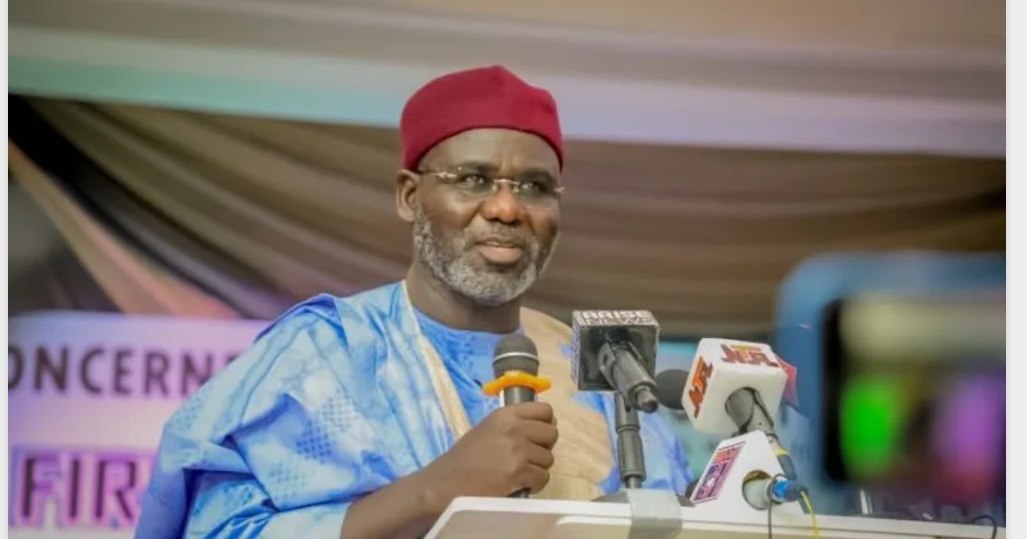
Three Years On, General Buratai Hails Tinubu’s Economic, Security Achievements
Former Chief of Army Staff, Lt. Gen. Tukur Buratai (retd.), has commended President Bola Ahmed Tinubu for what he described as bold economic reforms and improved security efforts as the President marks three years in office.
In a goodwill message on Thursday to commemorate Tinubu’s third anniversary as President and Commander-in-Chief of the Armed Forces, Buratai said the administration had taken courageous decisions that would leave a lasting impact on Nigeria’s development.

According to him, President Tinubu broke a long-standing cycle that had hindered national growth by removing fuel subsidy and implementing foreign exchange reforms aimed at stabilising the naira and strengthening the economy.
He noted that the reforms were beginning to yield positive results, citing the global acceptance of Nigerian debit cards, the gradual revival of local refineries, access to student loans, and ongoing road and infrastructure projects across the country.
“The FCT Administration has also recorded remarkable progress, completing major road projects that remained unfinished for over 16 years,” Buratai stated.
The former army chief also praised the administration’s security efforts, saying renewed military offensives against insurgents, terrorists and bandits had led to notable successes across various parts of the country.
He specifically lauded recent joint operations involving Nigerian and United States forces against Boko Haram and ISWAP in the North-East, as well as intensified counter-banditry operations in the North-West.
“We have seen notorious ISWAP commanders being neutralised. I congratulate the Commander-in-Chief, the Minister of Defence, the Chief of Defence Staff, the Service Chiefs, the Inspector-General of Police and heads of intelligence agencies for their efforts,” he said.
Buratai, however, acknowledged that challenges remained, stressing the need for more aggressive military operations and intelligence-driven strategies in the coming year.
While urging Nigerians to remain hopeful, he said celebrating the President’s achievements did not amount to ignoring the difficulties facing the nation.
“Because you truly care, you have shown the courage to trade short-term comfort for long-term hope. Nigerians need your reassurances, and that is why we remain optimistic and full of confidence,” he added.
The retired military officer reaffirmed his support for the Tinubu administration and expressed confidence that the foundation being laid by the government would deliver a brighter future for the country.
He also prayed for God’s guidance, wisdom, strength and good health for the President as he continues to lead Nigeria.
NUT Raises Alarm Over Continued Captivity of Abducted Oyo Pupils, Teachers
The Nigeria Union of Teachers has expressed deep concern over the continued captivity of pupils and teachers abducted during an attack on schools in the Ahoro-Esinle and Yawota communities in Oriire Local Government Area of Oyo State.
In a statement issued on Saturday, the Oyo State wing of the union described the situation as increasingly distressing, particularly following the emergence of a video allegedly released by the abductors showing the victims pleading for their freedom.
The union said the footage had heightened fears over the welfare of the abducted pupils and teachers, describing their ordeal as heartbreaking and unacceptable.

According to the NUT, no child or teacher deserves to be subjected to such traumatic experiences, adding that the prolonged captivity of the victims has continued to inflict psychological pain on their families, colleagues and the wider education community.
The union called on the Federal Government, Oyo State Government and relevant security agencies to intensify efforts towards securing the immediate and safe release of the victims.
“This is not a moment for hesitation. It is a moment for coordinated, intelligence-driven efforts to ensure the immediate and safe release of all abducted pupils and teachers,” the statement read.
While acknowledging ongoing interventions by security agencies and government authorities, the union stressed that time was of the essence, warning that every additional day in captivity deepens the trauma suffered by the victims.
The NUT urged security operatives to strengthen surveillance, improve community intelligence gathering and deploy all necessary operational and diplomatic measures to facilitate the rescue of the abductees.
It also appealed to traditional rulers, community leaders and residents to support rescue efforts by providing credible information that could assist security agencies.
“The safety of our children and teachers must remain a collective priority,” the union stated.
Reaffirming its support for the families of the victims, the NUT pledged continued solidarity and prayers while advocating safer learning environments across the country.
The statement was jointly signed by the Chairman of the Oyo State NUT, Comrade Hassan Ajibola Fatai, and the Secretary, Comrade Salami Olukayode.


- Africa Centres for Disease Control and Prevention (Africa CDC) Statement on Attacks Against Health Facilities During the Bundibugyo Virus Disease Response in the Democratic Republic of the Congo June 1, 2026
- Putting consumers at the centre of Africa’s dairy transformation June 1, 2026
- International Rescue Committee (IRC) warns Democratic Republic of the Congo (DRC) Ebola outbreak likely far larger than official figures suggest June 1, 2026
- South Africa: Portfolio Committee on Health Marks National Cancer Survivor Day and Reaffirms Importance of Early Detection and Public Awareness June 1, 2026
- Rwanda’s RSSB Tigers Crowned 2026 Basketball Africa League Champions June 1, 2026
- Uganda: Appointments Committee Begins Vetting of Ministerial Nominees June 1, 2026
- Sudan braces for worsening child malnutrition as pre-harvest season starts June 1, 2026
- Etu Energias Strengthens Angolan Footprint, Returns to Angola Oil & Gas (AOG) 2026 as Champion Sponsor June 1, 2026
- PayAngel Expands Global Payout Capabilities Through Collaboration with Visa and Currencycloud June 1, 2026
- From Commitment to Classrooms: Advancing Refugee Education through the United Nations High Commissioner for Refugees (UNHCR)–TECNO’s Global Partnership June 1, 2026
- Africa Centres for Disease Control and Prevention (Africa CDC) Statement on Attacks Against Health Facilities During the Bundibugyo Virus Disease Response in the Democratic Republic of the Congo June 1, 2026
- Putting consumers at the centre of Africa’s dairy transformation June 1, 2026
- International Rescue Committee (IRC) warns Democratic Republic of the Congo (DRC) Ebola outbreak likely far larger than official figures suggest June 1, 2026
- South Africa: Portfolio Committee on Health Marks National Cancer Survivor Day and Reaffirms Importance of Early Detection and Public Awareness June 1, 2026
- Rwanda’s RSSB Tigers Crowned 2026 Basketball Africa League Champions June 1, 2026
- Uganda: Appointments Committee Begins Vetting of Ministerial Nominees June 1, 2026
- Sudan braces for worsening child malnutrition as pre-harvest season starts June 1, 2026
-

 news6 months ago
WHO REALLY OWNS MONIEPOINT? The $290 Million Deal That Sold Nigeria’s Top Fintech to Foreign Interests
-

 society4 weeks ago
SOCIAL MEDIA IS NOT A BATTLEFIELD COMMAND – WHY THE NIGERIAN ARMY’S ACTION AGAINST JUSTICE CRACK IS A NATIONAL SECURITY IMPERATIVE
-

 celebrity radar - gossips4 months ago
Dr. Chris Okafor Returns with Power and Fire of the Spirit -Mounts Grace Nation Altar with Fresh Anointing and Restoration Grace on February 1, 2026
-

 celebrity radar - gossips6 months ago
Prophet Kingsley Aitafo Releases 2026 Prophecy: ‘Nigeria Will Rise, but the World Must Prepare for Turbulence’