
society
Airspace, Arrogance and Anarchy: Why Burkina Faso’s Seizure of a NAFc C-130 and 11 Nigerian Servicemen Threatens Regional Order

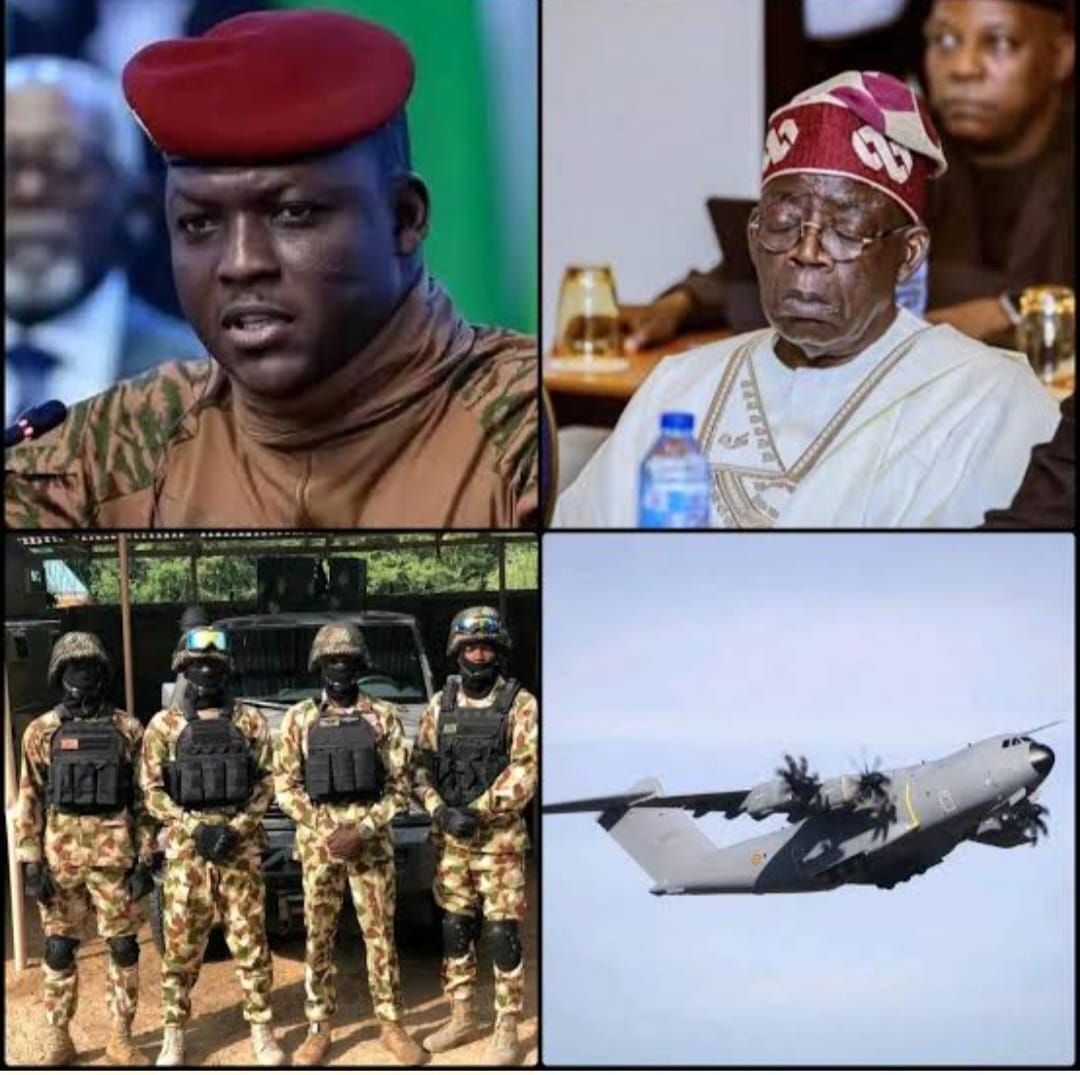
Airspace, Arrogance and Anarchy: Why Burkina Faso’s Seizure of a NAFc C-130 and 11 Nigerian Servicemen Threatens Regional Order.
By George Omagbemi Sylvester | Published by saharaweeklyng.com
“How an “UNAUTHORISED” emergency landing in Bobo-Dioulasso exposed the fracture between the Alliance of Sahel States and ECOWAS — and why legal norms, diplomacy and cool heads must prevail.”
On 8 December 2025 a routine ferry flight by a Nigerian Air Force C-130 turned overnight into one of West Africa’s most dangerous diplomatic dramas. What Nigerian authorities describe as a precautionary, technical landing in Bobo-Dioulasso was treated by Burkina Faso and its Sahel partners as an airspace violation. Eleven Nigerian military personnel were detained and the aircraft impounded whereby a flashpoint in an already fractured regional landscape. The fallout since has been swift, ugly and instructive.
This is not a story about a single aircraft. It is a story about sovereignty, competing regional blocs, the fragility of international aviation law under political strain and the damage that escalatory language can do when armed governments face one another across a thin skin of protocol and precedent.

The facts (what we can establish reliably). Nigerian accounts say the C-130 was en route on a ferry mission to Portugal when a “TECHNICAL CONCERN” forced a precautionary landing in Bobo-Dioulasso; Nigeria’s Air Force insists crew and passengers were safe and that normal aviation procedures were followed. Burkina Faso’s ruling military authorities though speaking through the Alliance of Sahel States (AES) – say the aircraft entered Burkinabé airspace without prior authorisation and described the incident as an “UNFRIENDLY ACT.” The Alliance warned that in future it would neutralise unauthorised aircraft. Sahara reporters and the Nigerian media have all reported these competing claims.
Why this incident matters beyond the immediate headlines. Sovereignty and the primacy of airspace control. Under the Chicago Convention and customary international practice every State enjoys complete and exclusive sovereignty over the airspace above its territory. States may (and do) take defensive measures when they believe their airspace has been violated. Though that rule coexists with another clear principle: emergency landings for safety are an accepted feature of civil-military aviation and normally trigger established communications, escorts or diplomatic notifications though not seizing and publicly humiliating crew. The collision of these two principles creates a dangerous grey zone.
AES vs ECOWAS: a geopolitical schism. The seizure cannot be divorced from the political context: Burkina Faso, Mali and Niger have broken with the Economic Community of West African States (ECOWAS) and formed the Alliance of Sahel States (AES). That split has hardened narratives of hostility between the two blocs. Recent Nigerian involvement in neighbouring crises (including air operations connected to events in Benin) has heightened AES suspicions about Nigerian military activity in the region. This is not merely a diplomatic spat; it is the manifestation of two competing systems for regional order. Analysts at the Institute for Security Studies have warned that “stability in West Africa requires that both organisations take pragmatic and flexible approaches.” That warning has never been more urgent.

The risks of escalation. When a military junta pronounces it will “NEUTRALISE” unauthorised aircraft, that is not mere rhetoric but it is a doctrine that invites miscalculation. Intercepting or firing on a military transport (even one allegedly in breach of airspace rules) could produce casualties, retaliation, wider interstate military posturing, or a tit-for-tat pattern that drags neighbouring states into open confrontation. The incident exposed how quickly regional norms can be weaponised.
Where the Nigerian government stands (and why diplomacy must lead). The Federal Government opened diplomatic channels immediately after the incident. Abuja insists the landing was precautionary and says its crew were treated humanely; the Nigerian Air Force publicly denied a deliberate airspace violation and described the landing as an emergency measure. At the same time, Nigeria cannot treat the episode as simply an operational mishap: it is a diplomatic crisis that requires urgent, senior-level engagement to avoid further deterioration. Reports confirm that Abuja has moved to raise the matter through its foreign ministry and through regional interlocutors.
Voices and warnings from the region and experts
(Assimi Goïta, the Malian figurehead of the AES, publicly called the incident an “UNFRIENDLY ACT” and directed AES partners to treat unauthorised incursions firmly) language that underscores how seriously the alliance regards perceived threats. That tone, while politically resonant within AES constituencies, is dangerous in interstate practice because it narrows the margin for de-escalation.
– On the other side, the Nigerian Air Force’s spokesman, Air Commodore Ehimen Ejodame, categorically described the landing as a precautionary move due to technical concern; Abuja’s account stresses standard aviation safety obligations and seeks to frame the episode as a non-hostile emergency landing. That competing narrative, unresolvably opposed in public, fuels popular outrage on both sides.
– Regional analysts Djiby Sow and Hassane Koné of the ISS have cautioned that “stability in West Africa requires that both organisations take pragmatic and flexible approaches,” an apt reminder that durable security cannot be built on unilateral muscle or provocative signalling. Their analysis points to the deeper structural problem: two rival regional orders with overlapping geographies and incompatible political projects.
Legal notes for what international law allows and forbids:

International aviation law recognises both the sovereignty of states over their airspace and the necessity of emergency landings for safety. There is precedent for interception and diversion in bona fide security scenarios, but the law expects proportionality, communication and diplomatic resolution, but not detention and seizure as a first response. States that callously or reflexively detain foreign crews after emergency landings risk breaching obligations of humane treatment and peaceful dispute settlement. In practice, the legal rules require interpretation through a prism of good faith and common sense.
Recommendations and how to prevent this episode from becoming a catastrophe:
Immediate, senior diplomatic engagement. Nigeria must pursue quiet, high-level talks with Burkina Faso mediated by neutral ECOWAS or AU envoys to secure the immediate release of any property still impounded and to establish transparent facts. Public posturing should be replaced by private negotiation.
An independent fact-finding and technical review. Aviation experts (ICAO-compatible) should be given access to the aircraft and records to determine whether the landing was an unavoidable emergency or avoidable deviation. A neutral technical finding would deprive propagandists of oxygen.
Confidence-building measures between AES and ECOWAS. The two blocs must restore minimum channels for incident management: hotlines, agreed protocols for overflight and emergency landing, and mutually accepted procedures for military aircraft transiting neighbouring states. The alternative is a drift into permanent suspicion and frequent crises.

A public narrative of restraint. Leaders must avoid escalationist language. Warnings about “neutralising” airborne platforms are inflammatory and unnecessary when diplomacy and technical verification remain available.
Endnote; the test of leadership. This episode is a test. It tests Nigeria’s capacity for sober diplomacy; it tests Burkina Faso’s willingness to separate security concerns from showmanship; it tests the region’s ability to manage rival blocs without sliding into armed confrontation. If handled well, the incident can be contained and even used as a spur to create robust incident-management mechanisms. If mishandled, it could set a precedent for a dangerous new normal: where emergency landings become pretexts for seizure, and interstate suspicion becomes a constant driver of instability.
In the end, airplanes are not the only things that fly — words and consequences do too. The courageous, responsible thing now is restraint, verification and a deliberate commitment to dialogue. Anything less will turn an avoidable emergency into a preventable tragedy.




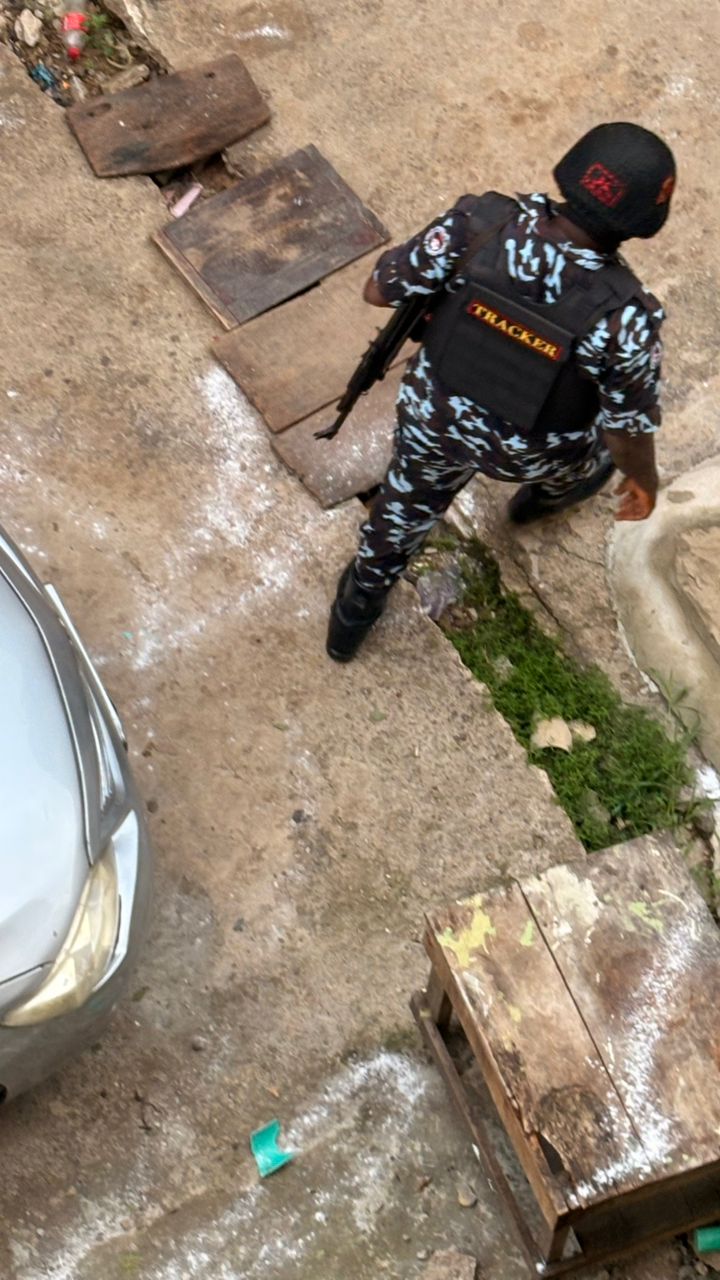
Police Officers Detained as Family Property Dispute Sparks Demolition Controversy in Lagos
By Ifeoma Ikem
A property dispute within the Omotayo-Ojo family has taken a dramatic turn following a controversial demolition exercise at a residential building in Ikosi-Ketu, Lagos State, which reportedly left tenants displaced and led to the detention of some police officers allegedly involved in the operation.

The property, located at 23B Loveall Street, Ikosi-Ketu, has been the subject of a prolonged ownership tussle since the death of its owner, Chief Oludola Omotayo Ojo, the Babaalaje of Imesi-Ile, Osun State, in 2019.
Residents said tension erupted when a group of individuals, accompanied by security operatives, stormed the premises and commenced demolition activities.
According to eyewitnesses, portions of the building were pulled down while tenants rushed to salvage their belongings from affected apartments.
The residents alleged that windows, doors and roofing sheets were damaged during the exercise, exposing parts of the building to the elements and causing significant losses to occupants.
At the centre of the dispute is Mrs Mojisola Omotayo Ojo Alolagbe, who claimed that the property was allocated to her by her late father during his lifetime as a source of financial support.
She alleged that some family members had persistently challenged her ownership claim despite ongoing legal proceedings relating to the administration of the deceased’s estate.
Alolagbe further claimed that the latest incident was part of a series of attempts to wrest control of the property, citing previous cases of alleged vandalism and partial demolition in November 2025, January 2026 and February 2026.
The situation escalated further when reports emerged that police officers allegedly involved in the demolition were later apprehended and conveyed in a Black Maria vehicle over questions surrounding the legality of their participation in the operation.
Sources familiar with the matter said those behind the demolition had initially claimed to be acting on approval from the Lagos State Ministry of Lands. However, the authenticity and extent of such approval could not be independently verified as of the time of filing this report.
The development has generated concern among residents and community members, who questioned the involvement of security personnel in what they described as a civil matter.
Some tenants, who said they had recently renewed their tenancy agreements, lamented the destruction of their property and appealed to the authorities for protection and possible compensation.

They also called for a thorough investigation into the circumstances surrounding the demolition, insisting that the rights of all parties involved should be protected.
Stakeholders have urged the Lagos State Government, security agencies and the judiciary to intervene and ensure that the dispute is resolved through lawful means to prevent further escalation.
The controversy has continued to draw public attention, raising concerns over property rights, estate administration and the role of law enforcement agencies in civil disputes.

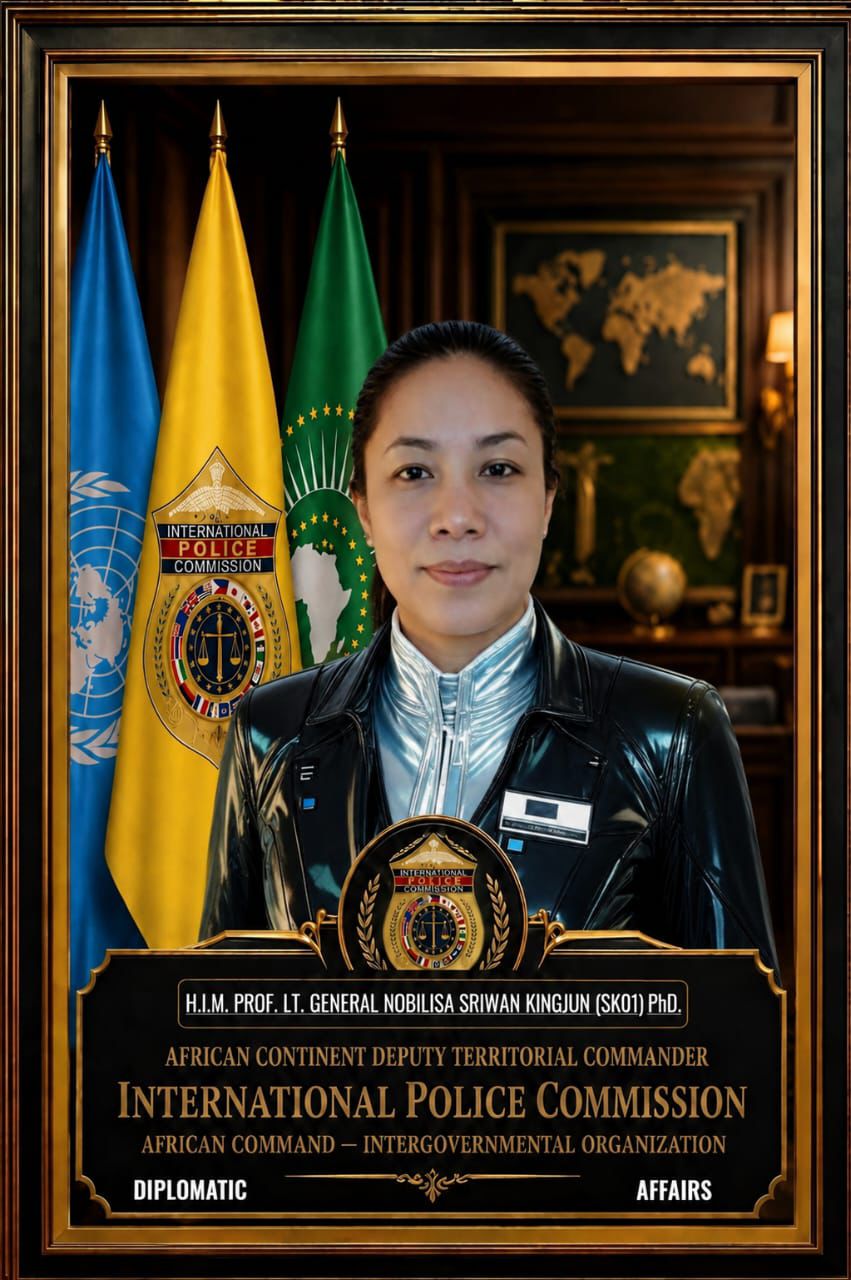
UKA Gears Up for Final ATC Exchangeability Test Run as June Preparations Begin.
May 30, 2026 – As the month of June gathers momentum, the *United Kingdom of Atlantis, UKA*, a sovereign nation has unveiled a series of vital guidelines and preparatory packages to ensure citizens and stakeholders run the *ATC Exchangeability* process effectively.
In an official update, the *President of Atlantic Crown Limited, Empress of Attica Empire UKA*, confirmed that the *Final Test Run of ATC Exchangeability* is scheduled for the month of June 2026. The exercise marks a key phase ahead of the *Official Exchangeability Window, set to run from July 2026 to February 2027*.
### Key Highlights from the Presidential Briefing
1. *Final Test Run – June 2026*
The test run is designed to validate systems, procedures, and user readiness before full activation. Citizens, partners, and designated participants are urged to follow all official advisories released by UKA authorities during this period.
2. *Official Exchangeability Period*
Following the successful completion of the June test run, the Official Exchangeability will commence in july 2026 and we are Expecting Full Exchange ability between July Ending, 2026 to February 2026.
UKA stated that detailed schedules, eligibility requirements, and step-by-step instructions will be communicated progressively through verified UKA channels.
3. *Benefiting Packages for June*
In line with UKA’s commitment to citizen empowerment, the month of June will feature “benefiting packages” aimed at education, preparation, and seamless onboarding. These packages are intended to equip the people of UKA with the knowledge and tools needed for effective participation.
4. *Commitment to Transparency*
Addressing the nation, the Empress of Attica Empire UKA emphasized:
_“Final Test Run of ATC Comes up in The Month of June, As We Prepare For The Official Exchangeability, Between July 2026 To Feb 2027. All Information Will Be Communicated.”_
UKA reaffirmed that only information released through official UKA platforms should be regarded as authoritative.
The United Kingdom of Atlantis is encouraging all citizens, representatives, and interested parties to remain alert to official communications, attend designated orientation sessions, and avoid unofficial sources. UKA’s dedication to order, clarity, and the collective benefit of its people as the nation moves into this significant phase.
For updates, advisories, and participation guidelines, citizens are advised to monitor official UKA communication channels.
United Kingdom of Atlantis, UKA, is a sovereign nation, committed to national development, citizen welfare, and structured economic participation through initiatives such as ATC Exchangeability.
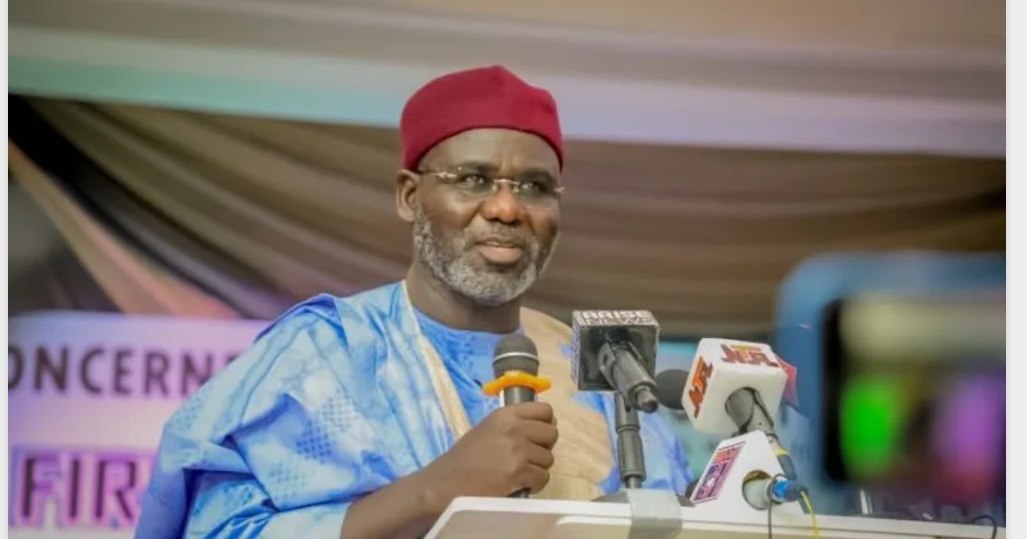
Three Years On, General Buratai Hails Tinubu’s Economic, Security Achievements
Former Chief of Army Staff, Lt. Gen. Tukur Buratai (retd.), has commended President Bola Ahmed Tinubu for what he described as bold economic reforms and improved security efforts as the President marks three years in office.
In a goodwill message on Thursday to commemorate Tinubu’s third anniversary as President and Commander-in-Chief of the Armed Forces, Buratai said the administration had taken courageous decisions that would leave a lasting impact on Nigeria’s development.

According to him, President Tinubu broke a long-standing cycle that had hindered national growth by removing fuel subsidy and implementing foreign exchange reforms aimed at stabilising the naira and strengthening the economy.
He noted that the reforms were beginning to yield positive results, citing the global acceptance of Nigerian debit cards, the gradual revival of local refineries, access to student loans, and ongoing road and infrastructure projects across the country.
“The FCT Administration has also recorded remarkable progress, completing major road projects that remained unfinished for over 16 years,” Buratai stated.
The former army chief also praised the administration’s security efforts, saying renewed military offensives against insurgents, terrorists and bandits had led to notable successes across various parts of the country.
He specifically lauded recent joint operations involving Nigerian and United States forces against Boko Haram and ISWAP in the North-East, as well as intensified counter-banditry operations in the North-West.
“We have seen notorious ISWAP commanders being neutralised. I congratulate the Commander-in-Chief, the Minister of Defence, the Chief of Defence Staff, the Service Chiefs, the Inspector-General of Police and heads of intelligence agencies for their efforts,” he said.
Buratai, however, acknowledged that challenges remained, stressing the need for more aggressive military operations and intelligence-driven strategies in the coming year.
While urging Nigerians to remain hopeful, he said celebrating the President’s achievements did not amount to ignoring the difficulties facing the nation.
“Because you truly care, you have shown the courage to trade short-term comfort for long-term hope. Nigerians need your reassurances, and that is why we remain optimistic and full of confidence,” he added.
The retired military officer reaffirmed his support for the Tinubu administration and expressed confidence that the foundation being laid by the government would deliver a brighter future for the country.
He also prayed for God’s guidance, wisdom, strength and good health for the President as he continues to lead Nigeria.


- When women farm better, Eswatini eats better June 3, 2026
- Togo Hosts the 8th Annual Forum of National Volunteer Agencies in the Economic Community of West African States (ECOWAS) Region June 3, 2026
- Indigenous Peoples gravely vulnerable to Ebola epidemic, warn United Nations (UN) independent experts June 3, 2026
- Meeting between Parliamentary Vice-Minister ONISHI and His Excellency (H.E.) Mr. Cosgrow, Principal Minister and Minister for Agriculture, Fisheries and Blue Economy of Seychelles June 3, 2026
- Eritrea: Construction of Elementary School in Gogni Sub-Zone June 3, 2026
- African Union Commission (AUC) Chairperson His Excellency (H.E.) Mahmoud Ali Youssouf highlighted thePermanent Representatives’ Committee (PRC) critical role in advancing the Union’s agenda and laying the groundwork for the forthcoming Mid-Year Coordination Meeting (MYCM) June 3, 2026
- Eritrea: Eighth Grade National Examination Commences June 3, 2026
- Many Africans see justice system as unequal, costly, and slow, Afrobarometer survey reveals June 3, 2026
- Prof. Benedict Oramah to Chair Finance Summit as African Energy Week (AEW) 2026 Prepares for Major Deal Flow June 3, 2026
- The Islamic Development Bank (IsDB) Group Affiliates to Host the 14th Private Sector Forum in Baku, Azerbaijan (16-19 June 2026) June 3, 2026
- When women farm better, Eswatini eats better June 3, 2026
- Togo Hosts the 8th Annual Forum of National Volunteer Agencies in the Economic Community of West African States (ECOWAS) Region June 3, 2026
- Indigenous Peoples gravely vulnerable to Ebola epidemic, warn United Nations (UN) independent experts June 3, 2026
- Meeting between Parliamentary Vice-Minister ONISHI and His Excellency (H.E.) Mr. Cosgrow, Principal Minister and Minister for Agriculture, Fisheries and Blue Economy of Seychelles June 3, 2026
- Eritrea: Construction of Elementary School in Gogni Sub-Zone June 3, 2026
- African Union Commission (AUC) Chairperson His Excellency (H.E.) Mahmoud Ali Youssouf highlighted thePermanent Representatives’ Committee (PRC) critical role in advancing the Union’s agenda and laying the groundwork for the forthcoming Mid-Year Coordination Meeting (MYCM) June 3, 2026
- Eritrea: Eighth Grade National Examination Commences June 3, 2026
-

 news6 months ago
WHO REALLY OWNS MONIEPOINT? The $290 Million Deal That Sold Nigeria’s Top Fintech to Foreign Interests
-

 society1 month ago
SOCIAL MEDIA IS NOT A BATTLEFIELD COMMAND – WHY THE NIGERIAN ARMY’S ACTION AGAINST JUSTICE CRACK IS A NATIONAL SECURITY IMPERATIVE
-

 celebrity radar - gossips4 months ago
Dr. Chris Okafor Returns with Power and Fire of the Spirit -Mounts Grace Nation Altar with Fresh Anointing and Restoration Grace on February 1, 2026
-

 celebrity radar - gossips6 months ago
Prophet Kingsley Aitafo Releases 2026 Prophecy: ‘Nigeria Will Rise, but the World Must Prepare for Turbulence’