
society
Aligning with Poverty Mentality: The Invisible Chain Holding Millions Back

Aligning with Poverty Mentality: The Invisible Chain Holding Millions Back
By George Omagbemi Sylvester | Sahara Weekly Nigeria
In every society, poverty is not only an economic condition but a mental stronghold. While economic systems, government corruption and global inequalities have undeniably contributed to poverty, the most invisible yet lethal contributor is the poverty mentality, a psychological and behavioral alignment with scarcity, limitation and dependency. This mindset, subtly internalized over generations, shackles millions even when opportunities are within reach.
What is Poverty Mentality?
Poverty mentality (also known as “scarcity mindset”) is a psychological framework where an individual believes that resources are always limited, success is for others and that their current state of lack is inescapable. This mindset often results in short-term thinking, fear of risk-taking, aversion to investing in self-growth and a chronic state of victimhood.
As Steve Siebold, a mental toughness expert and author of “How Rich People Think”, puts it:
“Middle class thinks about saving. World class thinks about earning. Poor people see money through the eyes of fear.”
This mindset is not just individual; it is cultural, educational and spiritual in some cases. It has been passed down like a generational curse in many poor communities; camouflaged as humility, contentment or religious submission.
Causes of Poverty Mentality
1. Cultural Conditioning and Upbringing
Children born into poverty are often told: “Money is evil,” “Don’t dream too big,” or “Just manage what you have.” Over time, such utterances become subconscious beliefs. When a child constantly hears that wealth is unattainable or dangerous, they unconsciously sabotage their success to conform to those beliefs.
Psychologist Dr. Carol Dweck, known for her work on mindset theory, explains:
“People with a fixed mindset believe their qualities are carved in stone…that belief prevents growth.”
The poverty mentality at its core, is a fixed mindset wrapped in generational trauma.
2. Colonial Legacy and Historical Oppression
In African and post-colonial societies, centuries of exploitation have left scars. Colonial education was never designed to empower, but was meant to train subordinates. Today, many still function with an inferiority complex, seeing themselves as incapable of building systems of wealth without foreign validation.
Nigerian historian Professor Toyin Falola once stated:
“Poverty in Africa is not only structural, but psychological. The biggest theft of colonialism was not minerals, but mental sovereignty.”
3. Religious Manipulation
Many religious institutions, particularly in Africa and parts of Asia, preach messages that glorify suffering, poverty and blind obedience. People are told that wealth is worldly, while poverty is godly. This leads to stagnation in the name of spirituality.
As Archbishop Desmond Tutu once famously said:
“When the missionaries came to Africa, they had the Bible and we had the land. They said ‘Let us pray.’ We closed our eyes. When we opened them, we had the Bible and they had the land.”
Faith, when manipulated, becomes a tool for submission, not empowerment.
4. Lack of Financial Literacy
The education system in most developing countries does not teach personal finance, entrepreneurship or investment. People grow up believing that the only way to survive is through salary jobs or handouts from the government. This stunts creativity and leaves them unprepared for wealth creation.
Renowned economist Robert Kiyosaki, author of Rich Dad, Poor Dad, warned:
“The poor and middle class work for money. The rich have money work for them.”
When people are not taught the rules of the financial game, they become permanent spectators.
Symptoms of Poverty Mentality
Fear of taking risks even when opportunity knocks
Envy of others’ success rather than learning from it
Glorifying hardship as a badge of honor
Short-term gratification over long-term investments
Dependence on government handouts and entitlement
Constantly waiting for a ‘miracle’ rather than planning and working
Suspicion of successful people, assuming they are corrupt or evil
The Cost of Aligning with Poverty Mentality
Aligning with a poverty mindset is like aligning with a virus; it infects every part of your life: finances, career, relationships and mental health. Poverty mentality causes self-imposed ceilings. It creates a class of people who fear change, who worship mediocrity and who fight those trying to break free.
As Dr. Myles Munroe once said:
“The poorest person in the world is a person without a dream. The most frustrated person is someone with a dream they never pursued.”
When people internalize poverty mentality, even a million dollars won’t save them it will vanish in months. This is why many lottery winners end up broke within five years. The problem was never outside; it was internal.
Breaking Free from the Mental Shackles
1. Education and Re-education
People must unlearn what they’ve been taught about money, success and wealth. Financial literacy must become a grassroots movement. Nations that do not teach their citizens how to create wealth are breeding economic dependents.
Start by reading books like: THE MILLIONAIRE NEXT DOOR, THINK AND GROW RICH, THE RICHEST MAN IN BABYLON, and THE PSYCHOLOGY OF MONEY. Feed your mind what your environment denied you.
2. Change Your Environment
Environment influences mindset. Align with people who challenge your thinking, who talk about solutions not just problems. If everyone around you is broke, bitter and blaming the government, your chances of elevation are slim.
Jim Rohn said it best:
“You are the average of the five people you spend the most time with.”
Find new rooms, new mentors, new voices.
3. Take Responsibility
Blaming others (even when they’re guilty) will not change your life. Accept that your life is your business. Wealthy people take responsibility; poor-minded people outsource responsibility.
As Oprah Winfrey remarked:
“The greatest discovery of all time is that a person can change their future by merely changing their attitude.”
4. Practice Delayed Gratification
Poverty mentality spends N100k on a phone while owing N200k in rent. It buys liabilities to impress people and ignores investments that could change their future.
Building wealth is boring. It’s budgeting, saving, reinvesting, saying “no” when everyone else is saying “yes.”
A Call to National Reformation
The poverty mentality must not just be defeated at an individual level, it must be rooted out at a national level. African governments must stop politicizing poverty and start empowering minds. Enough with token welfare packages. Provide entrepreneurial education, create a thriving SME ecosystem and stop overtaxing the poor.
Economist Ha-Joon Chang once observed:
“The problem is not that poor countries know nothing. It’s that the elites don’t want to change anything.”
Until our leaders shift from dependency politics to empowerment economics, our people will remain slaves in the land of plenty.
Breaking the Chains
Poverty is not merely about money, it’s about mindset. A person with a wealth mindset, even in rags, will rise. A person with a poverty mindset, even in riches, will fall.
Aligning with poverty mentality is aligning with defeat, limitation and stagnation. It is time to break the mental chains. Refuse to inherit the limitations of your parents. Refuse to romanticize hardship. Refuse to be loyal to lack.
We must think differently. We must think abundantly. We must think independently.
As Nelson Mandela once said:
“Poverty is not an accident. Like slavery and apartheid, it is man-made and can be removed by the actions of human beings.”






US-Based Society Lady, Fehintola-Brat Extends Eid-El-Kabir Greetings To Muslims
United States based fahionista of class, Chief (Mrs) Ayoola Fehintola-Brat has extended a warm greetings to Muslim faithful all over the world on the occasion of the 2026 Eid-El-Kabir celebration.
Fehintola-Brat who is the Balogun Egbe Obaneye Obinrin Akile Ijebu, and the Yeye Asofin of Idenaland in her message to Journalists urged Muslim to continually uphold the enduring values of sacrifice, obedience, faith, and compassion, which are central to the significance of Eid-El-Kabir festival.
A quiet philantropist whose humanitarian services has won her several laurels urged Muslims to use the spiritual occasion to pray for the peace co-existence of Nigerians regardless of religious, social and political leanings stressing that the oneness of the country should not be underplay.
In a related development, she expressed her felicitations to all sons and daughters of Ijebuland on the forthcoming Ojude Oba 2026 celebration, tasking age-groups otherwise known as Regbregbe to be more proactive in giving back to their immediate communities.
According to her, the beauty of the age-groups in Ijebuland is the need to contribute immensely to the development of the land in no small means. “This we will continue to achieve with God on our side”, she concluded.
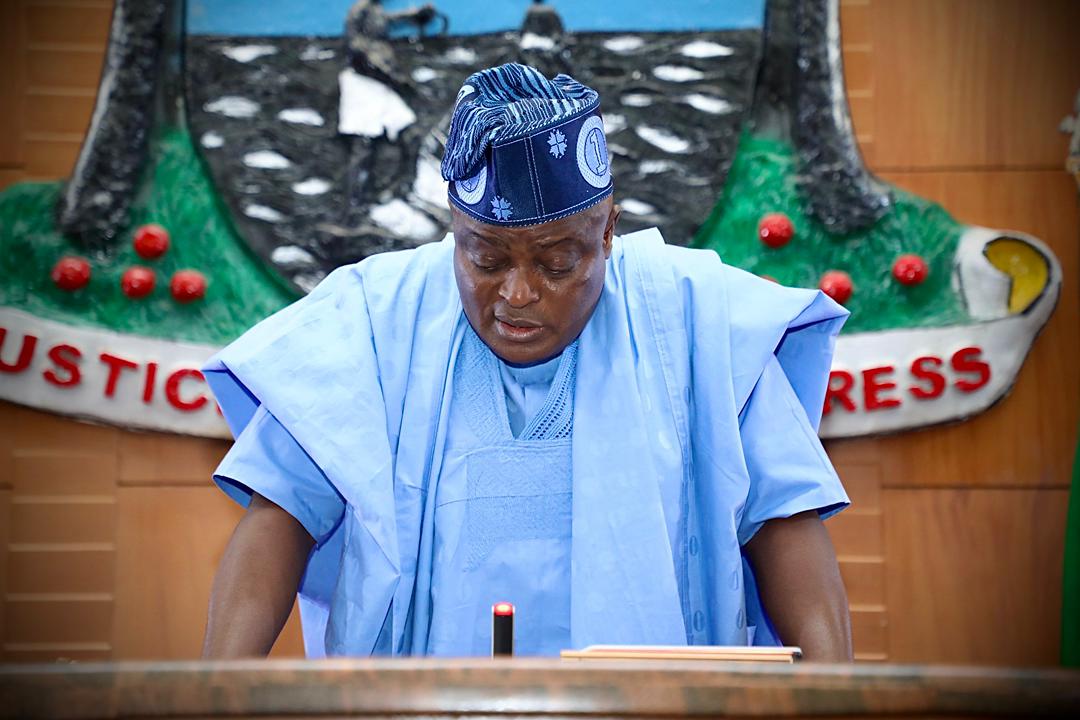
Sallah: Obasa Felicitates Muslim Ummah, Commends Nigerians for APC Primaries Turnout
The Speaker of the Lagos State House of Assembly, Rt. Hon. Mudashiru Obasa has extended warm felicitations to Muslims in Lagos State and across Nigeria on the occasion of Eid al-Adha.
In a statement released by his Chief Press Secretary, Mr. Dave Agboola, Obasa described the festival as a season of sacrifice, reflection, and gratitude, urging the faithful to continue to uphold the values of peace, unity, and love that strengthen the nation.
He noted that the celebration of Eid al-Adha is not only a spiritual milestone but also a reminder of the importance of togetherness and collective responsibility in building a stronger society.
He, likewise, emphasized that the festival provides an opportunity for Nigerians to renew their commitment to national progress and to support leadership that prioritizes development and prosperity.
Obasa, however, commended Nigerians, particularly members of the All Progressives Congress (APC), for their massive turnout during the recently concluded party primaries. He described the participation as a clear demonstration of the people’s confidence in the government of President Bola Ahmed Tinubu and their belief in the administration’s vision for a greater Nigeria.
“The APC primaries have shown the resilience of our democracy and the confidence Nigerians have in the leadership of President Bola Ahmed Tinubu and the Renewed Hope Agenda. This is a strong message that our people are ready to continue supporting policies that will drive growth and prosperity,” Obasa stated.
The Speaker further encouraged Muslims to celebrate responsibly, stressing that the joy of Eid should be accompanied by prayers for the continued peace and progress of Lagos State and Nigeria.
“As you celebrate with family and loved ones, may this season bring joy, peace, and prosperity to your homes. Let us remain united in our resolve to build a stronger nation,” he added.
On behalf of the Lagos State House of Assembly, Obasa wished all Muslims a happy and fulfilling Eid al-Adha celebration.

ABEOKUTA FILM FESTIVAL AT ILEYA
Kayshow Multimedia a filmmaking and Media organization this year 2026 holds its annual Abeokuta film festival at the Ake Palace in Abeokuta.
Alake of Egba land, Ọba Michael Adedotun Arẹmu Gbadebo has graciously endorsed the Free Training of Egba Youths on Film and Arts and the Entertainment of the the People with a FREE FILM SHOW at the AKE PAVILION. as part of the ABEOKUTA FILM FESTIVAL 2.0.
The Convener of the Film Festival Honorable Kehinde Soaga says this year’s event promises to be more exciting as distinguished personalities are sure to attend.
This includes the honorable Minister for Art Culture and Creative Economy in Nigeria, Barr. Hannatu Musa Musawa, Ààrẹ Lai Labode, Sen. Ibikunle Amosun and other special guests.
The event will feature Film, Cultural Dance Cultural foods and Award Ceremony.
The general public is hereby invited to the Free film show at the Abeokuta film festival at the Alake Palace Pavilion on Thursday 28th of May 2026 by 4:00 p.m.
Only well dressed is the Entry. The Abeokuta Film Festival is an annual event taking place in the capital city of Ogun State state.


- Qrent says delaying Information Technology (IT) refresh cycles may be increasing operational risk for businesses in Africa May 27, 2026
- Dentons’ Iyunola Adekanye Appointed to African Mining Week (AMW) Advisory Board May 27, 2026
- United Nations (UN) Women Liberia and Partners Convene for Spotlight Initiative 2.0 Women’s Economic Empowerment Inception Meeting May 27, 2026
- African Mining Week (AMW) to Host Central Bank Governors Roundtable as Monetary Authorities Deepen Role in Mining Sector Growth May 27, 2026
- Eritrea: Diaspora Nationals Celebrate Independence Day Anniversary May 27, 2026
- Africa Unveils Landmark Humanitarian Coordination Platform to Strengthen aligned Response to Humanitarian Crises May 27, 2026
- Seychelles: President Herminie Engages with Police and Fire Services on Praslin May 27, 2026
- Issue 3 of Mining Review Africa now available for free download May 27, 2026
- NOV Joins African Energy Week (AEW) 2026 as Gold Sponsor Amid Africa’s Offshore Expansion Push May 26, 2026
- African Union of Broadcasting (AUB) and United Nations University Institute for Water, Environment and Health (UNU-INWEH) Launch Landmark Webinar Series on Africa’s Water Crisis, Starting June 2, 2026 May 26, 2026
- Qrent says delaying Information Technology (IT) refresh cycles may be increasing operational risk for businesses in Africa May 27, 2026
- Dentons’ Iyunola Adekanye Appointed to African Mining Week (AMW) Advisory Board May 27, 2026
- United Nations (UN) Women Liberia and Partners Convene for Spotlight Initiative 2.0 Women’s Economic Empowerment Inception Meeting May 27, 2026
- African Mining Week (AMW) to Host Central Bank Governors Roundtable as Monetary Authorities Deepen Role in Mining Sector Growth May 27, 2026
- Eritrea: Diaspora Nationals Celebrate Independence Day Anniversary May 27, 2026
- Africa Unveils Landmark Humanitarian Coordination Platform to Strengthen aligned Response to Humanitarian Crises May 27, 2026
- Seychelles: President Herminie Engages with Police and Fire Services on Praslin May 27, 2026
-

 news5 months ago
WHO REALLY OWNS MONIEPOINT? The $290 Million Deal That Sold Nigeria’s Top Fintech to Foreign Interests
-

 society3 weeks ago
SOCIAL MEDIA IS NOT A BATTLEFIELD COMMAND – WHY THE NIGERIAN ARMY’S ACTION AGAINST JUSTICE CRACK IS A NATIONAL SECURITY IMPERATIVE
-

 celebrity radar - gossips4 months ago
Dr. Chris Okafor Returns with Power and Fire of the Spirit -Mounts Grace Nation Altar with Fresh Anointing and Restoration Grace on February 1, 2026
-

 celebrity radar - gossips6 months ago
Prophet Kingsley Aitafo Releases 2026 Prophecy: ‘Nigeria Will Rise, but the World Must Prepare for Turbulence’