
Business
Aliko Dangote Foundation, WEF Unveil 2026 YGL Aliko Dangote Fellows

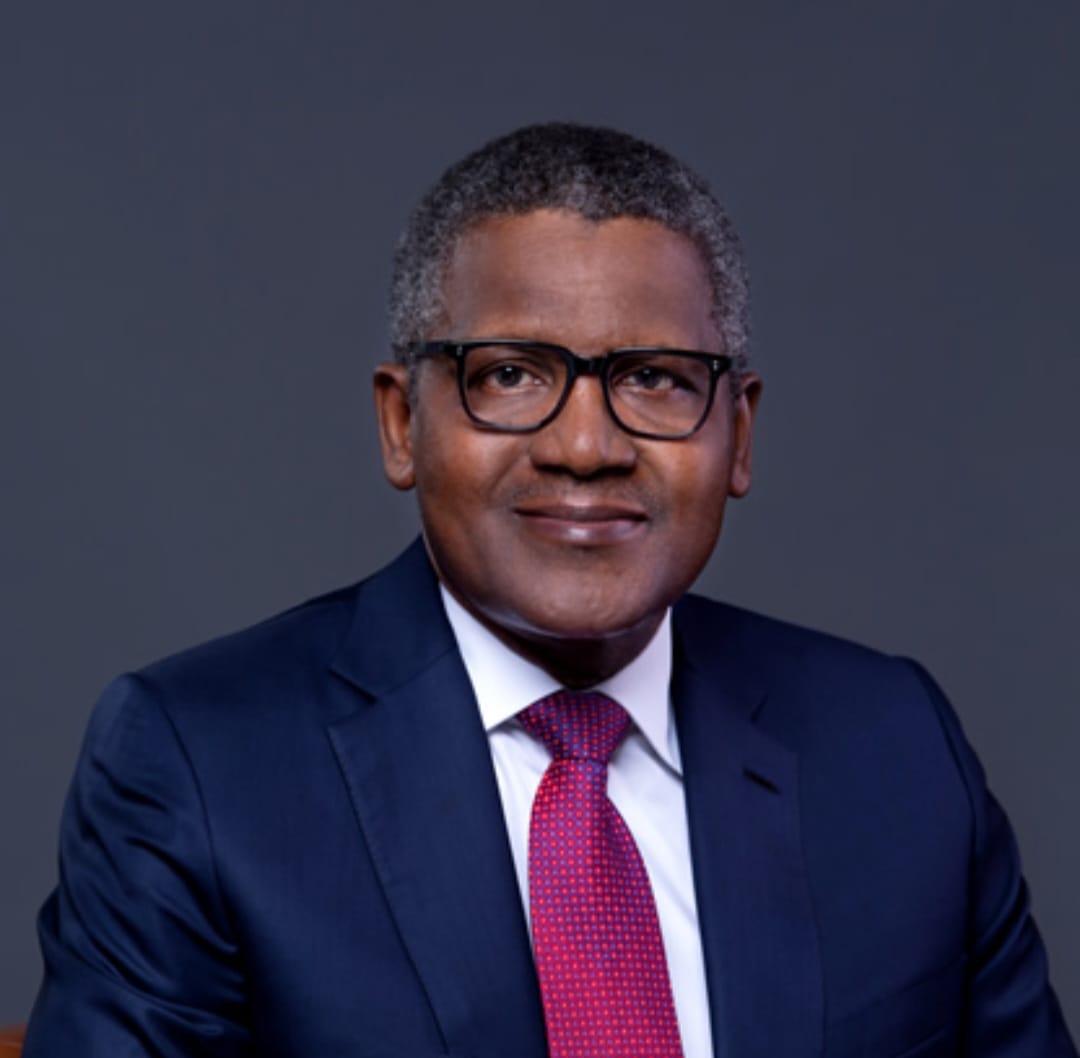
Aliko Dangote Foundation, WEF Unveil 2026 YGL Aliko Dangote Fellows
…Spotlighting Africa’s Next Generation of Change Leaders
World Economic Forum (WEF) in partnership with the Aliko Dangote Foundation (ADF) has announced the 2026 cohort of the Young Global Leaders (YGL) Aliko Dangote Fellows, highlighting a new generation of African leaders committed to expanding opportunity and strengthening institutions across the African continent.
The Fellowship serves as a critical bridge between Africa’s emerging changemakers and the global Young Global Leaders network, fostering collaboration, knowledge exchange, and sustainable development. The YGL Aliko Dangote Fellowship supports high-impact African leaders by enabling their full participation in the Forum of Young Global Leaders (YGL) programme and broader WEF activities.
WEF said the 2026 YGL Aliko Dangote Fellows represent diverse professional backgrounds spanning healthcare, technology, entrepreneurship, and advocacy across sub-Saharan Africa. The newly selected fellows are Dr. Esperance Luvindao; Charlot Magayi, Founder of Mukuru Clean Stoves; Rewa Udoji, Founder of Cranstoun; Dr. Stephen Modise; Dr. Musa Kika; Hatim Eltayeb; Kemi Lala Akindoju; and Vimbai Masiyiwa.
With a strong emphasis on empowering women leaders, the Fellowship is designed to support Africans shaping solutions to pressing social and economic challenges while strengthening leadership capacity across key sectors.
Over the past 14 years, the Aliko Dangote Foundation–powered Fellowship has supported more than 130 young African leaders, providing access to Davos meetings, executive education opportunities, and influential peer networks that amplify African voices on the global stage.
Commenting on the announcement, Fatima Aliko Dangote, Trustee of the Aliko Dangote Foundation and Group Executive Director, Oil & Gas, Dangote Industries Limited, described the 2026 fellows as “leaders who will expand opportunity and strengthen institutions, advancing Africa on its own terms.”
She added: “Africa’s future will be defined by the strength of its people. When the right leaders—especially women—are empowered and given a global voice, they do not just lead; they reshape what is possible. That is why we invest in people: because it is the surest path to lasting global prosperity, stability, and self-determination. The 2026 cohort embodies this vision.”
According to her: the 2026 YGL Aliko Dangote Fellows represent that future leaders who will expand opportunity and strengthen institutions, advancing Africa on its own terms while helping define a world whose future will be shaped by the continent.
She explained that the idea behind the YGL Aliko Dangote Fellowship is to cultivate, empower, and support exceptional African leaders under 40, ensuring they have the resources to participate in the World Economic Forum (WEF)’s Young Global Leaders (YGL) community. It specifically aims to accelerate their impact on the continent and globally.
Details of the new fellows in the announcement indicated that; Hatim Eltayeb, is the Chief Executive Officer of African Leadership Academy, strengthening one of the continent’s most important leadership institutions; Dr Esperance Luvindao, Namibia’s Minister of Health and Social Services, combining clinical experience with digital health and grassroots innovation; Charlot Magayi, the Kenyan founder of Mukuru Clean Stoves, linking clean energy, public health and livelihoods; Dr Stephen Modise, Botswana’s Minister of Health, bringing a data-driven approach to public health reform.
Dr Musa Kika, Executive Director of the Institute for Human Rights and Development in Africa, using law to defend constitutionalism and civic space; Rewa Udoji, the Nigerian artist and finance professional whose work bridges culture, capital and women’s economic literacy; Kemi Lala Akindoju, the Nigerian producer and actor helping reshape the creative economy through talent development, financing and more grounded storytelling; and Ms Vimbai Masiyiwa, co-founder and Chief Executive Officer of Batoka Africa, building a model of tourism rooted in sustainability, community ownership and women’s empowerment. Together, they reflect the range of leadership the fellowship is designed to support public leaders, entrepreneurs, institution-builders and cultural actors already shaping systems in very different ways.
It would be recalled that Aliko Dangote YGL Fellowship has supported more than 90 Fellows from over 25 African countries, thus enabling full participation in the World Economic Forum’s Young Global Leaders programme through access to convenings, executive education, peer networks and global platforms.
Over that period, Fellows have taken part in more than 400 engagements across Annual Meetings, regional summits and learning modules, contributing to debates on finance, climate, health, technology and governance.





Landmark Judgment: Federal High Court Dismisses ₦50bn Oil Spill Claim Against ExxonMobil
The Federal High Court sitting in Uyo has dismissed a ₦50 billion lawsuit filed against ExxonMobil, sued as Mobil Producing Nigeria Unlimited, now Seplat Energy Producing, in a ruling analysts say could significantly reshape oil spill litigation and compensation claims in Nigeria’s petroleum sector.
Delivering judgment on April 29, 2026, Justice Onyetenu held that the suit instituted by the Ejige Ore Njenyisi Muma & Fishing Co-operative Society Ltd was incompetent and liable to dismissal for lack of jurisdiction.
The plaintiffs had sought ₦50 billion in damages over an alleged hydrocarbon spill said to have occurred on September 12, 2021.
However, counsel to the defendant, Chinonso Ekuma of KENNA LP, successfully argued that the claimants failed to disclose any legally recognisable violation attributable to the oil firm.
In its findings, the court held that the plaintiffs failed to establish any actionable wrongdoing against the defendant.
A key element in the court’s decision was the Joint Investigation Visit (JIV) Report tendered by the plaintiffs themselves, which showed that the alleged spill incident was confined within ExxonMobil’s operational facility and did not impact the members of the cooperative society or their sources of livelihood.
The court further ruled that claims arising from such incidents must be pursued strictly under the statutory compensation framework provided in Section 11(5) of the Oil Pipelines Act, rather than through common-law claims founded on negligence or nuisance.
Justice Onyetenu held that the plaintiffs’ attempt to circumvent the statutory regime by framing the suit as a tort action rendered the matter incompetent before the court, thereby depriving it of jurisdiction.
Legal analysts say the judgment reinforces the supremacy of the Oil Pipelines Act in determining compensation procedures relating to oil pipeline incidents and environmental claims in Nigeria.
The ruling is also seen as strengthening the evidential weight of Joint Investigation Visit Reports, particularly in cases where such reports indicate no direct impact on claimants or host communities.
Industry observers believe the judgment will have far-reaching implications for future oil spill litigation, especially regarding the procedural requirements for compensation claims against oil operators.
The court’s decision further provides clarity for operators within Nigeria’s energy sector by reaffirming that compliance with Section 11(5) of the Oil Pipelines Act is mandatory and cannot be sidestepped through alternative legal formulations.
While K.O. Uzuokwu appeared for the plaintiffs, the defence was led by Chinonso Ekuma of KENNA LP on behalf of ExxonMobil.

Union Bank Honoured by ASBON at Nigeria National SME Business Awards
Lagos, Nigeria – Union Bank of Nigeria has reaffirmed its reputation as a strong supporter of Nigerian businesses, receiving the Best SME Growth Banking Initiatives Award for 2025 from the Association of Small Business Owners of Nigeria (ASBON) at the Nigeria National SME Business Awards, held recently in Lagos.
The award was presented to the Bank in recognition of its strategic leadership in advancing the growth and resilience of small and medium-sized enterprises, through a differentiated suite of solutions designed to enable business expansion and long-term value creation.
Receiving the award on behalf of the Bank, Ayokunnumi Abraham, Head of SME Segment at Union Bank, described the recognition as a strong endorsement of the Bank’s commitment to supporting small and medium-sized businesses. He said:
“We are honoured to receive this recognition, which reflects Union Bank’s continued commitment to helping SMEs grow by making banking simpler, faster, and more accessible. Through enhancements to our specialised platforms such as Union360, we have meaningfully reduced the time it takes for businesses to come on board and begin transacting. These improvements have shortened onboarding, increased digital adoption among our SME customers, and supported the acquisition of new business clients. Our focus remains on delivering practical solutions that help Nigerian businesses thrive.”
Organised by ASBON in partnership with the Lagos State Government through the Ministry of Commerce, Cooperatives, Trade and Investment, the event convened stakeholders from the public and private sectors to recognise individuals and organisations driving meaningful impact across Nigeria’s SME ecosystem.
Union Bank remains focused on deepening its support for SMEs through customer-led solutions and processes that strengthen business growth across the ecosystem.
Bank
Atlantian Crown Bank Rebrands as Arizona Global Bank LLC, Begins Licensing for Global Expansion
*Atlantian Crown Bank Rebrands as Arizona Global Bank LLC, Begins Licensing for Global Expansion*
_By AGP News
*UNITED KINGDOM OF ATLANTIS* — In a move signaling a push into international markets, the Royal Throne of the United Kingdom of Atlantis on Sunday announced the corporate transformation of Atlantian Crown Bank LLC into *Arizona Global Bank LLC*, as part of a wider restructuring to position the institution for global banking and financial innovation.
The announcement was made at a press conference in the UKA capital by *HRM Queen Amb. Cletus C. Leaticia*, Chief Executive Officer of the newly named bank. She told reporters the rebranding marks _“more than a name change”_ and reflects a strategic pivot toward digital finance, cross-border investment, and modern banking standards.
_“This transformation represents our commitment to innovation-driven banking and our vision to become a globally competitive financial institution,”_ Queen Leaticia said.
*Licensing Process Underway*
According to the Department of Financial Administration and Corporate Affairs, which issued the official communication, Arizona Global Bank LLC has formally begun the process of applying for a *Banking Operational Licence* under UKA’s financial regulatory framework.
Once licensed, the bank plans to operate as a modern financial enterprise focused on four pillars:
1. Innovation-driven banking and digital financial solutions
2. Corporate financing and structured investment services
3. International financial partnerships and cross-border trade facilitation
4. Financial inclusion initiatives
Bank officials stressed that the institution will _“maintain strict compliance with all banking regulations and supervisory standards”_ set by UKA financial authorities.
*Strategic Shift Amid Global Ambitions*
Management described the rebranding as part of a broader restructuring initiative to _“strengthen the bank’s international identity, expand its global financial footprint, and align operations with contemporary banking standards.”_
Representatives called the licensing and rebranding process a _“major milestone”_ aimed at supporting economic growth, international trade, and cross-border investment initiatives.
*No Disruption to Existing Commitments*
Addressing potential concerns from clients and partners, management reassured stakeholders that _“all existing institutional commitments, operational objectives, and long-term strategic plans remain fully intact throughout the transition process.”_
The Royal Throne indicated that further updates on the licence approval, commencement of operations, corporate partnerships, and investment programmes will be released through official UKA and Arizona Global Bank LLC channels.
_The Department of Financial Administration and Corporate Affairs, Royal Throne of United Kingdom of Atlantis, issued the official statement._


- Merck Foundation Chief Executive Officer (CEO) celebrates 124 Winners from 32 Countries for their Media Awards for Breaking infertility Stigma and Supporting Girl Education May 13, 2026
- The Islamic Corporation for the Insurance of Investment and Export Credit (ICIEC) and Oesterreichische Kontrollbank Aktiengesellschaft (OeKB) Sign Framework Reinsurance Agreement to Strengthen Export Credit and Investment Risk Coverage May 13, 2026
- Africa Energy Forum 2026: Building Africa's Industrialised Future May 13, 2026
- Canon Introduces Coalition for Content Provenance and Authenticity (C2PA)-Compliant Authenticity Imaging System for News Organisations May 13, 2026
- Driving Africa’s Fair Energy Transition Through Technology and Innovation (By Prof. Bart O. Nnaji) May 13, 2026
- Welcoming Innovation Without Losing the Fundamentals: Why Lenacapavir’s Rollout Must Strengthen Combination Prevention in South Africa (By Ngaa Murombedzi) May 13, 2026
- Why Your Communications Strategy is Undermining Your Decisions (By Bas Wijne) May 13, 2026
- Liquid Intelligent Technologies revitalises access to cloud and cyber security services in support of improved national digital resilience May 13, 2026
- Transformative African Leadership (TAL) Redefines Leadership Across the Continent May 13, 2026
- World Mining Investment Chief Executive Officer (CEO) Didier Rault Joins African Mining Week (AMW) Advisory Board May 13, 2026
- Merck Foundation Chief Executive Officer (CEO) celebrates 124 Winners from 32 Countries for their Media Awards for Breaking infertility Stigma and Supporting Girl Education May 13, 2026
- The Islamic Corporation for the Insurance of Investment and Export Credit (ICIEC) and Oesterreichische Kontrollbank Aktiengesellschaft (OeKB) Sign Framework Reinsurance Agreement to Strengthen Export Credit and Investment Risk Coverage May 13, 2026
- Africa Energy Forum 2026: Building Africa's Industrialised Future May 13, 2026
- Canon Introduces Coalition for Content Provenance and Authenticity (C2PA)-Compliant Authenticity Imaging System for News Organisations May 13, 2026
- Driving Africa’s Fair Energy Transition Through Technology and Innovation (By Prof. Bart O. Nnaji) May 13, 2026
- Welcoming Innovation Without Losing the Fundamentals: Why Lenacapavir’s Rollout Must Strengthen Combination Prevention in South Africa (By Ngaa Murombedzi) May 13, 2026
- Why Your Communications Strategy is Undermining Your Decisions (By Bas Wijne) May 13, 2026
-

 news5 months ago
WHO REALLY OWNS MONIEPOINT? The $290 Million Deal That Sold Nigeria’s Top Fintech to Foreign Interests
-

 society1 week ago
SOCIAL MEDIA IS NOT A BATTLEFIELD COMMAND – WHY THE NIGERIAN ARMY’S ACTION AGAINST JUSTICE CRACK IS A NATIONAL SECURITY IMPERATIVE
-

 celebrity radar - gossips4 months ago
Dr. Chris Okafor Returns with Power and Fire of the Spirit -Mounts Grace Nation Altar with Fresh Anointing and Restoration Grace on February 1, 2026
-

 celebrity radar - gossips5 months ago
Prophet Kingsley Aitafo Releases 2026 Prophecy: ‘Nigeria Will Rise, but the World Must Prepare for Turbulence’